Qualified Trust Caps Contract For Deed
Description
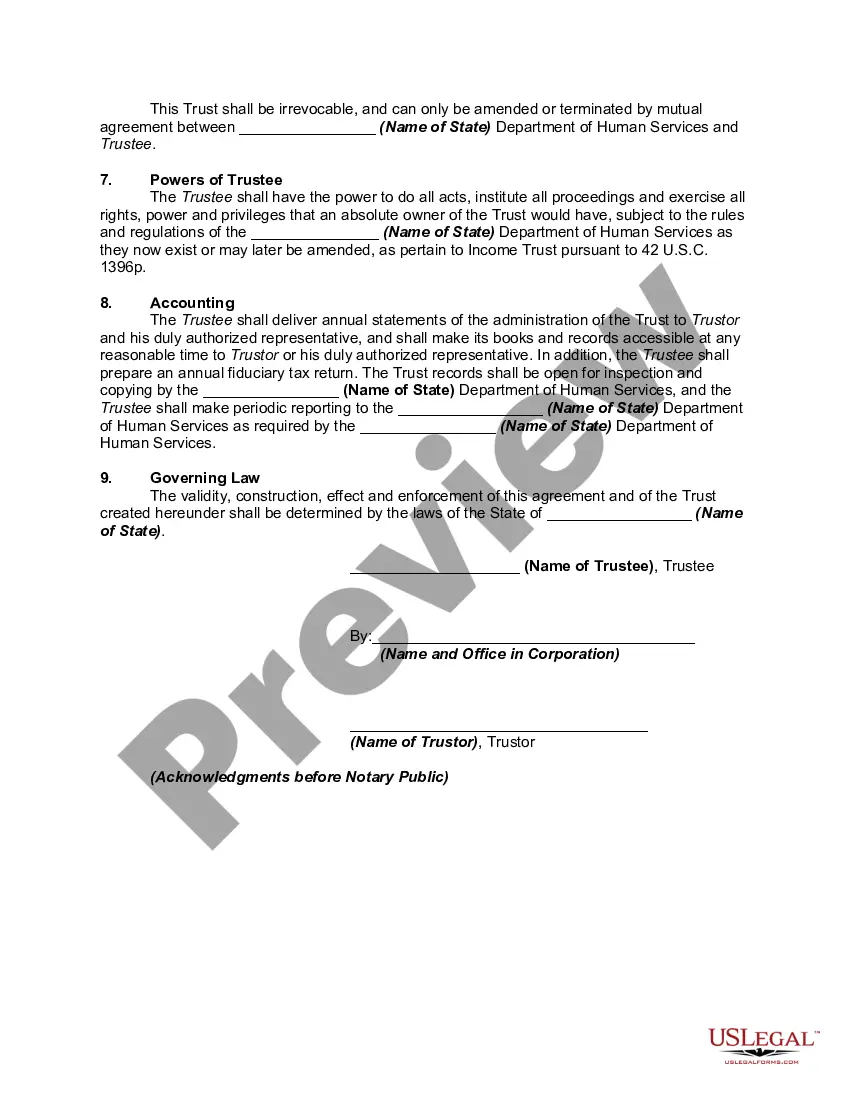
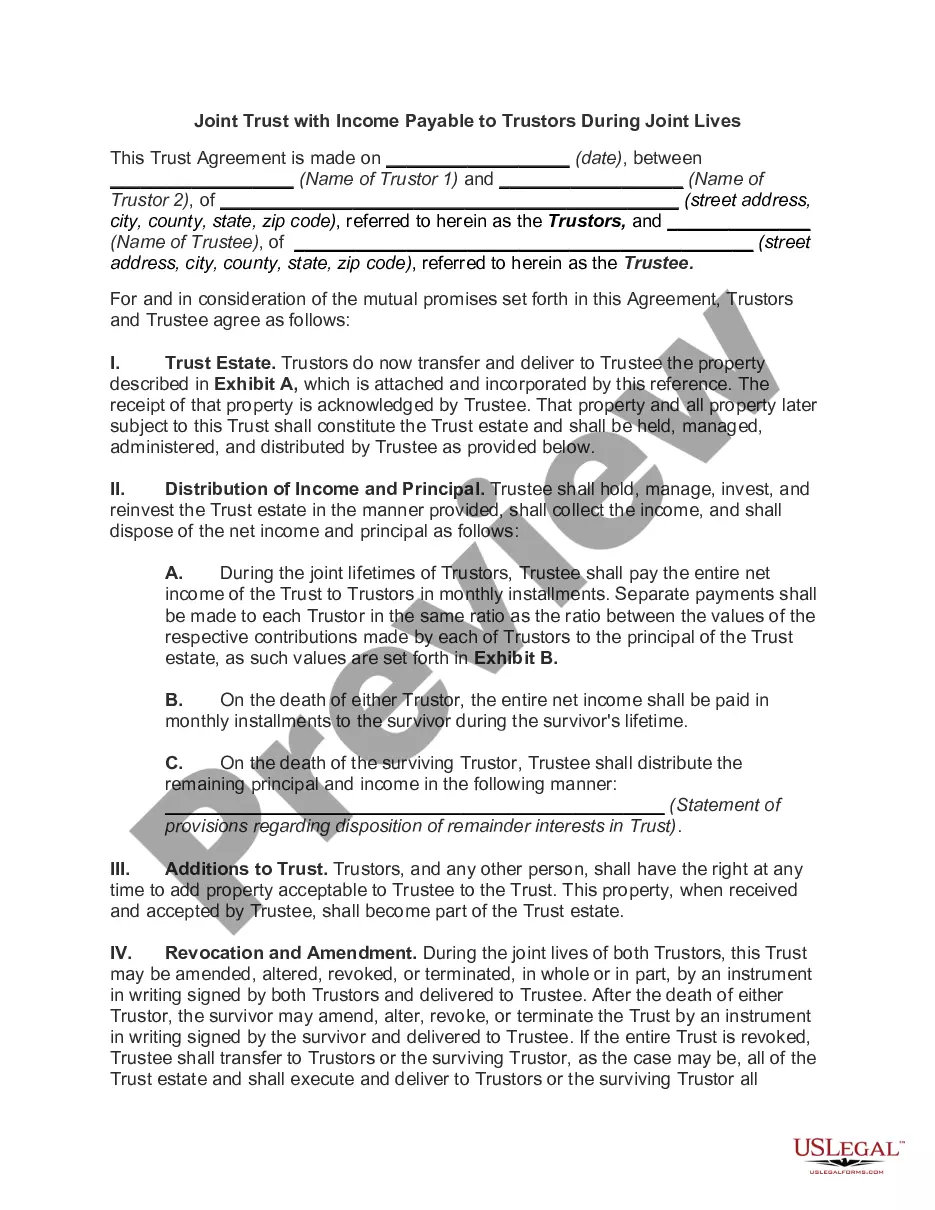

Get your form ready online
Our built-in tools help you complete, sign, share, and store your documents in one place.
Make edits, fill in missing information, and update formatting in US Legal Forms—just like you would in MS Word.
Download a copy, print it, send it by email, or mail it via USPS—whatever works best for your next step.
Sign and collect signatures with our SignNow integration. Send to multiple recipients, set reminders, and more. Go Premium to unlock E-Sign.
If this form requires notarization, complete it online through a secure video call—no need to meet a notary in person or wait for an appointment.
We protect your documents and personal data by following strict security and privacy standards.

Make edits, fill in missing information, and update formatting in US Legal Forms—just like you would in MS Word.

Download a copy, print it, send it by email, or mail it via USPS—whatever works best for your next step.

Sign and collect signatures with our SignNow integration. Send to multiple recipients, set reminders, and more. Go Premium to unlock E-Sign.

If this form requires notarization, complete it online through a secure video call—no need to meet a notary in person or wait for an appointment.

We protect your documents and personal data by following strict security and privacy standards.
Looking for another form?

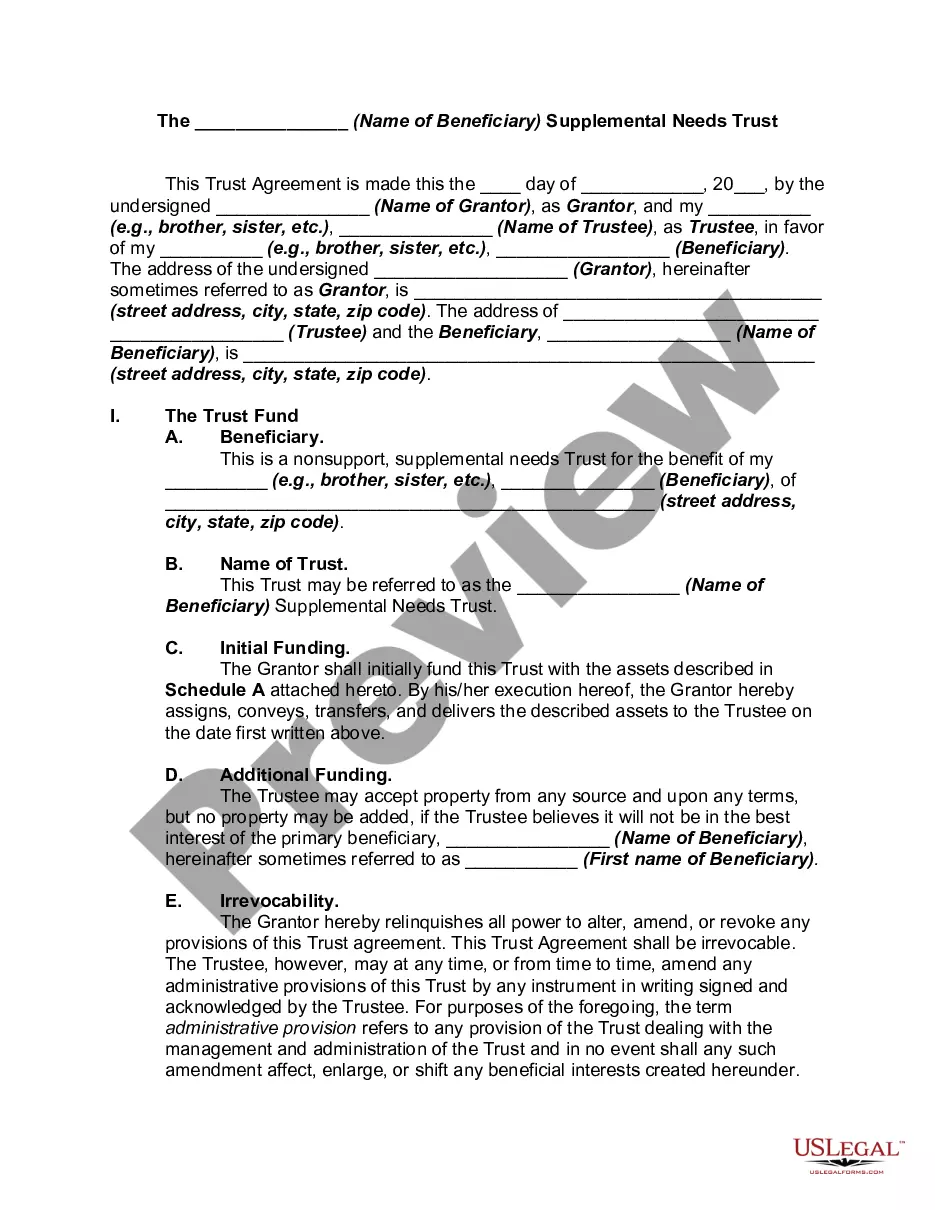
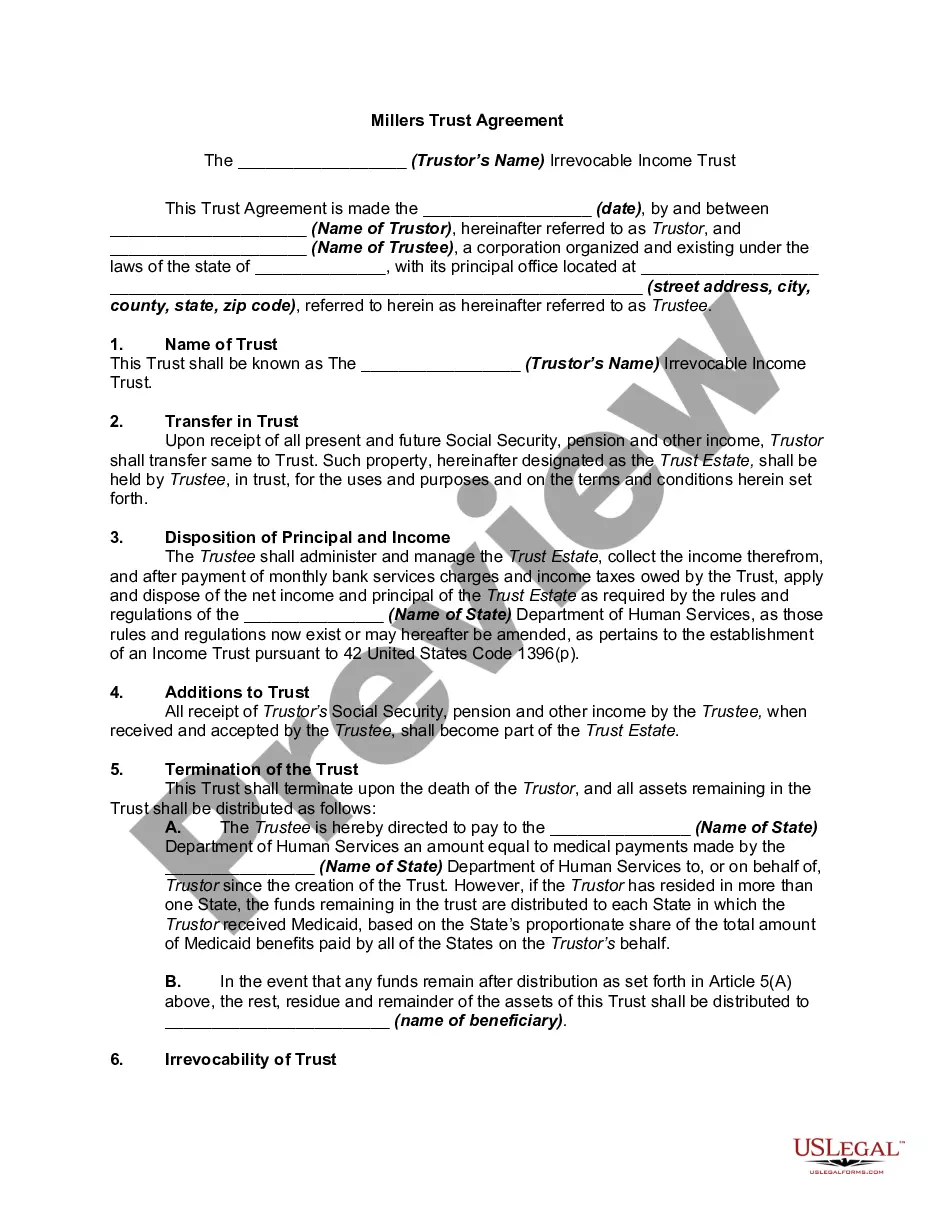
How to fill out Qualified Income Miller Trust?
- Begin by checking if you are an existing user. If yes, log in to your account and ensure your subscription is active. Download the required form by clicking the Download button.
- If you are a new user, start by previewing available forms. Look for the qualified trust caps contract for deed, ensuring it complies with your jurisdiction requirements.
- If the form isn't what you need, use the Search tab to explore alternative templates until you find the right fit.
- Proceed by clicking the Buy Now button on your selected document, then select an appropriate subscription plan and create an account for full access.
- Complete your order by providing payment information via credit card or PayPal.
- Now, download your document. It will be available for completion and can be accessed anytime in the My Forms section of your profile.
US Legal Forms not only offers a vast collection of forms but also ensures that you receive guidance from premium experts who can assist with form completion.
Start simplifying your legal processes today—visit US Legal Forms to access your qualified trust caps contract for deed!
Form popularity
FAQ
Another name for a contract for deed is a land contract or installment sale agreement. These terms reflect the structured payment system that characterizes a qualified trust caps contract for deed. If you are exploring options to secure homeownership, understanding these variations will help you navigate the real estate landscape more effectively.
A contract for deed is not identical to rent-to-own, but they share similarities in their goal of facilitating homeownership. With a qualified trust caps contract for deed, buyers agree to make regular payments toward owning the property while assuming ownership rights. It's essential to assess your needs and compare these options carefully to determine the best fit for you.
Rent-to-own and a qualified trust caps contract for deed are not the same, although they both aim to provide a pathway to homeownership. Rent-to-own involves a rental agreement with an option to buy, while a contract for deed involves direct payments towards ownership. Understanding these distinctions is vital when choosing the right option for your financial situation.
To record a contract for deed, you must file it with your local county recorder’s office or land registry office. This creates a public record of the transaction and protects your rights as a seller. Choosing a qualified trust caps contract for deed may streamline this process and ensure all legal formalities are satisfied efficiently.
To avoid capital gains tax on a land contract sale, you may need to structure the deal to take advantage of exemptions or defer taxes. This often involves selling the property in installments or considering the use of a qualified trust caps contract for deed. Consulting a tax professional or using strategies tailored to your situation can provide additional pathways to minimize tax impact.
Two main disadvantages of a contract for deed include the risk of losing your investment and limited seller protections. The buyer usually has no legal title until the contract is fulfilled, putting the seller at risk of losing their property if the buyer defaults. Utilizing a qualified trust caps contract for deed can help mitigate some of these risks by providing clearer agreements.
When reporting a contract for deed on taxes, you will typically report the interest income received on your tax return. You must also consider any capital gain on the sale of the property if it appreciates in value. Using a qualified trust caps contract for deed may simplify your reporting process and help clarify tax obligations related to these types of sales.
A beneficiary deed generally does not avoid capital gains tax. Instead, the value of the property is transferred to the beneficiary upon your passing. This means that the beneficiary may still face capital gains tax when they sell the property later. To ensure optimal tax benefits, consider how a qualified trust caps contract for deed can structure these transactions.
One significant danger of a qualified trust caps contract for deed is the possibility of losing the property without the formal foreclosure process. If the buyer misses payments, the seller can reclaim the property, often without prior notice. This reality underscores the importance of understanding the terms and maintaining open communication throughout the arrangement.
A qualified trust caps contract for deed can be beneficial for buyers who may not qualify for traditional financing. It offers an opportunity to invest in property while making manageable payments. However, buyers should assess their financial situation, understand the risks, and possibly seek guidance from platforms like uslegalforms to ensure a favorable outcome.