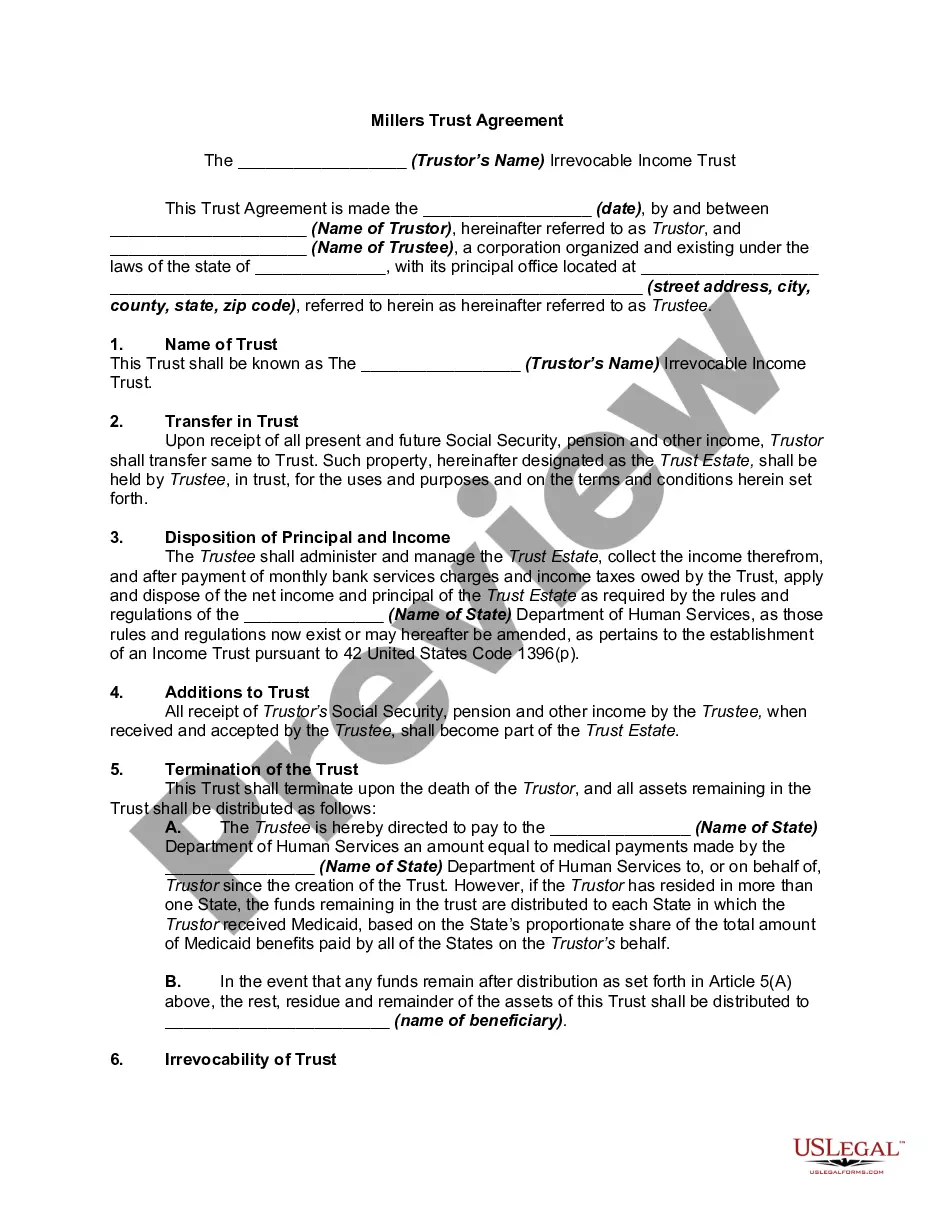
Qualified Income Trust Form Sample For A Bank
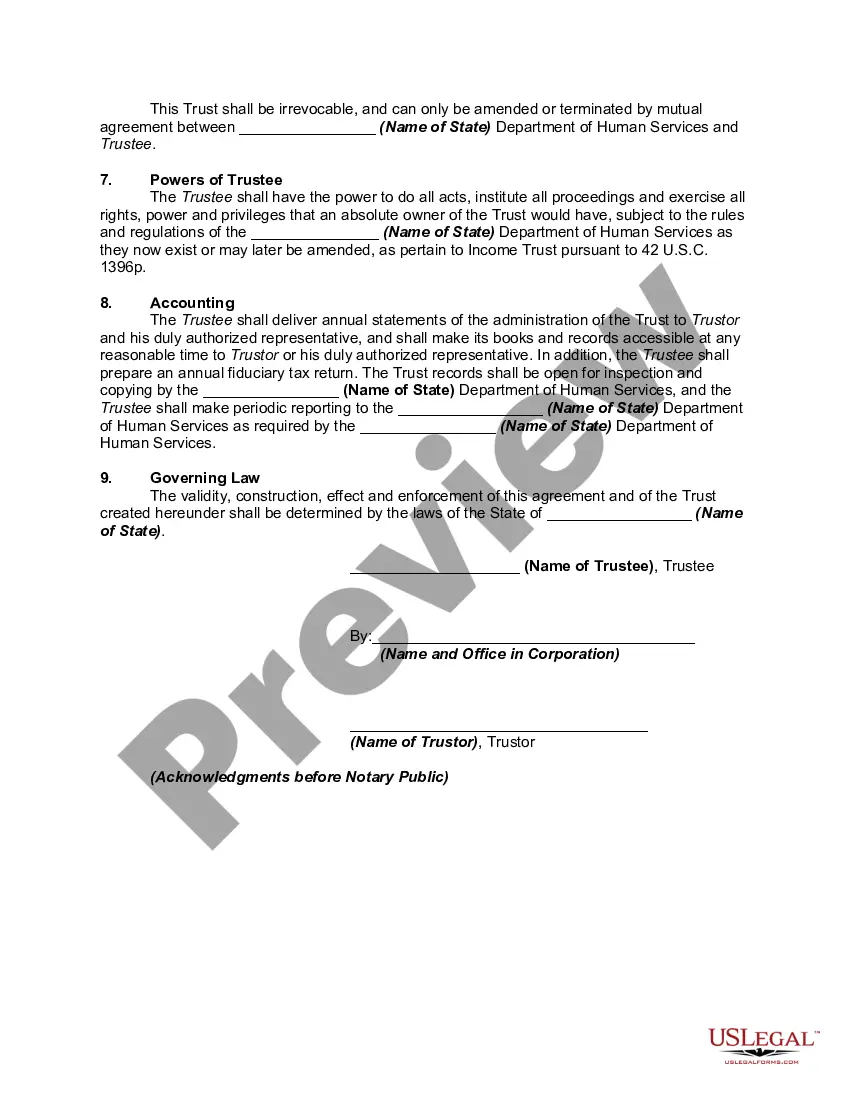
Description

Get your form ready online
Our built-in tools help you complete, sign, share, and store your documents in one place.
Make edits, fill in missing information, and update formatting in US Legal Forms—just like you would in MS Word.
Download a copy, print it, send it by email, or mail it via USPS—whatever works best for your next step.
Sign and collect signatures with our SignNow integration. Send to multiple recipients, set reminders, and more. Go Premium to unlock E-Sign.
If this form requires notarization, complete it online through a secure video call—no need to meet a notary in person or wait for an appointment.
We protect your documents and personal data by following strict security and privacy standards.

Make edits, fill in missing information, and update formatting in US Legal Forms—just like you would in MS Word.

Download a copy, print it, send it by email, or mail it via USPS—whatever works best for your next step.

Sign and collect signatures with our SignNow integration. Send to multiple recipients, set reminders, and more. Go Premium to unlock E-Sign.

If this form requires notarization, complete it online through a secure video call—no need to meet a notary in person or wait for an appointment.

We protect your documents and personal data by following strict security and privacy standards.
Looking for another form?








How to fill out Qualified Income Miller Trust?
- Log in to your US Legal Forms account if you're a returning user. Ensure your subscription is active to access the necessary forms.
- If this is your first visit, browse the available templates. Check the Preview mode and read the form descriptions to confirm it meets your needs.
- Using the Search tab, locate alternative templates if the initial one doesn’t align with your requirements.
- Once you're satisfied, click on the Buy Now button and select your preferred subscription plan, creating an account to unlock more resources.
- Complete your purchase by entering your payment details using a credit card or PayPal to finalize the transaction.
- Download your qualified income trust form sample directly to your device. You can always revisit it in the My Forms section of your account.
With US Legal Forms, accessing legal documents is not only convenient but also reliable. Their extensive collection ensures you have the right forms tailored to your specific legal needs.
Don't hesitate to start your process today. Visit US Legal Forms to streamline your legal documentation and empower your financial decisions.
Form popularity
FAQ
To set up a qualified income trust, begin by drafting a trust agreement that complies with state and federal laws. It is essential to use a qualified income trust form sample for a bank to guide you through the process. Once your trust is established, you need to fund it appropriately, ensuring you follow regulations to maintain its qualified status. Consulting a legal expert can help simplify this process and ensure that everything is correctly executed.
Setting up a trust for income involves several straightforward steps. Start by deciding the purpose of the trust and the beneficiaries it will serve. Next, you can utilize a qualified income trust form sample for a bank, which provides a clear template for creating the trust agreement. Finally, consider working with a financial advisor or legal professional to ensure that your trust meets all necessary legal requirements.
To establish a qualified income trust, you must meet several key requirements. First, the trust must be irrevocable and specifically designed to hold income for supplemental security income purposes. Additionally, you need to include a qualified income trust form sample for a bank, which outlines the details of the trust's structure and administration. Meeting these criteria ensures compliance with relevant regulations.
An example of an income trust is a trust that holds funds for a person's medical expenses or long-term care. This type of trust can specify how the income generated is distributed, focusing on the beneficiary’s needs. Utilizing a qualified income trust form sample for a bank can help you create a solid foundation for such trusts.
Creating a qualified income trust involves outlining your income and assets in a specific legal document. First, you need to understand your state's Medicaid rules. After that, you can use a qualified income trust form sample for a bank as a template, ensuring all necessary information is included to meet legal requirements.
A Qualified Income Trust (QIT) bank account helps individuals qualify for Medicaid by placing excess income in a trust. This account allows you to manage your income in a way that complies with Medicaid requirements, ensuring you meet eligibility criteria. A qualified income trust form sample for a bank can guide you through the setup process, making it easier to manage your funds.
In Ohio, a Qualified Income Trust (QIT) operates similarly to other states, allowing individuals to uphold Medicaid eligibility by segregating excess income. You need to complete a Qualified income trust form sample for a bank to create this account. The trust collects income and may cover costs related to medical care, thus aiding in financial planning. Understanding the specific Ohio regulations ensures that your QIT functions effectively within the state’s Medicaid framework.
A bank QIT is a specific type of Qualified Income Trust established at a banking institution. Funding a QIT at a bank involves using a Qualified income trust form sample for a bank to ensure compliance with legal requirements. This type of account helps individuals manage their income to qualify for Medicaid without loss of necessary funds. By working with a bank, you gain the benefit of professional oversight for managing your trust.
A Qualified Income Trust (QIT) serves to preserve your eligibility for Medicaid by setting aside excess income. The term encompasses the legal structure that helps individuals manage their finances within the limits imposed by Medicaid. With a Qualified income trust form sample for a bank, you can easily create an account tailored to your financial needs. This trust plays a crucial role in safeguarding your asset eligibility while also addressing healthcare expenses.
A Qualified Income Trust (QIT) account allows individuals to set aside income that exceeds state Medicaid limits. By filling out a Qualified income trust form sample for a bank, you can manage your income effectively while meeting Medicaid eligibility requirements. Essentially, the trust collects income and uses it to cover medical expenses or care costs. This setup ensures you qualify for assistance while keeping your financial health in check.