Qualified Income Trust Caps Complete With Ira
Description

Get your form ready online
Our built-in tools help you complete, sign, share, and store your documents in one place.
Make edits, fill in missing information, and update formatting in US Legal Forms—just like you would in MS Word.
Download a copy, print it, send it by email, or mail it via USPS—whatever works best for your next step.
Sign and collect signatures with our SignNow integration. Send to multiple recipients, set reminders, and more. Go Premium to unlock E-Sign.
If this form requires notarization, complete it online through a secure video call—no need to meet a notary in person or wait for an appointment.
We protect your documents and personal data by following strict security and privacy standards.

Make edits, fill in missing information, and update formatting in US Legal Forms—just like you would in MS Word.

Download a copy, print it, send it by email, or mail it via USPS—whatever works best for your next step.

Sign and collect signatures with our SignNow integration. Send to multiple recipients, set reminders, and more. Go Premium to unlock E-Sign.

If this form requires notarization, complete it online through a secure video call—no need to meet a notary in person or wait for an appointment.

We protect your documents and personal data by following strict security and privacy standards.
Looking for another form?







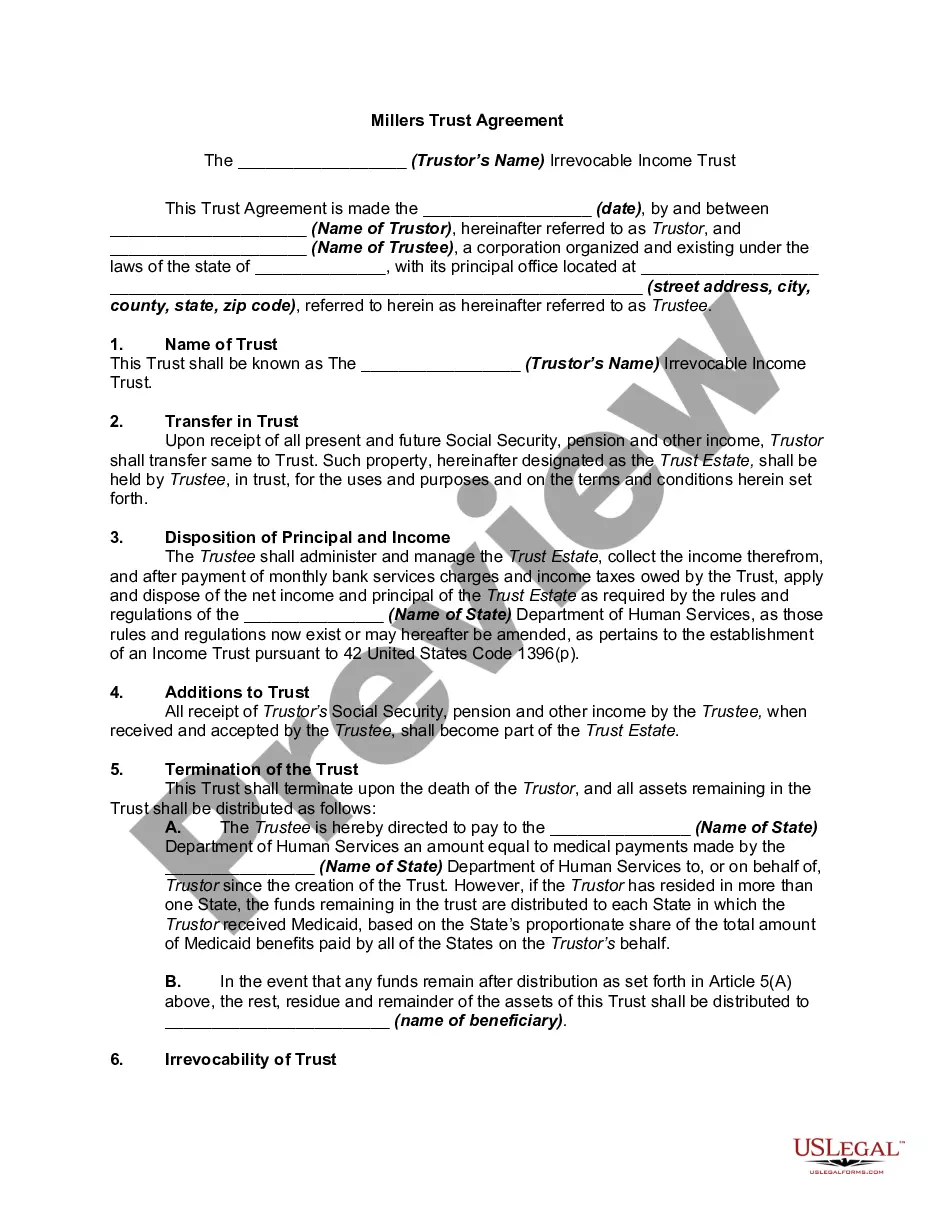
How to fill out Qualified Income Miller Trust?
- Log into your US Legal Forms account if you're a returning user and click the Download button to get your form. Confirm that your subscription is active; renew it if necessary.
- For first-time users, start by browsing the form library. Check the Preview mode and form description to ensure you select the correct document that fits your needs and complies with local regulations.
- If you encounter any discrepancies, use the Search feature to find the appropriate template. Ensure it meets your criteria before proceeding.
- Once you've found the right form, click the Buy Now button and select a subscription plan that works for you. You will need to create an account for full access.
- After making your purchase, enter your payment information using a credit card or PayPal to complete the transaction.
- Download the chosen template and save it to your device. You can access it anytime through the My Forms section of your profile.
By leveraging US Legal Forms, you can efficiently prepare all necessary documents with just a few clicks. The platform's extensive resources and user-friendly interface help ensure that your legal needs are met without hassle.
Take action today and explore the comprehensive benefits of US Legal Forms to simplify your legal documentation process!
Form popularity
FAQ
To set up a Qualified Income Trust account, start by gathering the necessary documents, such as your income statements and identification. Next, decide on a financial institution that meets your needs and can accommodate a Qualified Income Trust caps complete with IRA. After that, fill out the required forms to create the trust and establish a separate bank account for it. Finally, make sure to consult with a legal professional to ensure your trust aligns with existing laws and meets your financial goals.
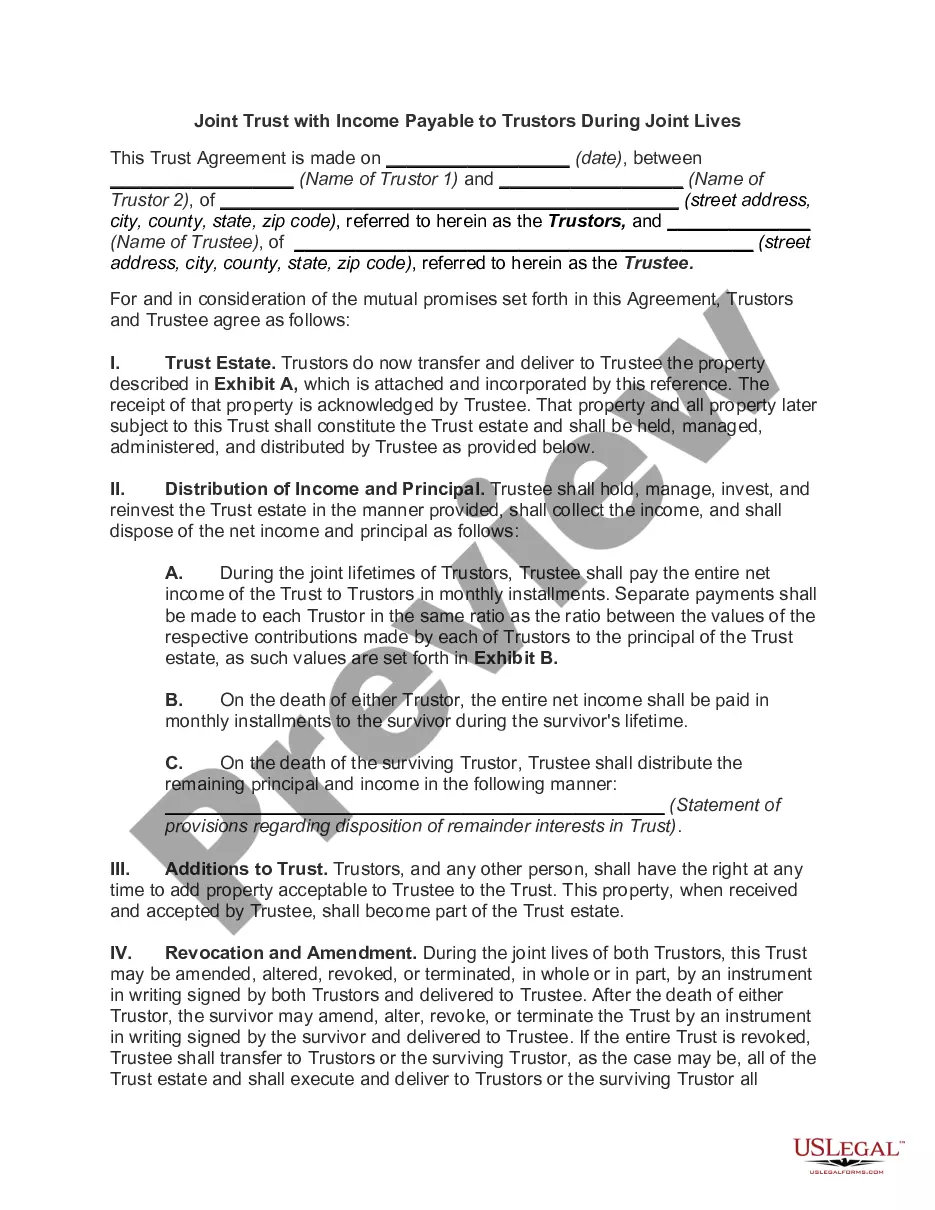
To set up a special needs trust account, start by defining the purpose and beneficiaries of the trust. Consult with an attorney to draft the trust document, ensuring it complies with all legal requirements. Additionally, consider the impact of qualified income trust caps complete with ira on your financial strategy. Tools such as US Legal Forms can provide valuable resources and templates to help you navigate setting up the trust effectively.
Setting up an income cap trust involves several key steps to ensure proper compliance. First, you should identify your eligibility for Medicaid and the resources you wish to protect through the trust. Next, document the trust's purpose, and designate a trustee to manage the assets, keeping in mind the implications of qualified income trust caps complete with ira. Many find it helpful to work with platforms like US Legal Forms for guidance and templates that simplify this process.
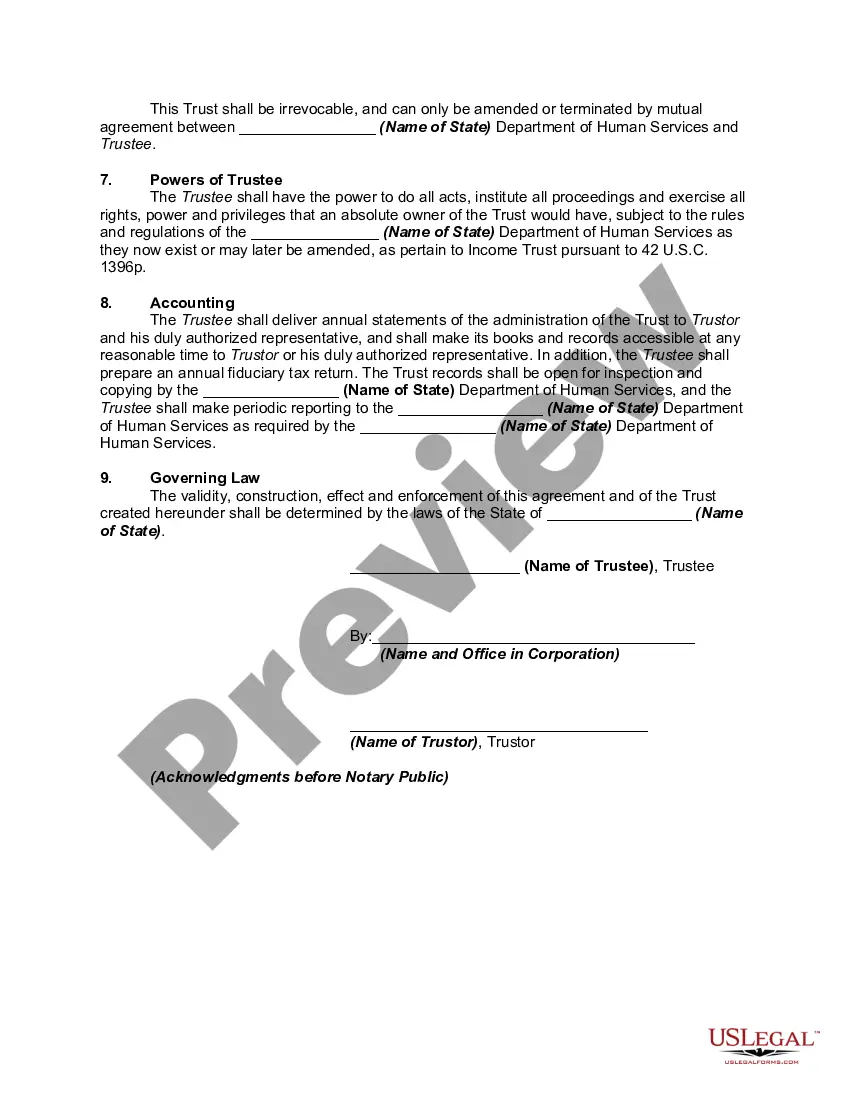
The grantor of a qualified income trust (QIT) is the individual who establishes the trust for their benefit. This person contributes assets or income into the trust to meet the requirements for Medicaid eligibility. It's important to understand that while the grantor retains some control over the trust, it must be structured correctly, especially when dealing with qualified income trust caps complete with ira. Consulting with a legal professional can ensure the trust complies with regulations.
Setting up a Qualified Income Trust (QIT) account requires several steps. First, choose a financial institution familiar with qualified income trust caps complete with ira. Next, you’ll need to complete necessary paperwork, including a trust agreement. Engaging with uslegalforms can provide you with the documents and guidance needed to smoothly establish your QIT account.
You need to file Form 5329 if you owe additional taxes on qualified retirement plans or if you need to report certain distributions. If you manage a trust or benefit from qualified income trust caps complete with ira, this form may apply. Ensuring accurate filing can prevent unnecessary penalties. Always consult with a tax advisor to determine your specific obligations.
Absolutely, trust income must be reported to the IRS. This is crucial for maintaining compliance with tax laws, especially when dealing with qualified income trust caps complete with ira. Failing to report can lead to penalties, so it's wise to be diligent in your reporting. Utilizing platforms like uslegalforms can simplify the process of tracking and reporting trust income.
For a trust to be required to file taxes, it generally must have a gross income of $600 or more. This threshold applies to many types of trusts, including qualified income trust caps complete with ira. It's important to monitor your trust's income regularly to ensure you meet this requirement and file appropriately. Seeking guidance from a tax professional can also help clarify your obligations.
Yes, you must report trust income on your tax return. Even if the income remains within a qualified income trust caps complete with ira, it's essential to ensure compliance with tax regulations. Reporting all sources of income helps avoid potential issues with the IRS. Be sure to keep accurate records of your income.
Trust income is typically not considered earned income. Earned income comes from work, whereas trust income is generated from investments and other financial assets. Understanding this distinction is important, especially when navigating qualified income trust caps complete with ira. You may want to consult a financial advisor for clarity on your specific situation.