Qualified Income Trust Caps Complete For The Future
Description

Get your form ready online
Our built-in tools help you complete, sign, share, and store your documents in one place.
Make edits, fill in missing information, and update formatting in US Legal Forms—just like you would in MS Word.
Download a copy, print it, send it by email, or mail it via USPS—whatever works best for your next step.
Sign and collect signatures with our SignNow integration. Send to multiple recipients, set reminders, and more. Go Premium to unlock E-Sign.
If this form requires notarization, complete it online through a secure video call—no need to meet a notary in person or wait for an appointment.
We protect your documents and personal data by following strict security and privacy standards.

Make edits, fill in missing information, and update formatting in US Legal Forms—just like you would in MS Word.

Download a copy, print it, send it by email, or mail it via USPS—whatever works best for your next step.

Sign and collect signatures with our SignNow integration. Send to multiple recipients, set reminders, and more. Go Premium to unlock E-Sign.

If this form requires notarization, complete it online through a secure video call—no need to meet a notary in person or wait for an appointment.

We protect your documents and personal data by following strict security and privacy standards.
Looking for another form?









How to fill out Qualified Income Miller Trust?
- Log in to your US Legal Forms account if you're a returning user. Ensure your subscription is active to avoid interruptions in service.
- For first-time users, begin by exploring the extensive library. Use the Preview mode to verify that the form meets your requirements and adheres to your local jurisdiction.
- If you need a different form, simply utilize the Search tab for alternative templates, then select the one that fits your needs.
- Proceed to purchase the document by clicking on the Buy Now button. Choose your preferred subscription plan and create an account to access all resources.
- Complete your payment using a credit card or PayPal. This step ensures you gain full access to the essential tools for document preparation.
- Download your selected form to your device for easy access. You can also find it anytime in the My Forms section of your profile.
Using US Legal Forms simplifies the process of managing legal documents, helping you save time and reduce stress. Their extensive library and access to premium experts ensure that you can create legally sound documents tailored to your needs.
Start today and experience the efficiency of US Legal Forms for all your legal documentation needs!
Form popularity
FAQ
Absolutely, any income generated by a trust must be reported to the IRS. This includes income from a Qualified Income Trust, as it affects eligibility for certain benefits. Understanding your reporting obligations is crucial for effective management and compliance with qualified income trust caps complete for the future.
A trust must file taxes if it has gross income of at least $600 for the year. This threshold applies to many types of trusts, including Qualified Income Trusts. Monitoring your income levels will ensure compliance with qualified income trust caps complete for the future.
Trust income is typically not considered earned income. Instead, it falls under unearned income, which comes from investments or property. Understanding this distinction is essential for managing your finances and complying with qualified income trust caps complete for the future.
Yes, you need to report trust income on your tax return. Generally, a Qualified Income Trust must file a tax return if it has taxable income. Understanding the implications of qualified income trust caps complete for the future can help ensure you comply with tax laws while managing your finances effectively.
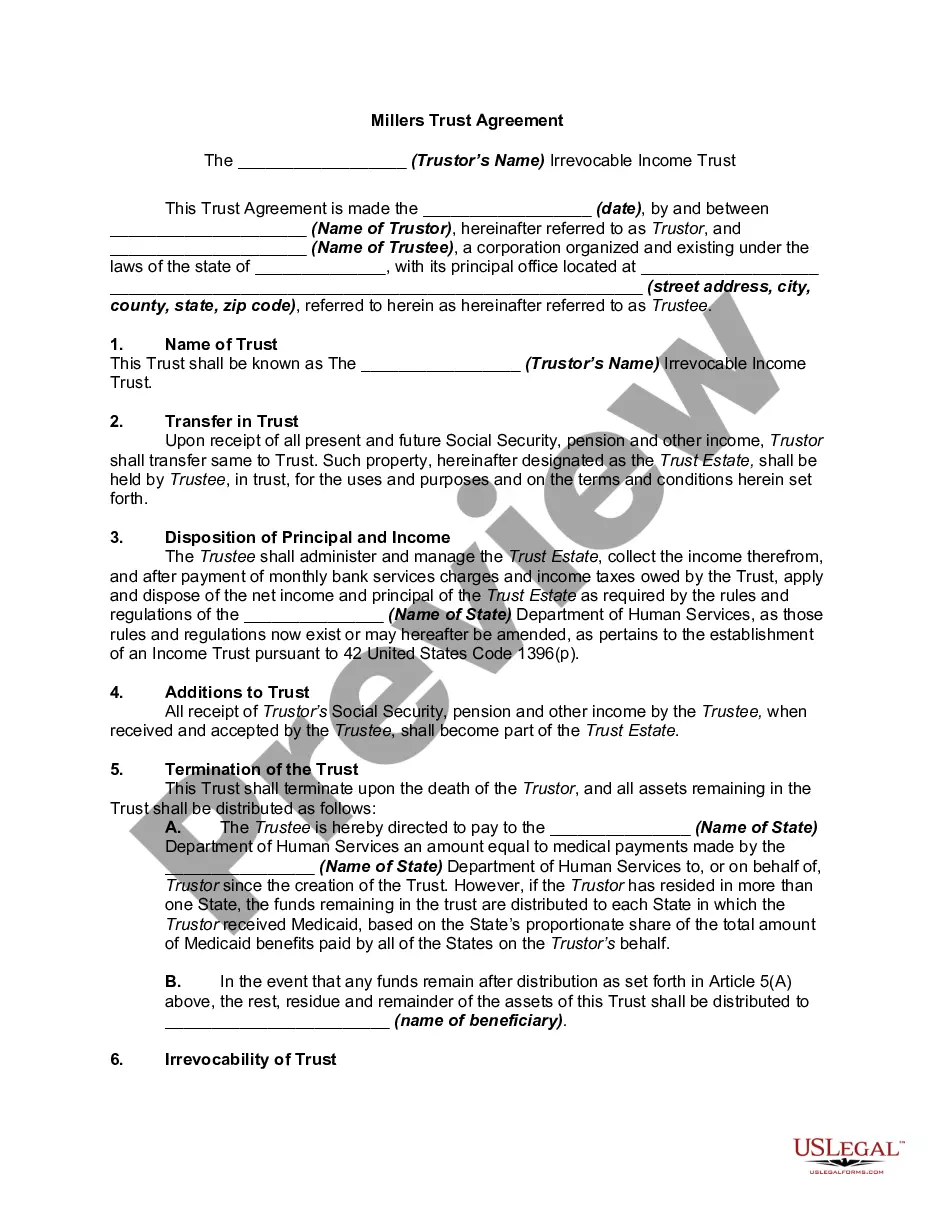
Setting up a Qualified Income Trust (QIT) involves a few clear steps. First, choose a bank or financial institution to act as the trustee for your trust. Next, create a detailed trust document, ensuring it meets the requirements for qualified income trust caps complete for the future. Finally, fund the trust by depositing income into it regularly, allowing you to protect your eligibility for Medicaid.
To fund a Qualified Income Trust (QIT), you should begin by depositing your income into the trust account. Next, ensure that your income does not exceed the cap set for the Qualified Income Trust caps complete for the future. You can transfer funds from your checking account, and it's essential to keep accurate records of all transactions. Additionally, using the US Legal Forms platform can simplify the process, providing you with reliable templates and guidance.
In New Jersey, a qualified income trust helps individuals with income that exceeds Medicaid limits qualify for benefits. The trust holds income above this limit, allowing beneficiaries to use their remaining income for living expenses. Proper management and compliance with New Jersey's specific regulations are vital. With clear guidance from platforms like uslegalforms, you can navigate the qualified income trust caps complete for the future efficiently.
Funds within a qualified income trust can be used to cover qualified medical expenses, housing costs, and other essential needs. Specifically, these expenses should meet Medicaid requirements to keep your eligibility intact. You can also set up a budgeting plan that clearly outlines allowable expenses. This way, you ensure your qualified income trust caps complete for the future serve you best.
A qualified income trust must adhere to specific guidelines, including income limits and permissible expenditures. These trusts are designed to ensure the beneficiary meets eligibility requirements for Medicaid. It is critical to keep accurate records and comply with state regulations. Knowing the rules helps you utilize the qualified income trust caps complete for the future efficiently.
When an individual with a qualified income trust passes away, the trust typically becomes part of the deceased's estate. The funds in the trust are subject to any applicable estate taxes. It is essential to review the terms of the trust and state laws, as this may affect distributions. Understanding these details helps you plan effectively, ensuring qualified income trust caps complete for the future.