Qit Account After Death For 5 Years
Description

Get your form ready online
Our built-in tools help you complete, sign, share, and store your documents in one place.
Make edits, fill in missing information, and update formatting in US Legal Forms—just like you would in MS Word.
Download a copy, print it, send it by email, or mail it via USPS—whatever works best for your next step.
Sign and collect signatures with our SignNow integration. Send to multiple recipients, set reminders, and more. Go Premium to unlock E-Sign.
If this form requires notarization, complete it online through a secure video call—no need to meet a notary in person or wait for an appointment.
We protect your documents and personal data by following strict security and privacy standards.

Make edits, fill in missing information, and update formatting in US Legal Forms—just like you would in MS Word.

Download a copy, print it, send it by email, or mail it via USPS—whatever works best for your next step.

Sign and collect signatures with our SignNow integration. Send to multiple recipients, set reminders, and more. Go Premium to unlock E-Sign.

If this form requires notarization, complete it online through a secure video call—no need to meet a notary in person or wait for an appointment.

We protect your documents and personal data by following strict security and privacy standards.
Looking for another form?










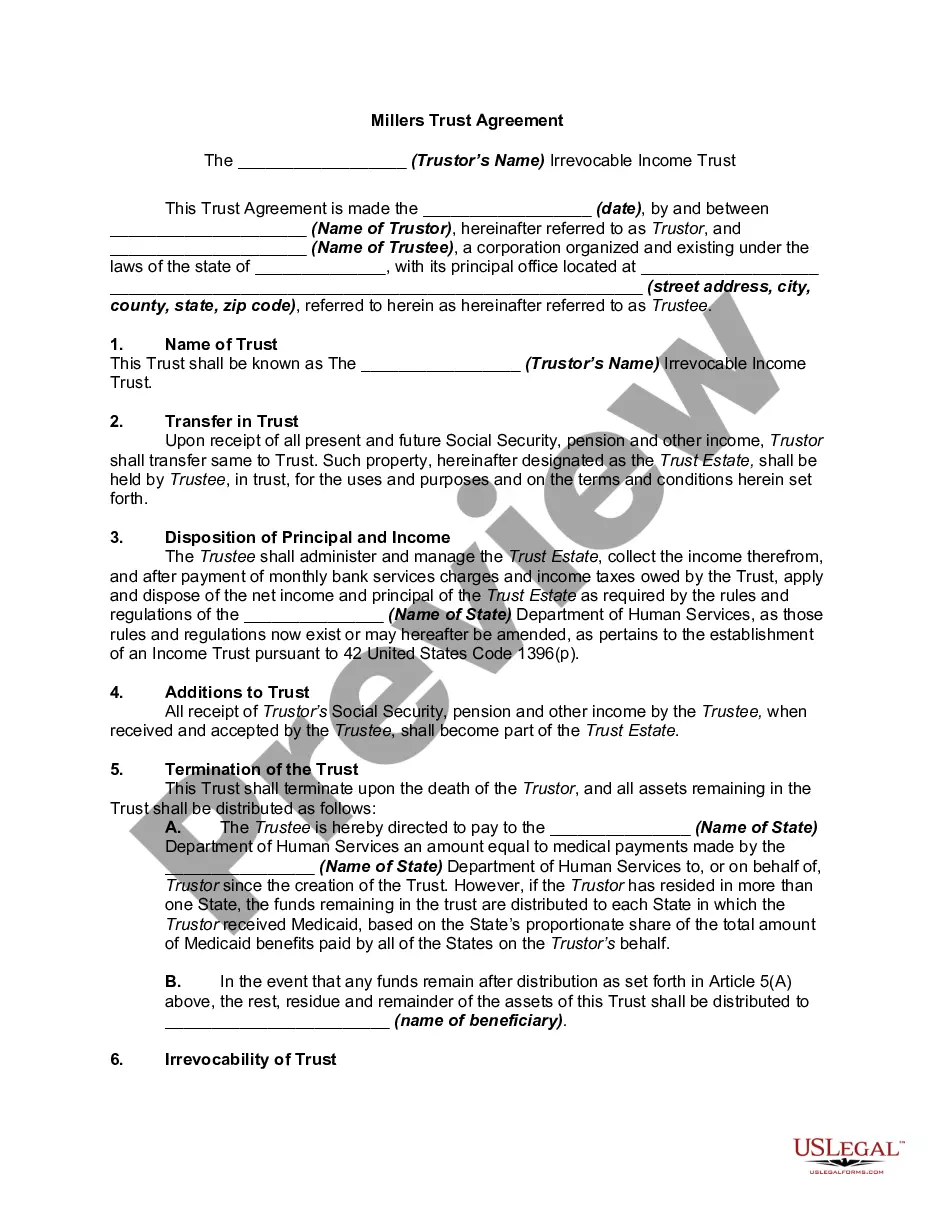
How to fill out Qualified Income Miller Trust?
- Log in to your account if you're a returning user. Ensure your subscription is active; renew it if necessary.
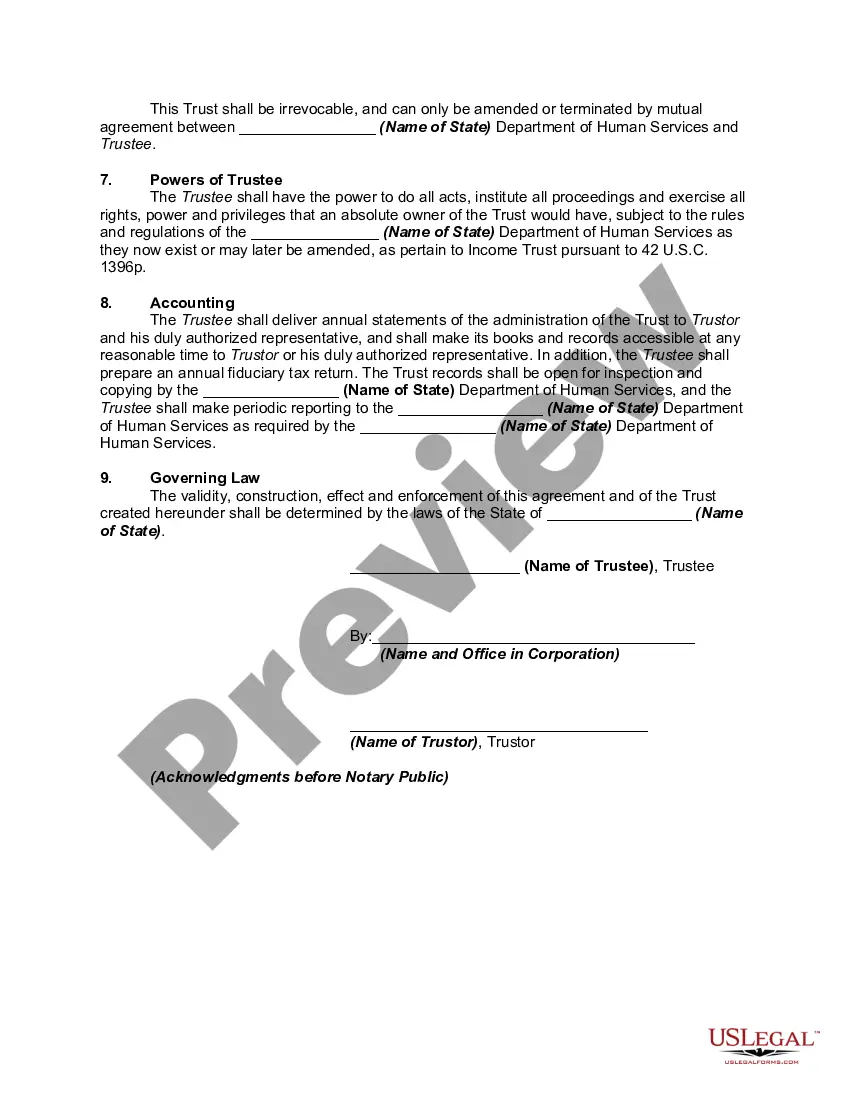
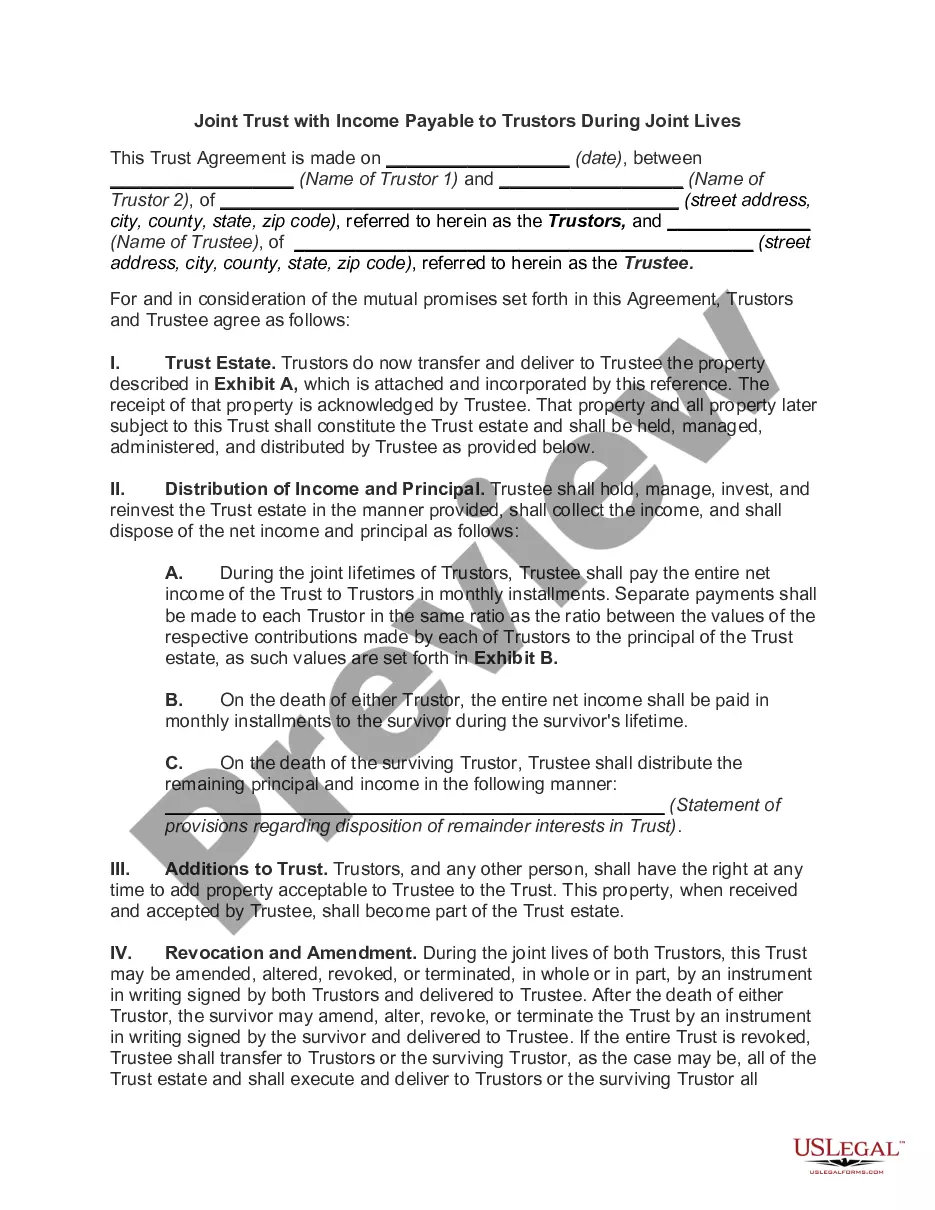
- Familiarize yourself with the form by checking the preview mode and description to confirm it meets your needs.
- Should you need a different document, utilize the search function to find the form that complies with your local jurisdiction.
- Purchase the required document by selecting your preferred subscription plan and registering for access to the vast library.
- Complete your purchase using credit card or PayPal, ensuring secure payment.
- Download the completed document and save it to your device to access it anytime via the My Forms section.
US Legal Forms empowers you with more than just documents; we provide a comprehensive resource for both individuals and attorneys, ensuring that every legal form you need is at your fingertips.
Start simplifying your legal processes today with US Legal Forms!
Form popularity
FAQ
Yes, a Miller trust is required to file a tax return, typically using IRS Form 1041, which covers income generated within the trust. This is vital for maintaining compliance with federal tax regulations. When managing a Qit account after death for 5 years, understanding these tax obligations becomes essential for your beneficiaries. Services like uslegalforms can provide guidance in these areas.
To establish a Miller trust, begin by drafting the trust document that outlines its rules and objectives. Ensure that the trust allows for income to be directed toward essential expenses without impacting eligibility for benefits. After setting it up, maintaining accurate records will help you manage the Qit account after death for 5 years effectively. Consulting legal resources or platforms like uslegalforms can streamline this process.
Setting up a trust account after death involves several steps to ensure it aligns with your financial goals. You need to first identify assets and determine who will manage the trust. Next, consider the terms of the Miller trust and how it integrates with a Qit account after death for 5 years. Utilizing a service like uslegalforms can facilitate the necessary legal documents to establish the trust effectively.
While you do not strictly need a lawyer to set up a Miller trust, consulting one can significantly ease the process. A lawyer can ensure that you meet all legal requirements and draft the trust correctly. They can also provide guidance on how to manage a Qit account after death for 5 years, ensuring that your trust serves its intended purpose. Using a platform like uslegalforms can provide additional support in creating the necessary documentation.
You might need a Miller trust to manage your income effectively for eligibility for certain benefits. This trust allows you to set aside income outside of your personal resources, which helps in qualifying for programs like Medicaid. Managing a Qit account after death for 5 years can also simplify asset distribution according to your wishes. Understanding these benefits can aid in planning your estate.
To close your QIT account in Ohio, you need to complete any required documentation and settle any outstanding obligations. Typically, this process involves a review by your attorney to ensure compliance with state laws. If you require assistance or a streamlined process, uslegalforms can provide necessary resources to guide you through effectively closing your Qit account after death for 5 years.
The primary beneficiary of a QIT is usually specified within the trust documentation and can vary based on the intent of the grantor. Generally, the individual or entity designated will receive the benefits from the trust. It is essential to clearly define these beneficiaries to avoid complications, particularly in light of a Qit account after death for 5 years.
Primary beneficiaries of a trust are the individuals or entities designated to receive benefits from the trust's assets. This can include family members, friends, or charitable organizations. Structuring your trust effectively ensures that your assets are distributed according to your wishes, contributing to peace of mind regarding your Qit account after death for 5 years.
The beneficiary of a qualified annuity is often defined by the annuity contract and can include individuals such as a spouse or children. Once the annuitant passes away, these funds will transfer to the beneficiary for their use. Just as with other financial instruments, recognizing the importance of naming beneficiaries can greatly impact your overall financial planning, especially when considering your Qit account after death for 5 years.
To fund a QIT, you will typically need to transfer assets into the trust to meet the funding requirements. Common options include directing income sources or transferring other funds from savings or investments. It is recommended to consult with a financial advisor or estate planner to effectively manage the funding process, especially when planning for your Qit account after death for 5 years.