Qit Account After Death For 30 Days
Description
Get your form ready online
Our built-in tools help you complete, sign, share, and store your documents in one place.
Make edits, fill in missing information, and update formatting in US Legal Forms—just like you would in MS Word.
Download a copy, print it, send it by email, or mail it via USPS—whatever works best for your next step.
Sign and collect signatures with our SignNow integration. Send to multiple recipients, set reminders, and more. Go Premium to unlock E-Sign.
If this form requires notarization, complete it online through a secure video call—no need to meet a notary in person or wait for an appointment.
We protect your documents and personal data by following strict security and privacy standards.

Make edits, fill in missing information, and update formatting in US Legal Forms—just like you would in MS Word.

Download a copy, print it, send it by email, or mail it via USPS—whatever works best for your next step.

Sign and collect signatures with our SignNow integration. Send to multiple recipients, set reminders, and more. Go Premium to unlock E-Sign.

If this form requires notarization, complete it online through a secure video call—no need to meet a notary in person or wait for an appointment.

We protect your documents and personal data by following strict security and privacy standards.
Looking for another form?









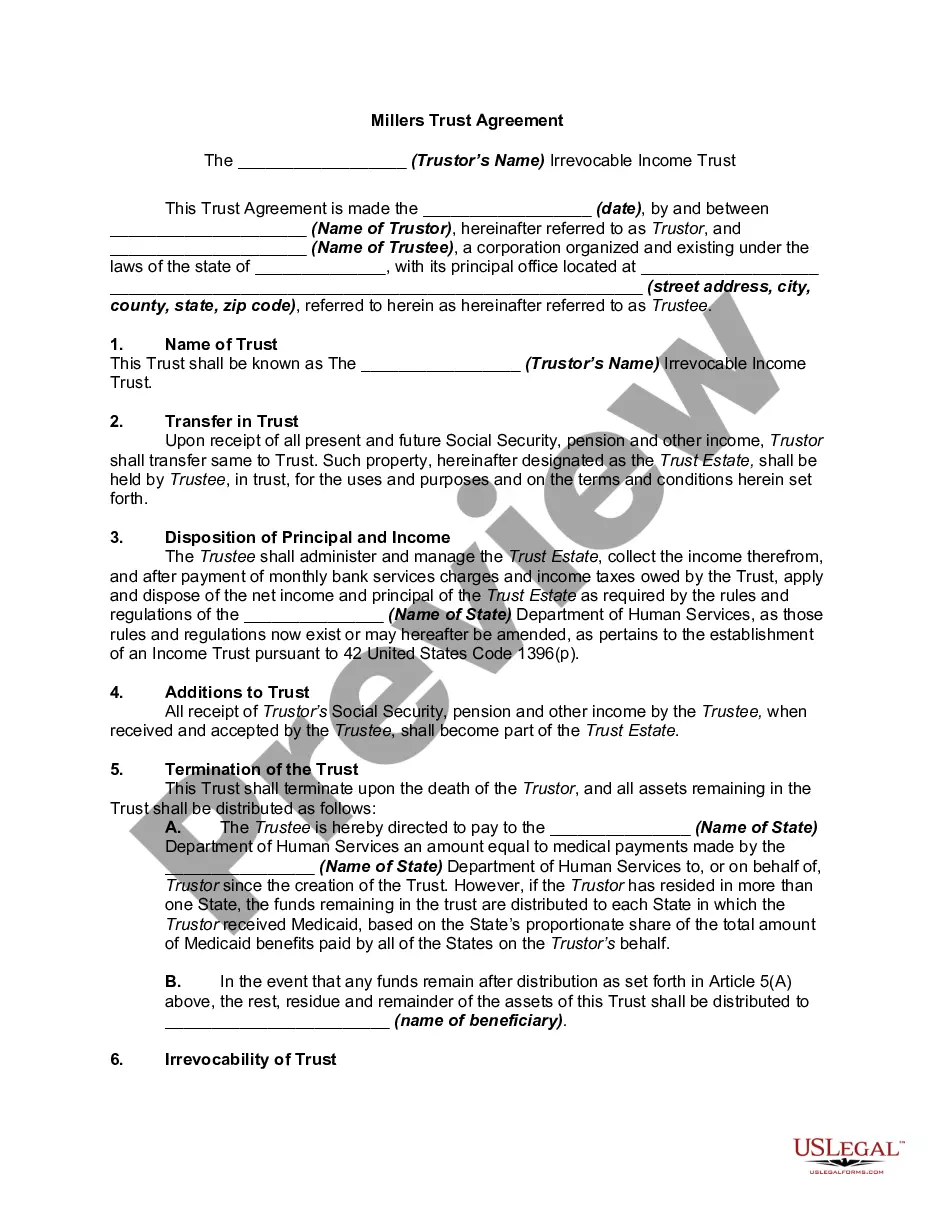
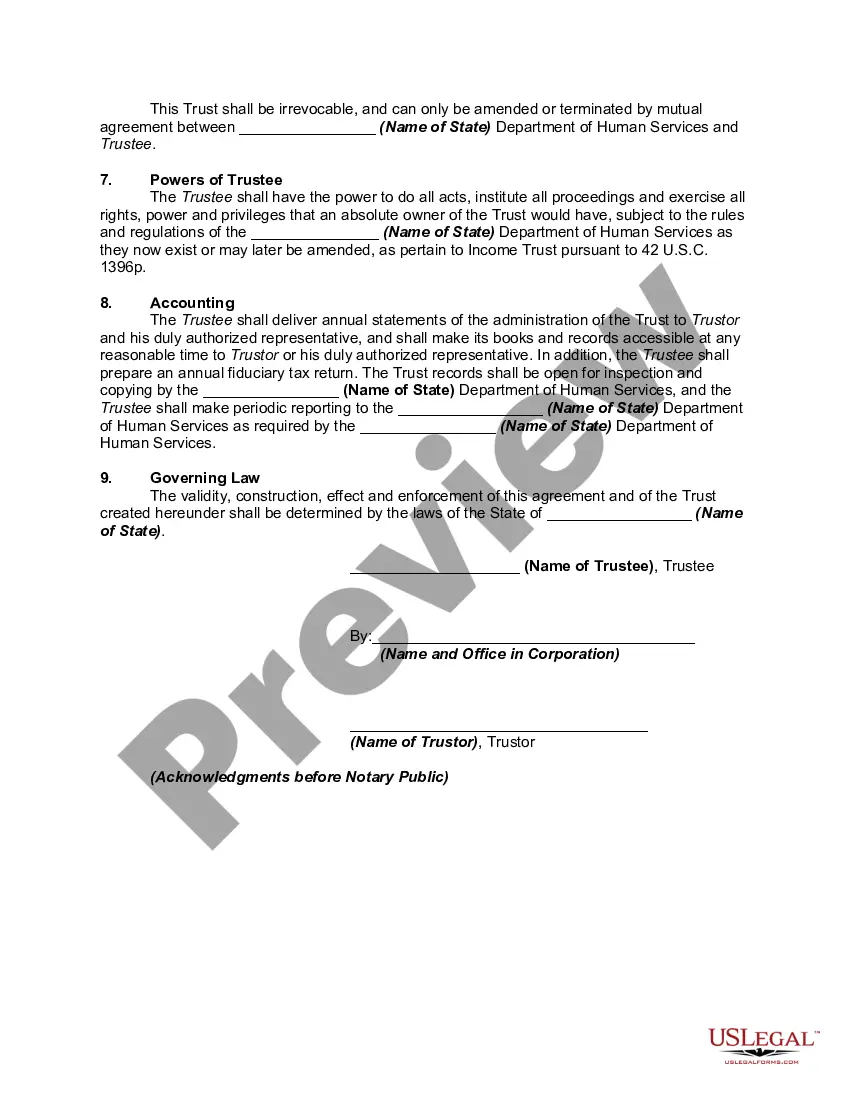
How to fill out Qualified Income Miller Trust?
- Log in to your US Legal Forms account if you are already a user. Ensure that your subscription is still active to access necessary documents.
- If you're new to US Legal Forms, start by reviewing the available templates to find one that meets your requirements. Make sure it aligns with your local law.
- Search for any needed templates that may not be readily available. Utilize the search feature to locate forms applicable to your situation.
- Select the document by clicking the 'Buy Now' button. Choose a suitable subscription plan and create an account to unlock access to the forms library.
- Complete your purchase securely using either your credit card or PayPal account. Make sure all details are accurate.
- Download the document and save it to your device. You can access it anytime later through the 'My Forms' section in your profile.
In summary, handling a Qit account after death within the allotted time can be easier with the right tools. US Legal Forms empowers individuals by providing a vast collection of legal templates, ensuring that you have access to the most reliable resources.
Start managing your legal needs today by visiting US Legal Forms and discover how they can facilitate your document completion process.
Form popularity
FAQ
A trust account after death is a financial tool used to manage and distribute assets in line with the deceased's wishes. These accounts can help avoid probate and ensure that funds are released in a structured manner. If you need to manage a deceased's finances effectively, consider establishing a Qit account after death for 30 days to handle initial transactions or expenses. It is advisable to consult with a professional to ensure compliance with legal standards.
Medicaid can claim your inheritance under certain conditions, especially if your relative received benefits that the state seeks to recover. This often involves the estate where the inheritance resides, which may be subject to Medicaid claims. Utilizing a Qit account after death for 30 days can help you navigate the complexities of asset distribution and inheritance, providing a clearer path forward. Legal guidance could prove beneficial in these situations.
Yes, a nursing home can potentially claim your inheritance if your loved one is eligible for Medicaid services. Inherited funds may be considered assets, and nursing homes can attempt to recover expenses this way. By setting up a Qit account after death for 30 days, you may gain better clarity on how assets should be managed post-inheritance, ensuring you are informed about your options. It’s important to seek advice tailored to your financial circumstances.
A nursing home can generally look back over five years to retrieve funds, particularly in cases involving Medicaid. This is known as the look-back period, and it helps to prevent individuals from transferring assets to avoid paying for care. If you have established a Qit account after death for 30 days, it may also influence how funds are managed or allocated. It's wise to consult with a legal expert to understand the specific implications for your situation.
To set up a Qit account, you will first visit the official Qit website and navigate to the registration page. Fill in the required personal information, and remember that establishing a Qit account after death for 30 days can help manage your assets effectively. Once you have completed the registration, verify your email and follow the prompts to finalize your account. After setting up, you can explore various features and tools designed to assist you in managing your account.
Upon the account owner's death, the Qit account typically enters a 30-day period during which the funds may be accessed by designated beneficiaries. The trust assets can only be used for specific allowable expenses as outlined by state regulations. It's essential to have a plan in place to advise beneficiaries on how to utilize these funds effectively. Utilizing resources from uslegalforms can help guide you through the process after the Qit account after death for 30 days.
A Qit account has certain limitations that users should consider. For instance, these accounts often have specific regulations about how much can be contributed and how the funds can be utilized. Additionally, the funds must be spent within the designated time frame, typically within the 30-day period after death. Understanding these constraints can help in managing expectations and planning effectively.
Qit account funds can provide financial support for various essential expenses after the account owner's death. You can use these funds for medical bills, housing costs, or even funeral expenses. This way, the funds serve as a safety net for your loved ones during a tough time. By planning ahead, you ensure that your family can access the Qit account after death for 30 days to maintain stability.
Medicaid can claim assets, including your house, through estate recovery if the estate is subject to such actions. Typically, this process begins after the death of the Medicaid recipient, and it depends on state laws regarding the estate’s value and the timing of the recovery process. Planning with a QIT account after death for 30 days can be an effective way to navigate this situation and protect your home from potential claims.
You cannot create a new trust for a deceased person, but you can establish a trust to manage their assets according to their will. This trust often requires legal documentation that outlines the deceased's wishes. Using USLegalForms can simplify your process, ensuring that the QIT account after death for 30 days is set up correctly for asset management.