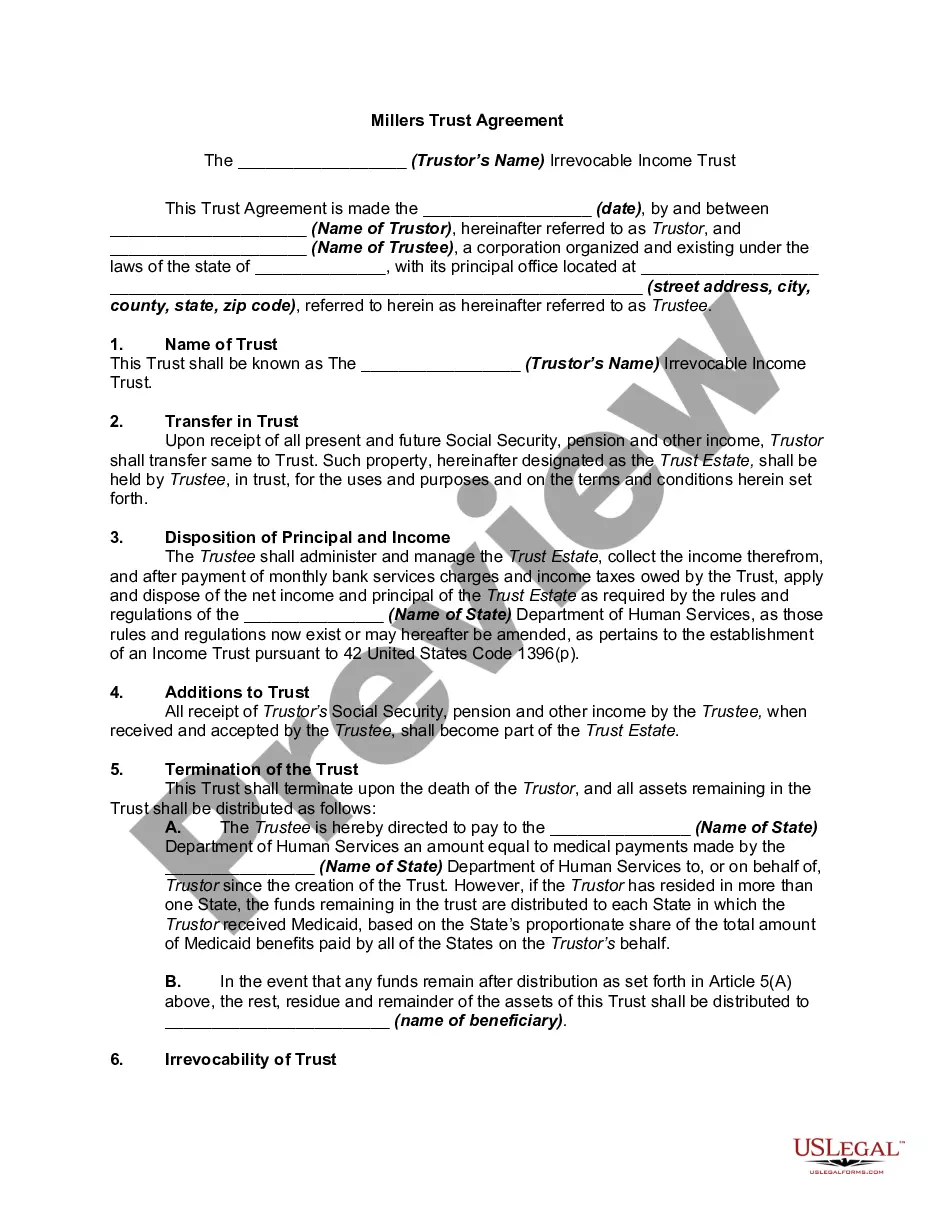
Ohio Qit Trust With Beneficiaries
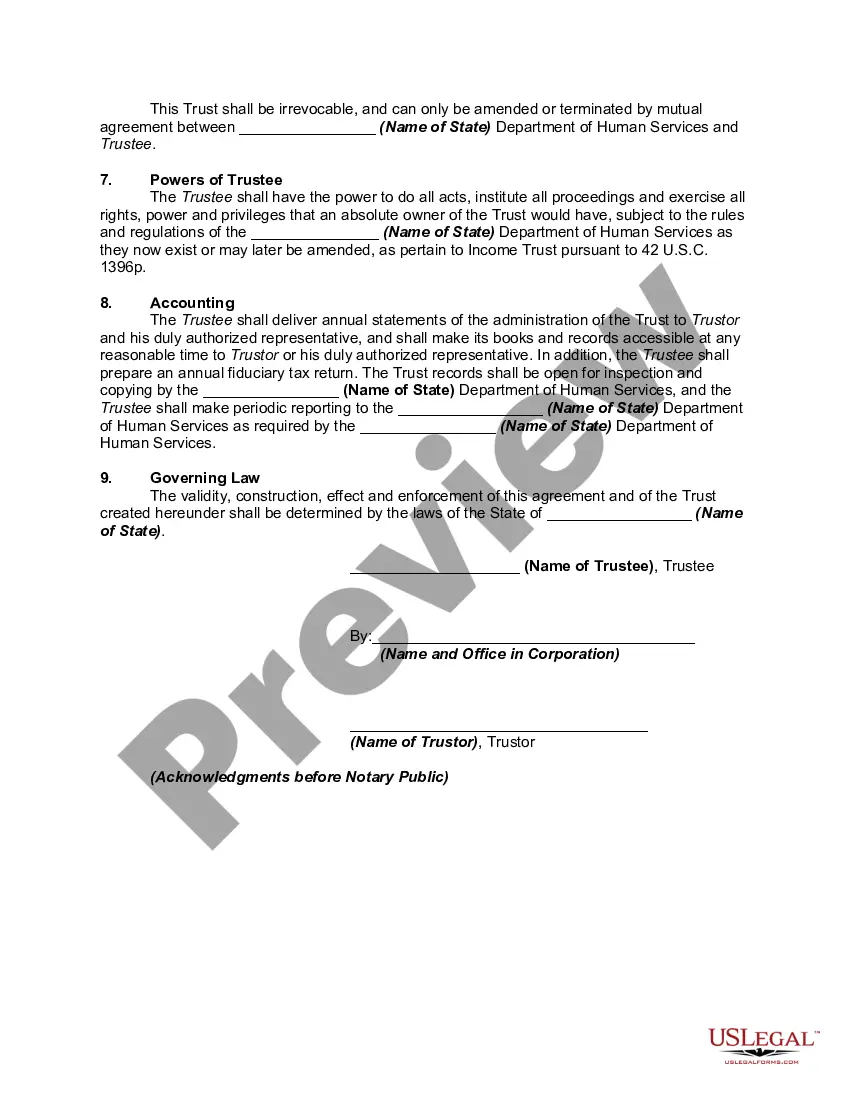
Description

Get your form ready online
Our built-in tools help you complete, sign, share, and store your documents in one place.
Make edits, fill in missing information, and update formatting in US Legal Forms—just like you would in MS Word.
Download a copy, print it, send it by email, or mail it via USPS—whatever works best for your next step.
Sign and collect signatures with our SignNow integration. Send to multiple recipients, set reminders, and more. Go Premium to unlock E-Sign.
If this form requires notarization, complete it online through a secure video call—no need to meet a notary in person or wait for an appointment.
We protect your documents and personal data by following strict security and privacy standards.

Make edits, fill in missing information, and update formatting in US Legal Forms—just like you would in MS Word.

Download a copy, print it, send it by email, or mail it via USPS—whatever works best for your next step.

Sign and collect signatures with our SignNow integration. Send to multiple recipients, set reminders, and more. Go Premium to unlock E-Sign.

If this form requires notarization, complete it online through a secure video call—no need to meet a notary in person or wait for an appointment.

We protect your documents and personal data by following strict security and privacy standards.
Looking for another form?








How to fill out Qualified Income Miller Trust?
Finding a reliable source to obtain the latest and most pertinent legal templates is a significant part of managing bureaucracy. Selecting the appropriate legal documentation demands accuracy and careful consideration, which is why it's vital to source Ohio Qit Trust With Beneficiaries samples exclusively from trustworthy providers, such as US Legal Forms. An incorrect template can waste your time and delay the situation at hand. With US Legal Forms, you have minimal concerns. You can review and verify all details regarding the document’s application and its relevance to your case as well as for your state or county.
Follow these steps to complete your Ohio Qit Trust With Beneficiaries.
Once you have the form on your device, you can modify it using the editor or print it out to complete it by hand. Eliminate the hassles associated with your legal documents. Explore the vast US Legal Forms library to discover legal templates, verify their relevance to your situation, and download them instantly.
- Use the library navigation or search bar to find your template.
- Review the form’s details to confirm it aligns with your state and county requirements.
- Preview the form, if accessible, to ensure it is the specific template you need.
- Return to the search if the Ohio Qit Trust With Beneficiaries does not suit your needs.
- If you are confident about the form’s applicability, proceed to download it.
- If you are a registered user, click Log in to verify your identity and access your chosen forms in My documents.
- If you haven't created an account yet, click Buy now to obtain the form.
- Choose the pricing option that fits your needs.
- Continue to the registration to finalize your purchase.
- Complete your payment using a credit card or PayPal.
- Select the file format for downloading the Ohio Qit Trust With Beneficiaries.
Form popularity
FAQ
Upon the death of the individual who established an Ohio QIT trust with beneficiaries, the trust typically becomes irrevocable. The assets in the trust will be distributed according to the terms outlined in the trust document. It's important to understand that any remaining funds may be subject to claims by the estate or creditors, depending on the situation. Therefore, consulting with a legal expert can provide guidance on the best steps to take after the trust owner's passing.
In Ohio, beneficiaries have a legal right to view the trust document, including an Ohio QIT trust with beneficiaries. This transparency ensures that all parties are informed about the trust's terms and their respective rights. As a beneficiary, you can request a copy of the trust from the trustee, who must comply unless certain restrictions apply. If you face difficulties accessing the trust, consider legal advice to understand your rights better.
Filling out a trust form for an Ohio QIT trust with beneficiaries requires careful attention to detail. First, gather all necessary information about the trust's purpose, the beneficiaries, and the assets involved. Next, use a reliable resource like US Legal Forms to find a suitable template that matches your needs. Finally, follow the instructions carefully, ensuring that all information is accurate to create a valid legal document.
Closing a QIT account in Ohio involves contacting your financial institution to start the process. Ensure that all distributions to the beneficiaries, as stated in the trust terms, are completed before closure. Knowledge of how an Ohio qit trust with beneficiaries operates can aid in completing this process smoothly and in compliance with Medicaid regulations.
To cancel your Ohio Medicaid benefits, you must notify your local county department of job and family services. They provide specific forms you need to complete, which indicate your request clearly. If you are using an Ohio qit trust with beneficiaries, it is wise to consider the implications of canceling benefits and consult with a knowledgeable advisor.
In Ohio, funds in a QIT can be used exclusively for certain expenses specified by Medicaid guidelines, such as housing costs, medical expenses, and other necessary living expenses. Utilizing the Ohio qit trust with beneficiaries allows you to manage your funds effectively while ensuring you meet Medicaid requirements. Thus, proper use of these funds can significantly affect your eligibility for benefits.
The beneficiary of a QIT, or Qualified Income Trust, in Ohio typically includes individuals who need to qualify for Medicaid while maintaining some income. This trust allows your income to be deposited, thereby lowering your countable resources. Understanding who benefits from the Ohio qit trust with beneficiaries can help you plan effectively for long-term care.
Revoking an irrevocable trust in Ohio can be challenging, as this type of trust is generally designed to be permanent. However, if it is clearly stated in the trust document, or if all beneficiaries agree, revocation may be possible. Consult with an attorney experienced in dealing with Ohio qit trust with beneficiaries to navigate this complex situation effectively.
In Ohio, beneficiaries of a trust generally have the right to request a copy of the trust document. The Ohio qit trust with beneficiaries ensures that they stay informed about their rights and interests. Therefore, it is a good practice for trustees to provide beneficiaries with a complete copy, helping to maintain transparency within the trust.
Distributing income from an Ohio qit trust with beneficiaries involves several straightforward steps. First, the trust's terms outline how income is divided among beneficiaries, ensuring clarity and fairness. Then, the trustee calculates the income generated by the trust, determines the share for each beneficiary, and makes the distributions accordingly. Utilizing a service like US Legal Forms can simplify this process, providing templates and resources tailored for handling trusts effectively.