Is A Testamentary Trust A Simple Trust
Description

Get your form ready online
Our built-in tools help you complete, sign, share, and store your documents in one place.
Make edits, fill in missing information, and update formatting in US Legal Forms—just like you would in MS Word.
Download a copy, print it, send it by email, or mail it via USPS—whatever works best for your next step.
Sign and collect signatures with our SignNow integration. Send to multiple recipients, set reminders, and more. Go Premium to unlock E-Sign.
If this form requires notarization, complete it online through a secure video call—no need to meet a notary in person or wait for an appointment.
We protect your documents and personal data by following strict security and privacy standards.

Make edits, fill in missing information, and update formatting in US Legal Forms—just like you would in MS Word.

Download a copy, print it, send it by email, or mail it via USPS—whatever works best for your next step.

Sign and collect signatures with our SignNow integration. Send to multiple recipients, set reminders, and more. Go Premium to unlock E-Sign.

If this form requires notarization, complete it online through a secure video call—no need to meet a notary in person or wait for an appointment.

We protect your documents and personal data by following strict security and privacy standards.
Looking for another form?





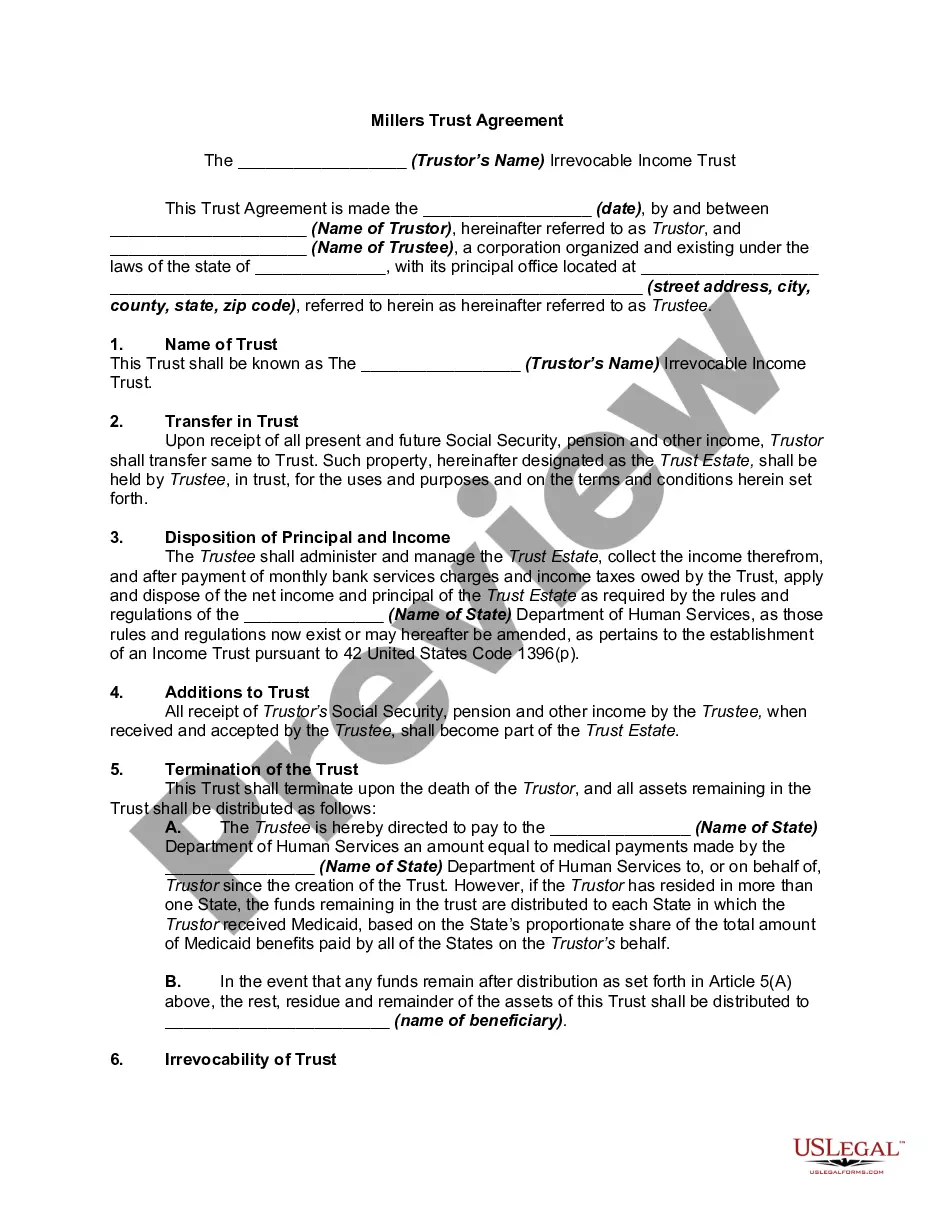
How to fill out Qualified Income Miller Trust?
- Log in to your existing US Legal Forms account to download the template you need, clicking the Download button. Ensure your subscription is active; renew as necessary.
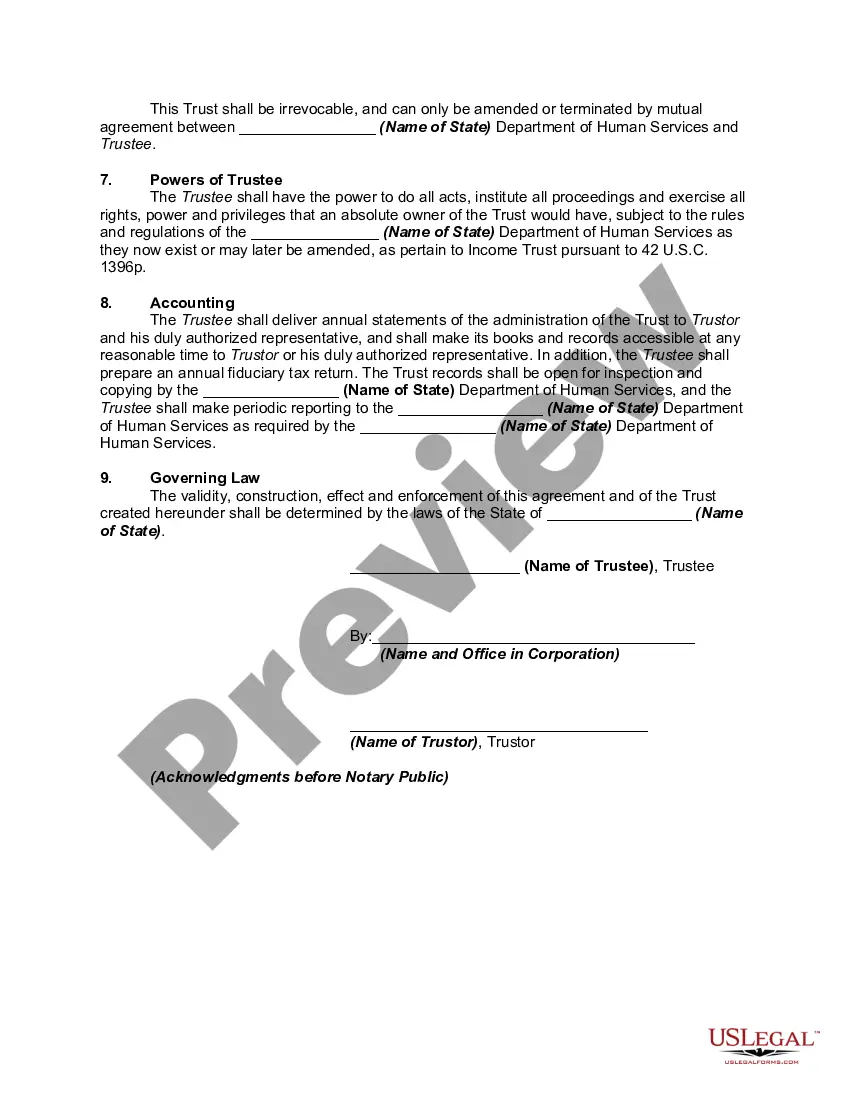
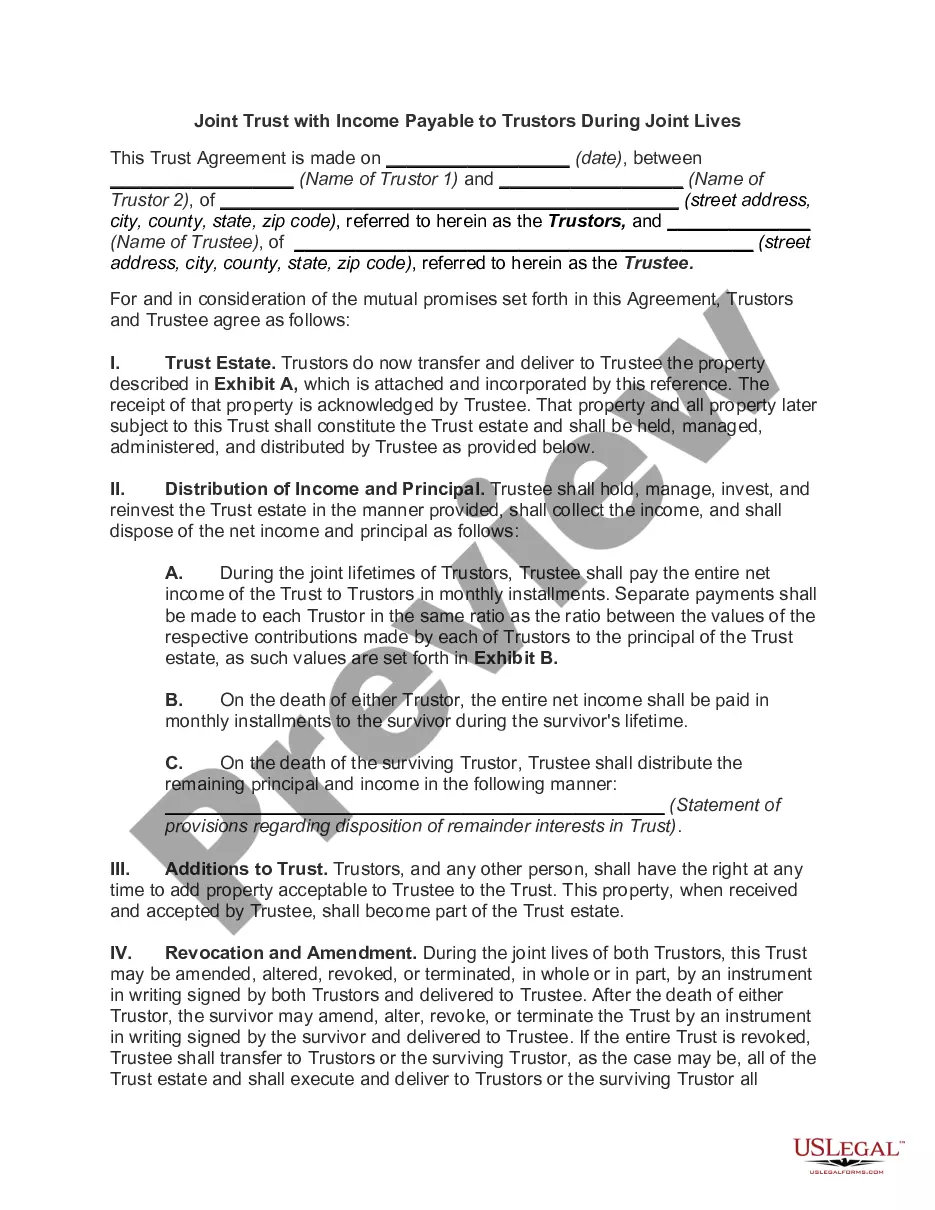
- If you are a new user, start by checking the Preview mode and read the form description to confirm its relevance to your requirements and local laws.
- If the form doesn’t match your needs, utilize the Search tab to find the correct template before proceeding.
- Once satisfied with your selection, click the Buy Now button, and select a subscription plan that fits your situation. You’ll need to register an account for access to the full resource library.
- Complete your purchase by entering your credit card details or using your PayPal account for secure payment.
- Finally, download your template and save it to your device, ensuring you can access it anytime via the My Forms section in your profile.
US Legal Forms empowers individuals and attorneys to quickly execute essential legal documents through an extensive collection of over 85,000 easily fillable forms.
With a robust library, premium expert assistance, and competitive pricing, you can trust US Legal Forms for all your documentation needs. Start your journey today!
Form popularity
FAQ
A testamentary trust is a type of trust created by a will and takes effect only after the death of the individual who established it. This trust is often used to manage estate assets, providing specific directions for their distribution according to the deceased's wishes. It is crucial for anyone considering estate planning to understand this type of trust and determine if a testamentary trust is a simple trust or requires a more complex setup for managing assets effectively. You can explore more about this on the US Legal Forms platform for a seamless experience in estate planning.
No, a testamentary trust is not a simple trust. The primary distinction lies in its function and formation; testamentary trusts arise from a decedent's will and are subject to specific terms set forth in that will, unlike simple trusts which typically distribute all income generated. Given these important differences, it is essential to clarify that the question, 'Is a testamentary trust a simple trust?' highlights the significant legal variations between these types.
A testamentary trust is generally considered more complex than a simple trust. This complexity stems from its creation after an individual's death through a will. Additionally, it often involves specific instructions and varying distributions, affecting how assets are managed and distributed. Therefore, while it may serve similar purposes, understanding whether a testamentary trust is a simple trust requires deeper insights into its unique features.