Custody Agreement With Newborn
Description
Get your form ready online
Our built-in tools help you complete, sign, share, and store your documents in one place.
Make edits, fill in missing information, and update formatting in US Legal Forms—just like you would in MS Word.
Download a copy, print it, send it by email, or mail it via USPS—whatever works best for your next step.
Sign and collect signatures with our SignNow integration. Send to multiple recipients, set reminders, and more. Go Premium to unlock E-Sign.
If this form requires notarization, complete it online through a secure video call—no need to meet a notary in person or wait for an appointment.
We protect your documents and personal data by following strict security and privacy standards.

Make edits, fill in missing information, and update formatting in US Legal Forms—just like you would in MS Word.

Download a copy, print it, send it by email, or mail it via USPS—whatever works best for your next step.

Sign and collect signatures with our SignNow integration. Send to multiple recipients, set reminders, and more. Go Premium to unlock E-Sign.

If this form requires notarization, complete it online through a secure video call—no need to meet a notary in person or wait for an appointment.

We protect your documents and personal data by following strict security and privacy standards.
Looking for another form?









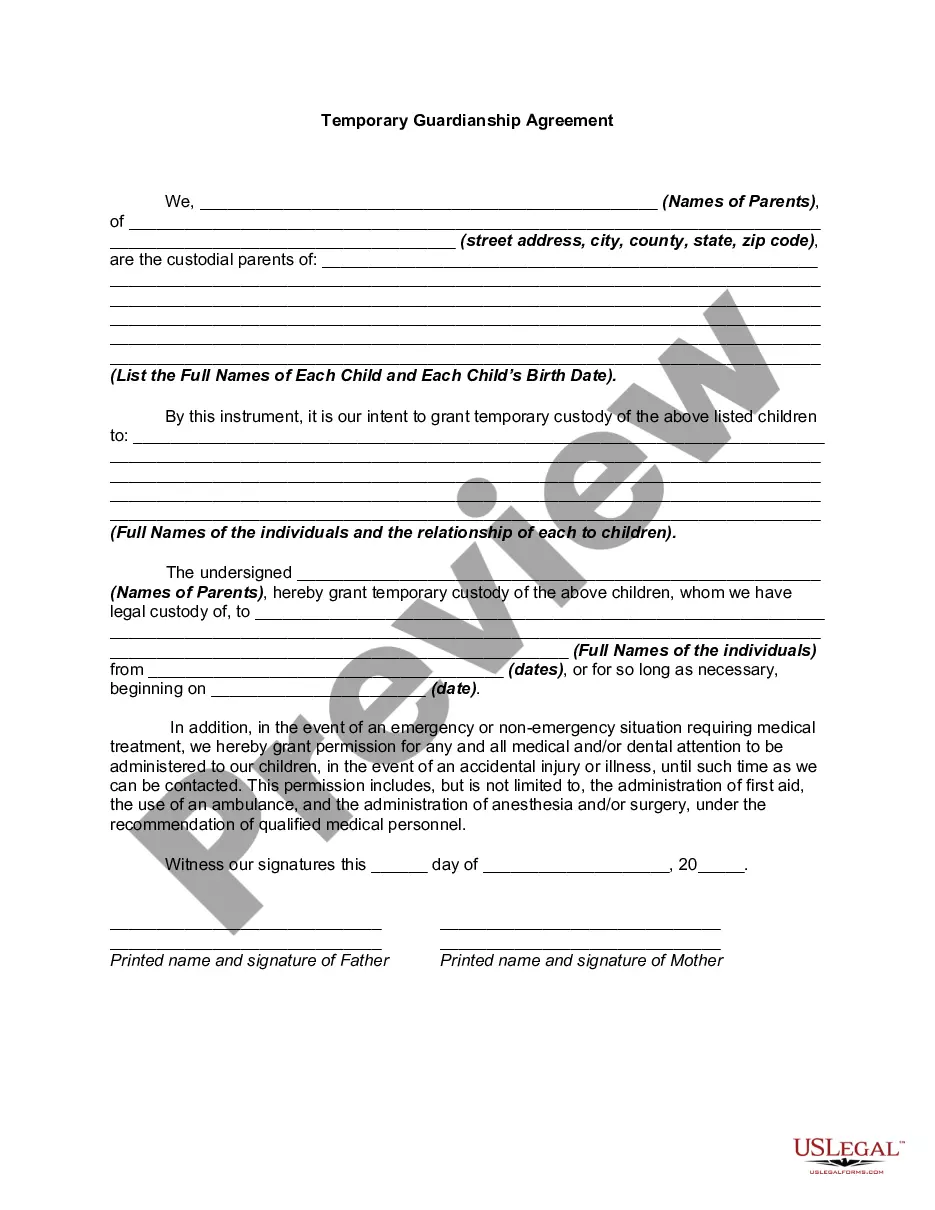
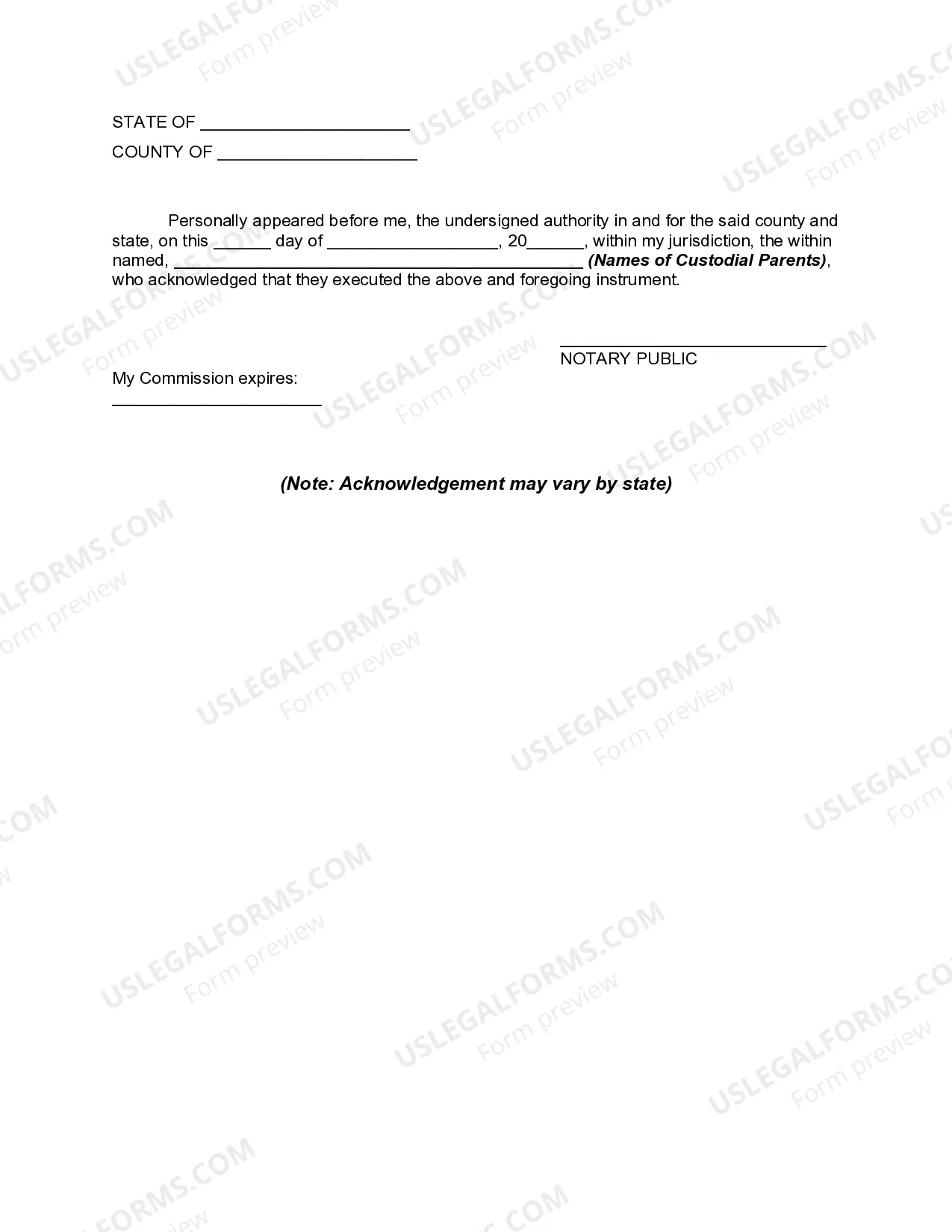
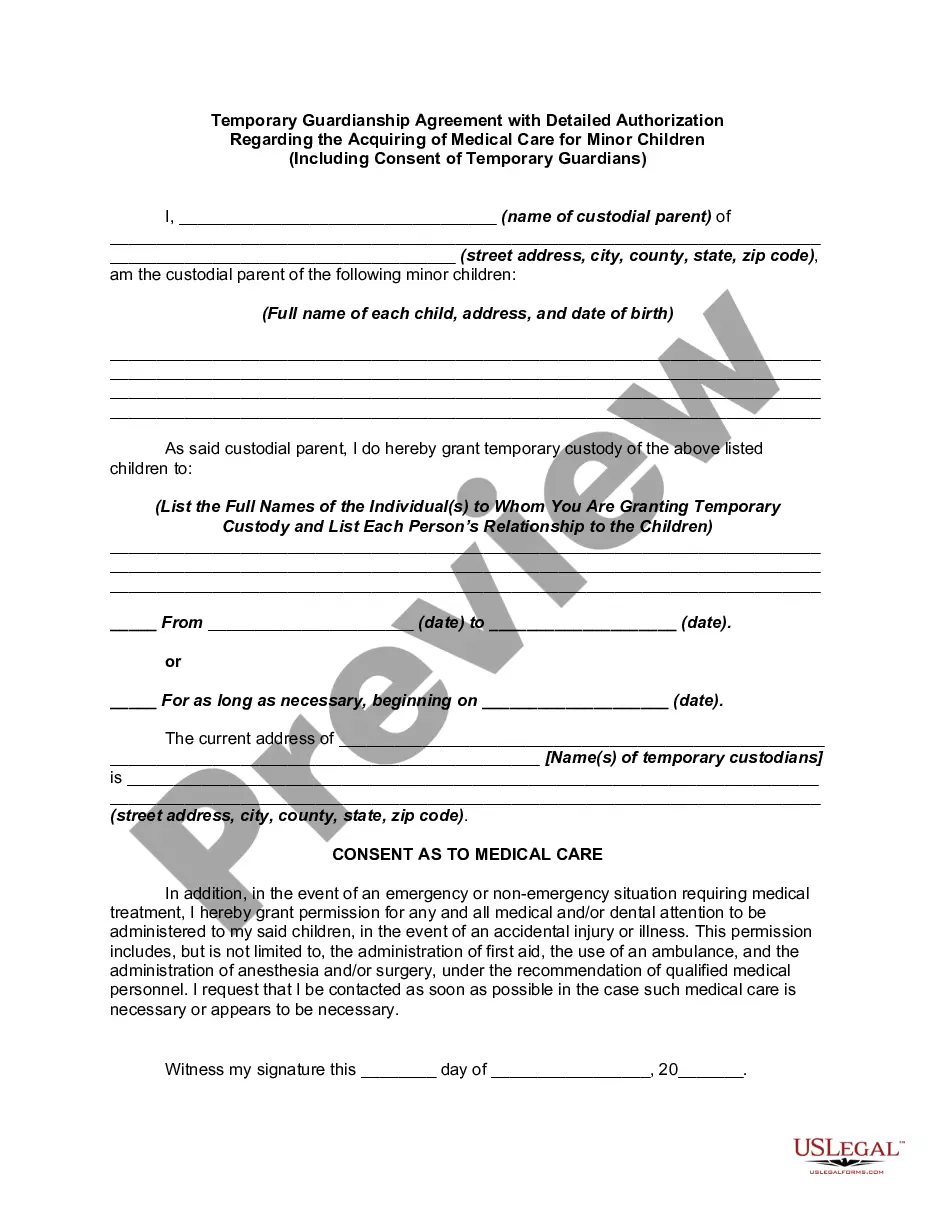
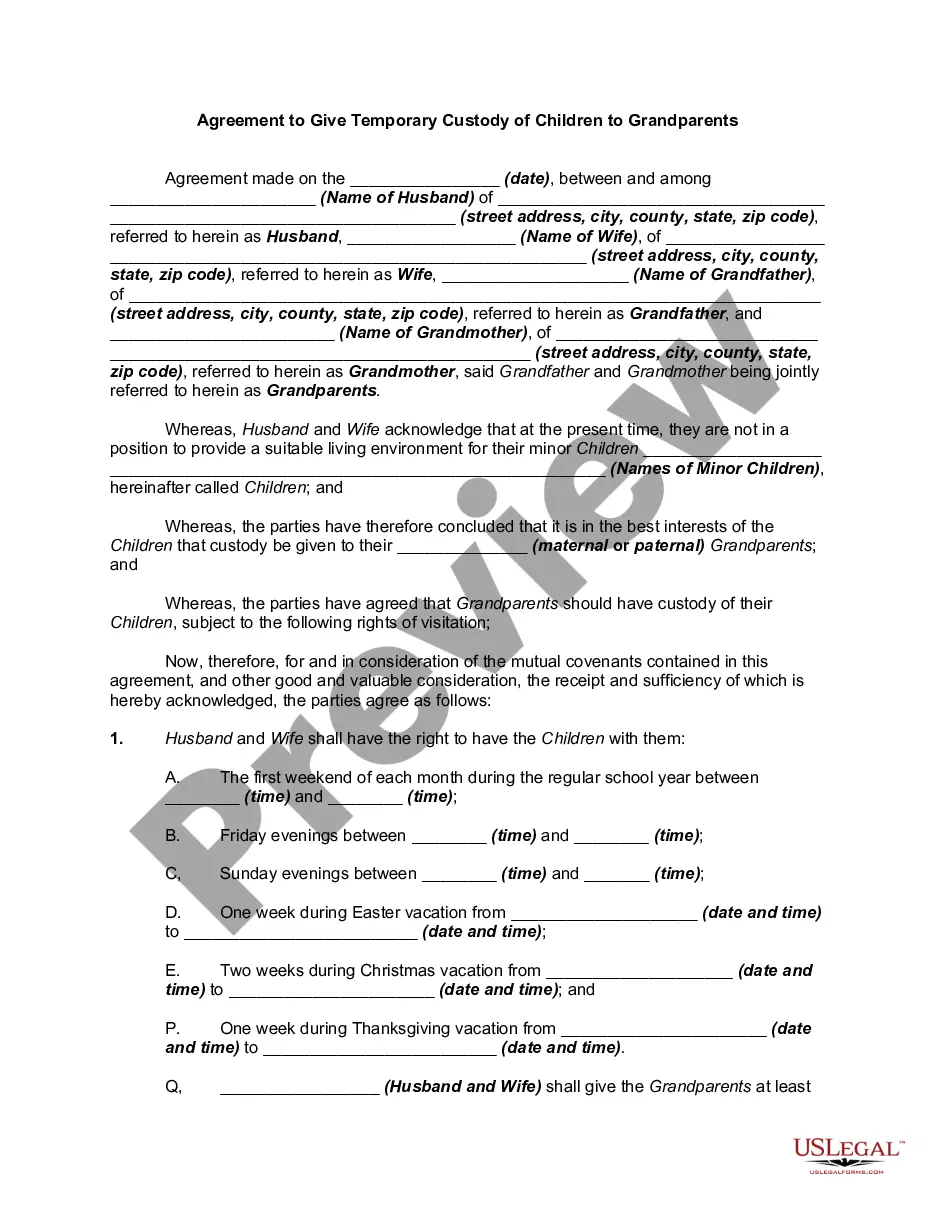
How to fill out Temporary Guardianship Agreement?
Managing legal documents can be daunting, even for seasoned professionals.
If you're looking for a Custody Agreement With Newborn but lack the time to search for the correct and updated version, the process can be overwhelming.
Utilize innovative tools to complete and manage your Custody Agreement With Newborn.
Access a valuable resource library of articles, guides, and materials relevant to your needs and circumstances.
Streamline your document management experience with the trusted US Legal Forms web library, backed by 25 years of expertise.
- Save time and effort in searching for the necessary documents, and take advantage of US Legal Forms’ advanced search and Preview feature to locate and download your Custody Agreement With Newborn.
- If you have a monthly subscription, Log In to your US Legal Forms account, find the form, and download it.
- Check the My documents section to review the documents you've previously downloaded and manage your files as desired.
- If you are new to US Legal Forms, register for an account to gain unlimited access to all platform benefits.
- Follow these steps after locating the desired form.
- A powerful online form library could transform how one handles these matters effectively.
- US Legal Forms is a leading provider of web legal documents, with more than 85,000 state-specific legal forms accessible at any time.
- With US Legal Forms, you can easily find what you need.
Form popularity
FAQ
One of the biggest mistakes in a custody battle is failing to prioritize the child's needs over personal emotions. Focusing on revenge or manipulation can jeopardize the chances of securing a favorable custody agreement with a newborn. It's essential to remain focused on co-parenting strategies that reflect the child's best interests.
During the newborn days, many couples opt to establish a night shift system where each parent takes turns caring for the baby. Parents alternate baby care duties, such as overnight feeds, diaper changes, burping and getting baby back to bed.
Consider having one parent consistently having the infant overnight while the other visits with the child during the day, at least until the infant gets older and is more adaptable. Making things consistent. No matter what type of arrangement you agree upon, try to keep your parenting times consistent.
It depends. The first thing to consider is your baby's ability to eat without you there. A formula-fed baby can be left with another caregiver as soon as you feel comfortable leaving them. If you're breastfeeding, it's important to wait until breastfeeding is well established, which typically takes about 3 to 4 weeks.
Split up nighttime duties. Take turns being the one to handle all nighttime duties, from feeding to changing to soothing your baby. Sleep in separate rooms, leaving one room free for the partner who isn't on baby duty that night. Pump and sleep so your partner can feed your baby while you sleep.
Usually, an infant lives with one parent and has visits with the other. The nonresidential parent should have several visits a week with the baby. The visits should give the parent opportunities to feed, bathe and soothe the baby, as well as play with them and put them to sleep.