Engagement Letter For Lawyer
Description
Get your form ready online
Our built-in tools help you complete, sign, share, and store your documents in one place.
Make edits, fill in missing information, and update formatting in US Legal Forms—just like you would in MS Word.
Download a copy, print it, send it by email, or mail it via USPS—whatever works best for your next step.
Sign and collect signatures with our SignNow integration. Send to multiple recipients, set reminders, and more. Go Premium to unlock E-Sign.
If this form requires notarization, complete it online through a secure video call—no need to meet a notary in person or wait for an appointment.
We protect your documents and personal data by following strict security and privacy standards.

Make edits, fill in missing information, and update formatting in US Legal Forms—just like you would in MS Word.

Download a copy, print it, send it by email, or mail it via USPS—whatever works best for your next step.

Sign and collect signatures with our SignNow integration. Send to multiple recipients, set reminders, and more. Go Premium to unlock E-Sign.

If this form requires notarization, complete it online through a secure video call—no need to meet a notary in person or wait for an appointment.

We protect your documents and personal data by following strict security and privacy standards.
Looking for another form?

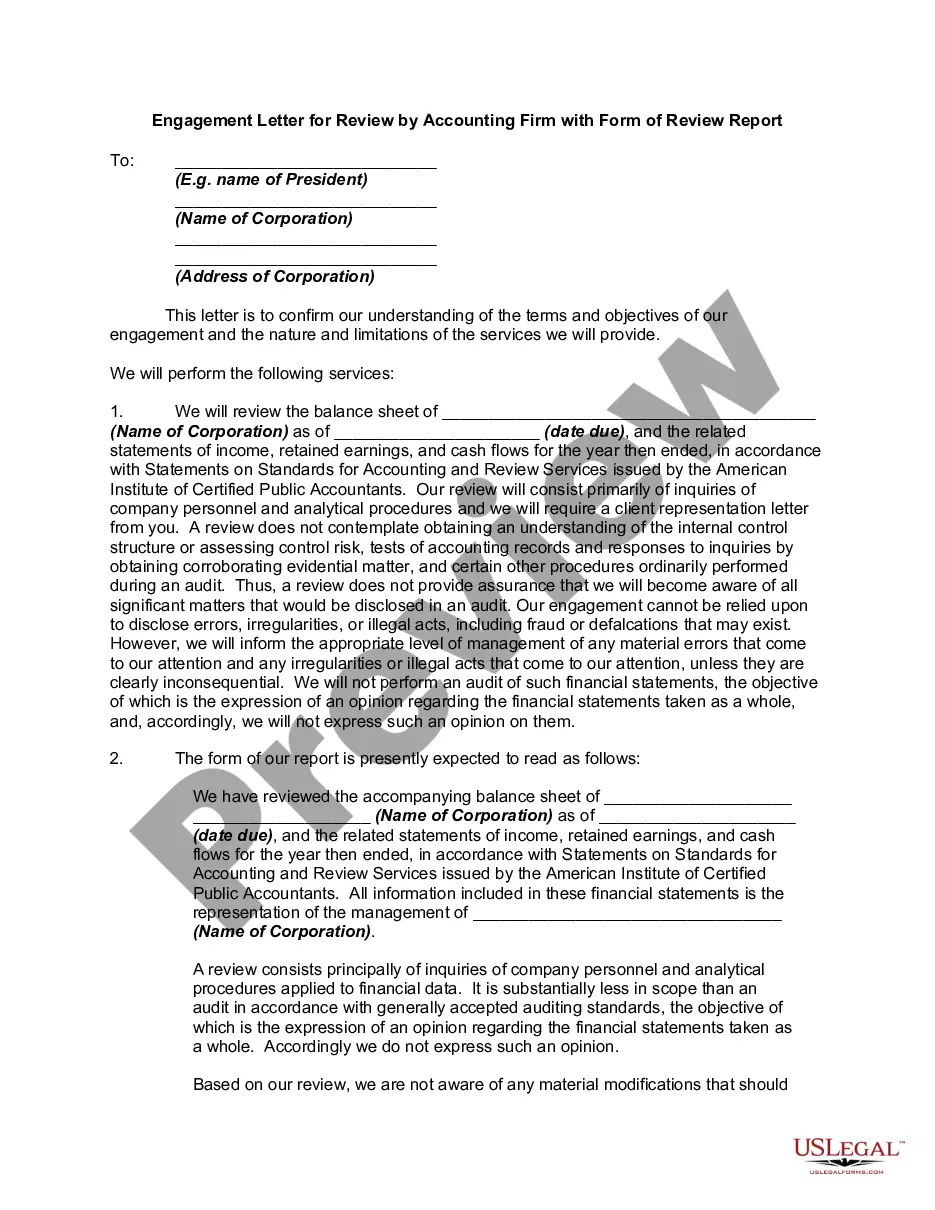
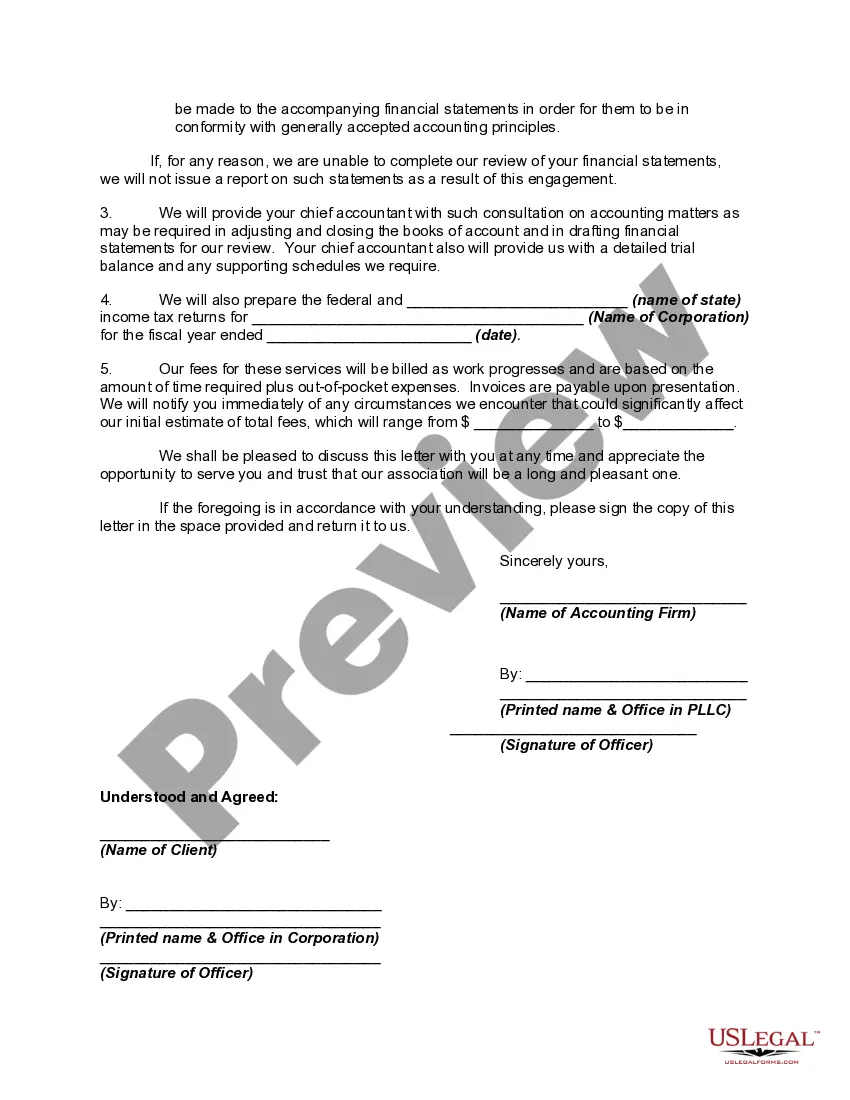
How to fill out Engagement Letter For Review By Accounting Firm With Form Of Review Report?
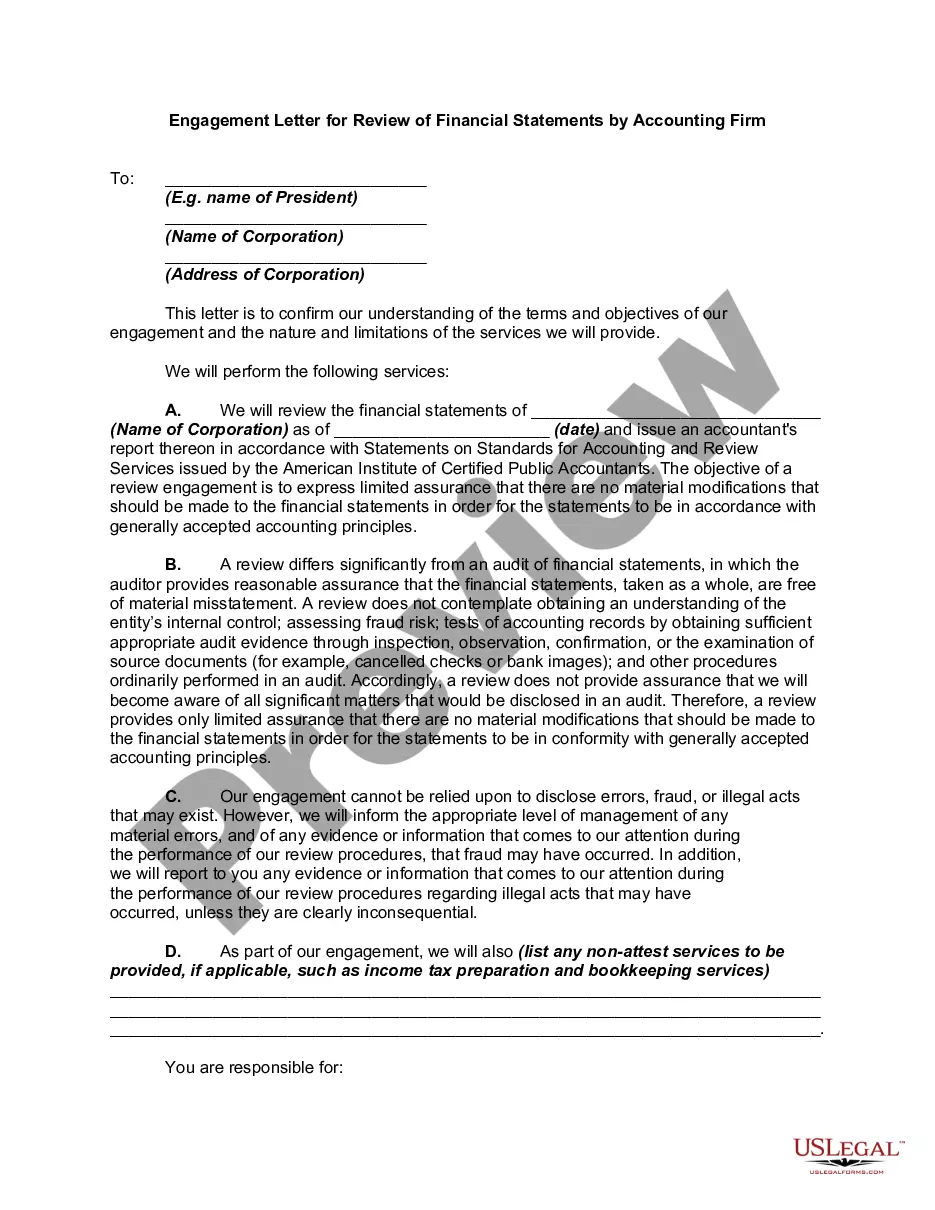
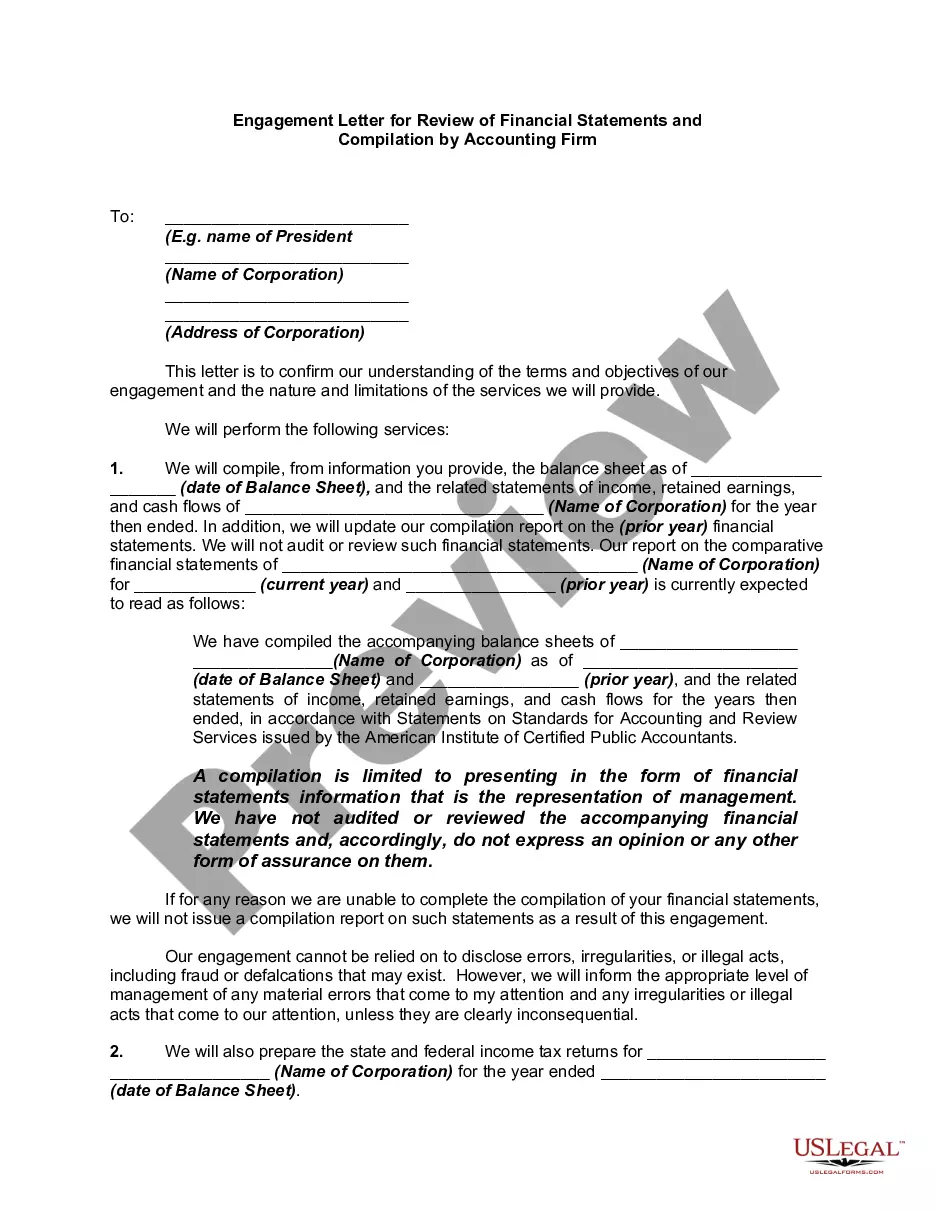
The Lawyer Engagement Letter presented on this page is a versatile legal template crafted by experienced attorneys in compliance with federal and state legislation and guidelines.
For over 25 years, US Legal Forms has offered individuals, organizations, and lawyers access to more than 85,000 validated, state-specific forms for any professional or personal need. It’s the fastest, most straightforward, and most dependable way to acquire the documents you require, as the service ensures bank-level data protection and anti-malware safeguards.
Opt for the desired format for your Engagement Letter for Lawyer (PDF, Word, RTF) and download the sample to your device.
- Search for the document you seek and examine it.
- Look through the sample you found and preview it or check the form description to confirm it meets your needs. If it doesn't, utilize the search feature to locate the correct version. Click Buy Now when you identify the template you require.
- Register and Log In to your account.
- Select the pricing option that fits you and create an account. Use PayPal or a credit card to make an immediate payment. If you already possess an account, Log In and review your subscription to continue.
- Obtain the editable template.
Form popularity
FAQ
A letter of engagement is typically written by the lawyer or law firm that will provide the services. This document outlines the terms of the relationship, ensuring that both the attorney and the client understand their obligations. The engagement letter for the lawyer serves as a foundational document that protects the interests of both parties and clarifies the working relationship. Effective communication from the outset fosters trust and sets the stage for a successful partnership.
To begin an engagement letter, use a formal greeting followed by the date and subject line. Clearly introduce yourself and your firm, stating your intention to represent the client. This sets the context for the engagement letter for the lawyer, which should outline the scope of services, fees, and other important details. Starting strongly establishes a professional tone and lays the groundwork for a successful working relationship.
Attorney engagement letters can be discoverable in court, depending on the circumstances surrounding the case. However, communications that fall under attorney-client privilege are generally protected and cannot be disclosed without client consent. Understanding the nature of the engagement letter for the lawyer is essential, as it may specify the confidentiality of discussions. Clear communication about these aspects can help both attorneys and clients navigate this complicated area.
Writing a professional proposal letter requires a clear structure that outlines your intentions and qualifications. Start with a greeting, introduce the purpose of the letter, and detail the services you will provide as outlined in the engagement letter for the lawyer. It is essential to stay concise and to the point, while also addressing the needs of the client to foster a confident approach. Ending with a call to action encourages further engagement.
Typically, the lawyer prepares the engagement letter for the lawyer-client relationship. This document outlines the terms of representation and helps clarify the scope of services provided. By preparing the engagement letter, attorneys ensure both parties understand their responsibilities, which serves as a valuable tool for effective communication. Ensuring clarity from the start can prevent misunderstandings down the line.
Attorney engagement letters are generally not considered privileged communications. They serve to outline the terms and conditions of your working relationship, rather than contain confidential legal advice. Always consult your lawyer about what specific information should remain confidential to protect your interests better.
Legal hold letters are typically designed to inform parties about the preservation of evidence and are often considered part of litigation strategy. However, they may not always be privileged, depending on the context and jurisdiction. An engagement letter for a lawyer can guide you on how such letters should be handled and whether they might hold privilege in your situation.
An attorney engagement letter is generally not privileged in the same way that some communications between you and your lawyer are. However, the content of the letter can be protected if it addresses specific legal issues or strategies. To ensure confidentiality and privilege, it’s vital to discuss sensitive matters in more private communications with your attorney.
Yes, an engagement letter for a lawyer is generally considered confidential. This means that the details concerning the agreement between you and your attorney should remain private. Both parties typically agree not to disclose terms without consent. This confidentiality helps build trust and ensures transparency in your legal relationship.
The audit engagement letter is usually sent by the auditor or audit firm conducting the review. This letter outlines the responsibilities of both parties and details the scope of work involved in the audit process. If you are unsure about how to draft this document, you can find a reliable template for an engagement letter for lawyer on platforms like uslegalforms. Such tools simplify the procedure by providing established guidelines.