Accounting And Tax Manager
Description
Get your form ready online
Our built-in tools help you complete, sign, share, and store your documents in one place.
Make edits, fill in missing information, and update formatting in US Legal Forms—just like you would in MS Word.
Download a copy, print it, send it by email, or mail it via USPS—whatever works best for your next step.
Sign and collect signatures with our SignNow integration. Send to multiple recipients, set reminders, and more. Go Premium to unlock E-Sign.
If this form requires notarization, complete it online through a secure video call—no need to meet a notary in person or wait for an appointment.
We protect your documents and personal data by following strict security and privacy standards.

Make edits, fill in missing information, and update formatting in US Legal Forms—just like you would in MS Word.

Download a copy, print it, send it by email, or mail it via USPS—whatever works best for your next step.

Sign and collect signatures with our SignNow integration. Send to multiple recipients, set reminders, and more. Go Premium to unlock E-Sign.

If this form requires notarization, complete it online through a secure video call—no need to meet a notary in person or wait for an appointment.

We protect your documents and personal data by following strict security and privacy standards.
Looking for another form?

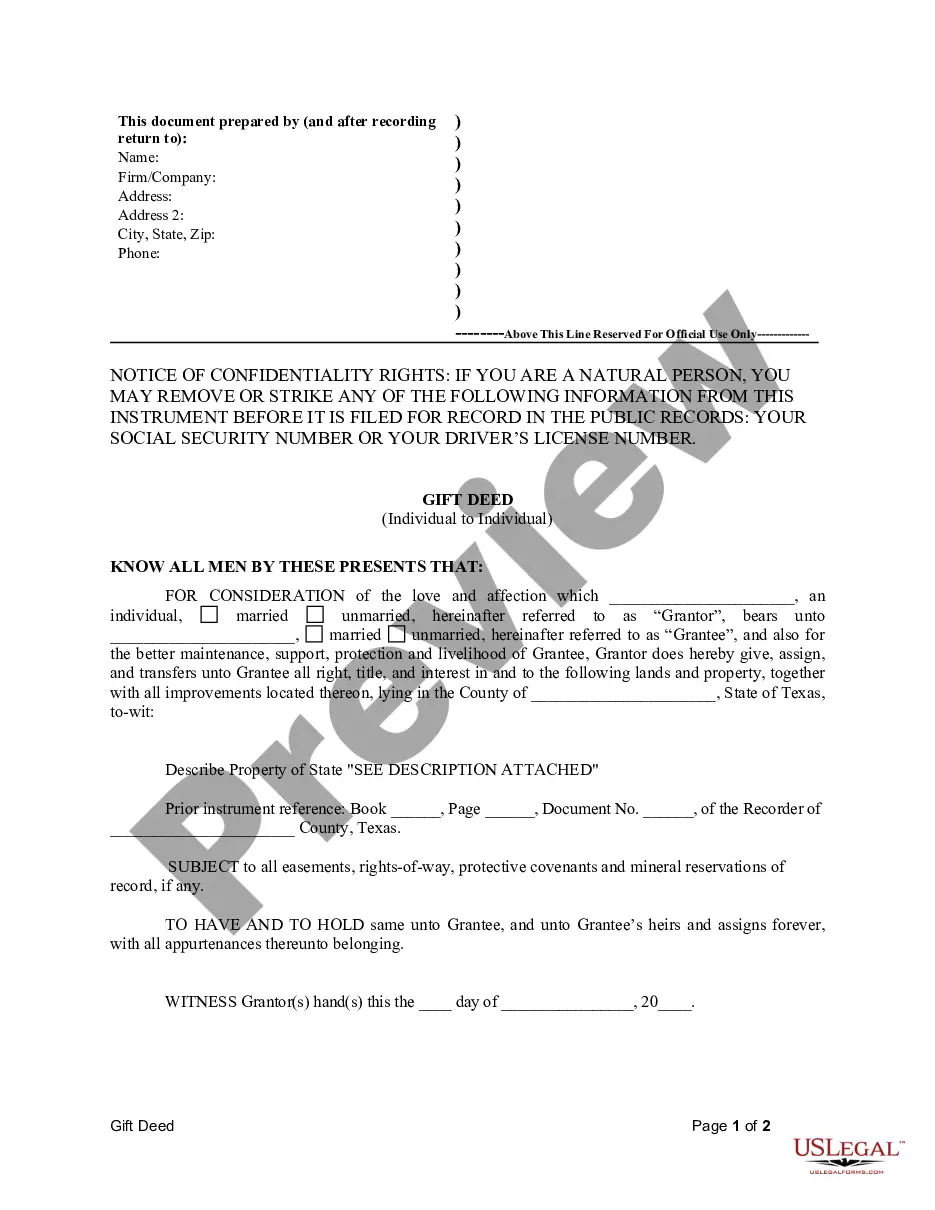




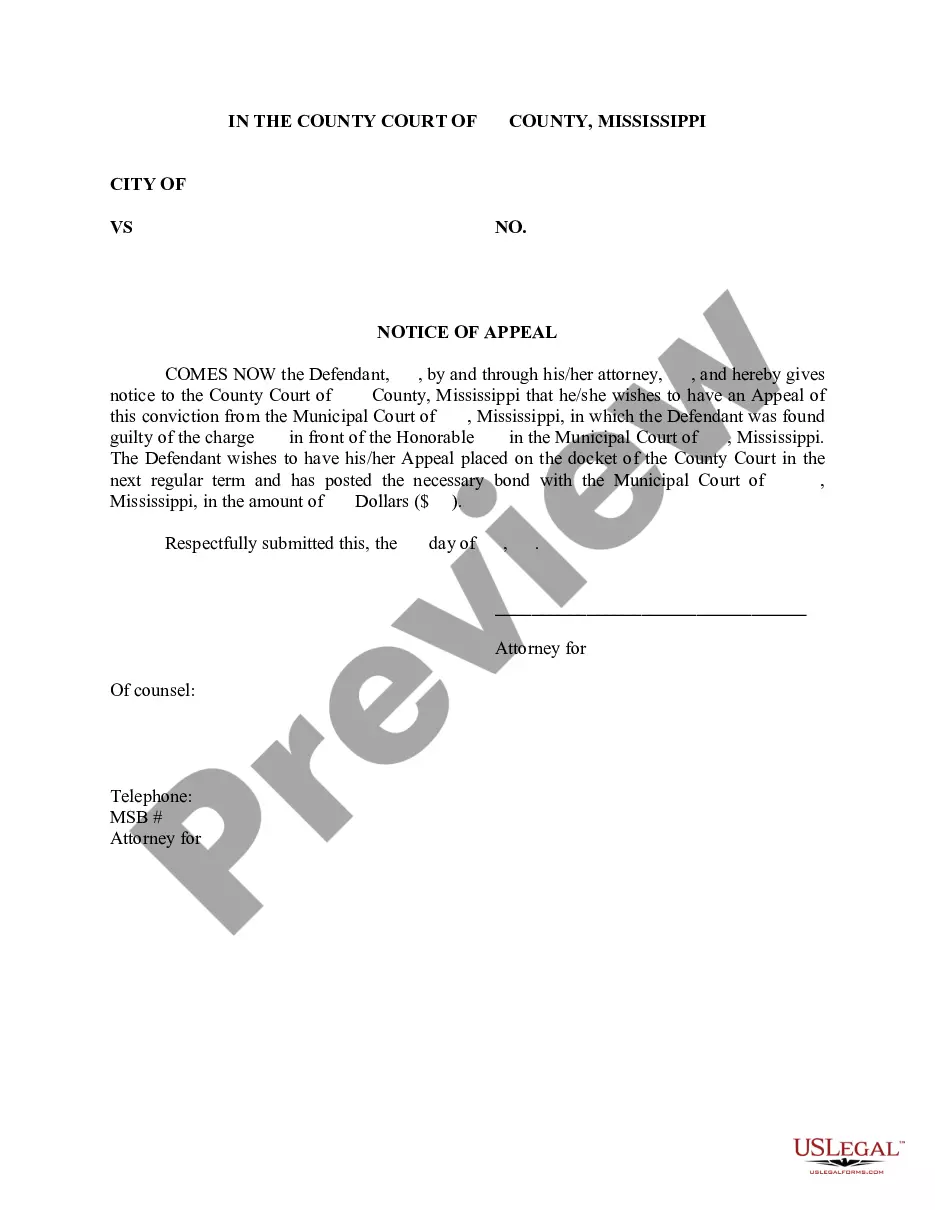
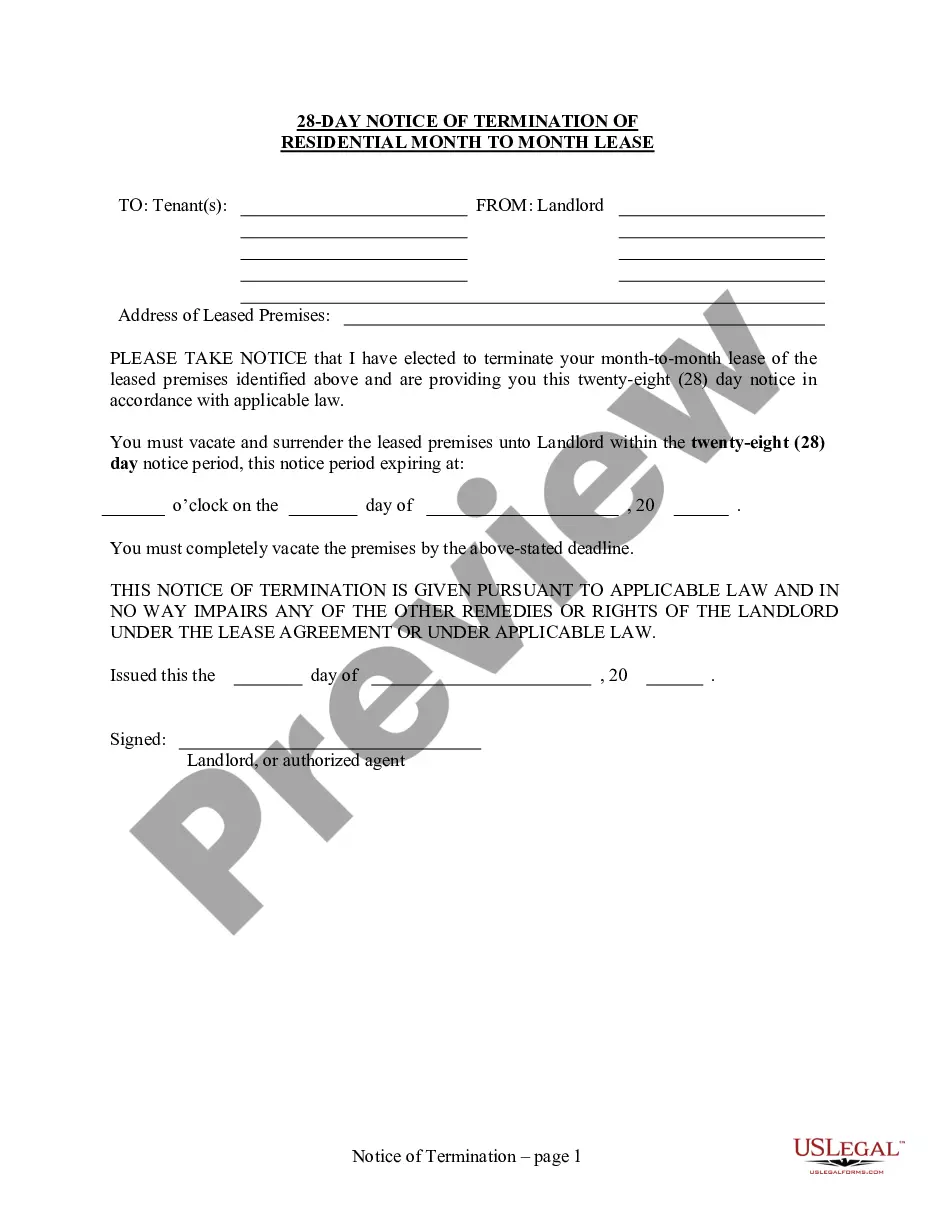
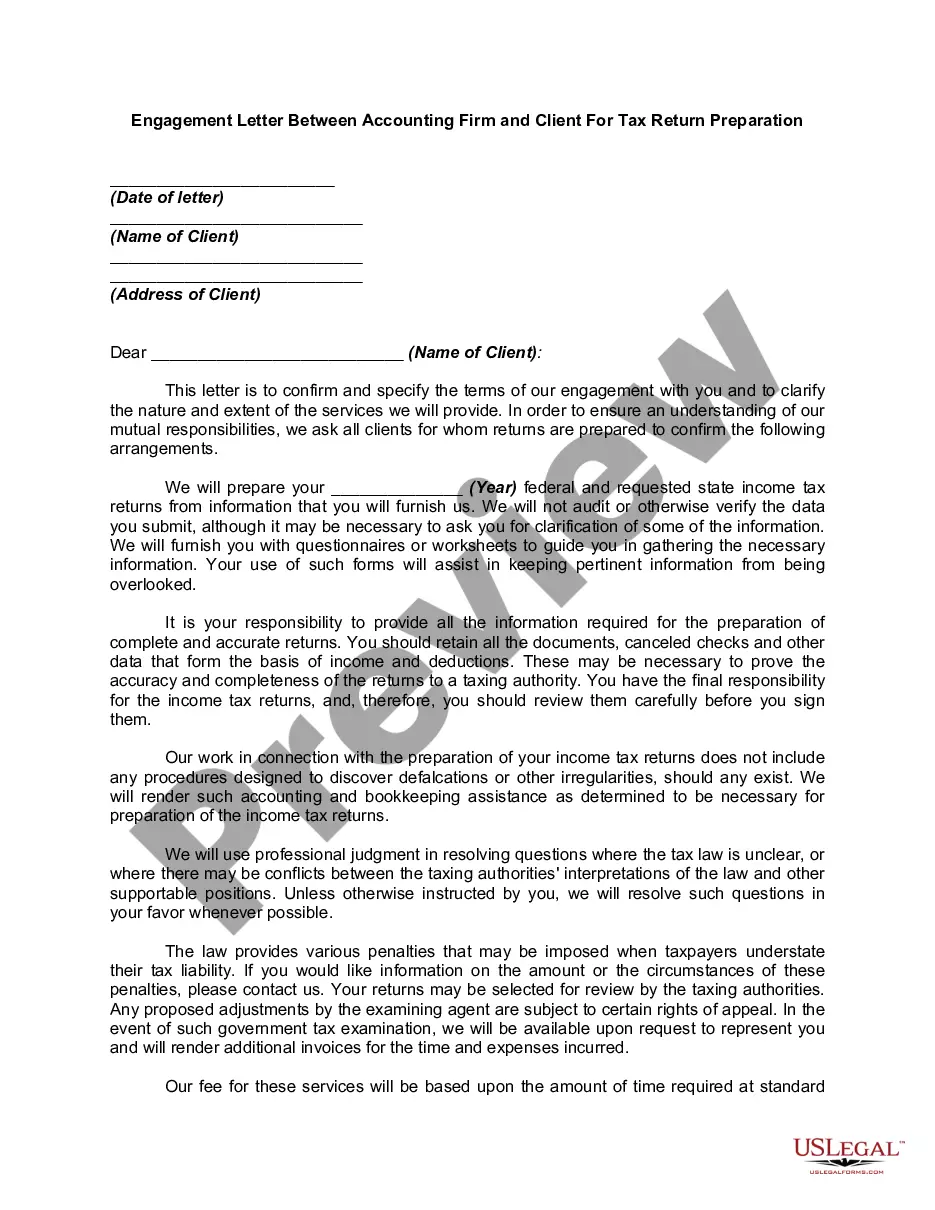
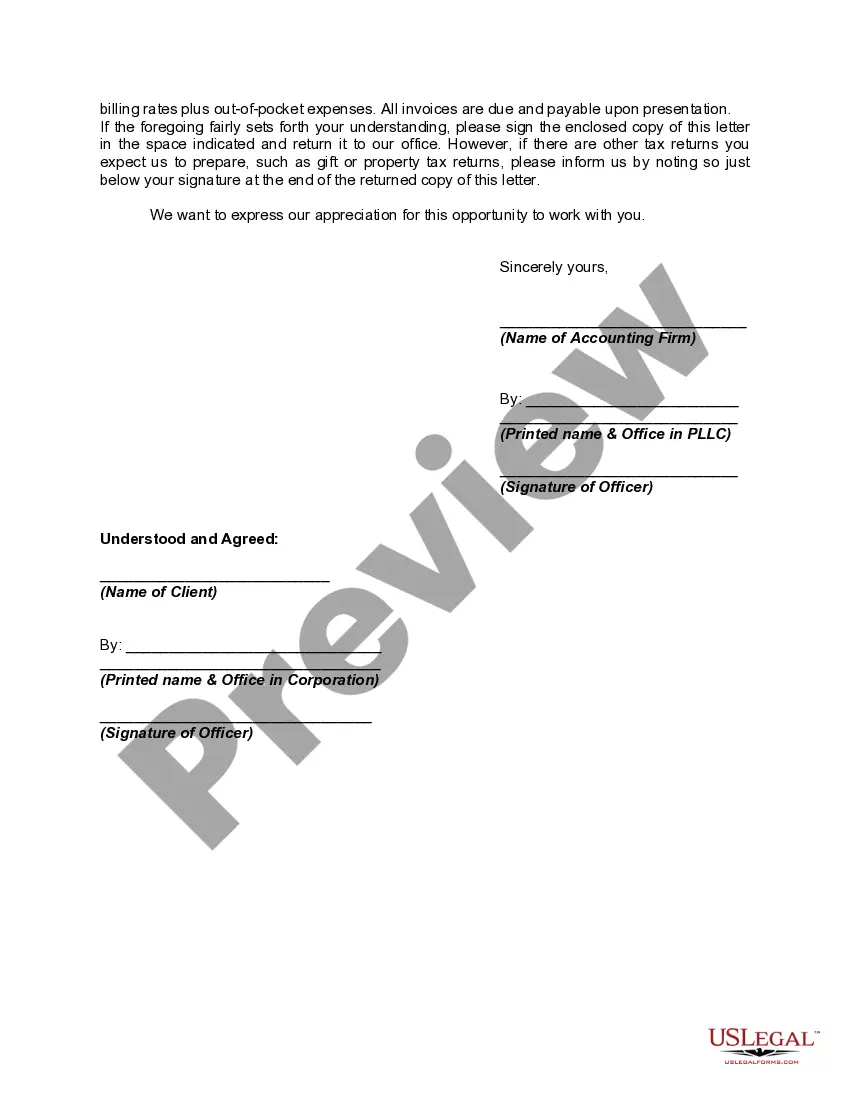
How to fill out Engagement Letter Between Accounting Firm And Client For Tax Return Preparation?
- If you are a returning user, log in to your account and ensure your subscription is active before downloading the necessary template.
- For new users, begin by searching the extensive library for the form that suits your requirements; ensure it aligns with your local laws by checking the preview mode and description.
- If you need a different template, use the Search tab to refine your results until you find the appropriate document.
- Once you have selected a suitable form, click the Buy Now button and choose your preferred subscription plan; you’ll need to create an account to gain full access.
- Provide your payment details, either through credit card or PayPal, to complete the purchase.
- After successful payment, download your form and save it on your device. You can access it anytime from the My Forms section of your profile.
With US Legal Forms, individuals and attorneys can quickly execute legal documents, benefiting from a robust collection of forms at a competitive price.
Take the hassle out of legal documentation by leveraging the resources of US Legal Forms today!
Form popularity
FAQ
The primary difference lies in their focus areas. A tax accountant specializes in preparing and filing taxes, ensuring compliance and financial accuracy for tax purposes. In contrast, a management accountant concentrates on internal decision-making, providing strategic insights based on financial data to guide business operations and performance.
A tax manager is indeed a type of accountant, specializing in tax-related matters for organizations or individuals. They focus on compliance, planning, and strategy to minimize tax liabilities. This role is crucial for ensuring that businesses adhere to tax regulations while optimizing their financial performance.
An accountant typically begins by gathering your financial documents, such as income statements and receipts. They then assess your financial situation to identify possible deductions and credits. Once they prepare the necessary forms, they can file them electronically or by mail on your behalf, streamlining the tax process for you.
Yes, tax accountants can specialize in various areas such as individual tax, corporate tax, and international tax. Each type addresses different tax situations and might require distinct knowledge and expertise. If you need guidance on tax matters, consider using platforms like US Legal Forms to connect with qualified tax professionals.
While both management accountants and accountants handle financial information, their roles differ significantly. A management accountant focuses on internal business processes, offering insights for decision-making, while a general accountant works primarily with financial statements and compliance. Understanding this distinction is vital for anyone pursuing a career in accounting and tax management.
Management accounting does involve different skills and techniques, making it challenging in its own right. You will need to focus on future projections and strategic planning, rather than just historical data. Many find it rewarding and engaging, especially if you enjoy problem-solving and making informed business decisions.
While a CPA can enhance your qualifications, it is not strictly necessary to become a management accountant. You can pursue a career in management accounting with an appropriate degree and experience in the field. However, obtaining a CPA can demonstrate your commitment and expertise, which may improve your job prospects.
Yes, you can be referred to as an accountant without a CPA license. The title of accountant is not legally restricted in many states, meaning you can work in accounting roles without formal certification. However, earning a CPA can help differentiate you and may open more diverse opportunities in your career as an accounting and tax manager. Stay informed about regulations in your state to ensure you meet any local requirements.
For most tax accountant roles, having a CPA license is not a strict requirement. While it can enhance your job prospects and credibility, you can still work effectively as a tax accountant with relevant education and experience. Understanding tax laws, regulations, and accounting principles is crucial for success in this field. Consider using tools and templates available on platforms like US Legal Forms to support your work in tax preparation.
To become an accounting manager, you typically need a solid educational background in accounting, finance, or a related field. Most employers prefer candidates with several years of experience in accounting roles, which help you develop skills in financial reporting, analysis, and team leadership. Networking within the industry and continuously improving your expertise can position you well for this managerial role. Platforms like US Legal Forms can provide you with resources to advance your career smoothly.