Accounting With Insurance
Description
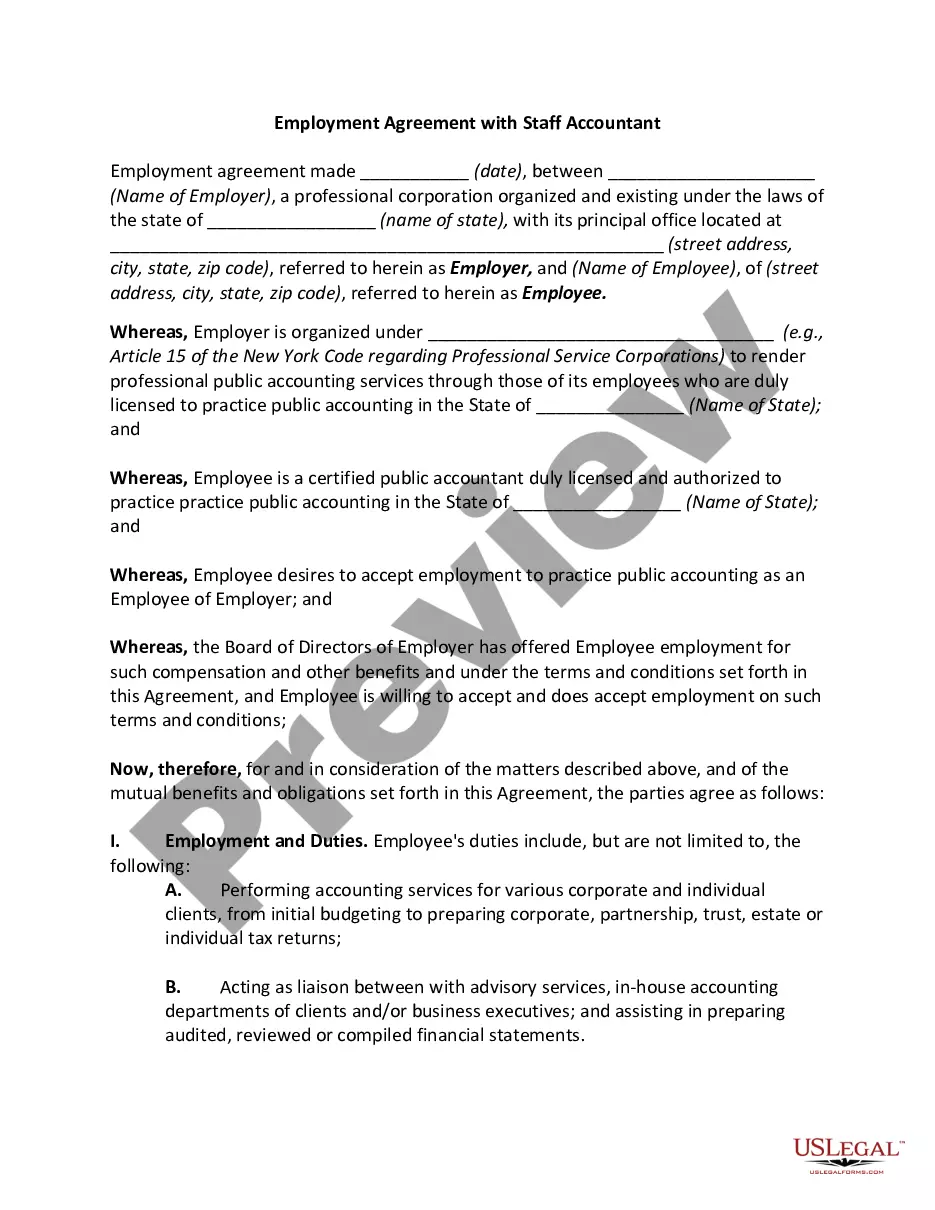
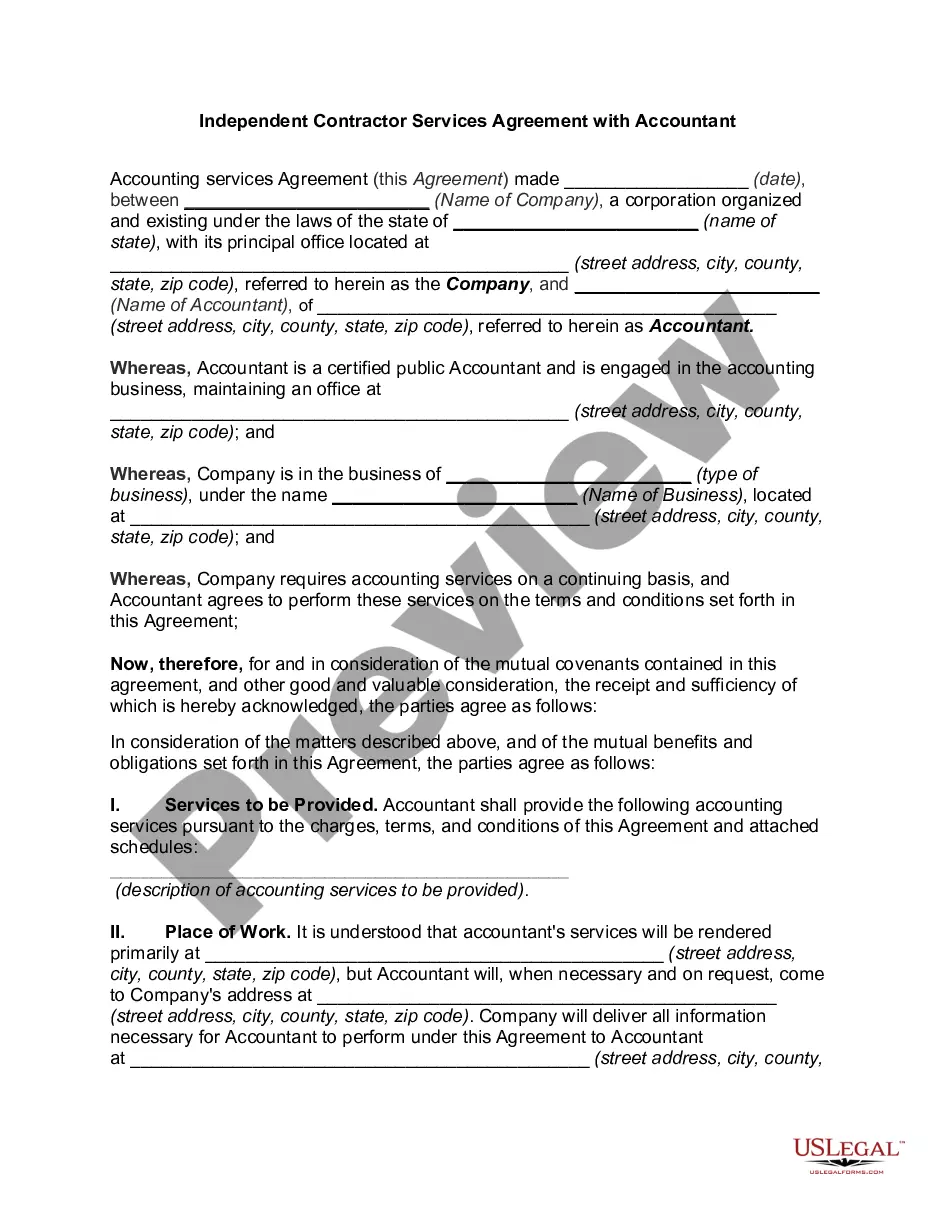
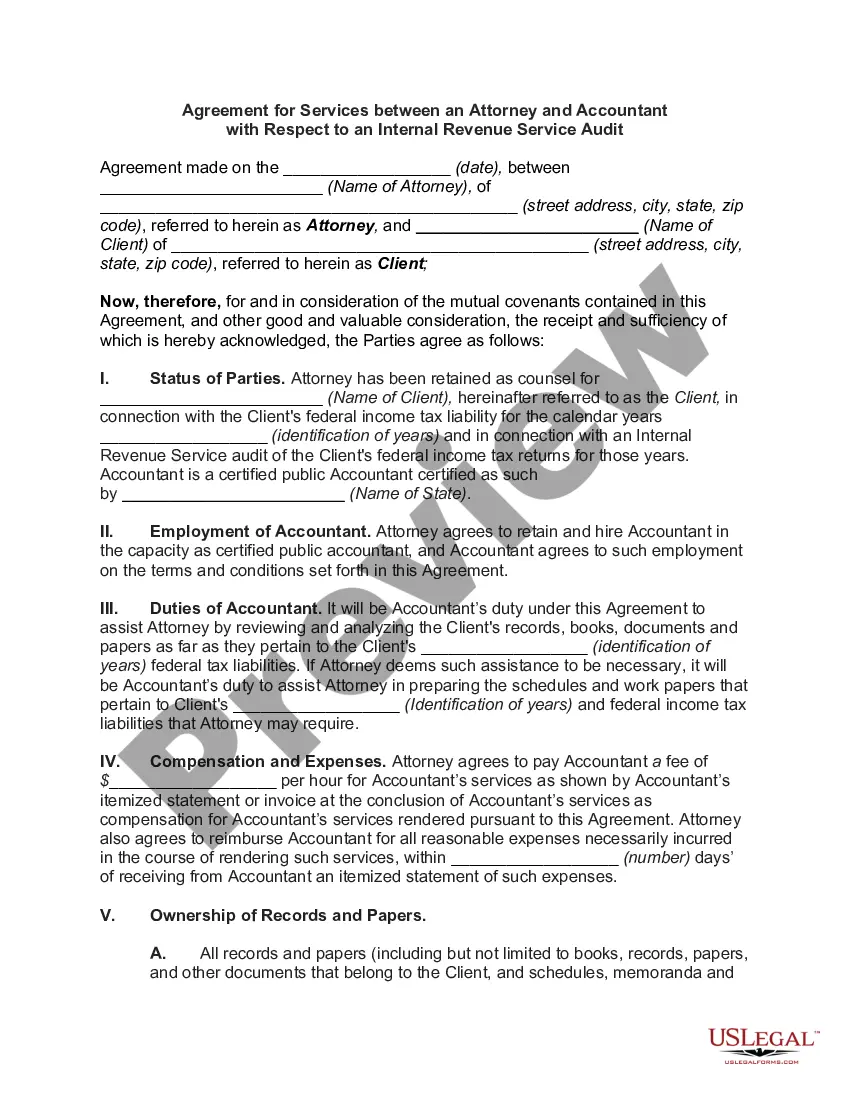
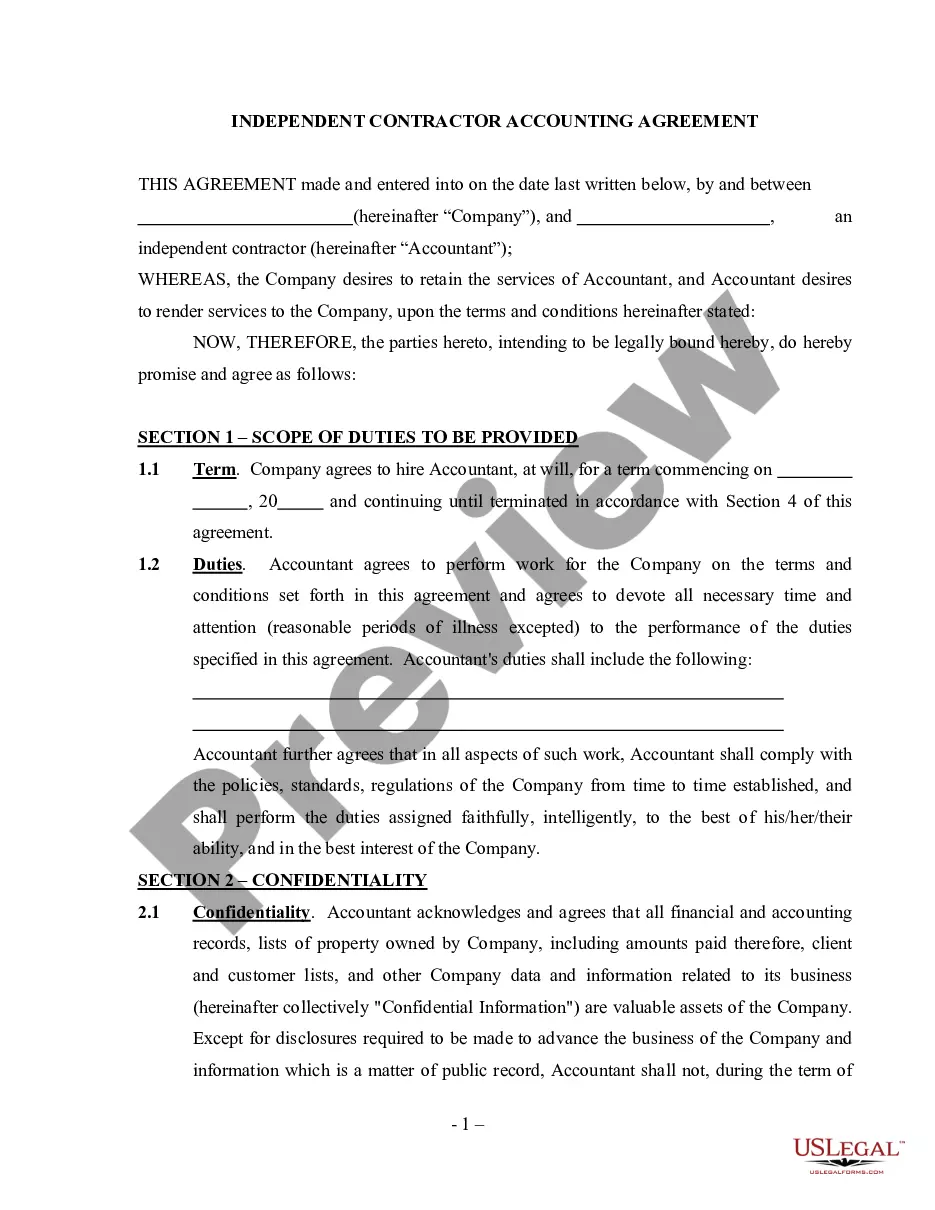
Get your form ready online
Our built-in tools help you complete, sign, share, and store your documents in one place.
Make edits, fill in missing information, and update formatting in US Legal Forms—just like you would in MS Word.
Download a copy, print it, send it by email, or mail it via USPS—whatever works best for your next step.
Sign and collect signatures with our SignNow integration. Send to multiple recipients, set reminders, and more. Go Premium to unlock E-Sign.
If this form requires notarization, complete it online through a secure video call—no need to meet a notary in person or wait for an appointment.
We protect your documents and personal data by following strict security and privacy standards.

Make edits, fill in missing information, and update formatting in US Legal Forms—just like you would in MS Word.

Download a copy, print it, send it by email, or mail it via USPS—whatever works best for your next step.

Sign and collect signatures with our SignNow integration. Send to multiple recipients, set reminders, and more. Go Premium to unlock E-Sign.

If this form requires notarization, complete it online through a secure video call—no need to meet a notary in person or wait for an appointment.

We protect your documents and personal data by following strict security and privacy standards.
Looking for another form?










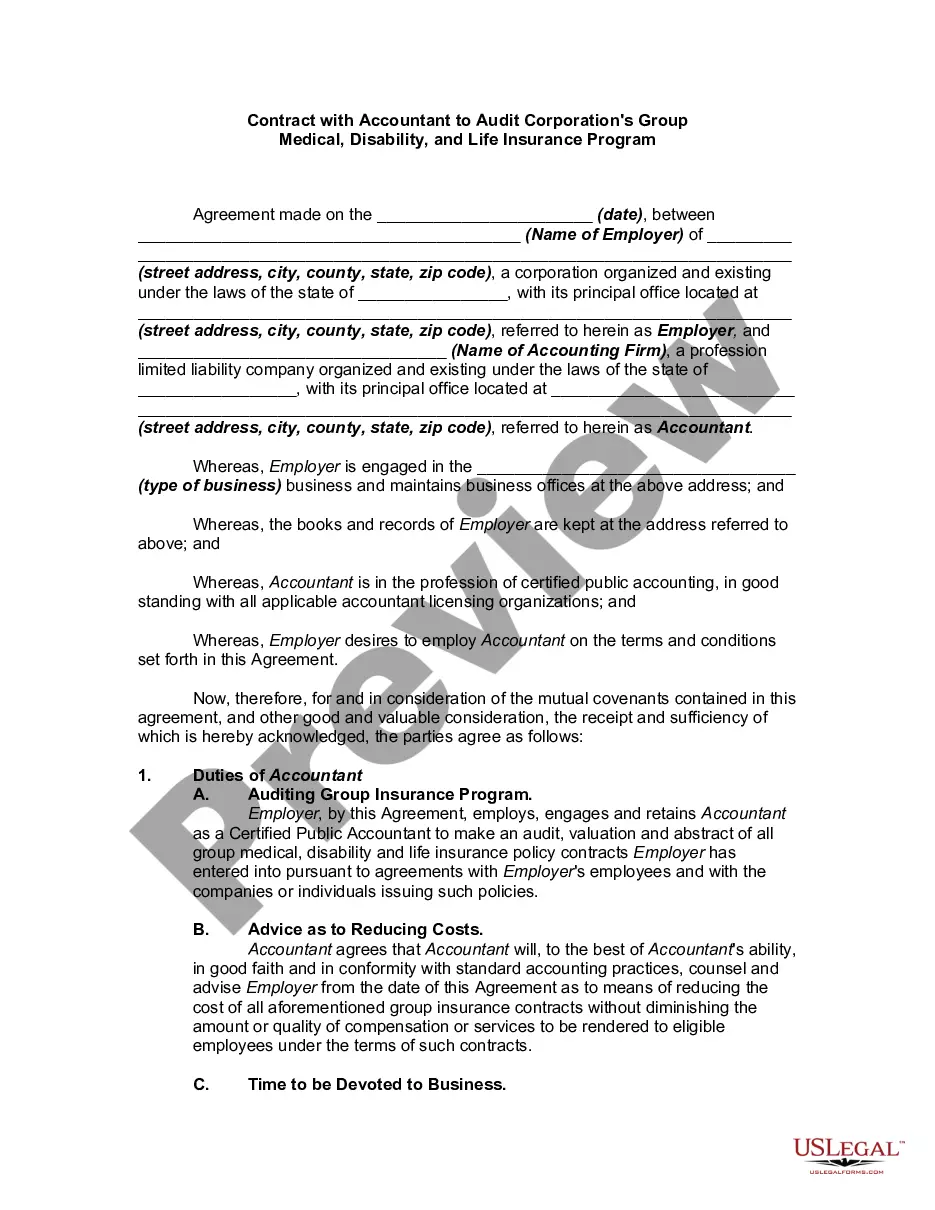
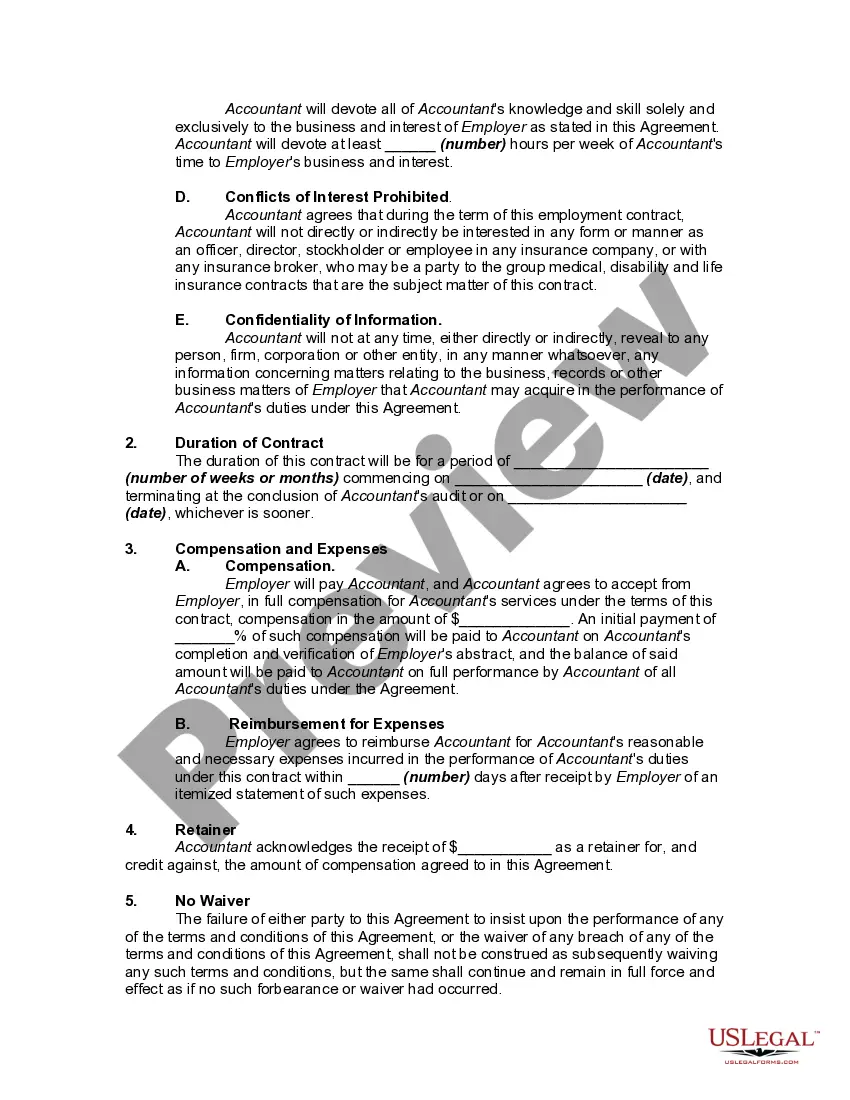
How to fill out Contract With Accountant To Audit Corporation's Group Medical, Disability, And Life Insurance Program?
It's well known that you can't instantly become a legal expert, nor can you swiftly learn how to prepare Accounting With Insurance without a specialized background.
Drafting legal documents is a lengthy process necessitating specific training and expertise. So why not entrust the preparation of the Accounting With Insurance to the experts.
With US Legal Forms, one of the most extensive legal document repositories, you can find everything from court filings to templates for internal business correspondence. We recognize how essential compliance and adherence to both federal and state regulations are. That’s why, on our site, all templates are location-specific and current.
You can access your forms again from the My documents section at any time. If you're a current client, you can simply Log In and find and download the template from the same section.
No matter the purpose of your forms—be it financial, legal, or personal—our platform has everything you need. Give US Legal Forms a try now!
- Find the document you require by utilizing the search bar at the top of the page.
- Preview it (if this feature is available) and review the accompanying description to determine if Accounting With Insurance is what you're looking for.
- Restart your search if you need any other template.
- Create a free account and choose a subscription plan to buy the template.
- Select Buy now. Once the payment is completed, you can download the Accounting With Insurance, fill it out, print it, and deliver it, either electronically or via mail, to the specified individuals or organizations.
Form popularity
FAQ
Insurance accounting involves recording, classifying, and analyzing financial transactions associated with insurance operations. It encompasses various functions, such as premium collection, claims processing, and investment income reporting. Proper insurance accounting provides a clear picture of an insurance company’s financial health, ultimately influencing decision-making. By mastering insurance accounting, companies can enhance their accounting with insurance.
An insurance claim can be shown in accounting by recording it as receivable when filed and then adjusting it based on settlements. Initially, you would debit the accounts receivable and credit the insurance income when the claim is intact. This meticulous tracking helps in maintaining clarity in your financial records related to accounting with insurance.
Insurance calculation involves assessing various factors such as risk, coverage amount, and premiums. To determine the premium, insurers often use actuarial data and statistical models. By understanding these calculations, you can better manage your finances in accounting with insurance.
The following journal entry can be used to record the insurance claim: Debit: Insurance Claim Receivable (Assets) - Increase in the amount of insurance claim receivable. Credit: Loss on Damaged Goods (Expenses) - Record the loss incurred due to damaged goods.
Insurance expense is the amount that a company pays to get an insurance contract and any additional premium payments. The payment made by the company is listed as an expense for the accounting period.
If your Asset Disposal account has a profit in it, create a new revenue account called Gain from Insurance Claim. If your Asset Disposal account has a loss in it, create a new expense account, Loss from Insurance Claim.
Any insurance premium costs that have not expired as of the balance sheet date should be reported as a current asset such as Prepaid Insurance. The costs that have expired should be reported in income statement accounts such as Insurance Expense, Fringe Benefits Expense, etc.
If the premium paid is greater than the increase in cash surrender value for the year, the difference between the two is recorded as an insurance expense on the income statement. If the premium paid is less than the increase in the cash surrender value, the difference is recorded as an insurance gain.