Summary Judgment For Failure To State A Claim
Description
Get your form ready online
Our built-in tools help you complete, sign, share, and store your documents in one place.
Make edits, fill in missing information, and update formatting in US Legal Forms—just like you would in MS Word.
Download a copy, print it, send it by email, or mail it via USPS—whatever works best for your next step.
Sign and collect signatures with our SignNow integration. Send to multiple recipients, set reminders, and more. Go Premium to unlock E-Sign.
If this form requires notarization, complete it online through a secure video call—no need to meet a notary in person or wait for an appointment.
We protect your documents and personal data by following strict security and privacy standards.

Make edits, fill in missing information, and update formatting in US Legal Forms—just like you would in MS Word.

Download a copy, print it, send it by email, or mail it via USPS—whatever works best for your next step.

Sign and collect signatures with our SignNow integration. Send to multiple recipients, set reminders, and more. Go Premium to unlock E-Sign.

If this form requires notarization, complete it online through a secure video call—no need to meet a notary in person or wait for an appointment.

We protect your documents and personal data by following strict security and privacy standards.
Looking for another form?







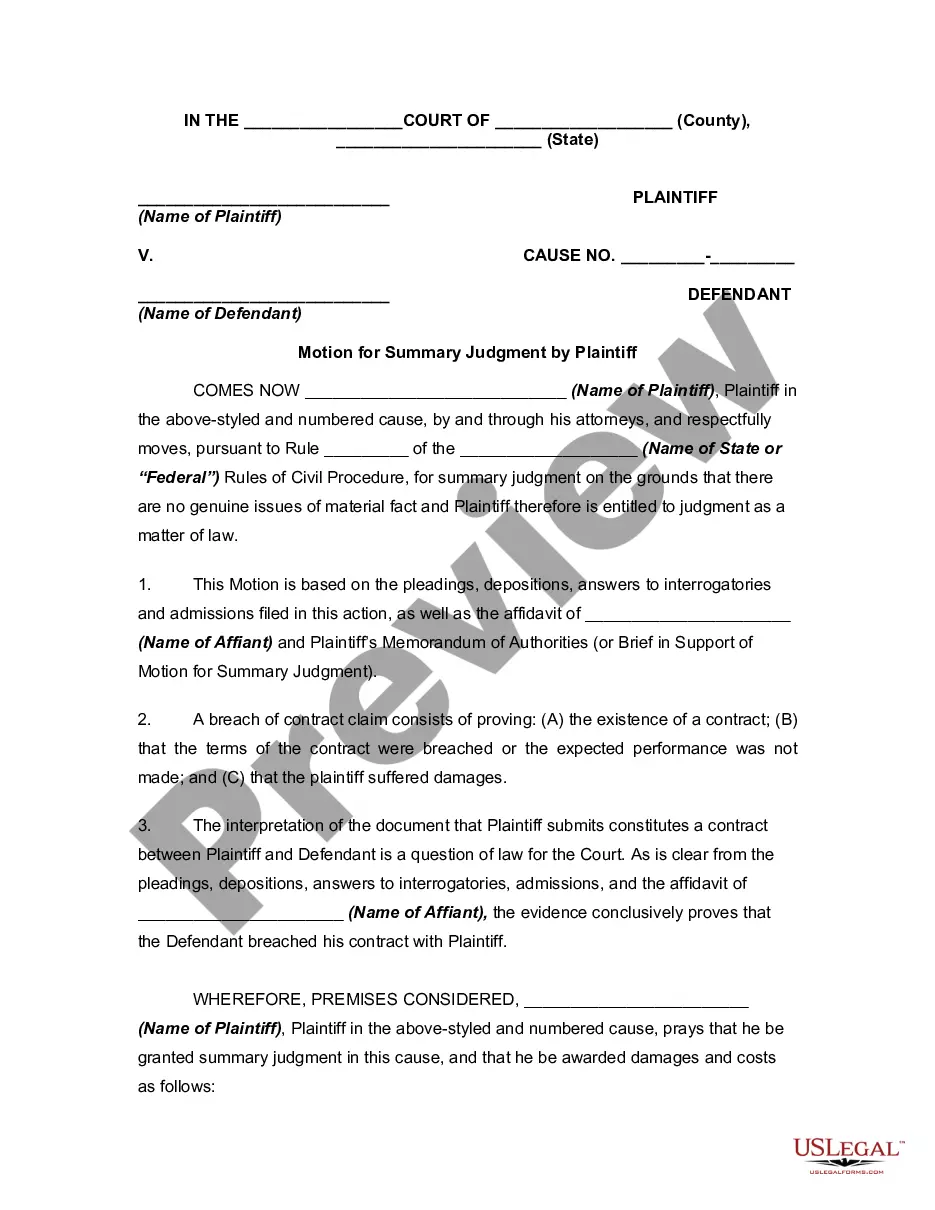
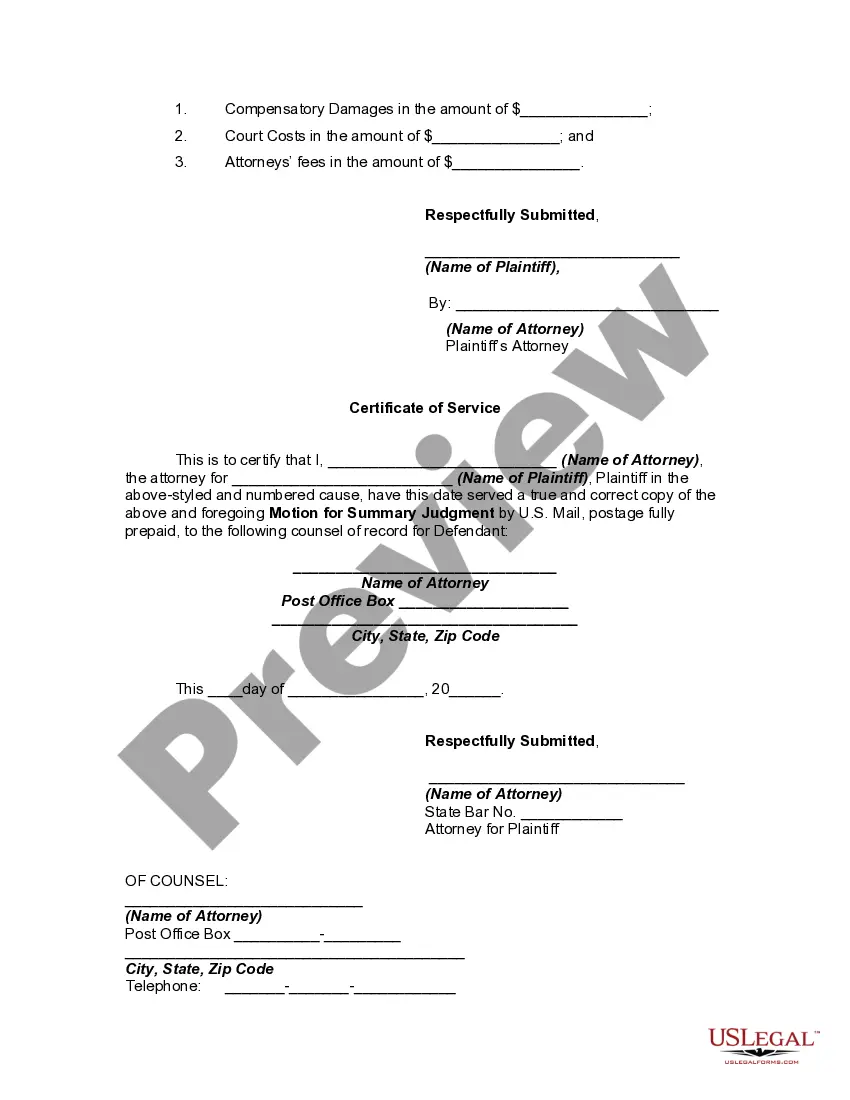
How to fill out Motion For Summary Judgment By Plaintiff For Breach Of Contract?
- Log in to your account if you're a returning user. Ensure your subscription is active before proceeding.
- For first-time users, explore our Preview mode and form descriptions to find the right document tailored to your local jurisdiction.
- If you need additional templates, utilize the Search tab to discover forms that better suit your needs.
- Select your desired document and click on the Buy Now button. Choose a subscription plan that works best for you.
- Complete your purchase by entering your payment information, either via credit card or PayPal.
- Download the finalized form to your device for completion and easy access anytime through the My Forms section of your account.
By utilizing US Legal Forms, you not only gain access to more than 85,000 customizable legal templates but also benefit from expert assistance, ensuring that your documentation is both accurate and legally valid.
Take control of your legal needs today! Sign up for US Legal Forms and streamline your document preparation process.
Form popularity
FAQ
Failure to state a claim is typically governed by Rule 12(b)(6) of the Federal Rules of Civil Procedure. This rule allows a defendant to request the court to dismiss a case if the complaint does not state a legally valid claim. Understanding the implications of this rule is crucial, especially for those exploring summary judgment for failure to state a claim, as it sets the stage for evaluation and potential dismissal.
To write a compelling motion for summary judgment, begin by clearly stating the legal standard and demonstrating a lack of genuine issues of material fact. Support your arguments with relevant evidence, such as affidavits, depositions, and documents that align with your claims. When addressing claims of failure to state a claim, ensure your motion not only outlines the deficiencies in the opposing party's claim but also underscores why the law favors your position.
An example of failure to state a claim might involve a scenario where a plaintiff alleges harm but does not specify any legal basis for the claim, such as a breach of contract or negligence. For instance, if a complaint states that someone caused emotional distress without explaining how or providing any wrongdoing, a court may dismiss the case. This reinforces the importance of understanding summary judgment for failure to state a claim, as it helps clarify whether a case should advance.
Failure to state a claim on which relief can be granted occurs when a party's complaint does not contain sufficient factual allegations to support a legal claim. Essentially, it means that even if all the facts presented in the complaint are true, the law does not recognize them as a valid claim. In the context of summary judgment for failure to state a claim, this defense can effectively halt the case before it progresses to trial.
To survive a motion to dismiss for failure to state a claim, ensure that your complaint includes clear, well-supported allegations that provide a legal basis for the claim. Use specific facts and detailed legal arguments while adhering to your jurisdiction's requirements. Engaging with legal resources like USLegalForms can help prepare your response effectively. Being proactive and precise can significantly increase your chances of moving forward in your case.
You can file a motion for failure to state a claim usually at the initial phases of litigation, specifically in response to a complaint. The timing often aligns with filing your answer to the complaint, allowing you to challenge the validity of the claims made against you. Utilizing legal tools, such as those found on USLegalForms, can simplify this process. Prompt action can keep your case on a stronger legal footing.
Failure to state a claim occurs when a complaint does not provide sufficient factual evidence that supports a legal claim. This means that even if all allegations were true, the law does not recognize them as grounds for relief. Knowing what constitutes a valid claim is essential to building a strong case. Ensuring you avoid this pitfall can make a significant impact on your legal success.
Yes, failure to state a claim can be waivable if the defendant fails to raise it in a timely manner. If the motion to dismiss based on this ground is not brought forward at an appropriate stage in the proceedings, it may be considered forfeited. Legal strategy and planning are essential to ensure you present such defenses effectively. Addressing this early on can avoid complications later in the case.
You can file a motion to dismiss for failure to state a claim any time after the complaint has been filed, but typically, it occurs before the defendant answers the complaint. Timing matters; many jurisdictions require this motion to be filed with or before the answer. Once the motion is filed, the court will assess whether the complaint adequately states a claim. This step is critical in the legal process of addressing claims that lack substance.
To request a summary judgment, you must file a motion with the court that explains why the case should not proceed to trial. This motion should include supporting evidence and legal arguments demonstrating that there are no genuine disputes of material fact. Legal resources and platforms such as USLegalForms can guide you through the documentation needed for such requests. Choosing to file for summary judgment can save you time and resources, especially in cases of failure to state a claim.