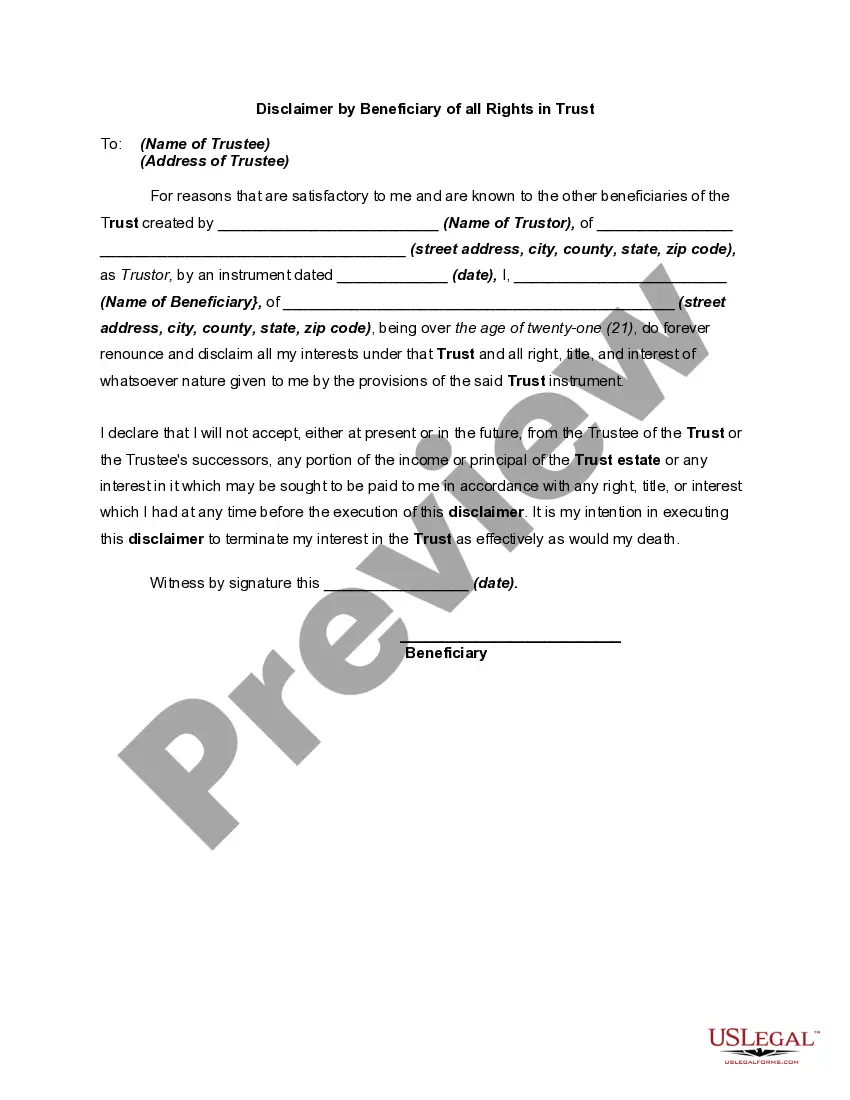
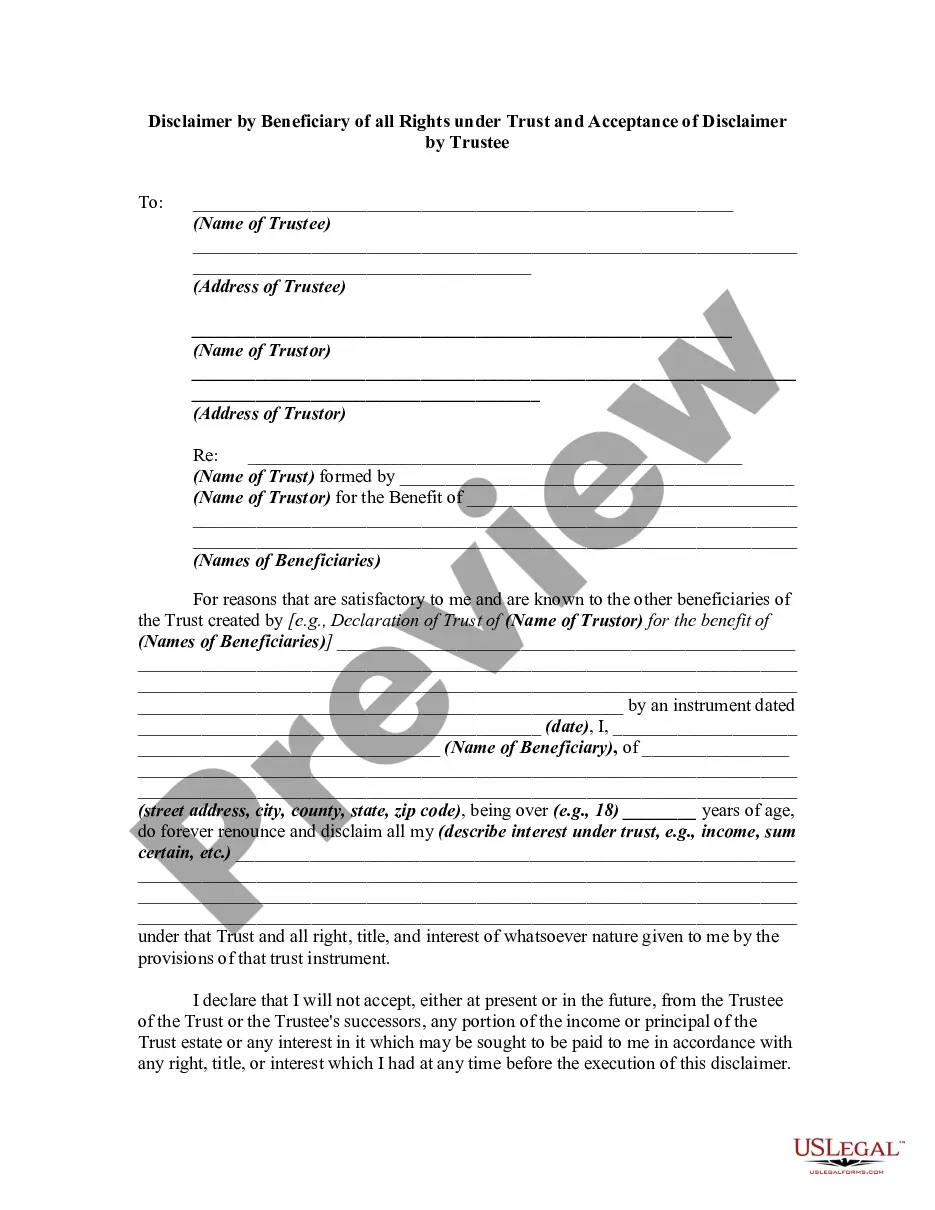
Disclaimer Beneficiary Without Social Security Number
Description
Get your form ready online
Our built-in tools help you complete, sign, share, and store your documents in one place.
Make edits, fill in missing information, and update formatting in US Legal Forms—just like you would in MS Word.
Download a copy, print it, send it by email, or mail it via USPS—whatever works best for your next step.
Sign and collect signatures with our SignNow integration. Send to multiple recipients, set reminders, and more. Go Premium to unlock E-Sign.
If this form requires notarization, complete it online through a secure video call—no need to meet a notary in person or wait for an appointment.
We protect your documents and personal data by following strict security and privacy standards.

Make edits, fill in missing information, and update formatting in US Legal Forms—just like you would in MS Word.

Download a copy, print it, send it by email, or mail it via USPS—whatever works best for your next step.

Sign and collect signatures with our SignNow integration. Send to multiple recipients, set reminders, and more. Go Premium to unlock E-Sign.

If this form requires notarization, complete it online through a secure video call—no need to meet a notary in person or wait for an appointment.

We protect your documents and personal data by following strict security and privacy standards.
Looking for another form?
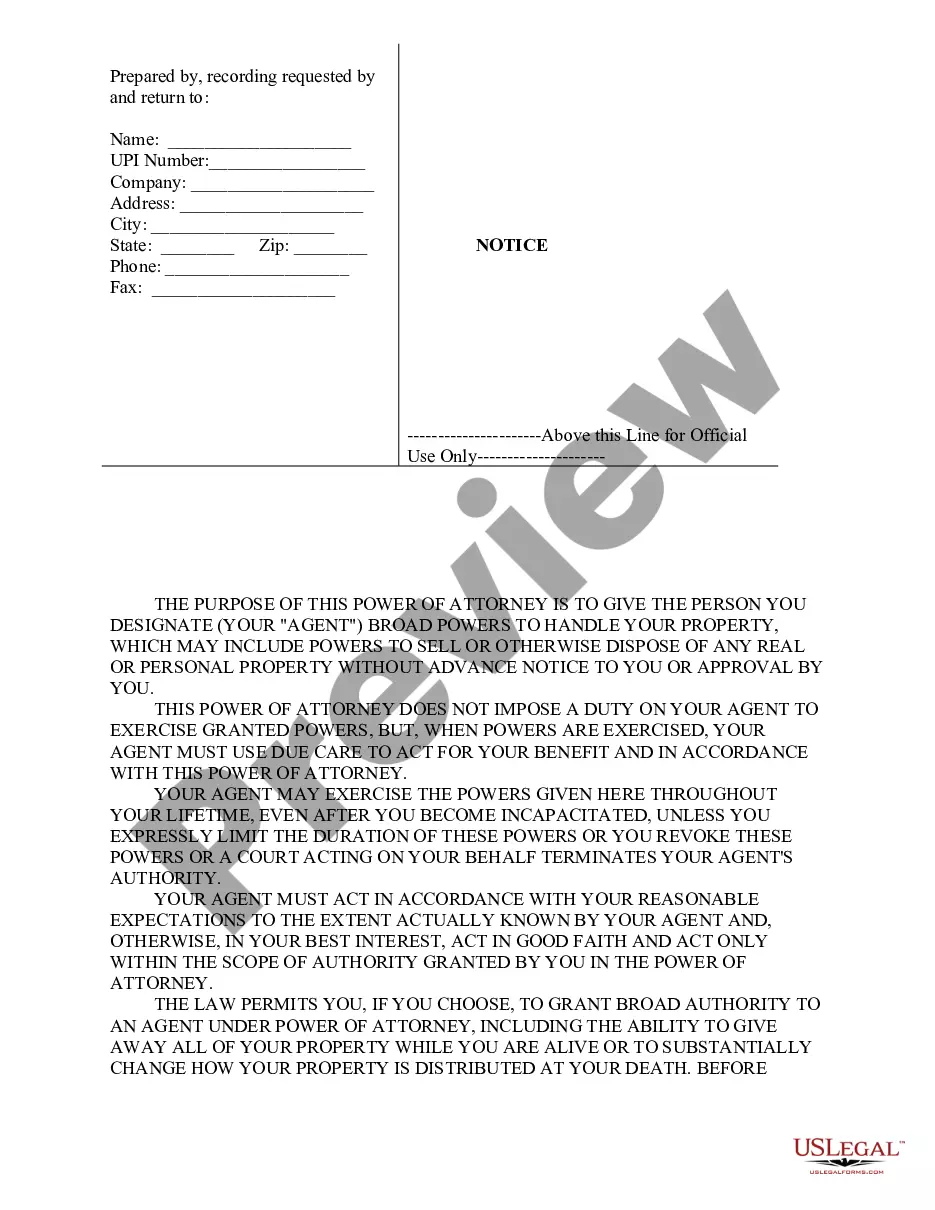





How to fill out Disclaimer By Beneficiary Of All Rights In Trust?
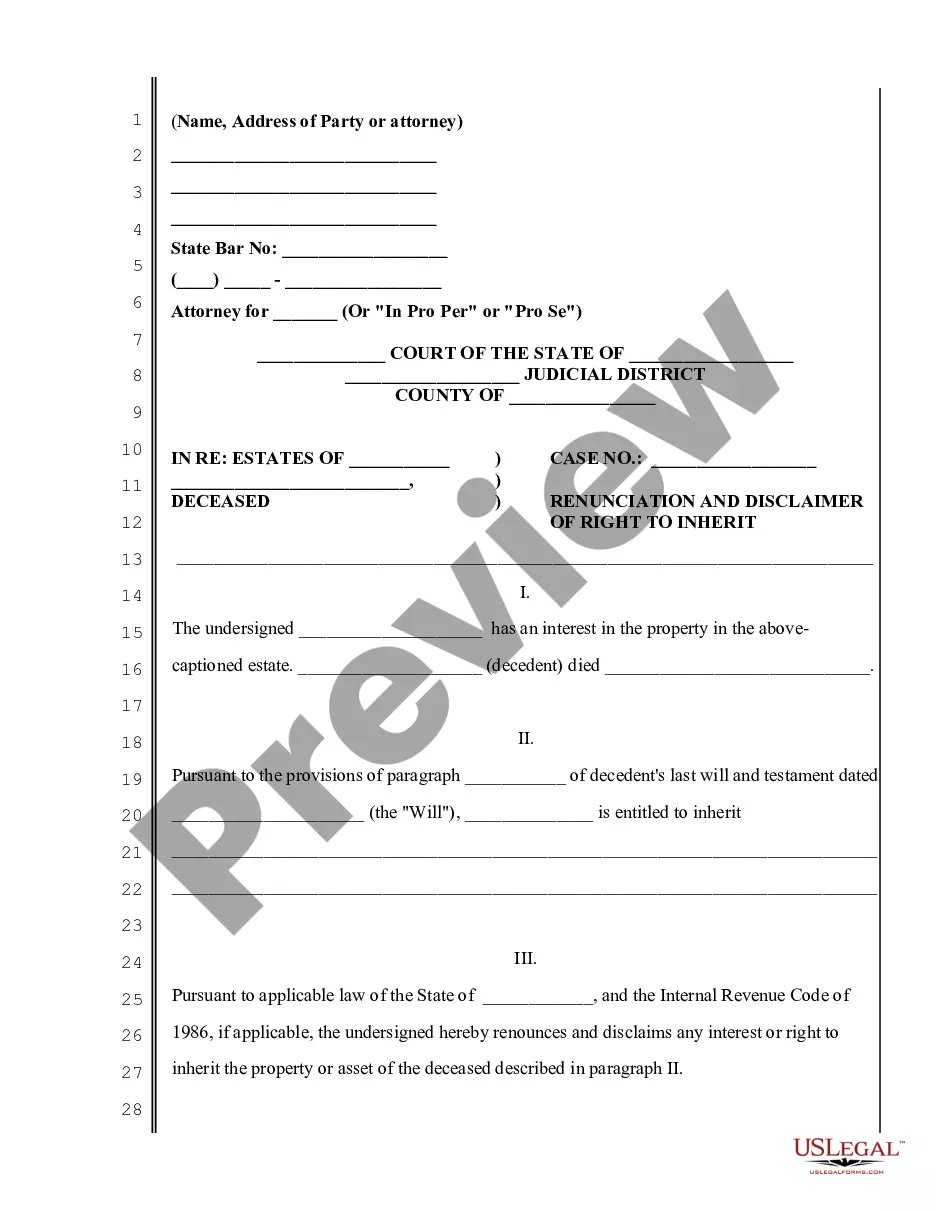
Handling legal paperwork and operations can be a time-consuming addition to the day. Disclaimer Beneficiary Without Social Security Number and forms like it usually require that you look for them and navigate how to complete them properly. Therefore, whether you are taking care of economic, legal, or personal matters, using a comprehensive and hassle-free web catalogue of forms at your fingertips will significantly help.
US Legal Forms is the best web platform of legal templates, boasting more than 85,000 state-specific forms and numerous resources to assist you to complete your paperwork quickly. Explore the catalogue of relevant papers available with just one click.
US Legal Forms gives you state- and county-specific forms offered by any moment for downloading. Safeguard your papers managing procedures by using a top-notch support that lets you put together any form within a few minutes without having extra or hidden charges. Just log in to your profile, locate Disclaimer Beneficiary Without Social Security Number and acquire it straight away within the My Forms tab. You may also access formerly downloaded forms.
Could it be your first time using US Legal Forms? Sign up and set up up your account in a few minutes and you will have access to the form catalogue and Disclaimer Beneficiary Without Social Security Number. Then, stick to the steps listed below to complete your form:
- Ensure you have discovered the proper form using the Preview option and looking at the form information.
- Pick Buy Now once ready, and choose the subscription plan that is right for you.
- Press Download then complete, eSign, and print the form.
US Legal Forms has twenty five years of experience supporting users manage their legal paperwork. Obtain the form you require right now and enhance any operation without having to break a sweat.
Form popularity
FAQ
^If your beneficiary does not have a Social Security number, then an alternative number such as the Individual Tax Identification Number (ITIN) may be used instead. If your beneficiary is a charity or organization, the Employer Identification Number (EIN) may be used.
Spouse, partner, children, parents, brothers and sisters, business partner, key employee, trust and charitable organization.
1. If the Estate must file an estate tax return. If the beneficiary is required to file an estate tax return, the Internal Revenue Service requires that the Executor list the Social Security number (SSN) or Taxpayer Identification Number (TIN) of any beneficiary receiving more than a certain amount.
Most beneficiary designations will require you to provide a person's full legal name and their relationship to you (spouse, child, mother, etc.). Some beneficiary designations also include information like mailing address, email, phone number, date of birth and Social Security number.
Yes. Banks may require the beneficiary to provide a Social Security number (SSN) for monetary transactions. This requirement is intended to verify that funds are distributed to the correct designated individual(s) listed in a will, trust, insurance policy, retirement plan, annuity, or other contract.