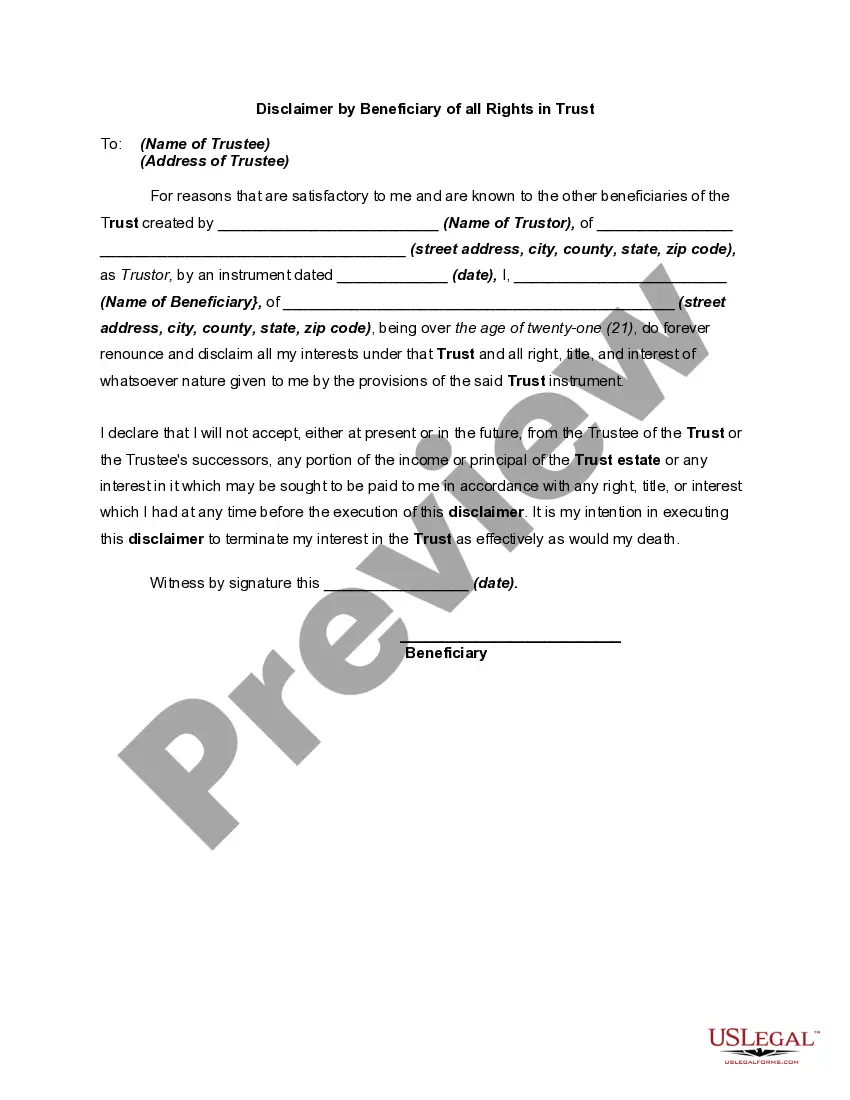
Beneficiary Trust Form With Bank Details
Description
Get your form ready online
Our built-in tools help you complete, sign, share, and store your documents in one place.
Make edits, fill in missing information, and update formatting in US Legal Forms—just like you would in MS Word.
Download a copy, print it, send it by email, or mail it via USPS—whatever works best for your next step.
Sign and collect signatures with our SignNow integration. Send to multiple recipients, set reminders, and more. Go Premium to unlock E-Sign.
If this form requires notarization, complete it online through a secure video call—no need to meet a notary in person or wait for an appointment.
We protect your documents and personal data by following strict security and privacy standards.

Make edits, fill in missing information, and update formatting in US Legal Forms—just like you would in MS Word.

Download a copy, print it, send it by email, or mail it via USPS—whatever works best for your next step.

Sign and collect signatures with our SignNow integration. Send to multiple recipients, set reminders, and more. Go Premium to unlock E-Sign.

If this form requires notarization, complete it online through a secure video call—no need to meet a notary in person or wait for an appointment.

We protect your documents and personal data by following strict security and privacy standards.
Looking for another form?
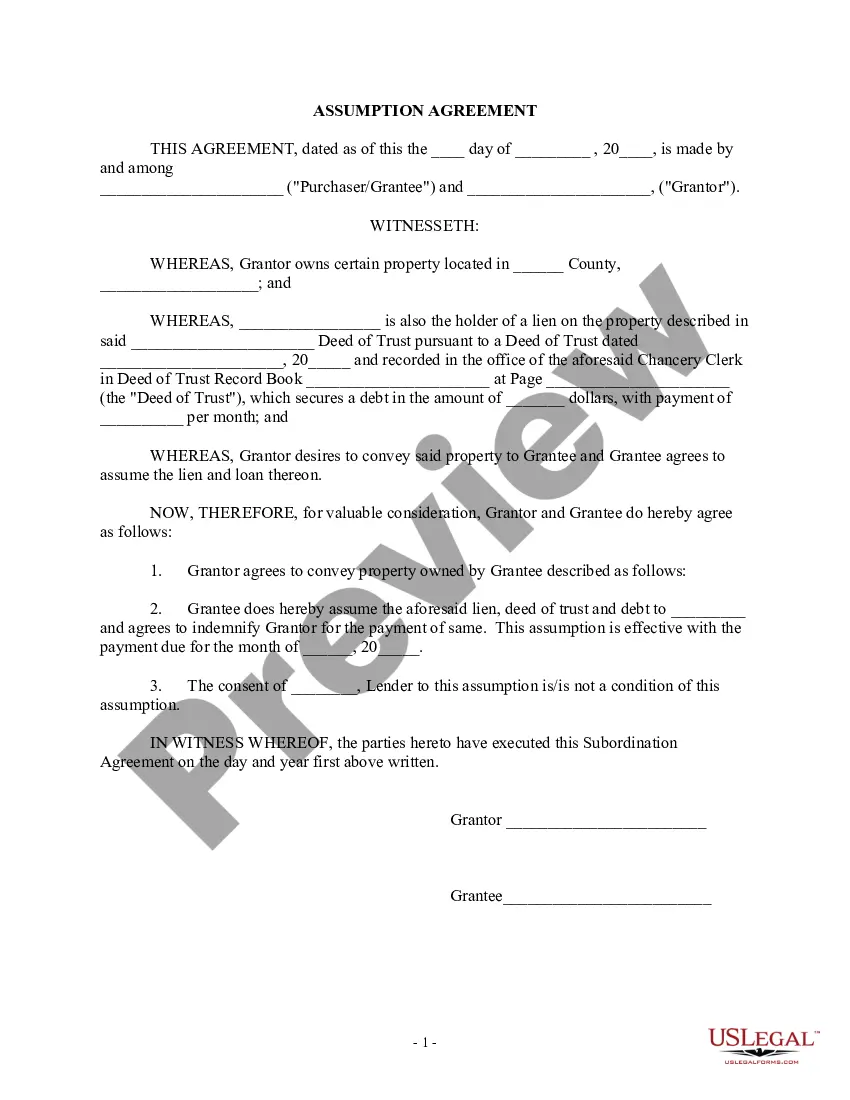







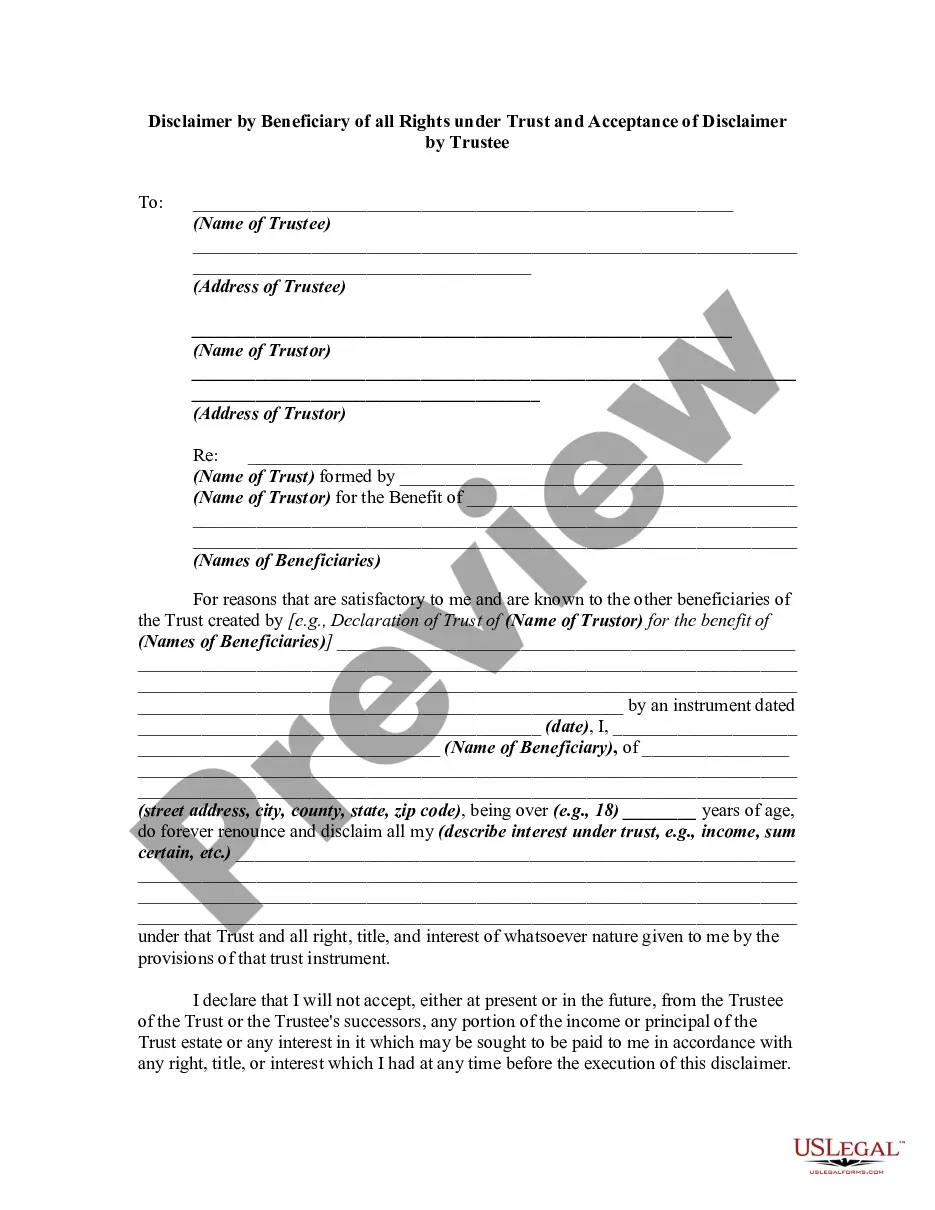
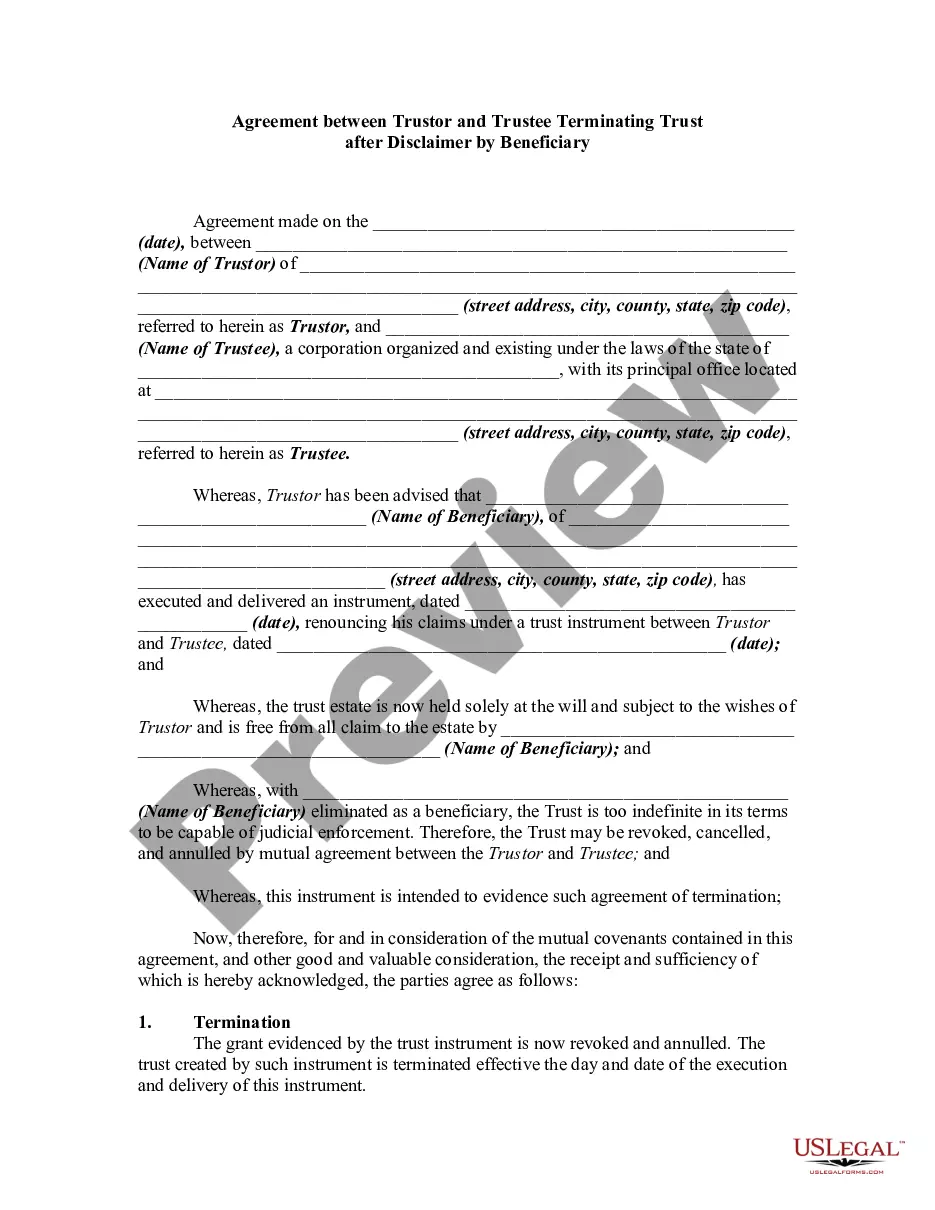
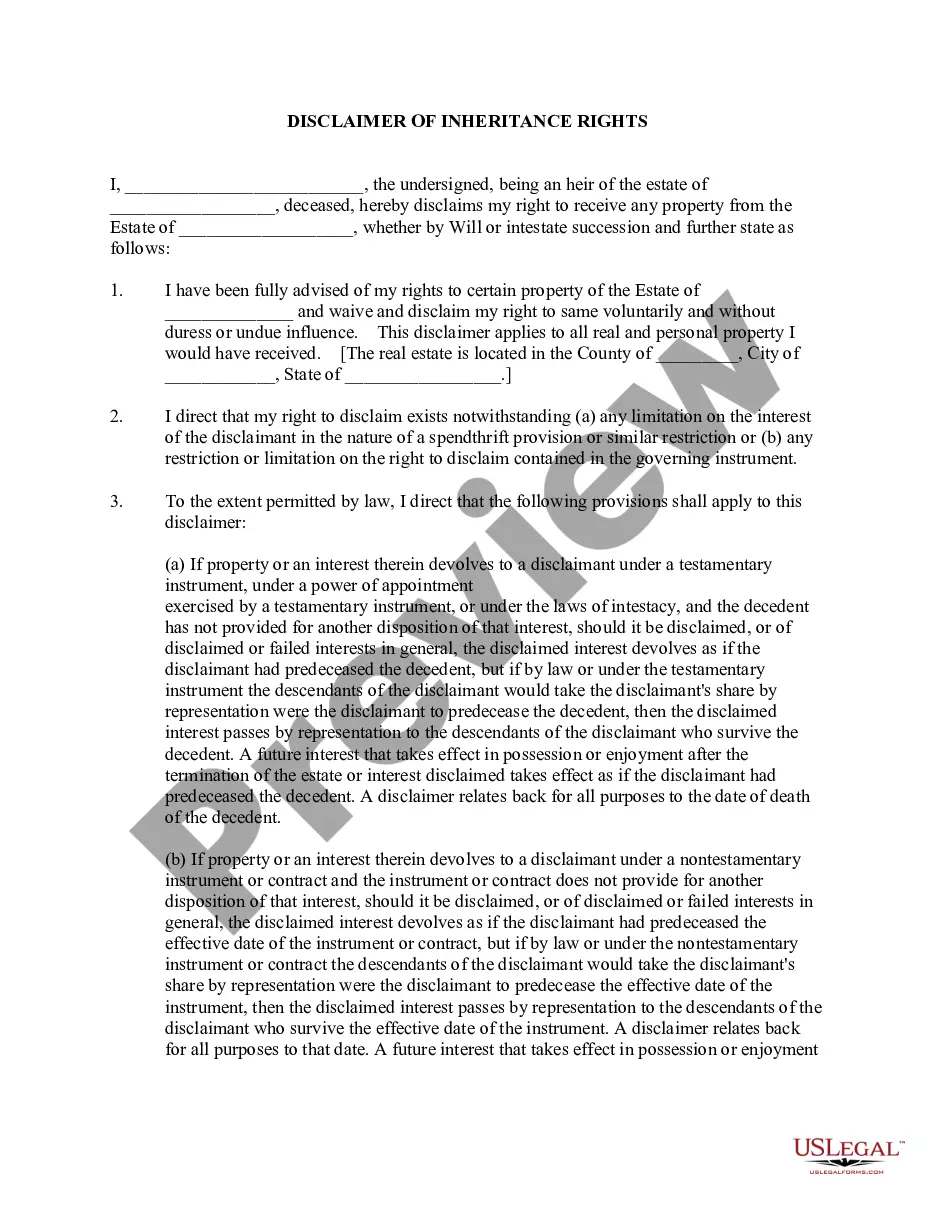
How to fill out Disclaimer By Beneficiary Of All Rights In Trust?
- Log in to your US Legal Forms account if you have used our service before. Ensure your subscription is active; renew if necessary.
- If you're a new user, start by previewing the required form and its description. Verify it meets your needs and complies with local jurisdiction requirements.
- If adjustments are needed, utilize the search feature to find the correct template that aligns with your requirements.
- Once you've found the correct form, click on the 'Buy Now' button and select your desired subscription plan. You will need to create an account to access the forms library.
- Proceed with your purchase by entering your payment information or opting for PayPal.
- Download the form directly to your device and save it for easy access. You can always find it later in the 'My Forms' section of your profile.
In conclusion, US Legal Forms simplifies the process of obtaining and completing legal documents like the 'Beneficiary Trust Form with Bank Details'. With more than 85,000 templates available and assistance from premium experts, you can ensure that your documents are accurate and legally binding.
Start securing your legacy today by visiting US Legal Forms and exploring the vast library of resources available at your fingertips!
Form popularity
FAQ
Yes, you can make your trust the beneficiary of your checking account. This process is similar to designating a trust as the beneficiary of other assets. You need to fill out the beneficiary trust form with bank details, which your bank will provide. Upon completion, the trust will receive the funds in your account according to the terms you have set, ensuring a smooth transition when the time comes.
One disadvantage of naming a trust as a beneficiary is the complexity it may introduce when managing the trust's assets. It can lead to additional paperwork and legal requirements, potentially delaying access to funds. Furthermore, if the trust is not properly set up, it could lead to unintended consequences. Engaging with a platform like USLegalForms can help you navigate the necessary paperwork, ensuring that your beneficiary trust form with bank details is completed correctly.
As a beneficiary, you may have the right to see your deceased mom's bank statements, depending on the state laws regarding trust and inheritance. Typically, if you are named in the trust, you can request account information. If you have questions, consider consulting an attorney specializing in estate planning to determine your rights. Remember, understanding these details can be crucial for managing the estate and the associated trust.
Changing a bank account to a trust involves completing the beneficiary trust form with bank details. First, contact your bank to request this form and gather information regarding your trust. You will need to provide the trust agreement and identification. Once you submit the completed form, the bank will update your account to reflect that it is now held in the name of the trust.
To make a trust the beneficiary of your bank account, you need to fill out the beneficiary trust form with bank details provided by your financial institution. This form typically requires you to provide the trust's name, the trustee's name, and relevant account details. After you complete the form, submit it to your bank, ensuring all information is accurate. This process will help ensure that the funds in your account are transferred according to the trust's terms upon your passing.
Yes, beneficiaries are generally entitled to see checking account statements if they pertain to the trust. Accessing these statements can help beneficiaries understand the account's financial activities leading up to the distribution of assets. A well-drafted beneficiary trust form with bank details can facilitate this transparency. Knowing your rights as a beneficiary helps in claiming your rightful share.
An executor must provide beneficiaries with information about the estate's assets, debts, and how the assets will be distributed. This transparency includes disclosing bank accounts, which may involve sharing a beneficiary trust form with bank details. Open communication fosters trust and understanding among all parties involved. Executors often benefit from clear guidelines to ensure compliance with legal needs.
Most banks offer beneficiary forms to establish and designate beneficiaries on accounts. Filling out a beneficiary trust form with bank details ensures proper allocation of assets upon death. It’s critical to keep these forms updated to reflect changes in your estate planning. Contact your bank to inquire about their specific processes and requirements.
Beneficiaries have the right to request to see bank statements related to the trust, depending on the trust terms. These documents can provide insight into how the trust is managed and the assets it holds. A beneficiary trust form with bank details may require transparency about financial activities. Understanding your rights as a beneficiary is important for effective communication with the trustee.
Yes, a trust can be listed as a beneficiary on a checking account. This designation allows for the funds to be transferred to the trust upon the account holder's passing. A properly completed beneficiary trust form with bank details is crucial to ensure that the trust effectively receives the assets. It’s a smart way to manage and protect your estate.