Beneficiary Rights Trust For The Future
Description
Get your form ready online
Our built-in tools help you complete, sign, share, and store your documents in one place.
Make edits, fill in missing information, and update formatting in US Legal Forms—just like you would in MS Word.
Download a copy, print it, send it by email, or mail it via USPS—whatever works best for your next step.
Sign and collect signatures with our SignNow integration. Send to multiple recipients, set reminders, and more. Go Premium to unlock E-Sign.
If this form requires notarization, complete it online through a secure video call—no need to meet a notary in person or wait for an appointment.
We protect your documents and personal data by following strict security and privacy standards.

Make edits, fill in missing information, and update formatting in US Legal Forms—just like you would in MS Word.

Download a copy, print it, send it by email, or mail it via USPS—whatever works best for your next step.

Sign and collect signatures with our SignNow integration. Send to multiple recipients, set reminders, and more. Go Premium to unlock E-Sign.

If this form requires notarization, complete it online through a secure video call—no need to meet a notary in person or wait for an appointment.

We protect your documents and personal data by following strict security and privacy standards.
Looking for another form?








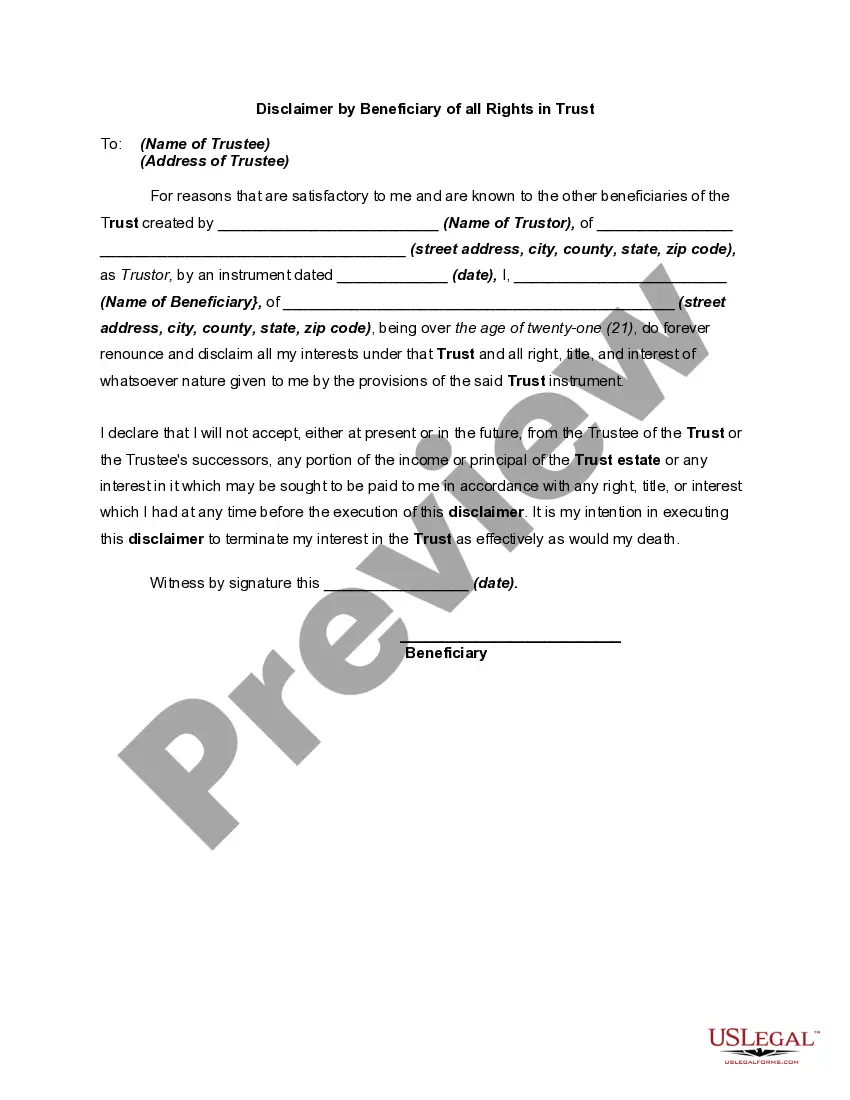
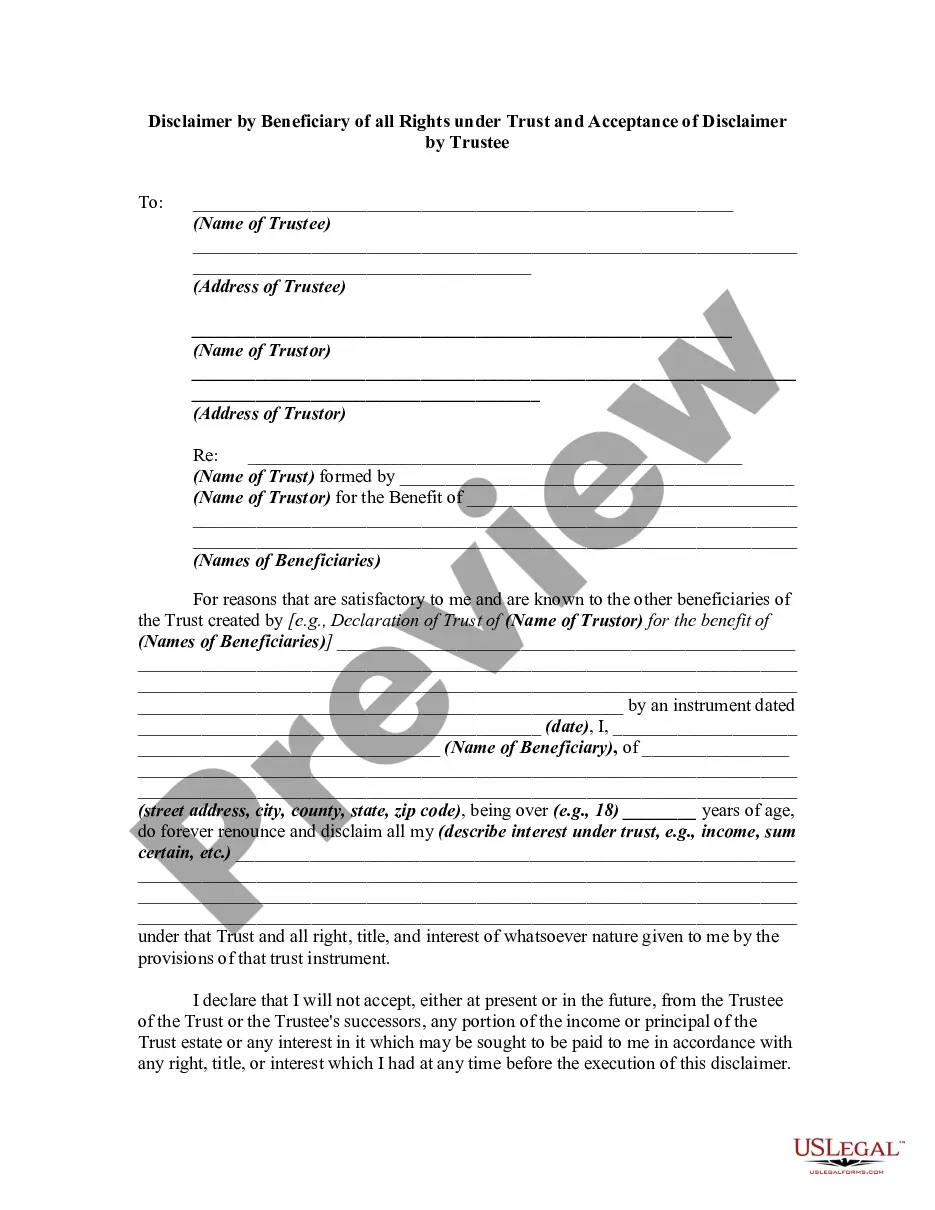
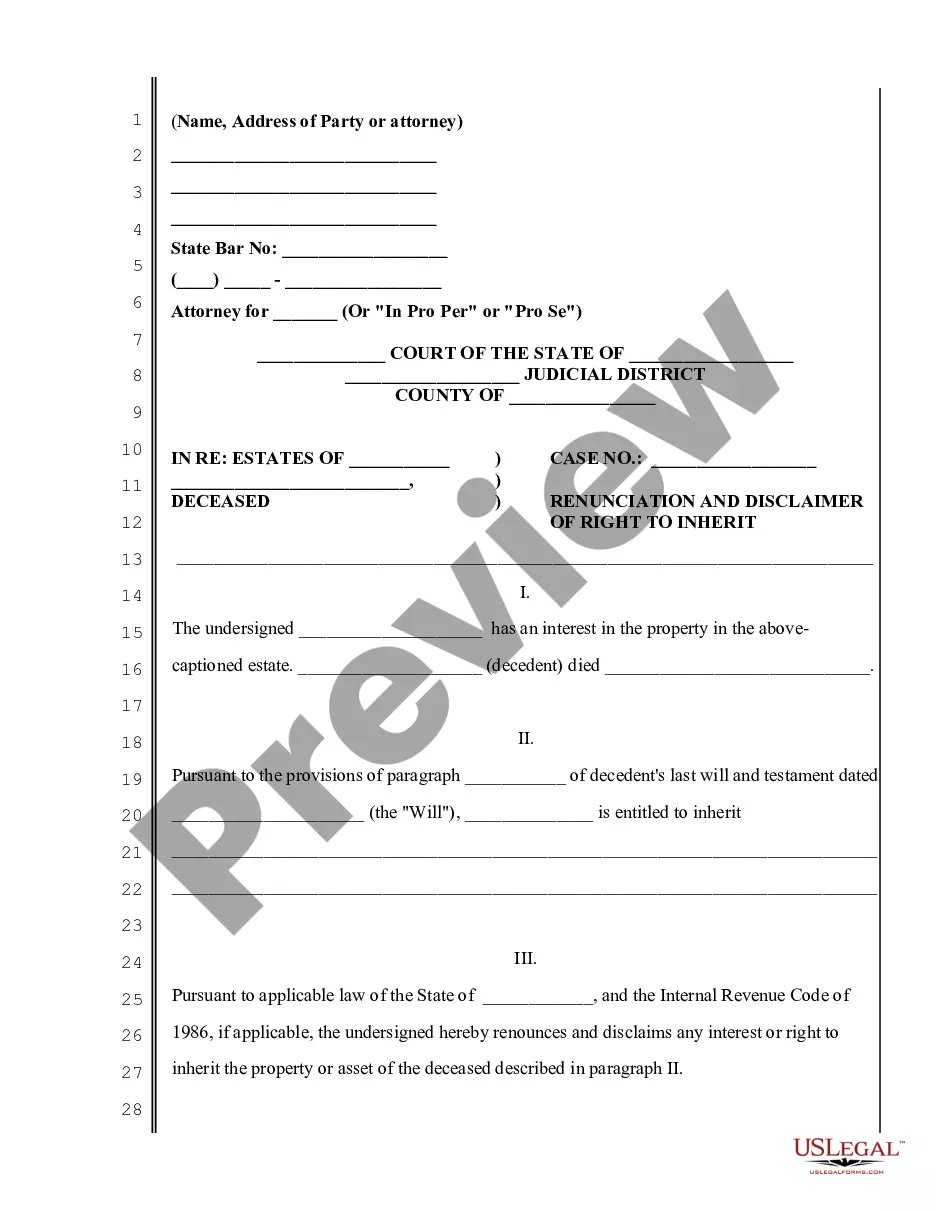
How to fill out Disclaimer By Beneficiary Of All Rights In Trust?
- If you're a returning user, log in to your account and select the desired form template to download to your device. Ensure your subscription is active; renew if necessary.
- For first-time users, start by previewing the form description to find the right document that fits your requirements and complies with your jurisdiction.
- If the required form isn't suitable, utilize the Search tab above to locate an alternative template that better meets your needs.
- Proceed to purchase the document by clicking the Buy Now button, choosing a subscription plan, and creating an account to access the library.
- Complete the payment using your credit card or PayPal. After purchase, download the document and save it on your device.
- Access your saved document at any time in the My Forms section of your profile.
US Legal Forms provides a comprehensive and user-friendly library, empowering both individuals and attorneys to execute legal documents swiftly and effectively.
Start your journey toward securing your assets today. Visit US Legal Forms to get your Beneficiary Rights Trust documents now!
Form popularity
FAQ
The 5-year rule for trust beneficiaries is important for understanding how distributions are treated for tax purposes. Under this rule, beneficiaries may face restrictions on accessing trust assets within the first five years after the trust is established. It is crucial to understand the implications of a beneficiary rights trust for the future to ensure a smooth distribution process, especially concerning taxes.
One disadvantage of a family trust is the potential for family disputes, particularly when beneficiaries have differing opinions on asset management. A beneficiary rights trust for the future can outline clear instructions, but it may still lead to conflict if expectations are not met. Additionally, the creation and administration of a family trust may require ongoing legal oversight, which can be a financial burden.
It can be beneficial for your parents to consider a trust for their assets, especially a beneficiary rights trust for the future. This decision can help ensure a smoother transition of wealth and provide clarity on asset distribution. However, it is essential for them to consult with a legal expert or financial planner to assess their personal situation and determine if a trust aligns with their goals.
One potential downfall of having a trust is the complexity it can introduce to your estate planning. While a beneficiary rights trust for the future can help ensure your assets are managed according to your wishes, it may require ongoing administrative tasks and legal fees. Additionally, if not properly funded or maintained, the trust may not provide the intended benefits after your passing.
Filling out a beneficiary designation form for a trust involves identifying yourself and the trust's details, followed by specifying the beneficiaries and their respective shares. It is crucial to ensure that all information is accurate and reflects your intentions clearly. This process is essential for a well-structured beneficiary rights trust for the future. For assistance, consider US Legal Forms as a reliable resource to guide you through each step.
No, a trustee cannot ignore a beneficiary's rights or queries regarding the trust. The trustee has a fiduciary duty to act in the best interests of the beneficiaries and provide necessary information. If a trustee fails to communicate properly, it can raise concerns about the management of the beneficiary rights trust for the future. Utilizing the resources on US Legal Forms can help clarify these rights and provide guidance.
Yes, beneficiaries have the right to request specific information regarding the trust, including bank statements. This transparency allows beneficiaries to understand how the trust assets are managed and distributed by the trustee. Regular communication ensures that a beneficiary rights trust for the future operates fairly and meets everyone's expectations. If you encounter issues, help from platforms like US Legal Forms can guide you.
In the structure of a trust, the trustee holds the authority to manage and distribute the trust's assets. However, beneficiaries own the rights to the benefits provided by the trust. They receive distributions according to the trust terms, allowing them to have a significant influence over how the trust serves their needs. Understanding these dynamics helps ensure your beneficiary rights trust for the future functions effectively.
A future beneficiary is someone who will receive benefits from a trust at a later date, often triggered by a specific event, such as the death of a current beneficiary or reaching a certain age. This arrangement helps ensure that assets are preserved until the time is right. By creating a beneficial rights trust for the future, you can plan effectively for these eventualities and protect your loved ones' interests.
As a beneficiary, you possess critical rights, such as the right to receive distributions, request information about the trust's assets, and participate in decisions that affect the trust. Additionally, you can challenge actions that you believe are unlawful or contrary to the trust's purpose. Understanding these rights is key to making the most of your position within a beneficial rights trust for the future.