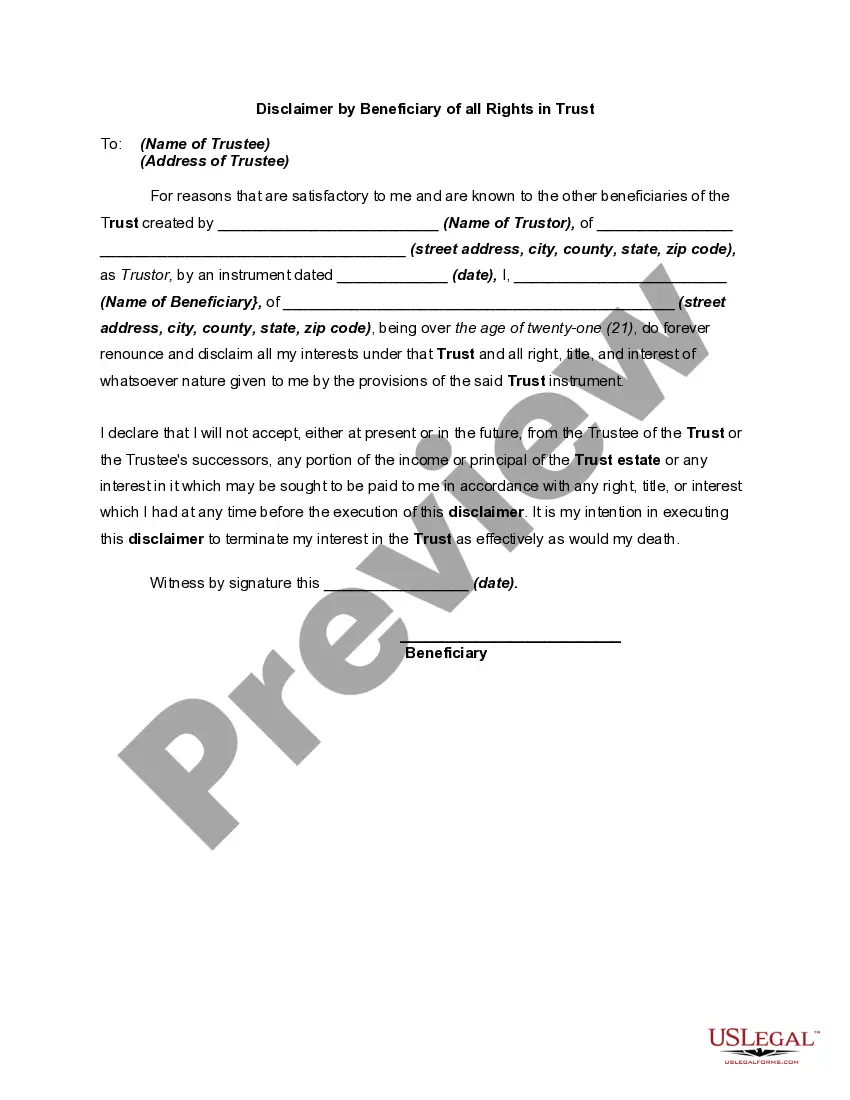
Beneficiary Rights In Nj
Description
Get your form ready online
Our built-in tools help you complete, sign, share, and store your documents in one place.
Make edits, fill in missing information, and update formatting in US Legal Forms—just like you would in MS Word.
Download a copy, print it, send it by email, or mail it via USPS—whatever works best for your next step.
Sign and collect signatures with our SignNow integration. Send to multiple recipients, set reminders, and more. Go Premium to unlock E-Sign.
If this form requires notarization, complete it online through a secure video call—no need to meet a notary in person or wait for an appointment.
We protect your documents and personal data by following strict security and privacy standards.

Make edits, fill in missing information, and update formatting in US Legal Forms—just like you would in MS Word.

Download a copy, print it, send it by email, or mail it via USPS—whatever works best for your next step.

Sign and collect signatures with our SignNow integration. Send to multiple recipients, set reminders, and more. Go Premium to unlock E-Sign.

If this form requires notarization, complete it online through a secure video call—no need to meet a notary in person or wait for an appointment.

We protect your documents and personal data by following strict security and privacy standards.
Looking for another form?








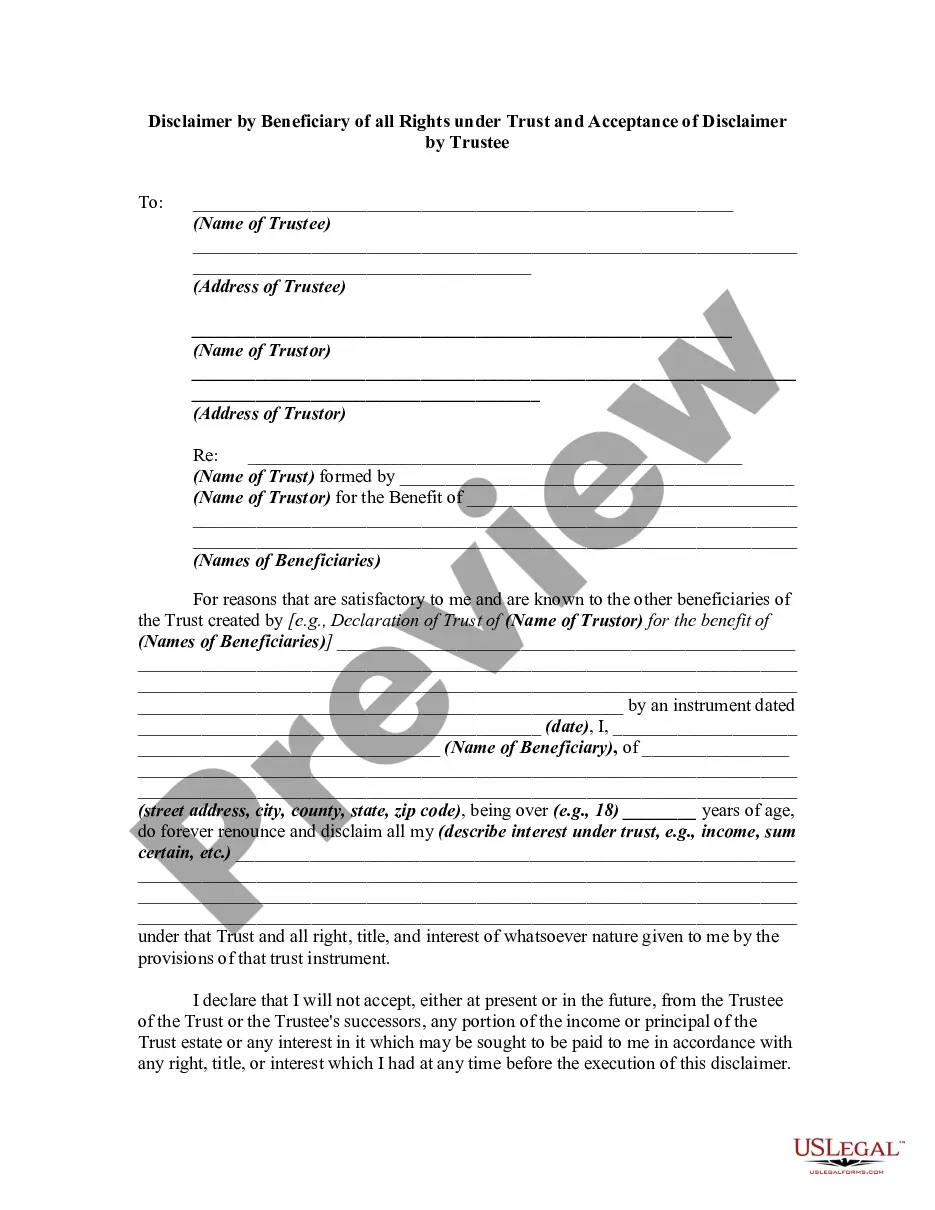
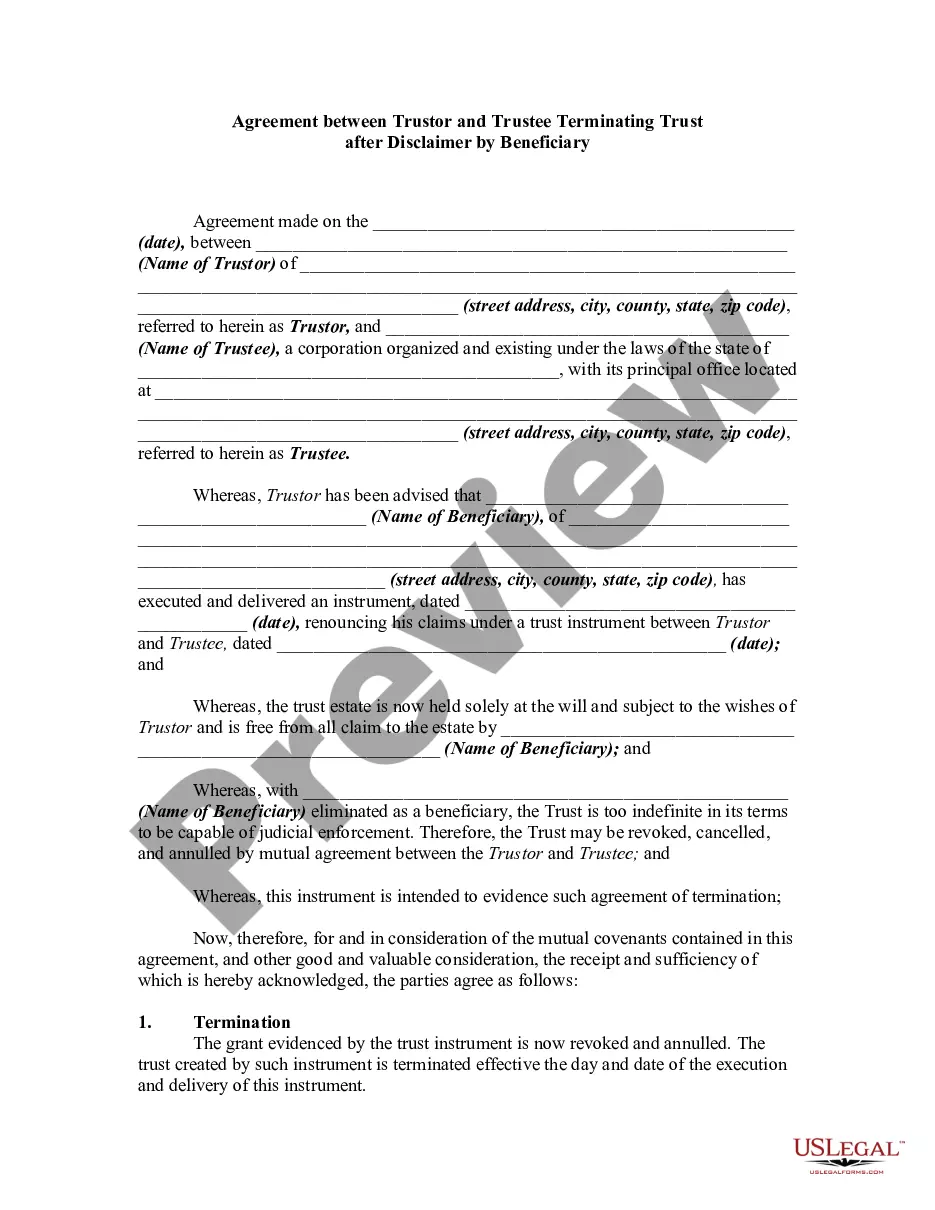
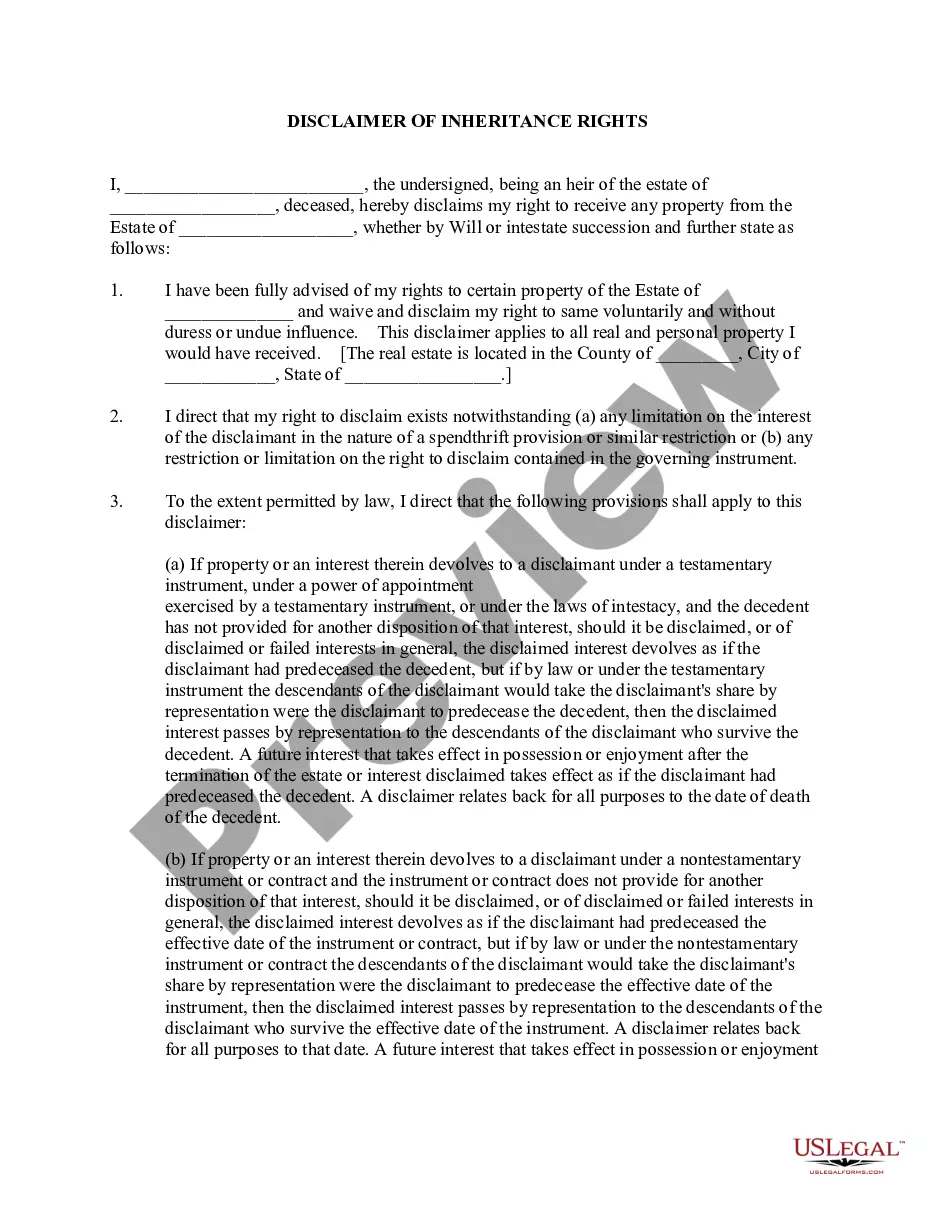
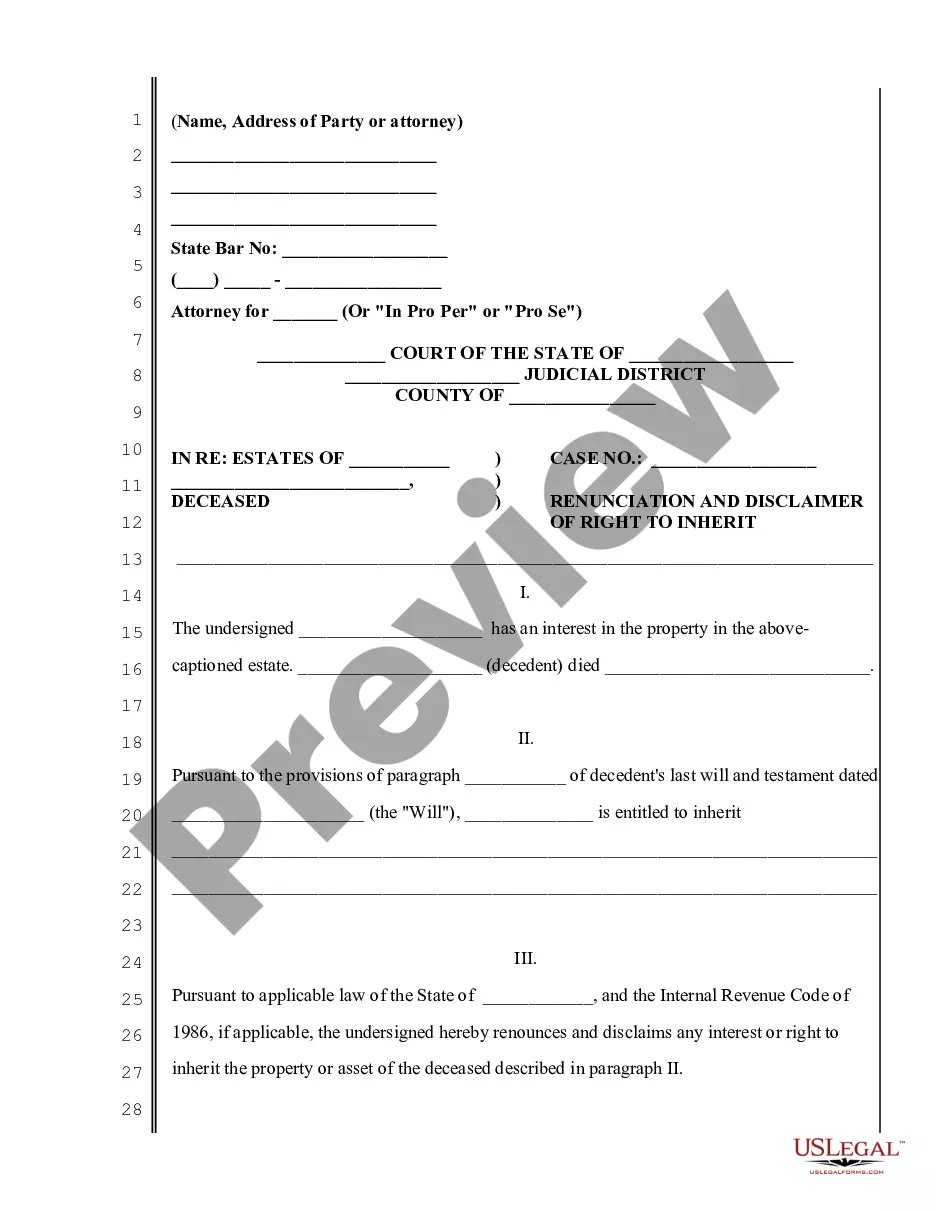
How to fill out Disclaimer By Beneficiary Of All Rights In Trust?
Accessing legal documents that conform to federal and state regulations is essential, and the internet provides numerous choices to select from.
However, what's the benefit of spending time searching for the properly drafted Beneficiary Rights In Nj template online if the US Legal Forms online database already compiles such documents in one location.
US Legal Forms is the largest online legal resource with over 85,000 fillable documents created by attorneys for various professional and personal situations. They are easy to navigate with all files categorized by state and intended use. Our experts keep pace with legal changes, ensuring that your paperwork remains current and compliant when acquiring a Beneficiary Rights In Nj from our site.
- Review the template using the Preview option or through the text outline to confirm it fulfills your requirements.
- Search for another document using the search function at the top of the screen if needed.
- Click Buy Now once you've located the appropriate form and select a subscription plan.
- Create an account or Log In and make a payment via PayPal or credit card.
- Select the appropriate format for your Beneficiary Rights In Nj and download it.
Form popularity
FAQ
To avoid inheritance tax in New Jersey, you can utilize various strategies focusing on your beneficiary rights in NJ. First, consider gifting assets before your passing, as this can reduce the taxable amount of your estate. Additionally, establishing living trusts may help in transferring your properties without triggering tax. Consulting with an estate planning attorney can provide further guidance tailored to your situation.
In New Jersey, the order of inheritance generally begins with the spouse and children of the deceased. If there are no direct descendants, parents or siblings may inherit next, followed by more distant relatives. Beneficiary rights in NJ dictate that if a will is present, it takes precedence over statutory order. Familiarizing yourself with these rules ensures you understand your potential inheritance rights.
A beneficiary has several rights, including the right to receive the assets designated to them once the original owner passes. Beneficiary rights in NJ also include receiving clear communication regarding the status of the estate, along with timely distributions. In cases of delay or dispute, beneficiaries are entitled to seek legal recourse. Understanding these rights can empower you to take action if necessary.
Certain factors can override a beneficiary's designation, such as a valid will or trust, which may specify different terms. Additionally, changes in marital status, like divorce, can impact beneficiary rights in NJ, potentially nullifying previous designations. It's crucial to regularly review and update your estate plan to ensure it reflects your current wishes. Consulting with a legal expert can help clarify any specific situations.
Filling out beneficiary paperwork involves gathering the necessary information, such as names, addresses, and Social Security numbers. Start by downloading the appropriate forms from a reliable source, like US Legal Forms, which offers comprehensive templates for beneficiary rights in NJ. Carefully review all instructions before you fill in the details to ensure accuracy. Once completed, submit the paperwork as required by the institution or organization managing the assets.
The order of inheritance in NJ generally follows a specific hierarchy, beginning with the deceased's children and spouse. If there are no children, the estate may pass to the parents, siblings, or further descendants. Understanding this order is crucial for beneficiaries to comprehend their potential share of the inheritance. Familiarizing oneself with New Jersey's inheritance laws can clarify many aspects of estate distribution.
Beneficiaries have multiple powers in NJ, including the right to receive information about the estate and to contest the will if they believe it is flawed. They can demand accountability from the executor through financial disclosures and can take legal action if necessary. Understanding these powers can help beneficiaries advocate effectively for their rights. Knowing what to expect will empower beneficiaries throughout the process.
In NJ, an executor must notify beneficiaries shortly after the estate enters probate. This notification should occur as soon as possible to keep beneficiaries informed of their rights and the estate's status. An executor's responsibility includes keeping beneficiaries updated on important developments, ensuring they are not left in the dark. Timely communication is an essential aspect of fulfilling their duties.
Yes, beneficiaries in NJ can request to see bank statements and other financial documents related to the estate. Access to such information is necessary for beneficiaries to verify the management of estate funds. Executors have a duty to act in the best interest of the beneficiaries, which includes providing clear and accurate financial records. This right helps beneficiaries ensure that the estate is being managed appropriately.
In NJ, an executor must disclose essential information to beneficiaries, including the details of the estate's assets and liabilities. They are also required to provide beneficiaries with an inventory of property and a final account of distributions. This transparency is vital in maintaining trust and ensuring that beneficiaries understand the estate’s financial situation. Knowing what information should be disclosed can empower beneficiaries in their rights.