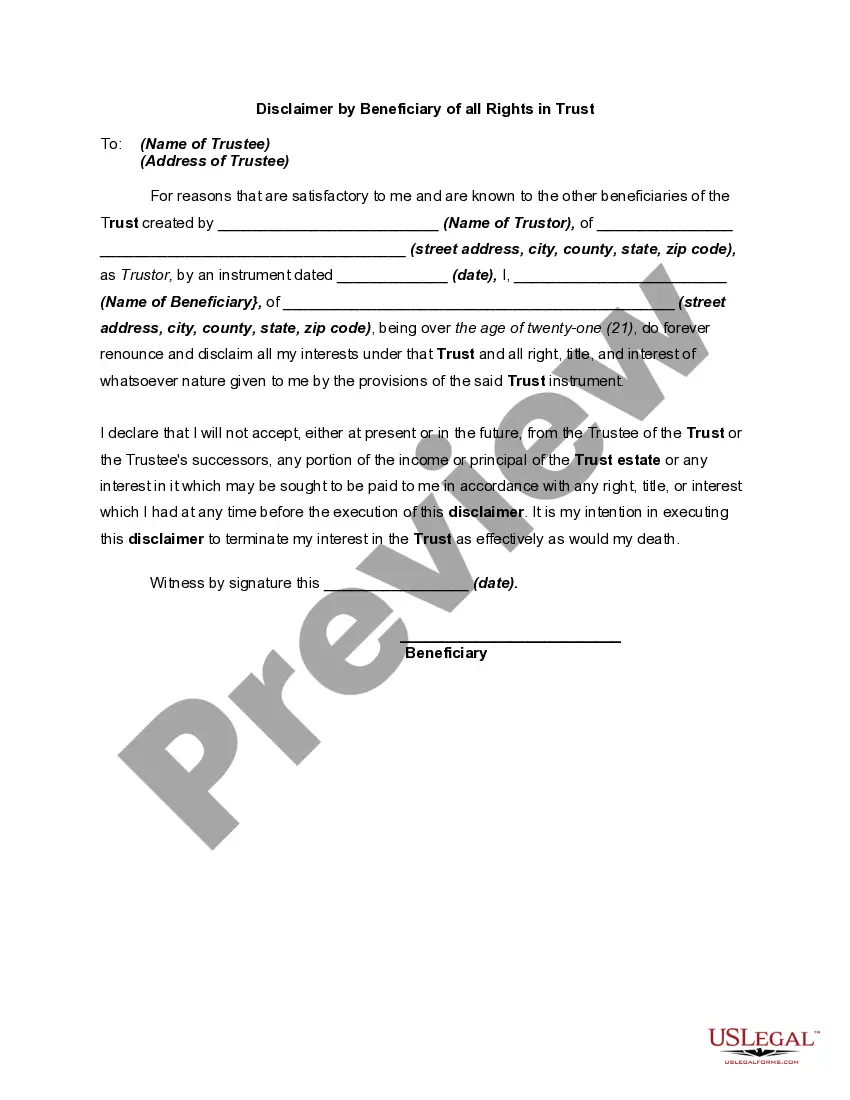
Beneficiary Disclaimer With Trust
Description
Get your form ready online
Our built-in tools help you complete, sign, share, and store your documents in one place.
Make edits, fill in missing information, and update formatting in US Legal Forms—just like you would in MS Word.
Download a copy, print it, send it by email, or mail it via USPS—whatever works best for your next step.
Sign and collect signatures with our SignNow integration. Send to multiple recipients, set reminders, and more. Go Premium to unlock E-Sign.
If this form requires notarization, complete it online through a secure video call—no need to meet a notary in person or wait for an appointment.
We protect your documents and personal data by following strict security and privacy standards.

Make edits, fill in missing information, and update formatting in US Legal Forms—just like you would in MS Word.

Download a copy, print it, send it by email, or mail it via USPS—whatever works best for your next step.

Sign and collect signatures with our SignNow integration. Send to multiple recipients, set reminders, and more. Go Premium to unlock E-Sign.

If this form requires notarization, complete it online through a secure video call—no need to meet a notary in person or wait for an appointment.

We protect your documents and personal data by following strict security and privacy standards.
Looking for another form?

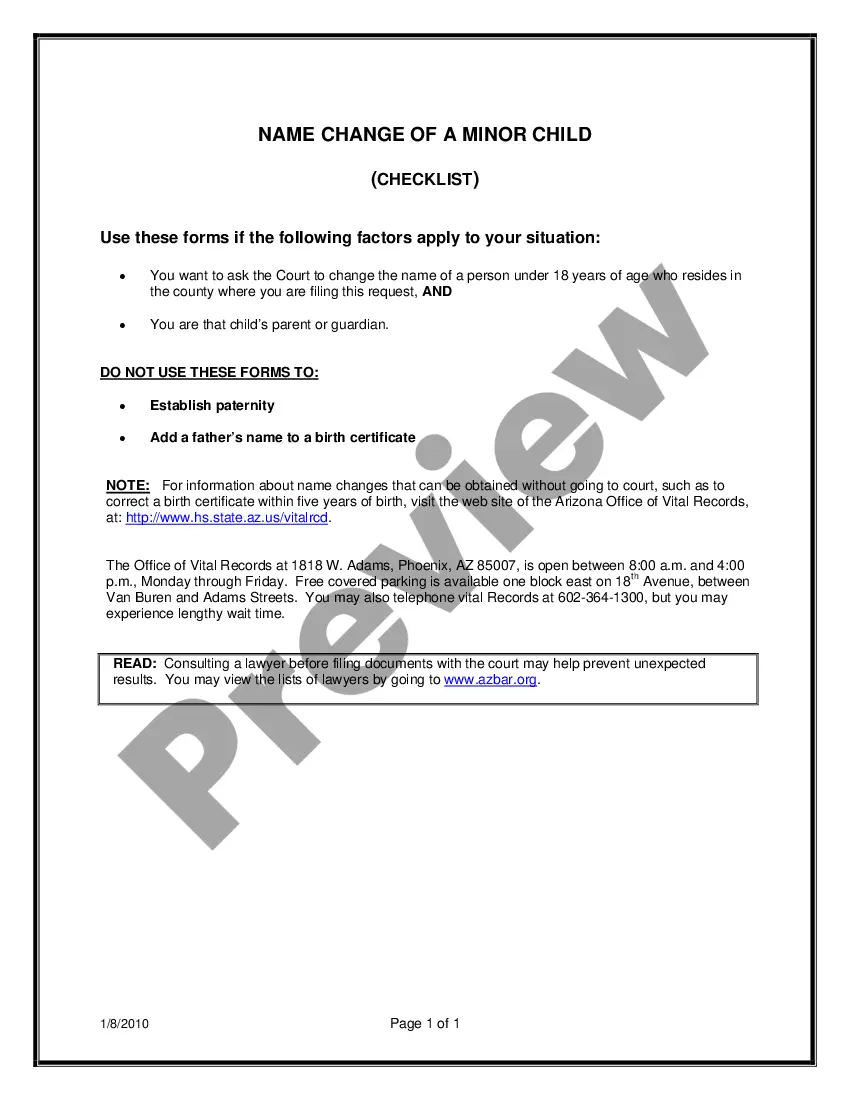

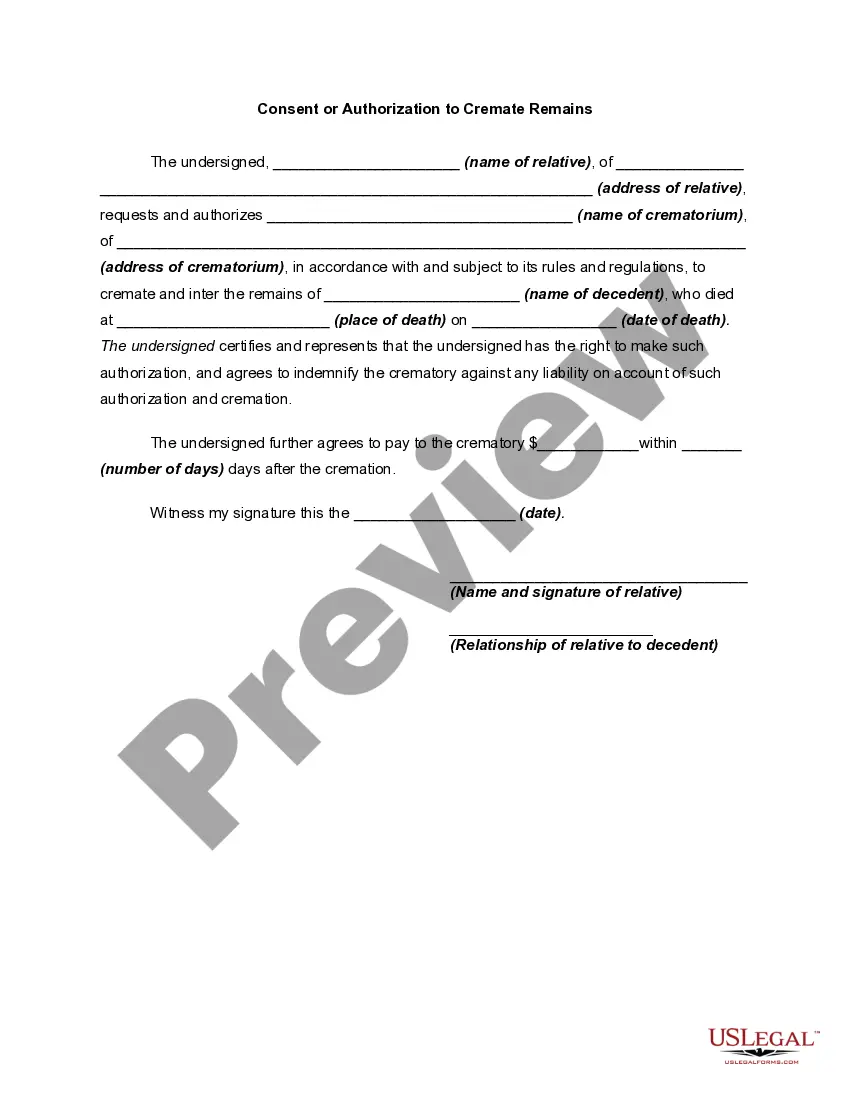
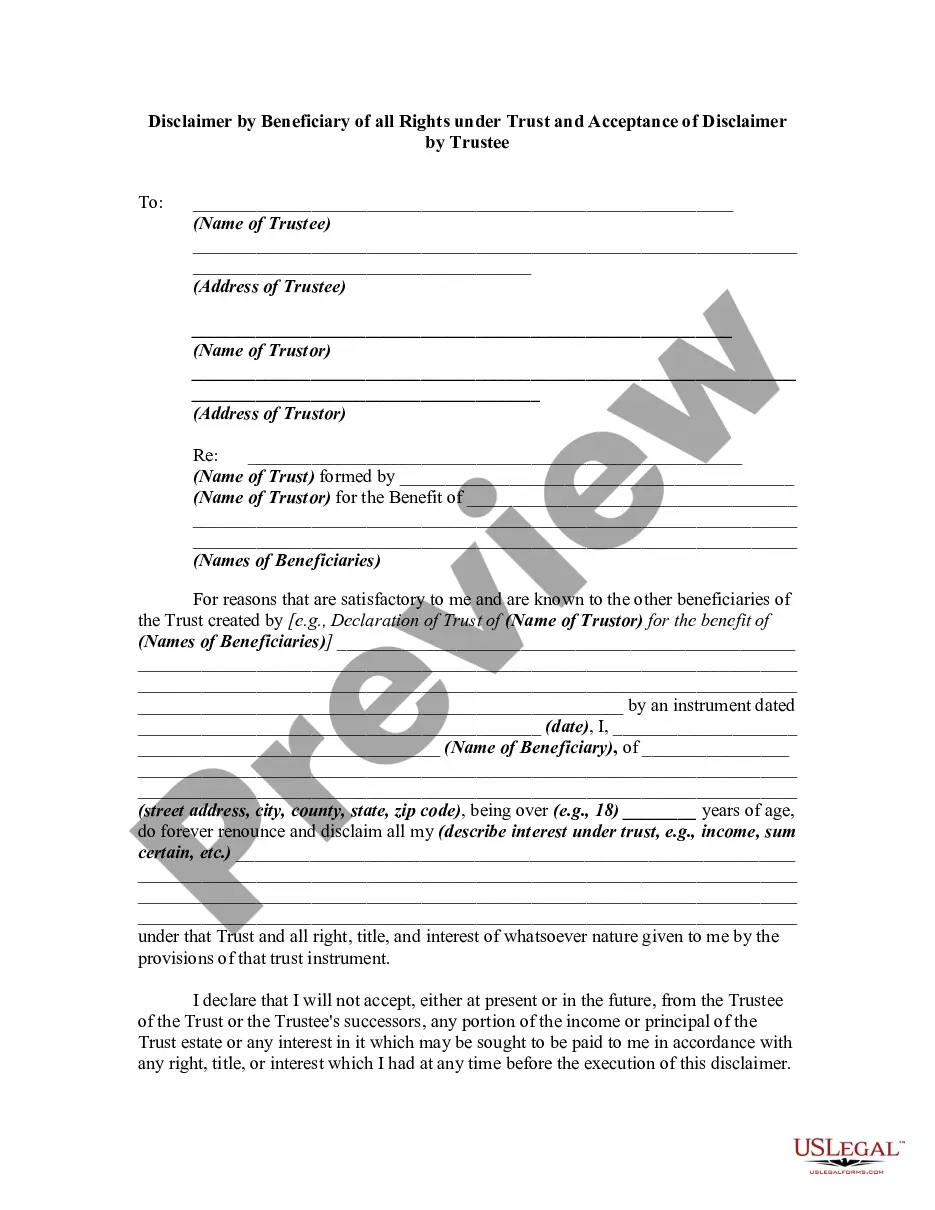
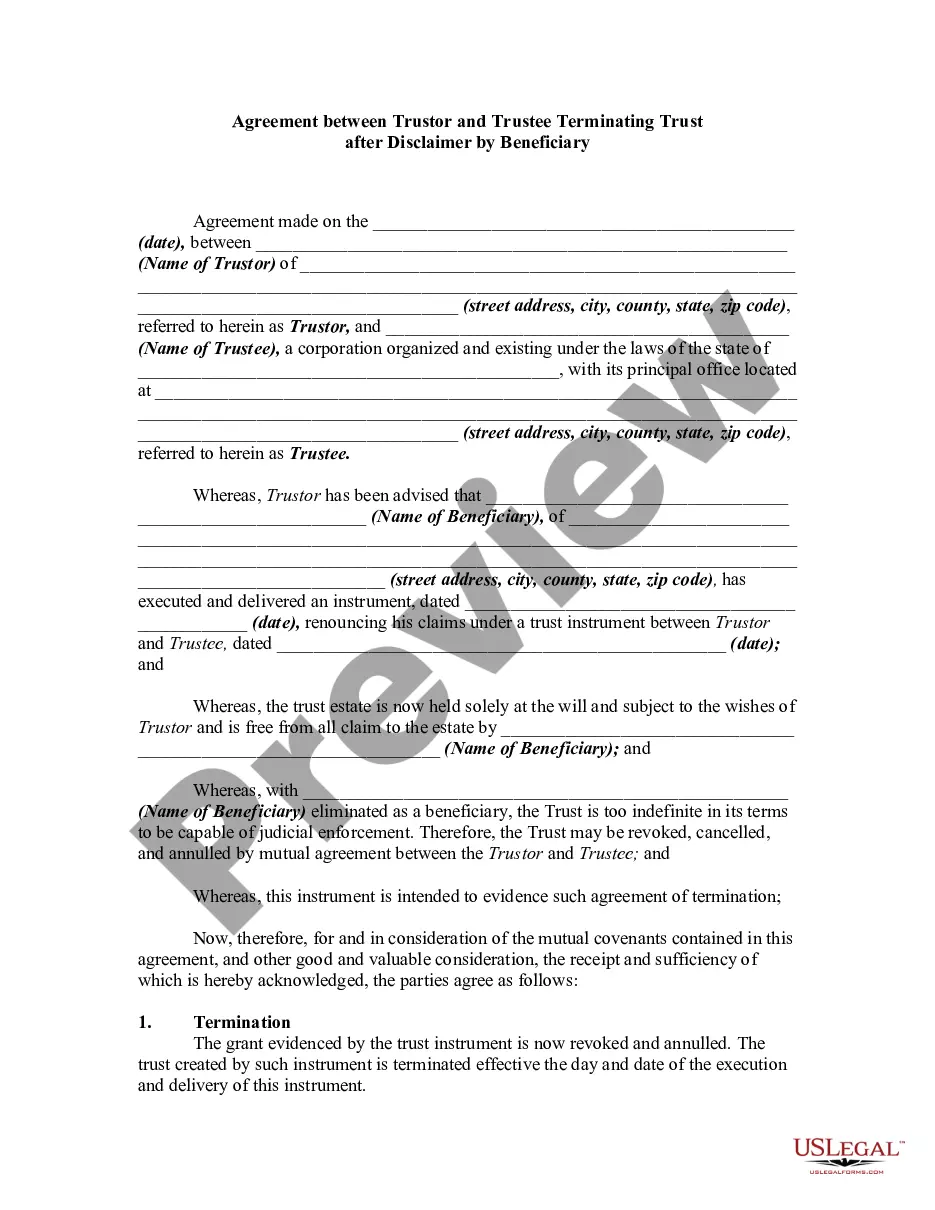
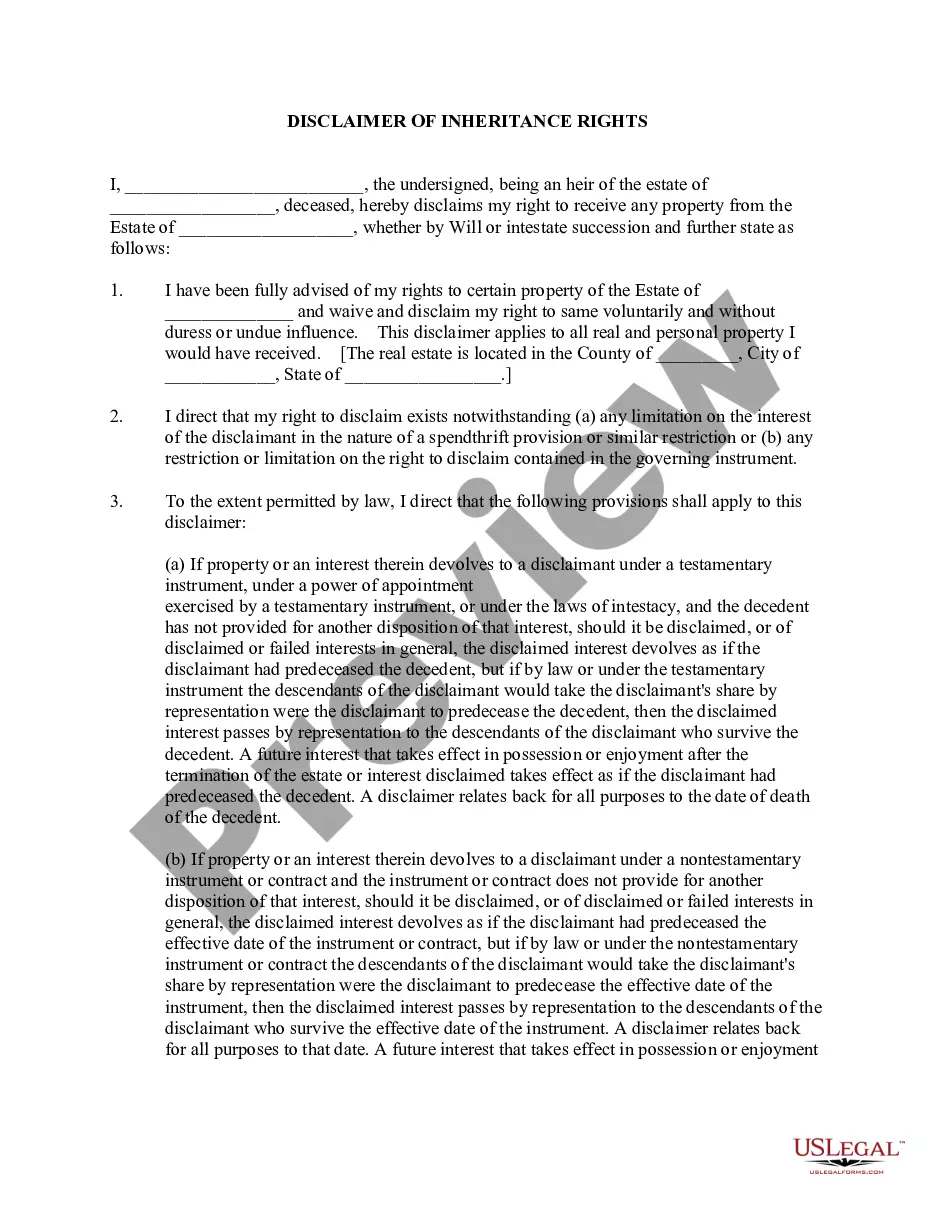
How to fill out Disclaimer By Beneficiary Of All Rights In Trust?
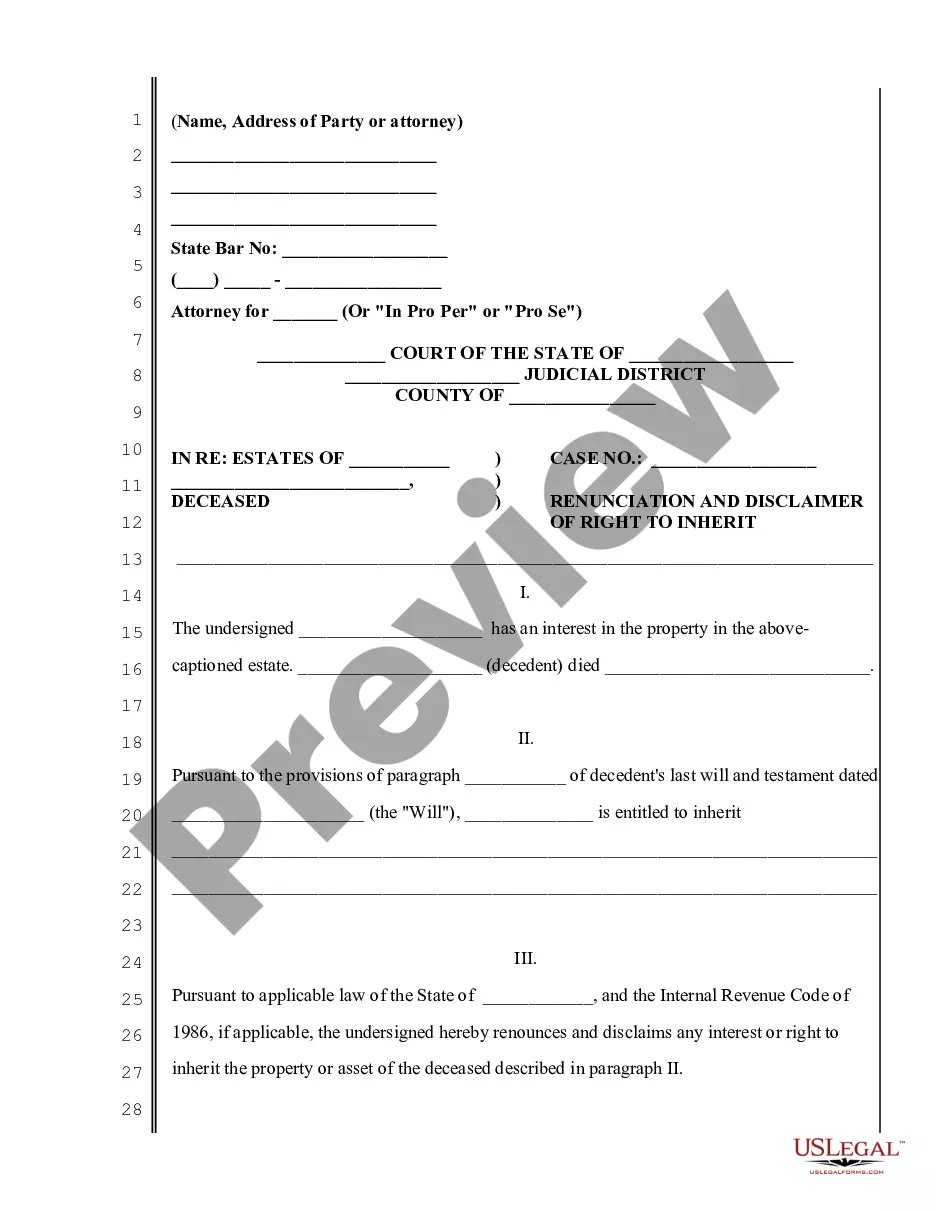
The Beneficiary Disclaimer With Trust displayed on this site is a reusable legal document created by experienced attorneys in accordance with federal and local regulations.
For over 25 years, US Legal Forms has supplied individuals, businesses, and legal professionals with upwards of 85,000 authenticated, state-specific documents for any commercial and personal circumstances. It is the quickest, easiest, and most dependable method to acquire the necessary paperwork, as the service assures the utmost level of data security and anti-malware safeguards.
Subscribe to US Legal Forms to have authenticated legal templates available for all of life's situations.
- Review the document you require and examine it.
- Search through the sample you requested and view it or analyze the form description to confirm it meets your requirements. If it doesn't, use the search feature to locate the correct one. Click Buy Now once you have identified the template you wish to use.
- Register and Log In.
- Select a pricing option that fits your needs and create an account. Make a swift payment using PayPal or a credit card. If you possess an existing account, Log In and check your subscription to proceed.
- Acquire the editable template.
- Choose the format you prefer for your Beneficiary Disclaimer With Trust (PDF, Word, RTF) and store the document on your device.
- Complete and sign the form.
- Print the template to fill it out by hand. Alternatively, use an online versatile PDF editor to quickly and accurately complete and sign your form electronically.
- Re-download your documents whenever necessary.
- Access the My documents tab in your profile to retrieve any previously saved forms.
Form popularity
FAQ
FAQ Fill out the names and contact information of both parties. ... Describe the relationship between the two parties, including how long you have been living together. Provide any additional details about your living arrangement that support your claim of cohabitation.
Did you know that Kentucky does not recognize common law marriage? A common law or ?de facto? marriage is when a couple lives together for a certain length of time and are regarded as ?married? to family and friends, but never have an official ceremony or obtain a marriage license.
To create a legally binding cohabitation agreement, you and your spouse must be completely open and honest about your financial situations and you must both sign the agreement in front of a witness. There cannot have been any pressure or threats involved in signing the agreement.
No matter how long you and your significant other have been living in the same household, you are not considered husband and wife. Marriage vows must be accompanied by a valid Kentucky marriage license in order to make a wedding legal in the state of Kentucky.
As under federal law, Kentucky does not recognize domestic partners. Consequently, such partners are treated as single taxpayers.
Further, there is currently no domestic partnership or civil union statute in Kentucky to confer many of the governmental benefits typically awarded to spouses to gay couples. As it stands, those in a same sex relationship are regarded merely as unmarried cohabitants if they in fact live together.
The laws of Kentucky and Ohio do not give unmarried cohabitating couples any type of legal status. Certainly, cohabitating couples are not provided the statutory protection that married couples enjoy.
The laws of Kentucky and Ohio do not give unmarried cohabitating couples any type of legal status. Certainly, cohabitating couples are not provided the statutory protection that married couples enjoy.