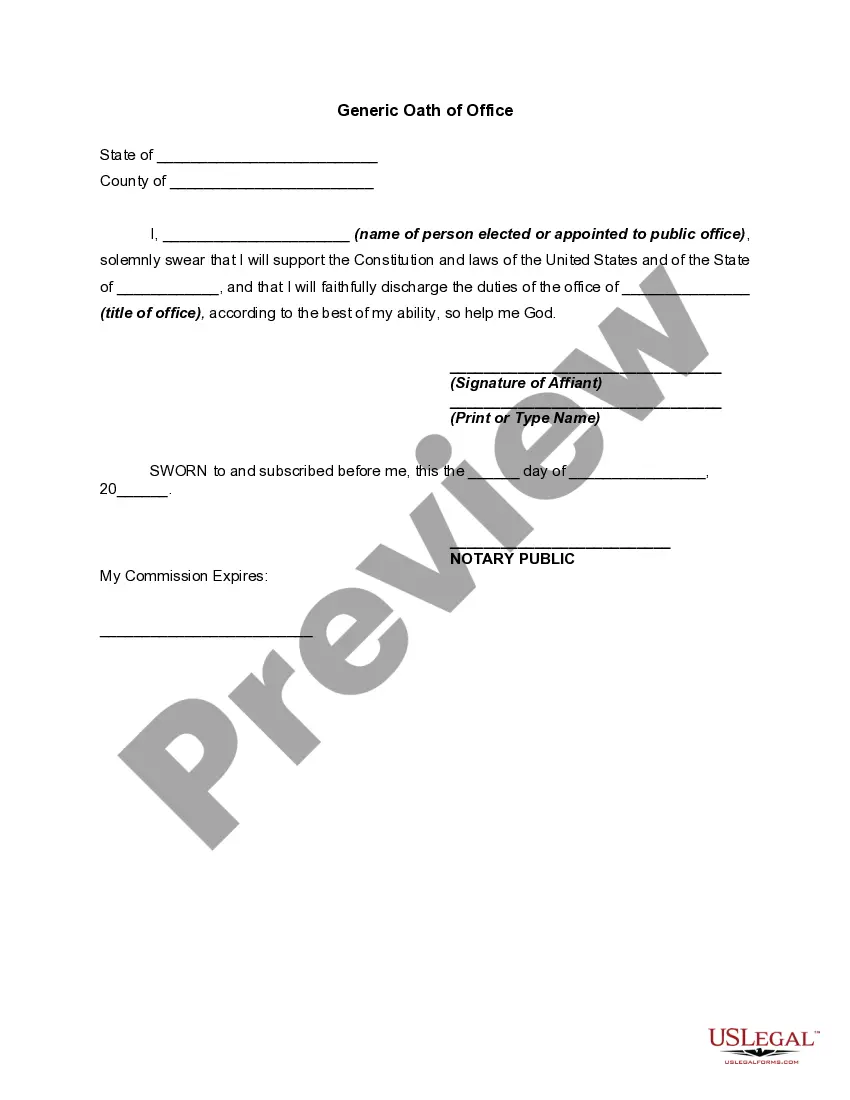
Office Generic Oath For All Users
Description
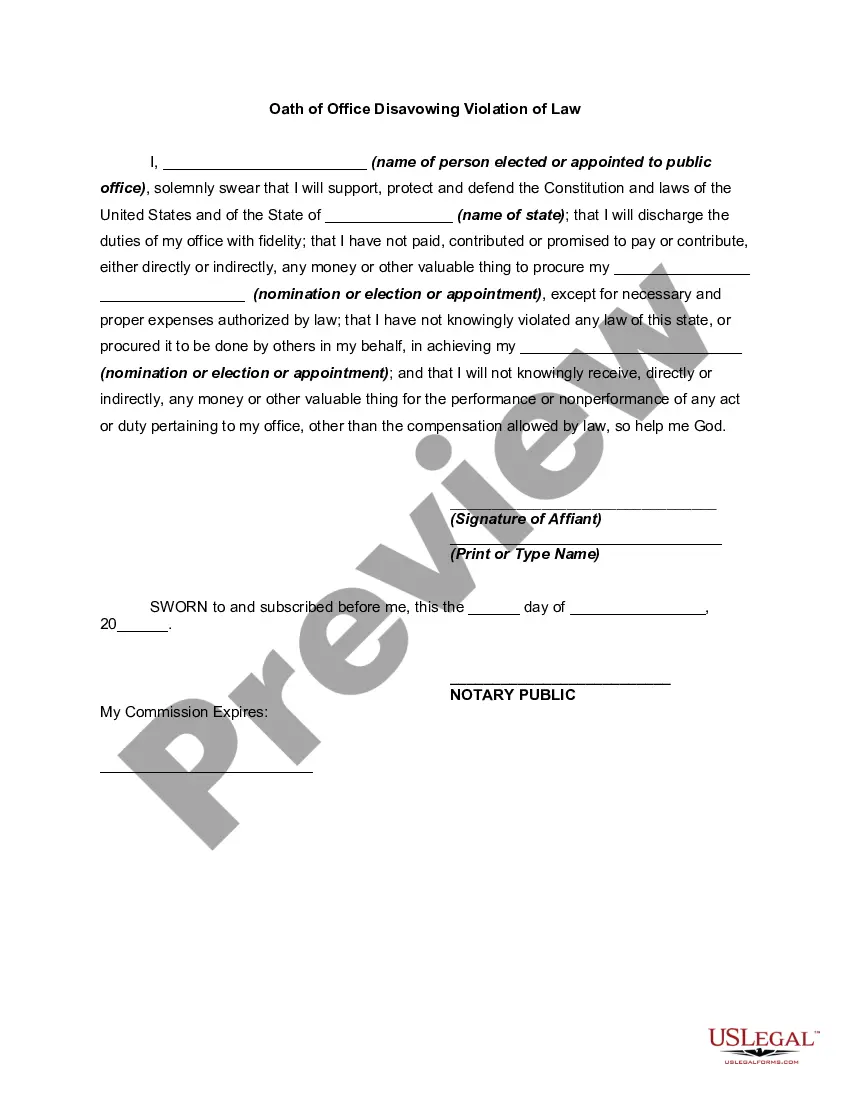
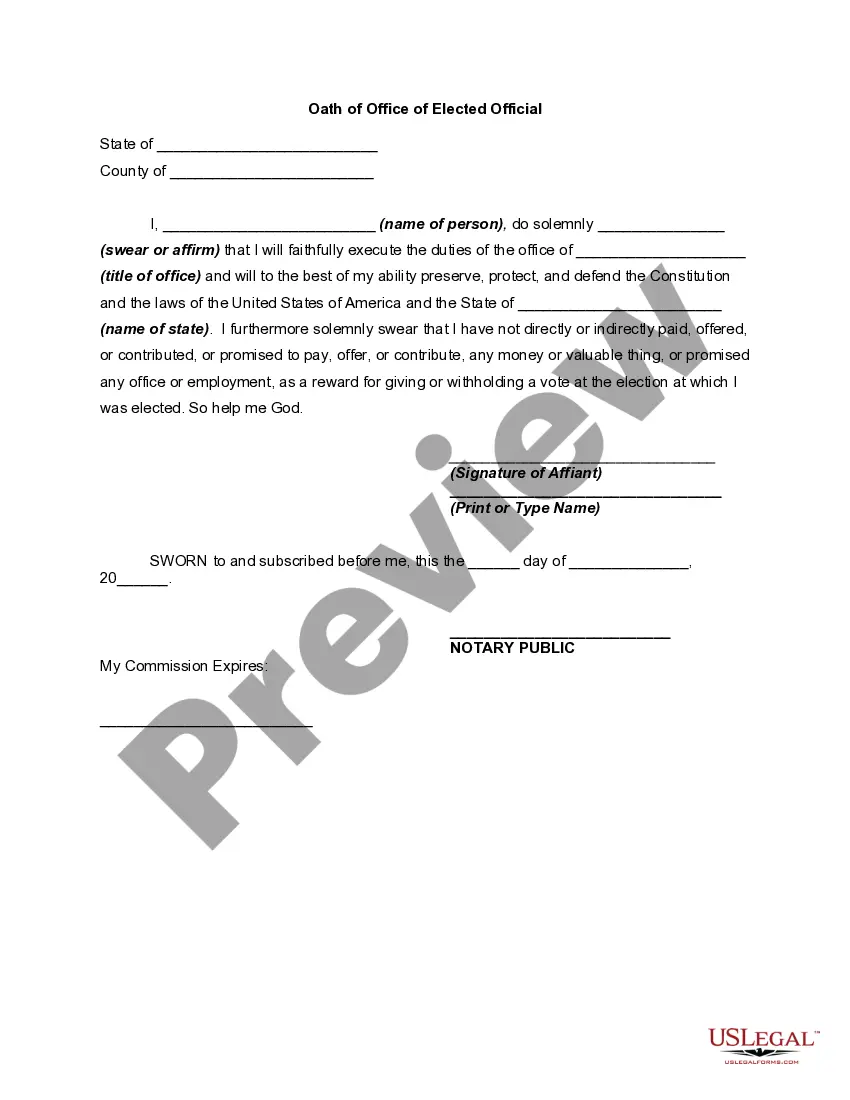
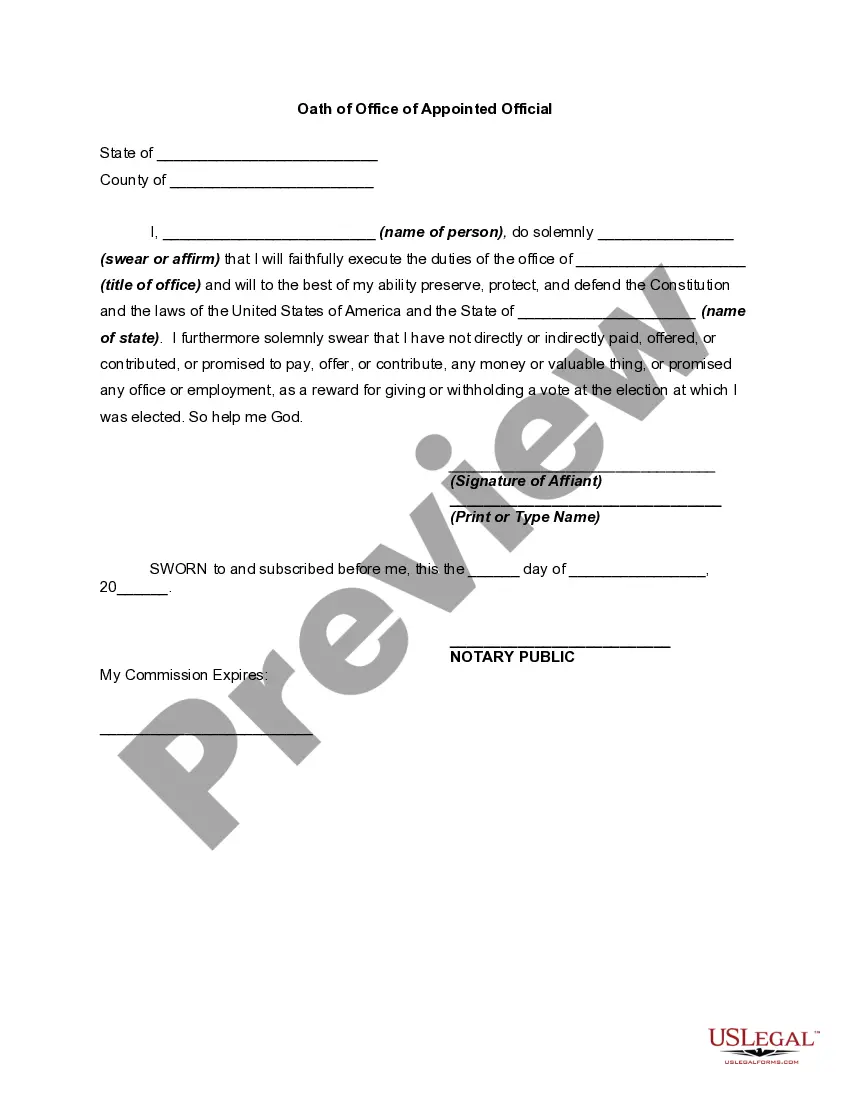
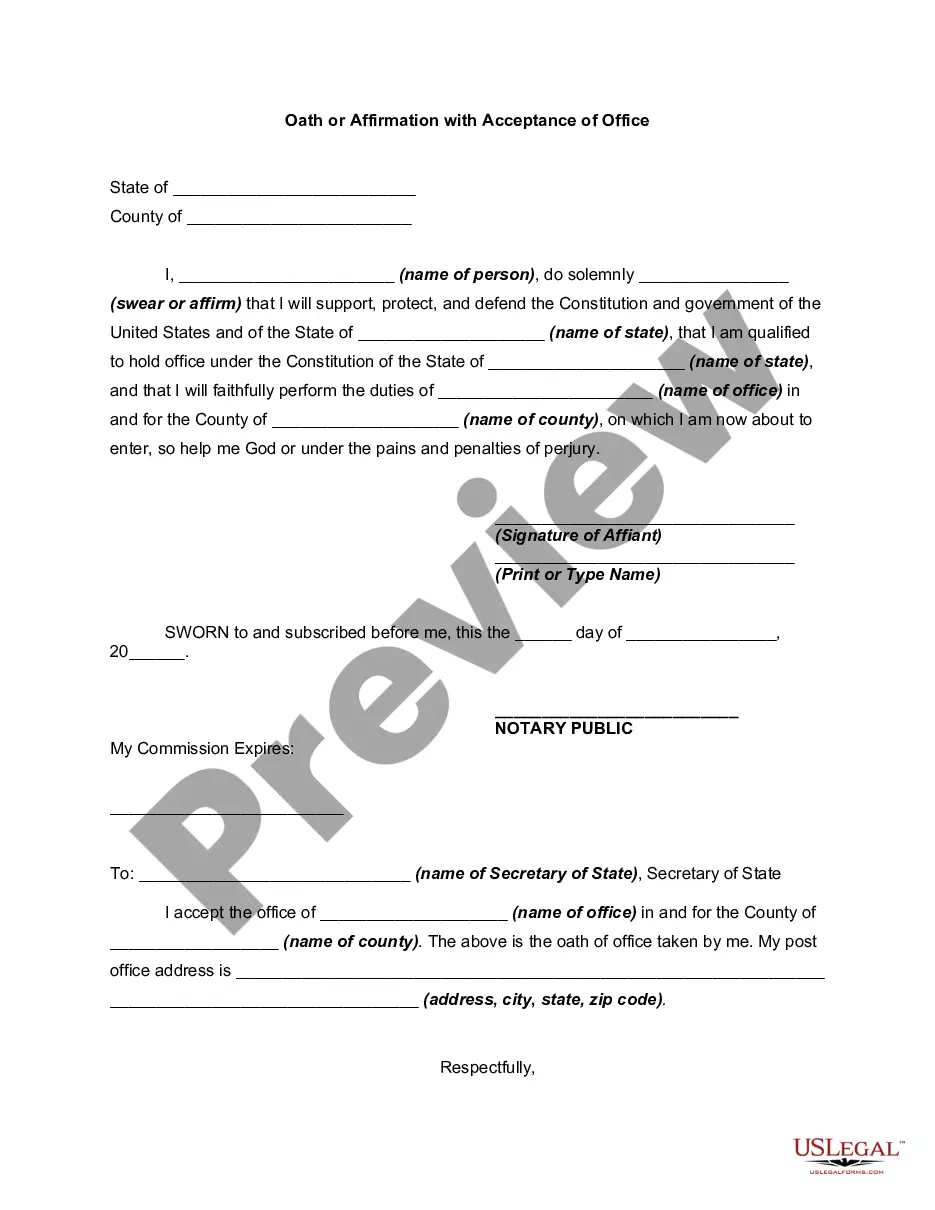





How to fill out Generic Oath Of Office?
- Log in to your US Legal Forms account if you are a returning user. Ensure your subscription is up to date to avoid any issues.
- If you're new to the service, start by checking the Preview mode of the form you need. Verify that it corresponds to your local jurisdiction's requirements.
- If the form doesn't meet your needs, utilize the search function to find another suitable template.
- Next, select the 'Buy Now' option to purchase the document. Choose a subscription plan that works for you, and create an account to gain access to the form library.
- Complete your purchase using credit card details or PayPal for speedy transactions.
- Finally, download the form to your device for easy access. You can also revisit it anytime from your profile in the 'My Forms' section.
By leveraging US Legal Forms, individuals and attorneys can streamline the legal documentation process. With over 85,000 forms available, users can ensure their documents are not only quick to prepare but also compliant with legal standards.
Start using US Legal Forms today and simplify your legal needs with ease and confidence!
Form popularity
FAQ
Enabling OAuth 2.0 for email usually involves configuring your email server settings to support OAuth authentication. This may include setting up necessary credentials and redirect URLs. By doing this, you will reinforce the Office generic oath for all users accessing email services, safeguarding your communications.
Setting up OAuth for Microsoft involves registering your application in the Azure portal, defining authentication settings, and obtaining necessary keys. You will also need to set up permission scopes carefully. This allows you to access the Office generic oath for all users across different Microsoft services securely.
Yes, Outlook is compatible with OAuth, especially with recent updates. This compatibility allows users to utilize OAuth for secure authentication while accessing their accounts. It’s an effective way to enhance the Office generic oath for all users on the Outlook platform.
Enabling OAuth in Outlook begins with creating an application in the Microsoft Azure portal that specifies necessary permissions and redirect URIs. Once configured, ensure users are trained on how to authenticate their accounts through OAuth. This will streamline the Office generic oath for all users in their Outlook experience.
To enable Google OAuth 2.0 API, go to the Google Cloud Console. Create a project, enable the OAuth consent screen, and configure the credentials required for API access. Implementing this will support the Office generic oath for all users, ensuring safer integrations with Google services.
Enabling OAuth settings usually involves accessing the admin console of the respective application or platform. Ensure to locate the correct permissions and redirect URI settings for your needs. This comprehensive setup is necessary for utilizing the Office generic oath for all users effectively.
To enable Microsoft Authenticator for users, you must first set up the MFA (Multi-Factor Authentication) option in the Azure portal. From there, users can download the Authenticator app and register it with their accounts. This process reinforces the security associated with the Office generic oath for all users.
To enable OAuth 2.0 in Outlook, you need to configure your app in the Azure dashboard and obtain the correct OAuth settings. After setting up your application, ensure that you have the right permissions and redirect URI in place. This approach will enhance the security of the Office generic oath for all users in your Outlook environment.
Configuring OAuth authentication requires you to establish the necessary credentials for your application. Begin by creating the API key and secret, then use them to define the redirect URLs and permissions. This setup is crucial for ensuring a smooth experience with the Office generic oath for all users.
Enabling Microsoft OAuth involves accessing the Azure portal and setting up an application registration. Once registered, you need to specify the redirect URI and define the scopes for the permissions you require. This configuration will help facilitate the Office generic oath for all users in your applications seamlessly.