Subpoena For Deposition Florida
Description
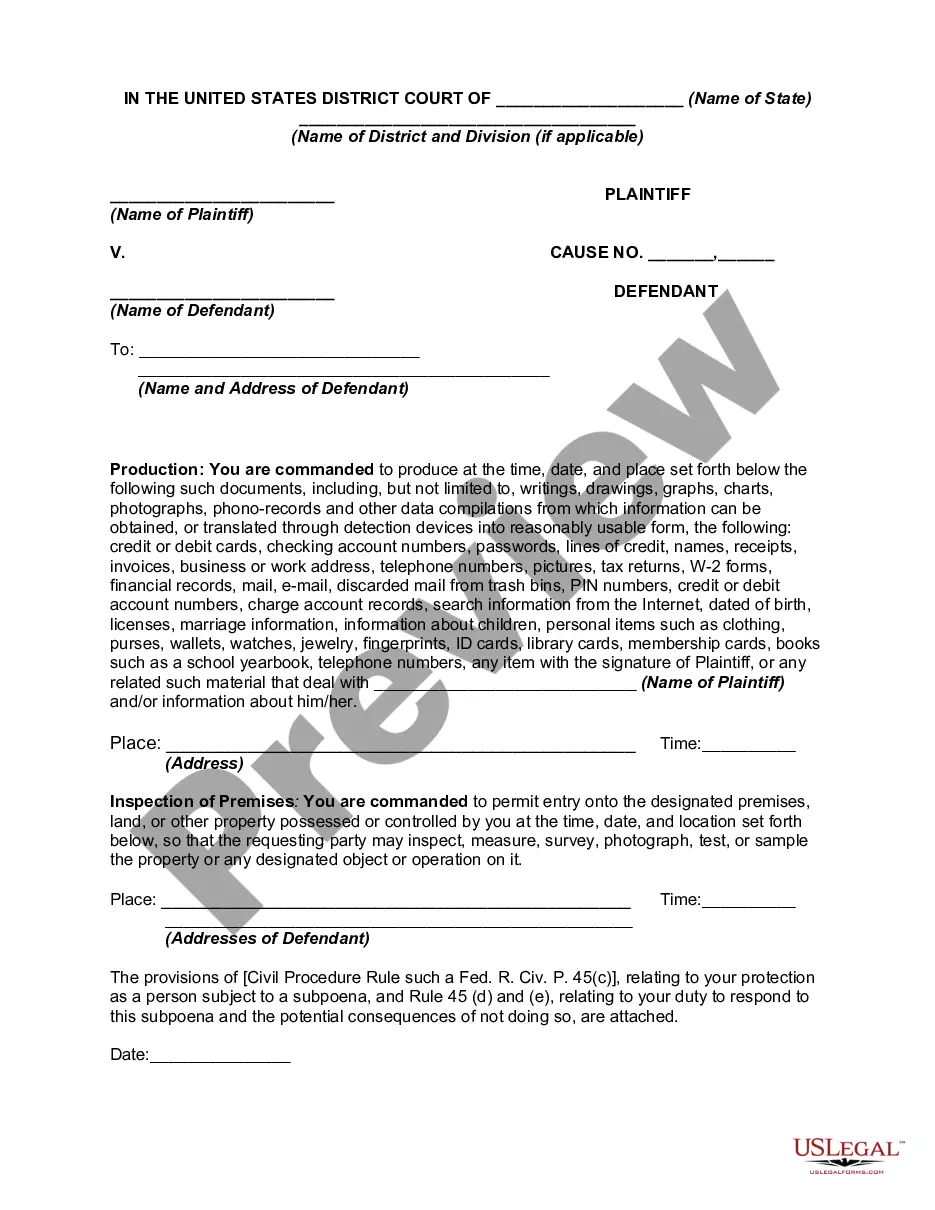
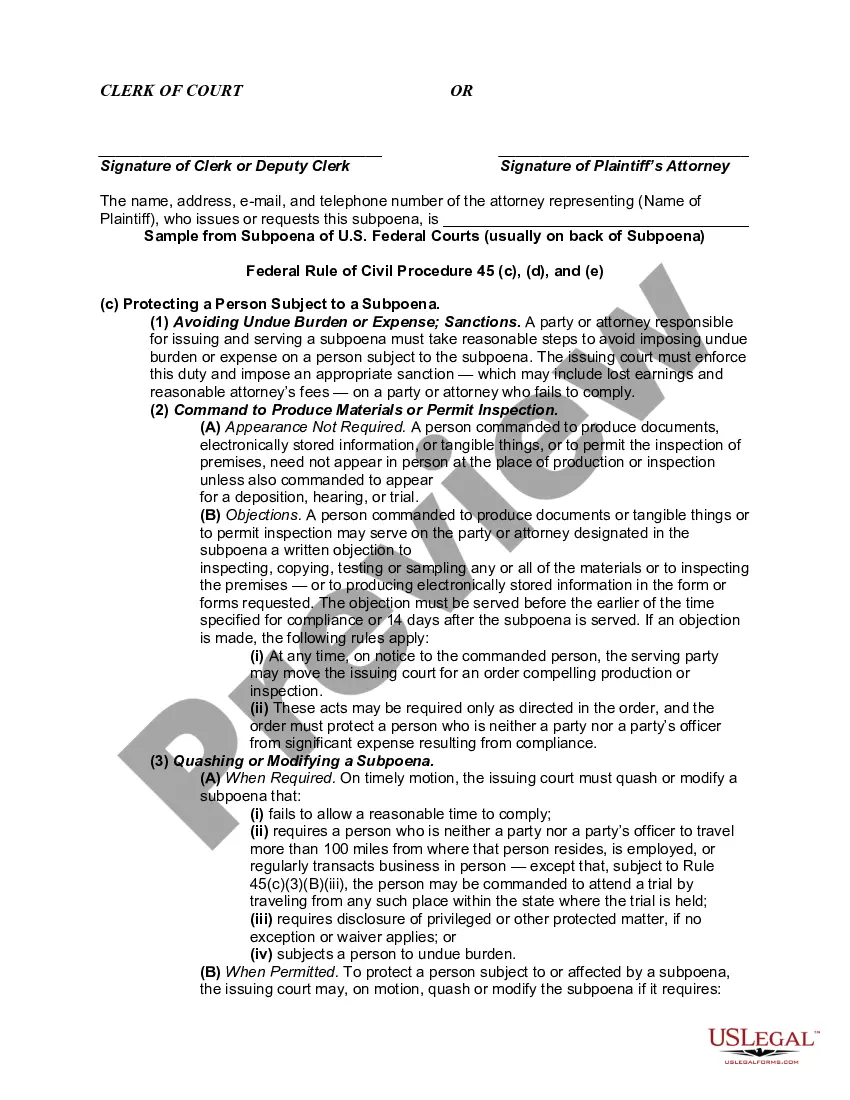
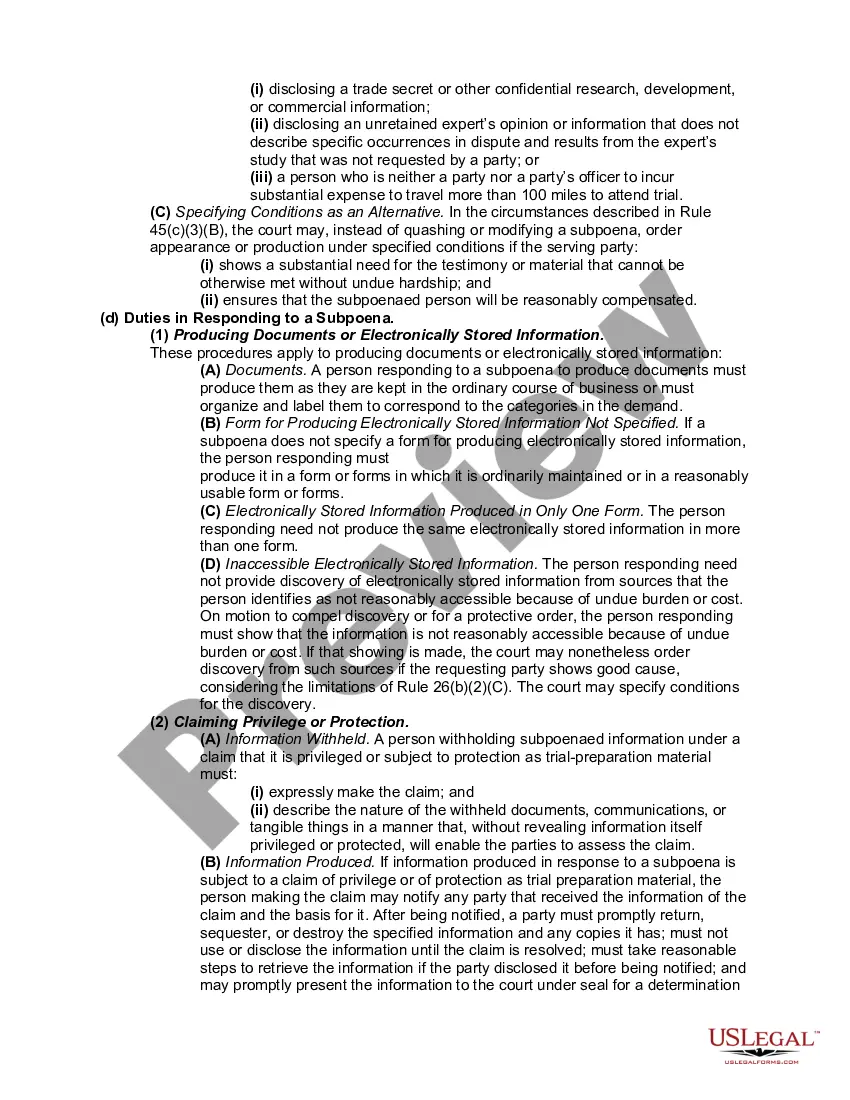

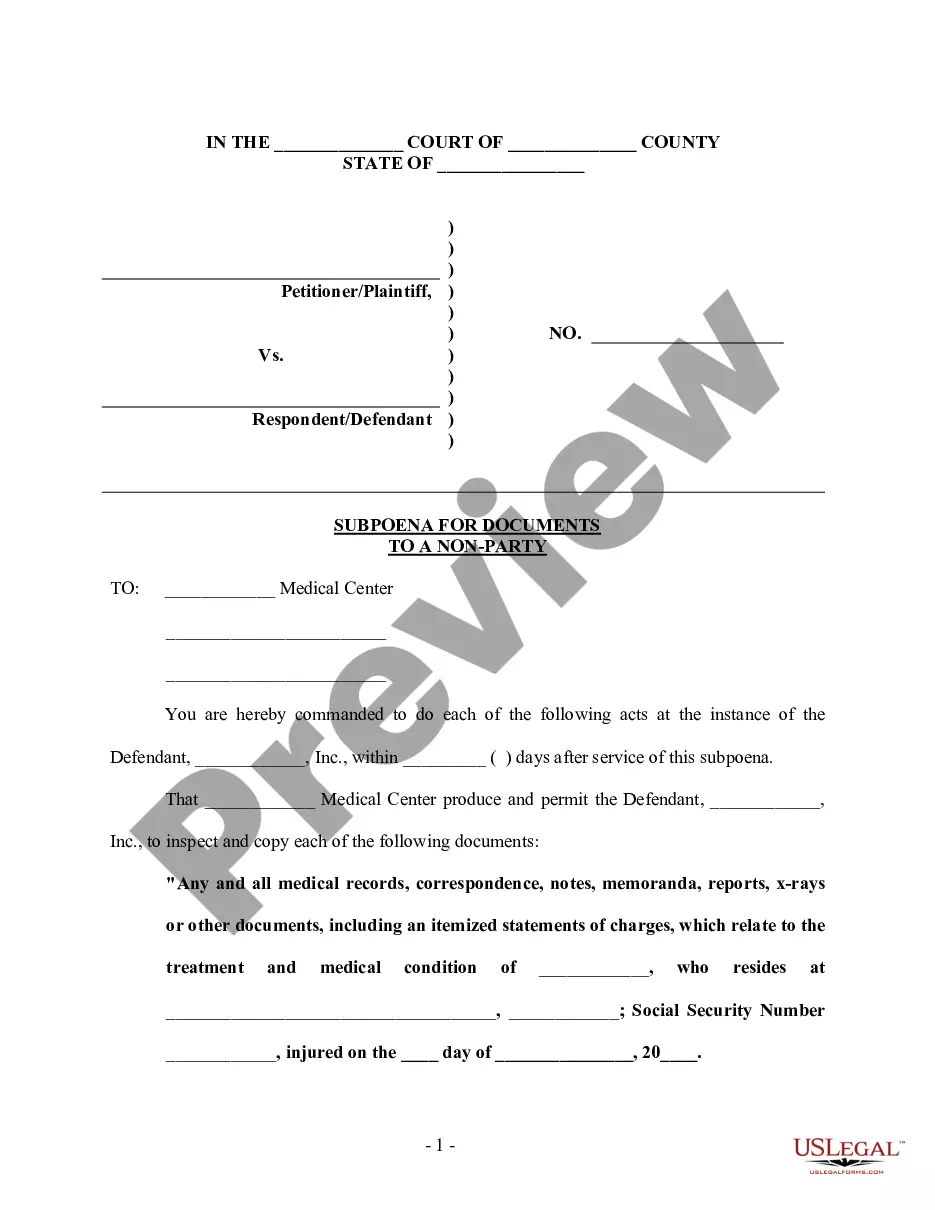
Get your form ready online
Our built-in tools help you complete, sign, share, and store your documents in one place.
Make edits, fill in missing information, and update formatting in US Legal Forms—just like you would in MS Word.
Download a copy, print it, send it by email, or mail it via USPS—whatever works best for your next step.
Sign and collect signatures with our SignNow integration. Send to multiple recipients, set reminders, and more. Go Premium to unlock E-Sign.
If this form requires notarization, complete it online through a secure video call—no need to meet a notary in person or wait for an appointment.
We protect your documents and personal data by following strict security and privacy standards.

Make edits, fill in missing information, and update formatting in US Legal Forms—just like you would in MS Word.

Download a copy, print it, send it by email, or mail it via USPS—whatever works best for your next step.

Sign and collect signatures with our SignNow integration. Send to multiple recipients, set reminders, and more. Go Premium to unlock E-Sign.

If this form requires notarization, complete it online through a secure video call—no need to meet a notary in person or wait for an appointment.

We protect your documents and personal data by following strict security and privacy standards.
Looking for another form?



How to fill out Subpoena To Produce Documents, Information, Or Objects Or Permit Inspection Of Premises In A Civil Action Involving Identity Theft?
Securing a reliable destination for obtaining the most up-to-date and pertinent legal templates is a significant portion of dealing with bureaucracy.
Identifying the appropriate legal documents requires accuracy and meticulousness, which highlights the necessity of acquiring examples of Subpoena For Deposition Florida solely from reputable sources, such as US Legal Forms. An incorrect template can squander your time and hinder the situation you find yourself in. With US Legal Forms, you have minimal concerns.
Eliminate the complications associated with your legal documentation. Explore the extensive US Legal Forms catalog where you can discover legal templates, assess their applicability to your circumstances, and download them immediately.
- Utilize the catalog navigation or search bar to find your document.
- View the form’s details to verify if it meets the criteria of your state and locality.
- Examine the form preview, if available, to confirm it is the document you need.
- Return to the search and seek the appropriate template if the Subpoena For Deposition Florida does not meet your specifications.
- If you are sure about the form’s applicability, download it.
- As an authorized user, click Log in to verify and access your selected templates in My documents.
- If you do not yet have an account, click Buy now to purchase the template.
- Select the pricing plan that aligns with your needs.
- Proceed to registration to complete your transaction.
- Conclude your purchase by choosing a payment method (credit card or PayPal).
- Select the document format for downloading Subpoena For Deposition Florida.
- After acquiring the form on your device, you may modify it using the editor or print it and fill it out manually.
Form popularity
FAQ
In Florida, there are mainly two types of subpoenas: a subpoena for deposition and a subpoena for production of documents. A subpoena for deposition compels individuals to testify in a legal matter, whereas a subpoena for production requires them to provide specific documents or evidence. Understanding the type you need can help clarify your legal strategy. Tools like USLegalForms can guide you through the process of drafting the appropriate subpoena.
Generally, you cannot refuse to testify in a deposition once you have received a subpoena for deposition in Florida. However, there are specific legal grounds for refusal, such as attorney-client privilege or fifth amendment rights. If you feel you have a valid reason, consult with your attorney to understand your options. It's important to address these issues promptly to avoid complications.
To obtain a subpoena for deposition in Florida, you typically start by filing a request with the appropriate court. You may also use legal forms available through platforms like USLegalForms, which can simplify the process. Once issued, make sure to properly serve it to the intended recipient. This ensures you gather the necessary evidence needed for your case.
In Florida, a deposition subpoena does not necessarily have to be personally served. However, delivering it directly to the individual often ensures that they receive it promptly. You may also send the subpoena by mail, but confirm that it complies with local court rules. It's crucial to ensure that the recipient has adequate notice to prepare for the deposition.
To serve a deposition subpoena in Florida, you must deliver it to the person named in the subpoena, or their attorney, in a legally recognized manner. You can serve it in person, by mail, or through a designated process server, ensuring you comply with the state's legal requirements. Accurately completing this step is crucial for the validity of the subpoena for deposition. For seamless execution, consider using US Legal Forms, which provides templates and resources to assist you in the serving process.
The burden of proof for a subpoena refers to the obligation to provide evidence that supports the need for the requested information. In the context of a subpoena for deposition in Florida, the party issuing the subpoena must demonstrate that the testimony or documents sought are relevant to the case. It's important to ensure that the subpoena complies with legal standards to avoid challenges. Understanding this burden helps streamline the deposition process and enhances the efficiency of legal proceedings.
Ignoring a deposition subpoena in Florida can lead to legal consequences, including contempt of court. It is essential to comply with the subpoena or seek a legal objection through the proper channels. If you feel you have a valid reason to contest a subpoena, it’s advisable to consult with a legal professional for guidance. Platforms like US Legal Forms provide support and documentation to help navigate these situations.
A subpoena is a general legal document that requires a person to appear in court or produce documents, while a deposition subpoena specifically orders a witness to attend a deposition for testimony. The distinction lies in the context and purpose of the subpoenas. Understanding this difference is vital for effectively pursuing your legal strategy. US Legal Forms offers resources that help clarify these terms and their applications.
In Florida, you do not always have to subpoena a party to obtain their deposition; parties can agree to attend voluntarily. However, if a party refuses to appear or if their testimony is crucial, a subpoena for deposition Florida ensures they are legally obligated to attend. It's wise to assess the situation carefully and consider all options available. If needed, US Legal Forms can help you create and issue subpoenas effectively.
The rules for a subpoena for depositions in Florida dictate that it must specify the name of the individual appearing, the date and time of the deposition, and the location. Additionally, the subpoena must comply with service rules to ensure the recipient receives it properly. Familiarity with these rules helps ensure that your subpoena holds up in court. US Legal Forms can provide guidance through templates that adhere to these legal requirements.