Unmarried Fathers Rights
Description

Get your form ready online
Our built-in tools help you complete, sign, share, and store your documents in one place.
Make edits, fill in missing information, and update formatting in US Legal Forms—just like you would in MS Word.
Download a copy, print it, send it by email, or mail it via USPS—whatever works best for your next step.
Sign and collect signatures with our SignNow integration. Send to multiple recipients, set reminders, and more. Go Premium to unlock E-Sign.
If this form requires notarization, complete it online through a secure video call—no need to meet a notary in person or wait for an appointment.
We protect your documents and personal data by following strict security and privacy standards.

Make edits, fill in missing information, and update formatting in US Legal Forms—just like you would in MS Word.

Download a copy, print it, send it by email, or mail it via USPS—whatever works best for your next step.

Sign and collect signatures with our SignNow integration. Send to multiple recipients, set reminders, and more. Go Premium to unlock E-Sign.

If this form requires notarization, complete it online through a secure video call—no need to meet a notary in person or wait for an appointment.

We protect your documents and personal data by following strict security and privacy standards.
Looking for another form?






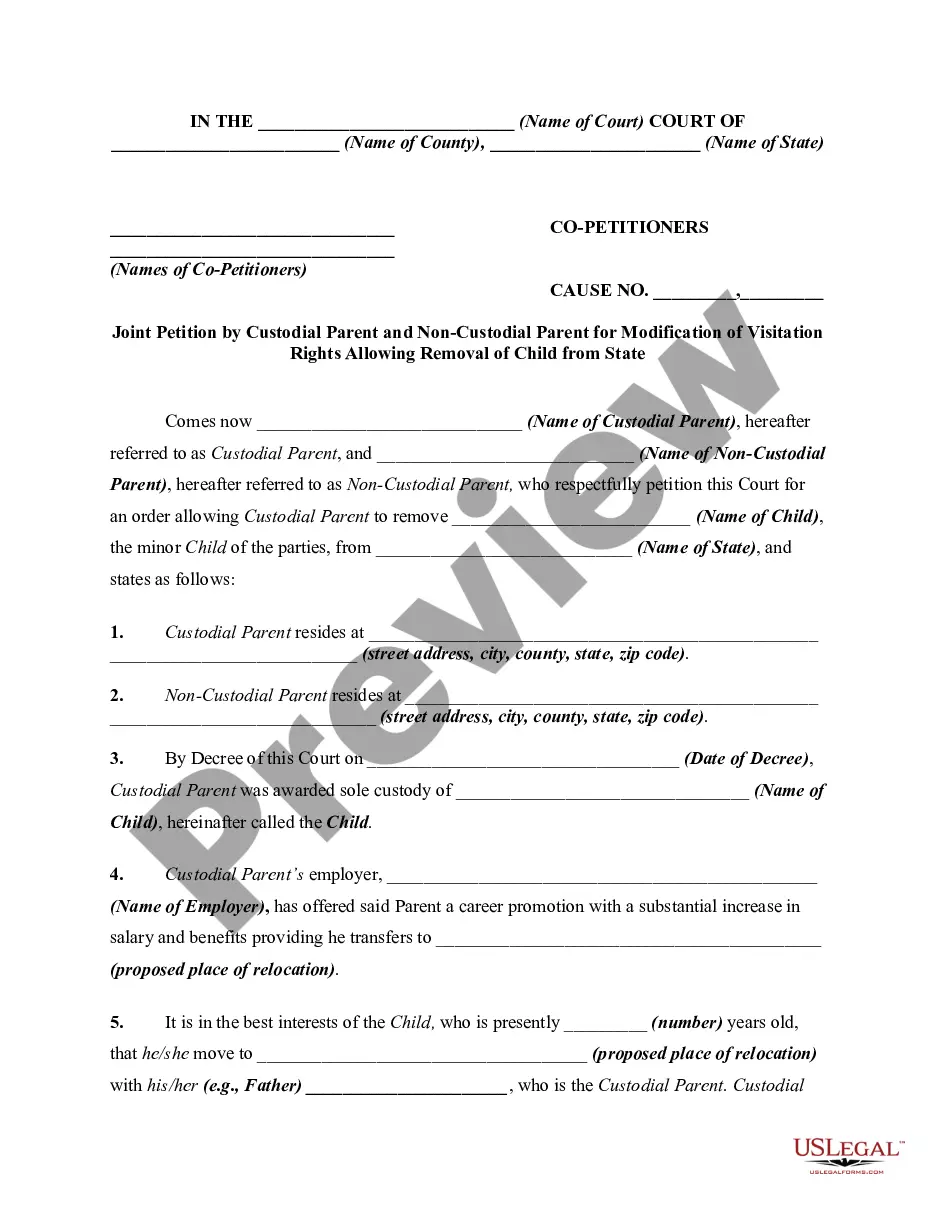
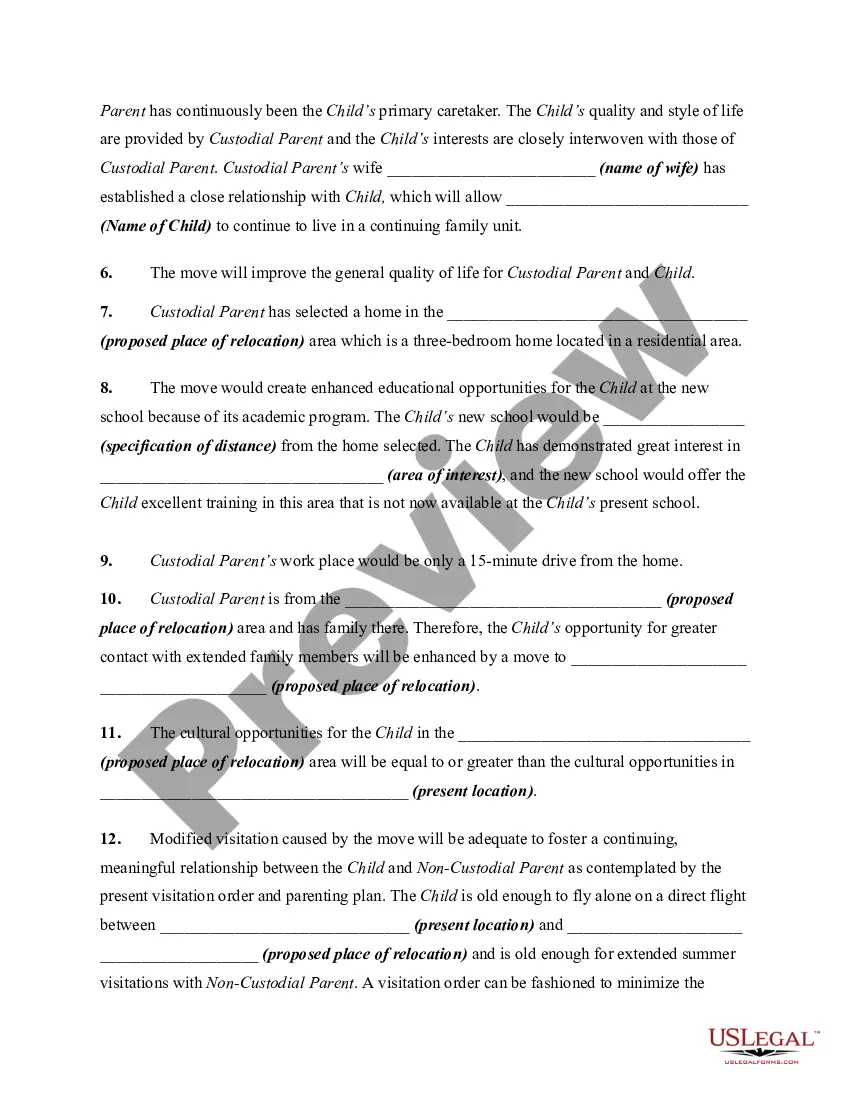
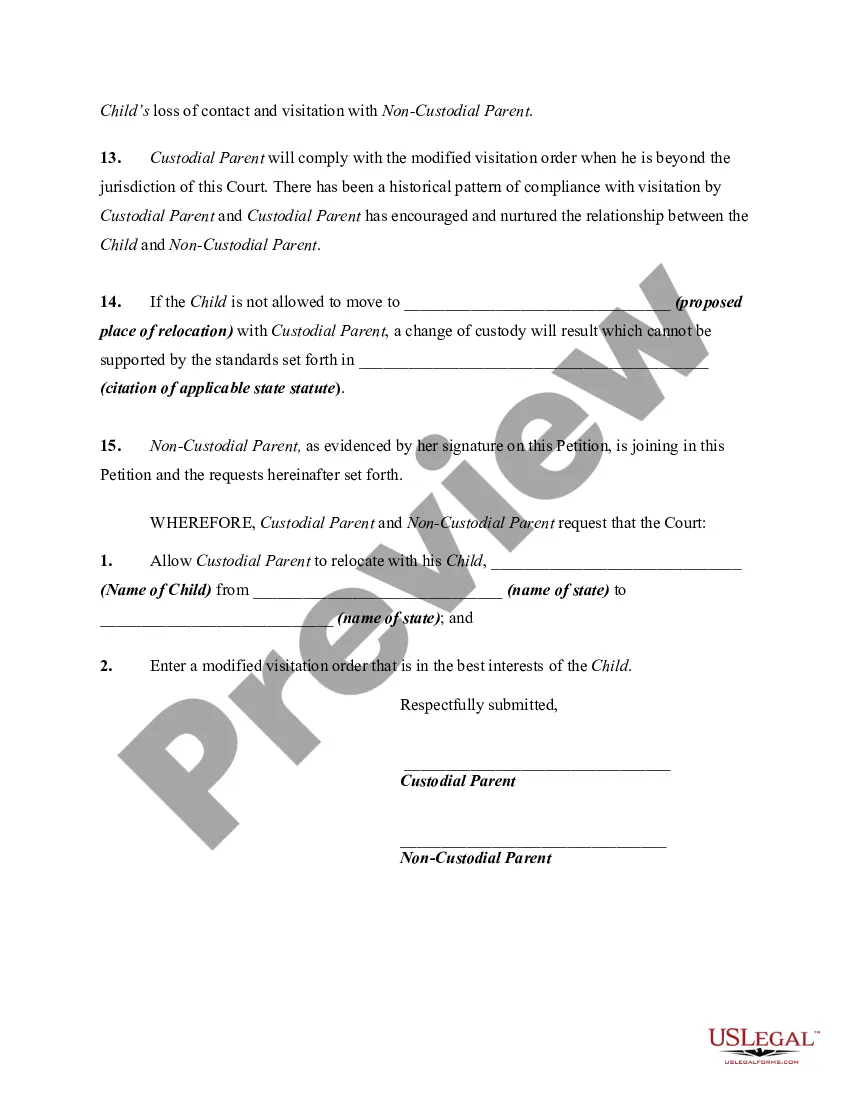
How to fill out Joint Petition By Custodial Parent And Non-Custodial Parent For Modification Of Visitation Rights Allowing Removal Of Child From State?
- Start by checking your subscription status and log in to your US Legal Forms account. If your subscription is active, proceed to select the required form.
- Review the form description thoroughly to confirm that it aligns with your needs and local jurisdiction requirements.
- If you need to find additional forms, utilize the search feature at the top of the page to locate the appropriate documents.
- Select your desired document and click the 'Buy Now' button. Choose a subscription plan that fits your needs and create an account to gain access to various resources.
- Complete your purchase by entering your payment information using a credit card or PayPal.
- Once payment is confirmed, download the form to your device from your account dashboard.
Utilizing US Legal Forms empowers you to navigate the legalities surrounding unmarried fathers' rights confidently. With an extensive library of over 85,000 forms and expert assistance available, you're ensured precision and legality in your documentation.
Don't wait; take the necessary steps to advocate for your rights today. Visit US Legal Forms to begin your journey!
Form popularity
FAQ
The most significant factor in calculating child support is the income of both parents. Courts assess the financial capabilities of each parent along with the lifestyle of the child before the separation. Other elements, such as healthcare and childcare costs, also play a role. Understanding this can empower unmarried fathers to advocate effectively for fair support, aided by resources available at US Legal Forms.
If you have a baby and you are not married, the mother typically has primary custody by default. However, as an unmarried father, you have rights that can be established through legal action. It is essential to recognize your rights and responsibilities early on to ensure your participation in your child's life. The US Legal Forms platform can provide the forms and guidance you need to assert those rights.
To obtain child support as an unmarried father, you first need to establish paternity. This legal acknowledgment determines your rights and responsibilities regarding the child. After establishing paternity, you can file for child support through your state’s court system. Resources on US Legal Forms can guide you through this process and help protect your rights as an unmarried father.
Child support is generally calculated based on both parents' incomes and the child's needs. Courts take into account various factors including the number of children, healthcare expenses, and educational costs. For unmarried fathers, understanding your rights is crucial. Platforms like US Legal Forms can help you navigate these calculations and prepare necessary documentation.
Yes, a mother can refuse access to the father, but this refusal must align with legal guidelines. Unmarried fathers' rights provide avenues for legally challenging such refusals, particularly if they do not serve the child's best interest. It is advisable to pursue legal counsel to navigate these complexities. A lawyer can help in establishing visitation rights that ensure both parents are involved in the child's life.
When one parent prevents the other from seeing their child, this can be referred to as parental alienation. This behavior can seriously impact the child's well-being and the relationship between the parents. Understanding unmarried fathers' rights can help address this issue legally. Seeking the help of legal resources can guide you through resolving parental alienation effectively.
If the mother is preventing the father from seeing the child, this situation can be challenging. Fathers should document any incidents where access has been denied, as this information is crucial for legal proceedings. Seeking legal advice is vital for understanding specific unmarried fathers' rights. Solutions may include mediation or court involvement to establish a parenting plan.
Yes, a mother can refuse to put the father on a birth certificate, especially if paternity is disputed. This refusal may affect the father's unmarried fathers rights, limiting his legal standing in matters related to custody or support. For clarity on these legal matters, utilizing resources like USLegalForms can assist in understanding your options and implications.
Yes, you can refuse to put the father on your child's birth certificate if you do not have his consent or if paternity has not been legally established. However, keep in mind that this action may impact the father's unmarried fathers rights and responsibilities towards the child. It's wise to consider the long-term implications for both the child and the father before making this decision.
Generally, a mother cannot legally give the child the father's last name without his consent in most states. Doing so may infringe on the father's unmarried fathers rights and recognition. The legal processes surrounding naming can vary, so it's important to consult relevant laws or seek assistance from a legal professional.