Pay Creditor Debt Formula
Description
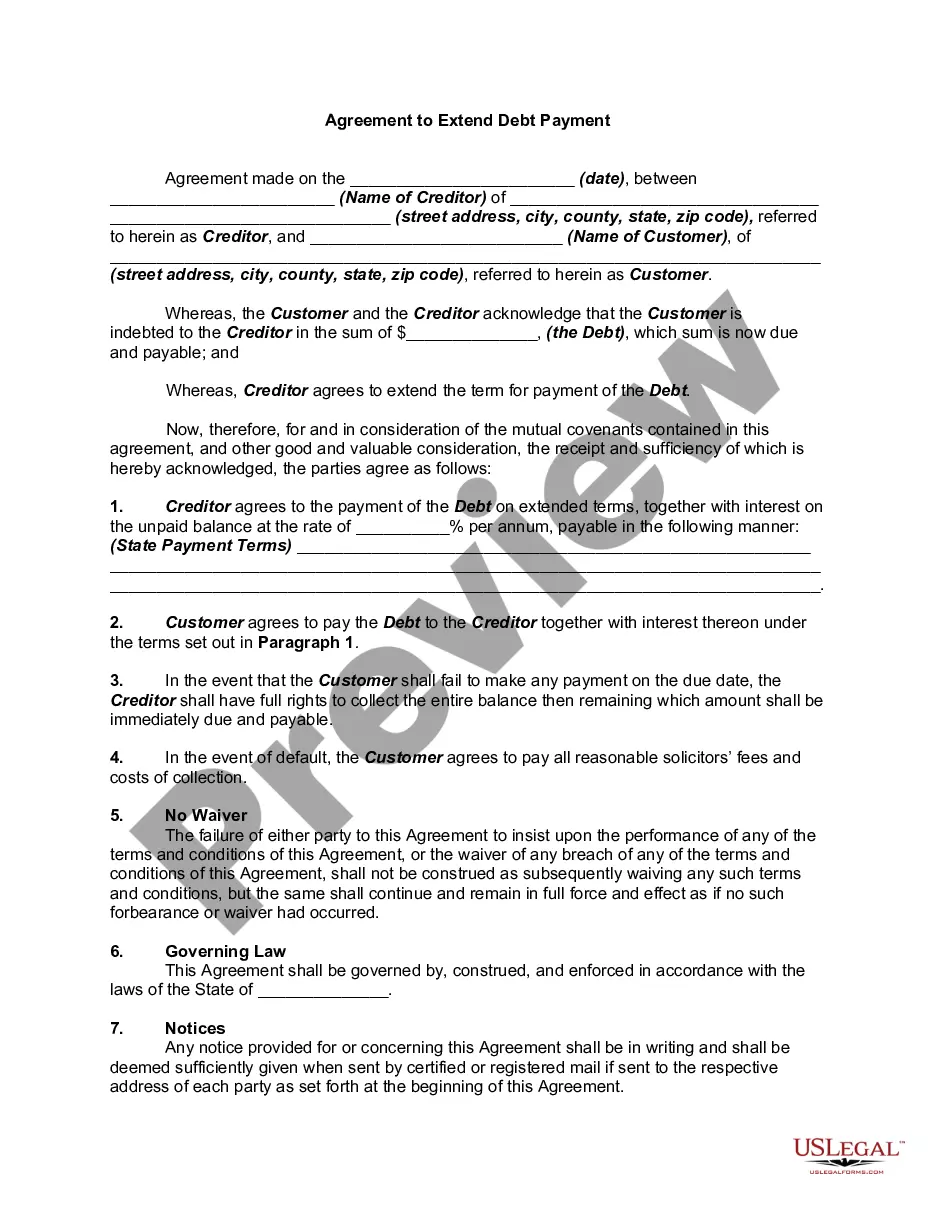
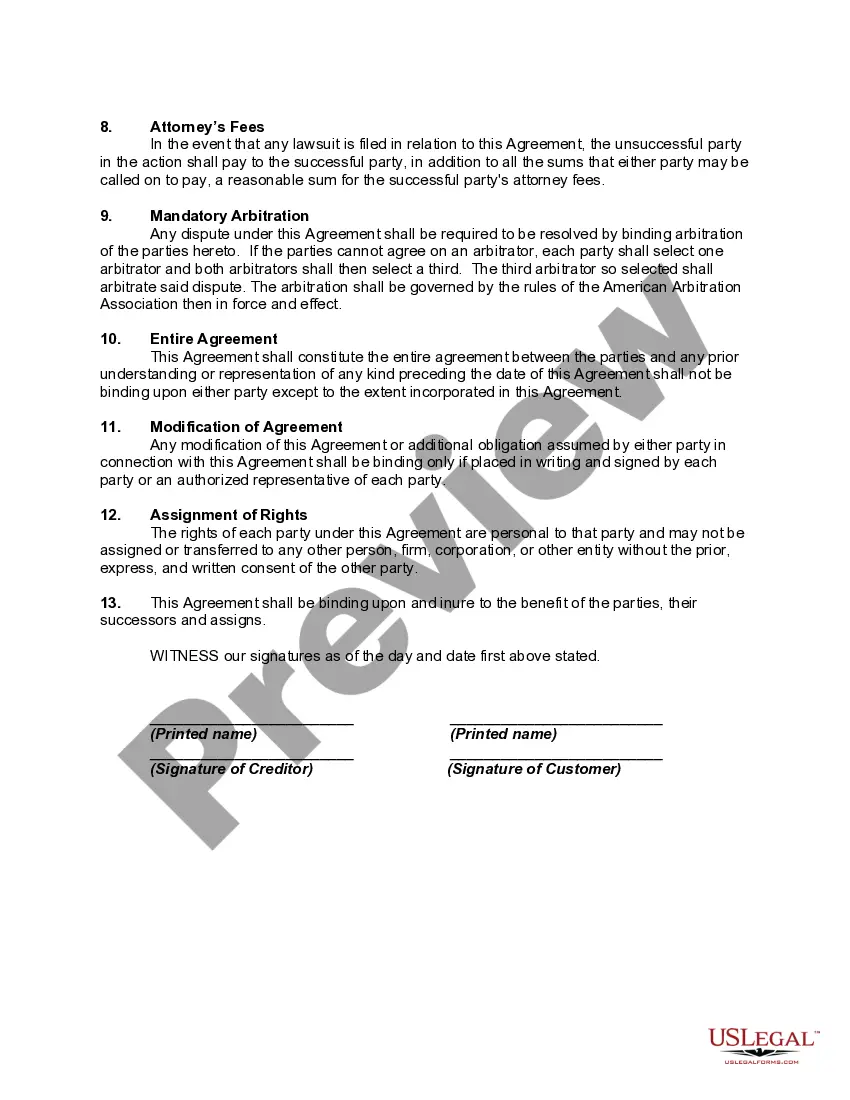
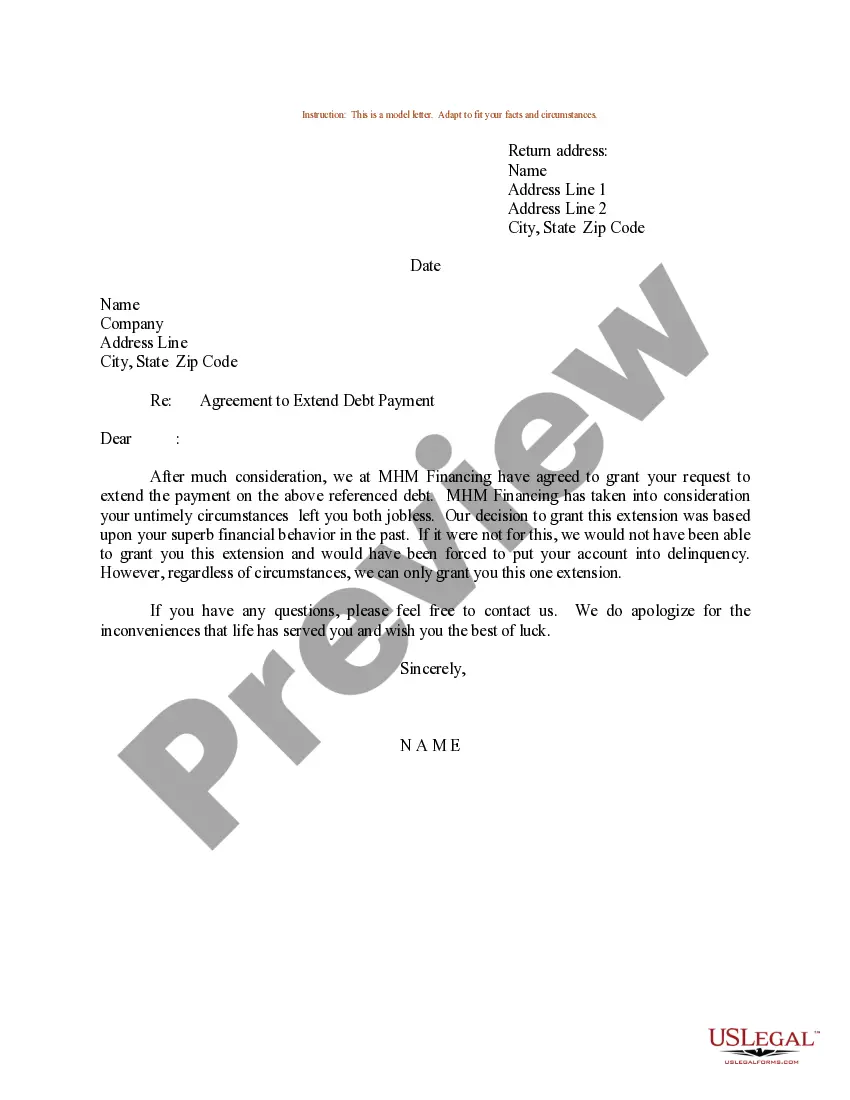
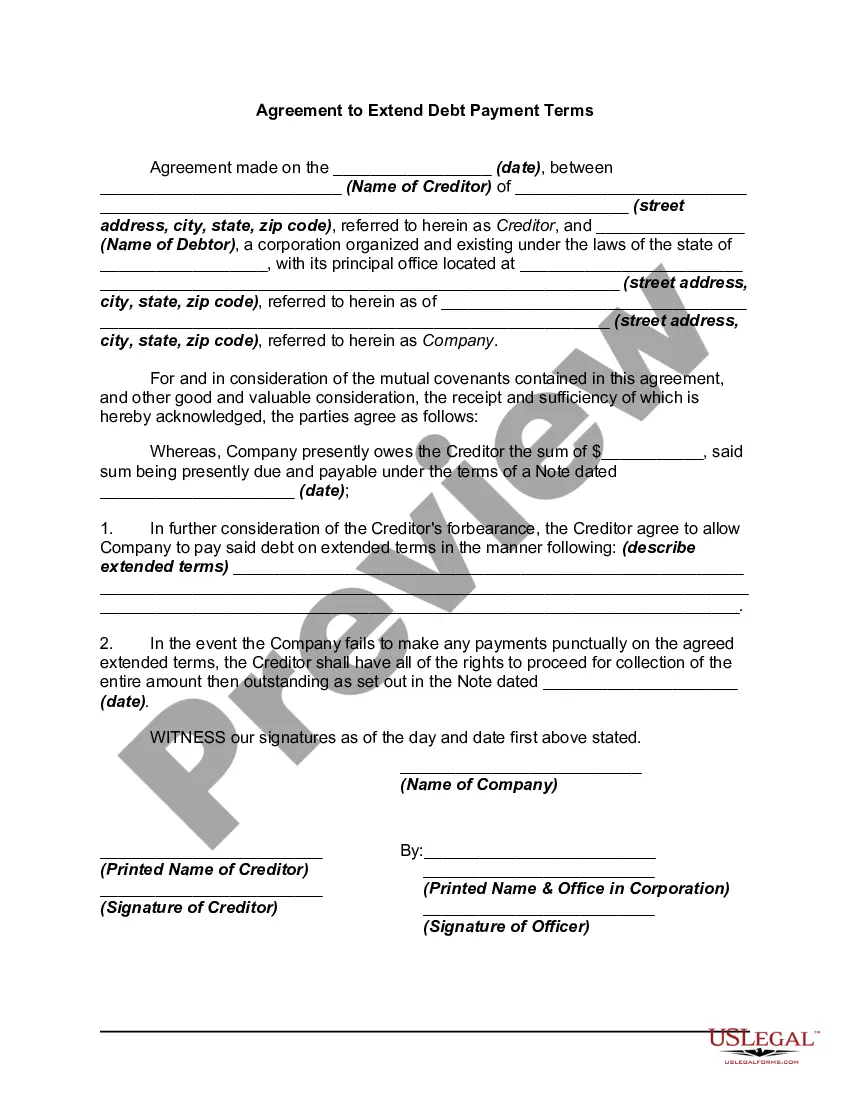



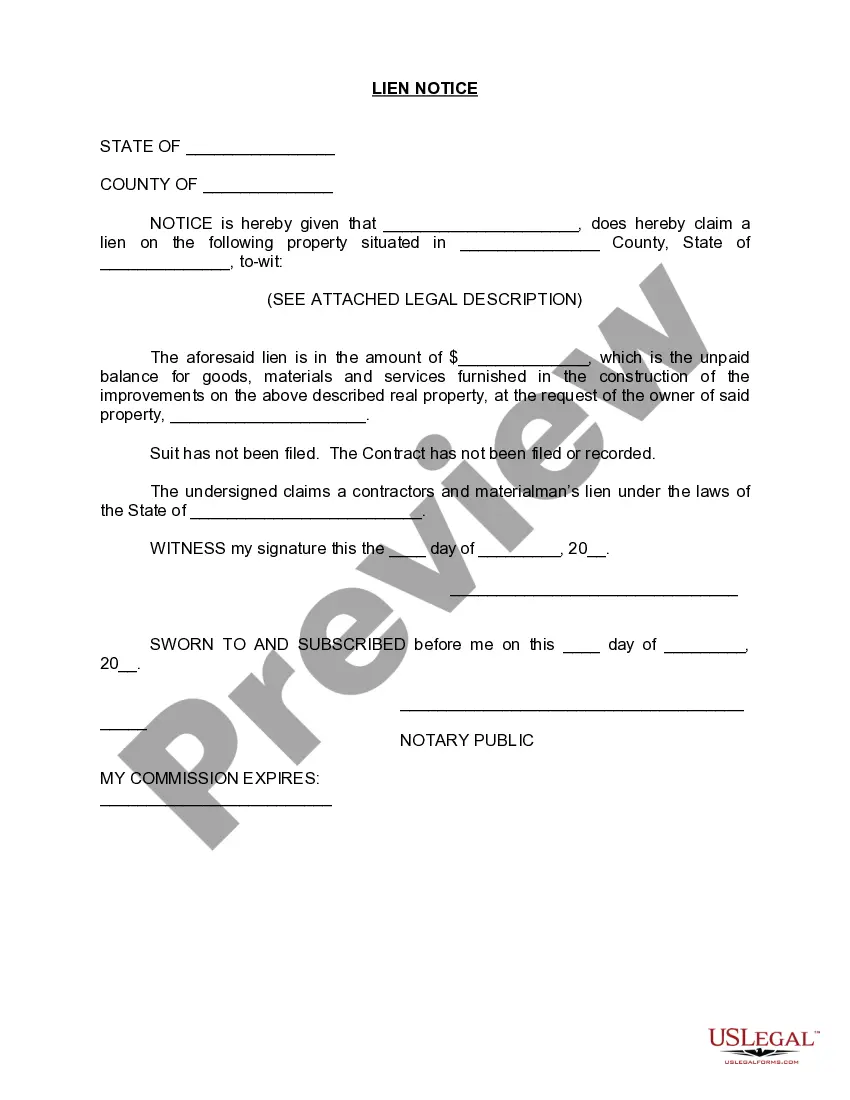
How to fill out Agreement To Extend Debt Payment?
The Pay Creditor Debt Formula you see on this page is a reusable formal template drafted by professional lawyers in compliance with federal and state laws. For more than 25 years, US Legal Forms has provided individuals, companies, and legal professionals with more than 85,000 verified, state-specific forms for any business and personal occasion. It’s the quickest, easiest and most reliable way to obtain the documents you need, as the service guarantees bank-level data security and anti-malware protection.
Acquiring this Pay Creditor Debt Formula will take you just a few simple steps:
- Browse for the document you need and check it. Look through the sample you searched and preview it or review the form description to ensure it fits your requirements. If it does not, utilize the search option to get the right one. Click Buy Now once you have located the template you need.
- Sign up and log in. Choose the pricing plan that suits you and create an account. Use PayPal or a credit card to make a prompt payment. If you already have an account, log in and check your subscription to continue.
- Get the fillable template. Choose the format you want for your Pay Creditor Debt Formula (PDF, DOCX, RTF) and save the sample on your device.
- Fill out and sign the paperwork. Print out the template to complete it manually. Alternatively, use an online multi-functional PDF editor to quickly and precisely fill out and sign your form with a eSignature.
- Download your papers one more time. Make use of the same document again anytime needed. Open the My Forms tab in your profile to redownload any previously purchased forms.
Sign up for US Legal Forms to have verified legal templates for all of life’s circumstances at your disposal.
Form popularity
FAQ
To calculate net debt, we must first total all debt and total all cash and cash equivalents. Next, we subtract the total cash or liquid assets from the total debt amount.
Add the company's short and long-term debt together to get the total debt. To find the net debt, add the amount of cash available in bank accounts and any cash equivalents that can be liquidated for cash. Then subtract the cash portion from the total debts.
To calculate net debt, we must first total all debt and total all cash and cash equivalents. Next, we subtract the total cash or liquid assets from the total debt amount. Total debt would be calculated by adding the debt amounts or $100,000 + $50,000 + $200,000 = $350,000.
The total-debt-to-total-assets ratio is calculated by dividing a company's total amount of debt by the company's total amount of assets. If a company has a total-debt-to-total-assets ratio of 0.4, 40% of its assets are financed by creditors, and 60% are financed by owners' (shareholders') equity.
You collect all your long-term debts and add their balances together. You then collect all your short-term debts and add them together too. Finally, you add together the total long-term and short-term debts to get your total debt. So, the total debt formula is: Long-term debts + short-term debts.