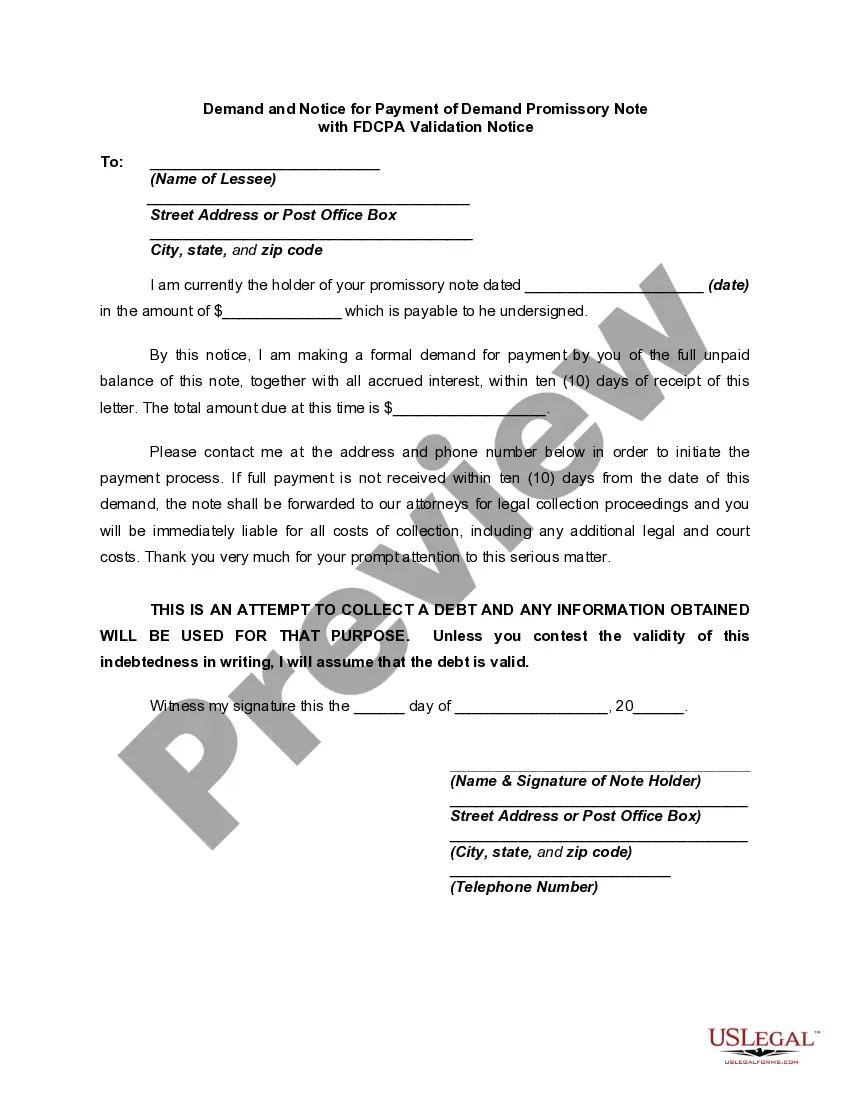
Fdcpa Debt Collection Act For 1977
Description
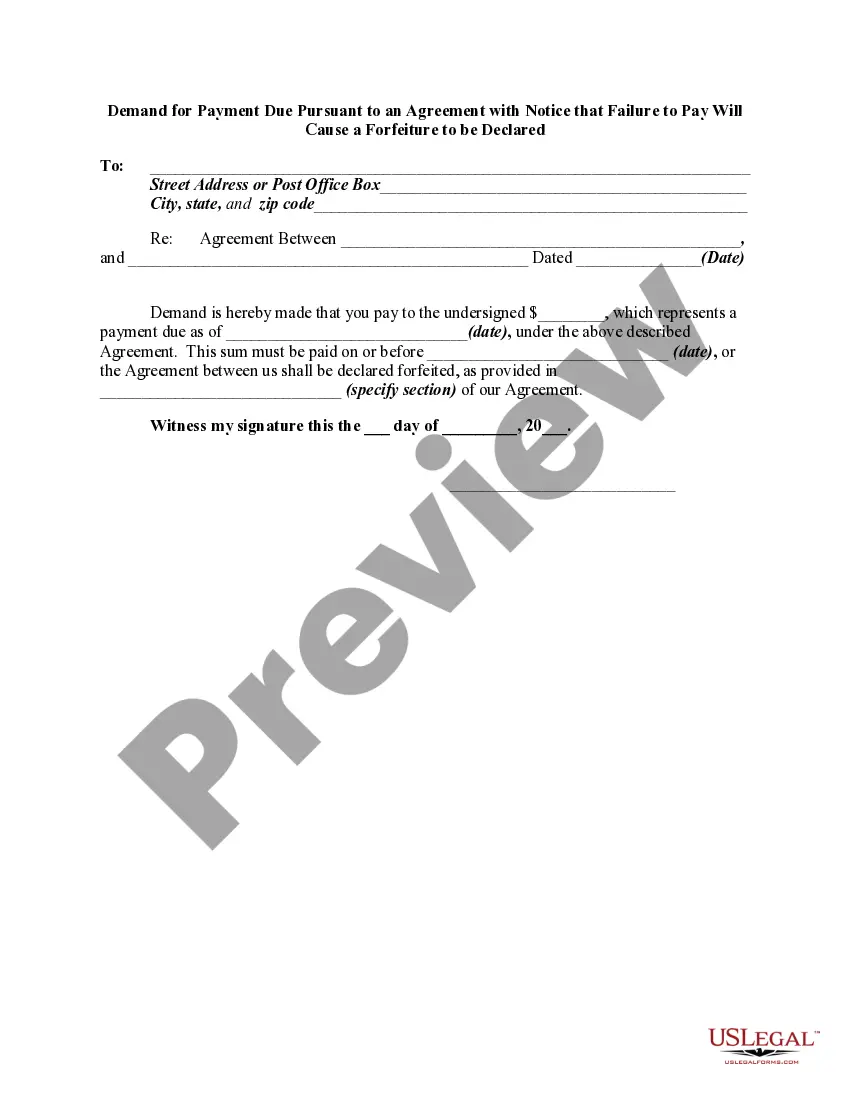
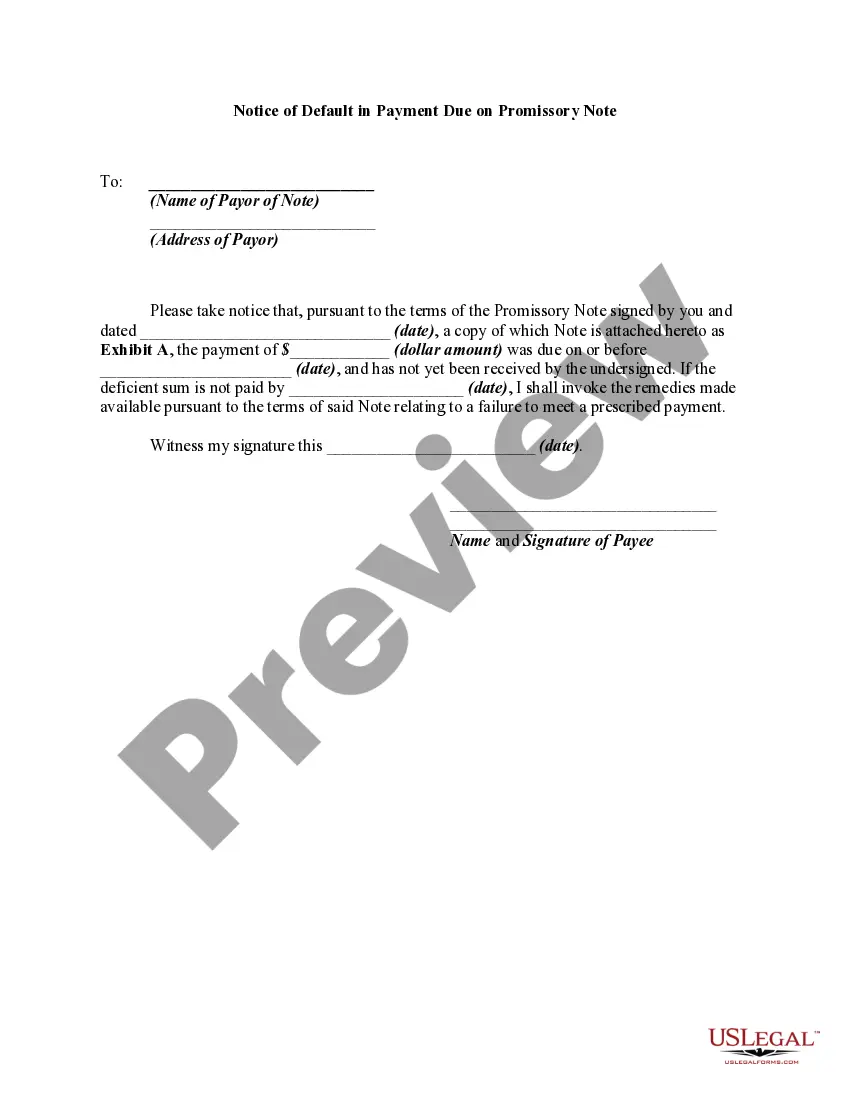
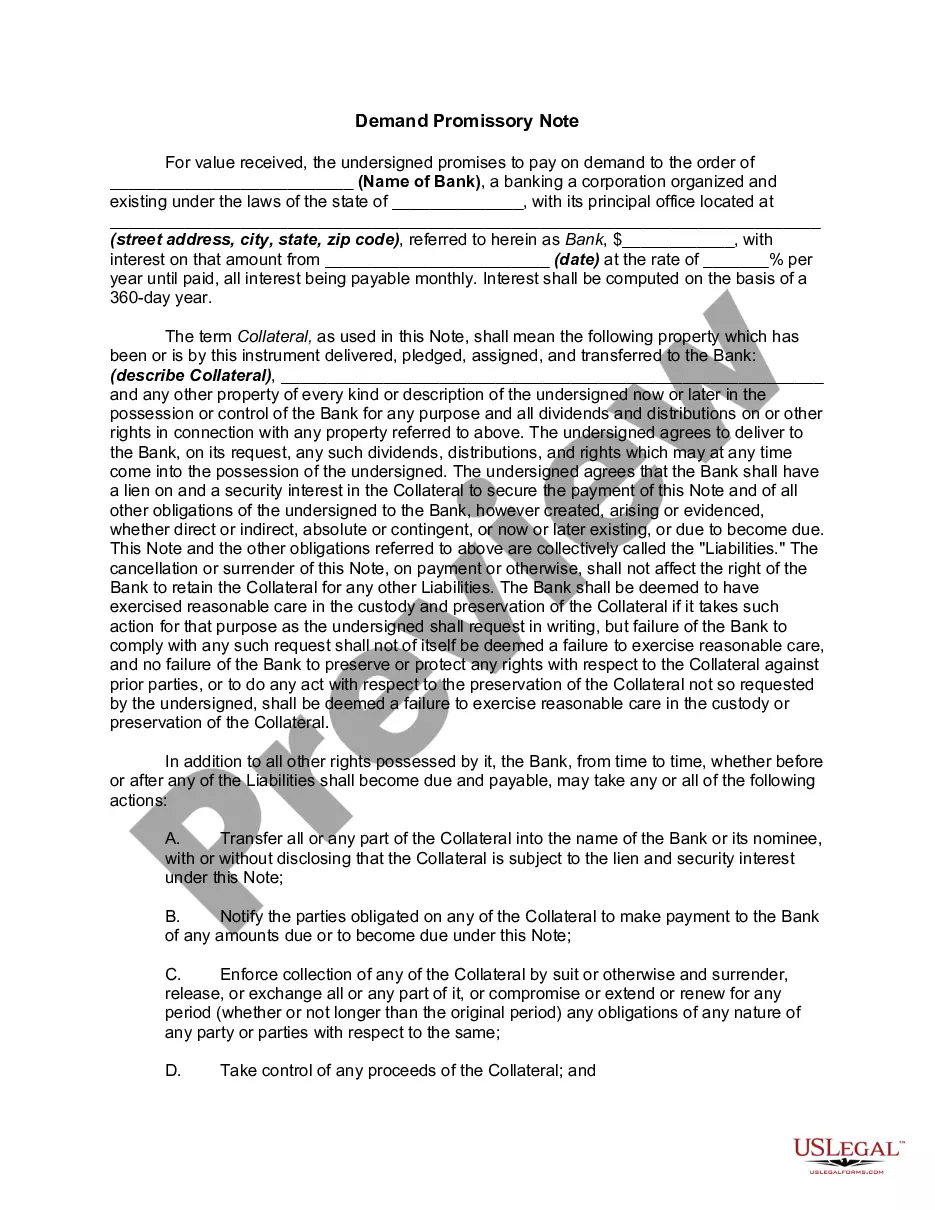
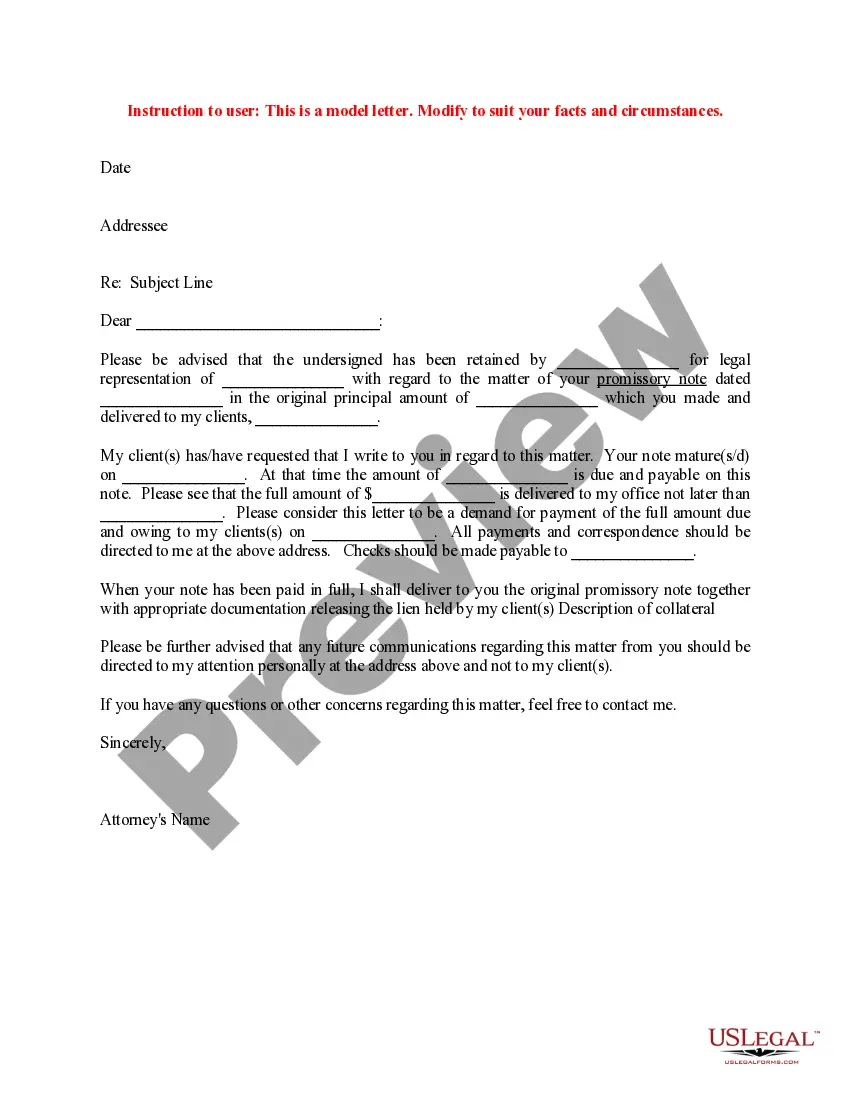





How to fill out Demand And Notice For Payment Of Demand Promissory Note With FDCPA Validation Notice?
Securing a reliable source for obtaining the latest and pertinent legal templates is a significant part of dealing with bureaucracy.
Finding the appropriate legal documents requires accuracy and meticulousness, which highlights the necessity of acquiring samples of Fdcpa Debt Collection Act For 1977 solely from trustworthy sources, such as US Legal Forms.
Proceed to the registration to finalize your purchase. Complete your transaction by selecting a payment method (credit card or PayPal). Choose the document format for downloading Fdcpa Debt Collection Act For 1977. After you have the form on your device, you can modify it using the editor or print it and fill it out by hand. Eliminate the stress associated with your legal documentation. Browse the extensive US Legal Forms catalog to discover legal samples, assess their relevance to your circumstances, and download them instantly.
- An incorrect template will squander your time and delay the matter you are facing.
- With US Legal Forms, there is minimal to worry about.
- You can access and review all the information regarding the document’s applicability and significance for your situation and in your locality.
- Follow these steps to complete your Fdcpa Debt Collection Act For 1977.
- Use the library navigation or search bar to locate your sample.
- View the form’s details to confirm if it meets the standards of your state and area.
- Check the form preview, if available, to ensure the template is what you are looking for.
- Continue searching and look for the correct template if the Fdcpa Debt Collection Act For 1977 does not fulfill your requirements.
- If you are confident about the form’s applicability, download it.
- Once you are a registered user, click Log in to verify and access your selected templates in My documents.
- If you do not have an account yet, click Buy now to acquire the form.
- Choose the pricing option that suits your needs.
Form popularity
FAQ
If you are struggling with debt and debt collectors, Farmer & Morris Law, PLLC can help. As soon as you use the 11-word phrase ?please cease and desist all calls and contact with me immediately? to stop the harassment, call us for a free consultation about what you can do to resolve your debt problems for good.
Debt collectors engaging in harassment (usually with repeated calls) or using abusive language. Debt collectors threatening to contact a third party about your debt (such as a friend, family member, or employer) or otherwise improperly share information about your debt publicly.
Under the FDCPA, a debt collector cannot harass or abuse you while attempting to collect money. The most common complaints the CFPB received in this category were: Frequent or repeated phone calls. Continued contact after the consumer requested the debt collector stop contacting them.
Under this Act (Title VIII of the Consumer Credit Protection Act), third-party debt collectors are prohibited from using deceptive or abusive conduct in the collection of consumer debts incurred for personal, family, or household purposes.
The Fair Debt Collection Practices Act (FDCPA) prohibits debt collectors from using abusive, unfair, or deceptive practices to collect debts from you, including: Misrepresenting the nature of the debt, including the amount owed. Falsely claiming that the person contacting you is an attorney.