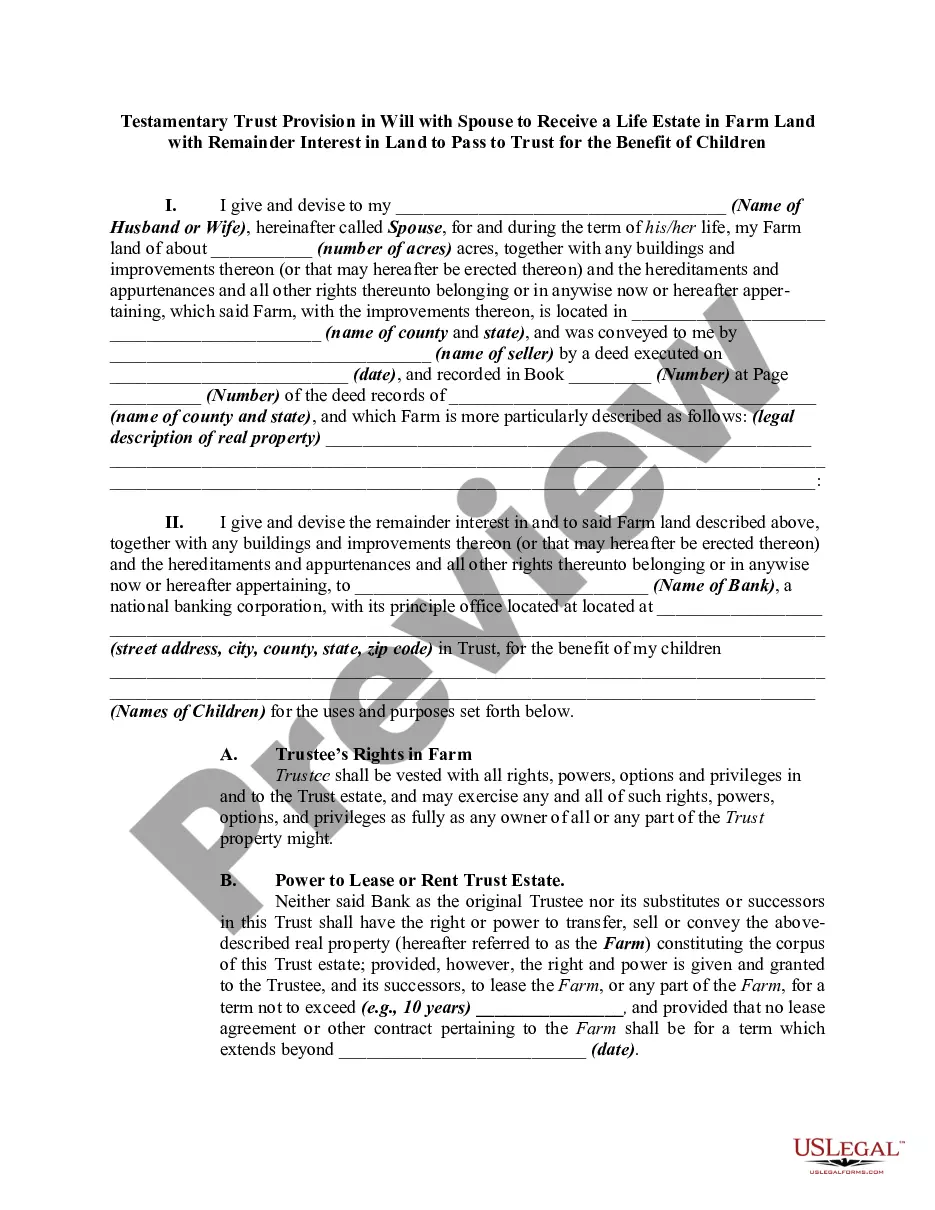
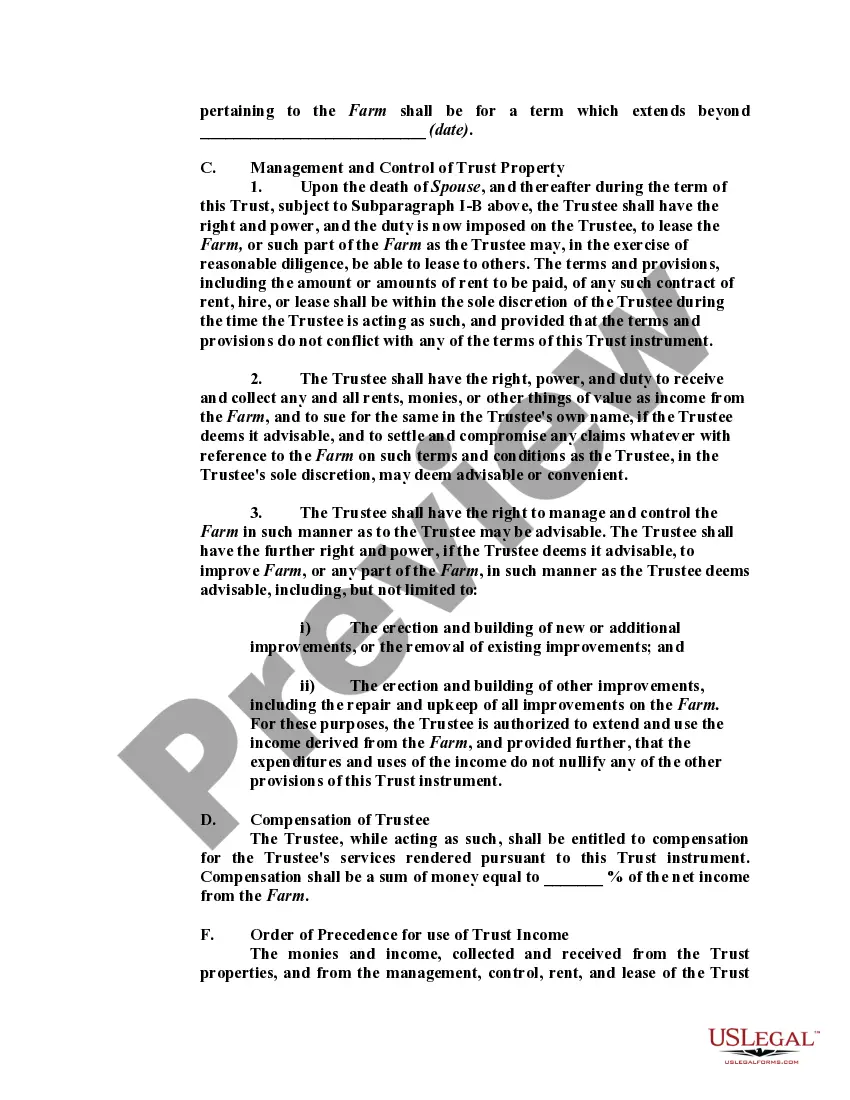
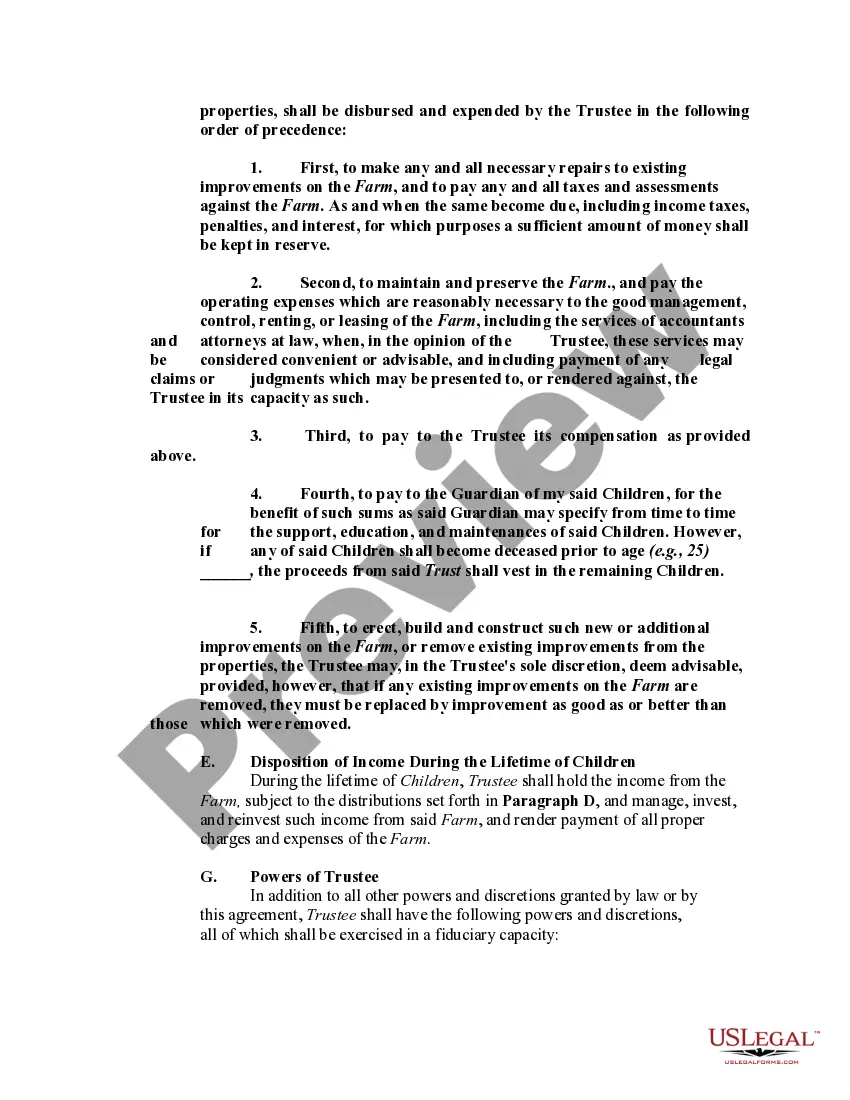
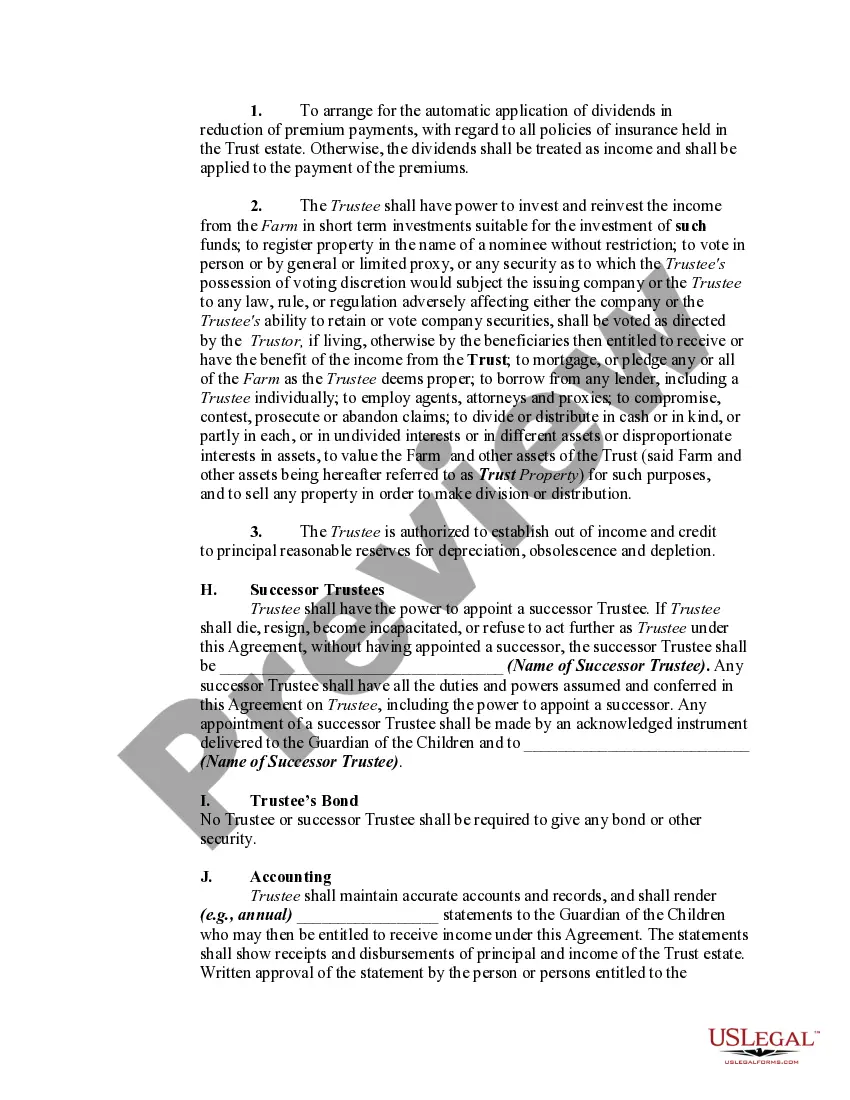
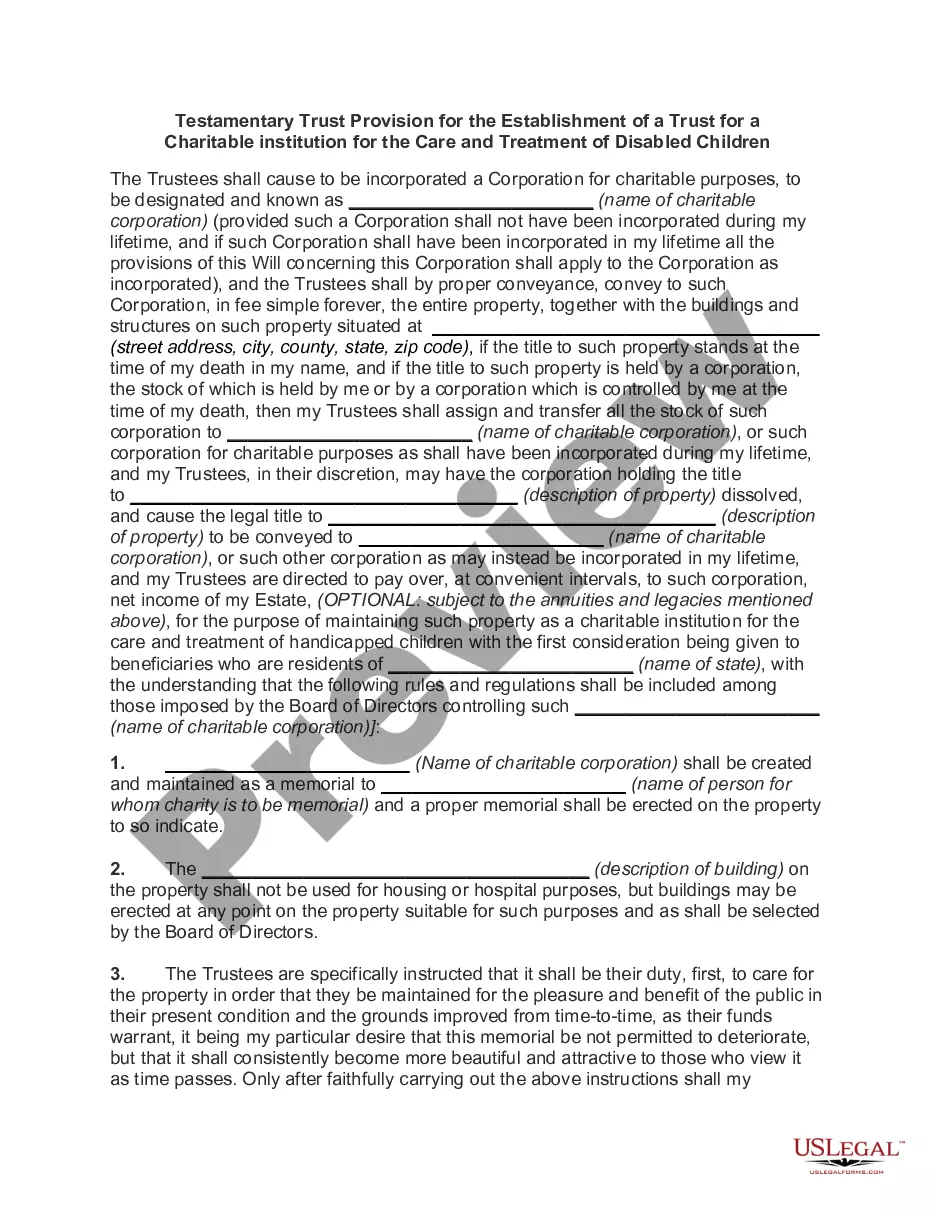
Testamentary Trust Provision For Trusts
Description
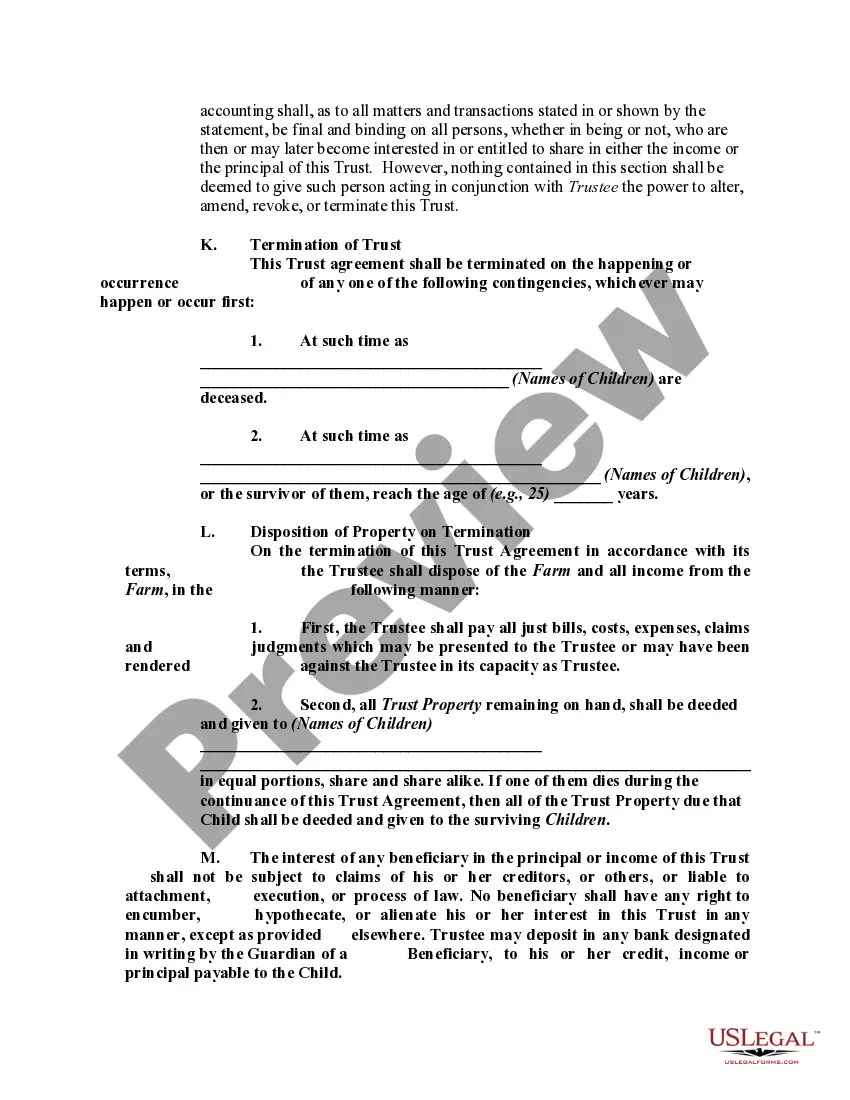
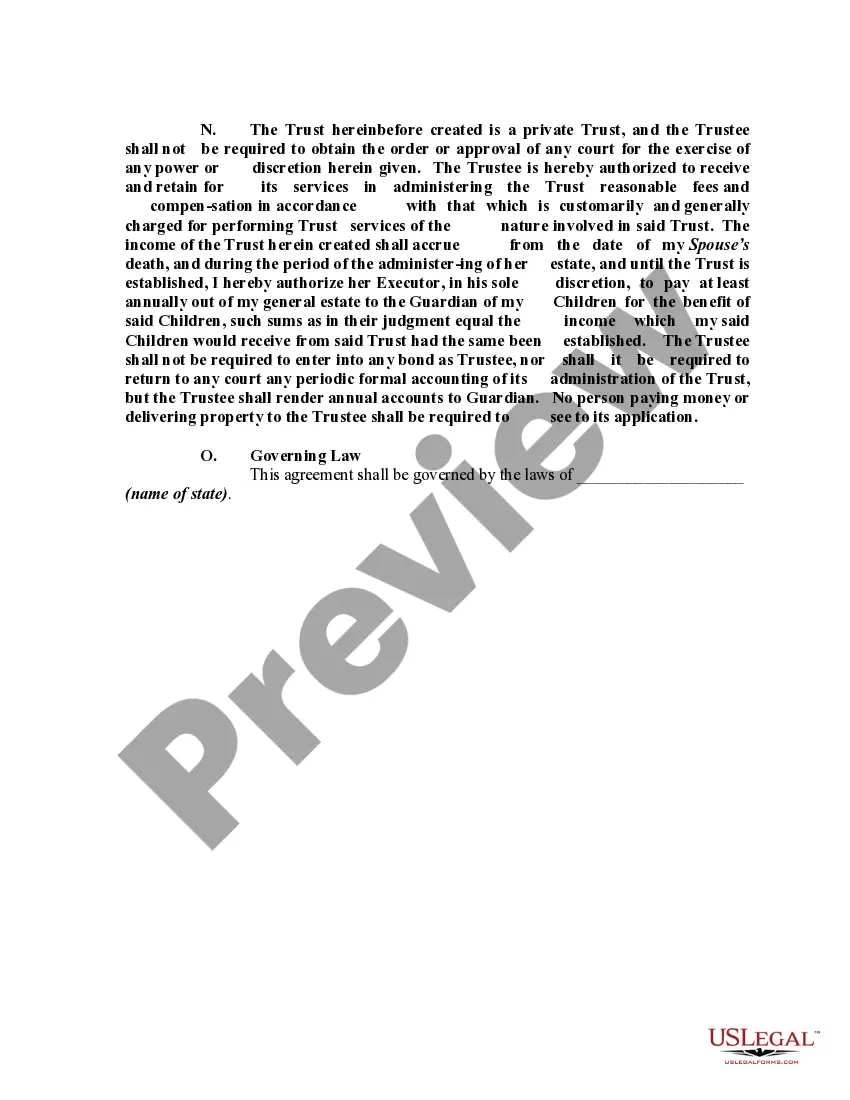
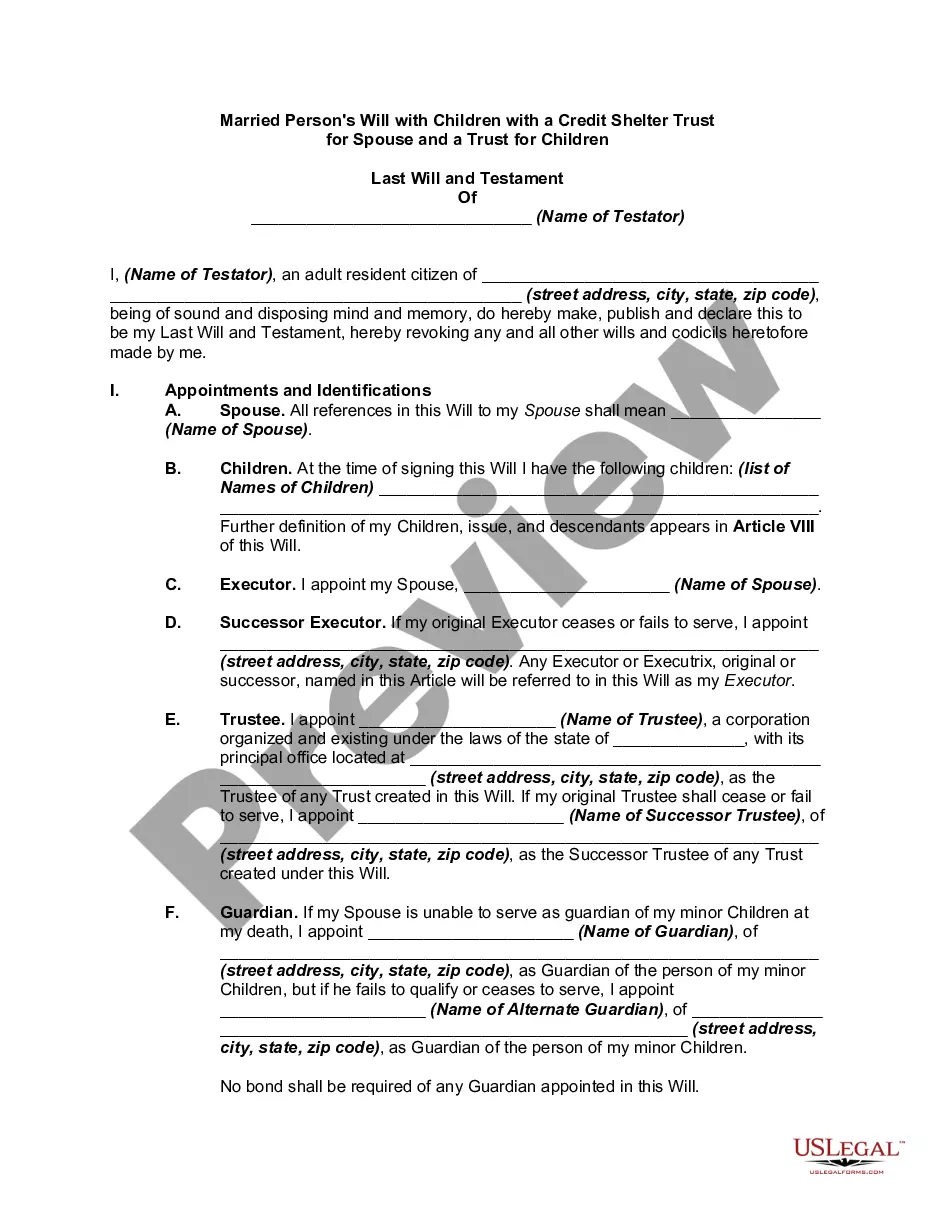
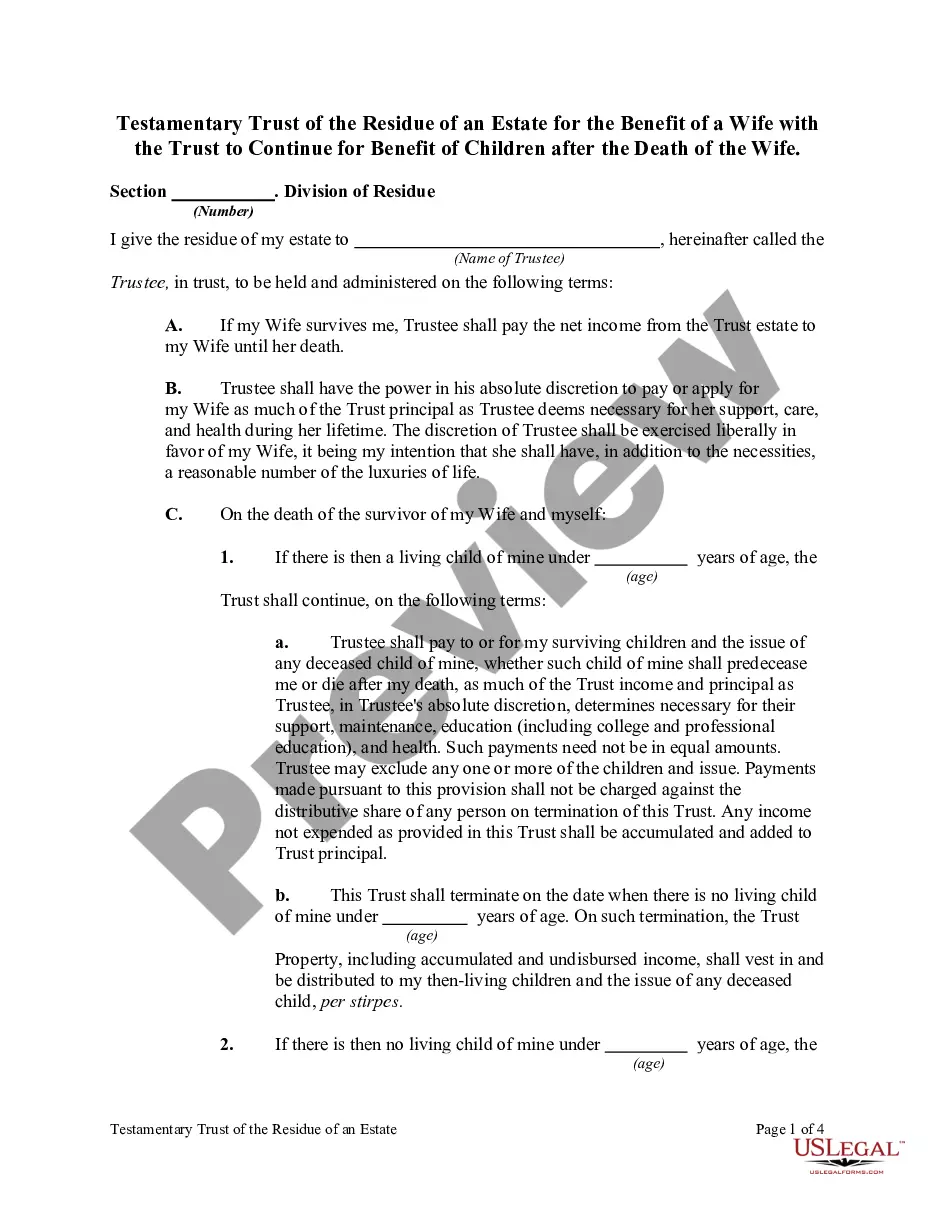
Get your form ready online
Our built-in tools help you complete, sign, share, and store your documents in one place.
Make edits, fill in missing information, and update formatting in US Legal Forms—just like you would in MS Word.
Download a copy, print it, send it by email, or mail it via USPS—whatever works best for your next step.
Sign and collect signatures with our SignNow integration. Send to multiple recipients, set reminders, and more. Go Premium to unlock E-Sign.
If this form requires notarization, complete it online through a secure video call—no need to meet a notary in person or wait for an appointment.
We protect your documents and personal data by following strict security and privacy standards.

Make edits, fill in missing information, and update formatting in US Legal Forms—just like you would in MS Word.

Download a copy, print it, send it by email, or mail it via USPS—whatever works best for your next step.

Sign and collect signatures with our SignNow integration. Send to multiple recipients, set reminders, and more. Go Premium to unlock E-Sign.

If this form requires notarization, complete it online through a secure video call—no need to meet a notary in person or wait for an appointment.

We protect your documents and personal data by following strict security and privacy standards.
Looking for another form?







How to fill out Testamentary Trust Provision In Will With Spouse To Receive A Life Estate In Farm Land With Remainder Interest In Land To Pass To Trust For The Benefit Of Children?
- Log in to your account if you are a returning user, ensuring your subscription is active. Click the 'Download' button to access the necessary templates.
- If this is your first visit, preview the relevant form and its description to confirm it meets your specific needs based on your local jurisdiction.
- Use the Search feature to find an alternative template if the current one does not meet all your requirements.
- Select your document by clicking the 'Buy Now' button, then choose a subscription plan that suits your needs.
- Complete your purchase by entering your payment details, either via credit card or PayPal.
- Download the template and save it to your device. Access it anytime from the 'My Forms' section of your profile.
In conclusion, US Legal Forms simplifies the process of obtaining a testamentary trust provision for trusts, allowing you to focus on what matters most. With a robust collection of over 85,000 legal forms and expert assistance, you can ensure that your documentation is accurate and compliant.
Take action today and experience the ease of accessing legal documents with US Legal Forms.
Form popularity
FAQ
The advantages of a testamentary trust include controlled asset distribution and protection for beneficiaries who may not be financially responsible. However, it may also have disadvantages, such as potential delays in asset distribution and higher costs associated with administration. Understanding the testamentary trust provision for trusts can help you weigh these factors effectively, guiding you to make an informed decision that suits your family's needs.
A testamentary trust typically lasts until the terms you've set are fulfilled. This period can range from a few years to several decades, depending on the age of your beneficiaries or specific conditions outlined in the trust. As you consider the testamentary trust provision for trusts, keep in mind that it remains active until your stated goals are achieved, ensuring proper management of your assets over time.
Yes, a testamentary trust can be a valuable part of your estate planning. It allows you to manage how your assets are distributed after your passing, ensuring that your beneficiaries receive their inheritance according to your wishes. By including a testamentary trust provision for trusts in your estate plan, you provide a clear structure for your loved ones, while potentially reducing the risk of family disputes.
To establish a testamentary trust provision for trusts, you will need essential documents, including a valid will and any necessary financial records that detail your assets. It might also be helpful to have a list of beneficiaries and a proposed trustee. Consulting a professional service, like USLegalForms, can simplify this process and ensure all necessary documentation is correctly prepared.
Setting up a testamentary trust provision for trusts involves creating a will that includes the trust specifics. You should consult with an estate planning attorney to draft the necessary documents accurately. Additionally, ensure that you clearly outline your wishes regarding asset distribution and trustee appointment within the will.
While a testamentary trust provision for trusts offers many benefits, there are some disadvantages to consider. It typically does not take effect until after death, potentially delaying access to funds for beneficiaries. Additionally, these trusts may incur higher legal fees and require ongoing management, which might not be suitable for everyone.
A testamentary trust provision for trusts is a legal component contained within a will. It specifies the creation of a trust that will take effect after the individual's death. This provision outlines how the assets will be managed and distributed according to the deceased's wishes, ensuring clarity during a difficult time.
The provision of a testamentary trust in a will specifies how your assets will be managed and distributed after your passing. This provision allows you to appoint a trustee responsible for overseeing the trust and protecting your beneficiaries’ interests. Understanding this testamentary trust provision for trusts can help ensure your estate is handled according to your wishes.
Yes, there is a trust document for a testamentary trust, which is usually included as part of your will. This document outlines the terms of the trust, including how and when assets will be distributed to beneficiaries. You can rely on resources like US Legal Forms to help you draft the necessary documents for your testamentary trust.
The assets in a testamentary trust are owned by the trust itself, not the individual beneficiaries. Once the trust is established after your death, assets are managed by a designated trustee until they are distributed according to the testamentary trust provision for trusts. This arrangement ensures that your wishes regarding asset distribution are followed.