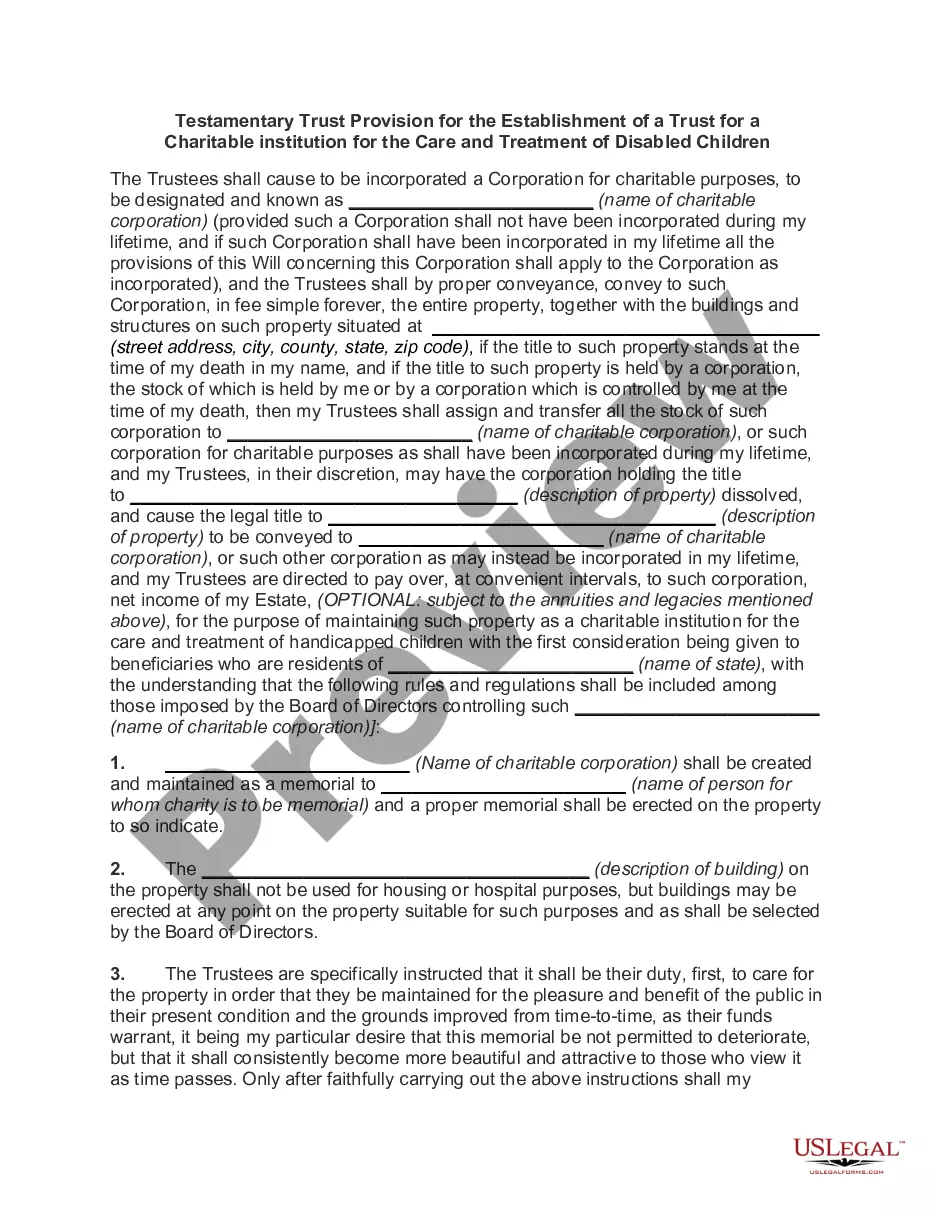
Settlor For Testamentary Trust
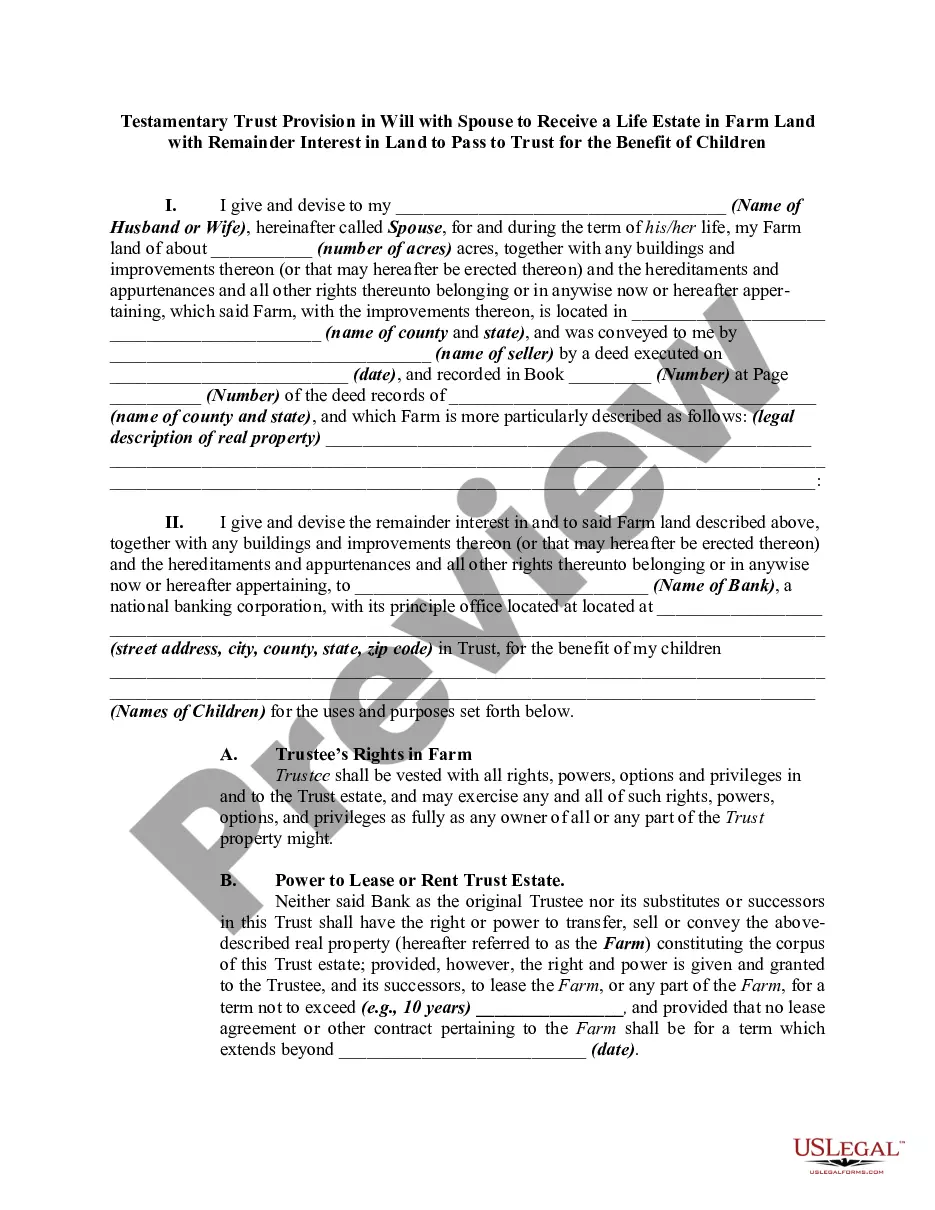
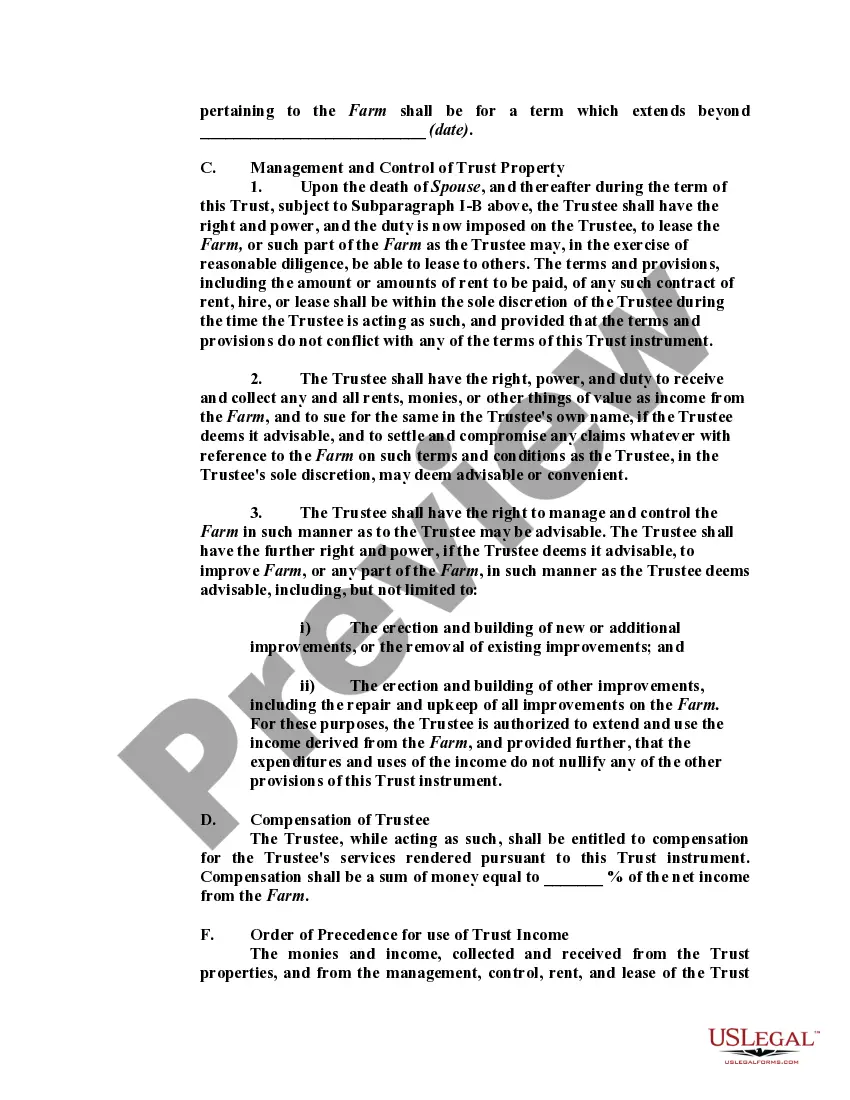
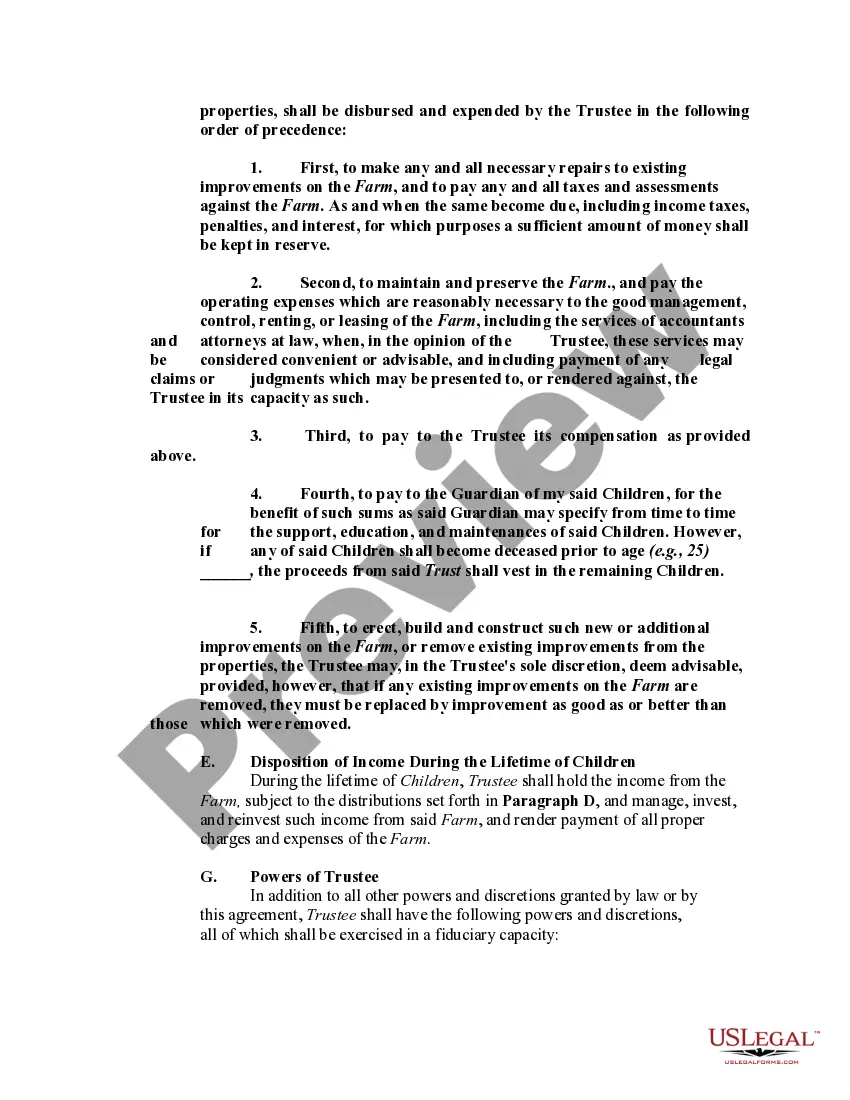
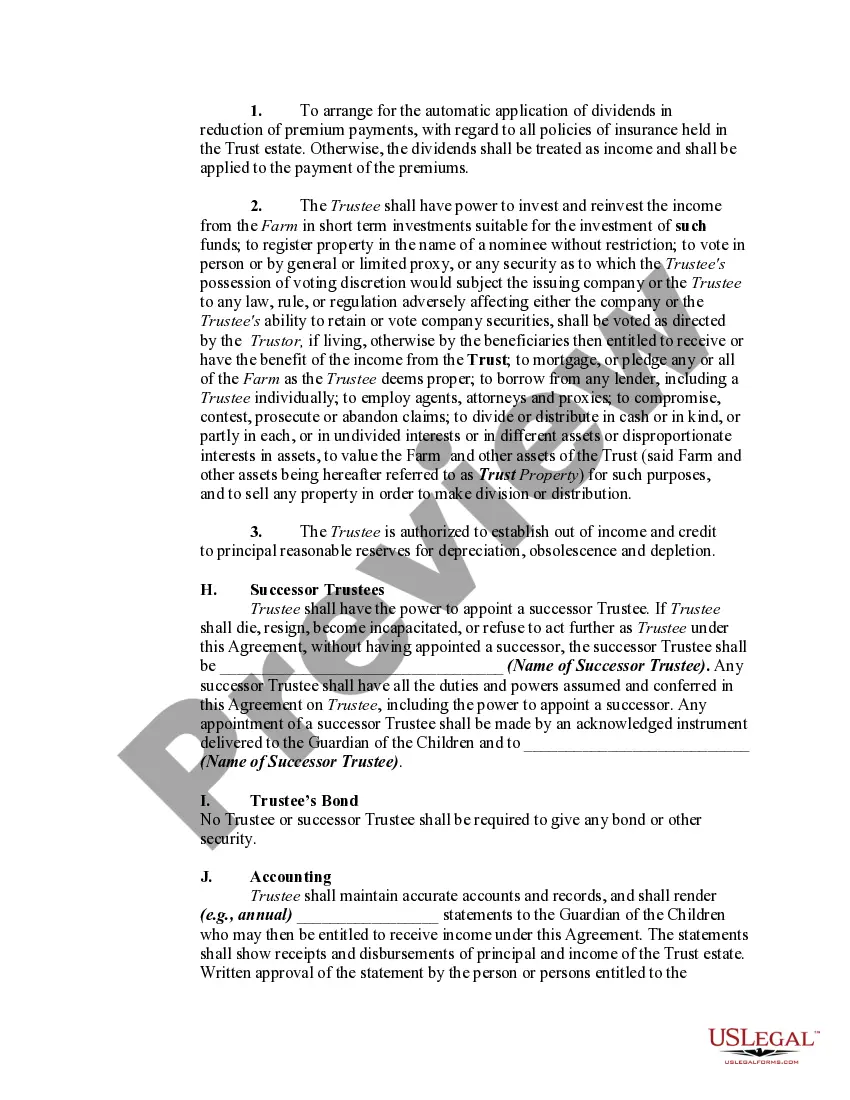
Description

Get your form ready online
Our built-in tools help you complete, sign, share, and store your documents in one place.
Make edits, fill in missing information, and update formatting in US Legal Forms—just like you would in MS Word.
Download a copy, print it, send it by email, or mail it via USPS—whatever works best for your next step.
Sign and collect signatures with our SignNow integration. Send to multiple recipients, set reminders, and more. Go Premium to unlock E-Sign.
If this form requires notarization, complete it online through a secure video call—no need to meet a notary in person or wait for an appointment.
We protect your documents and personal data by following strict security and privacy standards.

Make edits, fill in missing information, and update formatting in US Legal Forms—just like you would in MS Word.

Download a copy, print it, send it by email, or mail it via USPS—whatever works best for your next step.

Sign and collect signatures with our SignNow integration. Send to multiple recipients, set reminders, and more. Go Premium to unlock E-Sign.

If this form requires notarization, complete it online through a secure video call—no need to meet a notary in person or wait for an appointment.

We protect your documents and personal data by following strict security and privacy standards.
Looking for another form?
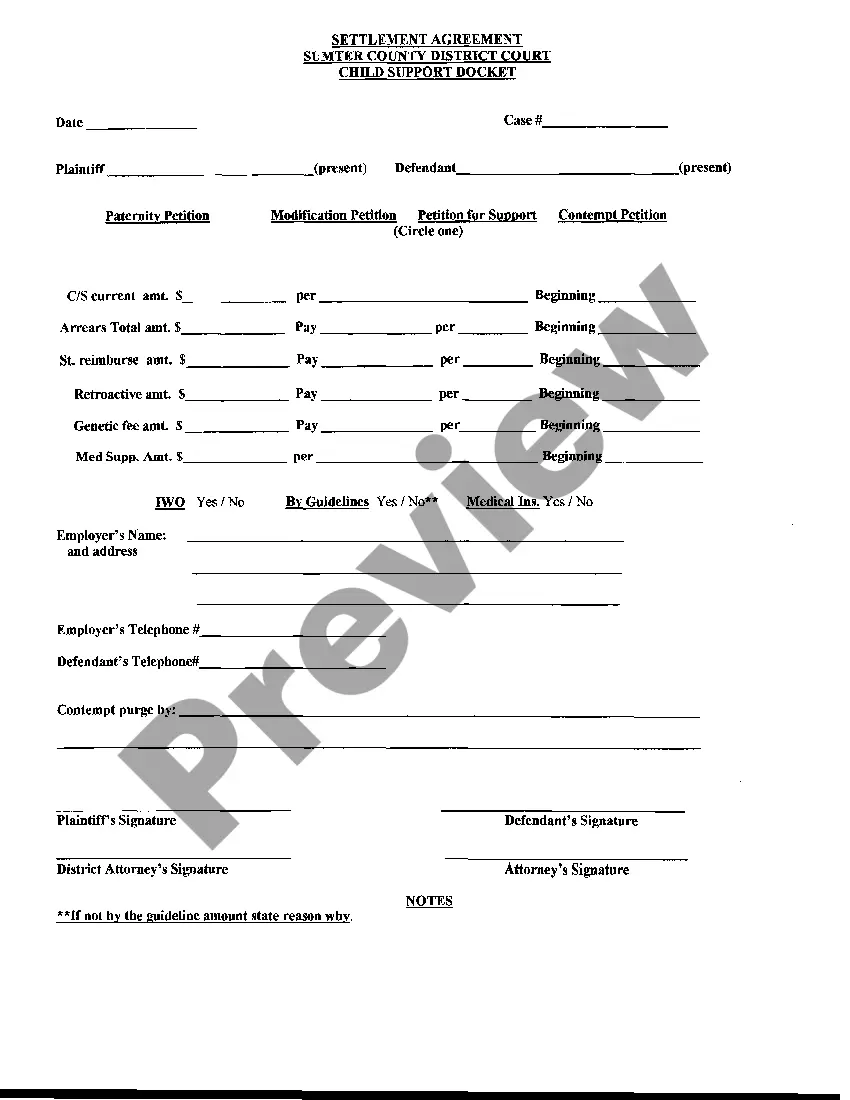



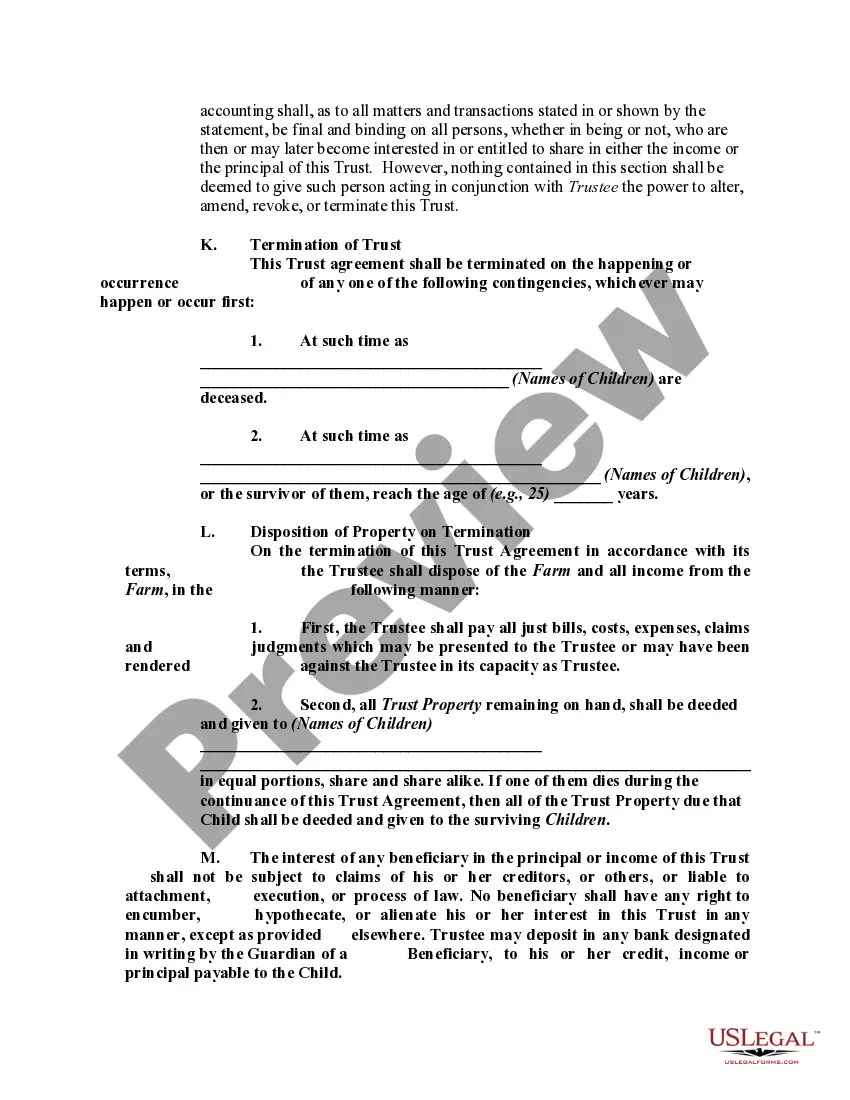
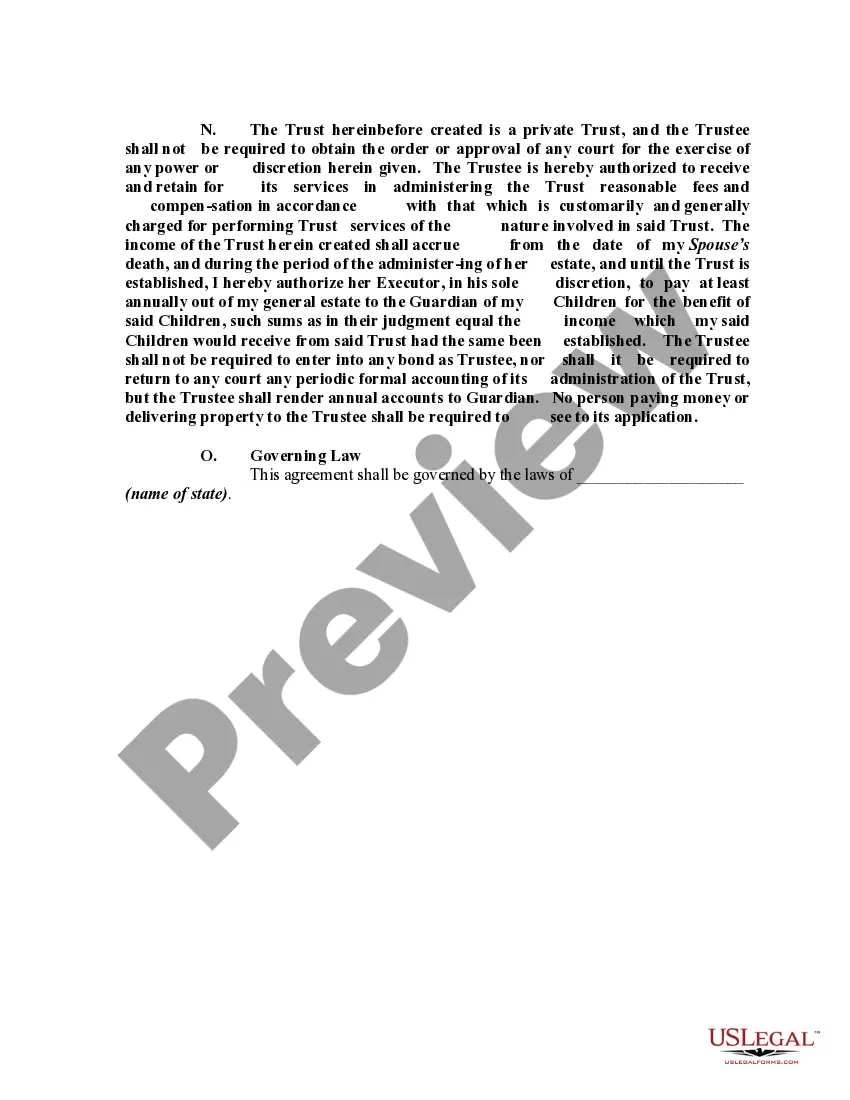
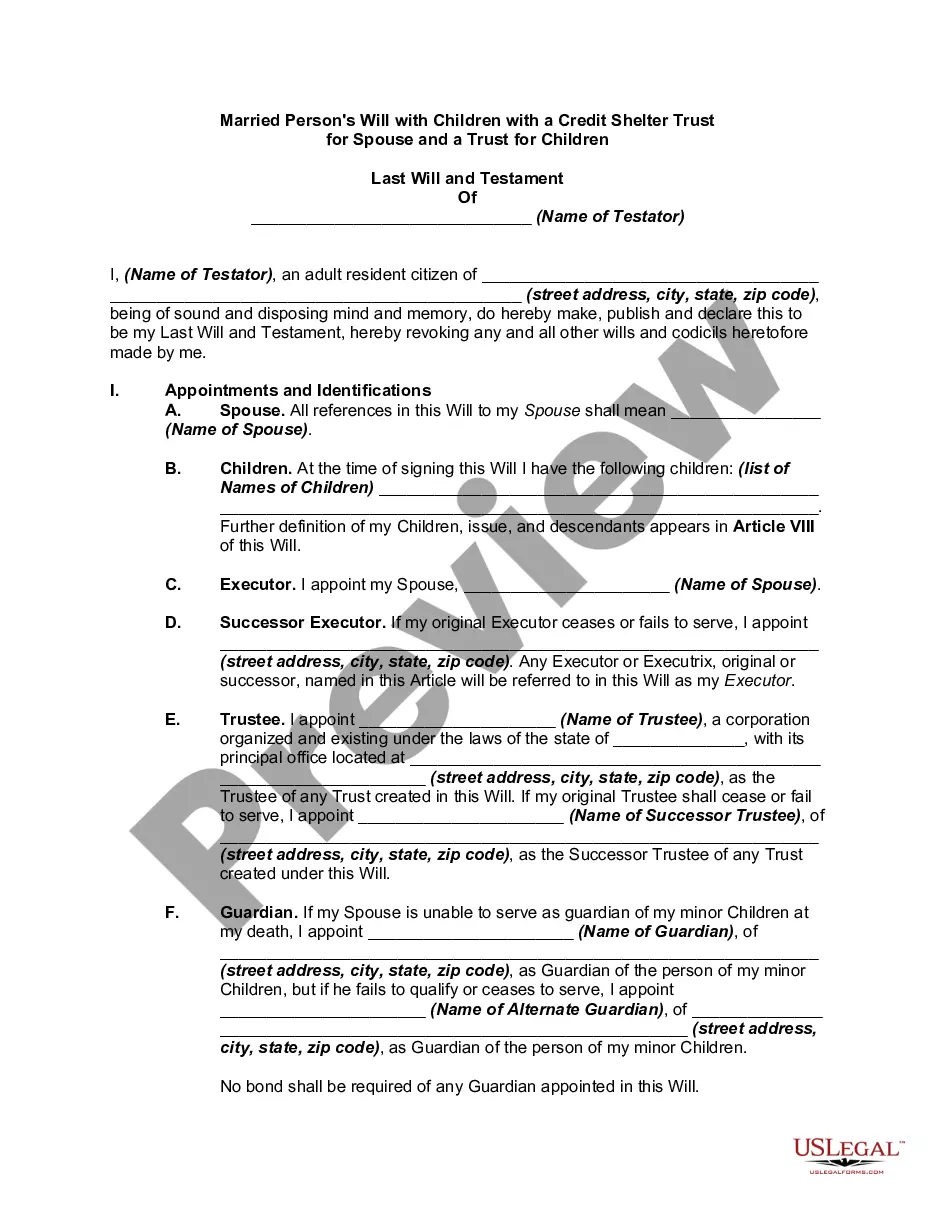
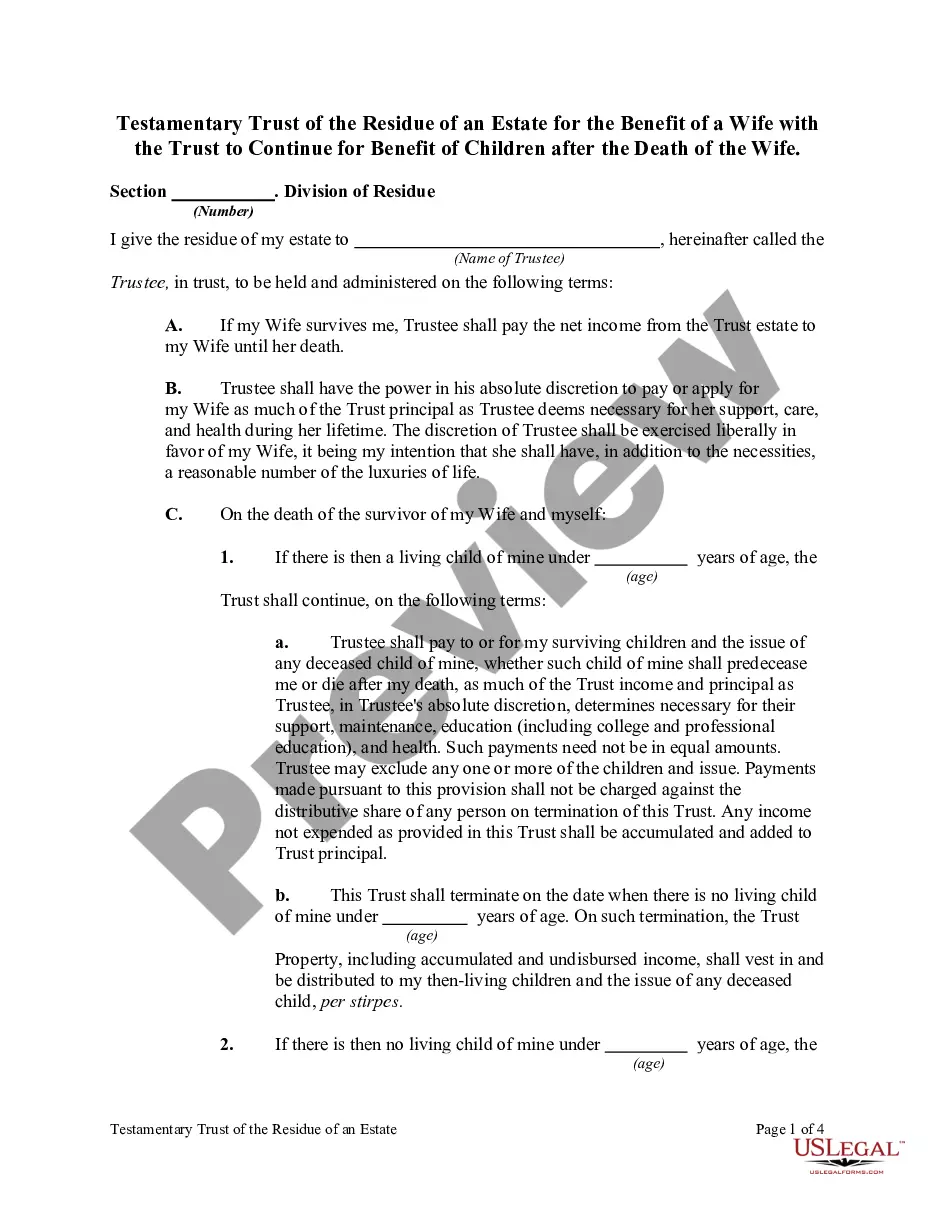
How to fill out Testamentary Trust Provision In Will With Spouse To Receive A Life Estate In Farm Land With Remainder Interest In Land To Pass To Trust For The Benefit Of Children?
- If you are a returning user, log in to access your account and download the required form template by clicking the Download button. Ensure your subscription is active; renew as necessary.
- For first-time users, start by reviewing the Preview mode and form description. Confirm that you select the document that suits your needs and complies with local laws.
- If you find discrepancies, utilize the Search tab above to seek an alternative template that fits your requirements.
- Once you identify the appropriate document, click the Buy Now button to select your desired subscription plan, requiring account registration to tap into the library's resources.
- Complete your purchase by entering your credit card information or using your PayPal account for subscription payment.
- Finally, download your form to your device, so you can complete it whenever necessary. You will also find it saved in the My documents section of your profile.
In conclusion, US Legal Forms streamlines the process of obtaining your settlor for testamentary trust documentation. With an extensive library and expert assistance, you can execute legal documents easily and accurately.
Start simplifying your estate planning today by visiting US Legal Forms!
Form popularity
FAQ
Yes, testamentary trusts do have trustees who are responsible for managing the trust assets. This role is filled by individuals or institutions chosen by the settlor for testamentary trust. The trustee ensures that the trust is administered according to the terms set out in the will. For effective management, selecting a qualified trustee is vital to ensure that the trust functions as intended.
The settlor of a trust is the individual who creates the trust, usually by drafting a will that specifies the trust’s terms. In the case of a testamentary trust, the settlor is the person whose will establishes the trust. This individual has the authority to outline how the trust assets should be managed and distributed after their passing. Understanding the role of the settlor for testamentary trust is essential for anyone looking to create a trust.
Choosing the right trustee for a testamentary trust is critical. The ideal trustee should be someone who understands financial management and can act impartially. Often, a trusted family member, a close friend, or a financial institution makes an excellent choice. Ultimately, this decision rests with the settlor for testamentary trust, who must consider the trust's needs and future beneficiaries.
The trustee of a testamentary trust is a person or institution designated to manage the trust according to its terms. This role is usually appointed by the settlor for testamentary trust within the will. The trustee holds the responsibility to administer assets and fulfill the instructions specified by the settlor. Selecting a trustworthy and capable trustee can greatly influence the effectiveness of the trust.
The responsible party for a testamentary trust is typically the executor of the will. This individual has the duty to establish the trust according to the terms outlined in the will. The executor ensures that the assets are managed and distributed according to the wishes of the settlor for testamentary trust. Therefore, if you are considering a testamentary trust, understanding the role of the executor is crucial.
Yes, a testamentary trust indeed has a settlor, who is the individual creating the trust through their will. The settlor for a testamentary trust determines the rules and conditions under which the trust operates, including asset distribution and the responsibilities of the trustee. This foundational role is crucial for ensuring the trust aligns with the settlor's wishes and goals for their beneficiaries.
A testamentary trust typically lasts until the terms established by the settlor are fulfilled, which can vary significantly depending on the trust's purpose. This could mean the trust remains active until a beneficiary reaches a certain age or achieves specific milestones. Understanding the lifespan of your trust can help you clarify your estate planning objectives and ensure that your beneficiaries are adequately supported.
In a testamentary trust, ownership of the assets is held by the trust itself, managed by the trustee on behalf of the beneficiaries. The settlor for the testamentary trust specifies how these assets are to be distributed according to their wishes. As such, the beneficiaries do not have direct ownership of the assets until the conditions of the trust are fulfilled.
Whether a testamentary trust is suitable for you depends on your specific financial goals and family situation. If you have minor children or beneficiaries who may struggle with financial responsibility, a testamentary trust can provide security and direction for the distribution of assets. You may want to consult with legal professionals who specialize in trusts to better understand how a settlor for a testamentary trust can fit into your estate planning.
The management of a testamentary trust falls to the trustee, who is appointed by the settlor for the testamentary trust. The trustee is responsible for ensuring that the trust's terms are followed and for making distributions to the beneficiaries according to the settlor's wishes. This role requires a mix of financial expertise and accountability to effectively handle the trust's assets over time.