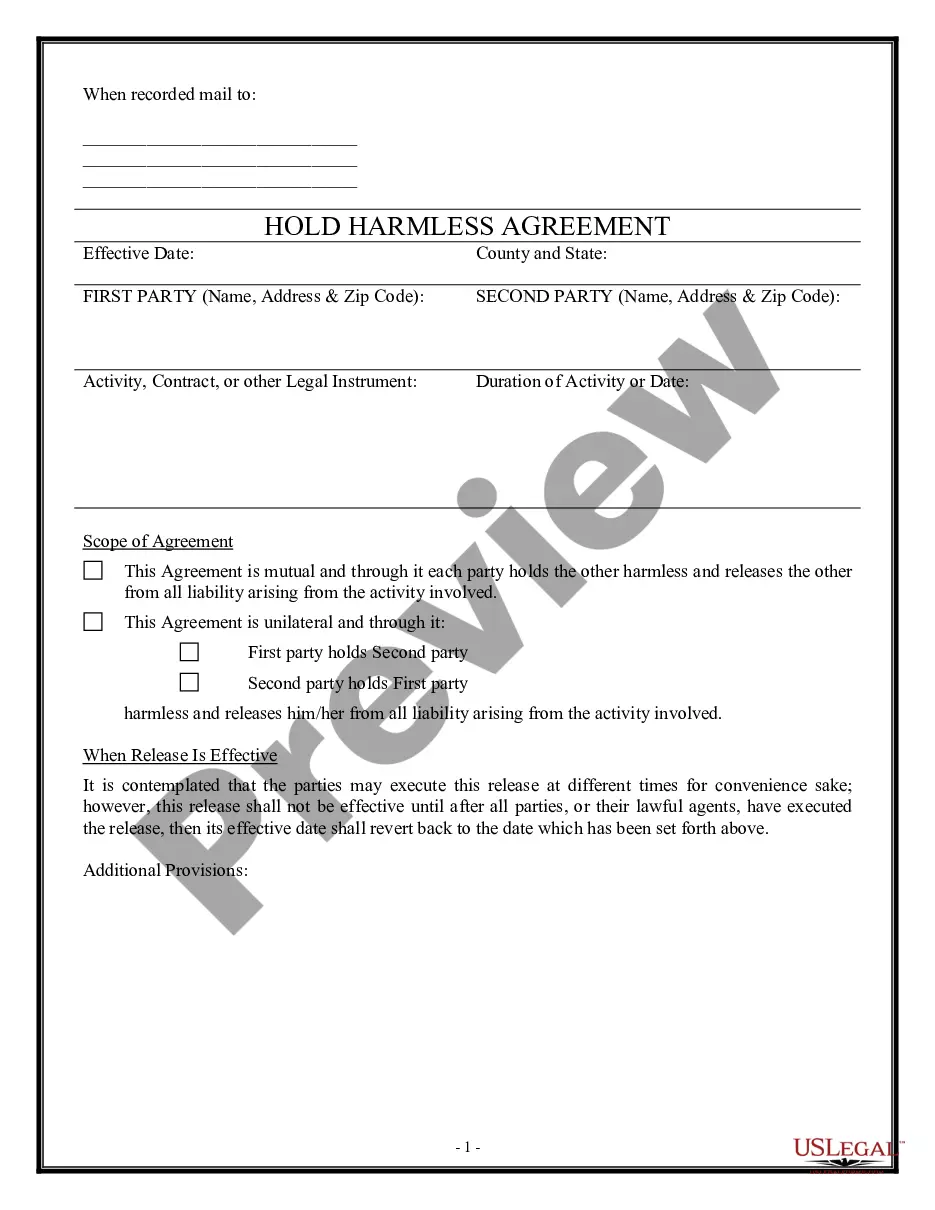
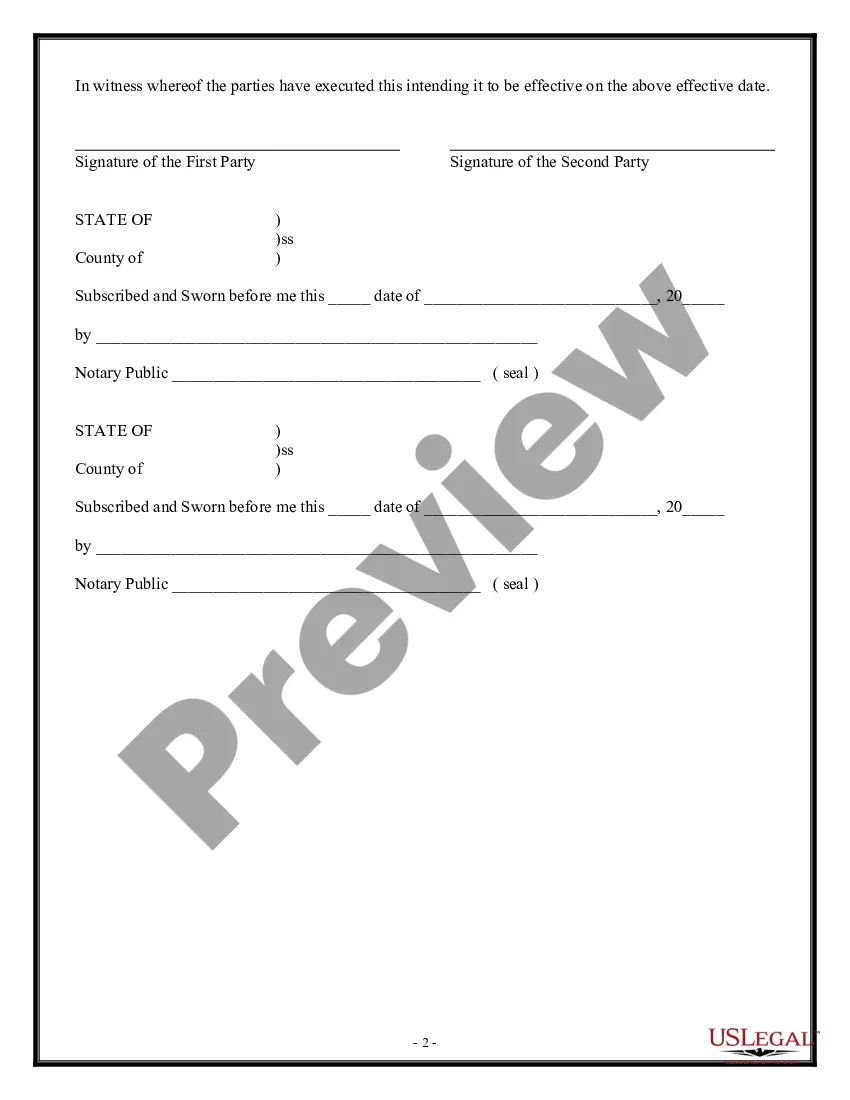
Hold Harmless Agreement For Caregivers
Description
Get your form ready online
Our built-in tools help you complete, sign, share, and store your documents in one place.
Make edits, fill in missing information, and update formatting in US Legal Forms—just like you would in MS Word.
Download a copy, print it, send it by email, or mail it via USPS—whatever works best for your next step.
Sign and collect signatures with our SignNow integration. Send to multiple recipients, set reminders, and more. Go Premium to unlock E-Sign.
If this form requires notarization, complete it online through a secure video call—no need to meet a notary in person or wait for an appointment.
We protect your documents and personal data by following strict security and privacy standards.

Make edits, fill in missing information, and update formatting in US Legal Forms—just like you would in MS Word.

Download a copy, print it, send it by email, or mail it via USPS—whatever works best for your next step.

Sign and collect signatures with our SignNow integration. Send to multiple recipients, set reminders, and more. Go Premium to unlock E-Sign.

If this form requires notarization, complete it online through a secure video call—no need to meet a notary in person or wait for an appointment.

We protect your documents and personal data by following strict security and privacy standards.
Looking for another form?
How to fill out General Hold Harmless Agreement?
It’s a well-known fact that you cannot become a legal specialist in a short span, nor can you easily learn how to promptly create a Hold Harmless Agreement for Caregivers without possessing specific expertise.
Assembling legal documents is a lengthy process that demands particular training and abilities. So why not entrust the creation of the Hold Harmless Agreement for Caregivers to the experts.
With US Legal Forms, one of the largest legal template databases, you can discover everything from court documents to templates for intra-office correspondence.
- We recognize how crucial compliance and adherence to federal and local statutes and regulations are.
- That’s why, on our site, all documents are locality-specific and current.
- Here’s how to get started on our website and acquire the form you need in just a few minutes.
- Identify the document you require using the search bar at the top of the webpage.
- Preview it (if this option is available) and review the accompanying description to ascertain whether the Hold Harmless Agreement for Caregivers is what you want.
Form popularity
FAQ
In Minnesota, the living will and durable Power of Attorney for Health Care are combined and called a Health Care Directive. Health care directive: The term for Minnesota's advance directive that combines a living will and durable-power-of-attorney-for-health-care into one document .
The requirements for Living Wills vary by state; however, in Minnesota, your document must be acknowledged by a notary public or signed by two witnesses. Only one of the witnesses to your Living Will can be your healthcare provider.
You don't have to use a form, but your health care directive must meet the following requirements to be legal: Be in writing and dated. State your name. Be signed by you or someone you authorize to sign for you, when you can understand and communicate your health care wishes.
Advance directives are legal documents that provide instructions for medical care and only go into effect if you cannot communicate your own wishes. The two most common advance directives for health care are the living will and the durable power of attorney for health care.
The two most common advance directives for health care are the living will and the durable power of attorney for health care. Living will: A living will is a legal document that tells doctors how you want to be treated if you cannot make your own decisions about emergency treatment.
Section G: Making the document legal NOTE: Under Minnesota law, either 2 witnesses or a notary public must verify your signature and the date.
The most common types of advance directives are the living will and the durable power of attorney for health care (sometimes known as the medical power of attorney). There are many advance directive formats.
How do I complete a health care directive? Identify a person, called an agent, to make health decisions for you if you become unable to make or communicate decisions. Write instructions about your health care goals, fears and concerns. ... Sign and date it to make it legal.