Agent For Athletes
Description
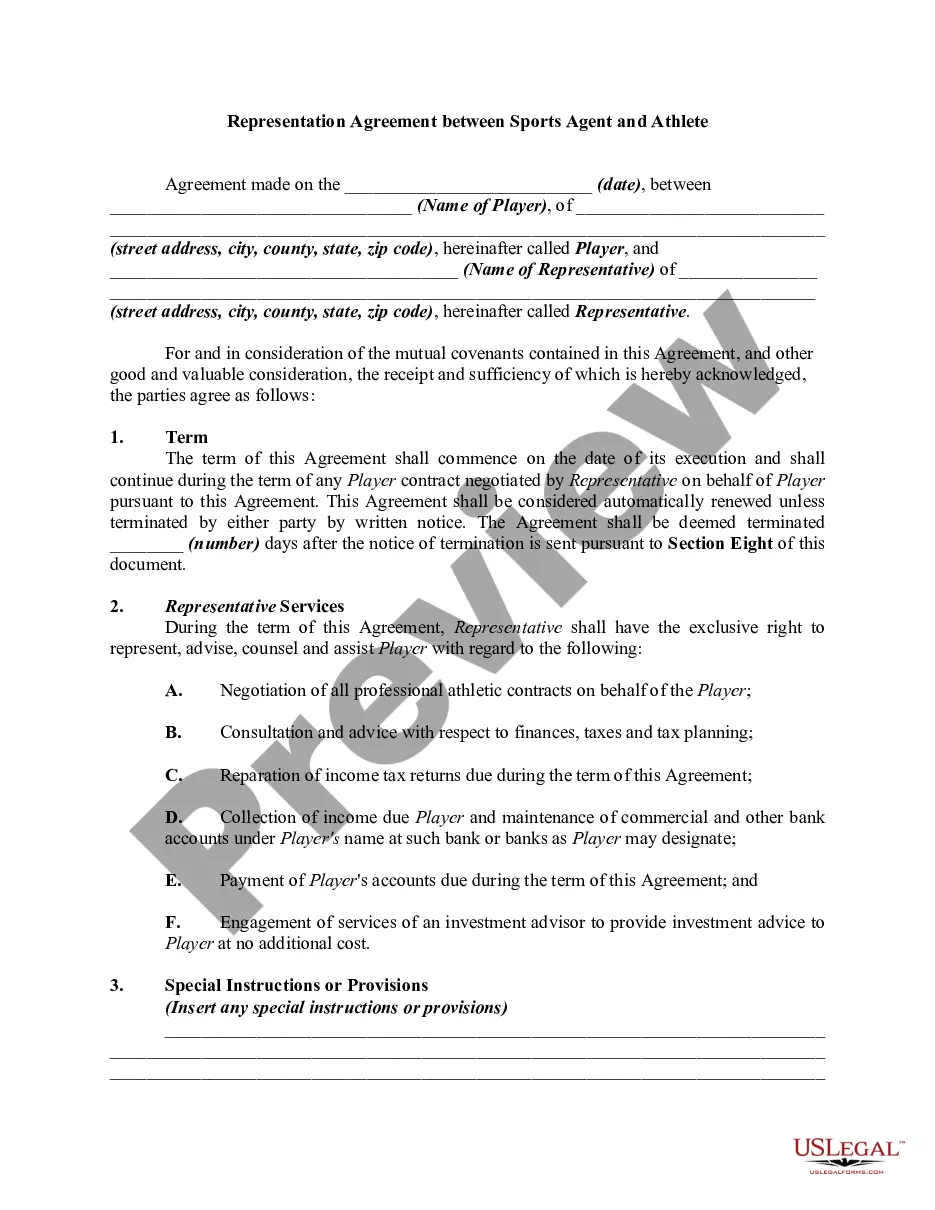
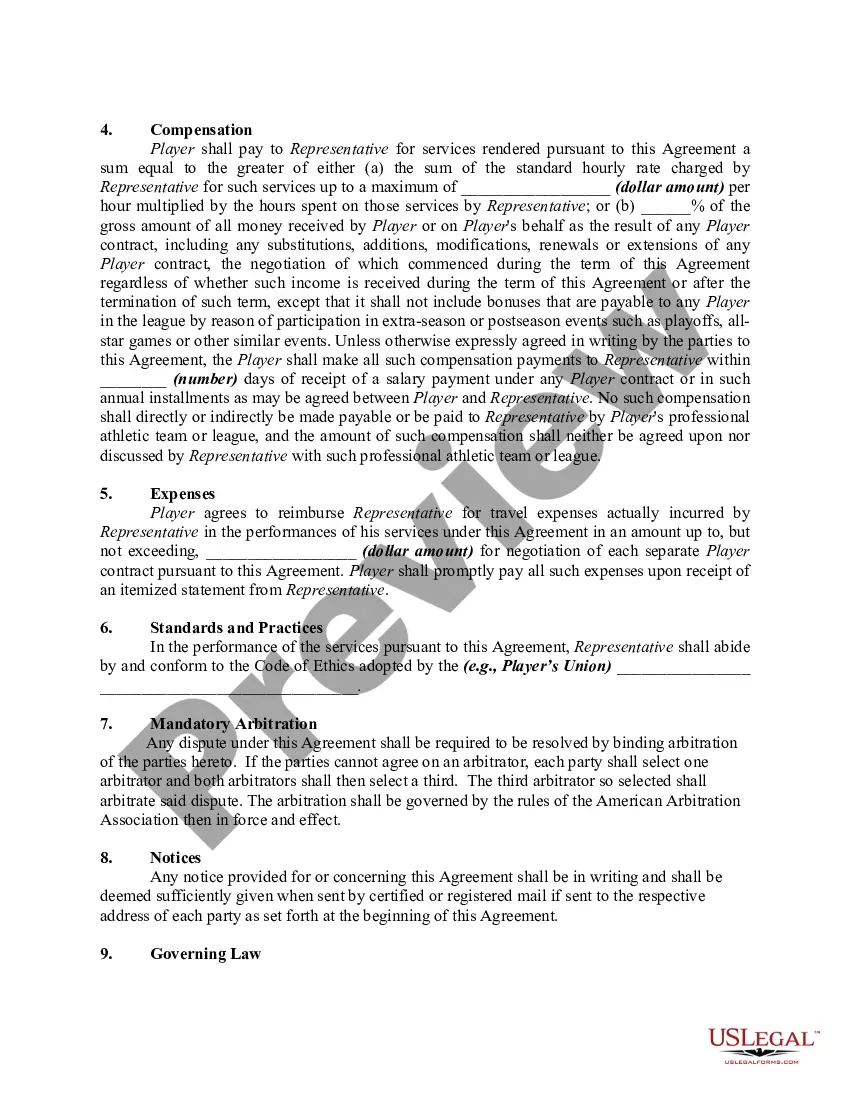
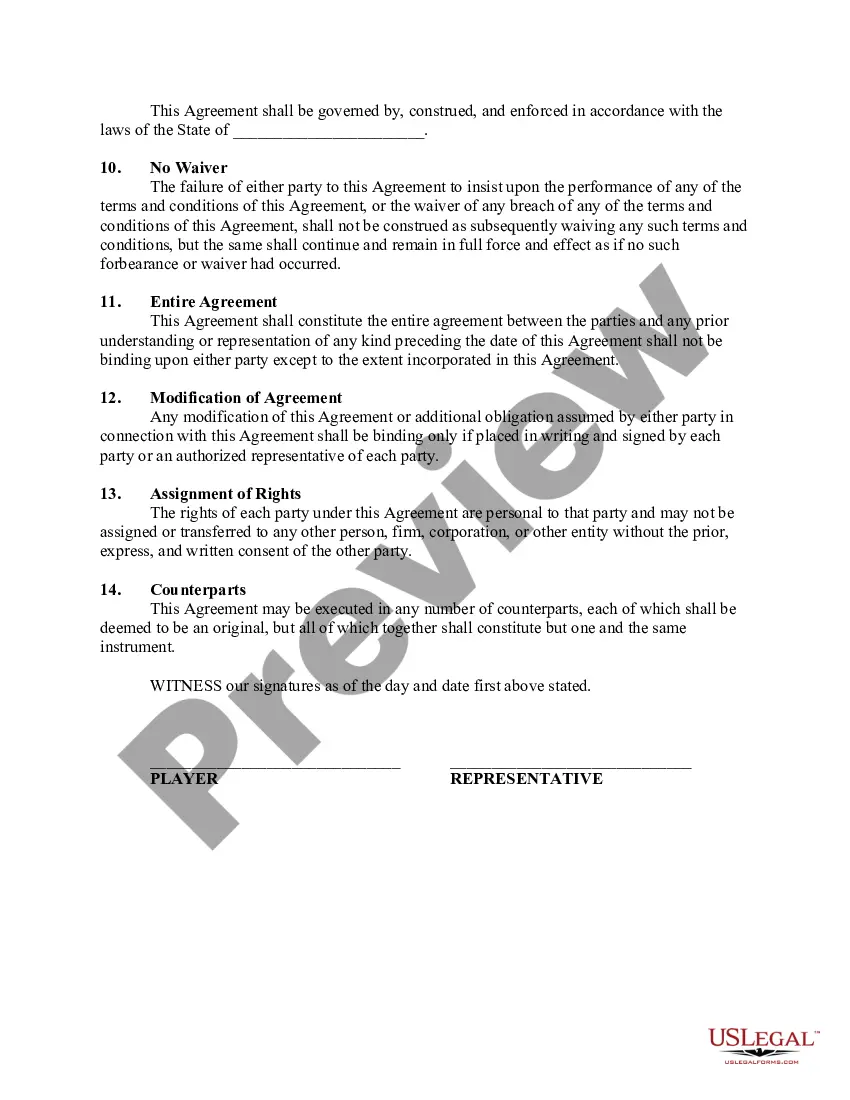
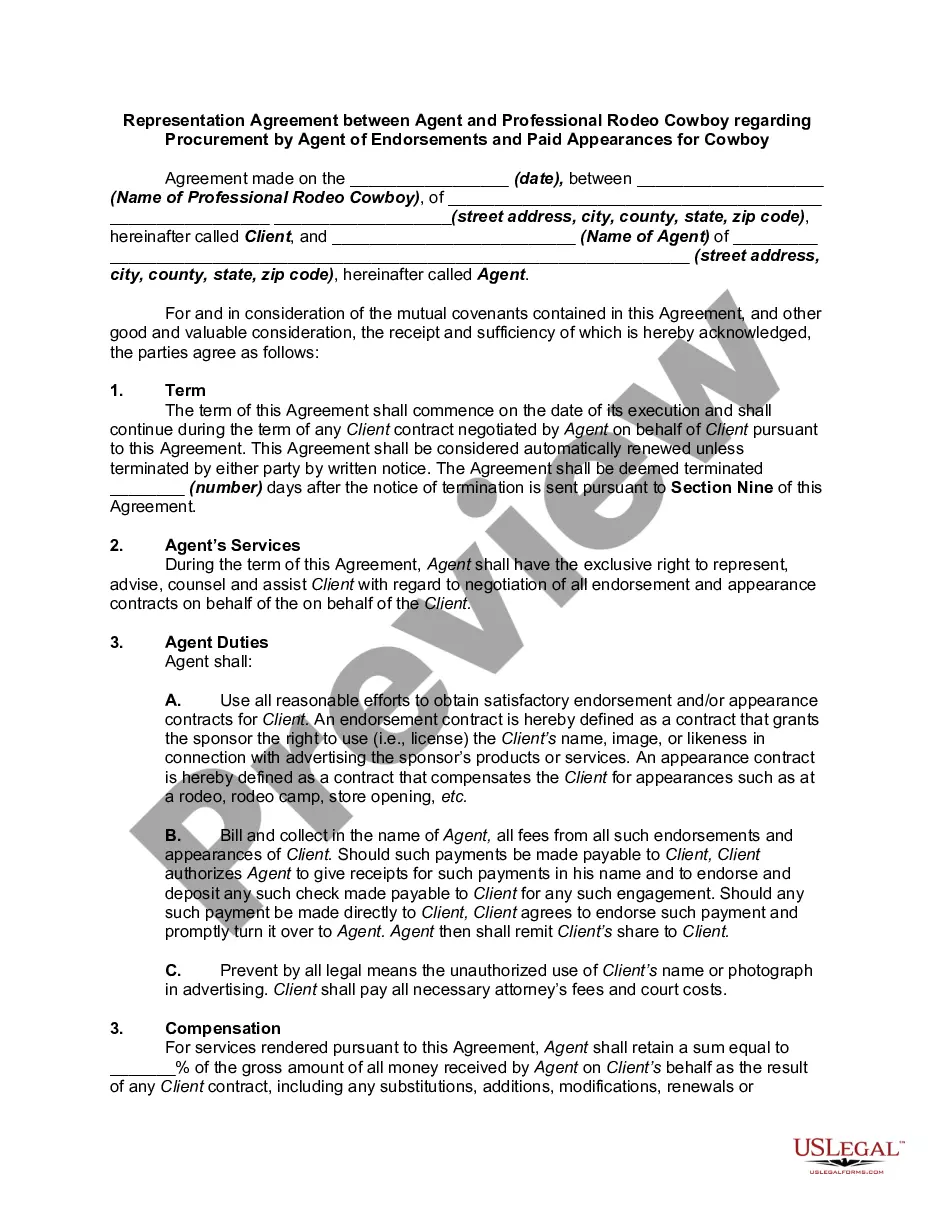
Get your form ready online
Our built-in tools help you complete, sign, share, and store your documents in one place.
Make edits, fill in missing information, and update formatting in US Legal Forms—just like you would in MS Word.
Download a copy, print it, send it by email, or mail it via USPS—whatever works best for your next step.
Sign and collect signatures with our SignNow integration. Send to multiple recipients, set reminders, and more. Go Premium to unlock E-Sign.
If this form requires notarization, complete it online through a secure video call—no need to meet a notary in person or wait for an appointment.
We protect your documents and personal data by following strict security and privacy standards.

Make edits, fill in missing information, and update formatting in US Legal Forms—just like you would in MS Word.

Download a copy, print it, send it by email, or mail it via USPS—whatever works best for your next step.

Sign and collect signatures with our SignNow integration. Send to multiple recipients, set reminders, and more. Go Premium to unlock E-Sign.

If this form requires notarization, complete it online through a secure video call—no need to meet a notary in person or wait for an appointment.

We protect your documents and personal data by following strict security and privacy standards.
Looking for another form?


How to fill out Representation Agreement Between Sports Agent And Athlete?
Regardless of whether for corporate objectives or personal matters, everyone must confront legal issues at some point in their lives.
Filling out legal documents requires meticulous care, starting with choosing the appropriate form example.
With an extensive catalog at US Legal Forms available, you need not waste time searching for the correct template elsewhere on the internet. Utilize the library's simple navigation to find the appropriate template for any situation.
- For instance, if you select an incorrect version of an Athlete Representative, it will be rejected upon submission.
- Thus, it is crucial to have a dependable source for legal documents like US Legal Forms.
- If you need to acquire an Athlete Representative sample, adhere to these simple steps.
- Utilize the search bar or catalog browsing to locate the template you require.
- Review the form's details to ensure it aligns with your circumstances, state, and locality.
- Preview the form to examine it.
- If it is not the correct form, return to the search feature to find the Athlete Representative sample you need.
- Obtain the document when it fits your requirements.
- If you already possess a US Legal Forms account, simply click Log in to access previously stored documents in My documents.
- If you do not have an account yet, you can acquire the form by selecting Buy now.
- Choose the appropriate pricing option.
- Complete the account registration form.
- Select your payment method: either a credit card or PayPal account.
- Choose the file format you desire and download the Athlete Representative.
- Once saved, you can either fill out the form using editing software or print it out and complete it by hand.
Form popularity
FAQ
How to Request Debt Verification. To request verification, send a letter to the collection agency stating that you dispute the validity of the debt and that you want documentation verifying the debt. Also, request the name and address of the original creditor.
Harassment of the debtor by the creditor ? More than 40 percent of all reported FDCPA violations involved incessant phone calls in an attempt to harass the debtor.
The Fair Debt Collection Practices Act (FDCPA) prohibits debt collectors from using abusive, unfair, or deceptive practices to collect debts from you, including: Misrepresenting the nature of the debt, including the amount owed. Falsely claiming that the person contacting you is an attorney.
Summary: The Fair Debt Buying Practices Act would establish clear procedures, minimum documentation requirements, and affirmative obligations before a debt buyer can contact a debtor, initiate a lawsuit, or obtain and collect on a judgment.
A debt collector may not communicate with a consumer at any unusual time (generally before a.m. or after p.m. in the consumer's time zone) or at any place that is inconvenient to the consumer, unless the consumer or a court of competent jurisdiction has given permission for such contacts.
Don't provide personal or sensitive financial information Never give out or confirm personal or sensitive financial information ? such as your bank account, credit card, or full Social Security number ? unless you know the company or person you are talking with is a real debt collector.
For example, the law prohibits collection agencies from using harassment, misleading, and unfair practices. The law prohibits unnecessary disclosure of the debt to parties not obligated to pay the debt. The law does not apply to creditors collecting their own debts.
To take legal action to collect a debt, the creditor (the person or company owed money) files a lawsuit against the debtor (the person who owes the money). Once a debt collection lawsuit is filed with the court, the creditor must give the debtor notice of the lawsuit (service).