Damages Personal Property For Probate
Description
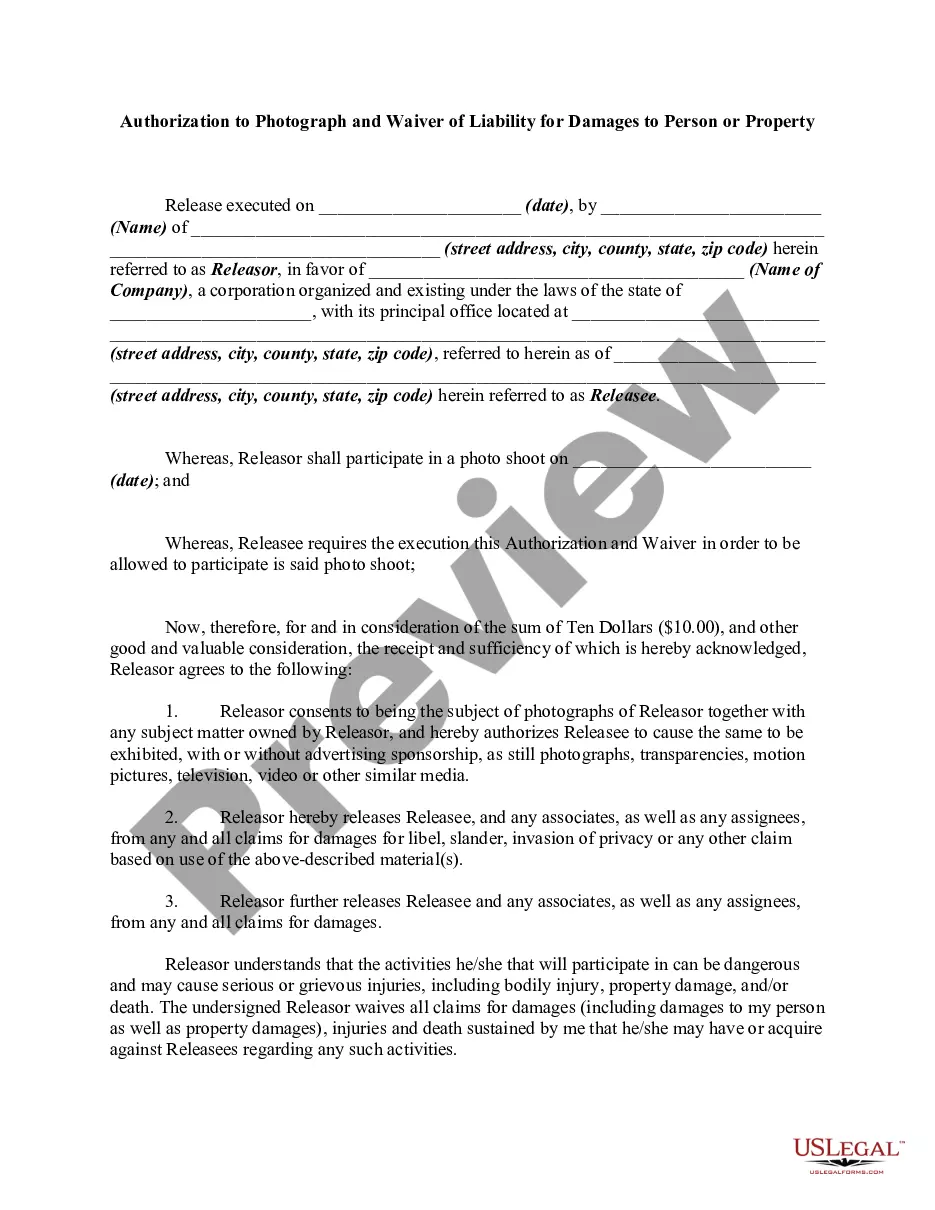
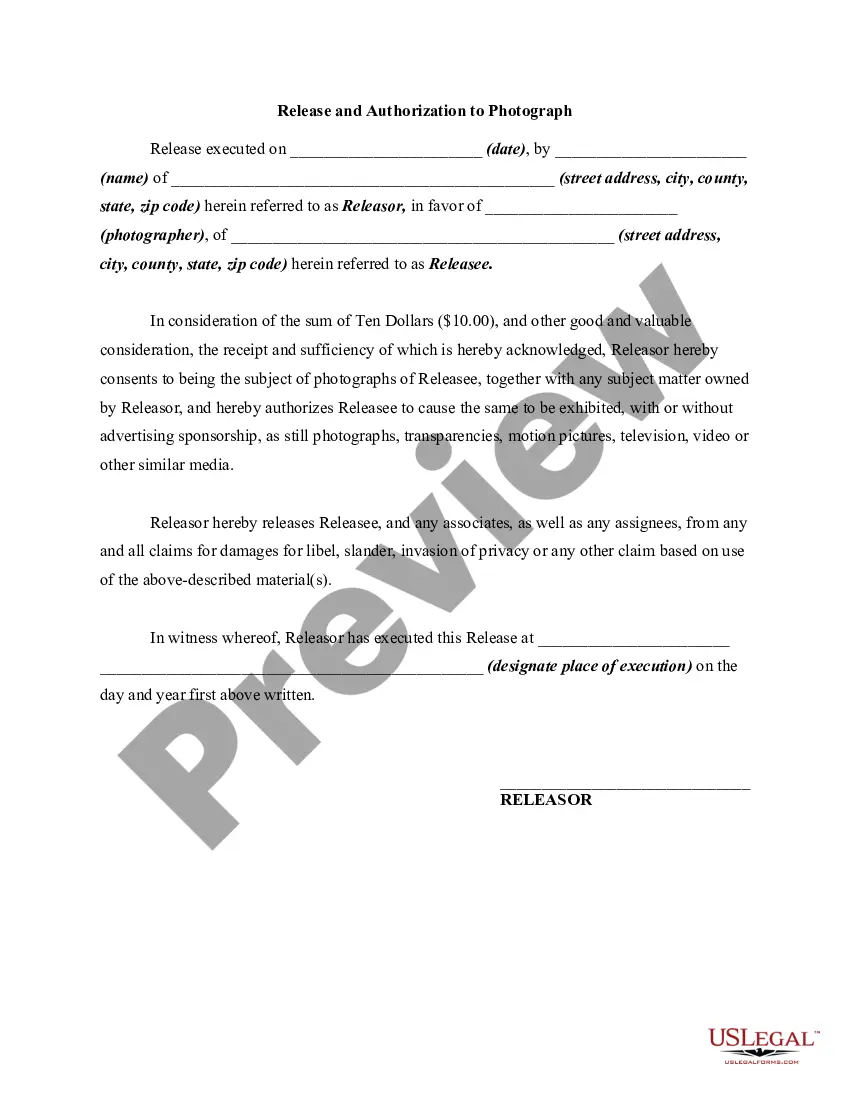
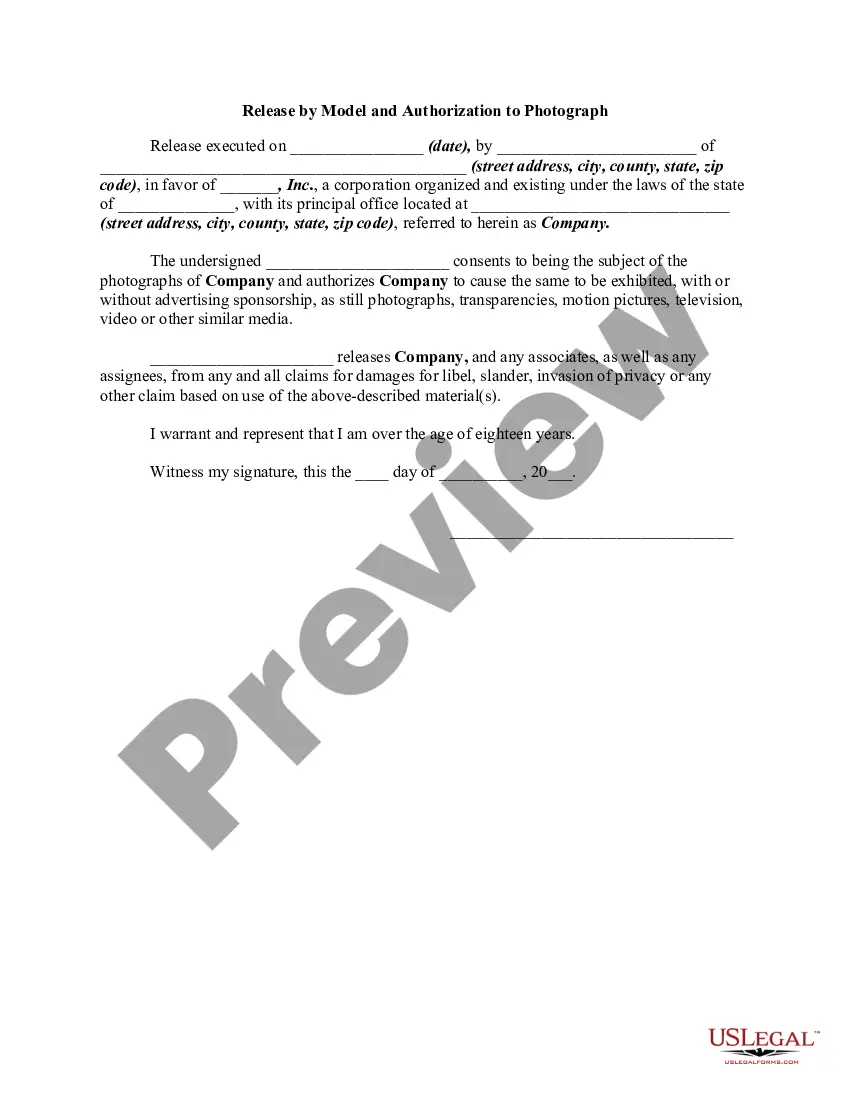
How to fill out Authorization To Photograph And Waiver Or Release Of Liability For Damages To Person Or Property?
It’s clear that you cannot become a legal expert instantaneously, nor can you determine how to swiftly prepare Damages Personal Property For Probate without possessing a specialized skill set.
Assembling legal documents is a lengthy endeavor necessitating specific training and expertise. So why not delegate the creation of the Damages Personal Property For Probate to the professionals.
With US Legal Forms, one of the most extensive legal template collections, you can discover anything from court papers to templates for internal communication.
Select Buy now. Once the purchase is finalized, you can obtain the Damages Personal Property For Probate, complete it, print it, and send it or mail it to the intended recipients or organizations.
You can regain access to your documents from the My documents tab at any moment. If you’re an existing client, you can easily Log In, and find and download the template from the same tab.
- Access the website and find the form you require in just minutes.
- Search for the document you need using the search bar at the top of the page.
- Preview it (if this feature is available) and review the accompanying description to determine if Damages Personal Property For Probate is what you’re seeking.
- Initiate your search again if you require any additional template.
- Register for a complimentary account and choose a subscription plan to acquire the template.
Form popularity
FAQ
Probate is required for most estates in Oregon, and the type of probate process depends largely on the value of the assets that are in your name when you pass away. If a will exists, the original will has to be filed with the probate court.
Probate can be started immediately after death and takes a minimum of four months. If the estate includes property that takes a while to sell, or if there are complicated tax or other matters, probate can last much longer. A small estate proceeding cannot be filed until 30 days after death and is complete upon filing.
An executor is legally allowed to override a beneficiary if they are following a court order. But can a beneficiary override an executor? It depends. A beneficiary can override an executor if the executor fails to follow the terms of the Will.
The general rule is that an estate has to be probated within 3 years of when the decedent died. However, this deadline doesn't apply to: A voluntary administration. Determining heirs.
On the 90-day inventory form, you will need to list the following information: The decedent's county of residence. The decedent's name. Any accounts in the sole name of the decedent and their value. Any joint accounts, the percentage the decedent owned, and their value.