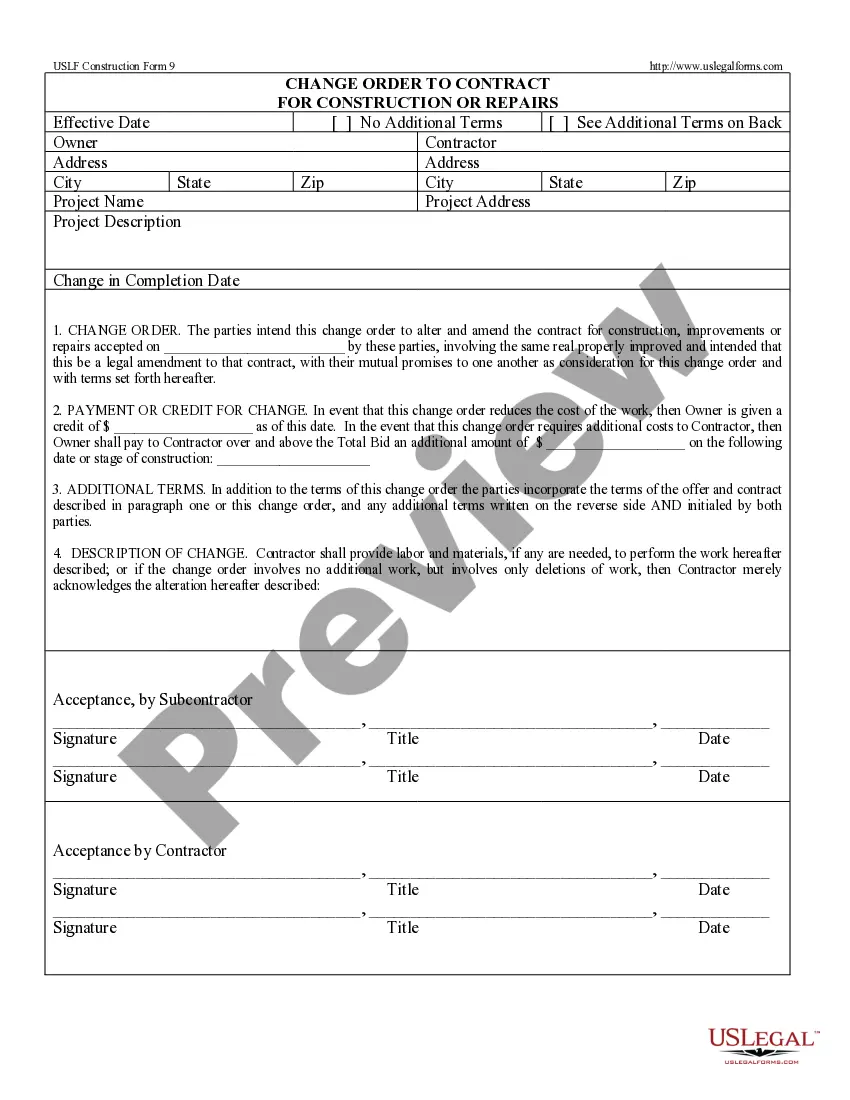
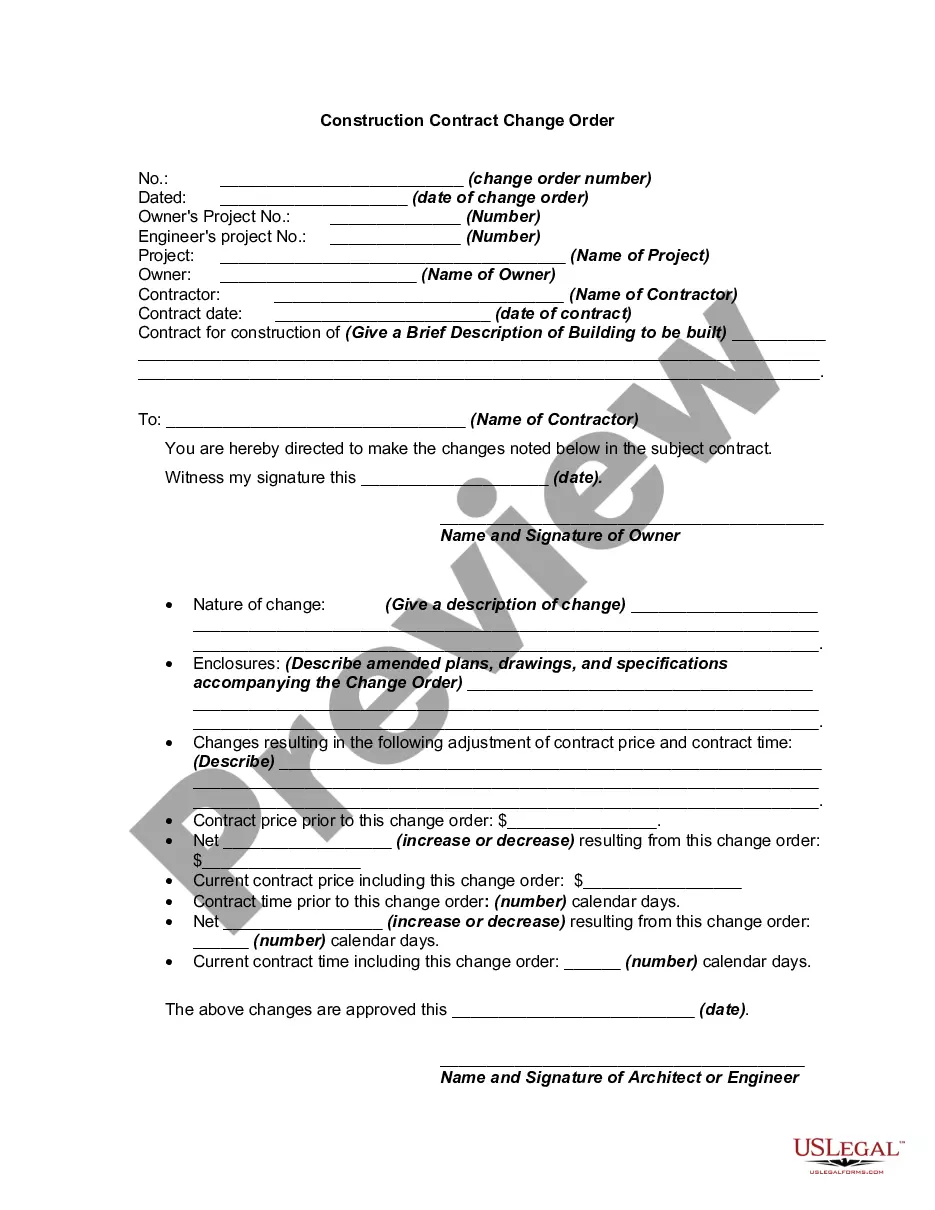
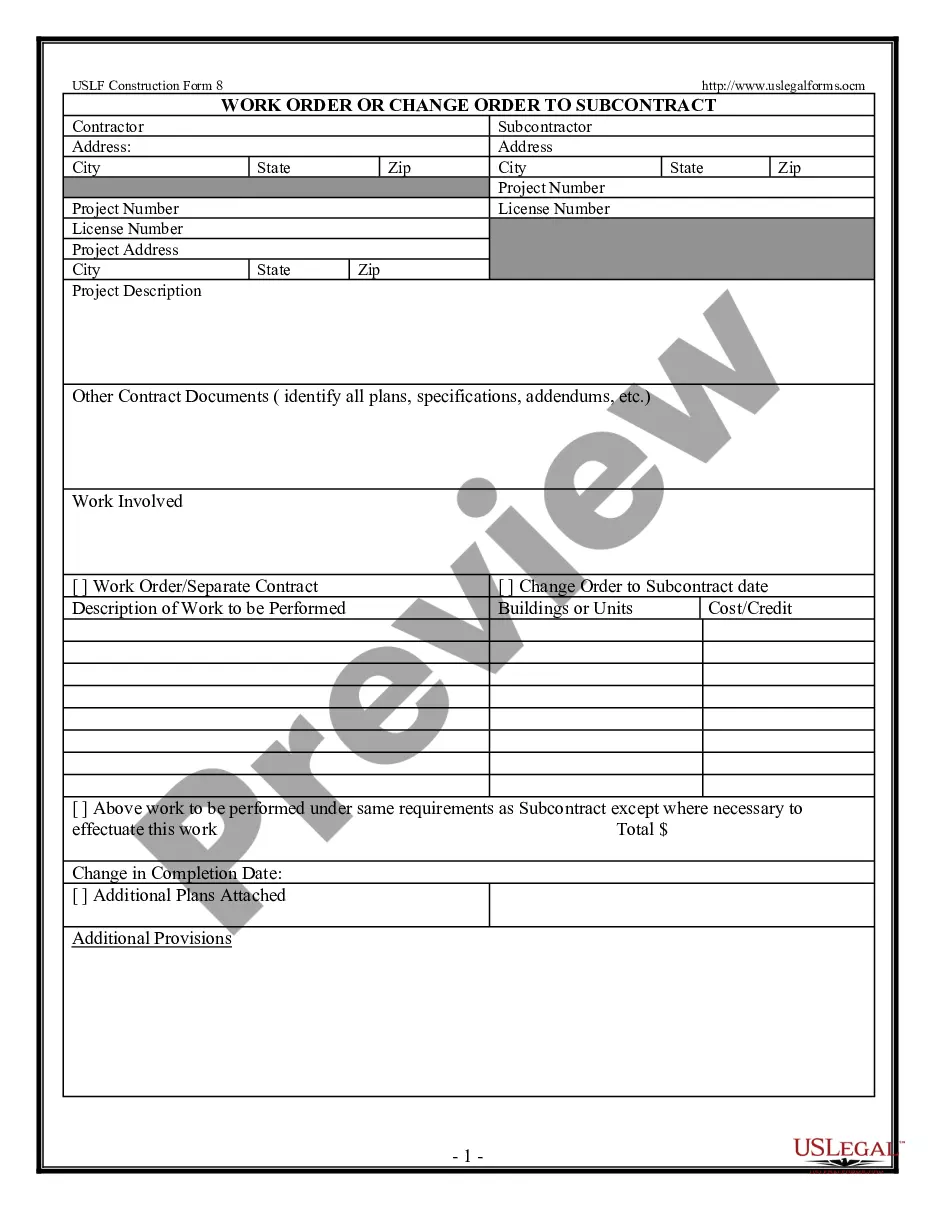
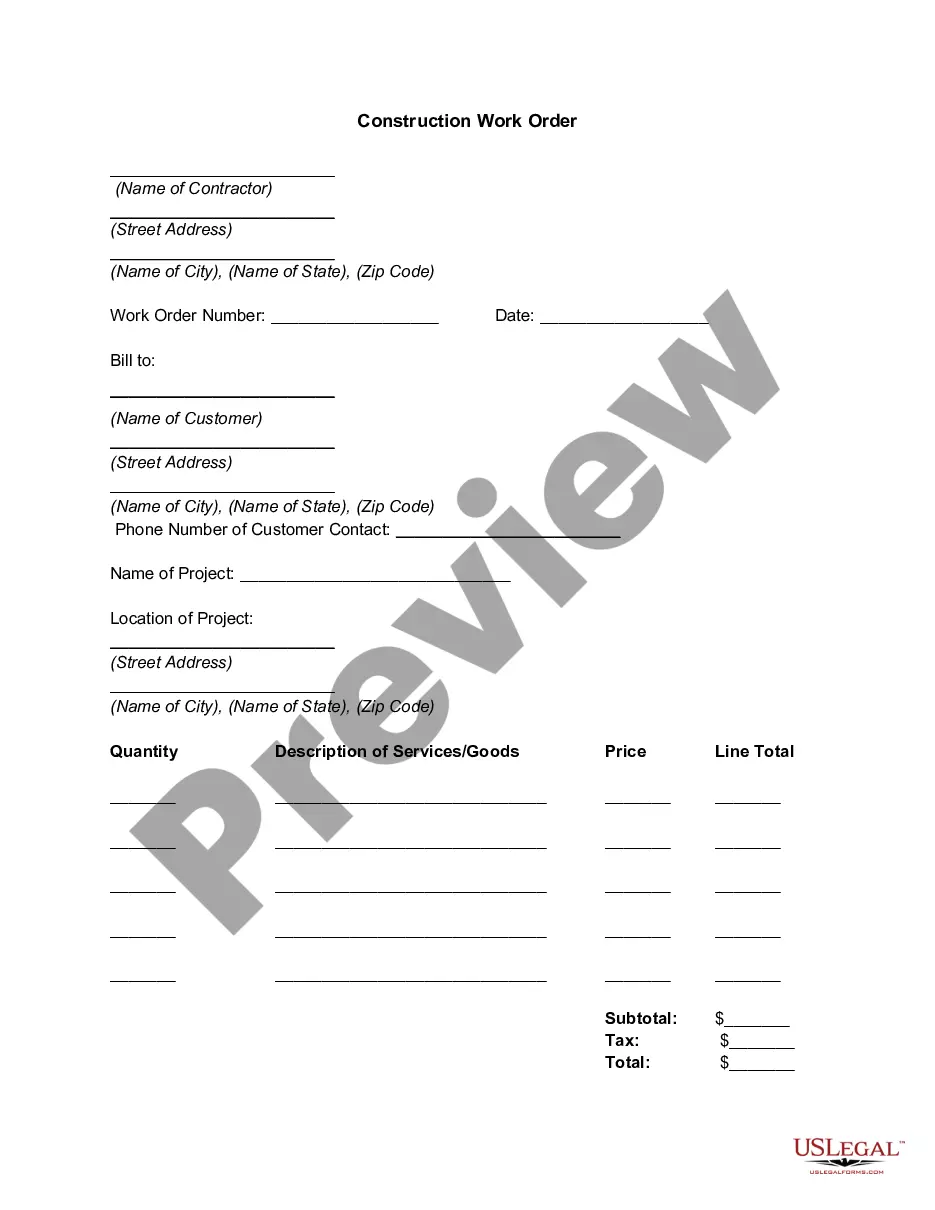
Change Order Sample Without Replacement
Description
Get your form ready online
Our built-in tools help you complete, sign, share, and store your documents in one place.
Make edits, fill in missing information, and update formatting in US Legal Forms—just like you would in MS Word.
Download a copy, print it, send it by email, or mail it via USPS—whatever works best for your next step.
Sign and collect signatures with our SignNow integration. Send to multiple recipients, set reminders, and more. Go Premium to unlock E-Sign.
If this form requires notarization, complete it online through a secure video call—no need to meet a notary in person or wait for an appointment.
We protect your documents and personal data by following strict security and privacy standards.

Make edits, fill in missing information, and update formatting in US Legal Forms—just like you would in MS Word.

Download a copy, print it, send it by email, or mail it via USPS—whatever works best for your next step.

Sign and collect signatures with our SignNow integration. Send to multiple recipients, set reminders, and more. Go Premium to unlock E-Sign.

If this form requires notarization, complete it online through a secure video call—no need to meet a notary in person or wait for an appointment.

We protect your documents and personal data by following strict security and privacy standards.
Looking for another form?
How to fill out Change Order For Construction Or Repairs By Contractor?
Managing legal documents and tasks can be a lengthy addition to your entire day.
Change Order Sample Without Replacement and forms similar to it often require you to search for them and comprehend how to fill them out correctly.
Consequently, whether you are handling financial, legal, or personal issues, having a comprehensive and straightforward online directory of forms at your disposal will greatly assist.
US Legal Forms is the leading online platform of legal templates, featuring over 85,000 state-specific documents and a variety of resources to help you complete your paperwork swiftly.
Is this your first time using US Legal Forms? Register and create an account in just a few minutes, and you will gain access to the form catalog and Change Order Sample Without Replacement. Then, follow the steps outlined below to complete your form: Ensure you have the correct form by using the Review option and reading the form details. Select Buy Now when ready, and choose the monthly subscription plan that suits you. Choose Download, then fill out, sign, and print the form. US Legal Forms has 25 years of experience assisting clients in managing their legal documents. Acquire the form you need today and streamline any procedure effortlessly.
- Explore the collection of relevant documents available to you with just a single click.
- US Legal Forms supplies you with state- and county-specific forms accessible at any time for download.
- Protect your document management processes by utilizing a superior service that allows you to prepare any form within minutes without extra or concealed charges.
- Simply Log In to your account, locate Change Order Sample Without Replacement, and download it instantly from the My documents section.
- You can also access previously saved forms.
Form popularity
FAQ
Generally, there are four types of change orders. These are Time and Material, Lump Sum, Zero Cost, and Unitary Cost change orders. A lump sum change order is used when the defined change in the work scope is quantifiable, and a definite price developed.
What is included in a change order form? Project details: The name of the project, the client, the contractor, and any other relevant information about the project. Description of change: A detailed description of the modifications to the original agreement, such as changes to the project scope, budget, or timeline.
Change orders need to have a breakdown of the scope with ideally labor and materials broken out. In some cases, the client wants to see backup of the costs as well and even labor rates. Be prepared to provide the support documentation that will be needed to justify the change order.
Classic examples of change orders include the owner's desire to move the location of a wall to accommodate some other design element, adding a window where there was none in the original plans, or changing the finish of the floors from tile to terrazzo.
The change order form should include: The contract number. The owner's name and contact information. The general contractor or architect's name and contact information. The project name and address. The contractor's name and contact information. The change order number (how many orders have you submitted so far?)