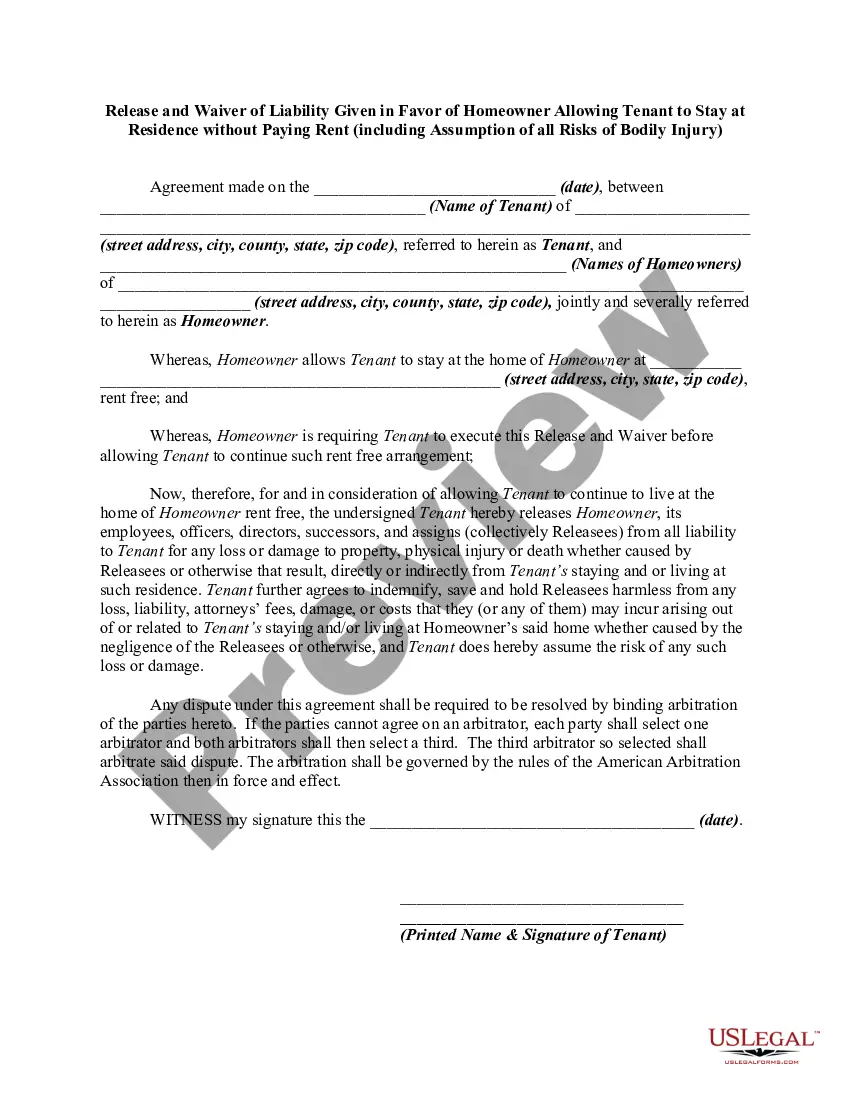
Homeowner Responsibility For Sidewalk
Description
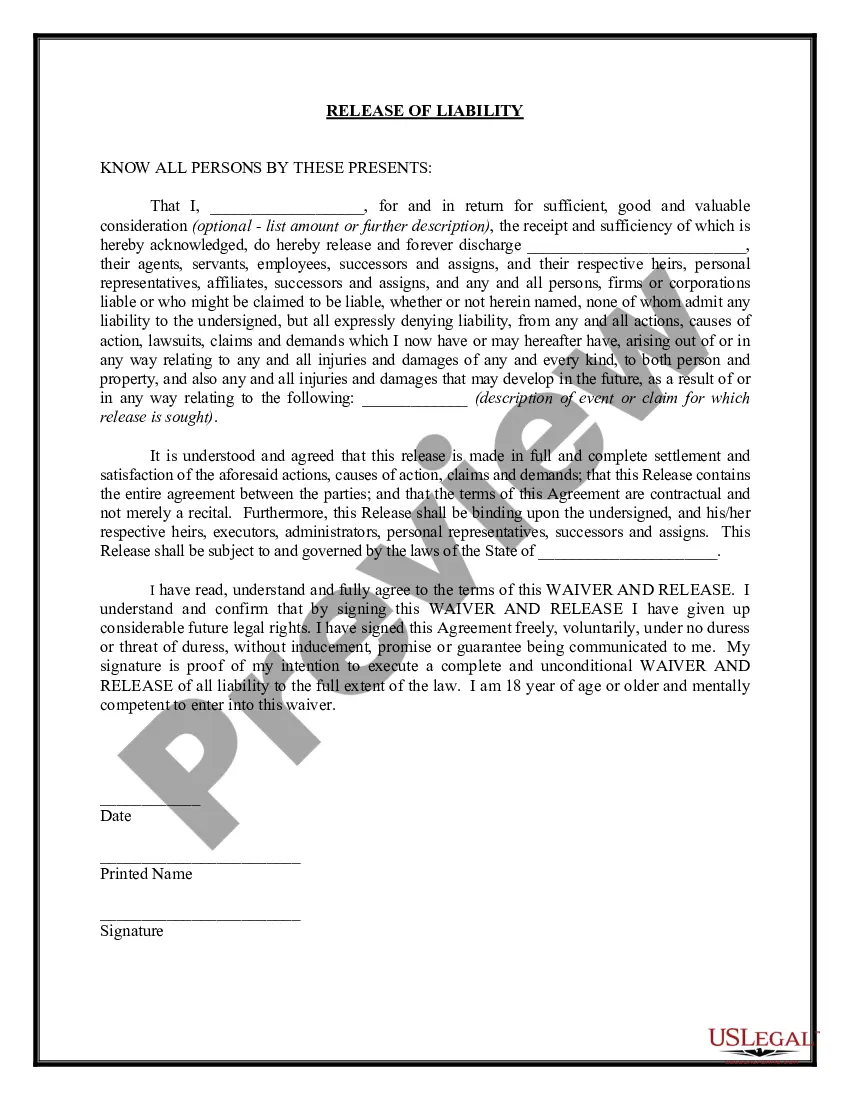


How to fill out Release And Waiver Of Liability Given In Favor Of Homeowner Allowing Tenant To Stay At Residence Without Paying Rent Including Assumption Of All Risks Of Personal Bodily Injury?
Securing a reliable source for obtaining the most up-to-date and pertinent legal templates is a significant part of navigating bureaucracy. Selecting the correct legal documents demands accuracy and meticulousness, which is why it is essential to obtain samples of Homeowner Responsibility For Sidewalk exclusively from credible providers, such as US Legal Forms. An incorrect template will squander your time and delay the situation you are facing. With US Legal Forms, your concerns are minimal. You can access and review all the details regarding the document’s application and relevance for your circumstances and in your jurisdiction.
Consider the following steps to complete your Homeowner Responsibility For Sidewalk.
Once you have the form on your device, you can modify it with the editor or print it and fill it out manually. Eliminate the stress that comes with your legal documentation. Explore the extensive US Legal Forms library to locate legal samples, verify their applicability to your situation, and download them instantly.
- Utilize the catalog navigation or search bar to find your sample.
- Examine the form’s description to determine if it aligns with the requirements of your state and locality.
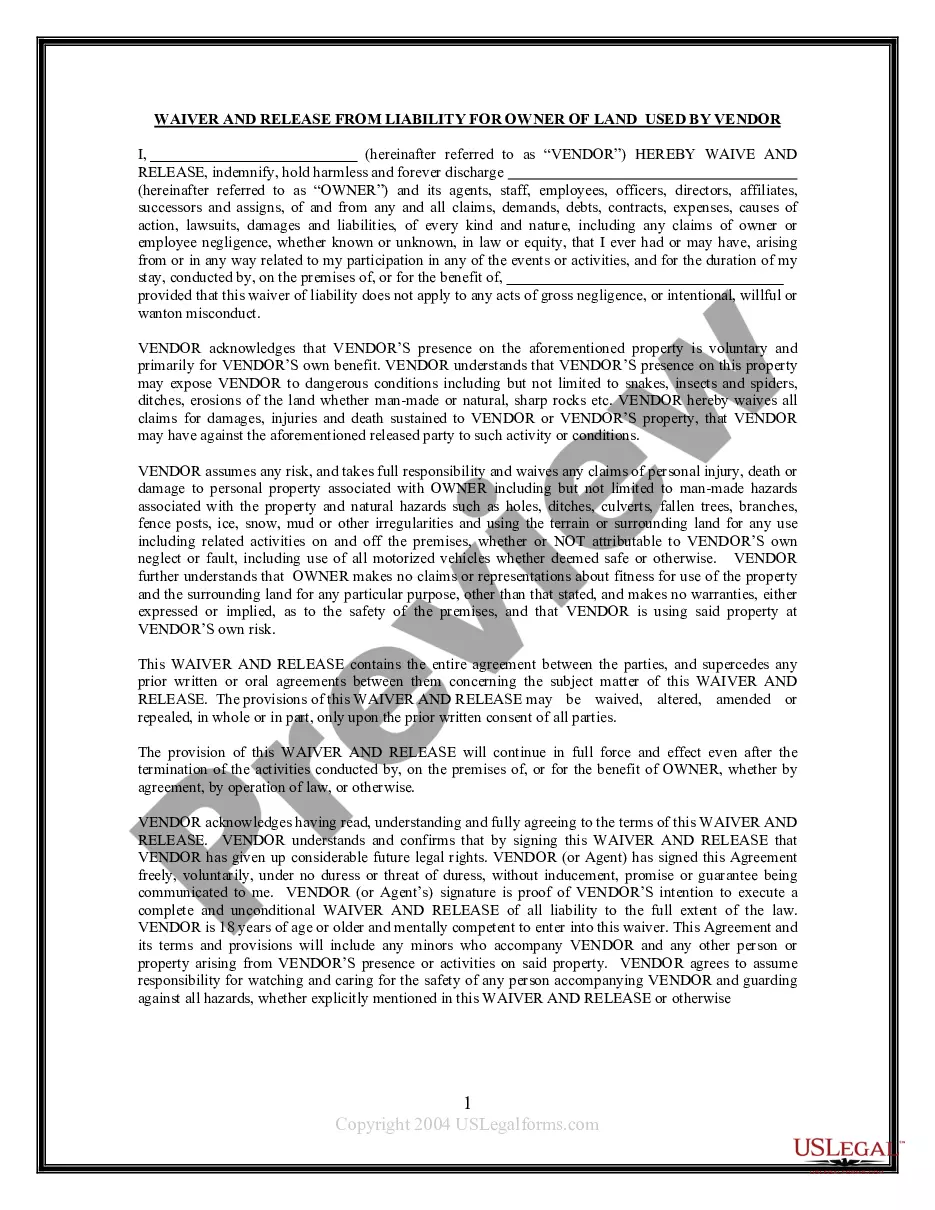
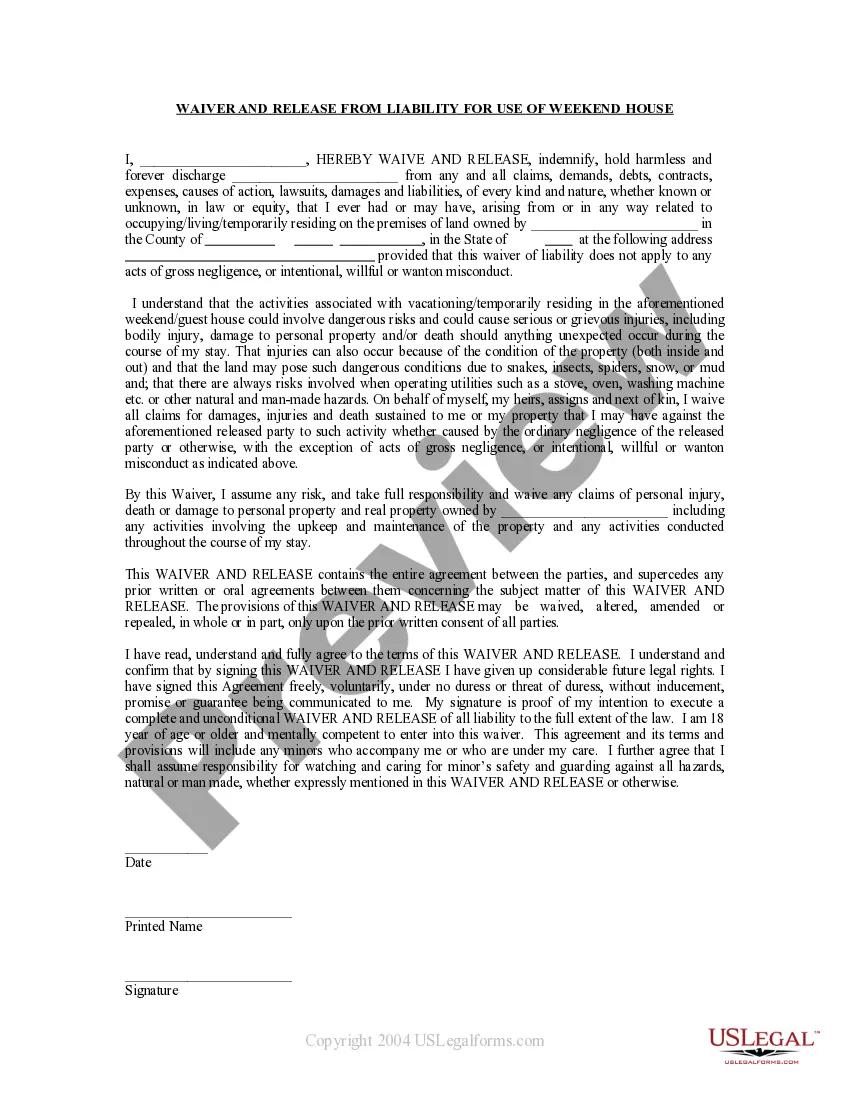
- Check the form preview, if available, to confirm the template is the one you seek.
- Return to the search and look for the suitable document if the Homeowner Responsibility For Sidewalk does not meet your needs.
- If you are confident about the form’s relevance, download it.
- If you are a registered user, click Log in to verify your identity and access your chosen forms in My documents.
- If you do not have an account yet, click Buy now to acquire the template.
- Choose the pricing plan that suits your preferences.
- Proceed with the registration to finalize your purchase.
- Complete your transaction by selecting a payment method (credit card or PayPal).
- Choose the file format for downloading Homeowner Responsibility For Sidewalk.
Form popularity
FAQ
Homeowners insurance may cover certain liabilities related to sidewalk accidents, but coverage can differ by policy. Typically, if someone is injured on your sidewalk and files a claim, your insurance may help cover legal fees and settlements. It's essential to review your policy to understand your homeowner responsibility for sidewalk and the extent of your coverage.
Compensation for tripping on pavement can vary widely based on the circumstances of the incident. Factors such as the severity of injuries, medical expenses, and lost wages play a significant role in determining the amount. If you are facing such a situation, understanding your homeowner responsibility for sidewalk conditions can be crucial in navigating potential claims.
Yes, a homeowner can be sued for not shoveling their sidewalk, particularly if this negligence leads to an injury. If someone slips and falls due to unshoveled snow or ice, they may have grounds for a lawsuit against the homeowner. It highlights the importance of understanding your homeowner responsibility for sidewalk maintenance and safety during winter months.
To prove negligence in a sidewalk-related incident, you must establish four key elements: duty, breach, causation, and damages. This means you need to show that the homeowner had a responsibility to maintain the sidewalk, failed in that duty, directly caused an injury, and that the injury resulted in damages. Understanding homeowner responsibility for sidewalk maintenance can help in assessing potential negligence.
Whether you are legally required to salt your sidewalk depends on local ordinances. Many municipalities have laws that mandate homeowners to treat their sidewalks in winter to prevent ice buildup. As a homeowner, your responsibility for sidewalk safety includes taking necessary precautions, such as salting, to avoid accidents.
The sidewalk rule refers to the legal principle that homeowners are responsible for maintaining the sidewalks adjacent to their property. This includes ensuring that the sidewalks are safe for pedestrians. Homeowner responsibility for sidewalk maintenance can vary by local laws, so it’s important to understand your specific area’s regulations.
In Pennsylvania, the homeowner responsibility for sidewalk repair typically falls on the property owner adjacent to the sidewalk. This means that if the sidewalk is cracked or damaged, the homeowner must take action to ensure it is repaired. Municipal regulations may vary, so it's essential to check local ordinances for specific requirements. Utilizing resources like USLegalForms can help you navigate the legal obligations and ensure compliance with local laws.
Yes, you are generally responsible if someone slips on your sidewalk. Homeowner responsibility for sidewalk maintenance requires you to ensure the area is safe for pedestrians. If someone gets hurt due to unsafe conditions, you could face legal consequences. Understanding your obligations helps you manage risks effectively.
Yes, someone can sue you if they slip on ice on your sidewalk. As a homeowner, you have a responsibility to keep sidewalks safe and clear of ice. If a person is injured due to icy conditions that you failed to address, you may be liable for their injuries. It's wise to take preventive measures, such as salting or shoveling, to minimize risk.
Compensation for a fall on pavement varies widely based on the circumstances. Factors such as medical expenses, lost wages, and pain and suffering come into play. Homeowner responsibility for sidewalk maintenance can impact the outcome of a claim. Consulting with a legal professional will help you understand potential compensation based on your situation.