Petition Vs Writ Petition
Description
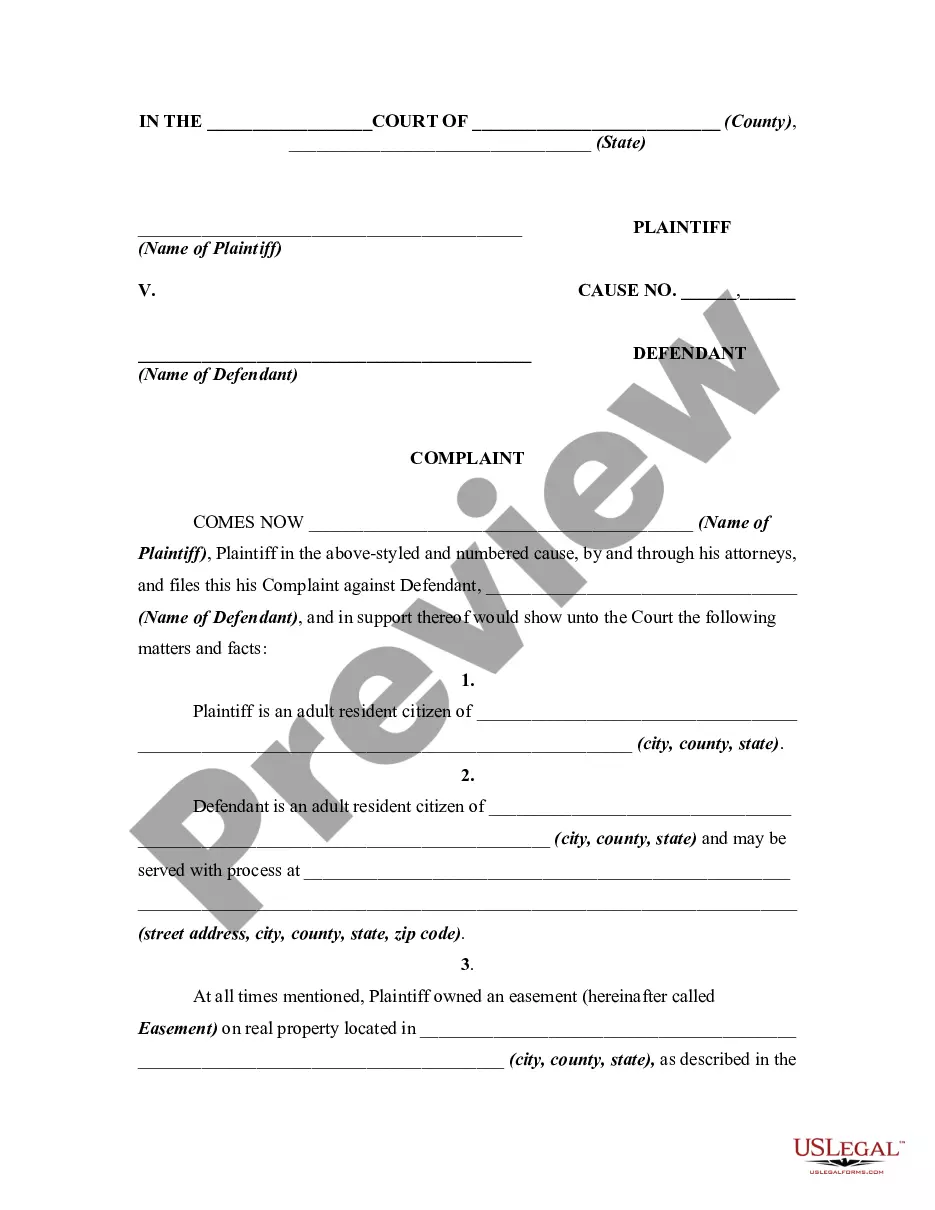
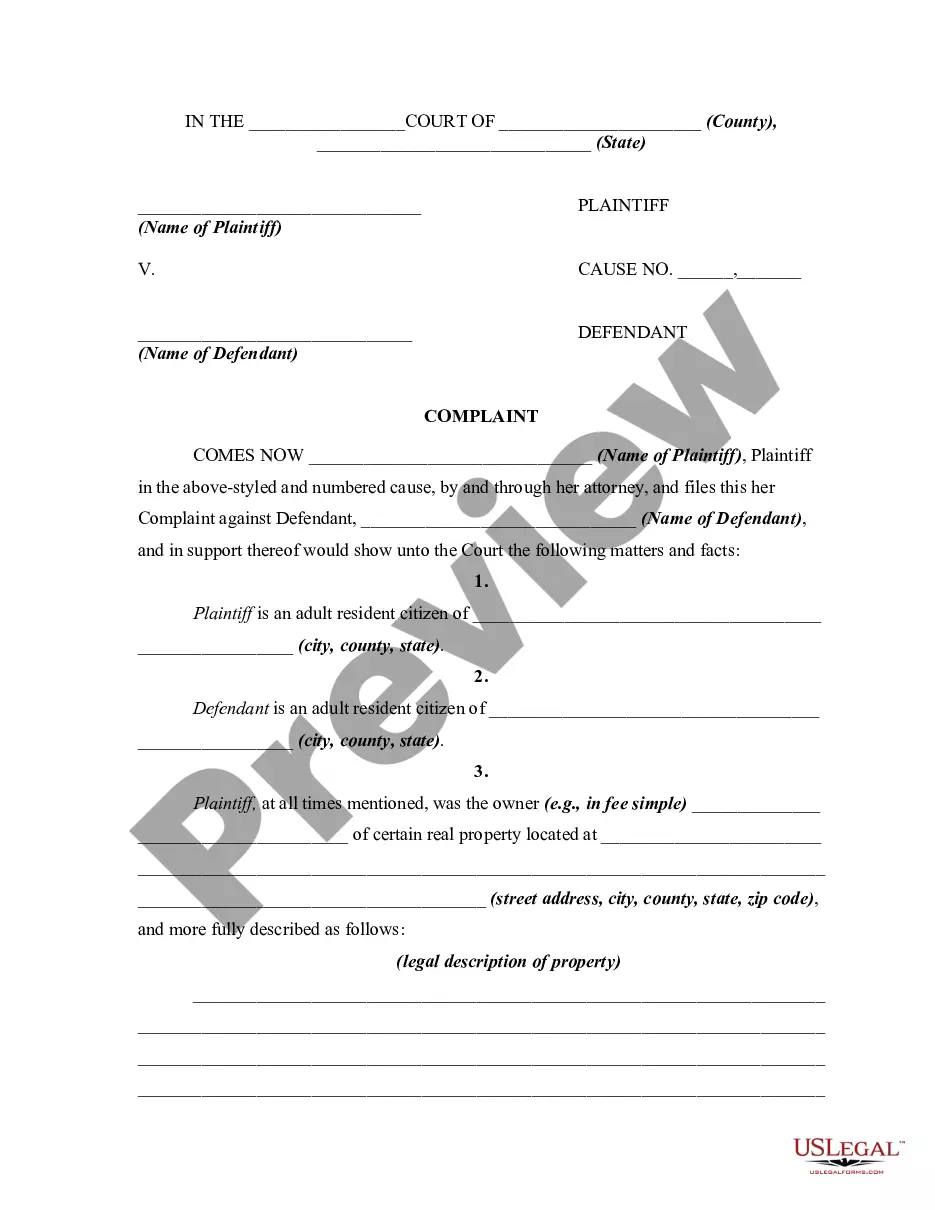
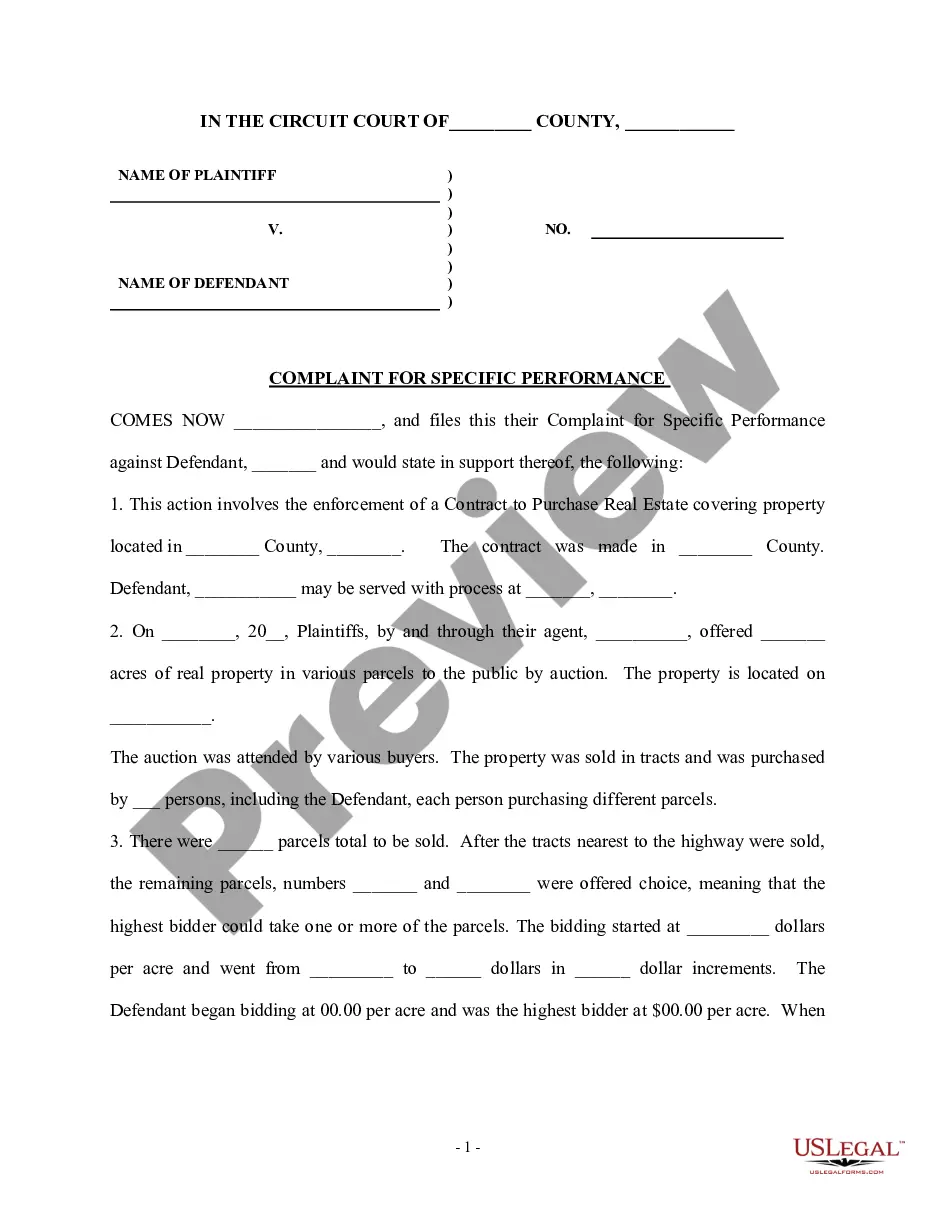
Get your form ready online
Our built-in tools help you complete, sign, share, and store your documents in one place.
Make edits, fill in missing information, and update formatting in US Legal Forms—just like you would in MS Word.
Download a copy, print it, send it by email, or mail it via USPS—whatever works best for your next step.
Sign and collect signatures with our SignNow integration. Send to multiple recipients, set reminders, and more. Go Premium to unlock E-Sign.
If this form requires notarization, complete it online through a secure video call—no need to meet a notary in person or wait for an appointment.
We protect your documents and personal data by following strict security and privacy standards.

Make edits, fill in missing information, and update formatting in US Legal Forms—just like you would in MS Word.

Download a copy, print it, send it by email, or mail it via USPS—whatever works best for your next step.

Sign and collect signatures with our SignNow integration. Send to multiple recipients, set reminders, and more. Go Premium to unlock E-Sign.

If this form requires notarization, complete it online through a secure video call—no need to meet a notary in person or wait for an appointment.

We protect your documents and personal data by following strict security and privacy standards.
Looking for another form?
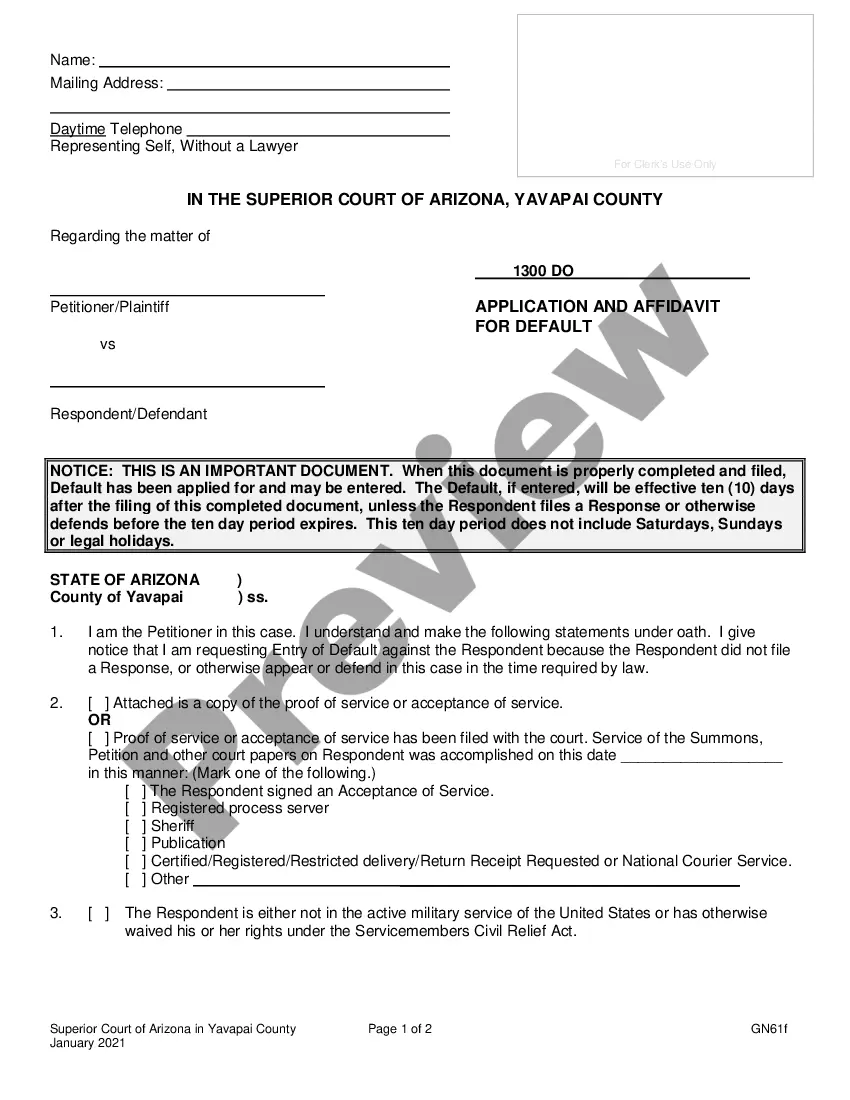






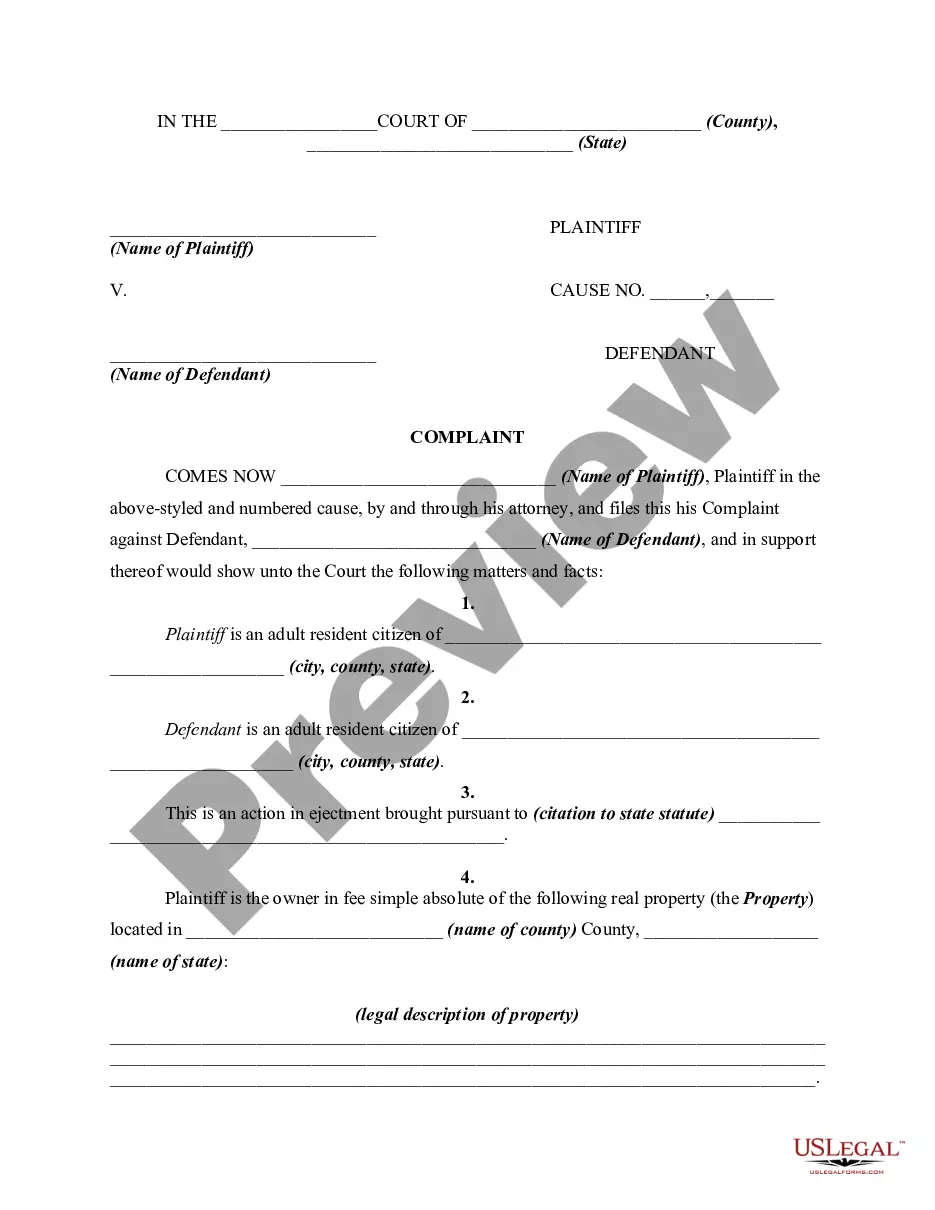
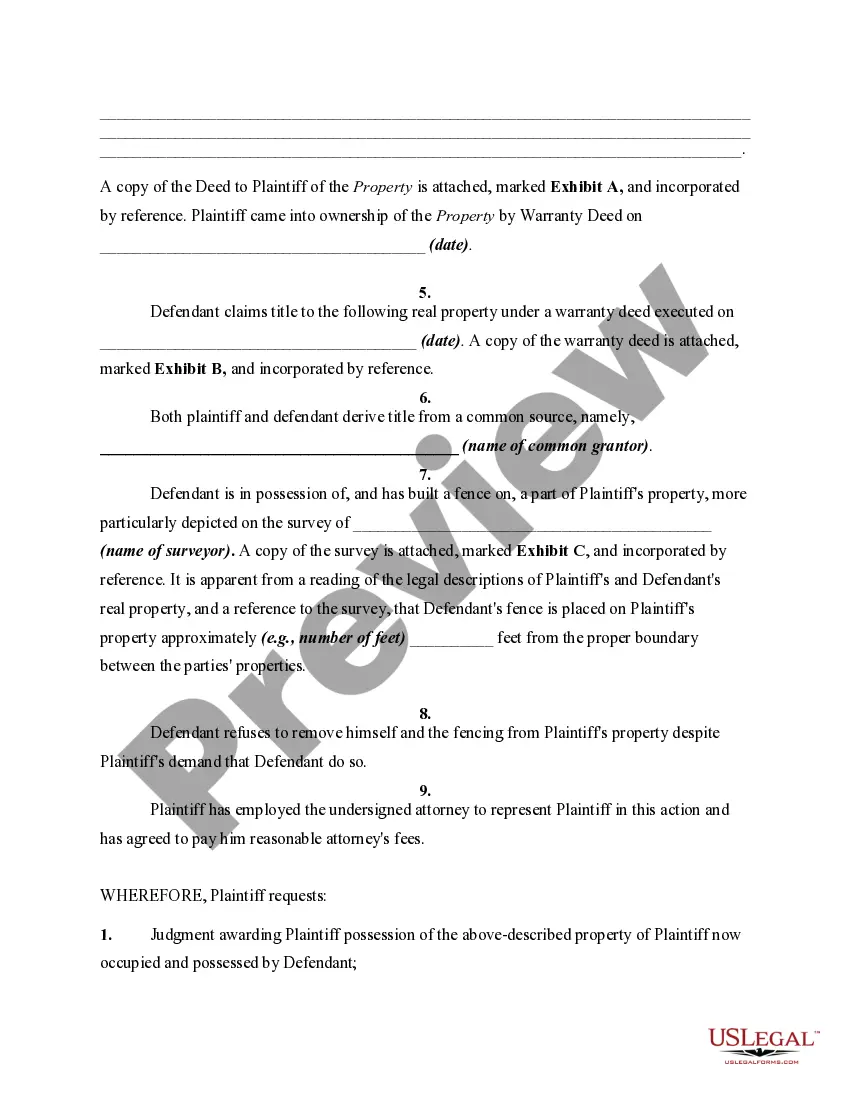
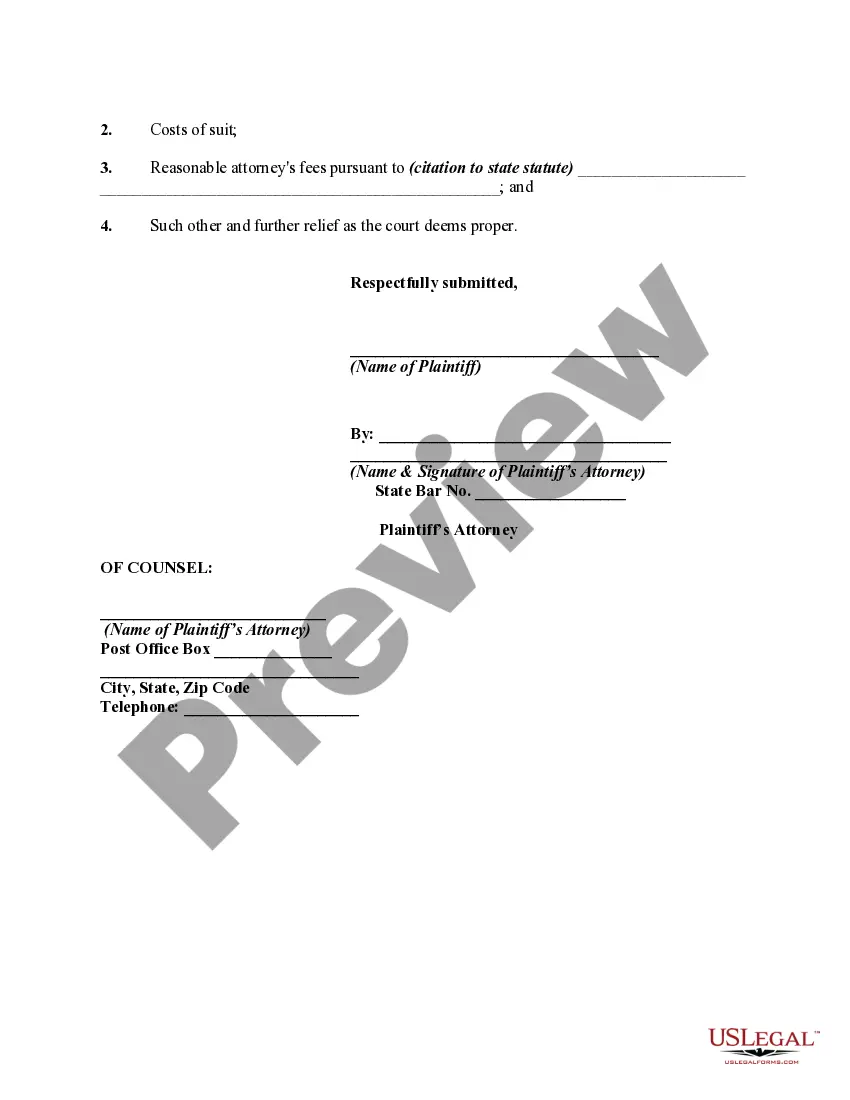
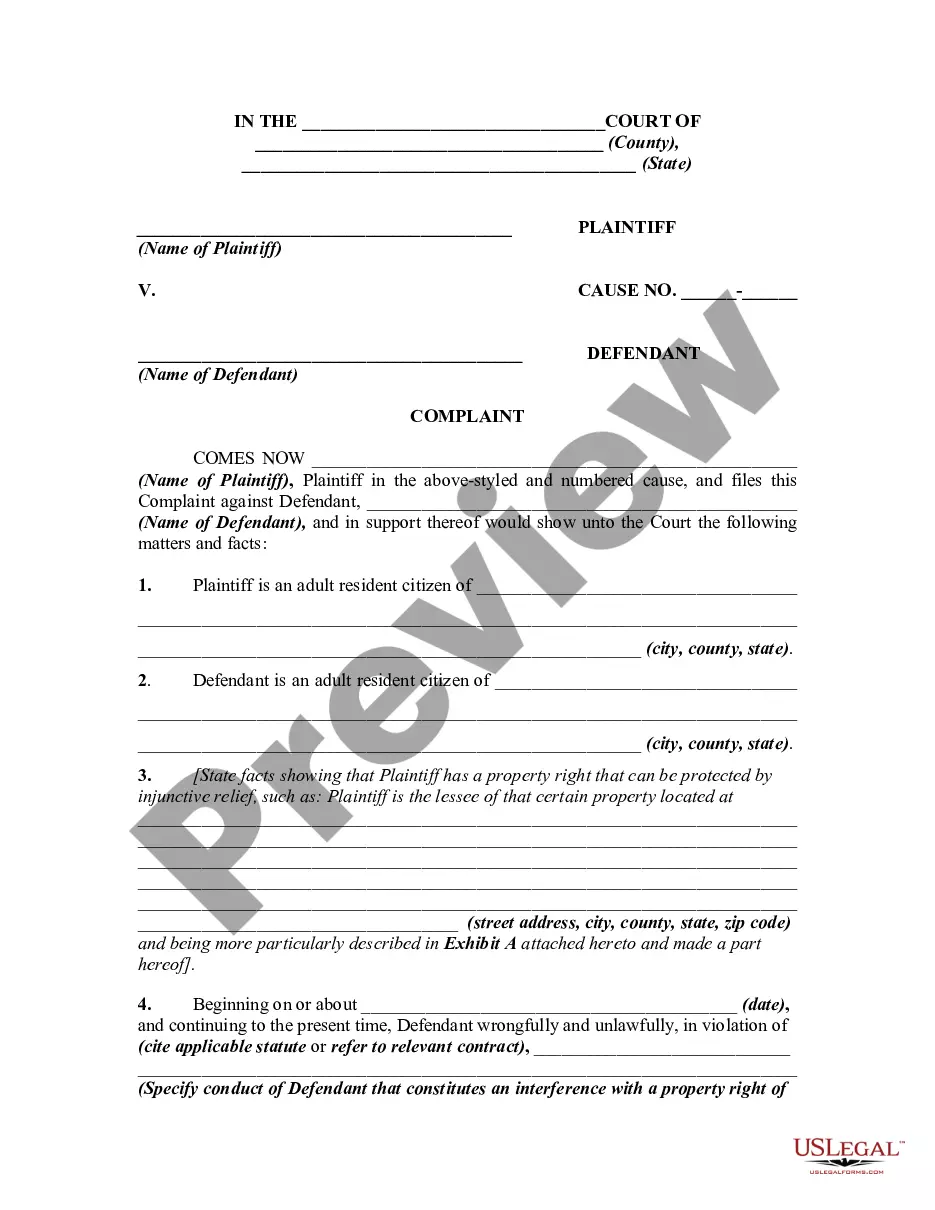
How to fill out Complaint, Petition, Or Declaration For Recovery Of Possession Of Property Due To Fence Built By Adjoining Landowner On Plaintiff's Property?
Creating legal documents from the ground up can frequently be daunting.
Specific situations may require extensive research and significant financial investment.
If you’re seeking a simpler and more cost-effective method for preparing Petition Vs Writ Petition or other forms without unnecessary hurdles, US Legal Forms is always available to assist you.
Our online database of over 85,000 current legal forms covers nearly every aspect of your financial, legal, and personal affairs.
Examine the document preview and descriptions to confirm that you are looking at the document you need. Verify if the template you select meets the criteria of your state and county. Choose the most appropriate subscription plan to acquire the Petition Vs Writ Petition. Download the form, then complete, certify, and print it. US Legal Forms boasts an impeccable reputation and over 25 years of expertise. Become a member today and simplify the document completion process!
- With just a few clicks, you can quickly obtain state- and county-compliant templates meticulously assembled for you by our legal experts.
- Utilize our platform whenever you need trustworthy and dependable services that allow you to effortlessly find and download the Petition Vs Writ Petition.
- If you’re familiar with our services and have previously created an account with us, simply Log In to your account, find the form, and download it or re-download it later in the My documents section.
- Not registered yet? No worries. It takes just a few minutes to sign up and explore the catalog.
- However, before diving straight into downloading Petition Vs Writ Petition, consider these suggestions.
Form popularity
FAQ
The petition shall not exceed 50 pages in length and shall contain: (1) the basis for invoking the jurisdiction of the court; (2) the facts on which the petitioner relies; (3) the nature of the relief sought; and (4) argument in support of the petition and appropriate citations of authority.
In cases where there is no statutory deadline, the petition should be filed within 30 days when challenging an action in a misdemeanor case, or within 60 days in a felony case. (American Property Management Corp. v. Superior Court (2012) 206 Cal.
Order from an Appellate Court, or the Supreme Court, when the court refuses to hear a case where one or more parties have filed a Petition for Writ of Review.
There are three main types of writs: writs of mandate (sometimes called ?mandamus?), writs of prohibition, and writs of review (sometimes called ?certiorari?).
Most such writ petitions are common-law writ petitions, which are not specifically set out by statute, and do not have a specific statute of limitation. However, courts have generally inferred a prudential, but not jurisdictional, 60-day deadline, by analogy with the amount of time usually allowed for appeals.