Response For Request
Description
Get your form ready online
Our built-in tools help you complete, sign, share, and store your documents in one place.
Make edits, fill in missing information, and update formatting in US Legal Forms—just like you would in MS Word.
Download a copy, print it, send it by email, or mail it via USPS—whatever works best for your next step.
Sign and collect signatures with our SignNow integration. Send to multiple recipients, set reminders, and more. Go Premium to unlock E-Sign.
If this form requires notarization, complete it online through a secure video call—no need to meet a notary in person or wait for an appointment.
We protect your documents and personal data by following strict security and privacy standards.

Make edits, fill in missing information, and update formatting in US Legal Forms—just like you would in MS Word.

Download a copy, print it, send it by email, or mail it via USPS—whatever works best for your next step.

Sign and collect signatures with our SignNow integration. Send to multiple recipients, set reminders, and more. Go Premium to unlock E-Sign.

If this form requires notarization, complete it online through a secure video call—no need to meet a notary in person or wait for an appointment.

We protect your documents and personal data by following strict security and privacy standards.
Looking for another form?
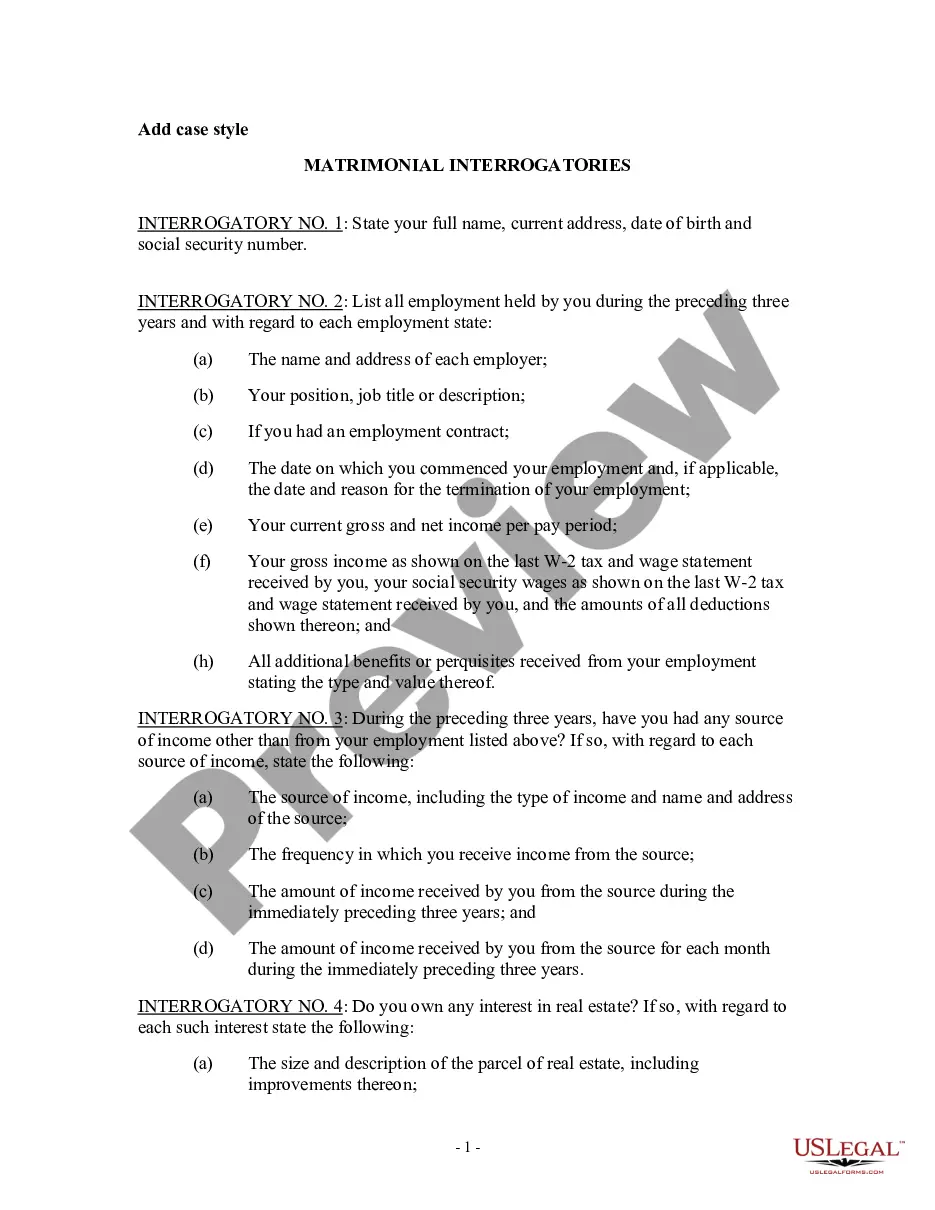
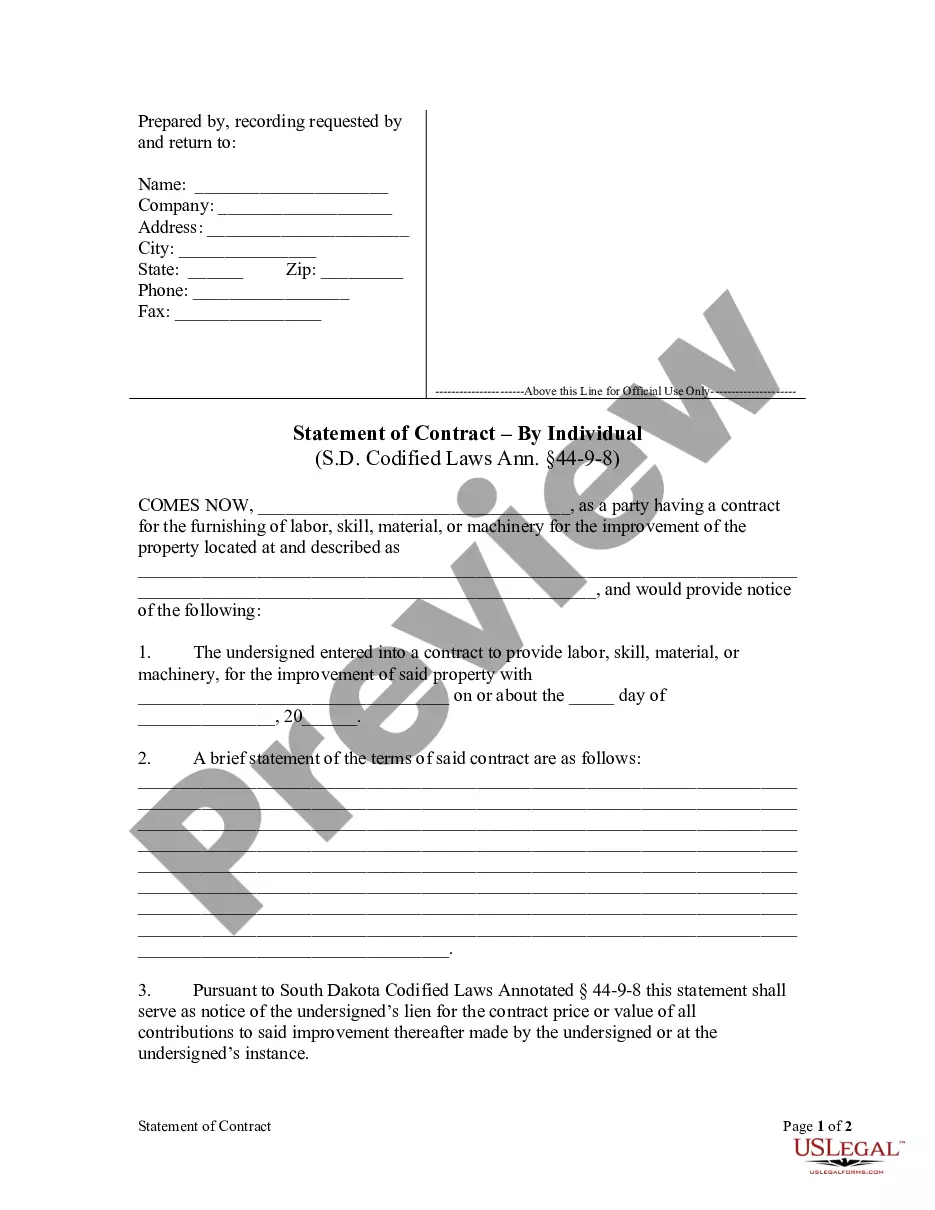
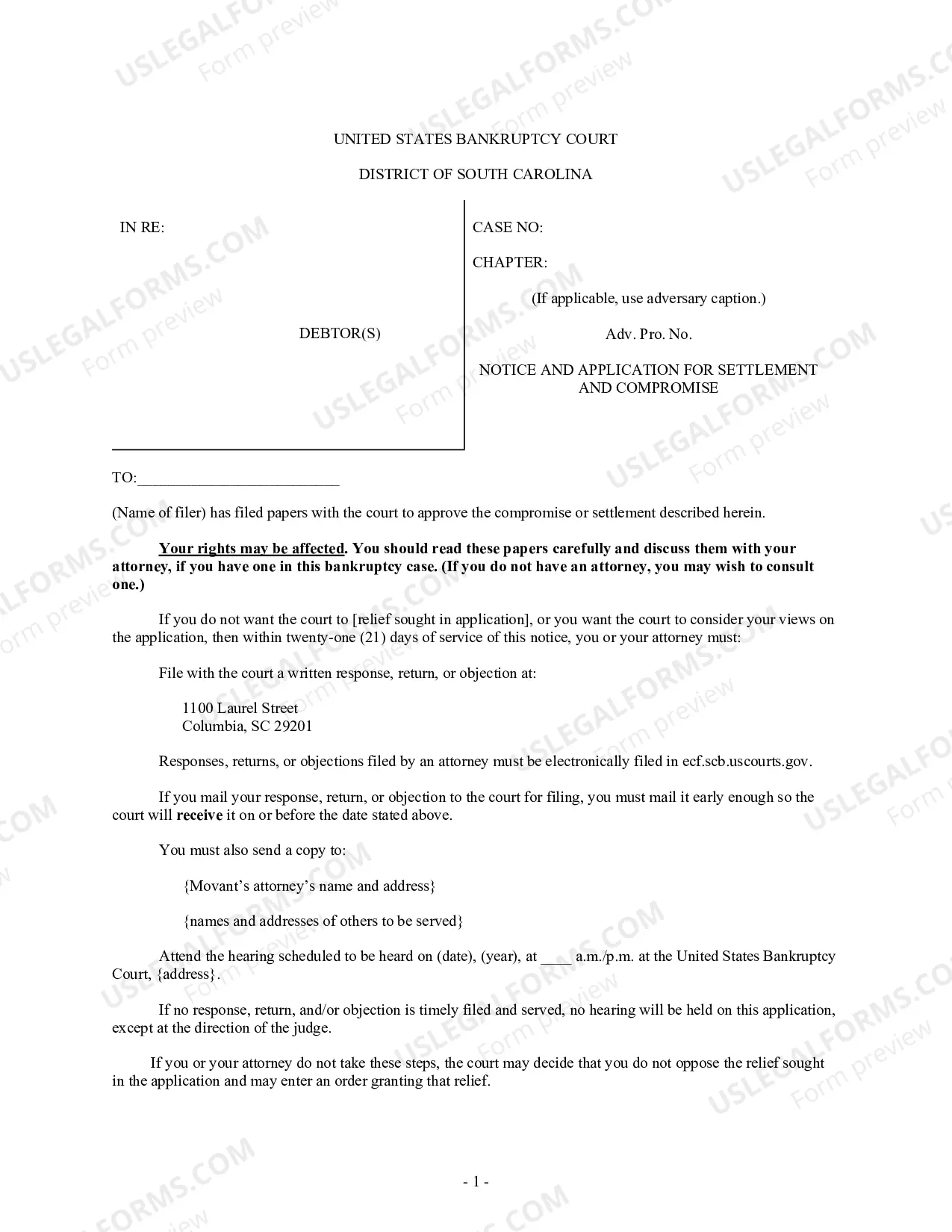
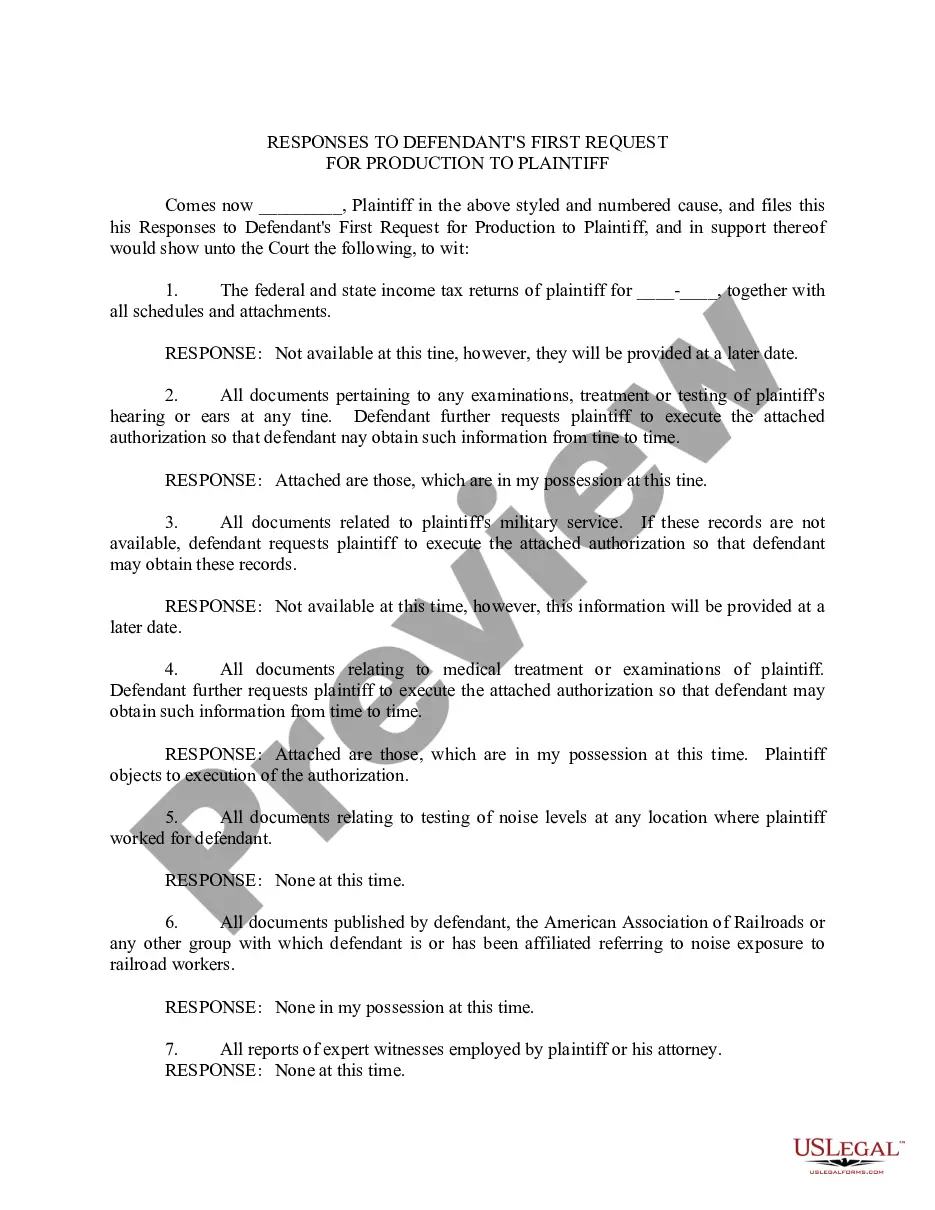
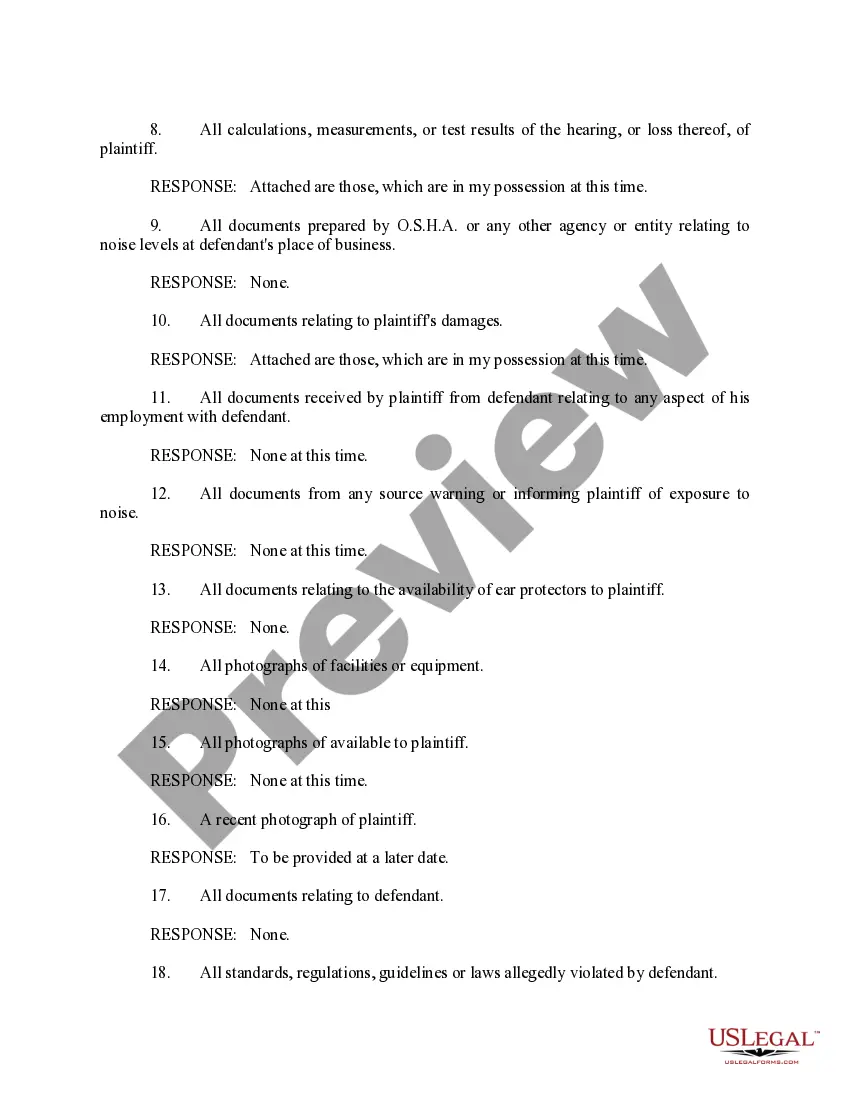
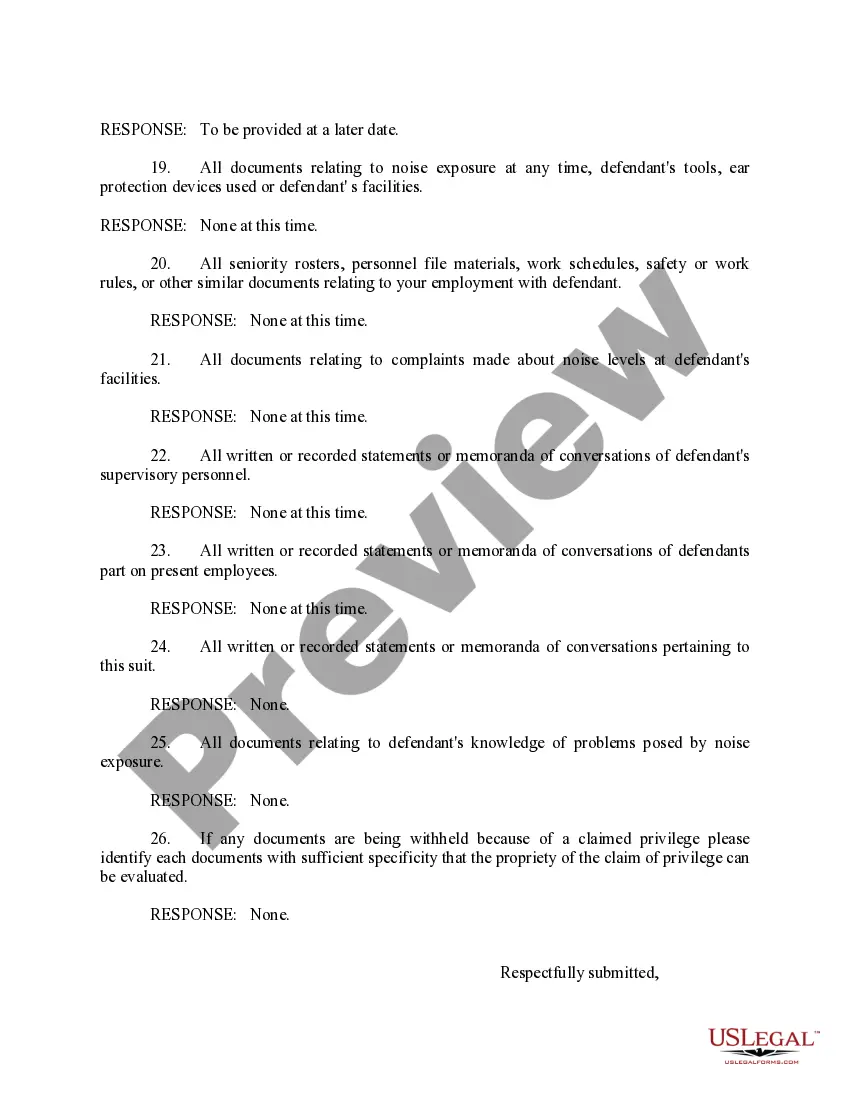
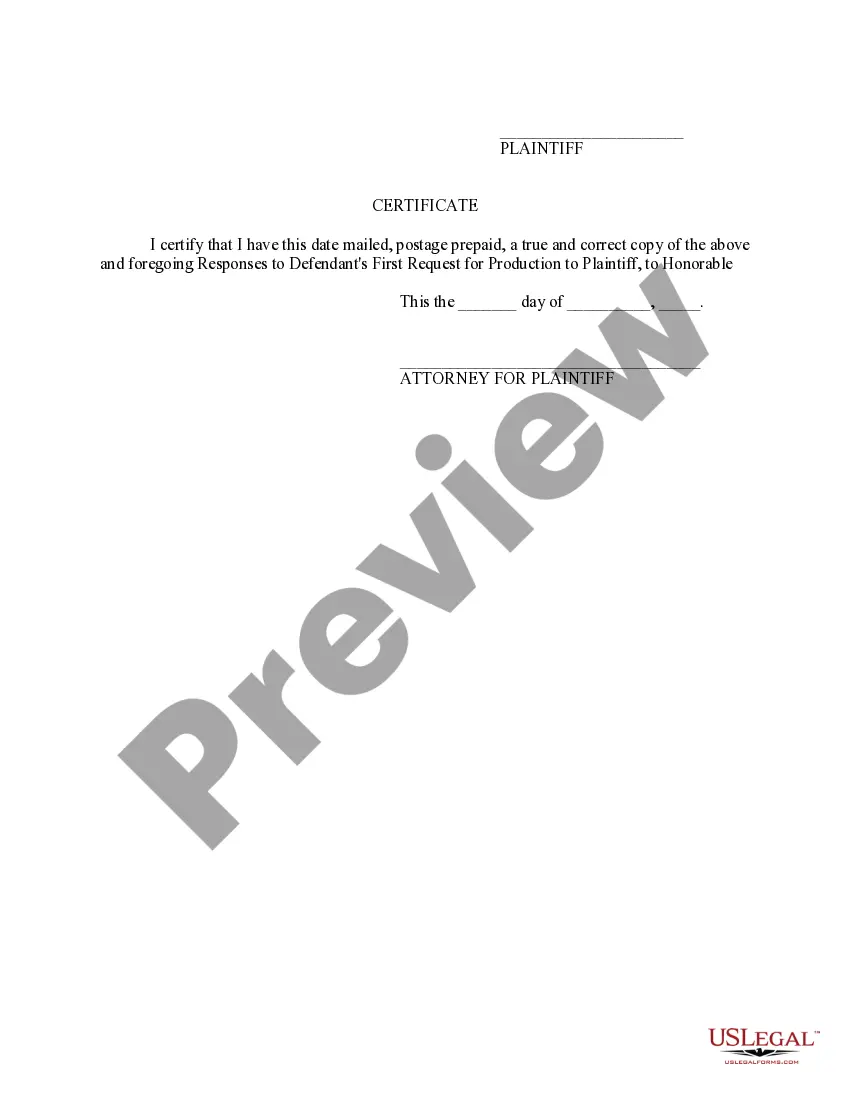
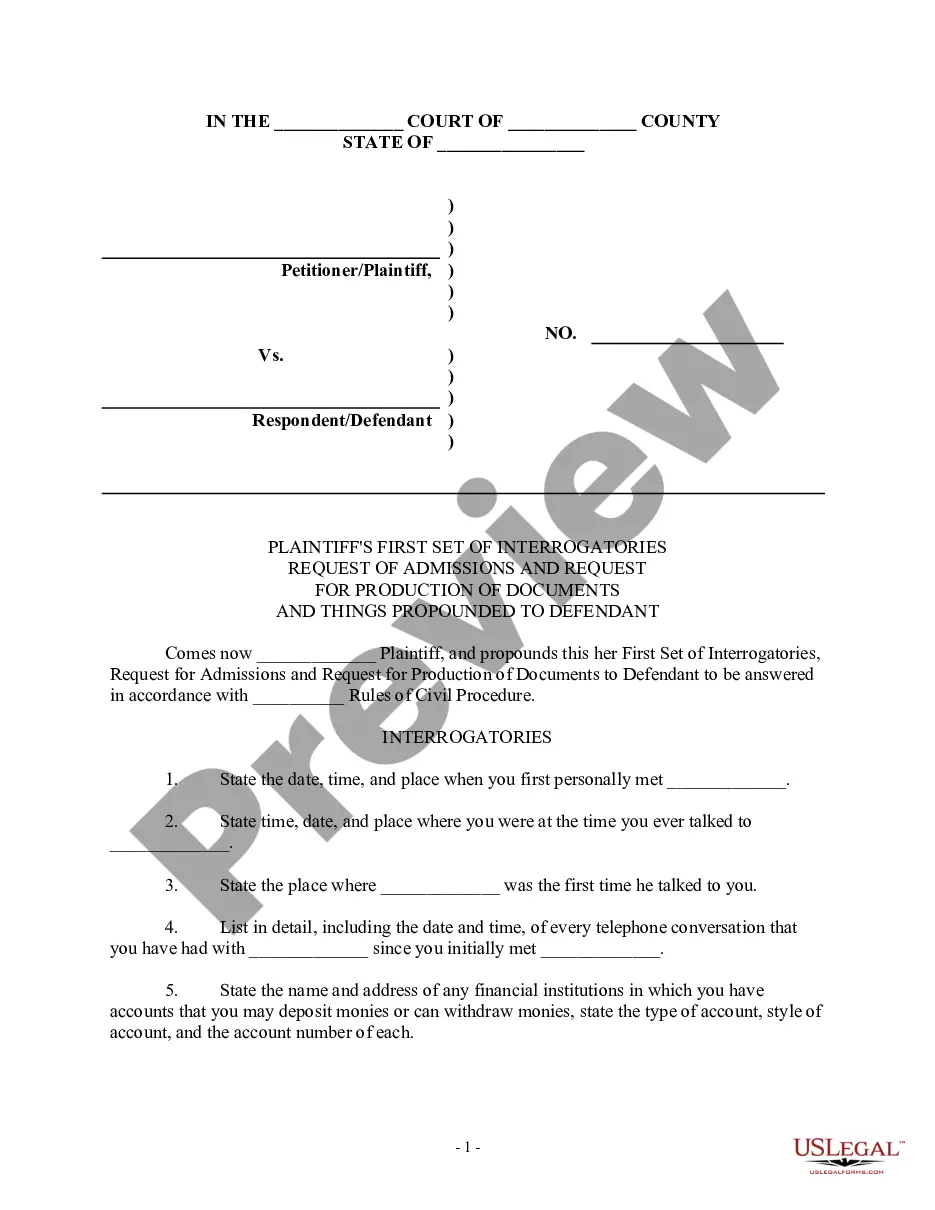
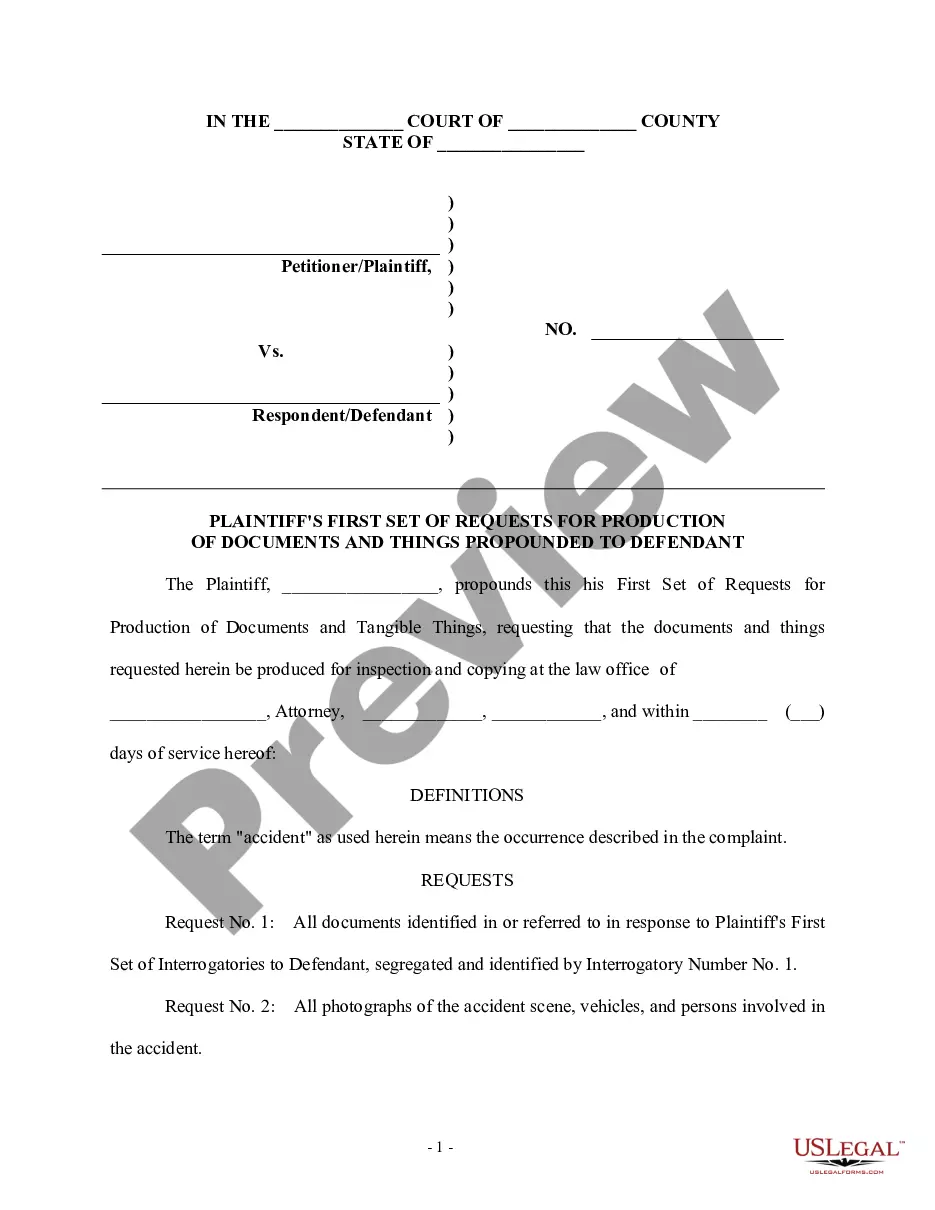
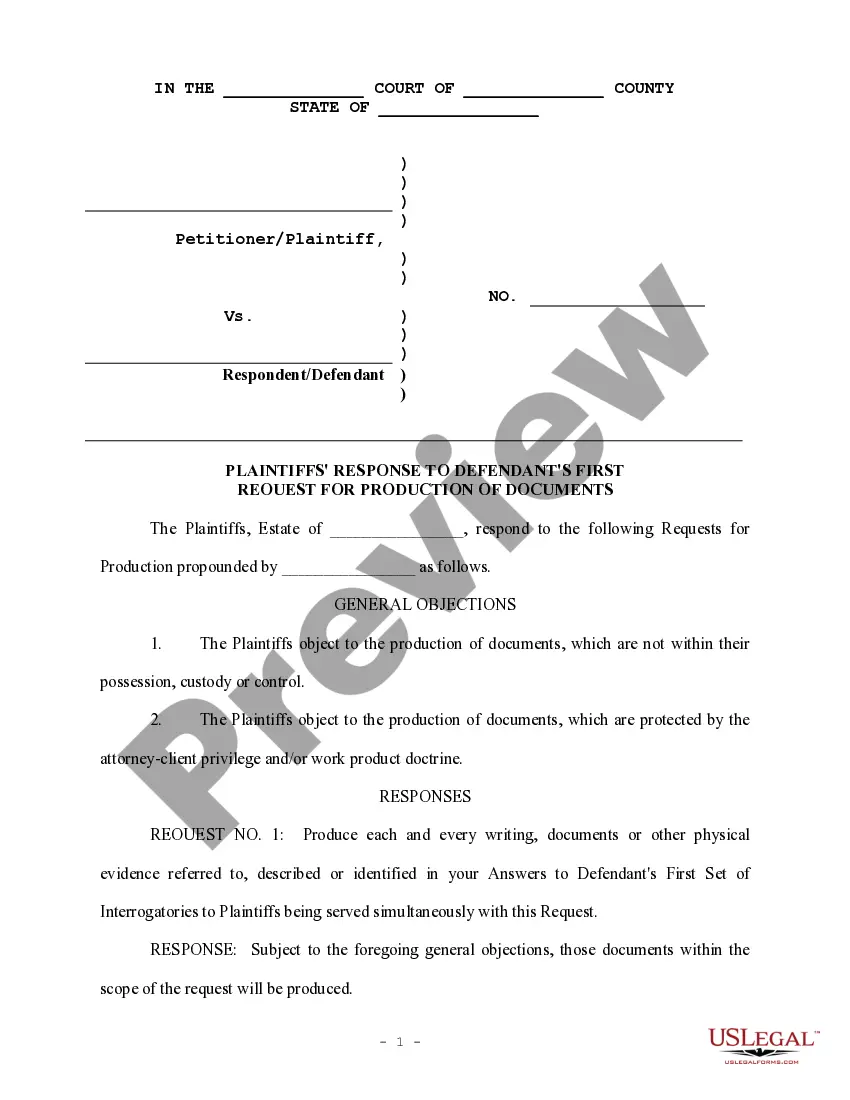
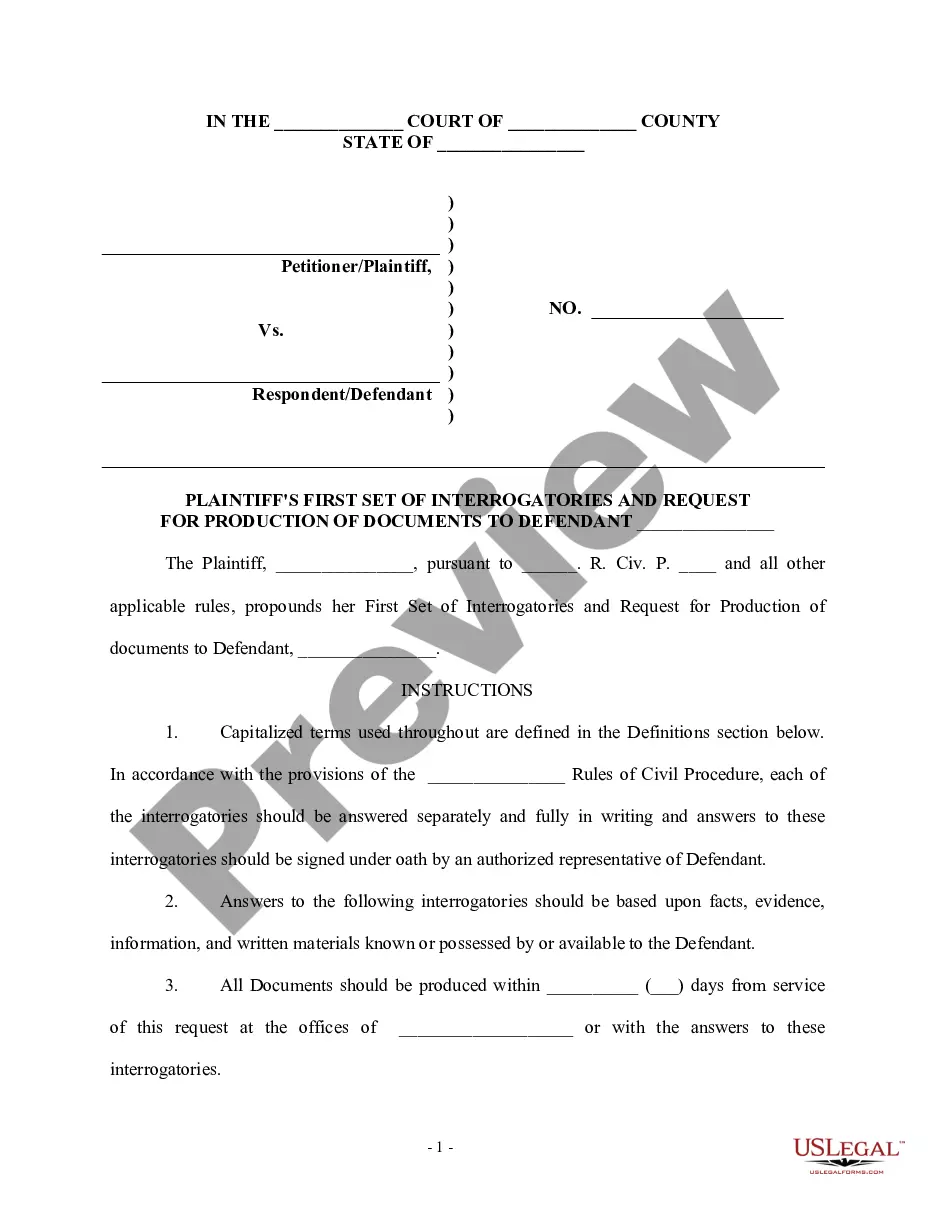
How to fill out Responses To Defendant's First Request For Production To Plaintiff?
Identifying a reliable source for the most up-to-date and pertinent legal templates is a significant part of managing bureaucracy.
Finding the appropriate legal documents requires precision and carefulness, which is why it is essential to obtain Response For Request samples exclusively from trustworthy providers, like US Legal Forms.
Once you have the form on your device, you can modify it using the editor or print it out and fill it in manually. Remove the inconvenience associated with your legal paperwork. Explore the extensive US Legal Forms collection where you can locate legal templates, assess their applicability to your situation, and download them instantly.
- Utilize the library navigation or search tool to find your sample.
- Review the form’s details to determine if it meets the standards of your state and locality.
- Check the form preview, if available, to confirm it is the correct document you need.
- Return to the search and seek the appropriate template if the Response For Request does not match your needs.
- If you are certain about the form’s applicability, download it.
- As a registered user, click Log in to verify your identity and access your chosen forms in My documents.
- If you haven't created an account yet, click Buy now to acquire the template.
- Select the payment plan that meets your criteria.
- Continue with the registration to complete your acquisition.
- Conclude your purchase by selecting a payment method (credit card or PayPal).
- Choose the document format for downloading Response For Request.
Form popularity
FAQ
When responding to a letter of request, begin by acknowledging the receipt of the letter. Then, provide a thorough yet succinct response that addresses all queries or requirements mentioned. Ensure your response for request is organized and clear, helping the recipient understand your position. For added efficiency, consider using uslegalforms to access templates that can assist you in crafting a professional reply.
To reply to a request, first, ensure you clearly understand the information being asked. Next, gather all relevant details, and then construct your response in a concise manner. Your response for request should be direct and informative, addressing each point raised in the original request. Utilizing platforms like uslegalforms can help streamline this process by providing templates and guidance.
A request-response is a fundamental communication pattern where one party sends a request and another party provides a response. In legal contexts, this often involves formal communication regarding documents or information. The response for request is crucial, as it determines how effectively the inquiry is resolved. Understanding this concept can enhance your interactions and ensure clarity in legal matters.
Filing a response means formally replying to a request made in a legal context. It is an essential step in legal proceedings where a party addresses claims or demands put forth by another party. When you file a response for request, you provide your perspective, evidence, or counterarguments to support your case. Using platforms like US Legal Forms can simplify this process, offering templates and guidance to ensure your response meets legal requirements.
A common example of a request-response protocol is the interaction between a client and a server in web communications. When you access a website, your browser sends a request to the server, which then processes the request and sends back a response, displaying the requested content. This process illustrates the fundamental operation of how data is exchanged on the internet and highlights the importance of a clear response for request to ensure effective communication.
To fill out a request, start by gathering all necessary information related to the request. Clearly define the purpose and any specific details you want to include. It is essential to follow the guidelines provided by the platform you are using, such as US Legal Forms, to ensure your submission is complete and accurate. Finally, review your request before sending it to enhance your chances of receiving a favorable response for request.
You need to file and serve (mail or hand deliver) your Responsive Declaration at least 9 court days before your court date. A court day is a day the court is open (Monday to Friday, not including any holidays). If your server mails your papers, they should do so well before the deadline.
If you are drafting a responsive declaration to the opposing party's allegations, tell the Court how they are incorrect. Use proof to validate your case. Any evidence that collaborates ?why? you are asking the Court to fulfill your requests can be persuasive.
You'll use the Responsive Declaration to Request for Order (form FL-320) to respond. In this form, you'll tell the court and other side if you agree or disagree with the request. If you disagree, you can explain why and what you think the court should order instead.
How to respond to Requests for Admission Download the blank response template and fill in basic information. ... Prepare the template for your responses. ... Read and answer the questions. ... Sign the document.