Transmittal Form For Receiving Documents Deped
Description
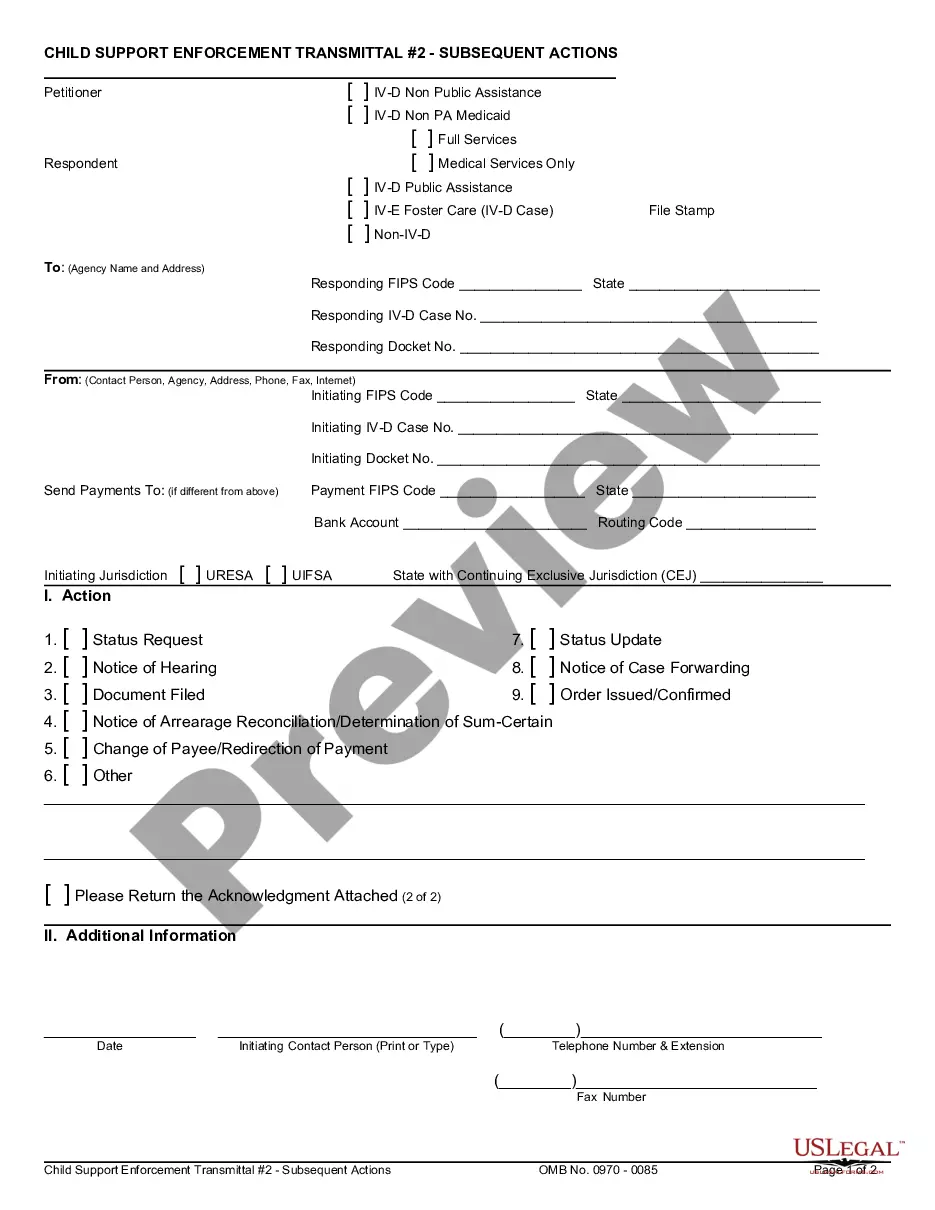
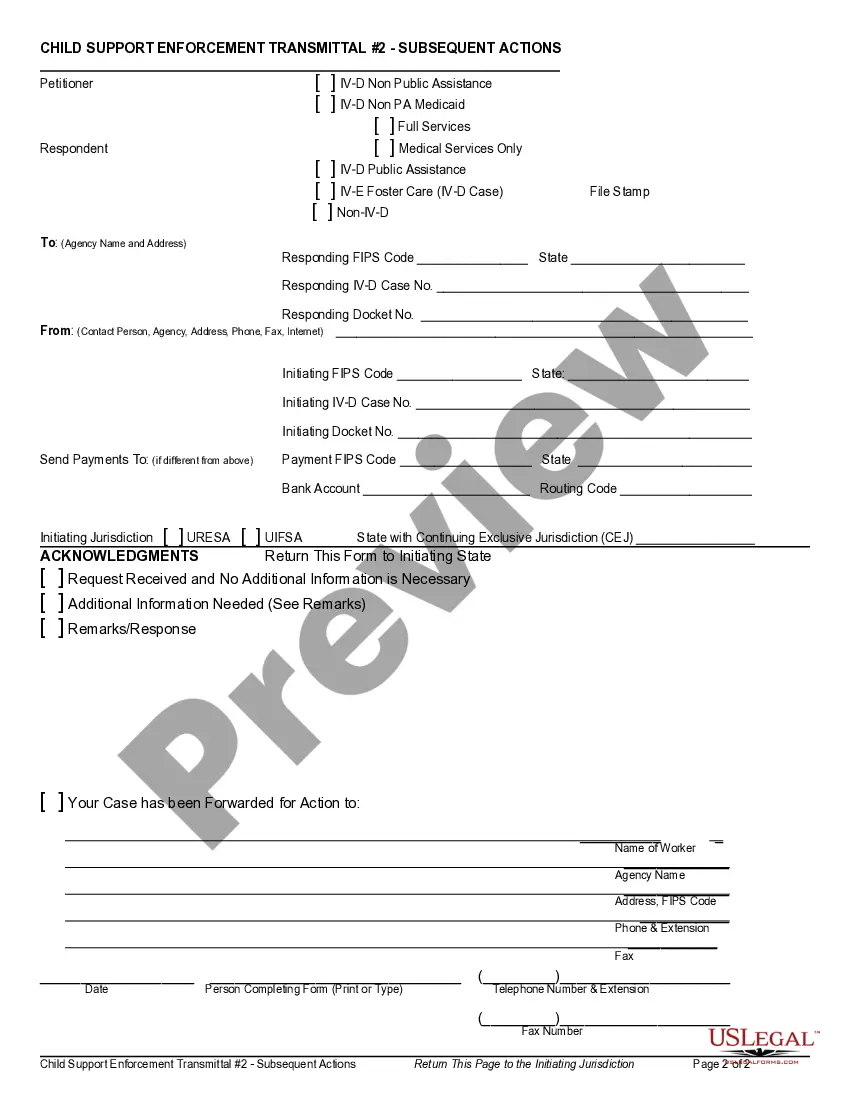
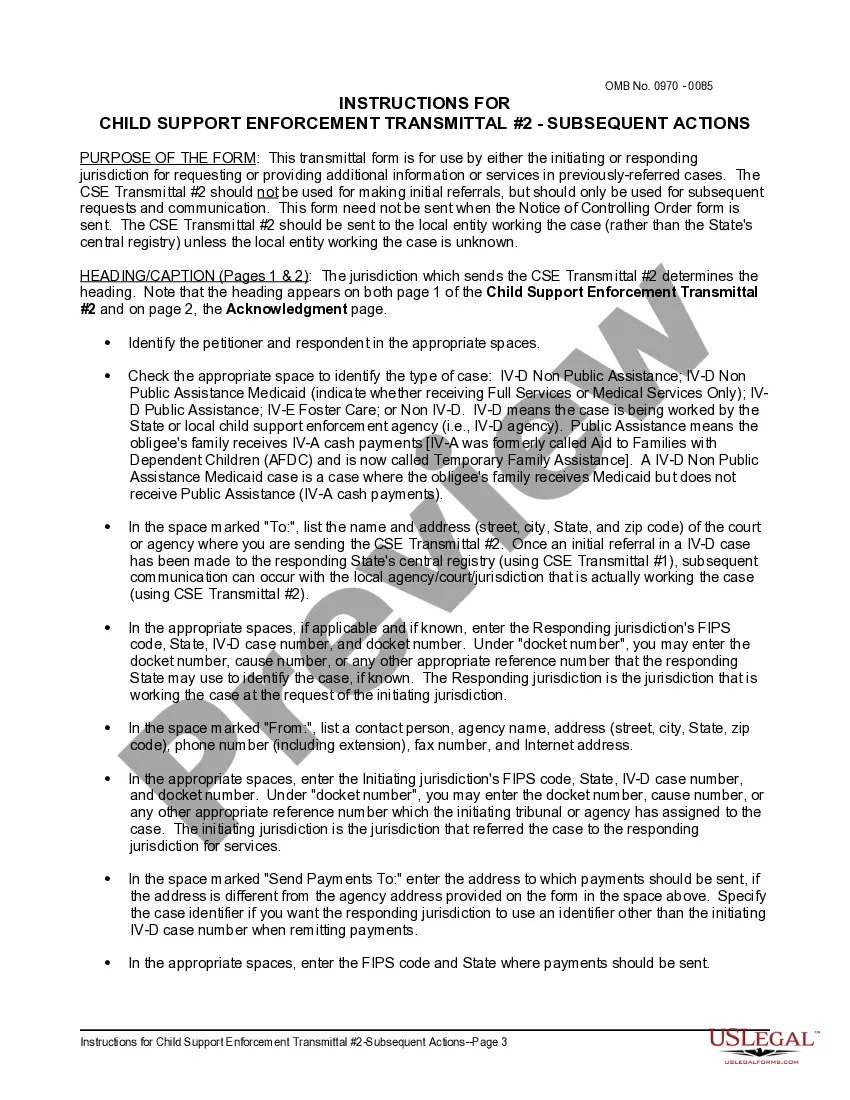
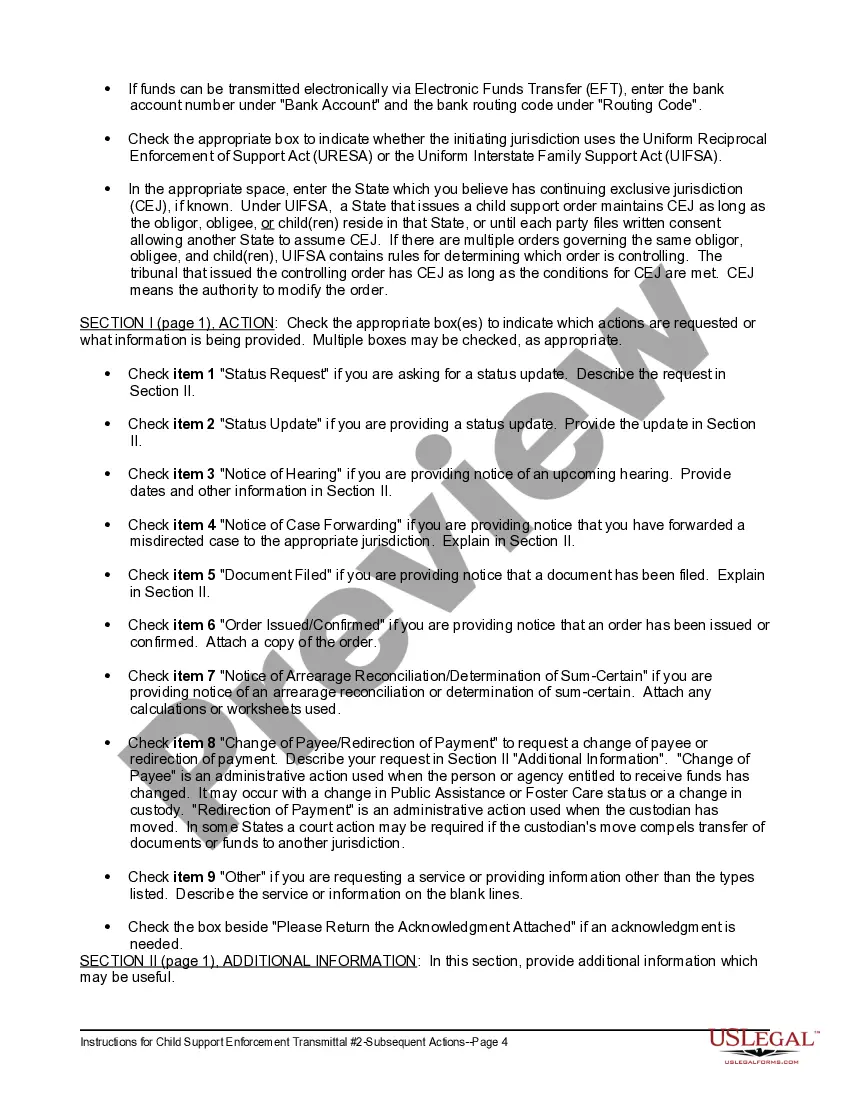
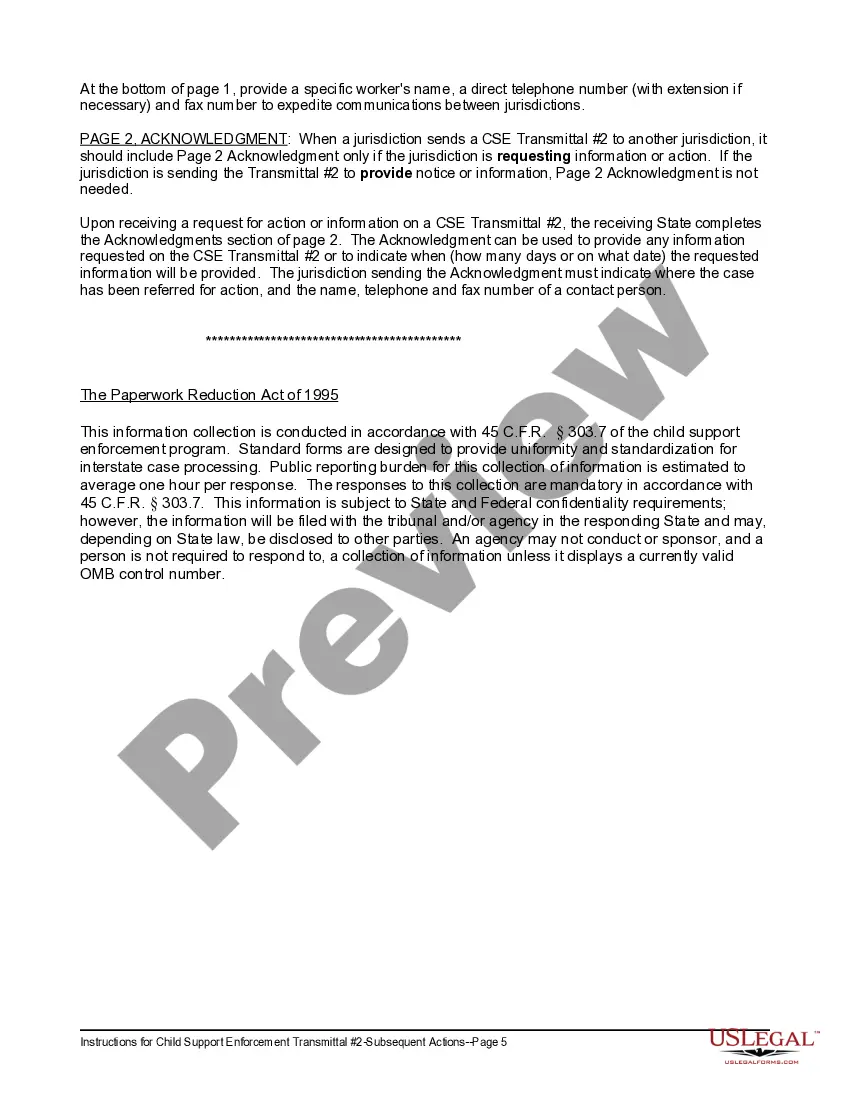
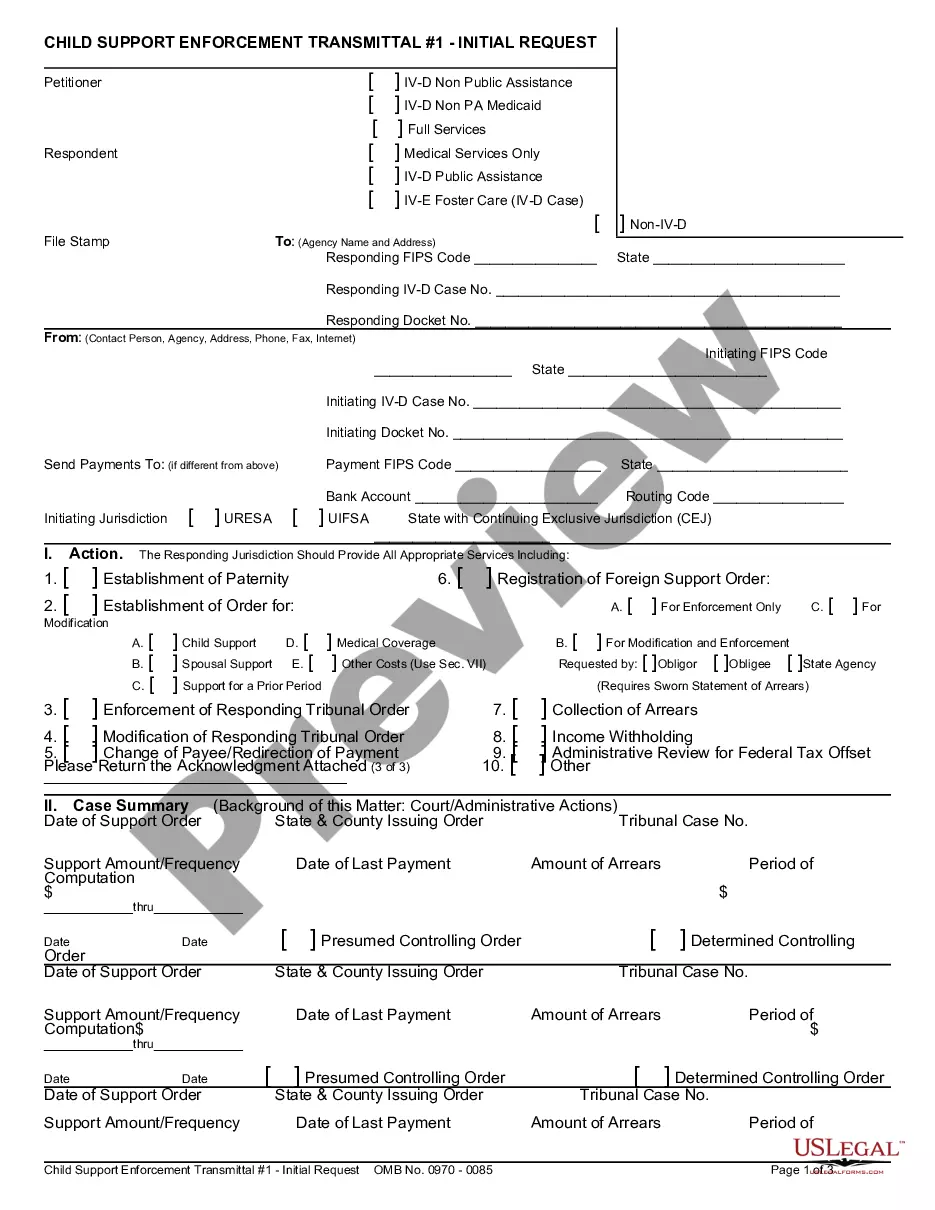
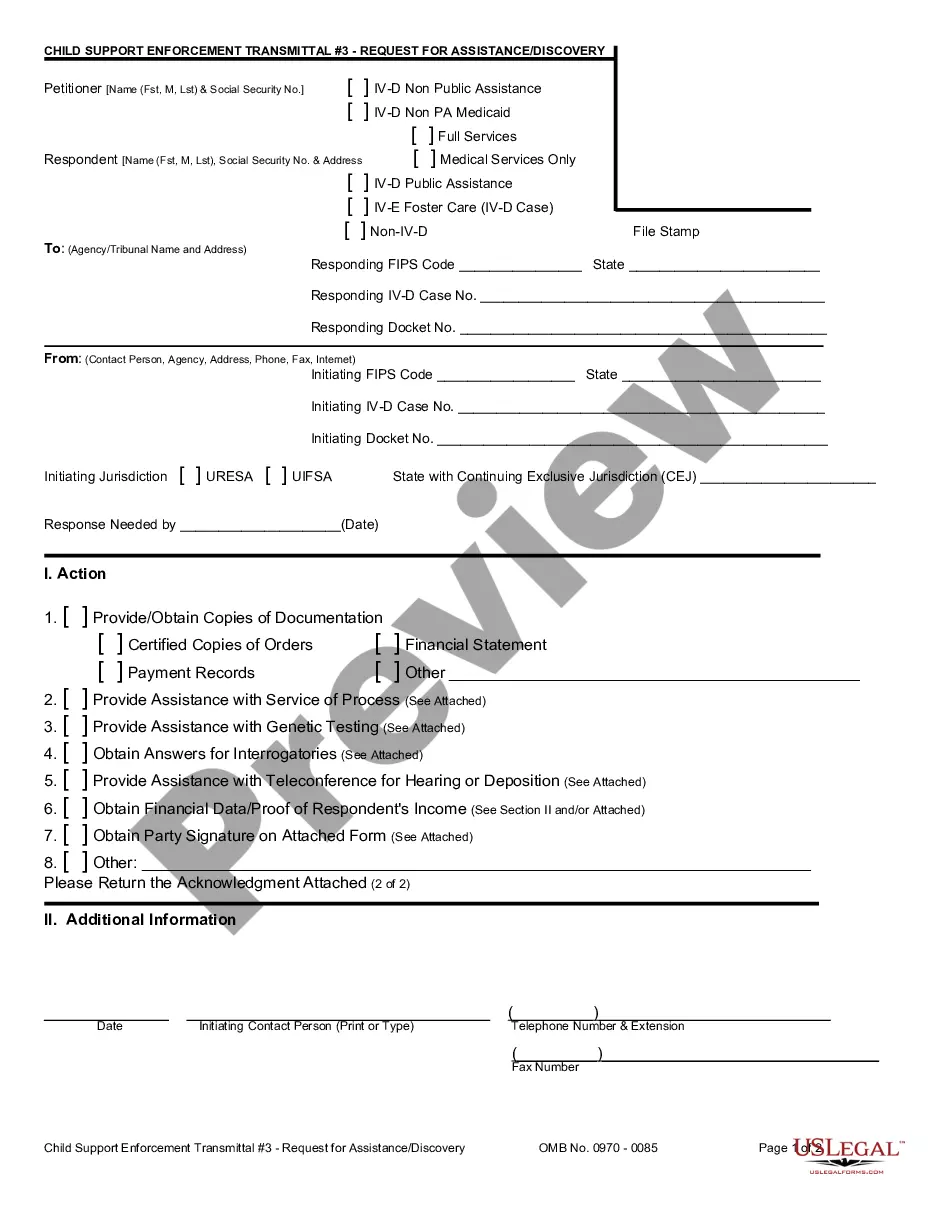

How to fill out Child Support Transmittal #2 - Subsequent Actions And Instructions?
Locating a reliable source to obtain the latest and suitable legal forms is a significant part of managing bureaucratic processes.
Acquiring the correct legal documents demands accuracy and meticulousness, which is why it is crucial to obtain samples of Transmittal Form For Receiving Documents Deped solely from reputable sources, such as US Legal Forms. A faulty template can squander your time and delay the situation you are facing. With US Legal Forms, your concerns are minimized.
Eliminate the stress associated with your legal documentation. Explore the extensive US Legal Forms database, where you can find legal templates, assess their relevance to your situation, and download them immediately.
- Utilize the library navigation or search box to locate your sample.
- Review the form’s details to verify it meets the prerequisites of your state and locality.
- Inspect the form preview, if available, to confirm that the form is precisely what you need.
- Continue searching and find the appropriate document if the Transmittal Form For Receiving Documents Deped does not align with your needs.
- If you are certain about the form’s applicability, download it.
- If you are a registered user, click Log in to verify and access your chosen templates in My documents.
- If you haven't created an account, click Buy now to obtain the template.
- Select the pricing option that fits your requirements.
- Proceed with registration to complete your purchase.
- Finalize your purchase by selecting a payment method (credit card or PayPal).
- Choose the file format for downloading Transmittal Form For Receiving Documents Deped.
- After obtaining the form on your device, you can modify it with the editor or print it out and fill it manually.
Form popularity
FAQ
A transmittal letter typically follows a standard business letter format. It begins with your address, followed by the date and the recipient's address. In the body, you should introduce the documents you are sending and provide any necessary context. Using a template for a transmittal form for receiving documents deped can help ensure you include all essential details.
A release form, also known as a waiver, is a legal document that grants permission for a person or organization to use someone else's image, likeness, or property in a specific context. They are commonly used in various settings, including photography, video production, and events.
A release of liability, also known as a liability waiver or a hold harmless agreement, is a contract in which one party agrees not to hold another party liable for damages or injury.
A liability waiver is a legal document that a person who participates in an activity may sign to acknowledge the risks involved in their participation. By doing so, the company attempts to remove legal liability from the business or person responsible for the activity.
The liability release form, also known as the waiver form, contains a legally binding agreement between two parties, stating that one of them (the releasor) promises not to sue the other side (the releasee) for past, current, or future damages, losses, or injuries.
As far as adult injuries are concerned, waiver/releases can be very effective and may result in lawsuit dismissals in most states as long as the three above-listed conditions are satisfied. There are a few states where the courts are not likely to uphold a waiver/release even if those three conditions are met.
The main difference between releases and waivers is the transferring of ownership. When rights are released, they are transferred to another party. When rights are waived, they are gone altogether.
Key Takeaways On How To Write A Waiver Choose a waiver template. Determine the type of activity or service. State the purpose of the waiver. Identify the risks. Include a title. Include customer information. Include waiver terms. Include a statement of understanding.
10 Things to Include in a Liability Waiver Business Information. Detailed Description of the Activity. Inherent Risks of the Activity. Acknowledgement and Voluntary Assumption of Risk. Choice of Law Provision Section. Release Clause. Indemnification Clause. Forum Selection or Venue Clause.