Action For Interpleader
Description
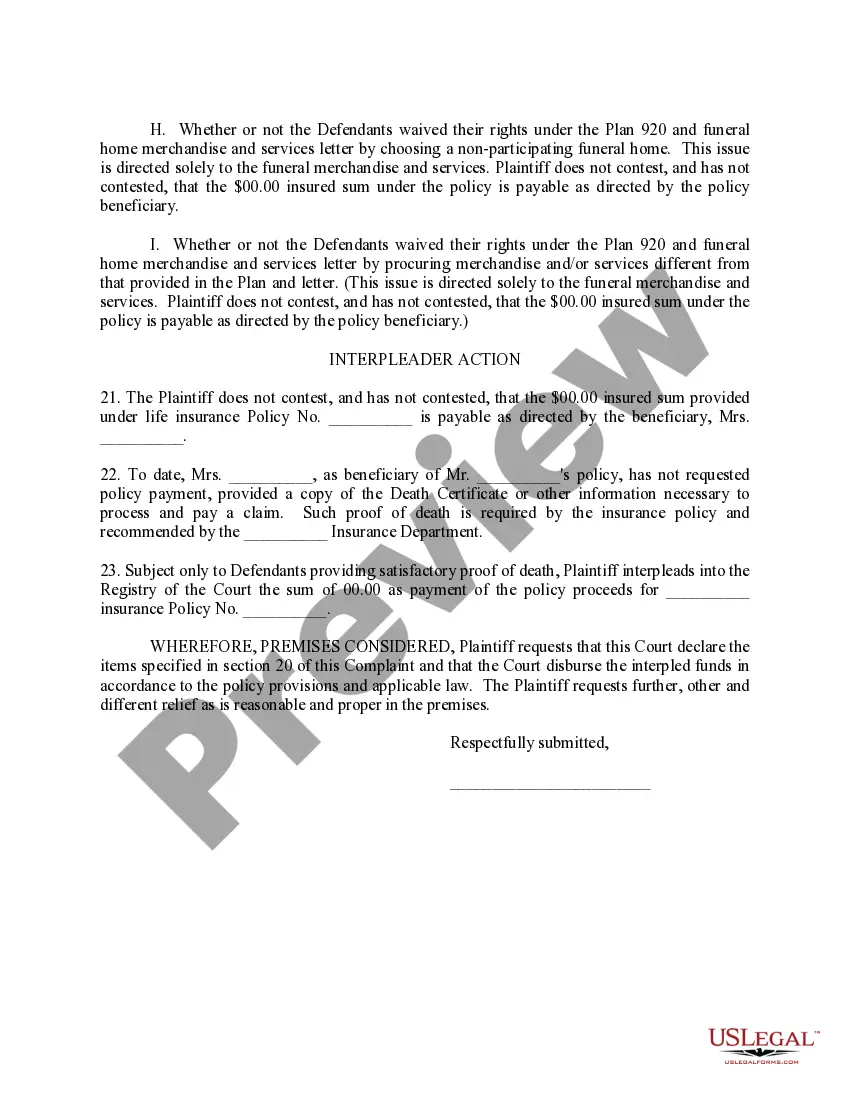


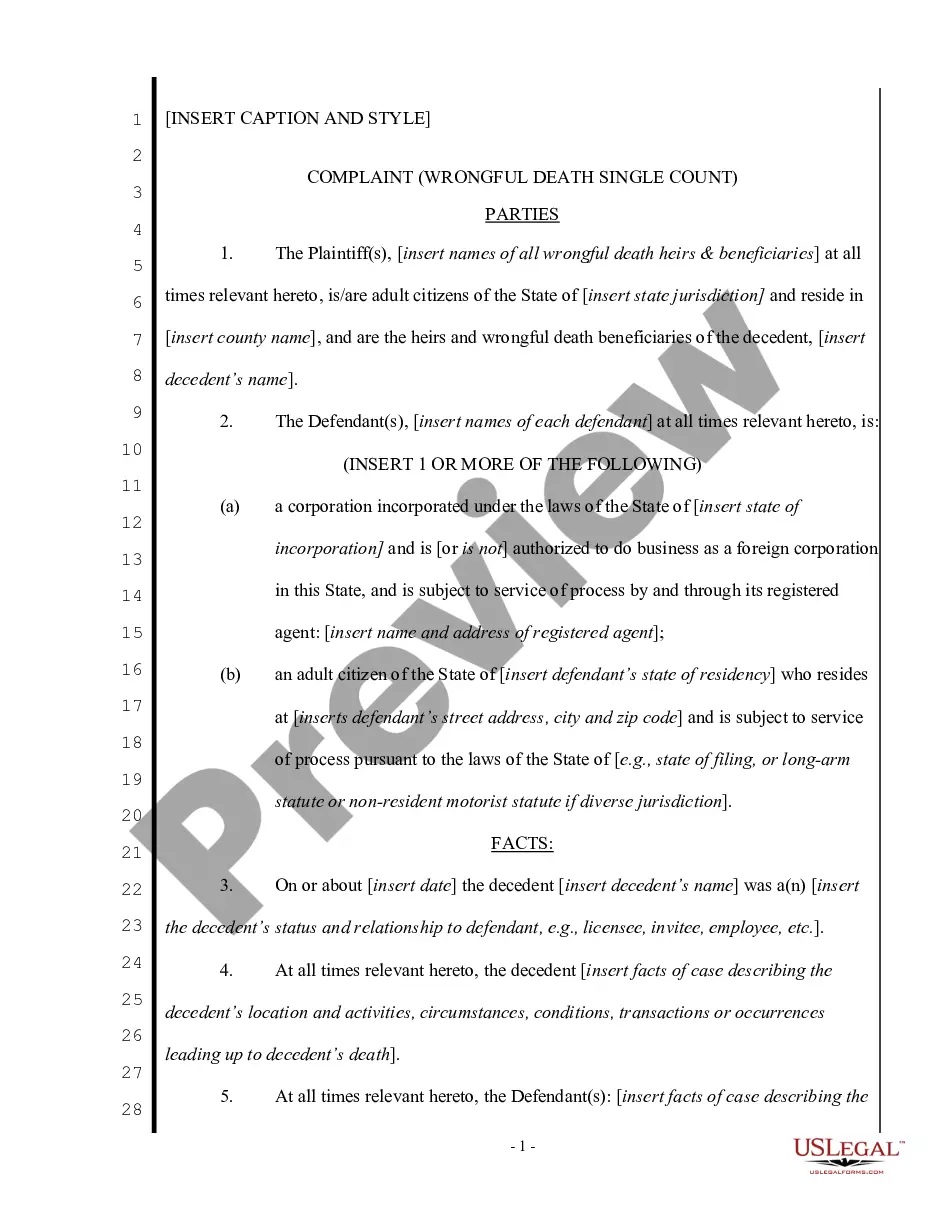
Get your form ready online
Our built-in tools help you complete, sign, share, and store your documents in one place.
Make edits, fill in missing information, and update formatting in US Legal Forms—just like you would in MS Word.
Download a copy, print it, send it by email, or mail it via USPS—whatever works best for your next step.
Sign and collect signatures with our SignNow integration. Send to multiple recipients, set reminders, and more. Go Premium to unlock E-Sign.
If this form requires notarization, complete it online through a secure video call—no need to meet a notary in person or wait for an appointment.
We protect your documents and personal data by following strict security and privacy standards.

Make edits, fill in missing information, and update formatting in US Legal Forms—just like you would in MS Word.

Download a copy, print it, send it by email, or mail it via USPS—whatever works best for your next step.

Sign and collect signatures with our SignNow integration. Send to multiple recipients, set reminders, and more. Go Premium to unlock E-Sign.

If this form requires notarization, complete it online through a secure video call—no need to meet a notary in person or wait for an appointment.

We protect your documents and personal data by following strict security and privacy standards.
Looking for another form?
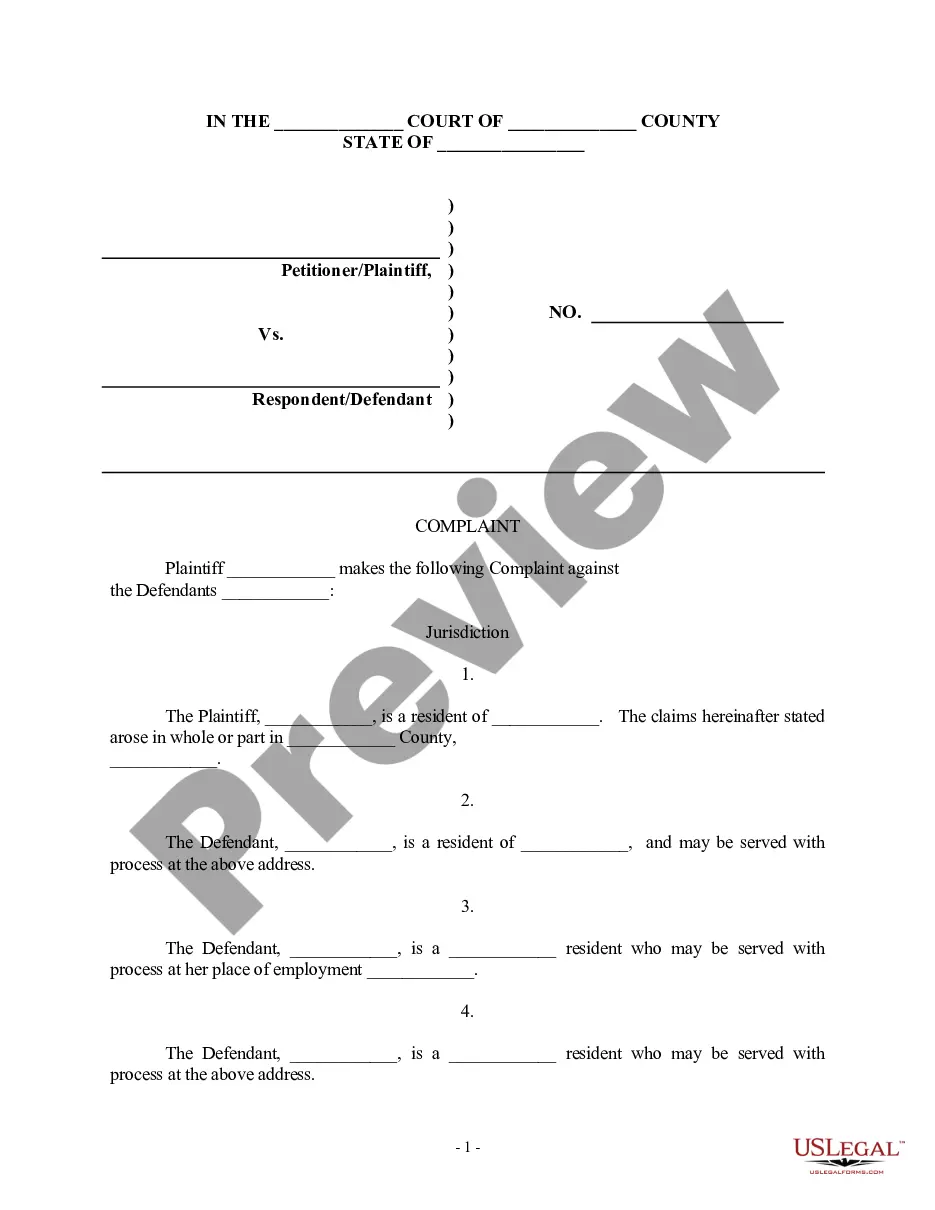

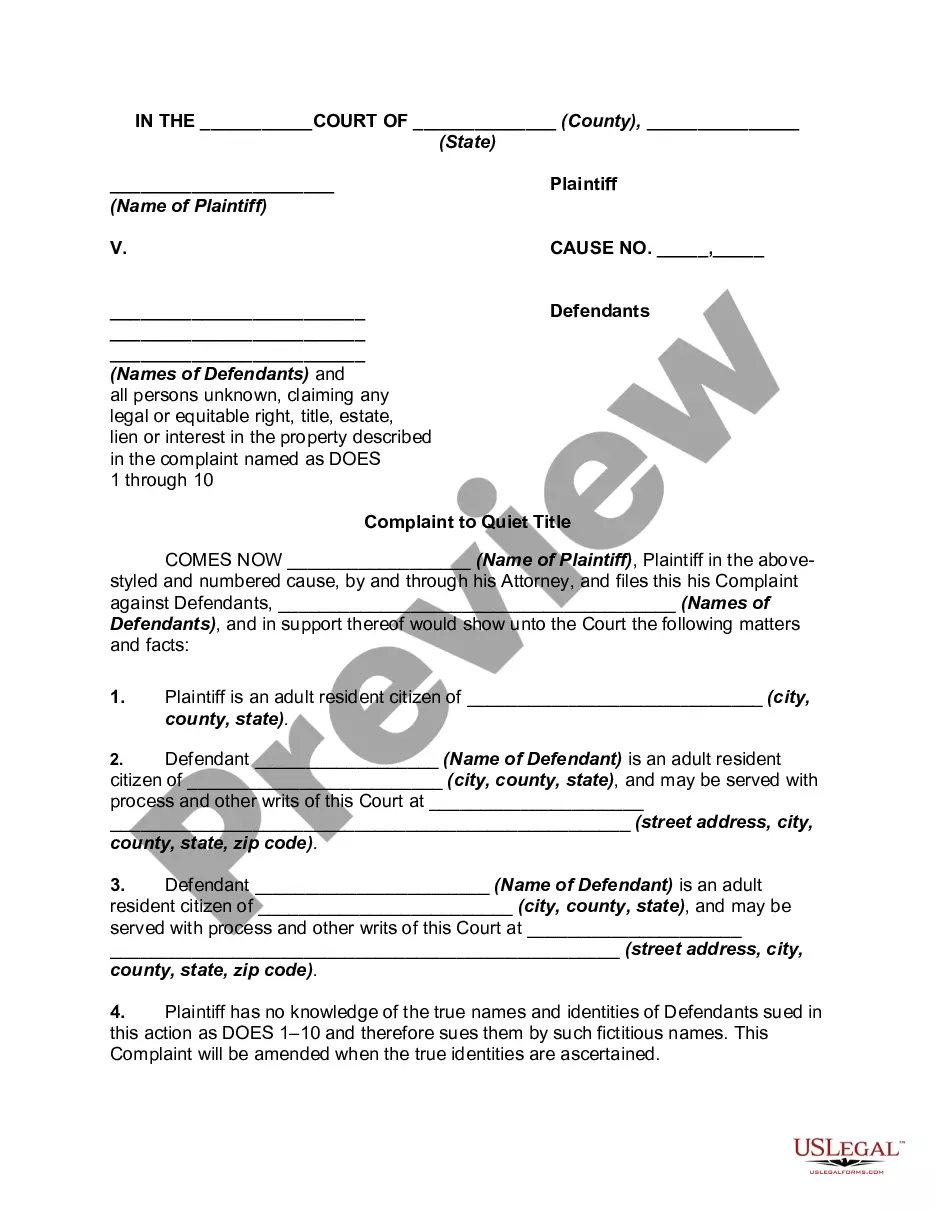




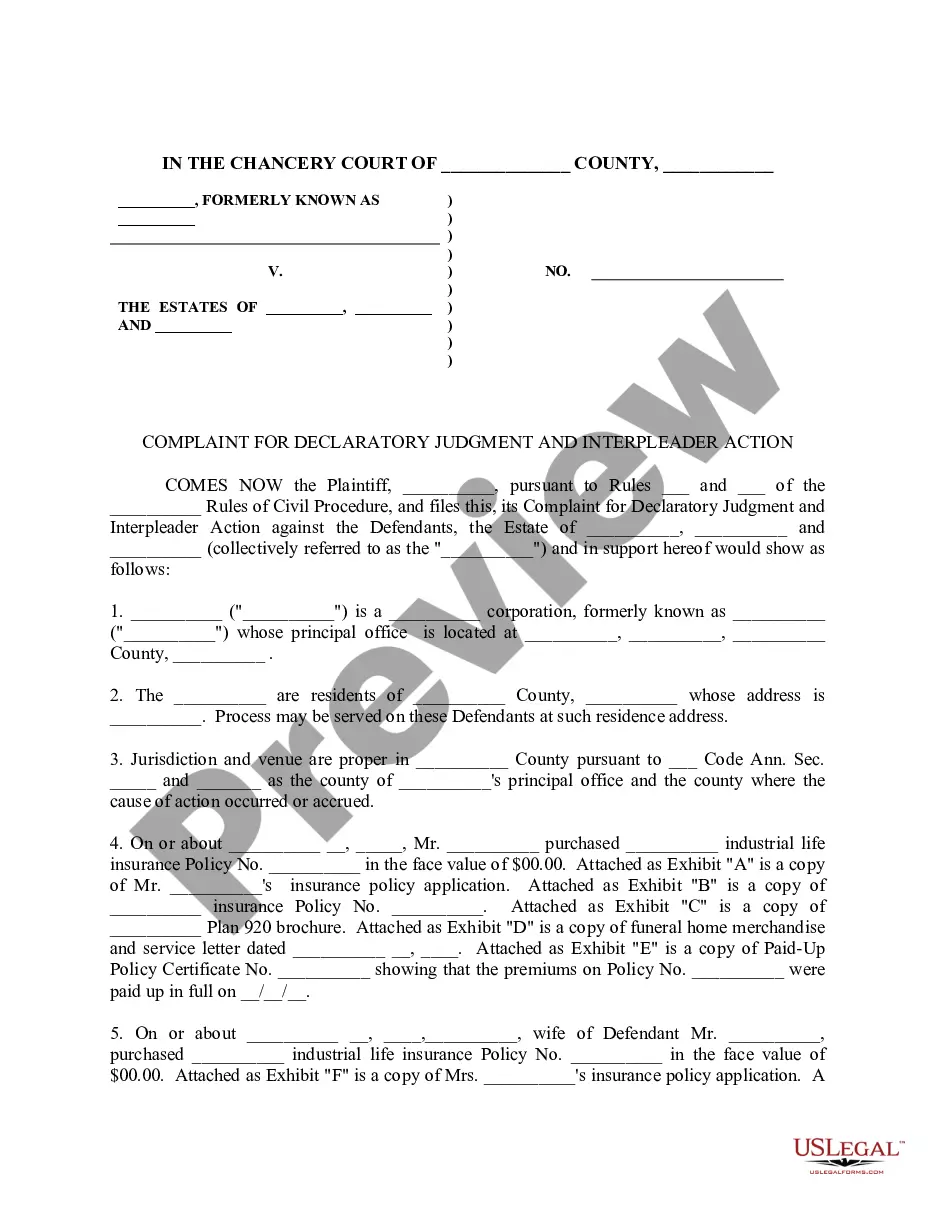
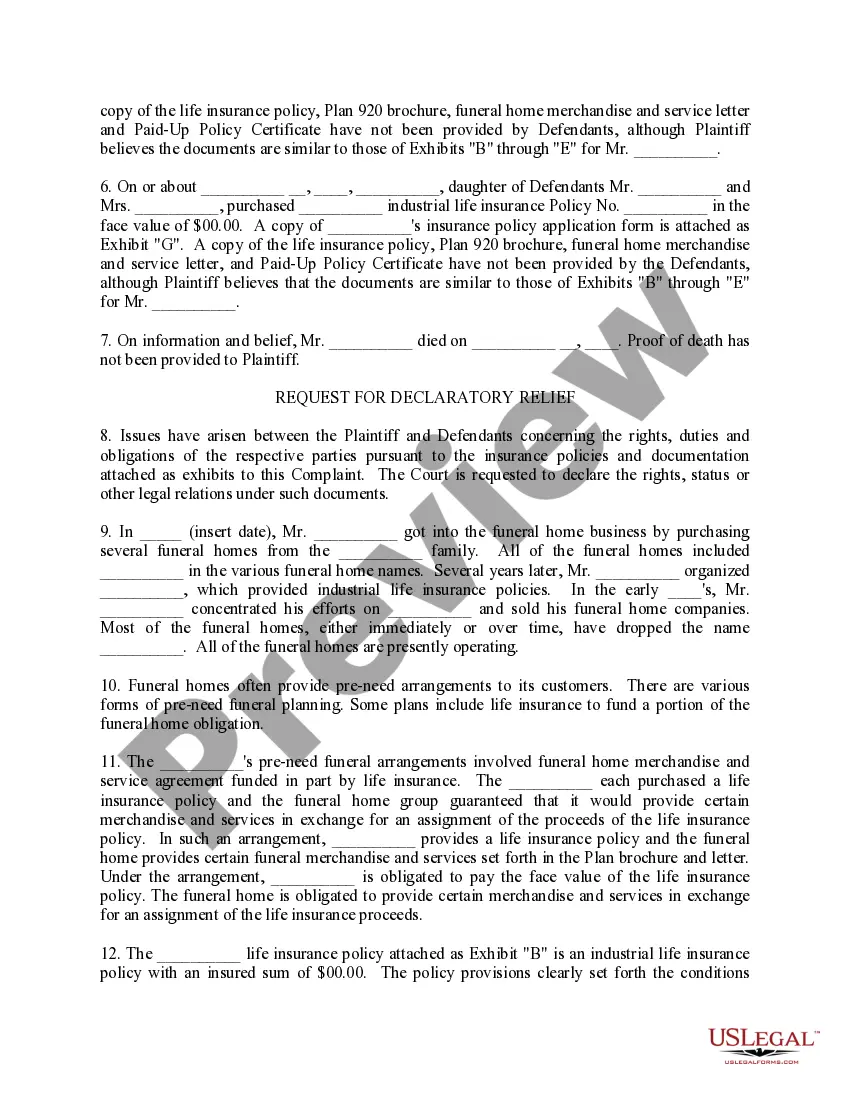
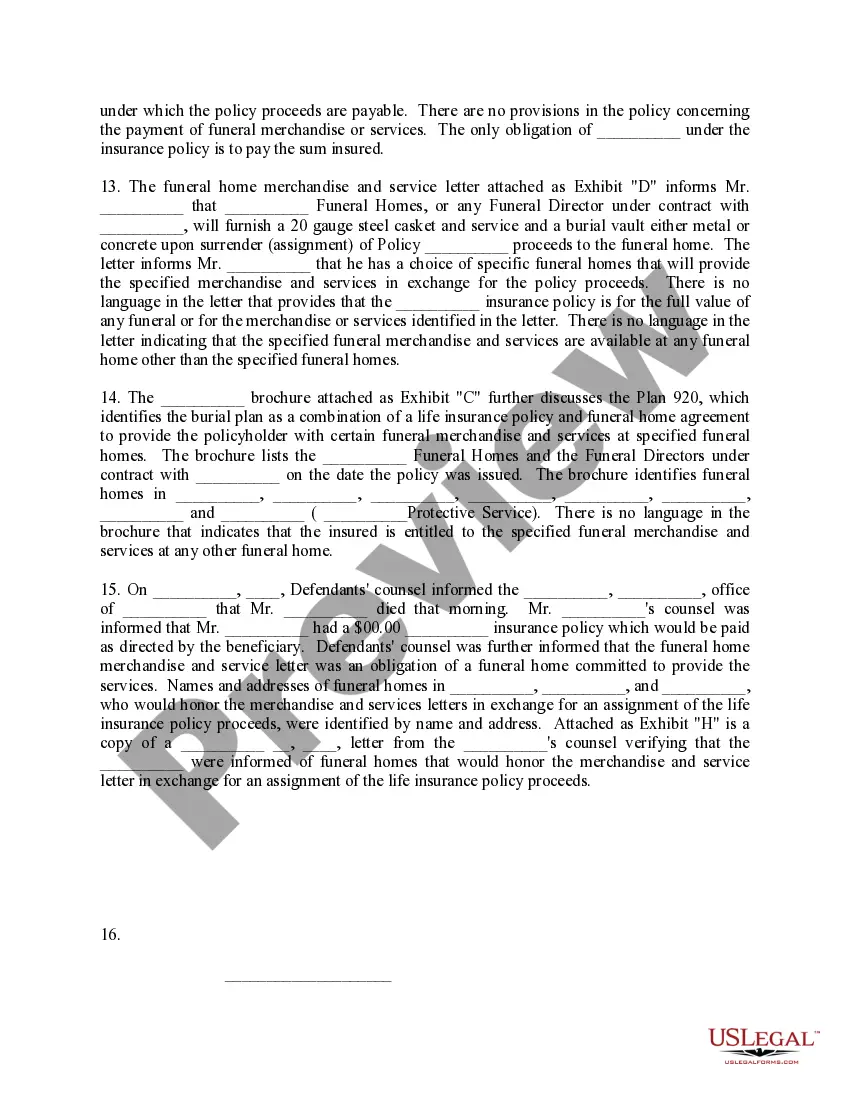
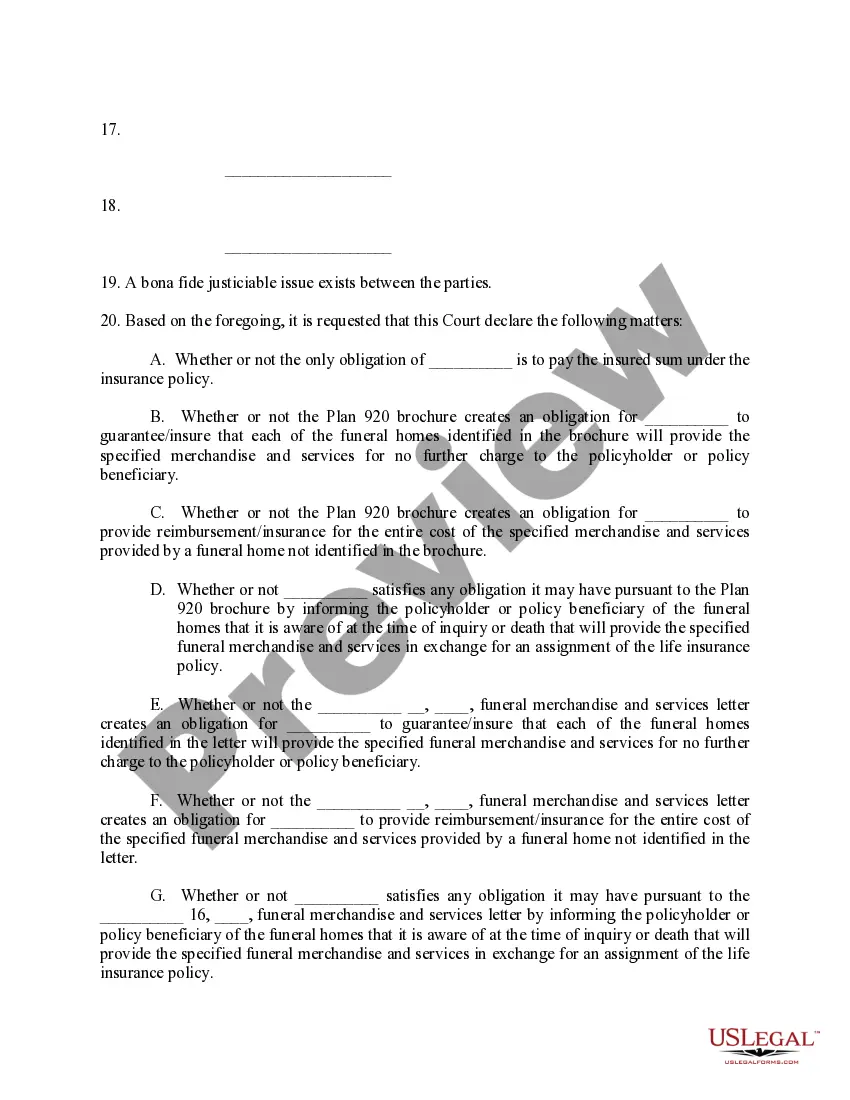
How to fill out Complaint For Declaratory Judgment And Interpleader Action Or Burial Policy?
Regardless of whether it is for corporate reasons or individual matters, everyone must confront legal circumstances at some stage in their lives.
Completing legal documents requires meticulous care, beginning with choosing the appropriate form template. For example, selecting an incorrect version of an Action For Interpleader will lead to its rejection upon submission.
With an extensive catalog from US Legal Forms available, you do not need to waste time searching for the suitable sample online. Utilize the library's user-friendly navigation to find the correct form for any situation.
- Acquire the sample you require by utilizing the search bar or catalog browsing.
- Review the description of the form to confirm it suits your case, state, and county.
- Click on the form's preview to examine it.
- If it is not the correct form, return to the search function to locate the Action For Interpleader template you seek.
- Obtain the template once it satisfies your requirements.
- If you already possess a US Legal Forms account, click Log in to access your previously saved templates in My documents.
- If you do not yet have an account, you can download the form by clicking Buy now.
- Select the appropriate pricing option.
- Complete the account registration form.
- Choose your payment method: utilize a credit card or PayPal account.
- Select the document format you desire and download the Action For Interpleader.
- Once saved, you can fill out the form using editing software or print it and complete it manually.
Form popularity
FAQ
Another example is that an escrow holder in a real estate transaction holds a deposit and the parties are arguing about whether one or the other should receive the deposit back. In such cases, the escrow holder will often file an interpleader action.
In an interpleader action, there are two phases to determine rightful ownership: The first step determines if the stakeholder is entitled to an interpleader and thus relieved of liability. The next step is the action of law determining with claimant should be granted the res (money or property).
An interpleader is a way for a party who holds property (a stakeholder) to initiate a suit between all claimants, who are parties claiming a right to that property. An interpleader allows the stakeholder to bring all claimants into the same action, instead of litigating against claimants in separate actions.
Alternatively, interpleader actions can be brought pursuant to Rule 22 of the Federal Rules of Civil Procedure. Because the Rules do not on their own confer jurisdiction on the federal courts, any action brought under Rule 22 must be brought under one of Congress's general jurisdictional statutes, such as 28 U.S.C.
There are two specific types of interpleader actions in the United States federal courts. Statutory Interpleader governed by 28 U.S.C. § 1335, and Rule Interpleader established by Federal Rules of Civil Procedure 22.