Rule Complaint Procedure For Disparate Impact Eeoc
Description
Get your form ready online
Our built-in tools help you complete, sign, share, and store your documents in one place.
Make edits, fill in missing information, and update formatting in US Legal Forms—just like you would in MS Word.
Download a copy, print it, send it by email, or mail it via USPS—whatever works best for your next step.
Sign and collect signatures with our SignNow integration. Send to multiple recipients, set reminders, and more. Go Premium to unlock E-Sign.
If this form requires notarization, complete it online through a secure video call—no need to meet a notary in person or wait for an appointment.
We protect your documents and personal data by following strict security and privacy standards.

Make edits, fill in missing information, and update formatting in US Legal Forms—just like you would in MS Word.

Download a copy, print it, send it by email, or mail it via USPS—whatever works best for your next step.

Sign and collect signatures with our SignNow integration. Send to multiple recipients, set reminders, and more. Go Premium to unlock E-Sign.

If this form requires notarization, complete it online through a secure video call—no need to meet a notary in person or wait for an appointment.

We protect your documents and personal data by following strict security and privacy standards.
Looking for another form?
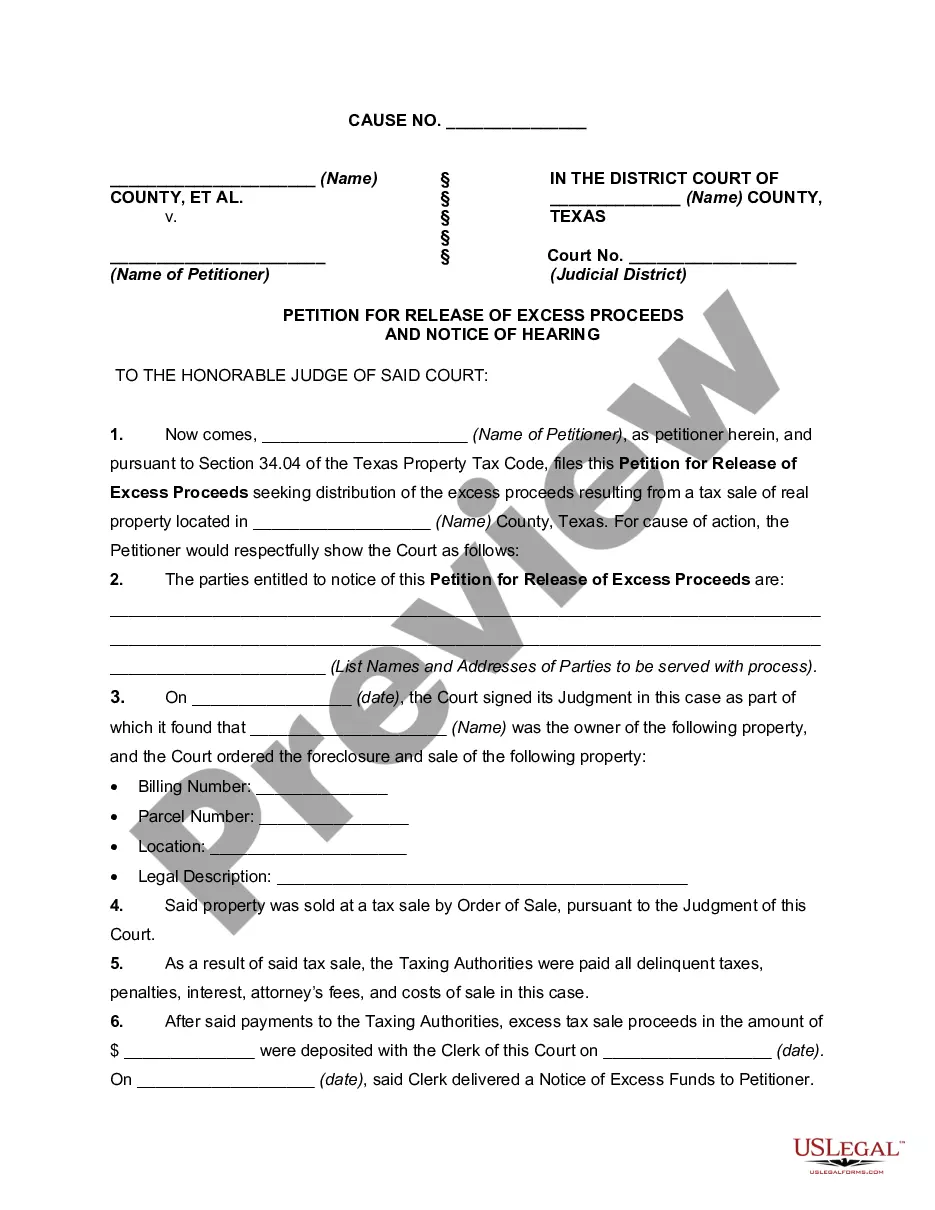


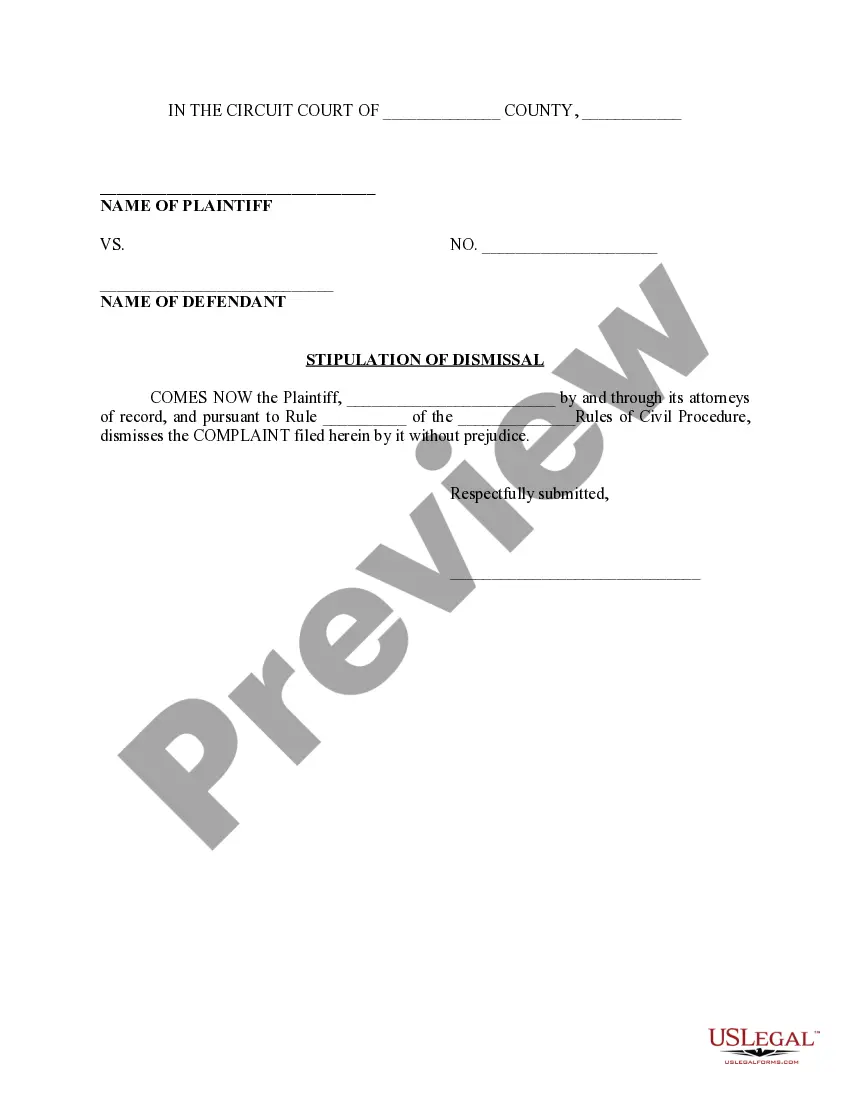
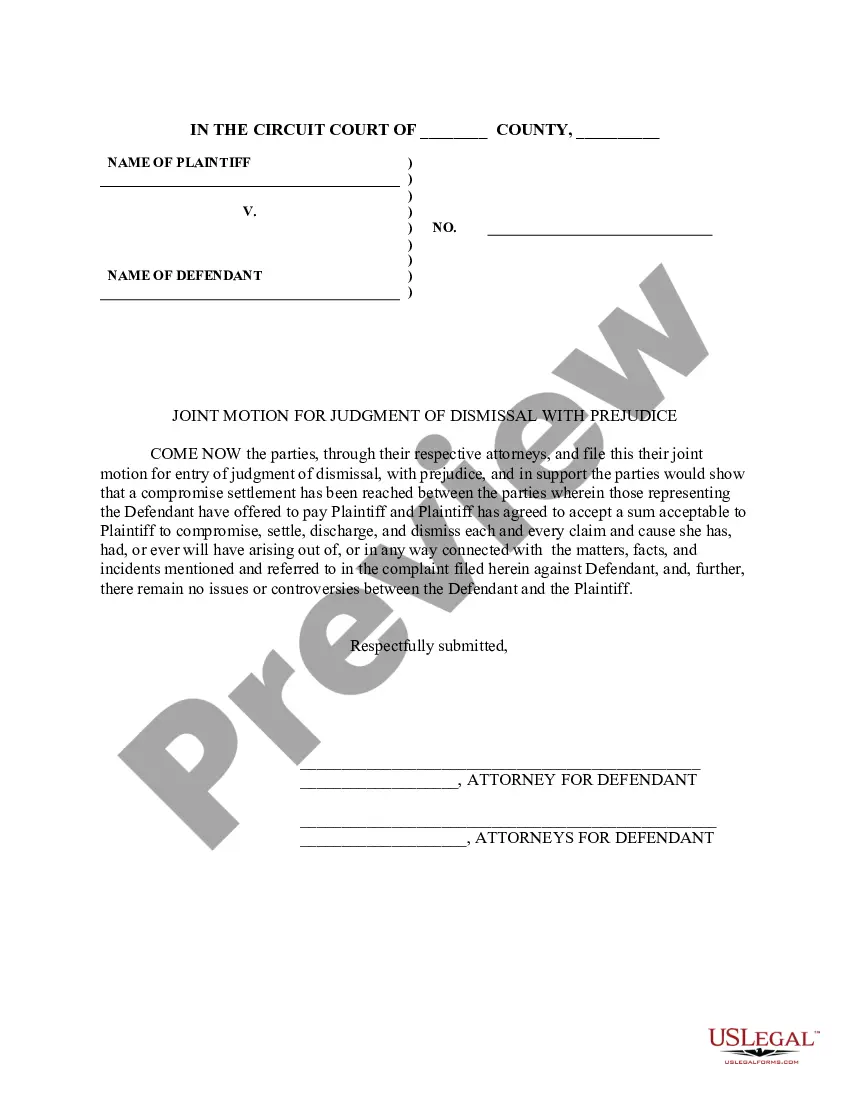
How to fill out Stipulation For Dismissal?
Legal oversight can be daunting, even for the most adept professionals.
When you are looking for a Rule Complaint Procedure For Disparate Impact Eeoc and don't have the time to devote to finding the correct and updated version, the procedures may be stressful.
Access specific legal and business forms for your state or county. US Legal Forms covers all your requirements, from personal to corporate documentation, in one convenient location.
Utilize sophisticated tools to fill out and manage your Rule Complaint Procedure For Disparate Impact Eeoc.
Here are the steps to follow after obtaining the form you need: Verify this is the correct form by viewing it and reading its description. Confirm that the template is valid in your state or county. Click Buy Now when you are prepared. Choose a subscription plan. Select the format you need, and Download, complete, sign, print and send your documents. Benefit from the US Legal Forms online catalog, backed by 25 years of experience and reliability. Transform your daily document management into a seamless and user-friendly process today.
- Tap into a valuable resource collection of articles, guides, handbooks, and materials relevant to your situation and requirements.
- Save time and effort searching for the documents you need, and leverage US Legal Forms’ advanced search and Review tool to obtain Rule Complaint Procedure For Disparate Impact Eeoc.
- If you possess a membership, Log Into your US Legal Forms account, search for the form, and download it.
- Check the My documents tab to locate the documents you have previously saved and to manage your folders according to your preferences.
- If you are new to US Legal Forms, register a free account and gain unlimited access to all the platform's advantages.
- A comprehensive online form catalog could be a transformative solution for anyone looking to manage these matters efficiently.
- US Legal Forms stands as a front-runner in digital legal documents, with more than 85,000 state-specific legal forms available at your convenience.
- With US Legal Forms, you can.
Form popularity
FAQ
For example, testing all applicants and using results from that test that will unintentionally eliminate certain minority applicants disproportionately is disparate impact.
Examples of disparate treatments in business. Examples of disparate treatment discriminatory practices in business include: Hiring on the basis of strength to favor male gender over female gender employees, even if there is no business necessity in the job for heavy lifting.
Disparate impact occurs when seemingly neutral policy or practice negatively impacts people of a protected class. Unlike disparate treatment, disparate impact can be unintentional, but that doesn't mean it isn't unlawful employment discrimination.
Disparate impact (also ?adverse impact?) commonly refers to unintentional discriminatory practice, whereas disparate treatment (also ?adverse treatment?) refers to intentional discriminatory practice.
Example of disparate treatment: providing higher pay to men than women for performing the same job (intentional discrimination) Example of disparate impact: hiring more men than women as construction workers as a result of physical height or strength (unintentional discrimination).