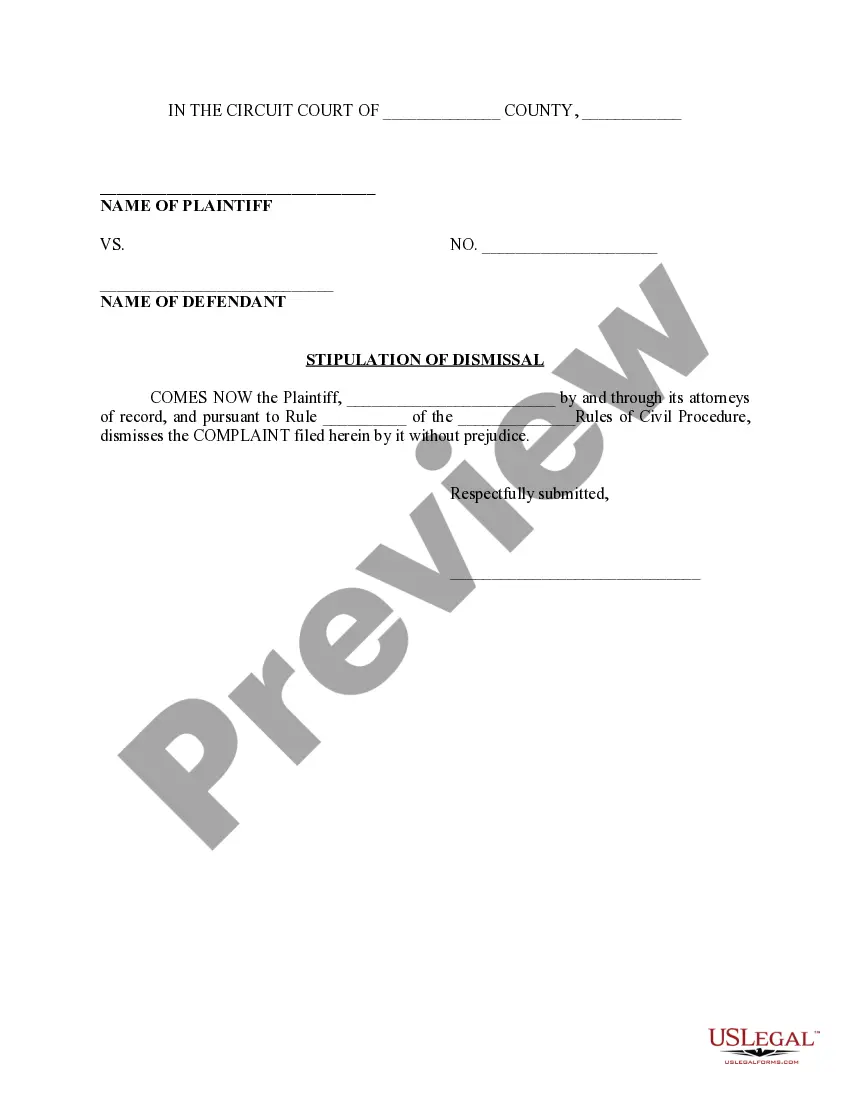
Order For Dismissal Form Without Prejudice Divorce
Description
Get your form ready online
Our built-in tools help you complete, sign, share, and store your documents in one place.
Make edits, fill in missing information, and update formatting in US Legal Forms—just like you would in MS Word.
Download a copy, print it, send it by email, or mail it via USPS—whatever works best for your next step.
Sign and collect signatures with our SignNow integration. Send to multiple recipients, set reminders, and more. Go Premium to unlock E-Sign.
If this form requires notarization, complete it online through a secure video call—no need to meet a notary in person or wait for an appointment.
We protect your documents and personal data by following strict security and privacy standards.

Make edits, fill in missing information, and update formatting in US Legal Forms—just like you would in MS Word.

Download a copy, print it, send it by email, or mail it via USPS—whatever works best for your next step.

Sign and collect signatures with our SignNow integration. Send to multiple recipients, set reminders, and more. Go Premium to unlock E-Sign.

If this form requires notarization, complete it online through a secure video call—no need to meet a notary in person or wait for an appointment.

We protect your documents and personal data by following strict security and privacy standards.
Looking for another form?






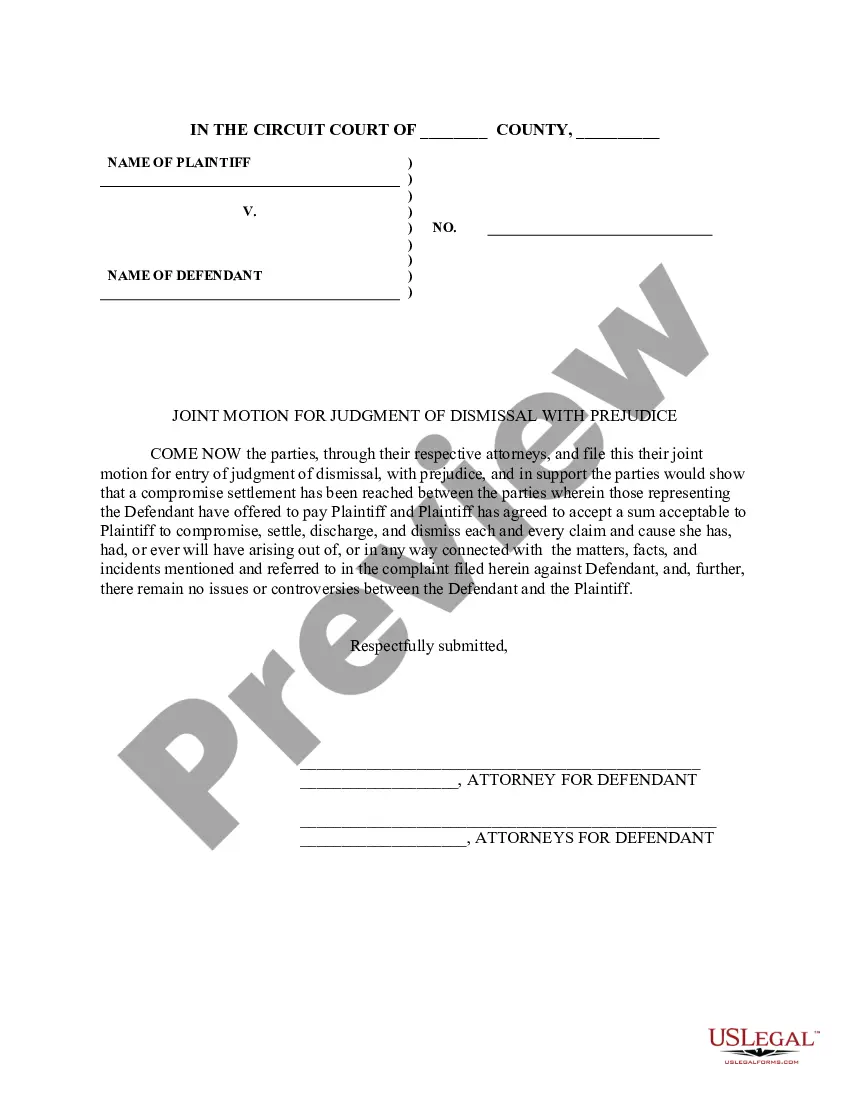
How to fill out Stipulation For Dismissal?
Legal documents handling can be daunting, even for experienced professionals.
When you are looking for an Order For Dismissal Form Without Prejudice Divorce and don’t have the time to spend searching for the correct and current version, the process can become stressful.
US Legal Forms meets any requirements you may have, from personal to business documents, all in one place.
Utilize advanced tools to complete and manage your Order For Dismissal Form Without Prejudice Divorce.
Below are the steps to follow after accessing the form you need: Verify that this is the correct form by previewing it and reviewing its details. Ensure that the template is accepted in your state or county. Click Buy Now when you are ready. Choose a subscription plan. Select the format you prefer, and Download, complete, sign, print, and send your document. Take advantage of the US Legal Forms online catalogue, backed by 25 years of expertise and reliability. Transform your daily document management into a seamless and user-friendly experience today.
- Gain access to a repository of articles, guides, and resources related to your situation and needs.
- Save time and effort searching for the documents you need, and use US Legal Forms’ enhanced search and Preview feature to locate Order For Dismissal Form Without Prejudice Divorce and obtain it.
- If you hold a membership, Log In to your US Legal Forms account, search for the form, and download it.
- Check the My documents section to view the documents you have previously saved and organize your files as needed.
- If it is your first time with US Legal Forms, create a free account and gain unlimited access to all the platform's benefits.
- A comprehensive online form repository could be a transformative tool for anyone aiming to manage these matters effectively.
- US Legal Forms is a leading provider in online legal documents, offering over 85,000 state-specific legal forms available to you at any time.
- With US Legal Forms, you can access legal and business forms specific to your state or county.
Form popularity
FAQ
?With prejudice? means that you cannot re-file your case ever. ?Without prejudice? means that you can re-file your case at a later date (as long as you are still within the statute of limitations).
California Request for Dismissal -- Form CIV-110 - YouTube YouTube Start of suggested clip End of suggested clip Since. I am an attorney I'm gonna put my state bar number. And I'm gonna put the name of my firm.MoreSince. I am an attorney I'm gonna put my state bar number. And I'm gonna put the name of my firm. And.
A case dismissed with prejudice is over and done with, once and for all, and can't be brought back to court. A case dismissed without prejudice means the opposite. It's not dismissed forever. The person whose case it is can try again.
The person who initially filed a petition for divorce, known as the petitioner, must submit a request to the court to withdraw the divorce papers. This request is typically made in the form of a written document called a "Motion to Dismiss" or "Notice of Voluntary Dismissal," depending on the state.
A court may allow a plaintiff to voluntarily withdraw from the suit through a Rule 41(a) dismissal without prejudice if the plaintiff would suffer hardship from continuing the suit. Also, under Rule 37(b)(2), a court may dismiss without prejudice to sanction a party acting in bad faith.