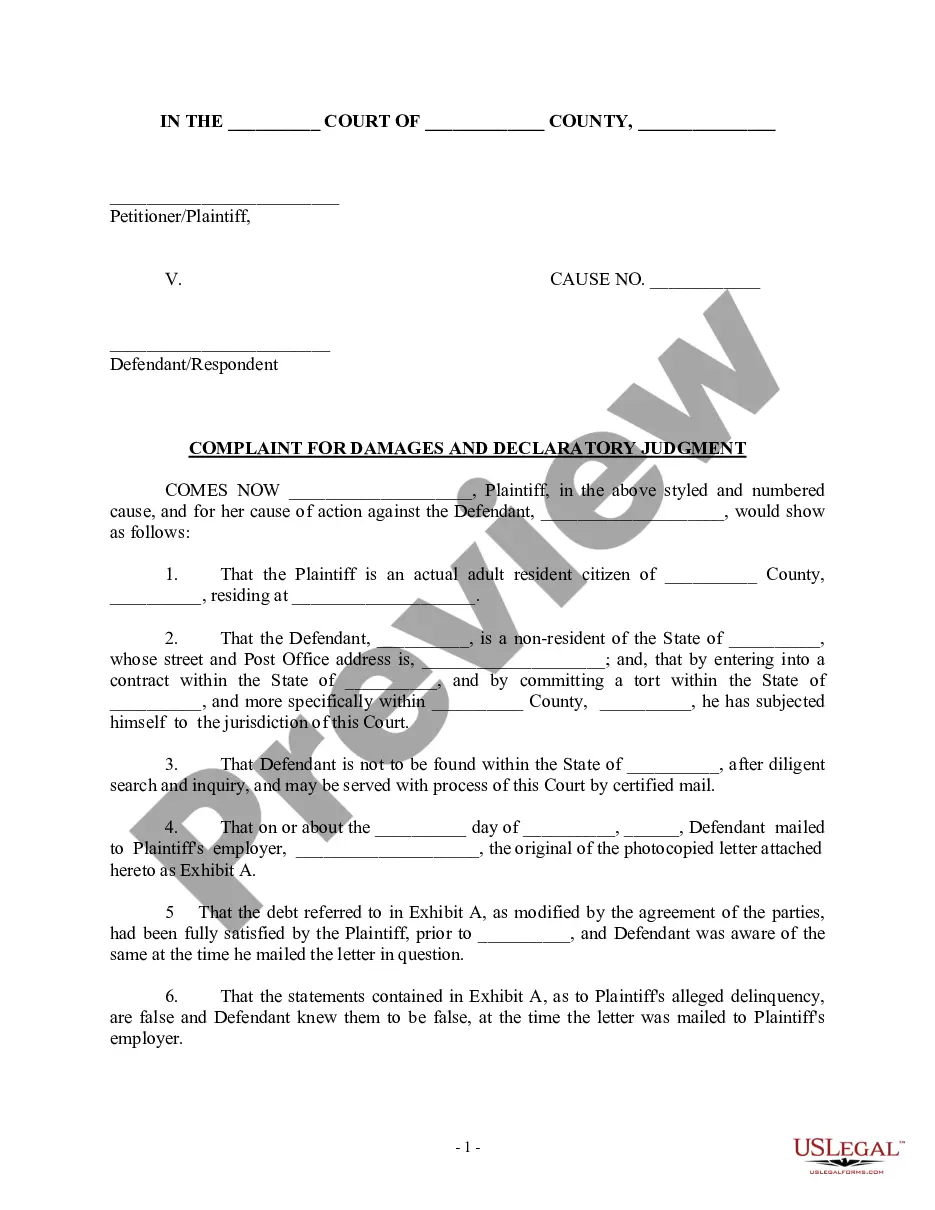
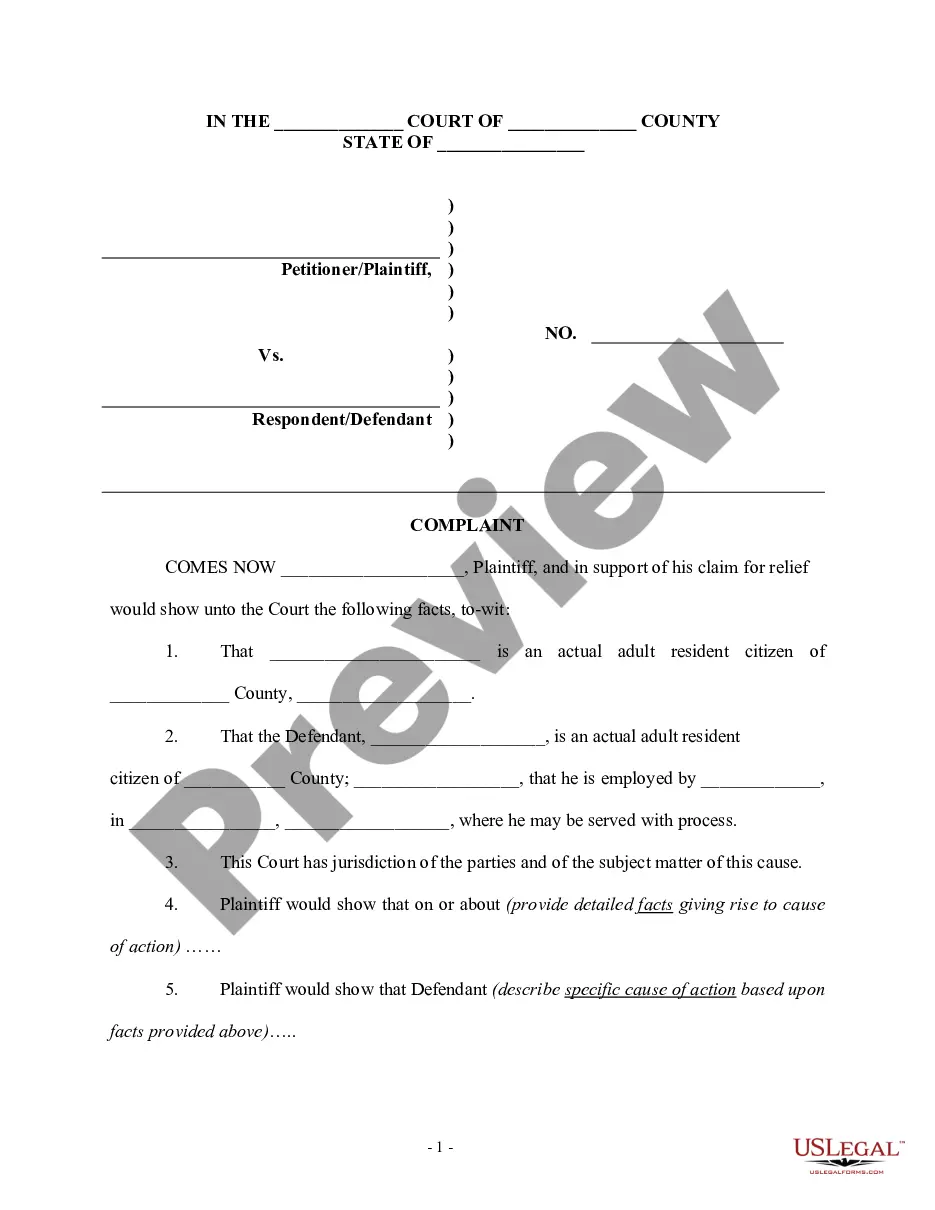
Sample Motion For Declaratory Judgment
Description

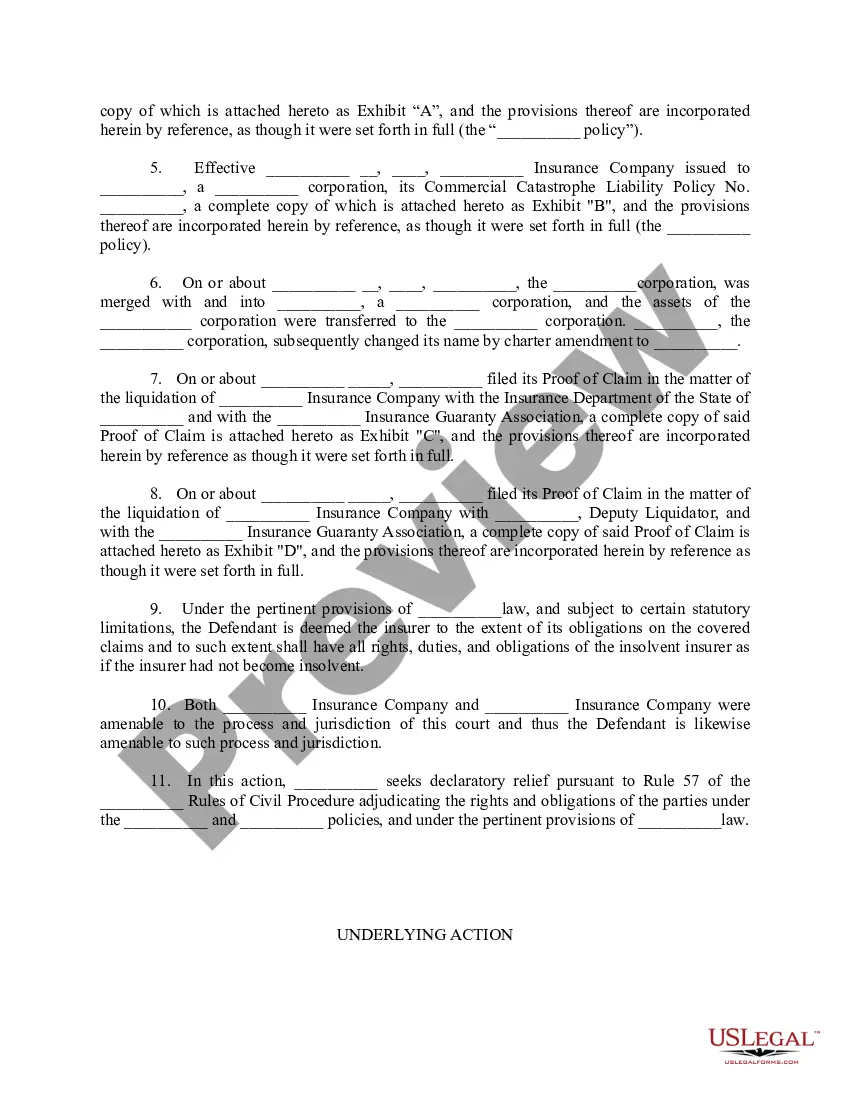
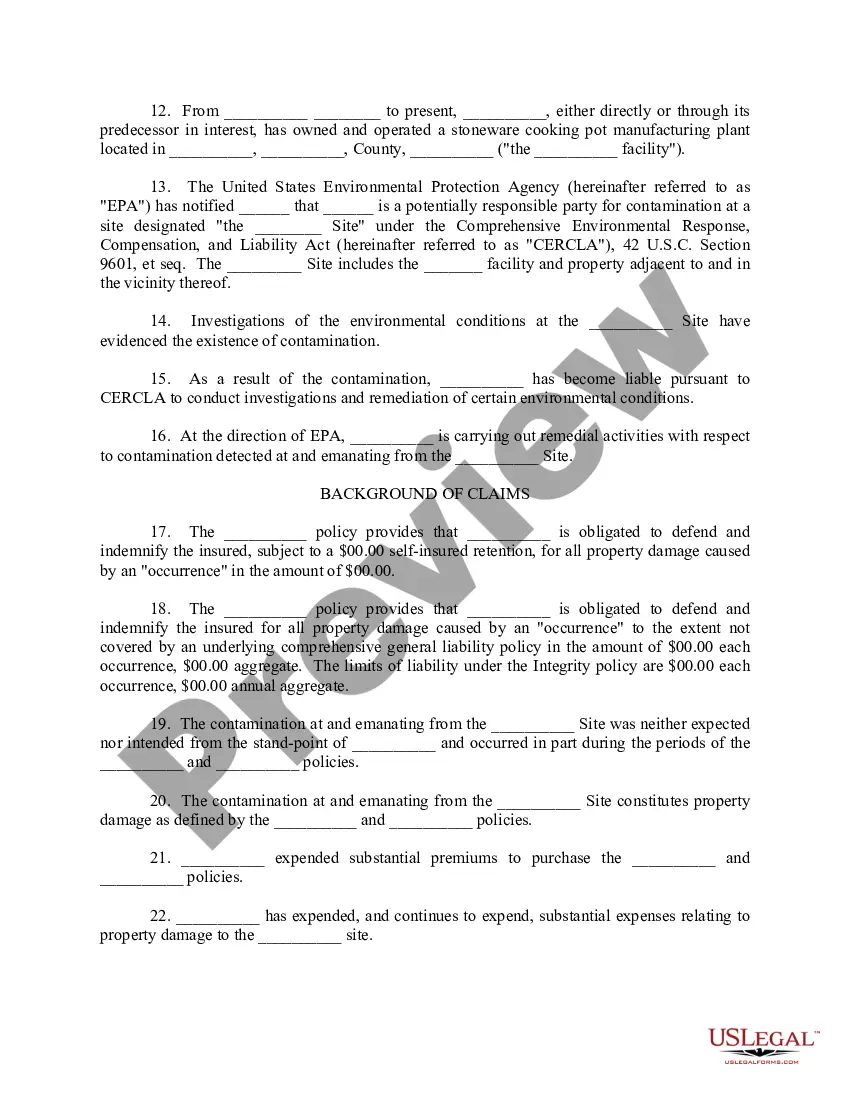
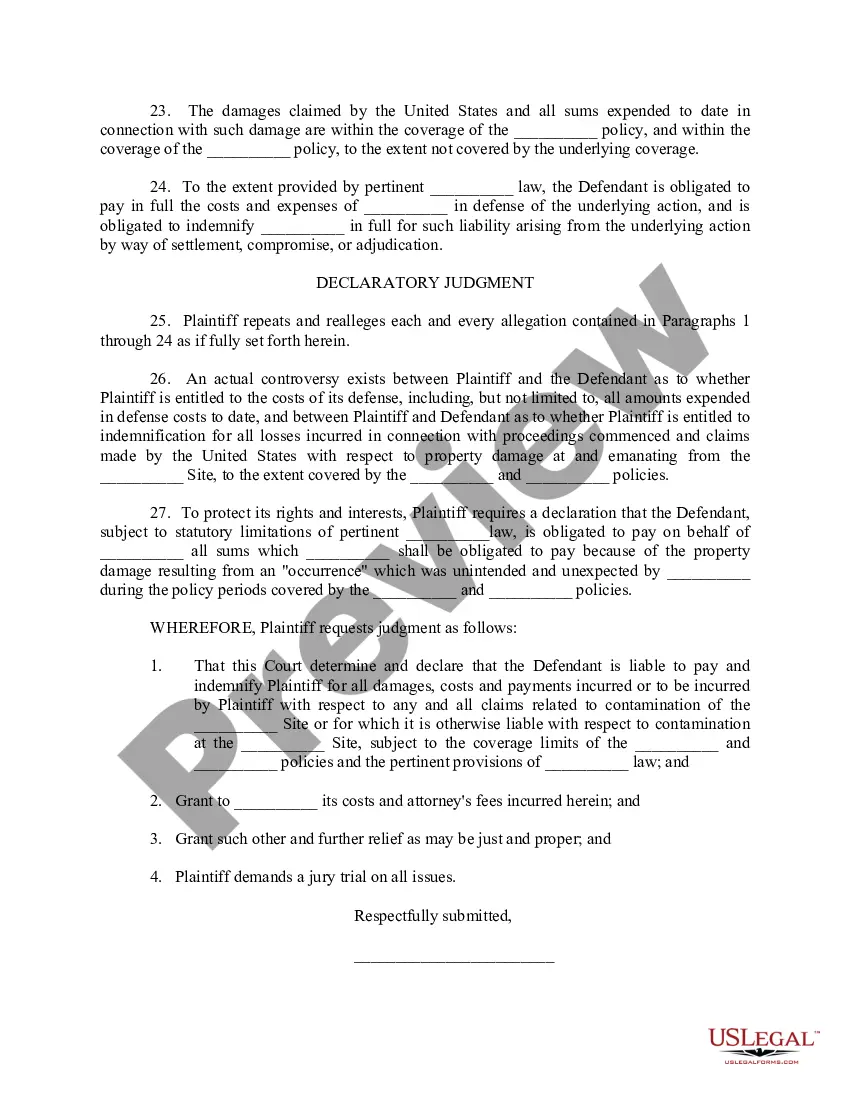

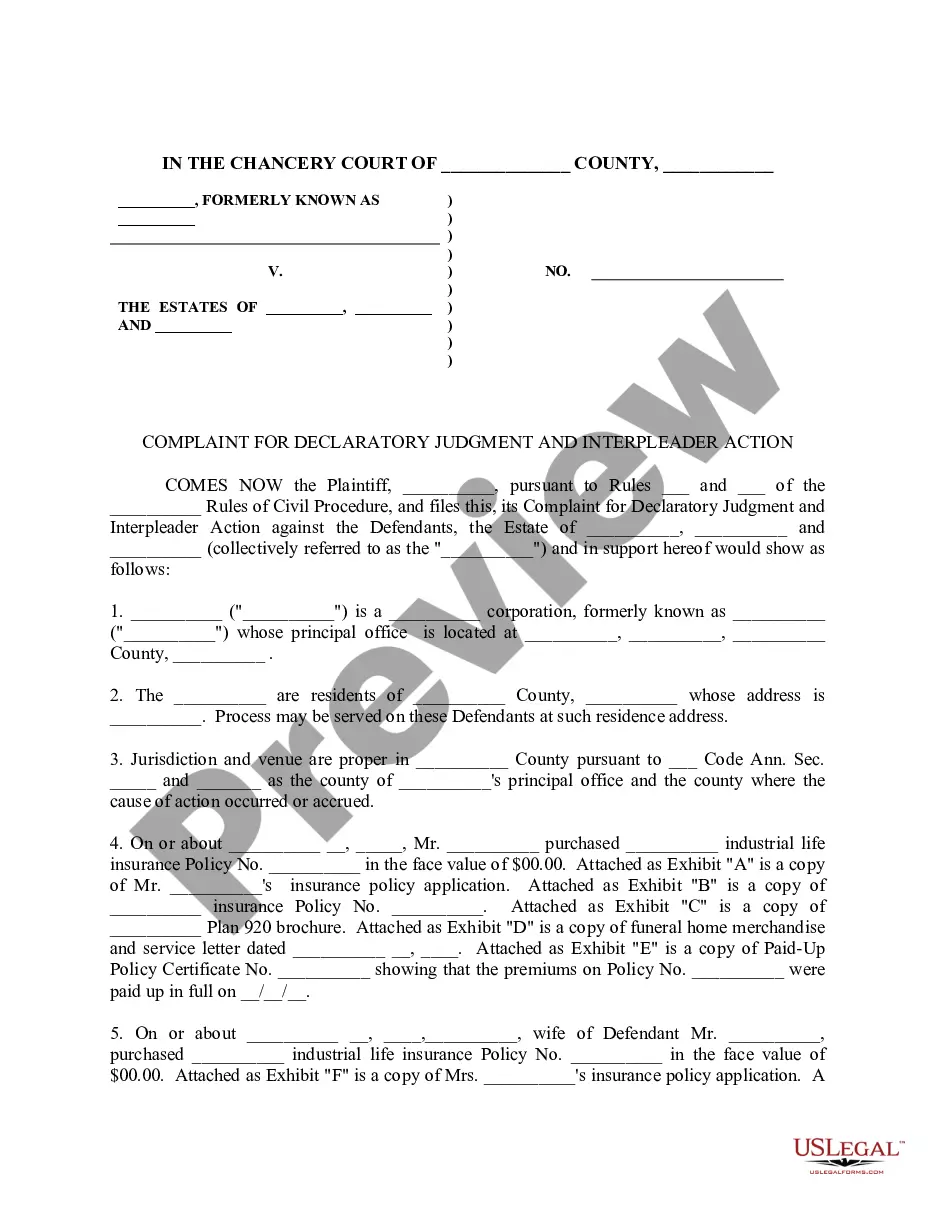


Get your form ready online
Our built-in tools help you complete, sign, share, and store your documents in one place.
Make edits, fill in missing information, and update formatting in US Legal Forms—just like you would in MS Word.
Download a copy, print it, send it by email, or mail it via USPS—whatever works best for your next step.
Sign and collect signatures with our SignNow integration. Send to multiple recipients, set reminders, and more. Go Premium to unlock E-Sign.
If this form requires notarization, complete it online through a secure video call—no need to meet a notary in person or wait for an appointment.
We protect your documents and personal data by following strict security and privacy standards.

Make edits, fill in missing information, and update formatting in US Legal Forms—just like you would in MS Word.

Download a copy, print it, send it by email, or mail it via USPS—whatever works best for your next step.

Sign and collect signatures with our SignNow integration. Send to multiple recipients, set reminders, and more. Go Premium to unlock E-Sign.

If this form requires notarization, complete it online through a secure video call—no need to meet a notary in person or wait for an appointment.

We protect your documents and personal data by following strict security and privacy standards.
Looking for another form?
How to fill out Complaint For Declaratory Judgment?
Discovering a reliable location to obtain the latest and suitable legal templates is part of the challenge of navigating bureaucracy.
Selecting the appropriate legal documents requires precision and careful attention, which is why it is crucial to source Sample Motion For Declaratory Judgment exclusively from dependable providers, such as US Legal Forms. An inaccurate template can lead to wasted time and hinder your current situation. With US Legal Forms, your concerns are minimal.
Once you have the form saved on your device, you can either edit it using the editor or print it out to fill it in manually. Eliminate the hassle that comes with your legal documentation. Explore the comprehensive US Legal Forms database to discover legal templates, assess their applicability to your situation, and download them immediately.
- Use the catalog navigation or search bar to find your template.
- Examine the document’s description to determine if it fulfills the criteria of your state and county.
- Check the document preview, if available, to confirm this template is indeed what you seek.
- Return to the search and locate the correct template if the Sample Motion For Declaratory Judgment does not meet your needs.
- Once you are certain about the document's accuracy, download it.
- If you are a registered user, click Log in to verify and access your selected documents in My documents.
- If you have not created an account yet, click Buy now to purchase the form.
- Select the pricing option that fits your requirements.
- Proceed with registration to finalize your order.
- Complete your transaction by selecting a payment method (credit card or PayPal).
- Choose the document format for downloading the Sample Motion For Declaratory Judgment.
Form popularity
FAQ
To secure a declaratory judgment, you must demonstrate an actual dispute between parties with standing to sue. This involves submitting a detailed sample motion for declaratory judgment that outlines the legal issue at hand and your interest in the outcome. The court needs sufficient information to determine if a justiciable controversy exists. It's advisable to utilize platforms like US Legal Forms for access to templates and guidance on crafting your motion effectively.
Copyrights, which cover works of authorship, such as books, logos and software, is part of intellectual property protection, as are patents, which protect inventions. Other types of IP include trademarks, designs and trade secrets.
To obtain a patent in the U.S., the inventor must file a patent application with the United States Patent and Trademark Office (USPTO), which includes (1) a written document comprising a description and claims, (2) drawings when necessary, (3) an oath or declaration, and (4) filing, search, and examination fees.
Fees Registration of a claim in an original work of authorshipRegistration of a claim in a group of unpublished works$85Registration of a claim in a group of published photographs or a claim in a group of unpublished photographs$55Registration of a claim in a group of works published on an album of music$6524 more rows
Your rights vary by the type of intellectual property and whether you register it. For example, you do not have to register trademarks or copyrights in order to have some protection, but registration gives you more rights. Patent protection requires registration in all cases.
Intellectual property claims are legal actions brought by one party against another when a party feels its intellectual property (IP) rights have been infringed upon.
In India, there are 7 types of intellectual property rights, namely ? copyright, trademarks, patents, geographical indications, plant varieties, industrial designs and semiconductor integrated circuit layout designs.
Here are five different ways to protect your intellectual property. Register copyrights, trademarks, and patents. ... Register business, product, or domain names. ... Create confidentiality, non-disclosure, or licensing contracts for employees and partners. ... Implement security measures. ... Avoid joint ownership.
Intellectual Property Law includes patents, copyrights, trademarks, and trade secrets. All of these areas are related in that they deal with protecting products of the mind but in other ways they are very different.