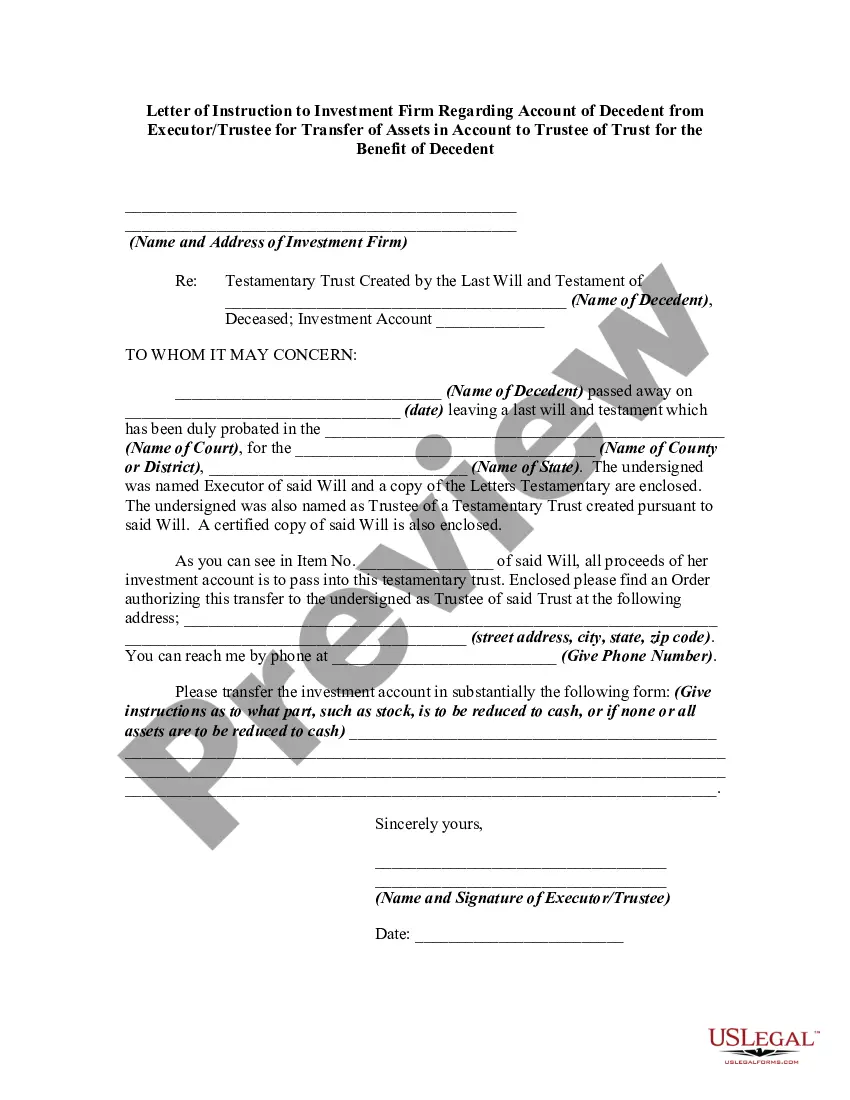
Accounts For Deceased Estate
Description

Get your form ready online
Our built-in tools help you complete, sign, share, and store your documents in one place.
Make edits, fill in missing information, and update formatting in US Legal Forms—just like you would in MS Word.
Download a copy, print it, send it by email, or mail it via USPS—whatever works best for your next step.
Sign and collect signatures with our SignNow integration. Send to multiple recipients, set reminders, and more. Go Premium to unlock E-Sign.
If this form requires notarization, complete it online through a secure video call—no need to meet a notary in person or wait for an appointment.
We protect your documents and personal data by following strict security and privacy standards.

Make edits, fill in missing information, and update formatting in US Legal Forms—just like you would in MS Word.

Download a copy, print it, send it by email, or mail it via USPS—whatever works best for your next step.

Sign and collect signatures with our SignNow integration. Send to multiple recipients, set reminders, and more. Go Premium to unlock E-Sign.

If this form requires notarization, complete it online through a secure video call—no need to meet a notary in person or wait for an appointment.

We protect your documents and personal data by following strict security and privacy standards.
Looking for another form?








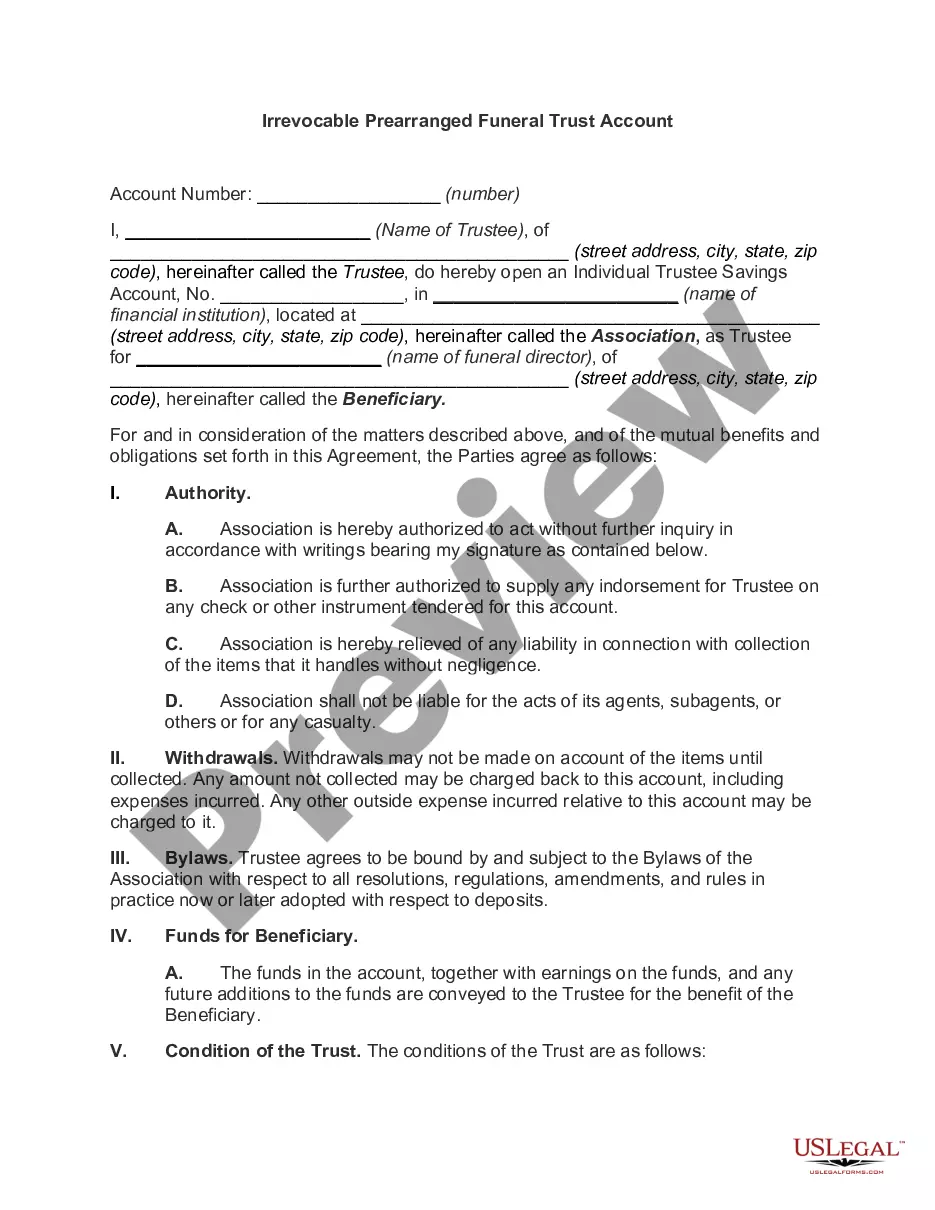
How to fill out Letter Of Instruction To Investment Firm Regarding Account Of Decedent From Executor / Trustee For Transfer Of Assets In Account To Trustee Of Trust For The Benefit Of Decedent?
Whether for professional objectives or for personal issues, everyone needs to handle legal matters at some stage in their existence. Finalizing legal documents demands meticulous focus, starting from selecting the appropriate form template.
For instance, if you choose an incorrect version of an Accounts For Deceased Estate, it will be rejected upon submission. Thus, it's vital to obtain a reliable source of legal paperwork such as US Legal Forms.
With a vast catalog from US Legal Forms available, you do not have to waste time searching for the correct template online. Take advantage of the library’s easy navigation to find the appropriate form for any situation.
- Retrieve the template you require by utilizing the search box or catalog navigation.
- Examine the form’s description to ensure it corresponds to your circumstances, state, and area.
- Select the form’s preview to view it.
- If it is the incorrect form, revert to the search mechanism to find the Accounts For Deceased Estate template you need.
- Download the template once it suits your requirements.
- If you have a US Legal Forms account, simply click Log in to retrieve previously saved templates in My documents.
- If you do not possess an account yet, you can acquire the form by clicking Buy now.
- Choose the suitable pricing option.
- Fill out the profile registration form.
- Select your payment method: either use a credit card or PayPal account.
- Indicate the document format you prefer and download the Accounts For Deceased Estate.
- Once downloaded, you can complete the form using editing software or print it and fill it out manually.
Form popularity
FAQ
Yes, it is advisable to open a separate bank account for an estate. This account helps protect the deceased's assets and allows for transparent management of funds. By using a dedicated estate account, you ensure all transactions related to accounts for deceased estate are clearly documented, making it easier for beneficiaries during the settlement process.
When selecting a bank for an estate account, look for institutions that specialize in handling estates and offer competitive fees and services. A bank with strong customer support can help address your unique needs during this sensitive time. Evaluate your options based on convenience and the ability to manage the accounts for deceased estate effectively.
To open an account for a deceased estate, you need to gather necessary documents, such as the death certificate and the will, if available. Next, select a bank that offers estate accounts, and visit a local branch to submit your application. This process allows you to manage debts and distribute assets effectively, ensuring proper handling of accounts for deceased estate.
The two-year rule for deceased estates refers to the timeframe in which a deceased person's estate must be settled. Generally, this rule means that all debts and taxes associated with the estate should be resolved within two years after the individual's passing. By adhering to this timeline, beneficiaries can efficiently manage the accounts for deceased estate and avoid potential penalties or disputes.
Yes, if the estate earns income, you will need to complete a tax return for the estate. This process is vital for settling debts and distributing assets according to the deceased’s wishes. Properly filing a tax return ensures compliance with the IRS or applicable governing authorities. Consulting US Legal Forms can provide templates and support to help you navigate completing the tax returns for deceased estate efficiently.
To create an estate account for a deceased person, you typically need a few documents, including the death certificate and a copy of the will. You should also obtain a Tax Identification Number (TIN) for the estate from the IRS. Banks and financial institutions often have specific forms and requirements, so be sure to check with your chosen institution. Setting up accounts for deceased estate properly secures the financial assets for distribution.
Yes, you must file taxes for an estate account when the estate generates income. The IRS requires that estate accounts, like any financial accounts, follow tax regulations. If the estate earns income over a specific amount, you will need to file a tax return for the deceased estate. This ensures compliance and helps manage the financial responsibilities of the estate.
Opening a deceased estate bank account requires specific steps to ensure proper management of the estate's finances. First, obtain the necessary paperwork, including the death certificate and letters of administration or probate documents. Then, approach a bank to inquire about their requirements for setting up accounts for deceased estate. Many banks offer guidance throughout this process, helping you establish a dedicated account for managing the estate.
Preparing accounting for an estate involves documenting all assets, debts, and expenses related to the deceased. Start by gathering financial records, property appraisals, and any outstanding invoices. You can also utilize online platforms like uslegalforms to help streamline this process, providing templates and guidance. Thorough accounting ensures transparency and accuracy in managing the estate.
Setting up accounts for a deceased estate is often necessary to manage the financial affairs of the deceased. These accounts allow you to collect assets and settle debts effectively. Additionally, many banks require that an estate account be opened to handle the funds properly, ensuring compliance with legal obligations. Therefore, creating an estate account can simplify the process of administering the estate.