Trust Irrevocable Agreement With The Owner
Description


Get your form ready online
Our built-in tools help you complete, sign, share, and store your documents in one place.
Make edits, fill in missing information, and update formatting in US Legal Forms—just like you would in MS Word.
Download a copy, print it, send it by email, or mail it via USPS—whatever works best for your next step.
Sign and collect signatures with our SignNow integration. Send to multiple recipients, set reminders, and more. Go Premium to unlock E-Sign.
If this form requires notarization, complete it online through a secure video call—no need to meet a notary in person or wait for an appointment.
We protect your documents and personal data by following strict security and privacy standards.

Make edits, fill in missing information, and update formatting in US Legal Forms—just like you would in MS Word.

Download a copy, print it, send it by email, or mail it via USPS—whatever works best for your next step.

Sign and collect signatures with our SignNow integration. Send to multiple recipients, set reminders, and more. Go Premium to unlock E-Sign.

If this form requires notarization, complete it online through a secure video call—no need to meet a notary in person or wait for an appointment.

We protect your documents and personal data by following strict security and privacy standards.
Looking for another form?










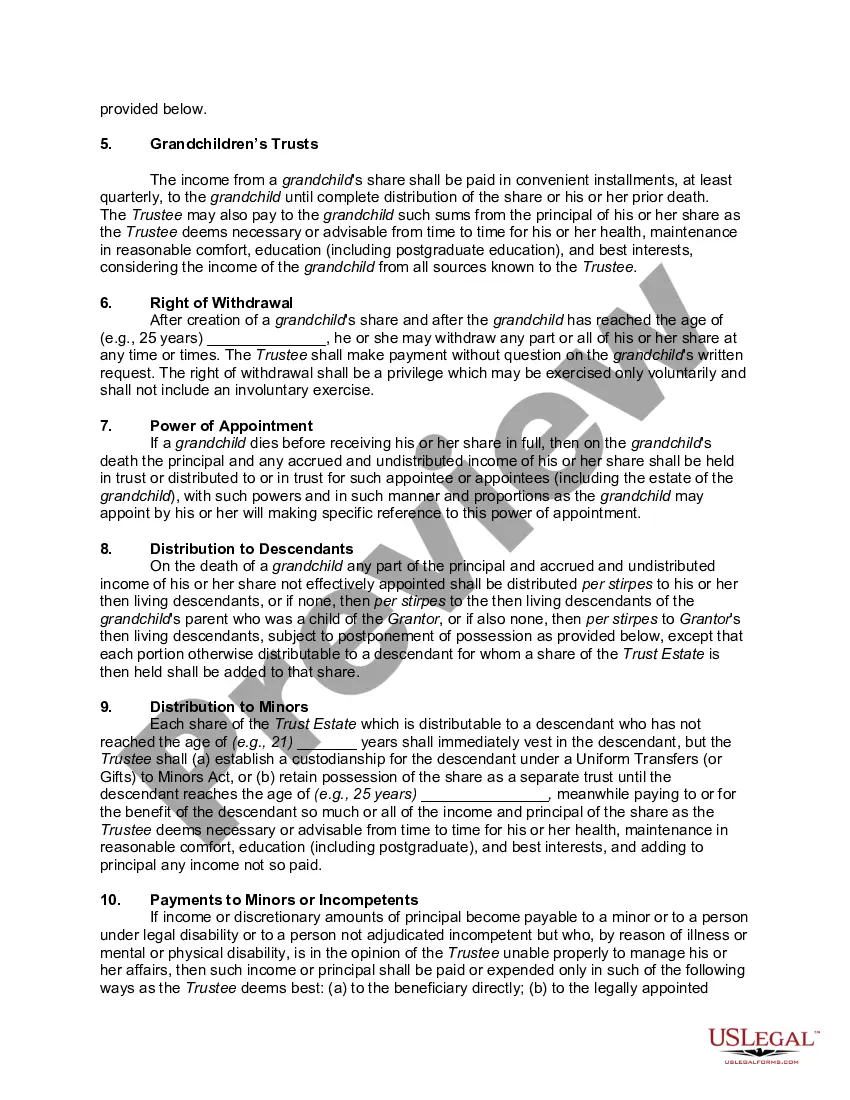
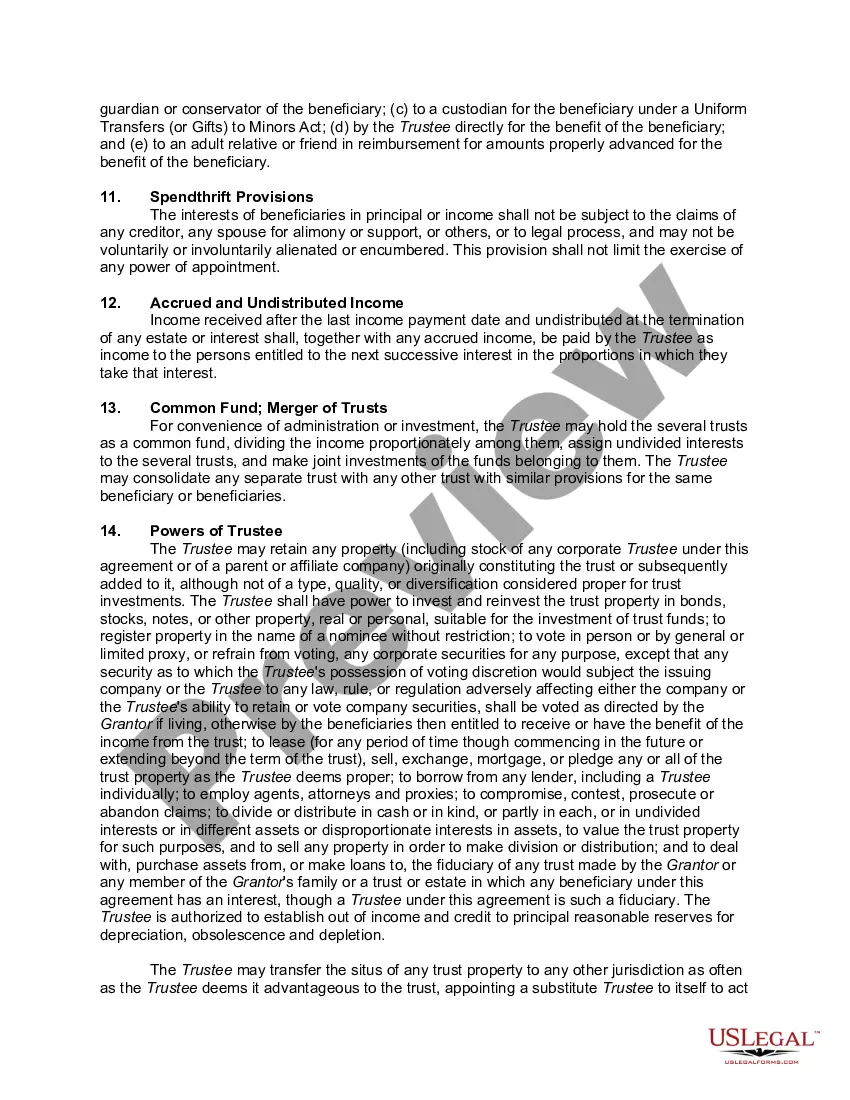
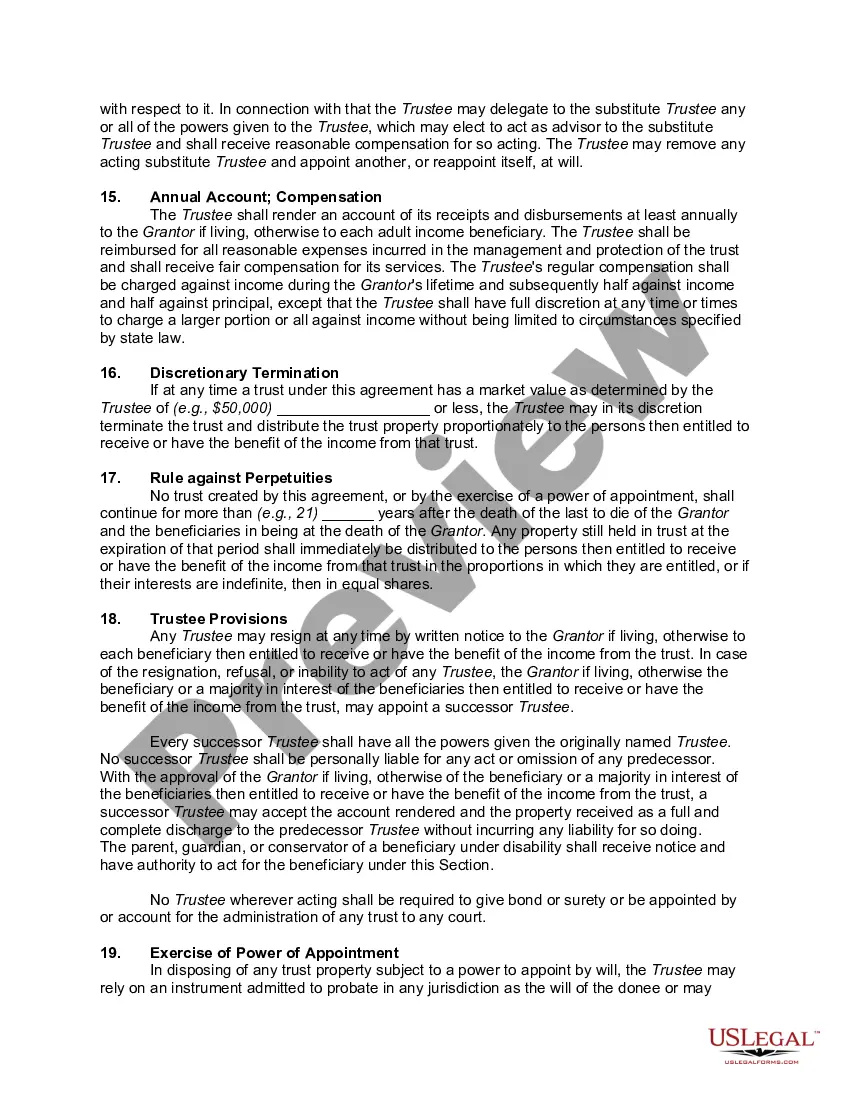
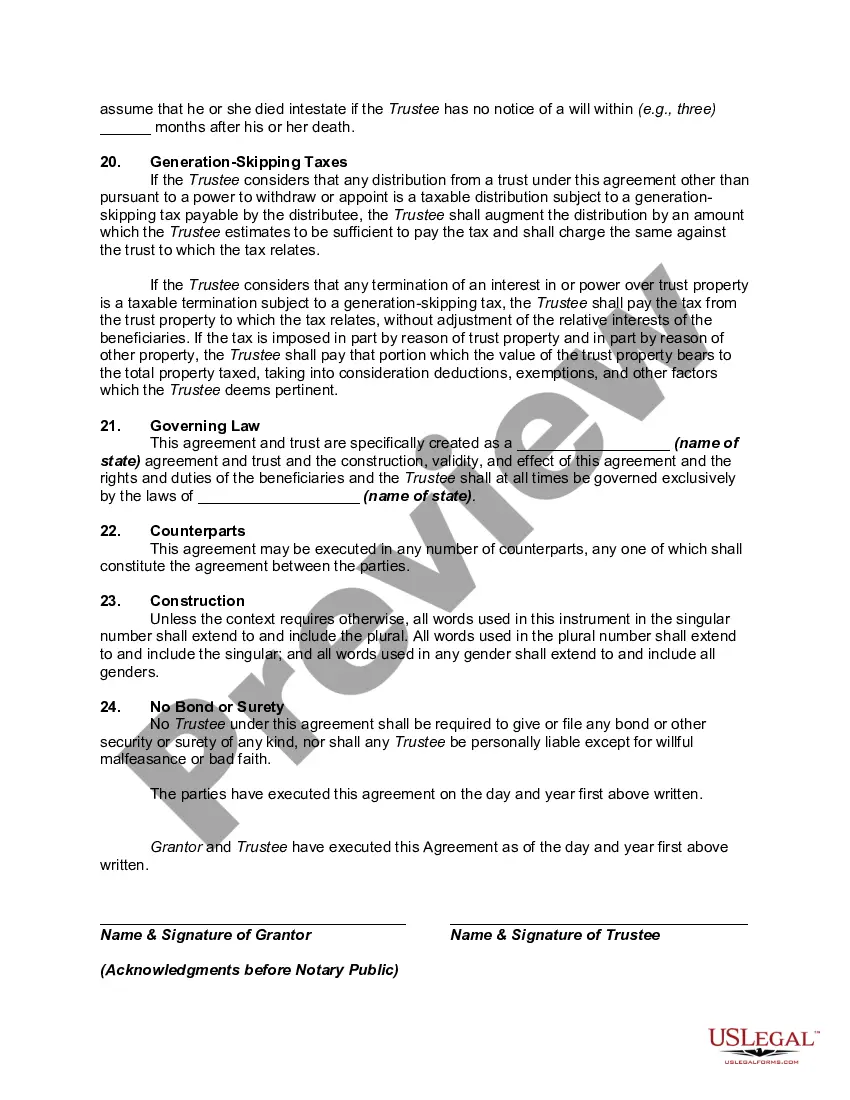
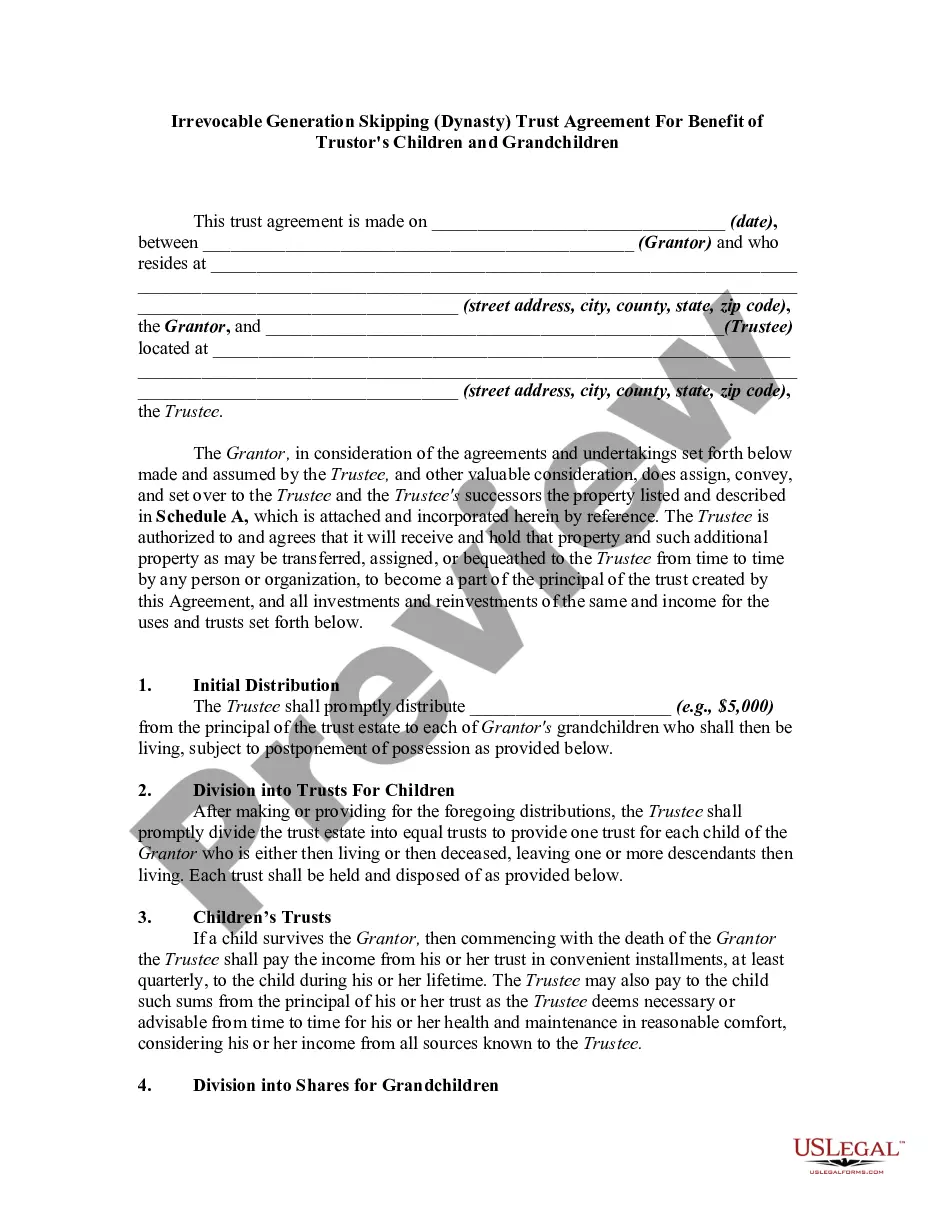
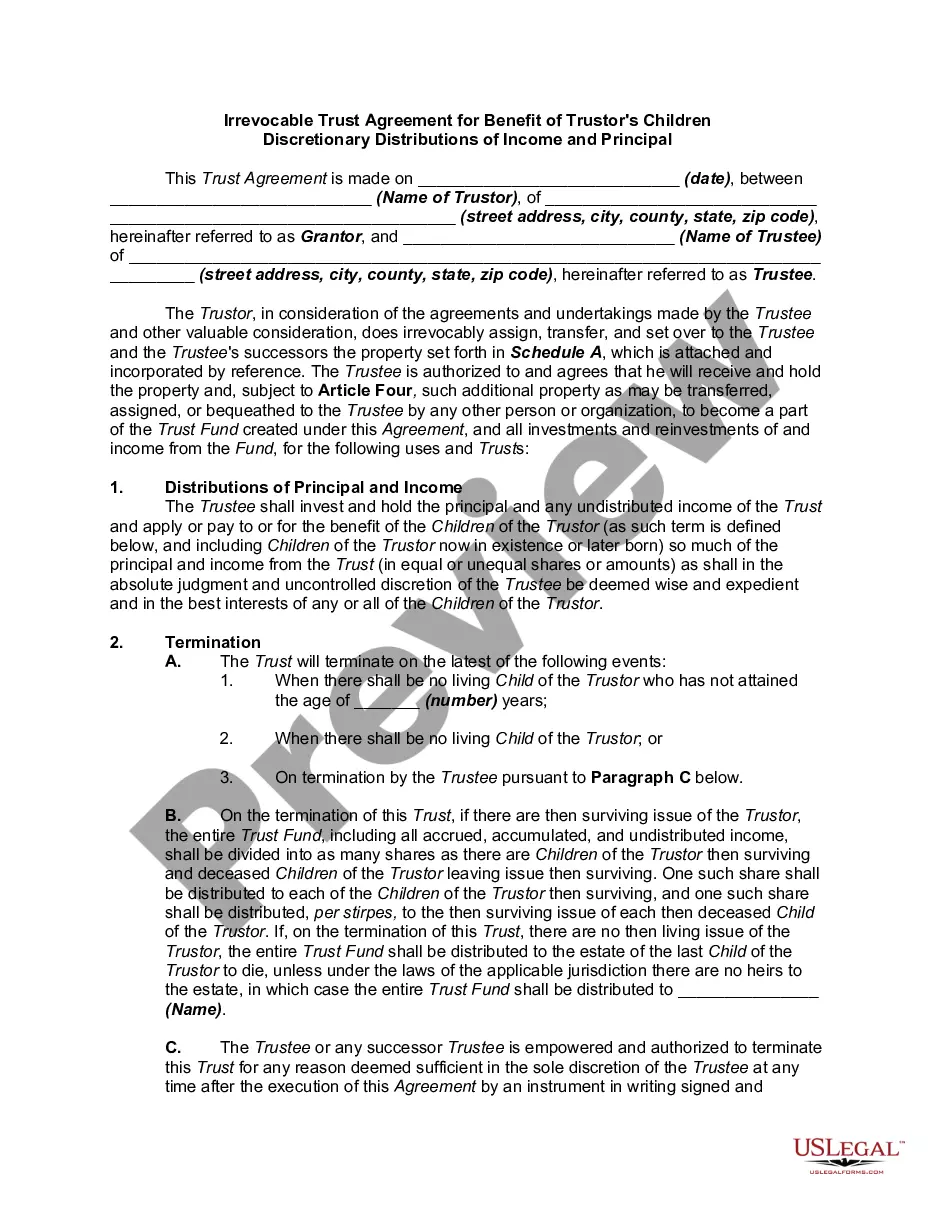
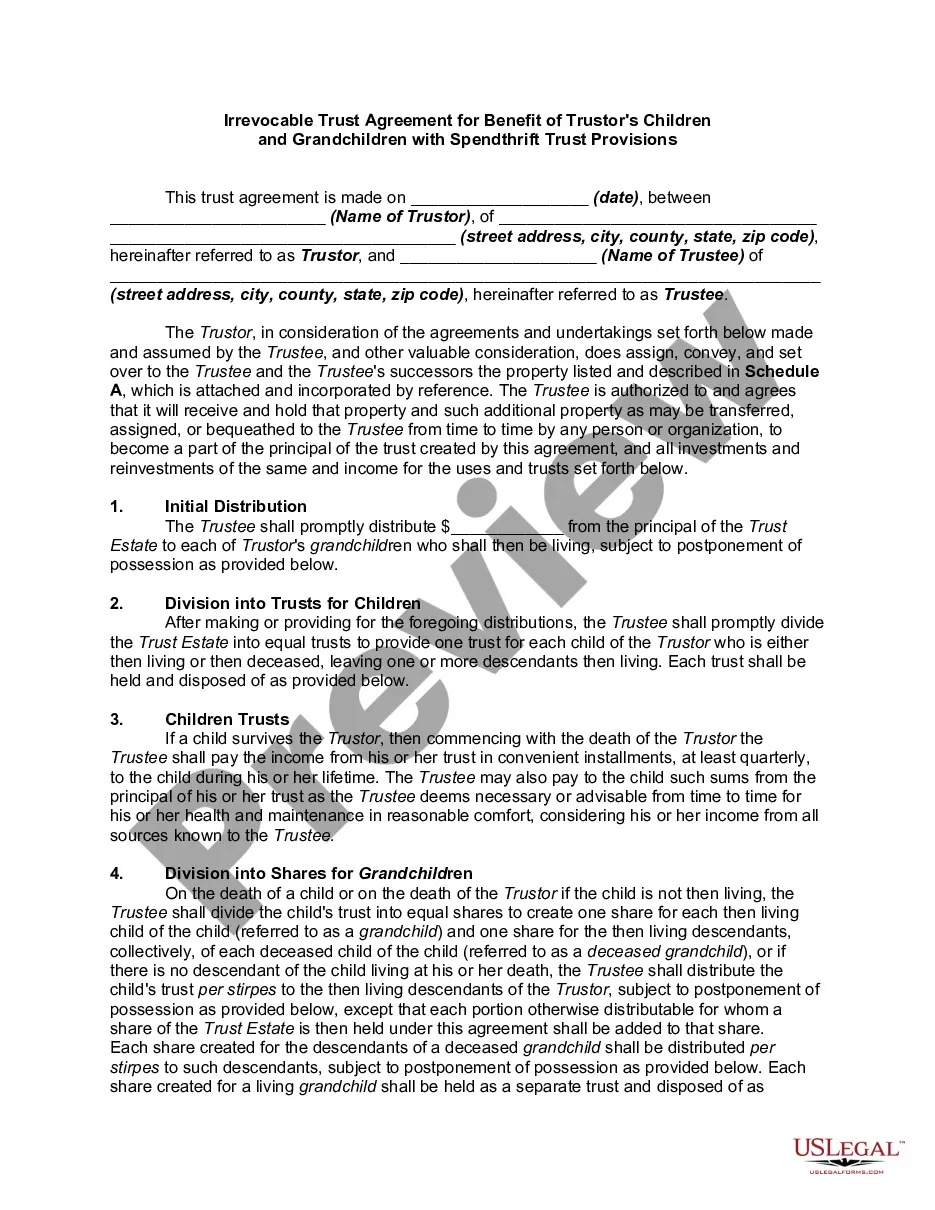
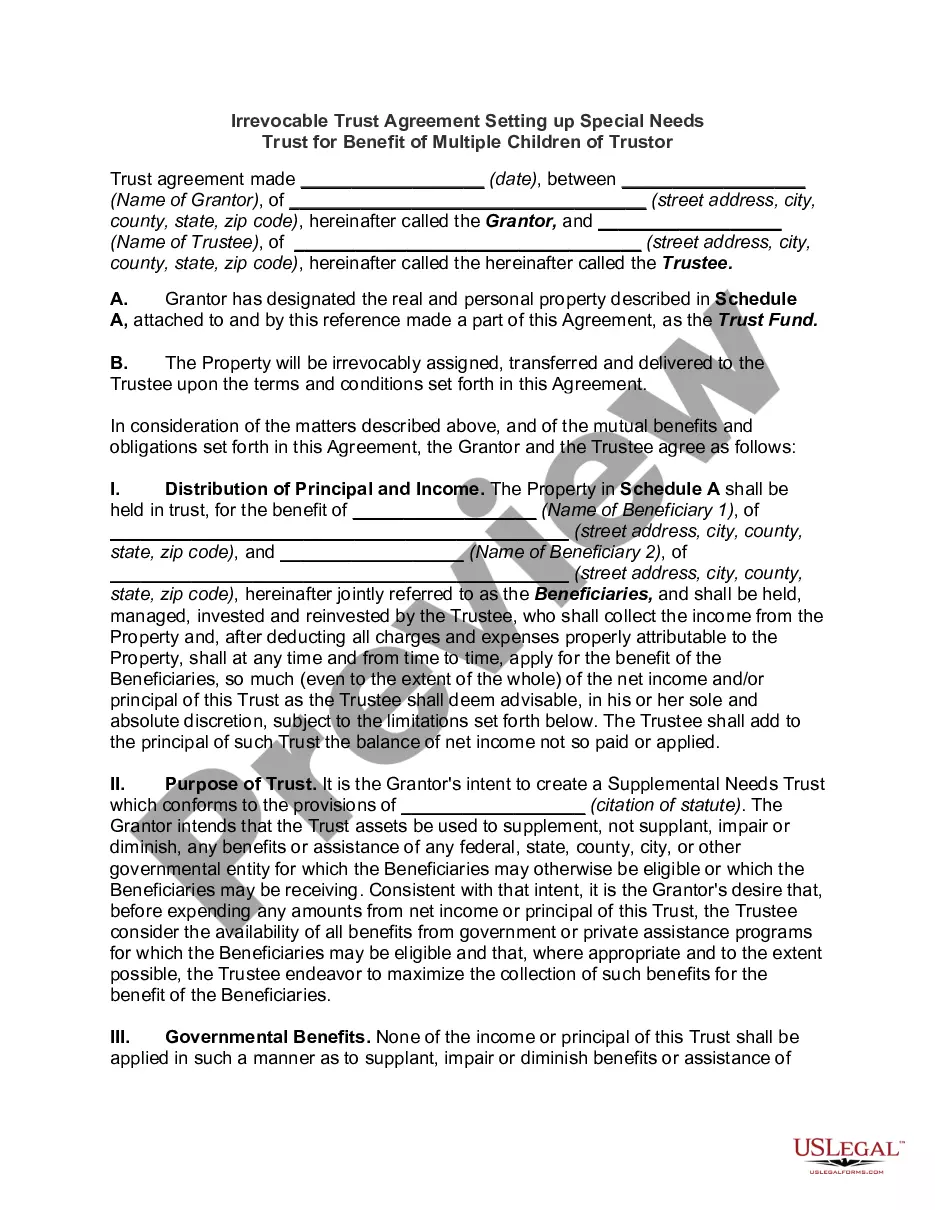
How to fill out Irrevocable Trust Agreement For Benefit Of Trustor's Children And Grandchildren?
- Start by previewing the form description to ensure it meets your specific requirements and adheres to legal regulations in your area.
- If the initial form does not suit your needs, utilize the search feature to find an alternative template within the extensive library.
- Once you've found the appropriate document, select the 'Buy Now' option and choose the subscription plan that best fits your legal needs.
- Create your account by providing necessary details, allowing you to access and manage your legal documents securely.
- Complete your purchase using your credit card or PayPal to finalize your subscription.
- Download your document directly to your device, and you'll have access to it anytime under the 'My Forms' section of your profile.
By following these straightforward steps, you can effectively leverage US Legal Forms' extensive library to secure a trust irrevocable agreement with the owner, empowering you to address your legal requirements confidently.
Don't delay; start your journey towards legally sound documentation today with US Legal Forms!
Form popularity
FAQ
In an irrevocable trust, the trust itself owns the house, not the individual who created the trust. This means that the grantor no longer has legal ownership or the ability to sell or modify the property. This structure can provide significant legal protections while aligning with your estate planning goals. Engaging in a trust irrevocable agreement with the owner ensures clarity about ownership and responsibilities.
The assets of an irrevocable trust are controlled by a designated trustee, who manages and administers the trust according to the terms outlined in the trust document. The trustee must act in the best interests of the beneficiaries while ensuring compliance with trust laws. By choosing the right trustee, you can facilitate a successful outcome for your trust irrevocable agreement with the owner.
When you place a house in an irrevocable trust, the trust becomes the legal owner of the property. This action provides protections against creditors and can simplify the process of transferring your home to beneficiaries later. While you lose control over the property, you gain peace of mind regarding estate planning. Establishing a trust irrevocable agreement with the owner clarifies ownership and intentions.
An irrevocable trust agreement is a legal document that permanently transfers assets to a trust, making it impossible for the grantor to alter or dissolve the trust. This type of trust offers benefits such as asset protection and estate tax advantages. As such, it's essential to draft this agreement carefully, considering your long-term objectives and benefits through a trust irrevocable agreement with the owner.
The basis of a house in an irrevocable trust is generally its fair market value at the time the trust was created. This value determines capital gains tax if the property is sold later. A lower basis may benefit the owner and heirs regarding tax implications. Exploring options through a trust irrevocable agreement with the owner can aid in optimizing this basis.
Generally, the IRS cannot seize your house if it is held in an irrevocable trust. This trust structure protects your home from creditors and legal claims, including those from the IRS. However, tax debts incurred before establishing the trust could still lead to IRS action. Understanding this aspect is crucial when creating a trust irrevocable agreement with the owner.
A family trust may lead to complexities, especially in managing family relationships. If not established with a clear trust irrevocable agreement with the owner, it can generate misunderstandings among family members. Additionally, ongoing management and potential legal fees can create burdens. It’s vital to approach the creation of a family trust thoughtfully.
One significant downfall of having a trust is that it can restrict flexibility. Once created, a trust irrevocable agreement with the owner limits the ability to alter or dissolve the trust without legal action. This rigidity might not align with changing family dynamics or financial situations. Therefore, it's essential to plan carefully before establishing a trust.
Filling out an irrevocable trust requires careful attention to detail. You will need to identify all assets, beneficiaries, and the terms under which the trust will operate. Utilizing a trust irrevocable agreement with the owner ensures that every aspect is legally binding and clear. For assistance, consider using resources from UsLegalForms to streamline the process.
One downside is the loss of control over the assets once they are placed in a trust. With a trust irrevocable agreement with the owner, the grantor cannot easily change the terms or regain full access to the assets. Additionally, there can be ongoing administrative costs and responsibilities to consider. It's important to weigh these factors before deciding.