Trust Irrevocable Agreement With Others
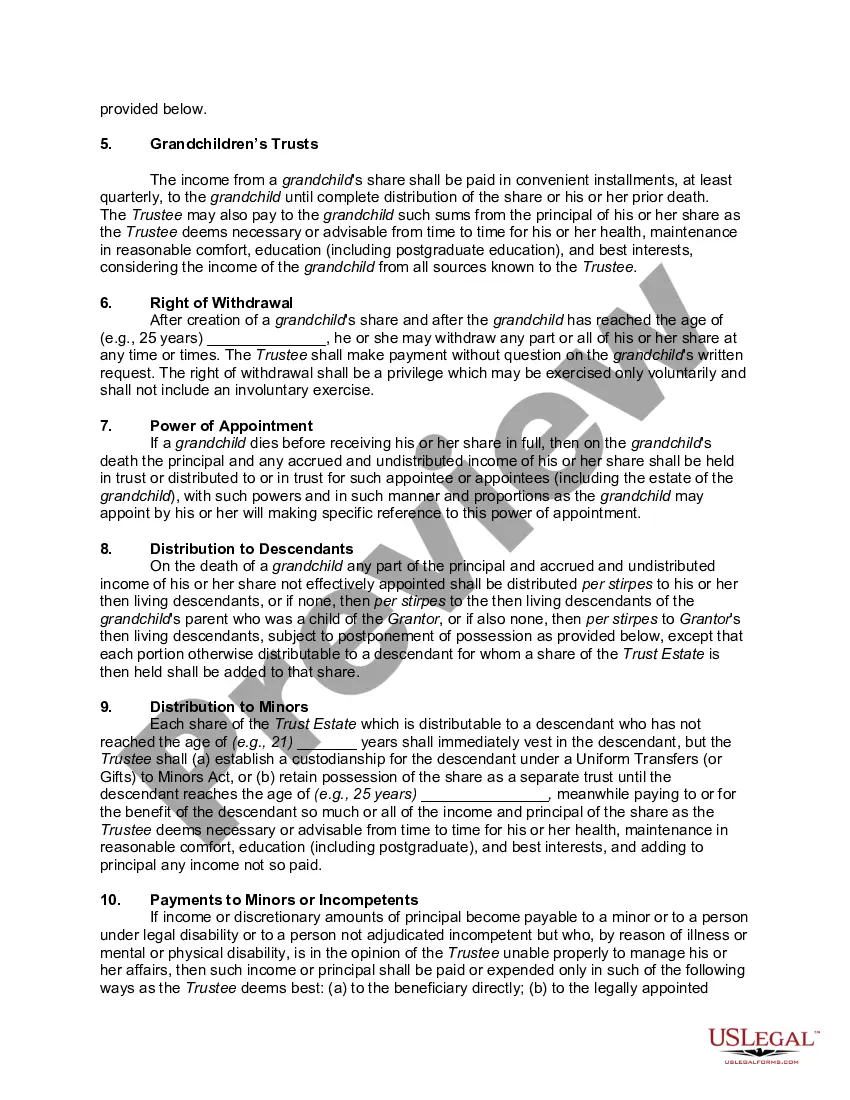
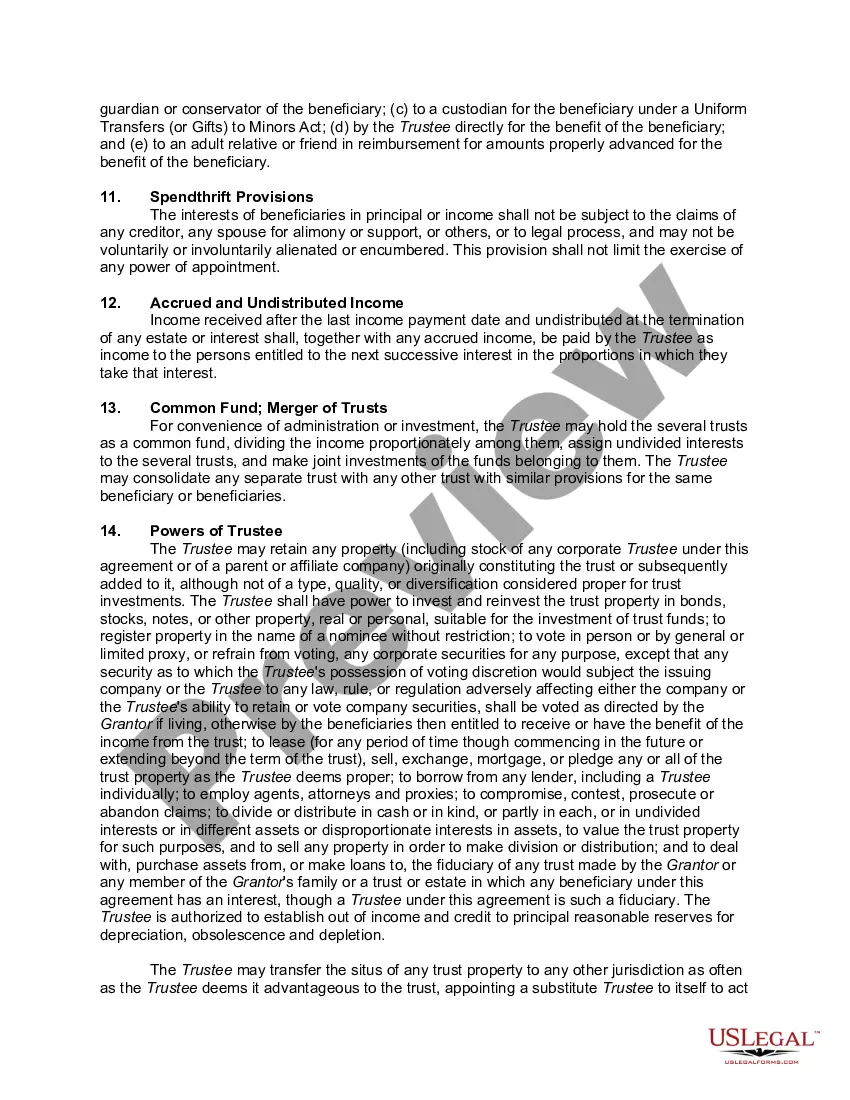
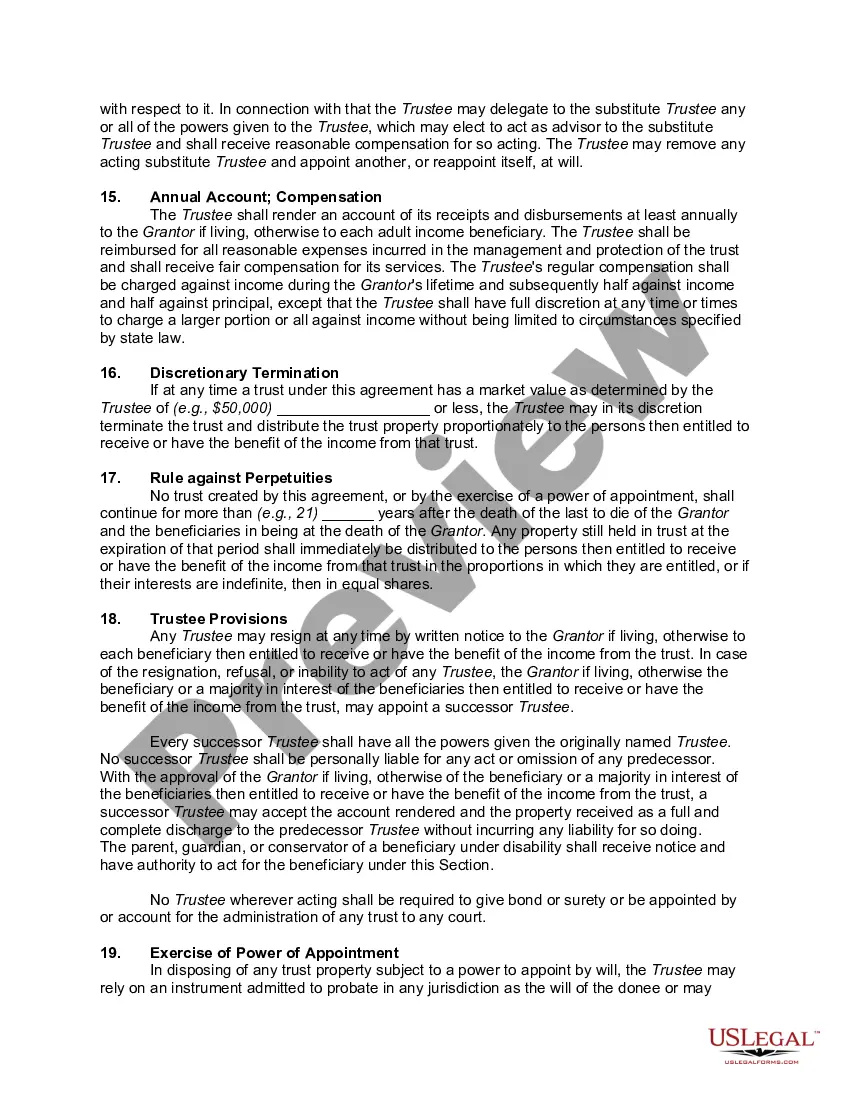
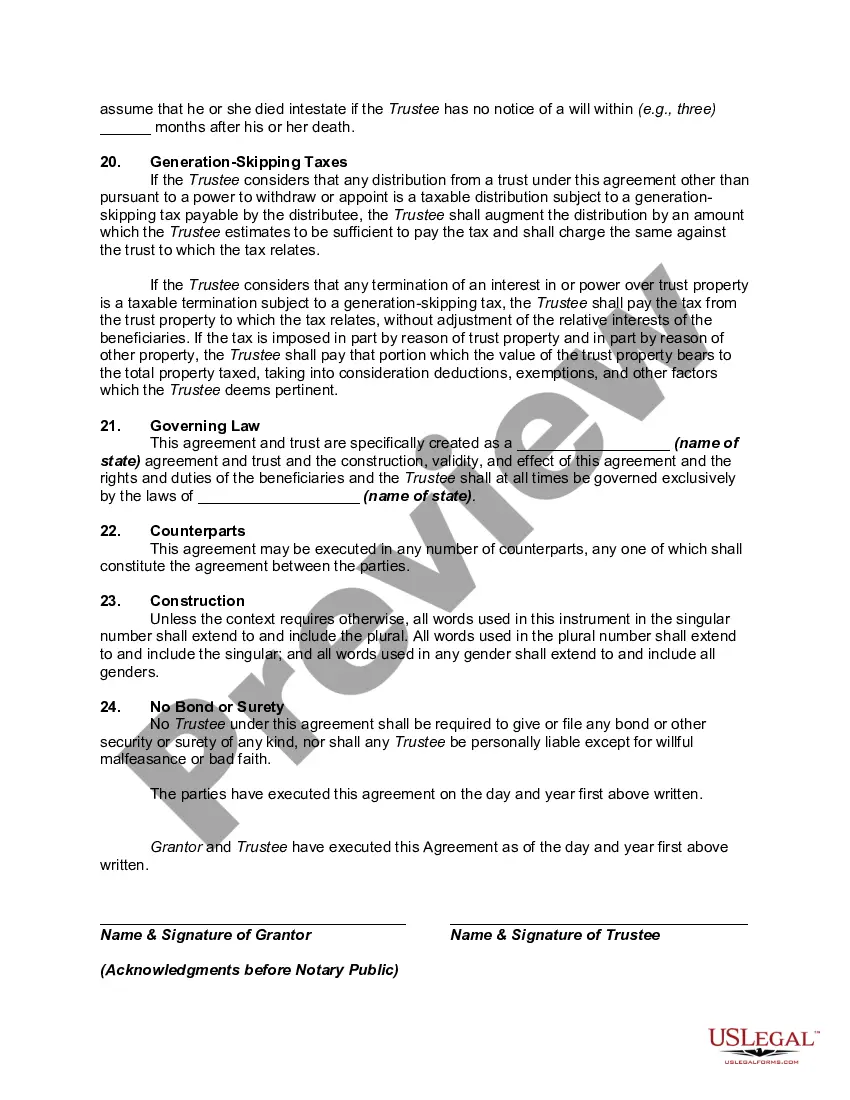
Description




Get your form ready online
Our built-in tools help you complete, sign, share, and store your documents in one place.
Make edits, fill in missing information, and update formatting in US Legal Forms—just like you would in MS Word.
Download a copy, print it, send it by email, or mail it via USPS—whatever works best for your next step.
Sign and collect signatures with our SignNow integration. Send to multiple recipients, set reminders, and more. Go Premium to unlock E-Sign.
If this form requires notarization, complete it online through a secure video call—no need to meet a notary in person or wait for an appointment.
We protect your documents and personal data by following strict security and privacy standards.

Make edits, fill in missing information, and update formatting in US Legal Forms—just like you would in MS Word.

Download a copy, print it, send it by email, or mail it via USPS—whatever works best for your next step.

Sign and collect signatures with our SignNow integration. Send to multiple recipients, set reminders, and more. Go Premium to unlock E-Sign.

If this form requires notarization, complete it online through a secure video call—no need to meet a notary in person or wait for an appointment.

We protect your documents and personal data by following strict security and privacy standards.
Looking for another form?








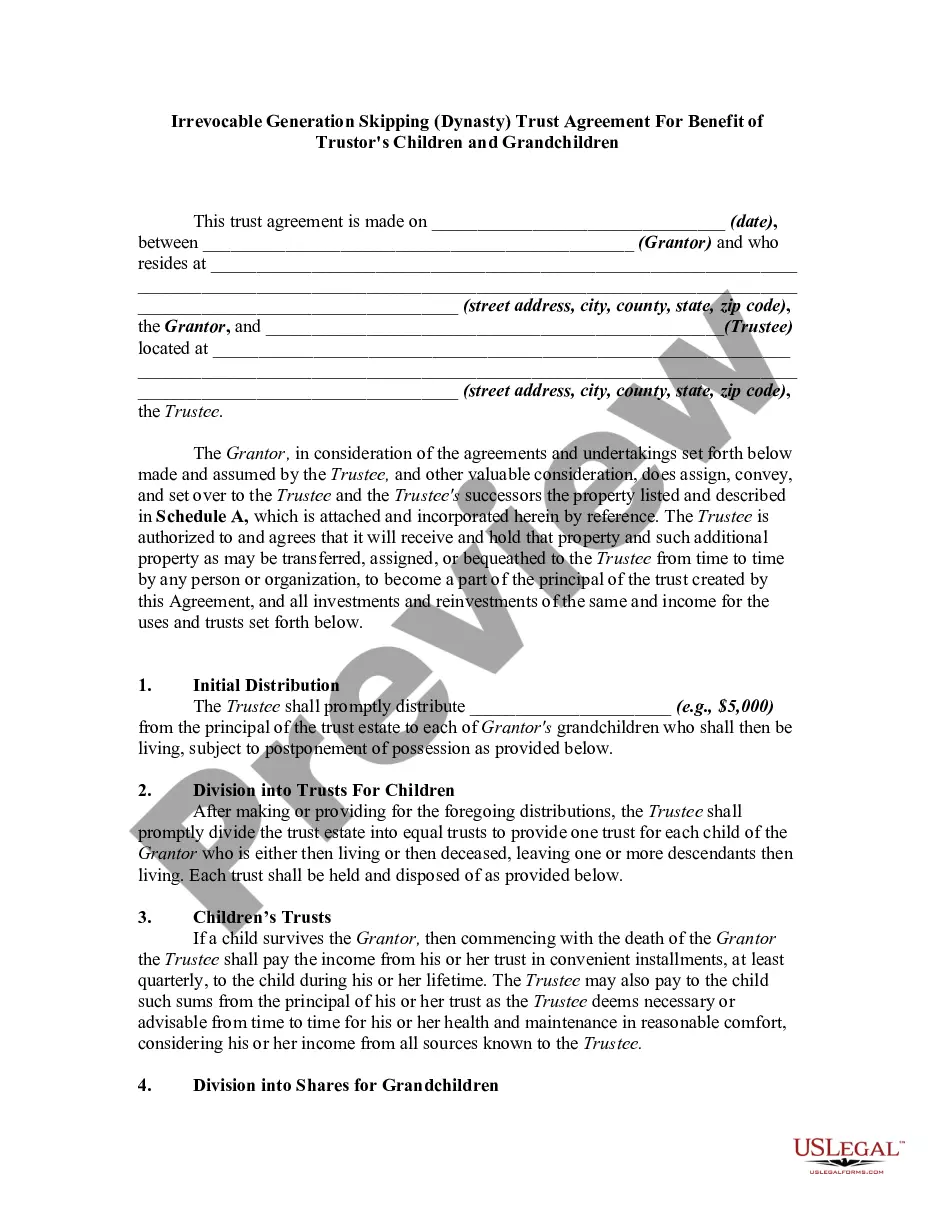
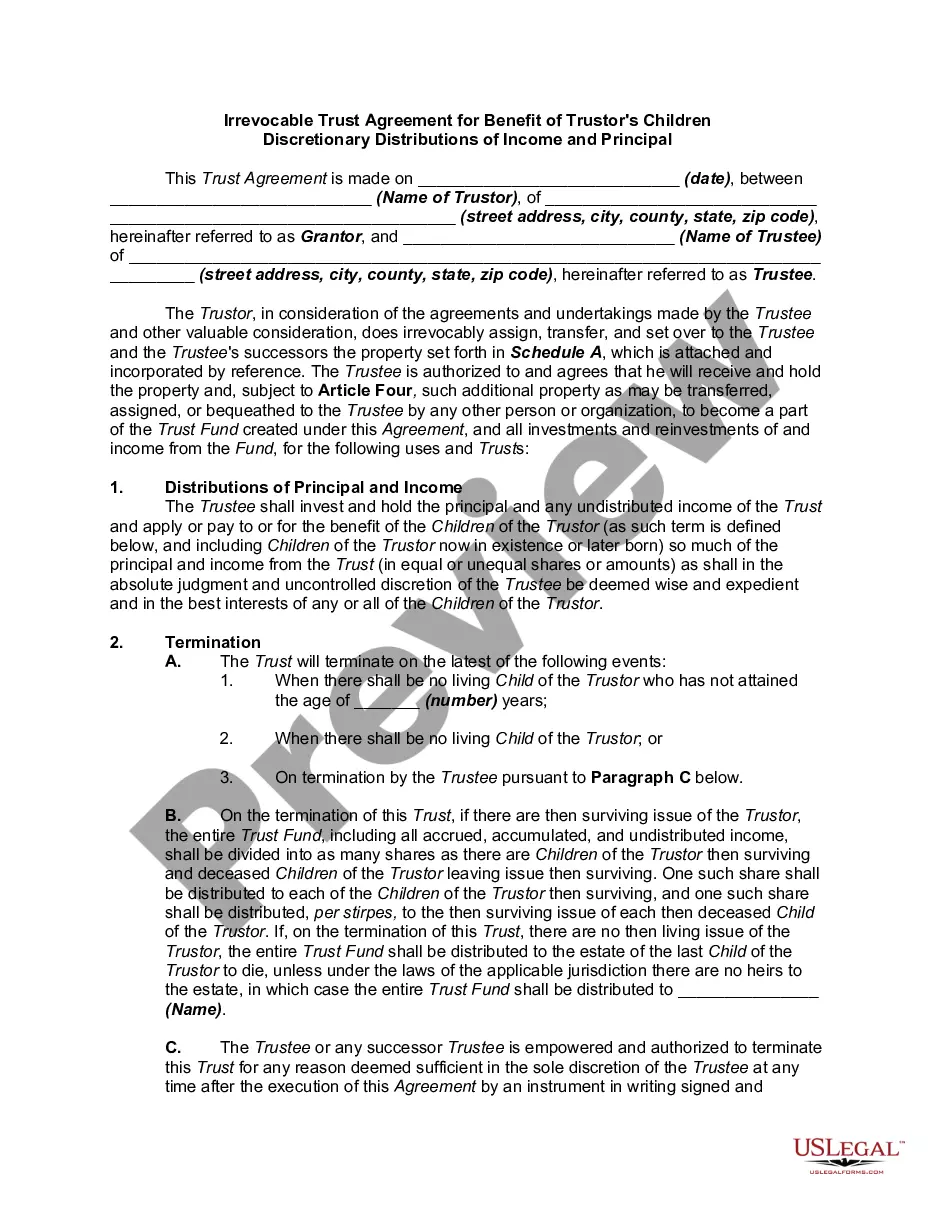
How to fill out Irrevocable Trust Agreement For Benefit Of Trustor's Children And Grandchildren?
- If you're a returning user, log in to your account and download the necessary form template directly to your device by clicking the Download button. Ensure your subscription is valid; if not, renew it promptly according to your payment plan.
- For new users, start by checking the Preview mode and form description. Confirm that the selected document meets your needs and aligns with your local jurisdiction requirements.
- If you identify discrepancies, leverage the Search feature at the top to find an alternative document that better fits your criteria.
- Once you find the correct form, click on the Buy Now button and choose a suitable subscription plan for accessing the extensive library.
- Complete your purchase by entering your credit card information or opting for PayPal to pay for the subscription.
- Finally, download the completed form to your device for further processing, and conveniently access it again in the My Forms section of your profile anytime you need.
By utilizing US Legal Forms, you gain access to over 85,000 fillable and editable legal documents, allowing for flexibility and precision. Moreover, premium experts are available to guide you through the form completion process, ensuring that all documents are legally sound.
Start your journey towards effective legal documentation today. Visit US Legal Forms and empower yourself with the tools to create robust agreements.
Form popularity
FAQ
You can prepare your own trust irrevocable agreement with others, but caution is advisable. Without the right knowledge, mistakes could jeopardize your trust’s effectiveness and lead to unintended consequences. It is crucial to include all required provisions and understand how your assets will be managed. Uslegalforms offers templates and guidance that help you create a proper irrevocable trust, ensuring you protect your intentions and assets.
You can set up a trust irrevocable agreement with others by yourself, but it might be complex. You need to understand the nuances of trust laws and necessary documents to ensure everything is valid. While DIY options exist, working with professionals often results in a more secure and effective trust. Uslegalforms provides user-friendly resources that can guide you through the process, making it easier to create your trust independently.
Yes, a trust irrevocable agreement with others typically needs to be filed with the court, especially if it involves a significant asset transfer. This filing ensures proper documentation and compliance with state regulations. When you file your trust, you create a public record that verifies its existence and terms. Using a platform like uslegalforms can simplify this process and ensure that you meet all legal requirements.
The lookback period for an irrevocable trust refers to the time frame in which the state reviews any asset transfers before qualifying for benefits, such as Medicaid. Typically, this period is five years and is crucial in establishing the eligibility of the trustor for financial assistance. A trust irrevocable agreement with others can play a vital role in strategic asset placement during this timeframe. Understanding the lookback period is essential, and you can find supportive resources through USLegalForms to guide you.
Filing for an irrevocable trust involves several steps, including drafting the trust document and formally transferring assets into the trust. A trust irrevocable agreement with others needs to be carefully designed to outline the terms and beneficiaries. After preparing the necessary documentation, you will record the trust with the appropriate state authority, ensuring all legal requirements are met. Platforms like USLegalForms provide valuable tools and templates to simplify this process.
The 5-year rule for an irrevocable trust is similar to the previous description, focusing on the impact of asset transfers made to the trust. Essentially, this rule helps determine when a trustor's assets will no longer be included in the estate for tax purposes. A trust irrevocable agreement with others must generally be in place for five years to ensure compliance with federal rules and to achieve maximum benefit. Familiarizing yourself with this guideline is crucial for effective estate planning.
The 5-year rule in a trust irrevocable agreement with others refers to the period during which assets transferred into the trust may be subject to certain tax implications and creditor protections. This rule generally means that any transfers made to the irrevocable trust may not be eligible for certain benefits unless the trust has been established for at least five years. Understanding this rule can help you effectively navigate the complexities of asset protection. Consulting resources like USLegalForms can provide essential documents and guidance through this process.
One major downside of an irrevocable trust is that once you establish it, you cannot easily change the terms or reclaim the assets placed in the trust. This lack of flexibility may pose challenges if your financial situation changes or your family dynamics shift. Additionally, if you enter into a trust irrevocable agreement with others, you may face potential conflicts or misunderstandings regarding the distribution of assets. It's essential to weigh these considerations carefully before proceeding.
An irrevocable trust agreement is a legal document that permanently transfers assets into a trust, making it impossible for the creator to modify or revoke it. This type of trust can be a smart choice for financial planning, as it helps protect assets from creditors and reduces estate taxes. By setting up an irrevocable trust agreement with others, you ensure that designated beneficiaries receive the trust assets after your passing. This arrangement often provides peace of mind to individuals looking to secure their family's future.
One significant mistake parents make when establishing a trust fund is inadequate planning regarding the distribution of assets. Many overlook their children's financial maturity and create a one-size-fits-all approach. Tailoring the trust irrevocable agreement with others to reflect the individual needs and circumstances of each child can avoid potential conflicts and ensure smoother transitions of wealth. Consulting with an expert can provide guidance on structuring these agreements effectively.