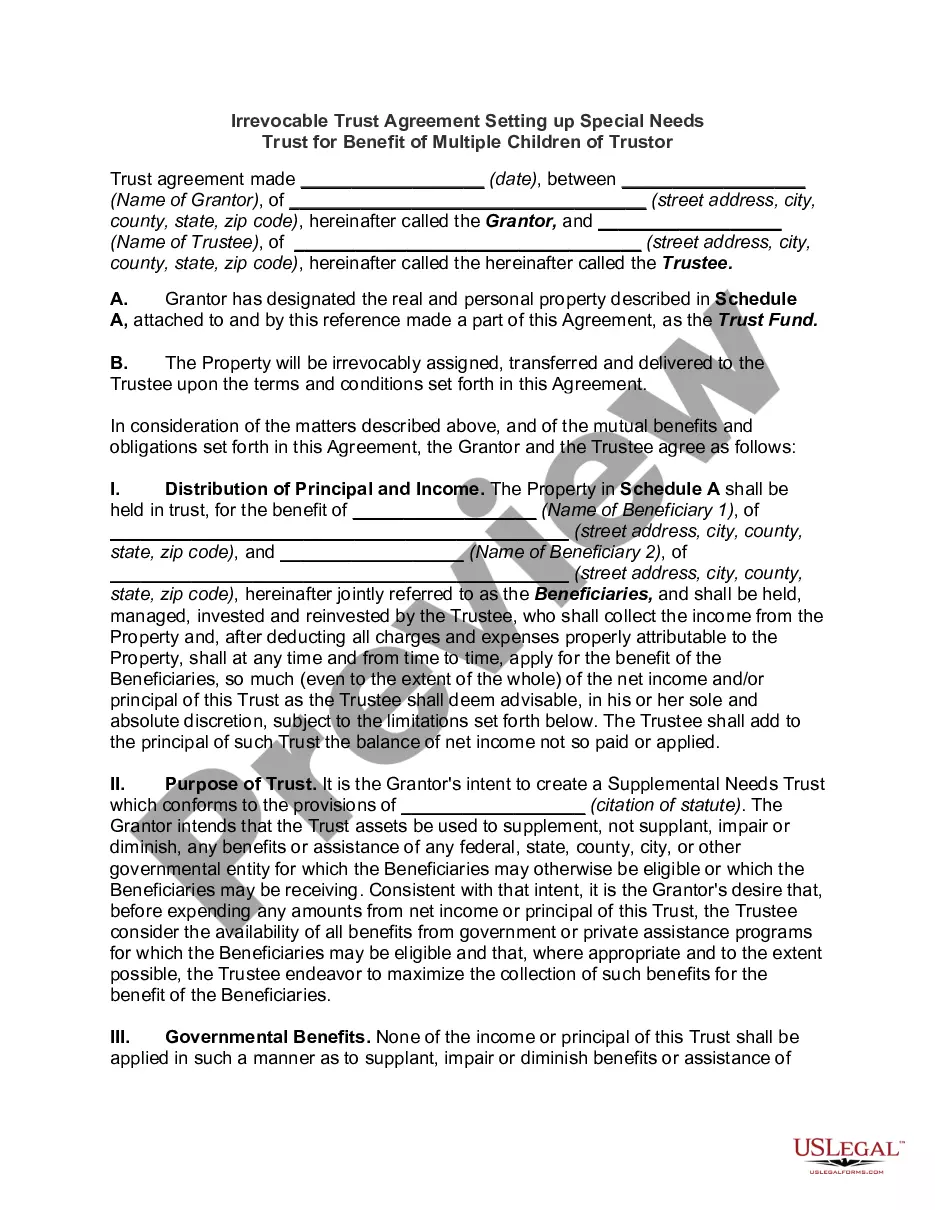
Trust Form Irrevocable With A Trustee
Description

Get your form ready online
Our built-in tools help you complete, sign, share, and store your documents in one place.
Make edits, fill in missing information, and update formatting in US Legal Forms—just like you would in MS Word.
Download a copy, print it, send it by email, or mail it via USPS—whatever works best for your next step.
Sign and collect signatures with our SignNow integration. Send to multiple recipients, set reminders, and more. Go Premium to unlock E-Sign.
If this form requires notarization, complete it online through a secure video call—no need to meet a notary in person or wait for an appointment.
We protect your documents and personal data by following strict security and privacy standards.

Make edits, fill in missing information, and update formatting in US Legal Forms—just like you would in MS Word.

Download a copy, print it, send it by email, or mail it via USPS—whatever works best for your next step.

Sign and collect signatures with our SignNow integration. Send to multiple recipients, set reminders, and more. Go Premium to unlock E-Sign.

If this form requires notarization, complete it online through a secure video call—no need to meet a notary in person or wait for an appointment.

We protect your documents and personal data by following strict security and privacy standards.
Looking for another form?








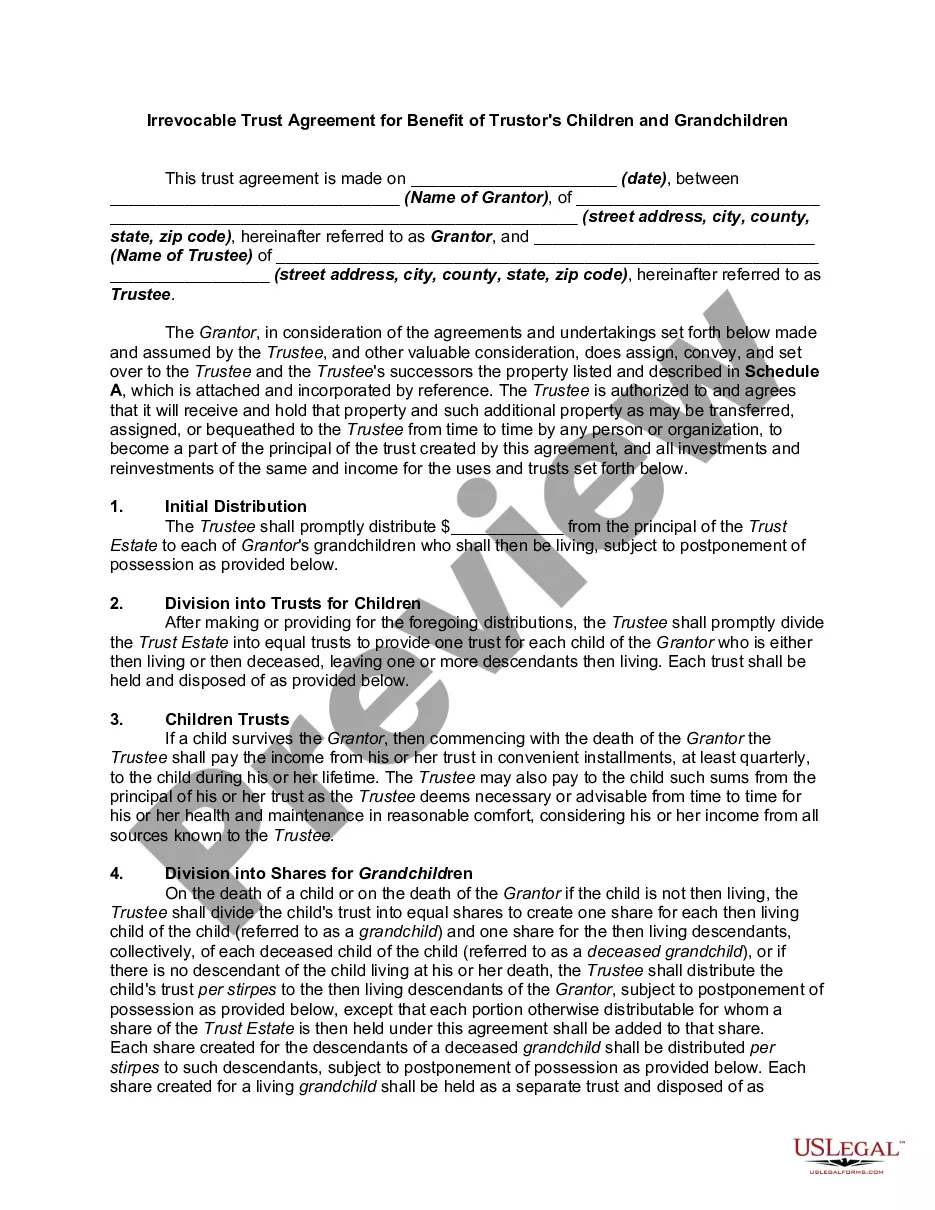
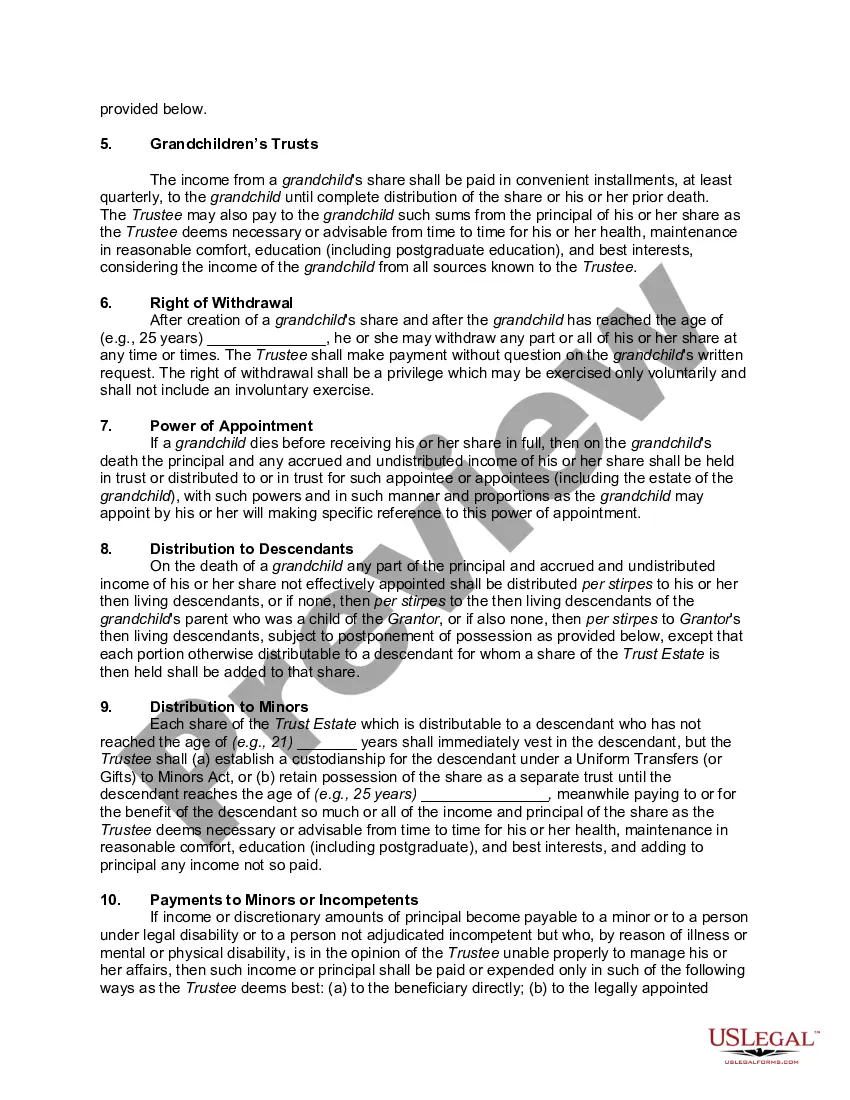
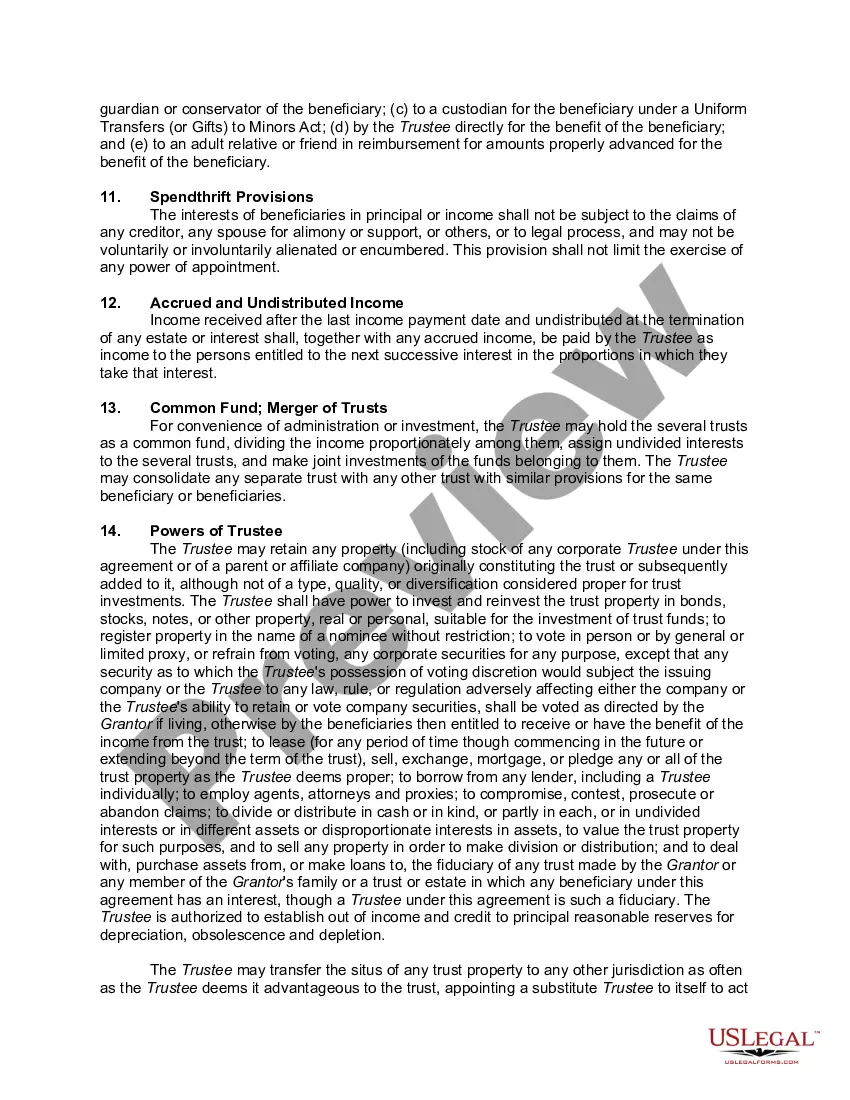
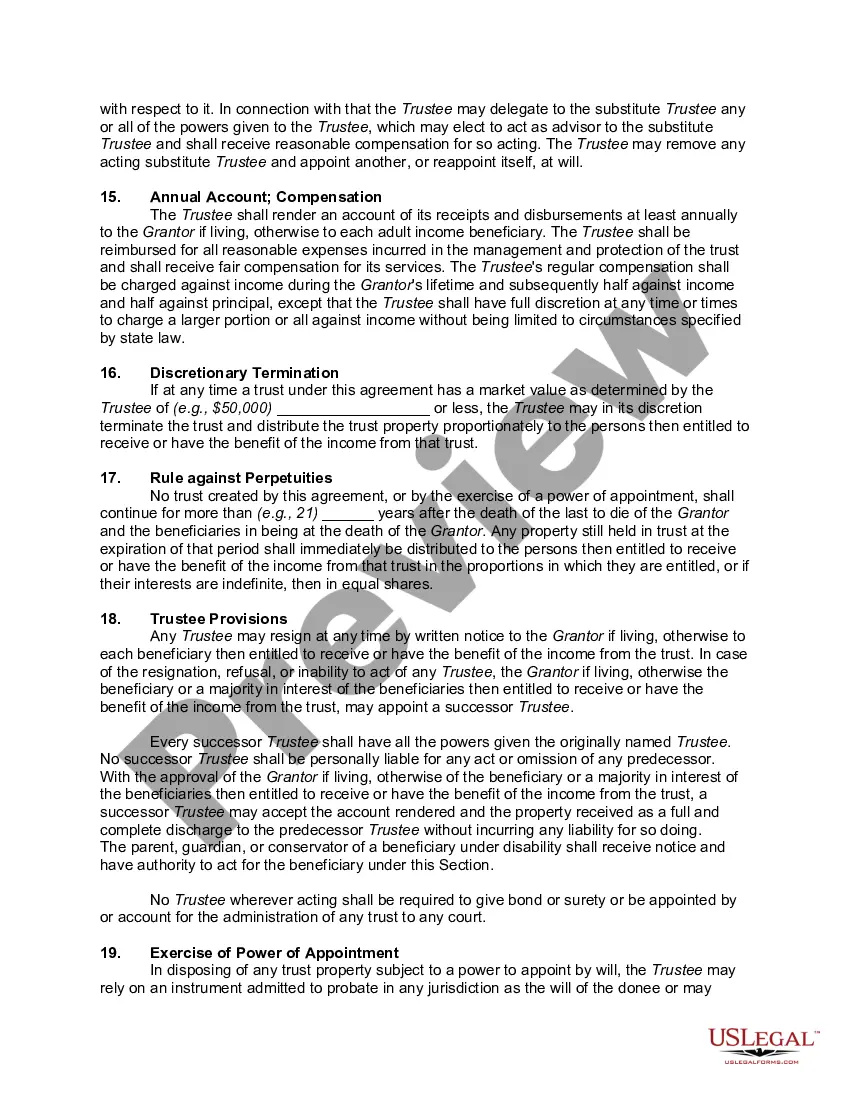
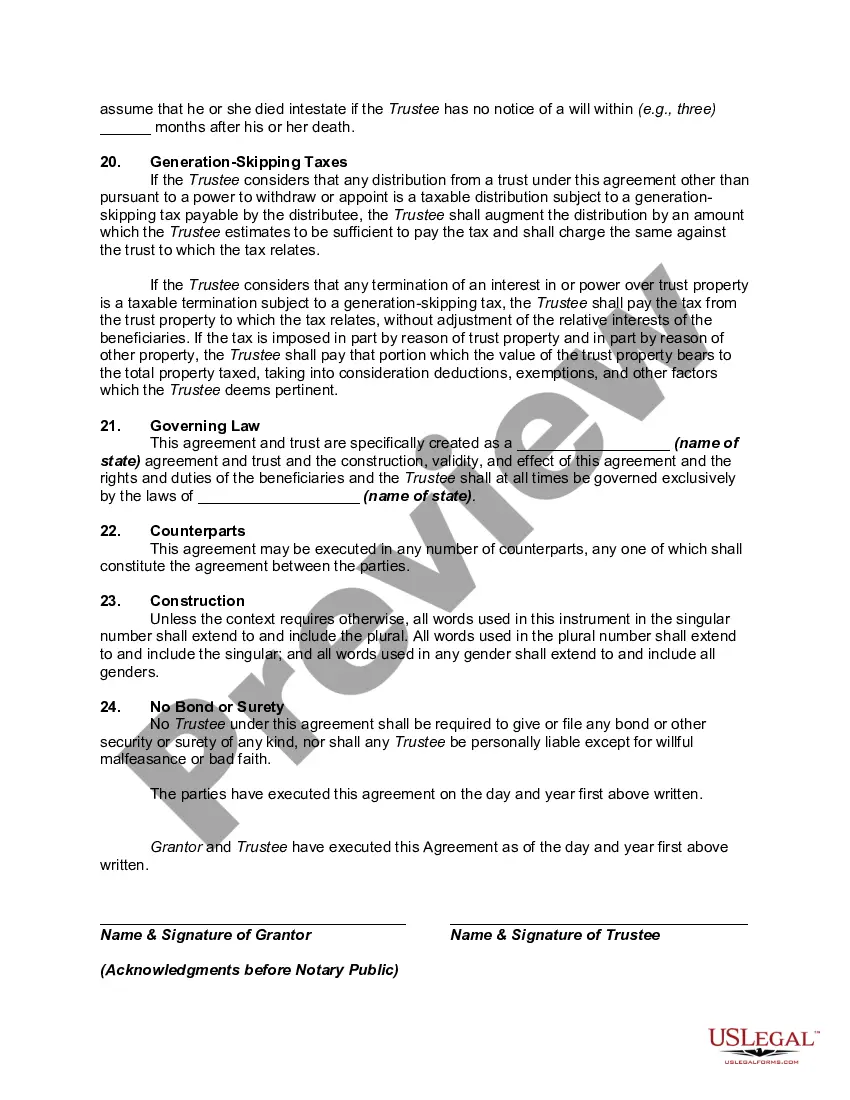
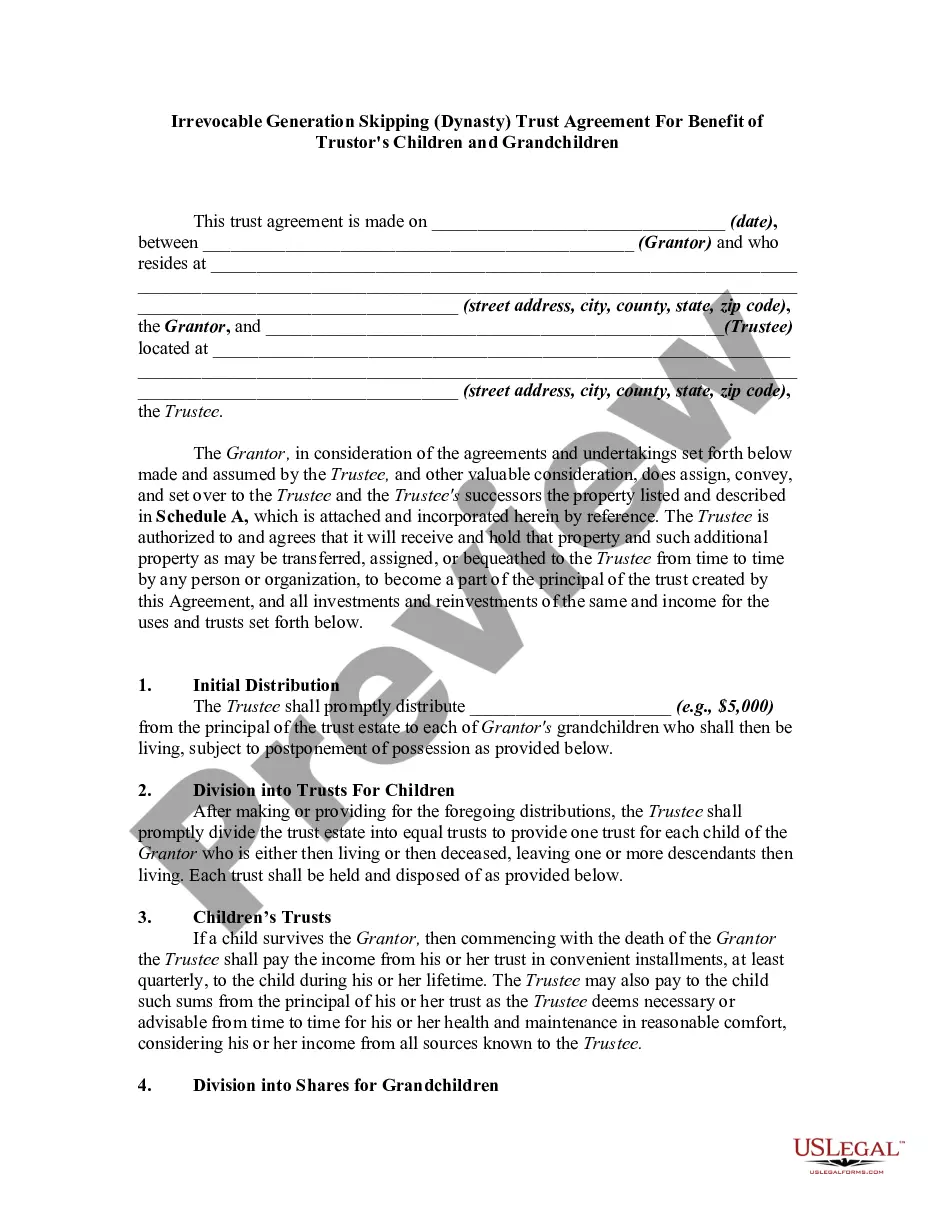
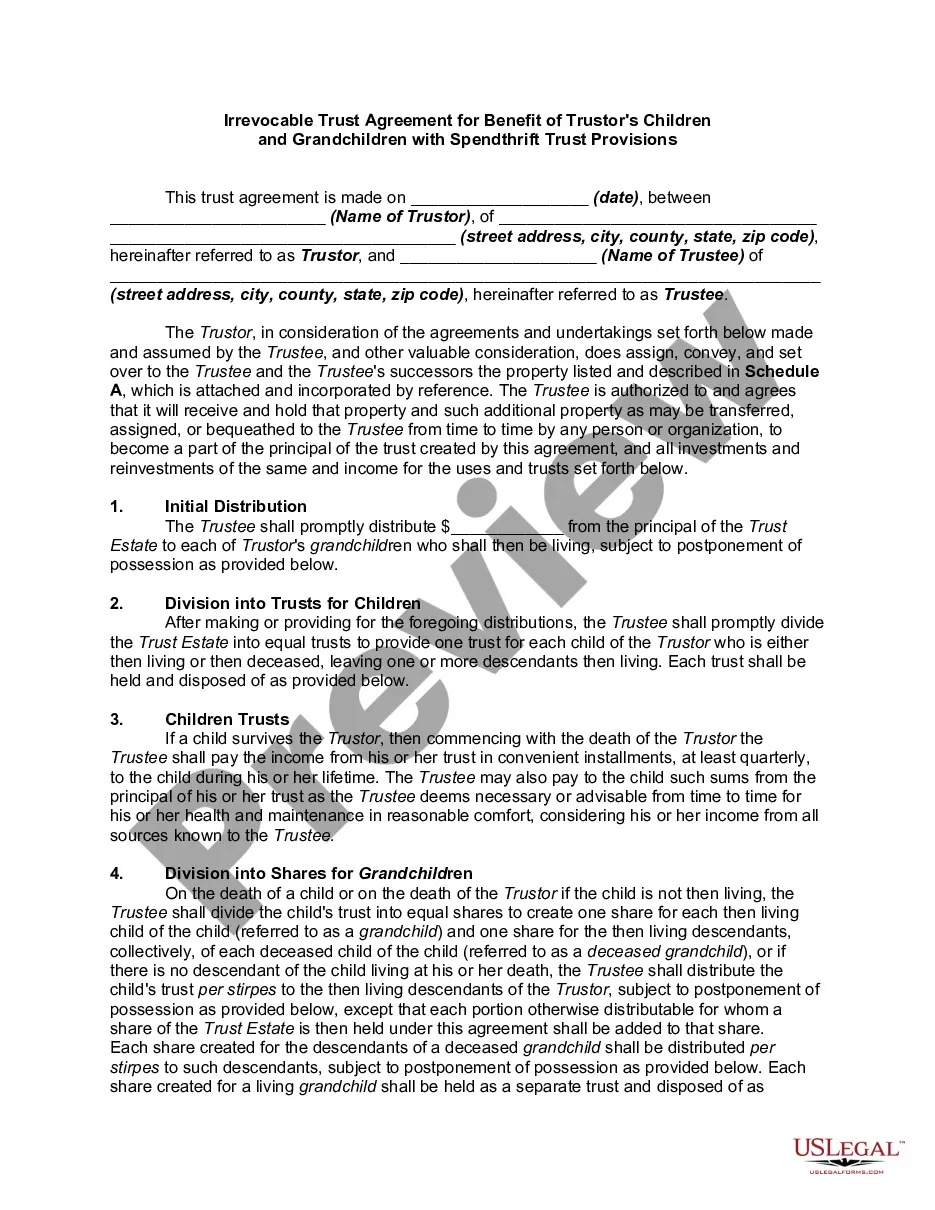
How to fill out Irrevocable Trust Agreement For Benefit Of Trustor's Children And Grandchildren?
- If you're a returning user, log in to your account to download the necessary form by clicking the Download button. Ensure your subscription is active, or renew it if needed.
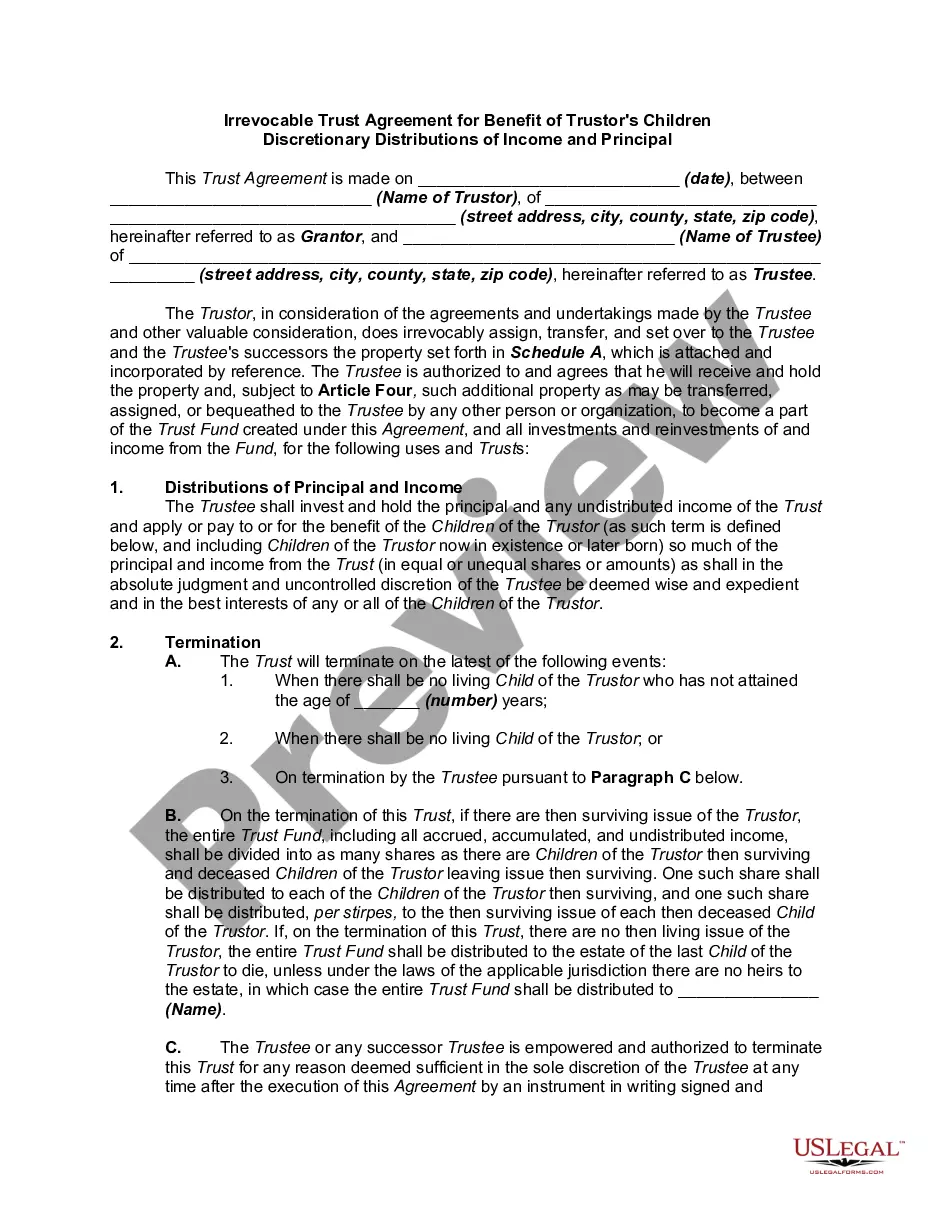
- For first-time users, start by reviewing the Preview mode and description of the trust form. Confirm it meets your needs and complies with local regulations.
- Should you need a different template, utilize the Search tab above to find the suitable trust form that fits your requirements.
- Proceed to purchase the document by clicking on the Buy Now button. Select your preferred subscription plan and create an account for access to library resources.
- Complete your payment by entering your credit card information or using your PayPal account.
- Finally, download the trust form to your device. You can also access it anytime from the My Forms section of your profile.
US Legal Forms provides a robust collection of over 85,000 easy-to-fill legal documents, allowing individuals and attorneys alike to execute legal papers efficiently. With premium expert assistance available, you can ensure your forms are completed accurately and meet all legal requirements.
Don't let legal complexities overwhelm you. Start your journey with US Legal Forms today for a smooth and reliable experience in managing your legal documentation.
Form popularity
FAQ
A valid irrevocable trust requires clear documentation and the intention to create a trust that cannot be altered. Key elements include a defined trustee, identified beneficiaries, and explicit terms outlining the management and distribution of trust assets. Ensuring you have the proper trust form irrevocable with a trustee is vital for legal enforceability, making it a good practice to use platforms like US Legal Forms for guidance and accuracy.
The new rule on irrevocable trusts introduces updated guidelines that provide clearer instructions on how to manage these trusts. An irrevocable trust, once established, cannot be modified without the consent of the trustee. It is essential to understand that this rule aims to protect the interests of beneficiaries while ensuring the trust form irrevocable with a trustee is administered correctly.
Writing an irrevocable trust document involves several crucial steps. Start by clearly defining your assets and how you wish them to be managed, keeping in mind the trust form irrevocable with a trustee. Next, select a trustworthy and competent trustee who will manage the trust according to your wishes. Finally, ensure that the document adheres to your state’s legal requirements, and consider consulting a legal professional or using platforms like UsLegalForms to simplify the process.
One major mistake parents often make when establishing a trust fund is failing to clearly communicate their intentions to the beneficiaries. This lack of clarity in the trust form irrevocable with a trustee can lead to misunderstandings and disputes later on. Moreover, some parents neglect to review and update their trust as family situations change, which can render the trust outdated and ineffective in achieving their goals.
When creating a trust form irrevocable with a trustee, it is crucial to avoid including personal property that you might want to retain control over, such as your primary residence. Additionally, do not place assets with fluctuating values, like collectibles or certain investments, as they can complicate the administration of the trust. Lastly, avoid including any debts or obligations that could burden the trust, as this may confuse your trustee and complicate asset distribution.
Filling out an irrevocable trust involves understanding the necessary components, such as naming the trustee and the beneficiaries, and detailing the trust's assets. It’s important to be clear and thorough to avoid future issues. US Legal Forms provides easy-to-use templates and guidance for creating a trust form irrevocable with a trustee, ensuring you cover all critical aspects accurately.
A trustee plays a vital role in managing an irrevocable trust. This person administers the assets, ensures compliance with the terms of the trust, and makes distributions to beneficiaries as outlined. Understanding the responsibilities involved in a trust form irrevocable with a trustee can help in maintaining the trust and protecting the interests of the beneficiaries.
The new IRS rule on irrevocable trusts affects how these trusts are taxed and reported. These changes help clarify your obligations as a trustee, especially regarding income and estate taxes. It's essential to understand how this impacts your trust form irrevocable with a trustee, as proper compliance ensures your trust's effectiveness and meets legal requirements.
Having an irrevocable trust can benefit you in multiple ways. Firstly, it helps in asset protection from creditors, which can be crucial for your peace of mind. Secondly, it offers tax benefits through estate tax exclusion. Lastly, a trust form irrevocable with a trustee facilitates the smooth transfer of wealth to beneficiaries, avoiding probate delays and ensuring your wishes are honored.
Generally, an irrevocable trust does not need to be filed with the court unless you are facing specific legal challenges or disputes. However, creating a trust form irrevocable with a trustee may involve certain documentation that benefits from legal verification. This ensures that your intentions are clear and your trust is legally enforceable.