Irrevocable Trust Trustors With A Trust
Description
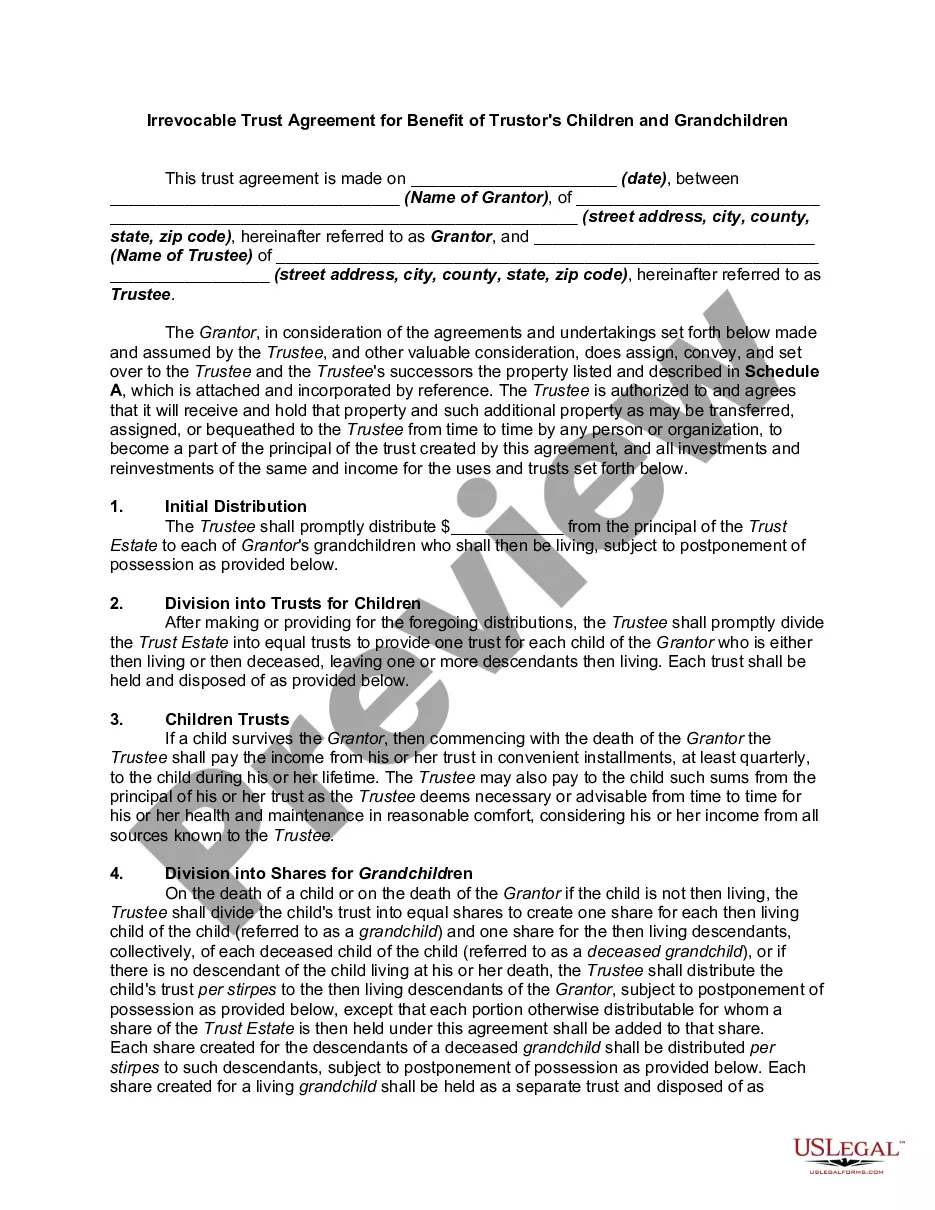
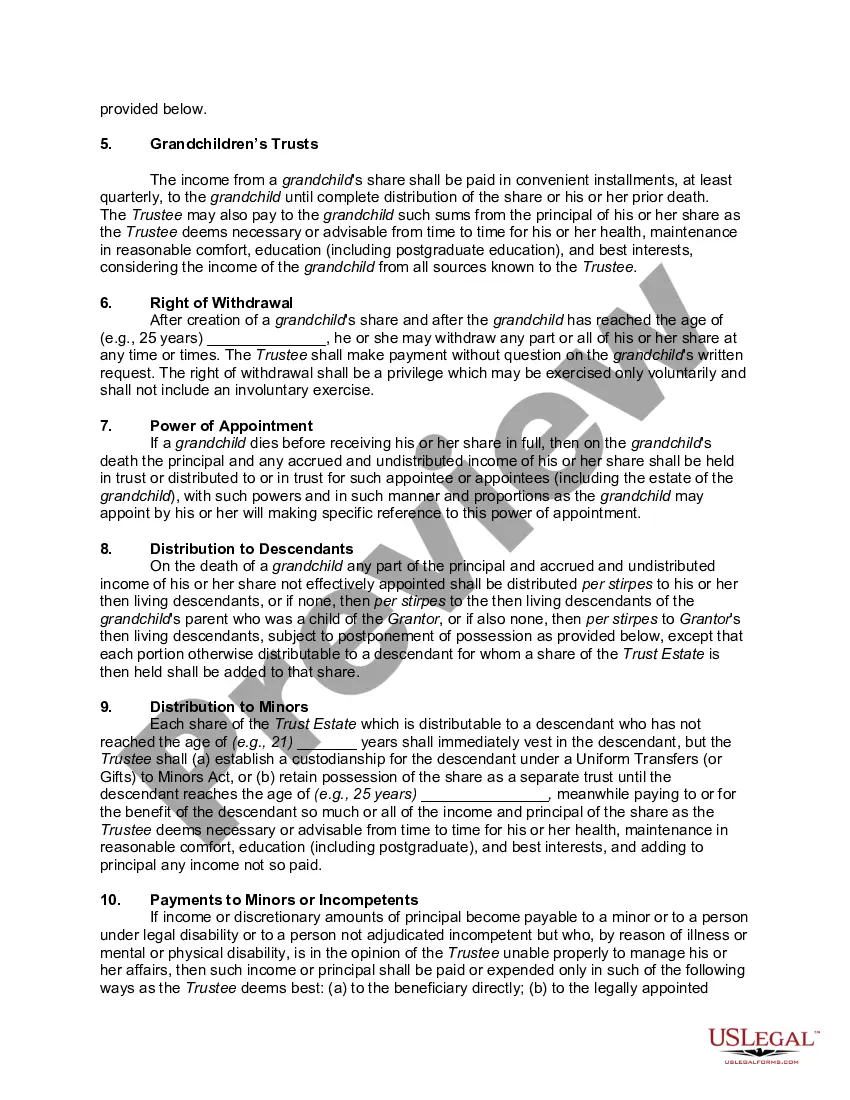
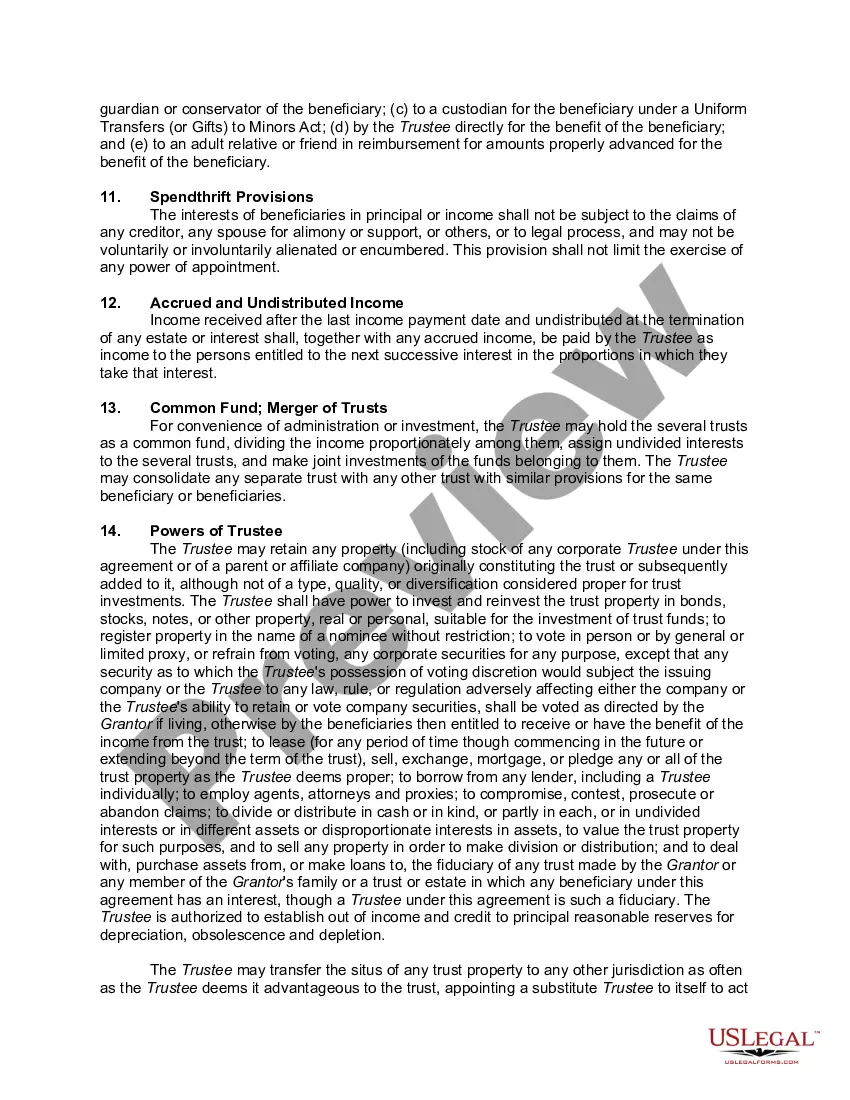
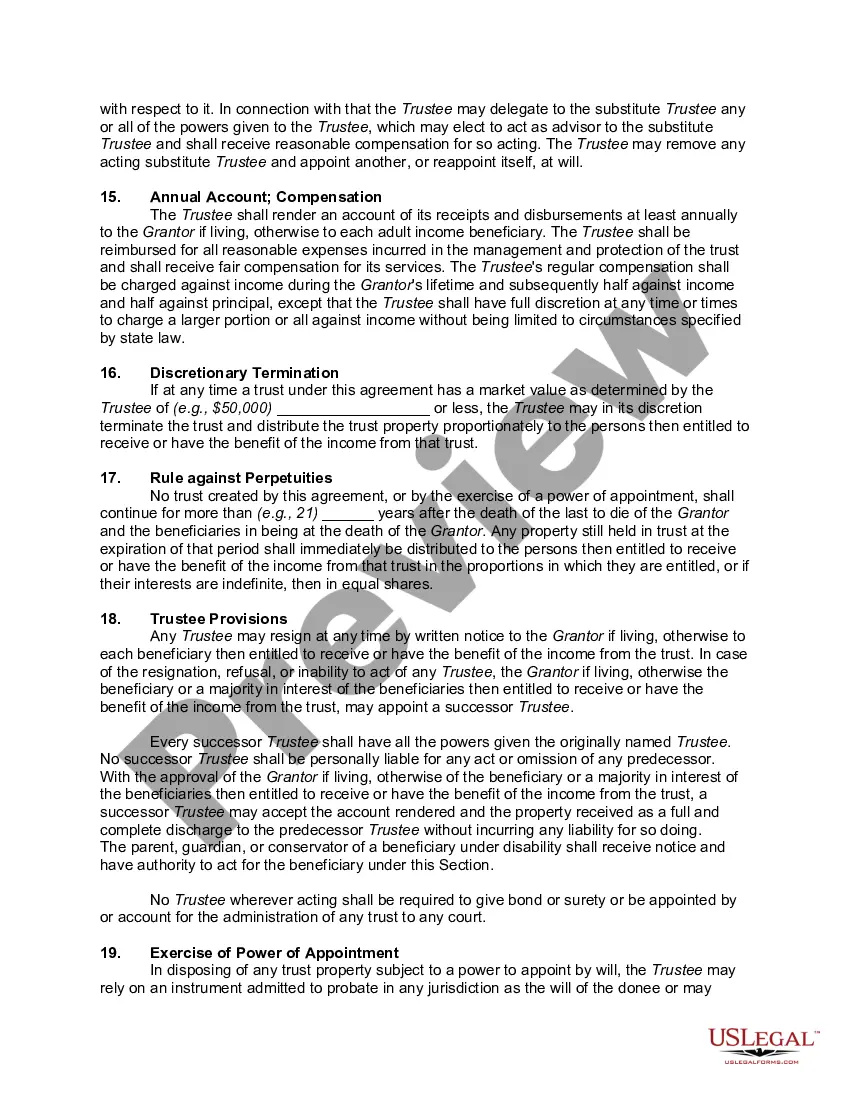

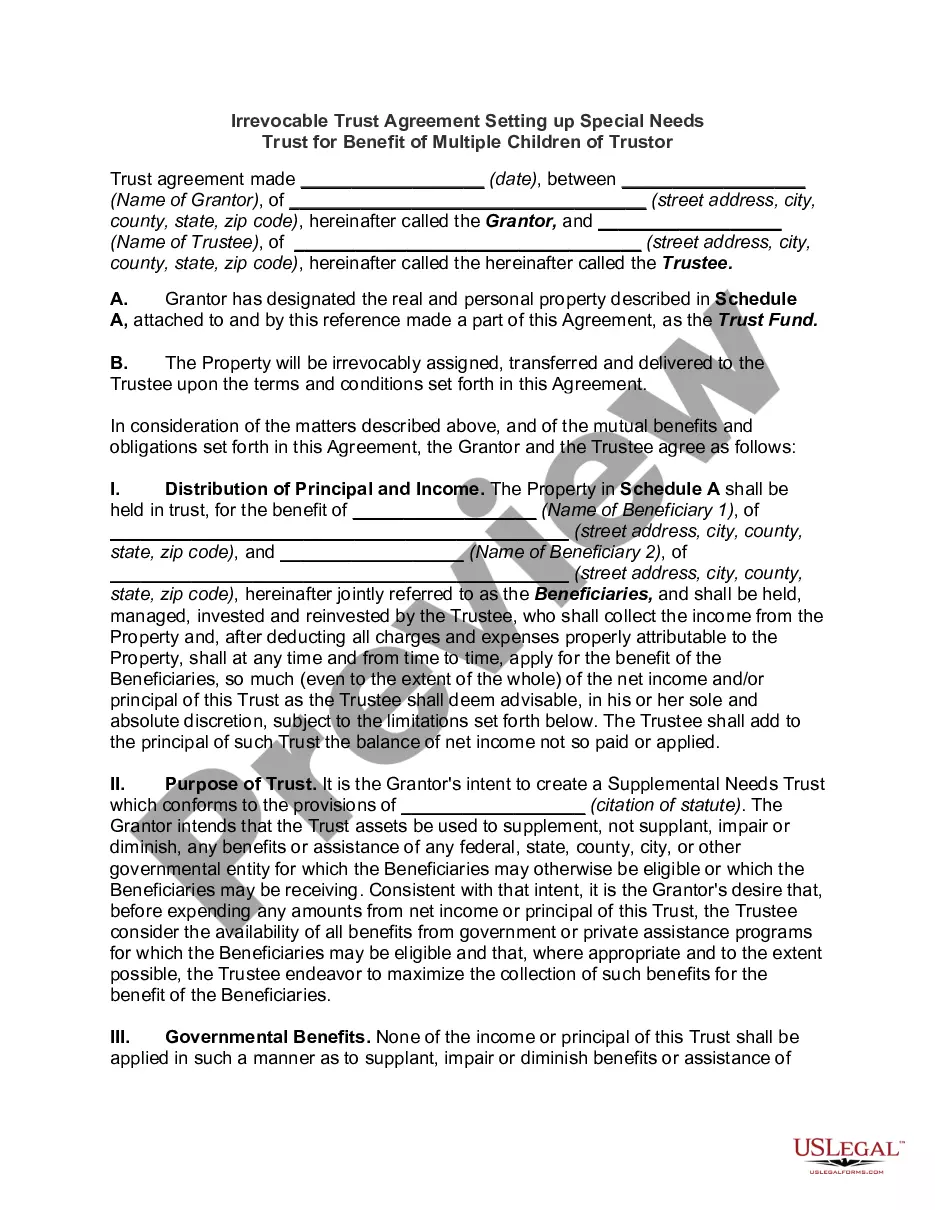
Get your form ready online
Our built-in tools help you complete, sign, share, and store your documents in one place.
Make edits, fill in missing information, and update formatting in US Legal Forms—just like you would in MS Word.
Download a copy, print it, send it by email, or mail it via USPS—whatever works best for your next step.
Sign and collect signatures with our SignNow integration. Send to multiple recipients, set reminders, and more. Go Premium to unlock E-Sign.
If this form requires notarization, complete it online through a secure video call—no need to meet a notary in person or wait for an appointment.
We protect your documents and personal data by following strict security and privacy standards.

Make edits, fill in missing information, and update formatting in US Legal Forms—just like you would in MS Word.

Download a copy, print it, send it by email, or mail it via USPS—whatever works best for your next step.

Sign and collect signatures with our SignNow integration. Send to multiple recipients, set reminders, and more. Go Premium to unlock E-Sign.

If this form requires notarization, complete it online through a secure video call—no need to meet a notary in person or wait for an appointment.

We protect your documents and personal data by following strict security and privacy standards.
Looking for another form?

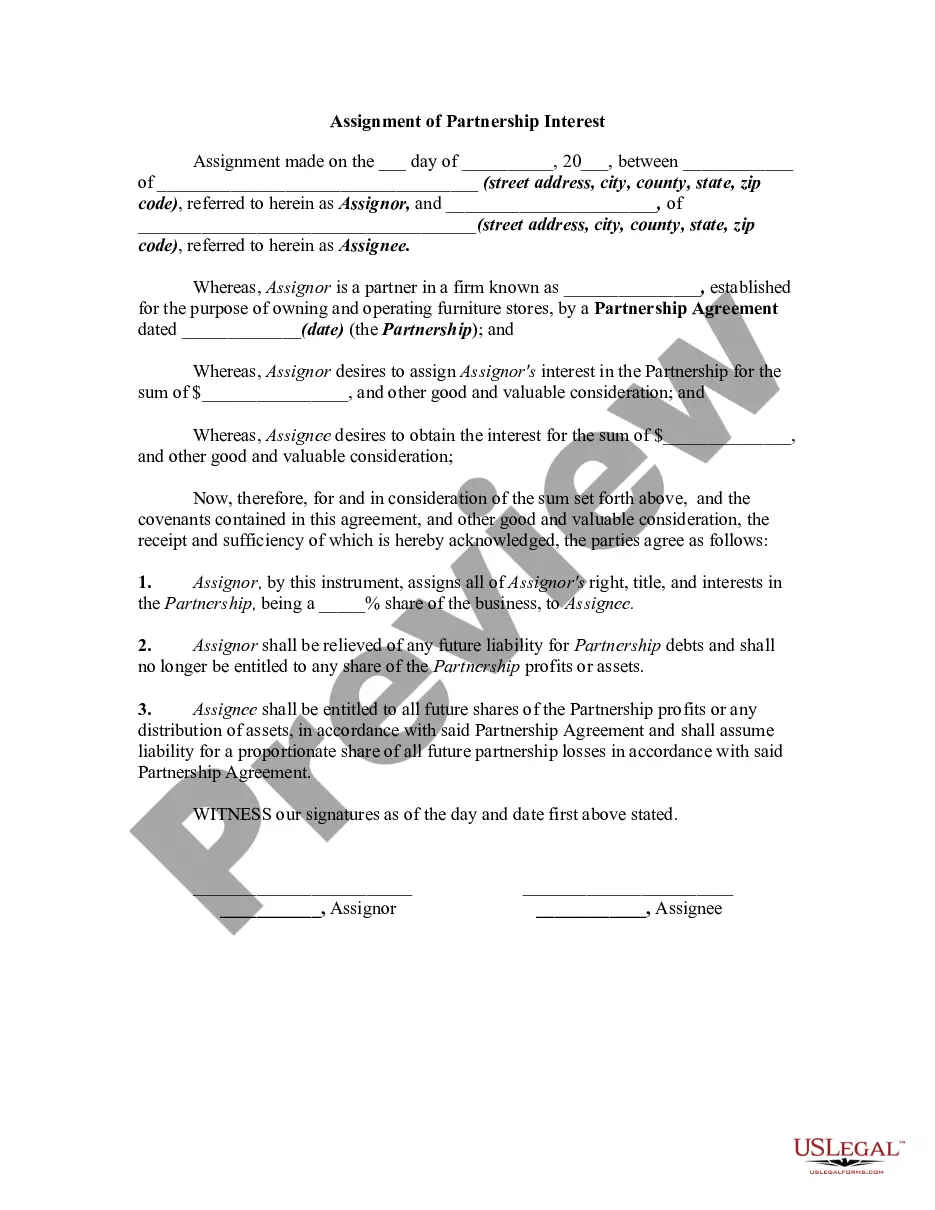





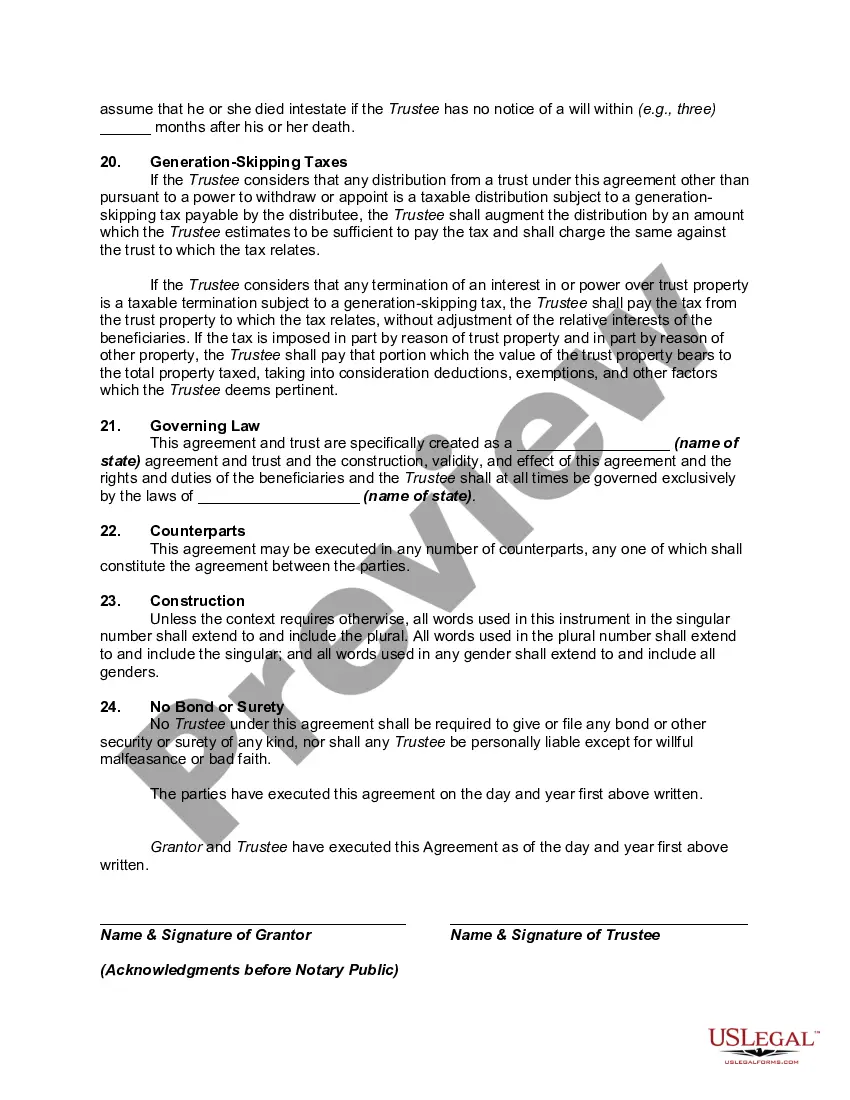
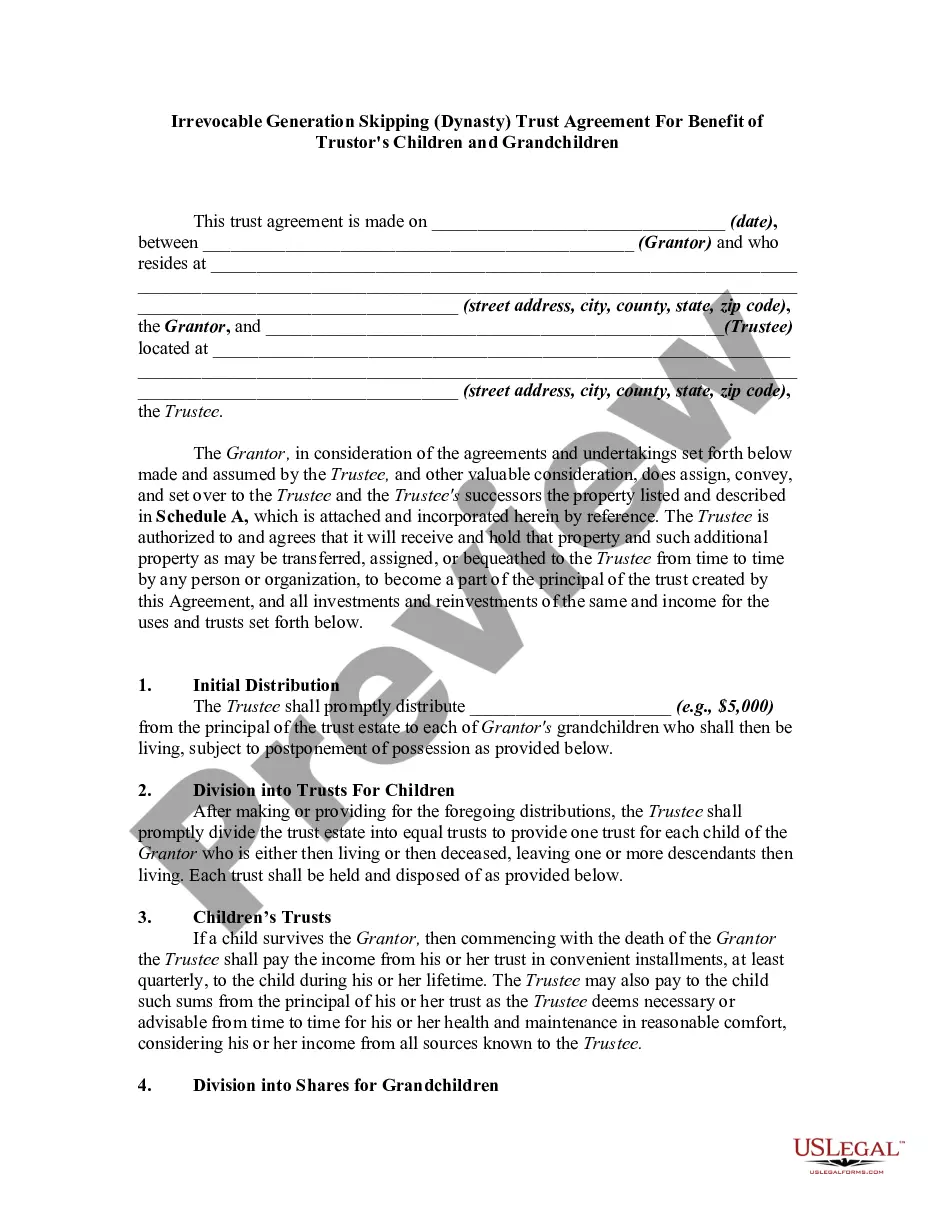
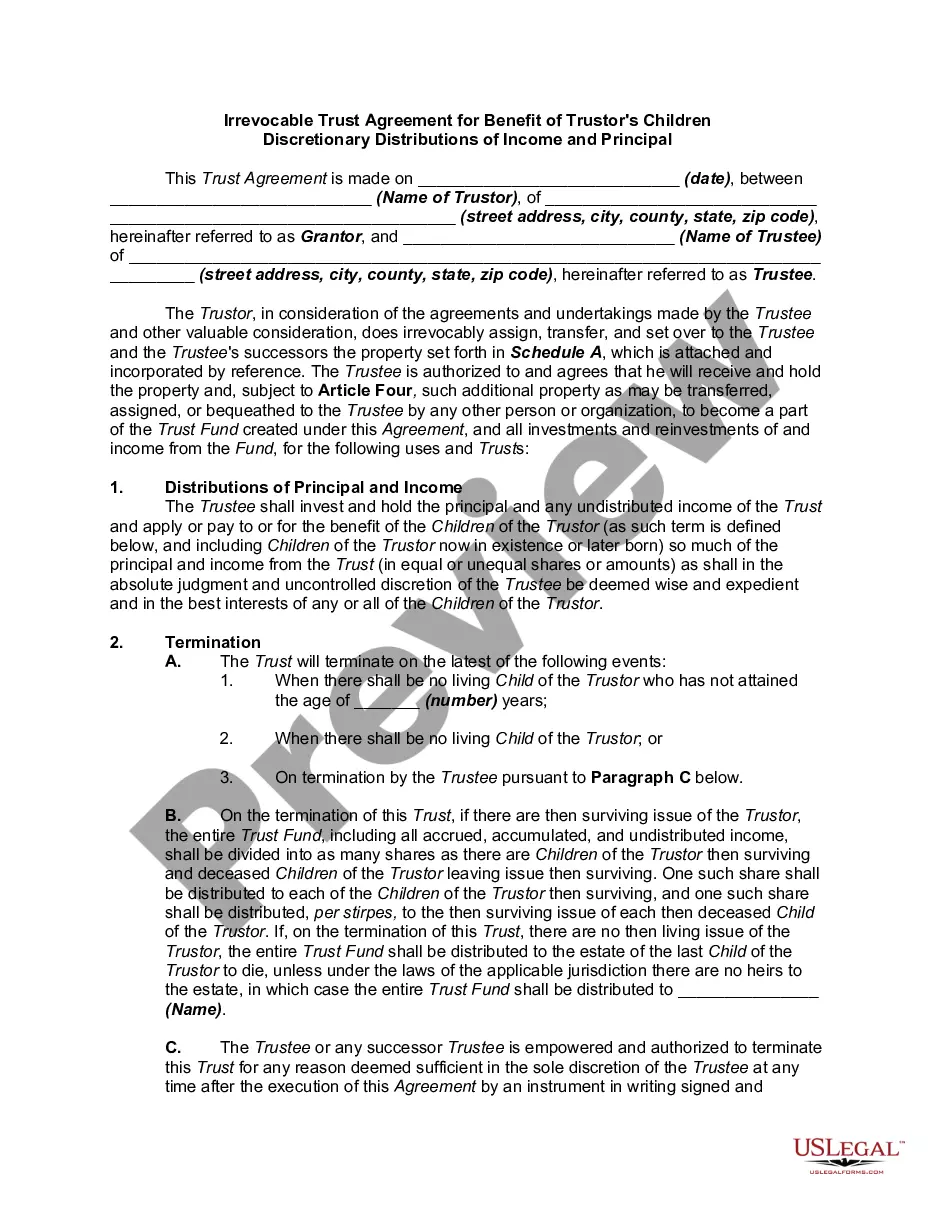
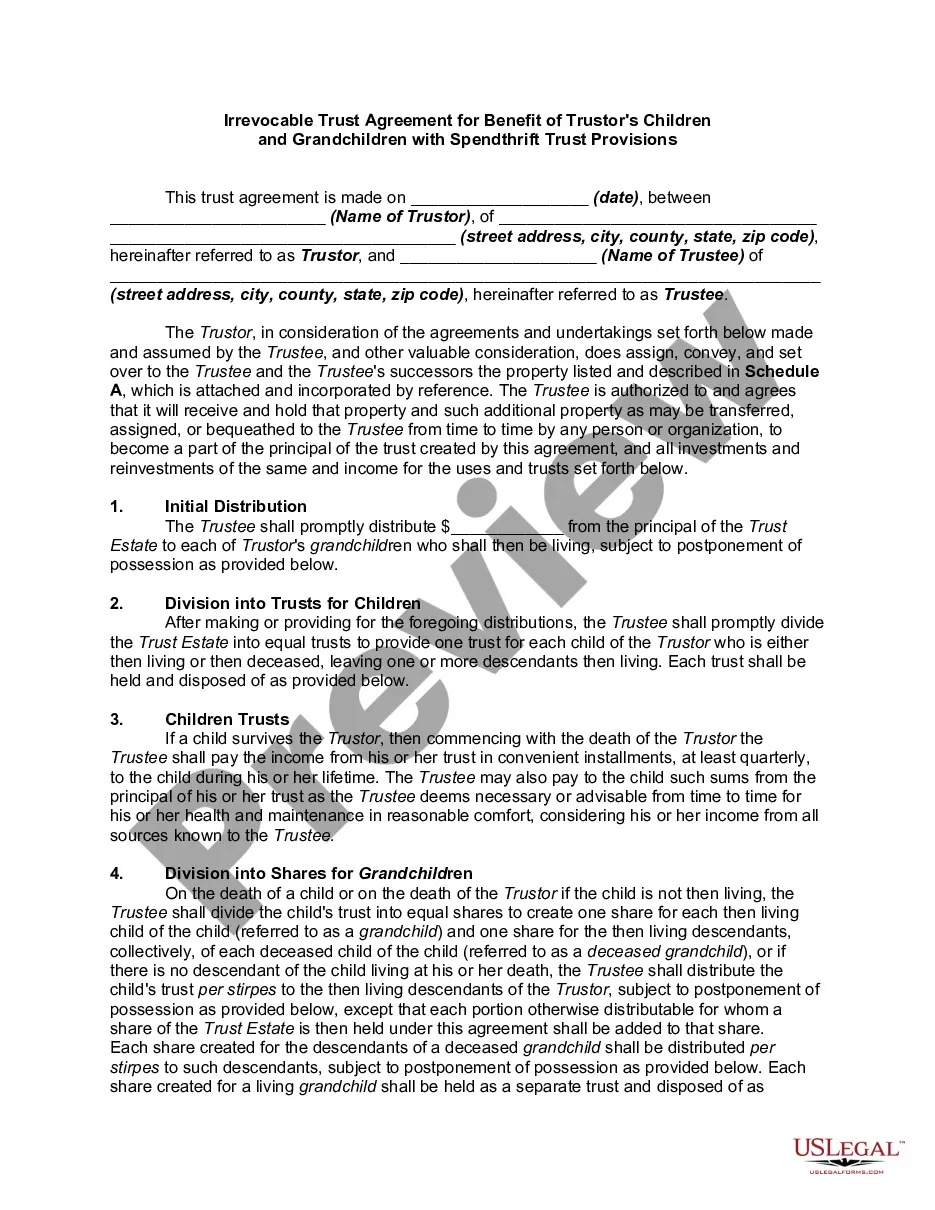
How to fill out Irrevocable Trust Agreement For Benefit Of Trustor's Children And Grandchildren?
- If you are a returning user, log into your account to retrieve your required form template. Ensure your subscription is active; renew it if necessary.
- For first-time users, start by browsing the extensive collection. Review the Preview mode and form descriptions to select the correct template that fits your specific needs.
- If adjustments are needed, use the Search tab above to find the appropriate form. Confirm it meets all necessary criteria.
- Proceed to purchase. Click on the Buy Now button and select your preferred subscription plan. An account registration is required for access.
- Finalize your transaction by inputting your payment details, whether via credit card or PayPal.
After the purchase, you can download the form directly to your device. This allows you to complete the document and access it anytime via the My Forms section of your profile.
US Legal Forms empowers users by providing an extensive legal document library, ensuring quick and notarized solutions. Start your journey to establishing your irrevocable trust today!
Form popularity
FAQ
In an irrevocable trust, the assets are owned by the trust itself, not the grantor or beneficiaries. This ownership structure provides essential asset protection, preventing creditors from accessing these properties. Therefore, the trust effectively safeguards the assets while allowing for planned distribution to beneficiaries as outlined by the trustor. For irrevocable trust trustors with a trust, this arrangement ensures lasting benefits for their loved ones.
One common downside of an irrevocable trust is that the grantor relinquishes control over the assets transferred into the trust. This means the trustor cannot modify or terminate the trust without beneficiary consent, which can limit financial flexibility. However, it’s important to weigh these disadvantages against the benefits of protection from creditors and tax advantages. Irrevocable trust trustors with a trust often find the benefits outweigh the challenges.
When the grantor of an irrevocable trust dies, the trust continues to operate as defined in its legal documents. The appointed trustee takes over management of the trust assets, ensuring they are handled according to the wishes of the trustor. This guarantees that beneficiaries receive their designated benefits without delays often associated with probate. Thus, irrevocable trust trustors with a trust can maintain their legacy seamlessly.
An irrevocable trust does not automatically dissolve after the death of the grantor. Instead, it remains in place as per the terms outlined in the trust document. This arrangement provides stability and ensures that the assets are managed and distributed according to the trustor's wishes. Therefore, irrevocable trust trustors with a trust can effectively protect their assets from probate.
One of the most significant mistakes parents make when creating a trust fund is failing to communicate their intentions clearly with their children. This oversight can lead to misunderstandings and disputes down the line. Irrevocable trust trustors with a trust should consider openly discussing their plans and expectations with family members to promote harmony and clarity.
Yes, a beneficiary can serve as the trustee of an irrevocable trust, but it comes with potential complications. While it may seem convenient, the relationship can lead to conflicts of interest and strain family dynamics. Many irrevocable trust trustors with a trust find it beneficial to appoint an independent trustee to foster a more balanced and fair distribution.
The best trustee for an irrevocable trust varies based on individual circumstances, but reliability and neutrality are key traits. Professional trustees, such as banks or trust companies, often come with experience and reduce family conflict. Irrevocable trust trustors with a trust frequently choose these competent entities to ensure proper management and adherence to legal requirements.
Filling out an irrevocable trust can be straightforward once you understand the components involved. You’ll need to include information about the grantor, the trustee, and the beneficiaries, as well as the assets being placed into the trust. For comprehensive guidance, many irrevocable trust trustors with a trust utilize resources such as uslegalforms, which provide templates and clarify the process.
Naming a trustee for your trust requires careful thought. Look for someone who possesses both integrity and competence, as they will be responsible for managing assets and making critical decisions. Many irrevocable trust trustors with a trust find that a blend of family, financial advisors, or legal professionals serves them best.
When selecting a trustee for your irrevocable trust, consider someone who can remain objective and act in the best interest of the beneficiaries. This might not always be a family member; a neutral third party or a professional trustee can often provide better oversight. Irrevocable trust trustors with a trust often benefit from appointing individuals or institutions that have experience in handling estate matters.