Irrevocable Trust Form Complete With The Following
Description


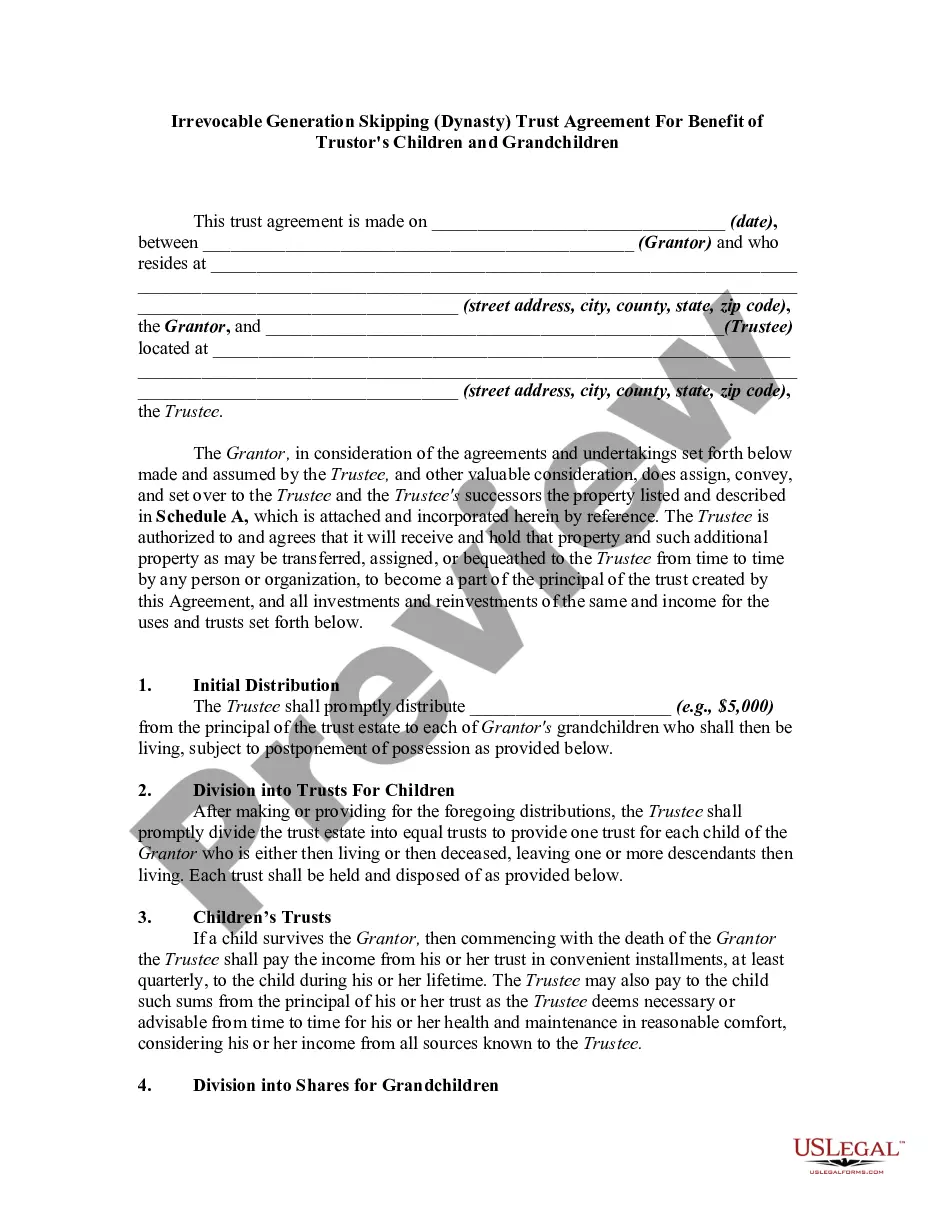
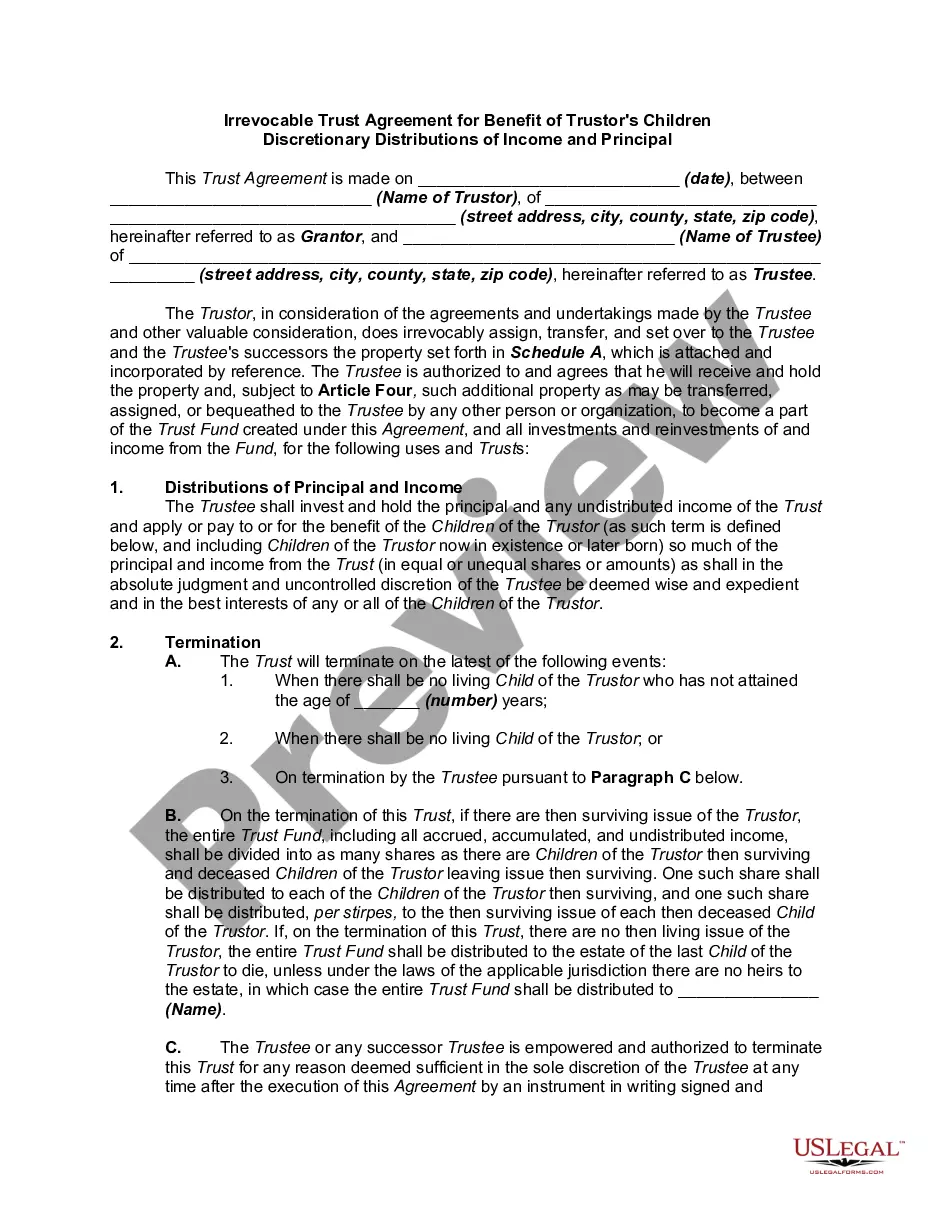
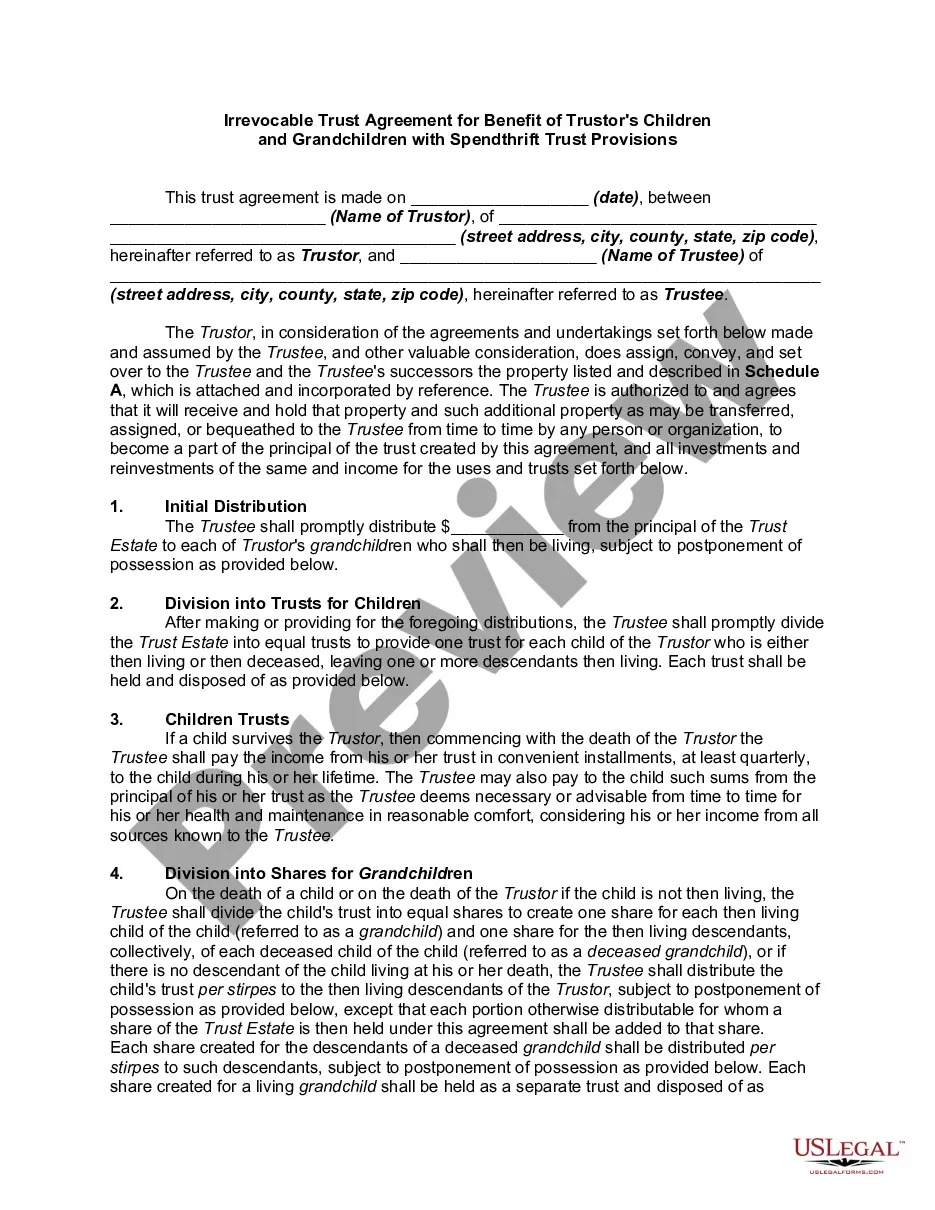
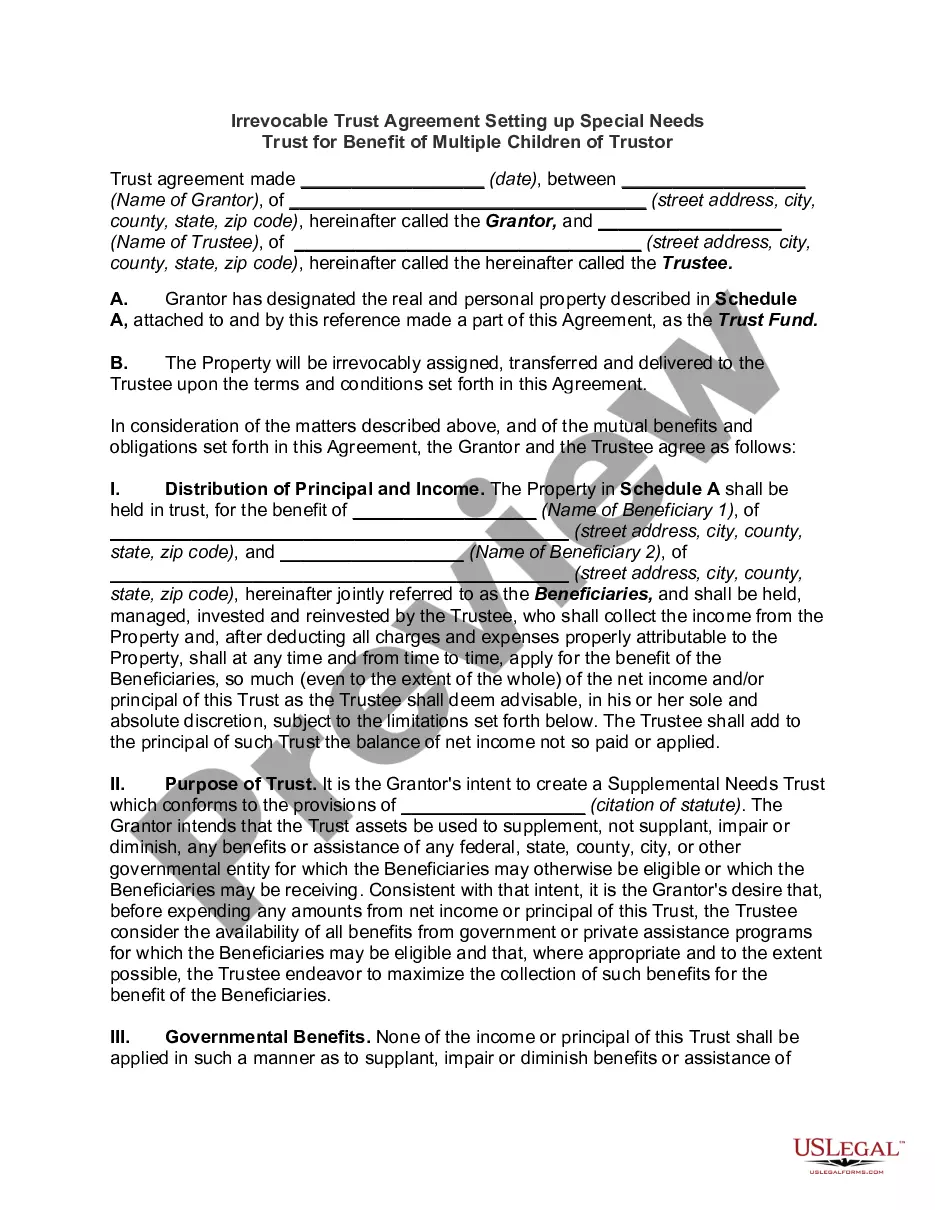
Get your form ready online
Our built-in tools help you complete, sign, share, and store your documents in one place.
Make edits, fill in missing information, and update formatting in US Legal Forms—just like you would in MS Word.
Download a copy, print it, send it by email, or mail it via USPS—whatever works best for your next step.
Sign and collect signatures with our SignNow integration. Send to multiple recipients, set reminders, and more. Go Premium to unlock E-Sign.
If this form requires notarization, complete it online through a secure video call—no need to meet a notary in person or wait for an appointment.
We protect your documents and personal data by following strict security and privacy standards.

Make edits, fill in missing information, and update formatting in US Legal Forms—just like you would in MS Word.

Download a copy, print it, send it by email, or mail it via USPS—whatever works best for your next step.

Sign and collect signatures with our SignNow integration. Send to multiple recipients, set reminders, and more. Go Premium to unlock E-Sign.

If this form requires notarization, complete it online through a secure video call—no need to meet a notary in person or wait for an appointment.

We protect your documents and personal data by following strict security and privacy standards.
Looking for another form?





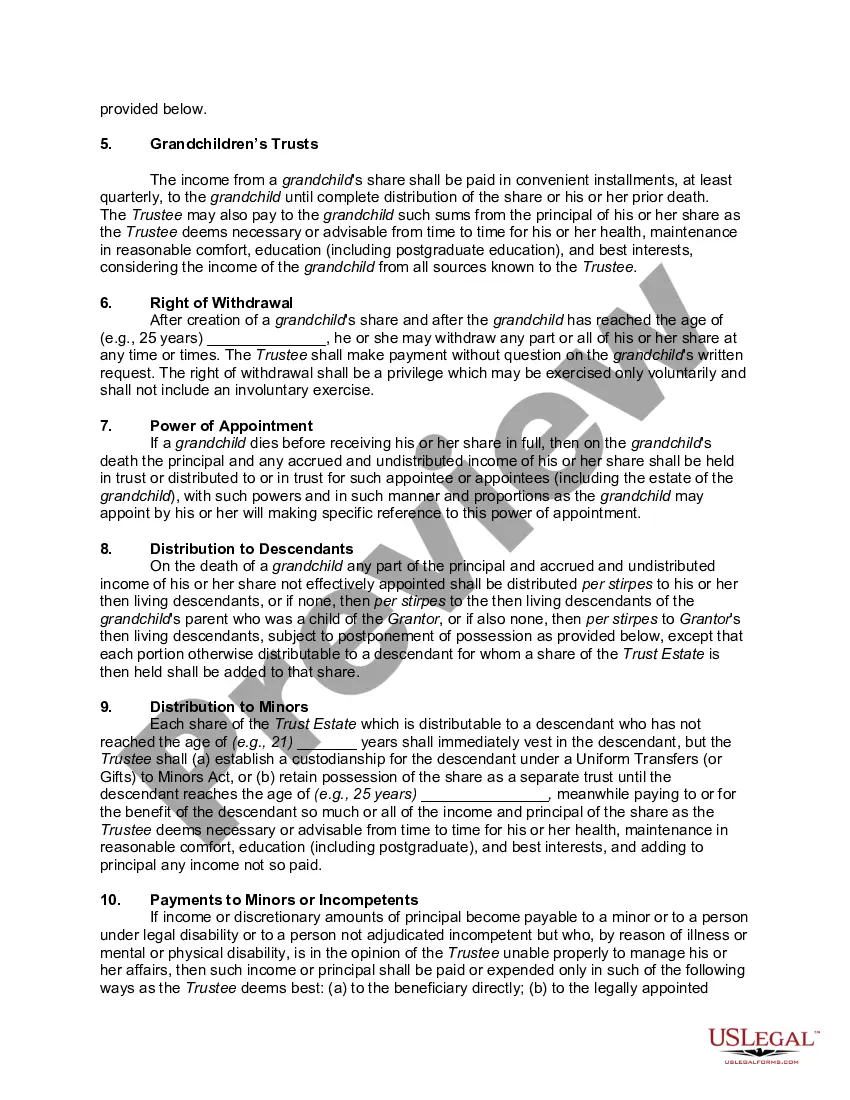
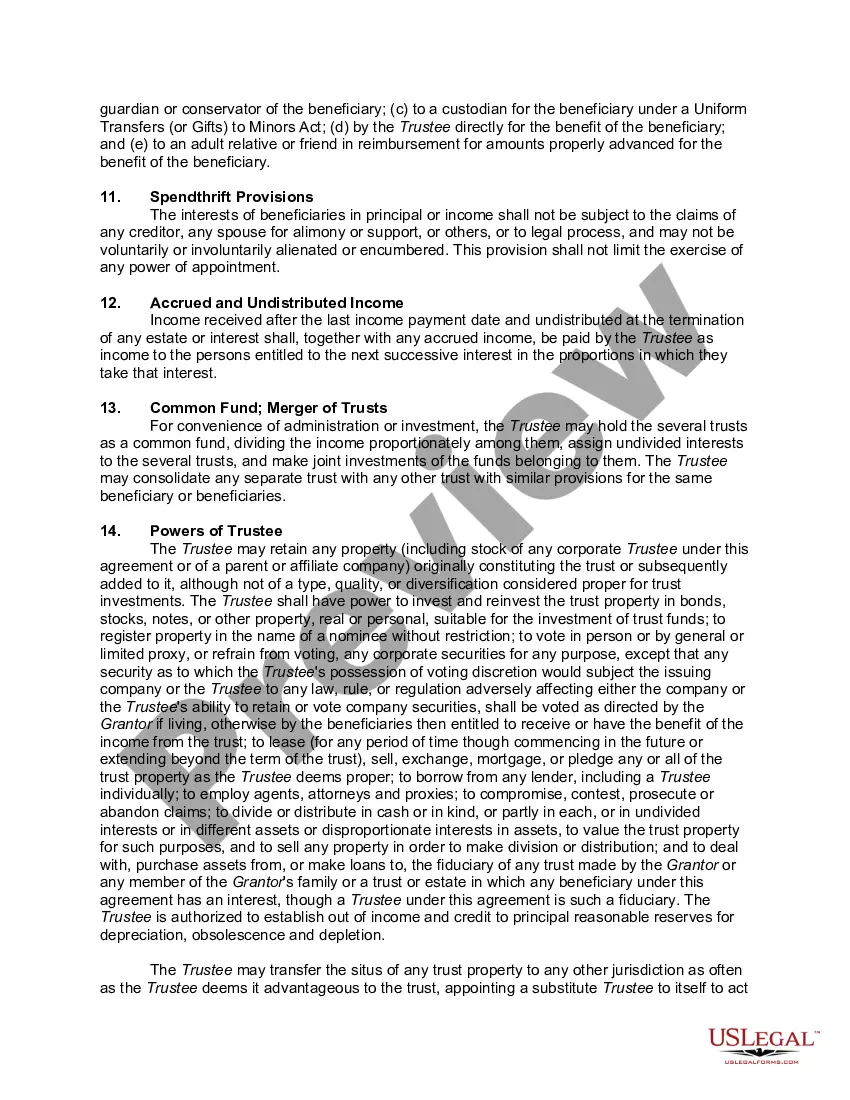
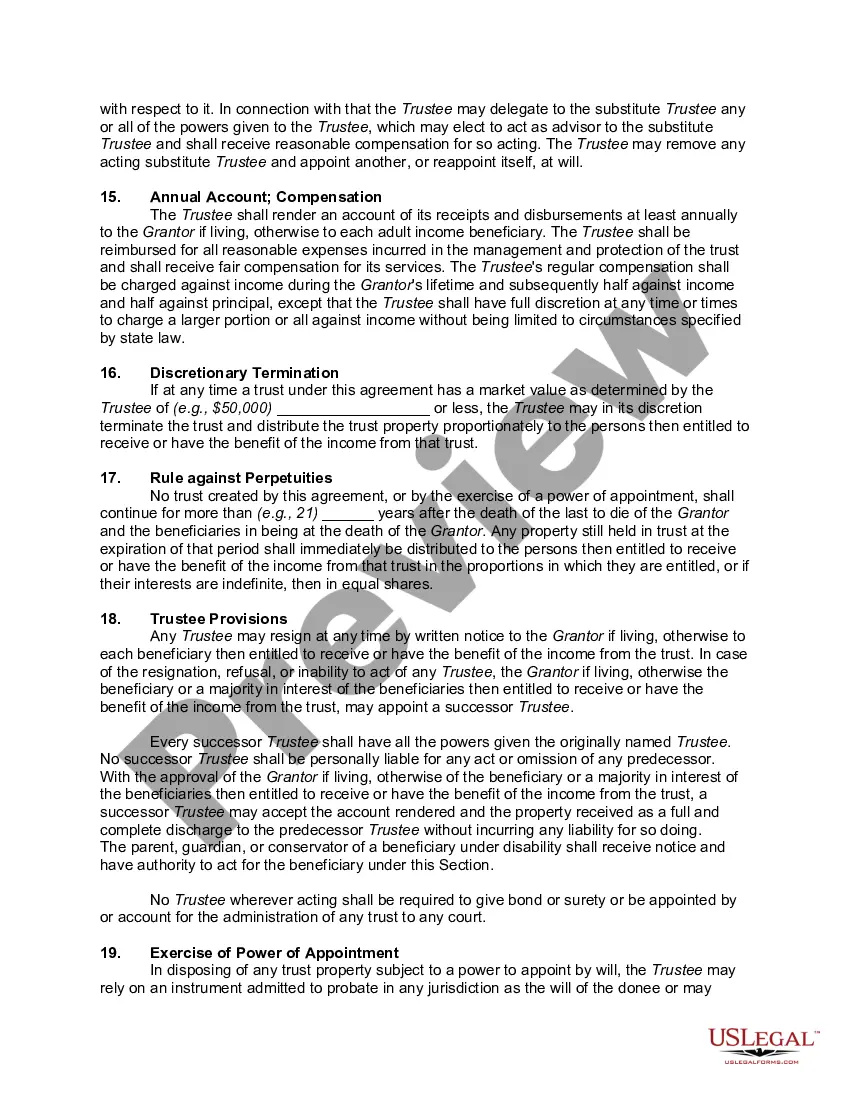
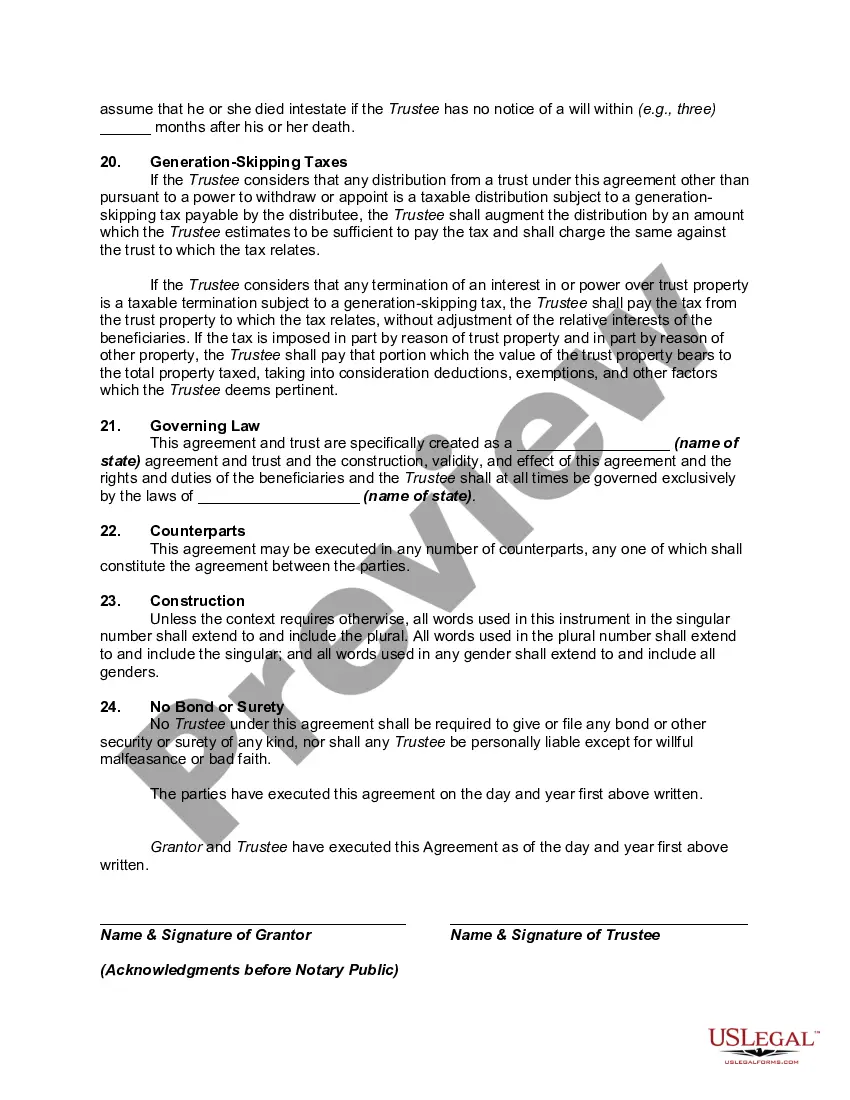
How to fill out Irrevocable Trust Agreement For Benefit Of Trustor's Children And Grandchildren?
- If you are an existing user, log in to your account and download the form template directly by clicking the Download button. Ensure your subscription is active; if not, renew it under your payment plan.
- For first-time users, start by reviewing the Preview mode and form description. Confirm that you’re selecting the correct form that adheres to local jurisdiction standards.
- If necessary, search for other templates using the Search tab above until you find the one that best fits your requirements.
- Purchase your document by clicking the Buy Now button and selecting your desired subscription plan. Registration for an account is mandatory to unlock full access to the library.
- Proceed with your payment by entering your credit card details or utilizing your PayPal account for the subscription fee.
- Once your purchase is complete, download the form to your device. You can also access it later via the My Forms menu in your profile.
US Legal Forms offers a robust collection of over 85,000 legal forms that are easy to fill out and edit, setting them apart from competitors. Additionally, users have access to premium experts who can assist with form completion, ensuring that your documents are accurate and legally sound.
Take control of your legal needs today! Visit US Legal Forms to get started on your irrevocable trust.
Form popularity
FAQ
One significant mistake parents often make when setting up a trust fund is failing to clearly define the terms and conditions for beneficiaries. Without precise guidelines, beneficiaries may misunderstand their roles and responsibilities. To avoid confusion and ensure effective management of the trust, consider using clear templates from uslegalforms.
An irrevocable trust is valid when it meets certain legal criteria, including a clear intention to create the trust, a grantor, a trustee, and identifiable beneficiaries with specific assets. Additionally, it must be executed in writing and signed according to state laws. Utilizing well-structured legal forms can help ensure that your irrevocable trust is valid and enforceable.
The new rule on irrevocable trusts primarily focuses on tax implications and changes in asset protection laws. Recent updates may affect how assets are categorized and what benefits they provide. Staying informed through reliable resources or legal platforms, such as uslegalforms, ensures you understand the latest developments.
To write an irrevocable trust document, begin by defining the trust's purpose and identifying the assets to be included. Next, appoint a trustee who will manage the assets and list the beneficiaries who will receive the benefits. Utilizing a resource like uslegalforms can help you access templates to simplify this process.
Yes, you can write your own irrevocable trust. However, ensure that you follow the legal requirements specific to your state. Using a comprehensive guide, like those from uslegalforms, can provide you with the necessary templates and instructions to craft a valid irrevocable trust form.
When creating an irrevocable trust, avoid placing assets that you may need access to in the future, such as your primary residence or personal belongings. Additionally, avoid including sentimental items that you wish to retain control over. Remember, once you place assets in an irrevocable trust, you relinquish control over them.
Assets that are commonly placed in an irrevocable trust include life insurance policies, investment accounts, and real estate intended for long-term benefit to your heirs. By placing these assets in a trust, you can help minimize estate taxes and avoid probate. It’s vital to assess each asset's potential impact on your estate planning strategy. To get started, utilize an irrevocable trust form complete to organize your assets effectively.
Filling out an irrevocable trust involves several steps, starting with collecting information about your assets and beneficiaries. You will need to select a trustee and outline the specific terms of the trust, including how assets will be distributed. Using a structured irrevocable trust form can streamline this process, ensuring you include all necessary details while adhering to legal requirements. If you have questions, seek legal advice.
You should avoid placing assets like personal checking accounts and vehicles in an irrevocable trust, as you may want to retain access and use. Additionally, retirement accounts often have specific implications that could create tax issues if transferred. Trusts can complicate your financial situation, so it’s crucial to evaluate your assets carefully. An irrevocable trust form complete with expert guidance might help you navigate these decisions.
One major disadvantage of placing your house in an irrevocable trust is the loss of control. Once you transfer ownership, you cannot sell or modify the terms without consent from the beneficiaries. Additionally, it may affect your eligibility for certain government benefits, such as Medicaid. If you're considering this move, using a well-designed irrevocable trust form can help clarify your intentions.