Irrevocable Trust Benefit Trustees For Reservations
Description


Get your form ready online
Our built-in tools help you complete, sign, share, and store your documents in one place.
Make edits, fill in missing information, and update formatting in US Legal Forms—just like you would in MS Word.
Download a copy, print it, send it by email, or mail it via USPS—whatever works best for your next step.
Sign and collect signatures with our SignNow integration. Send to multiple recipients, set reminders, and more. Go Premium to unlock E-Sign.
If this form requires notarization, complete it online through a secure video call—no need to meet a notary in person or wait for an appointment.
We protect your documents and personal data by following strict security and privacy standards.

Make edits, fill in missing information, and update formatting in US Legal Forms—just like you would in MS Word.

Download a copy, print it, send it by email, or mail it via USPS—whatever works best for your next step.

Sign and collect signatures with our SignNow integration. Send to multiple recipients, set reminders, and more. Go Premium to unlock E-Sign.

If this form requires notarization, complete it online through a secure video call—no need to meet a notary in person or wait for an appointment.

We protect your documents and personal data by following strict security and privacy standards.
Looking for another form?



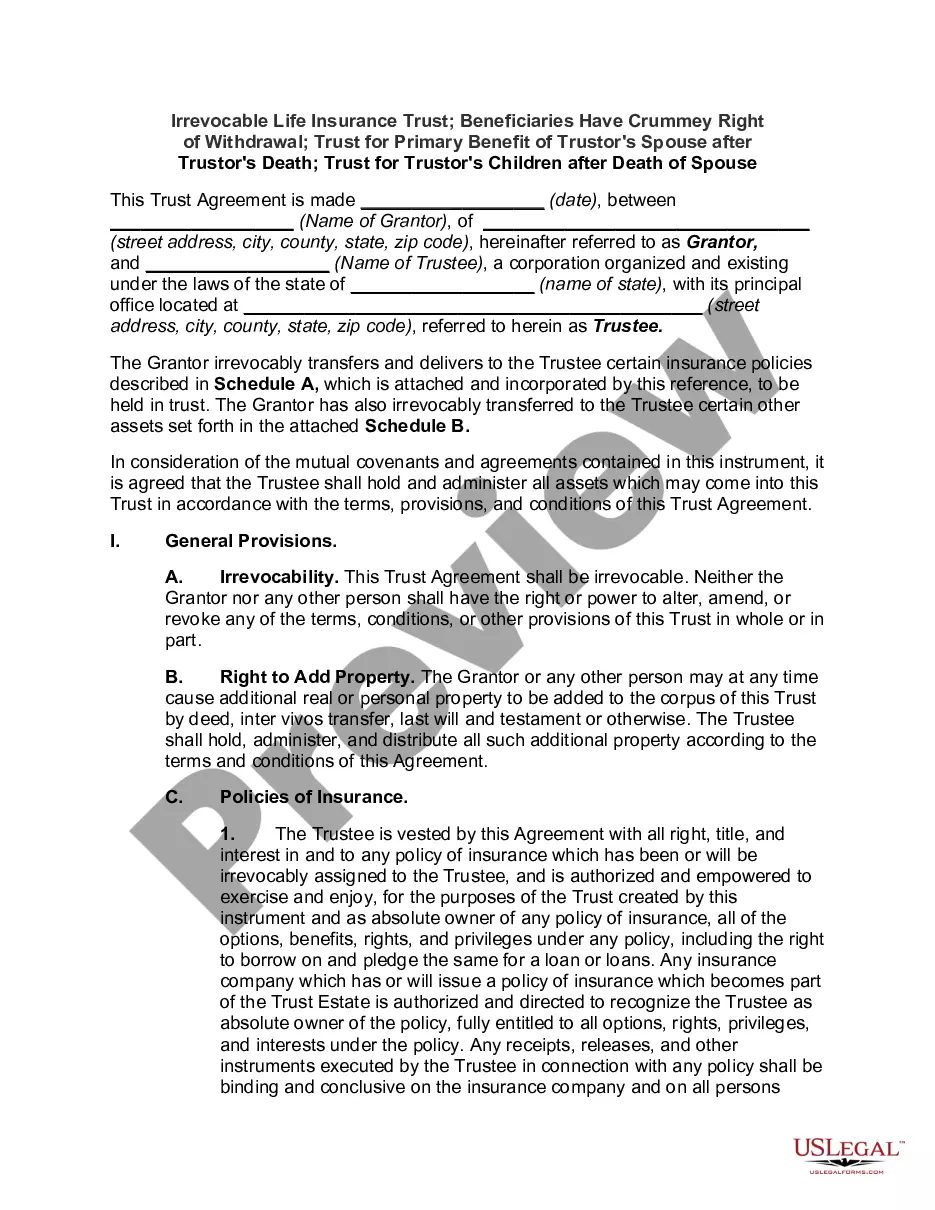


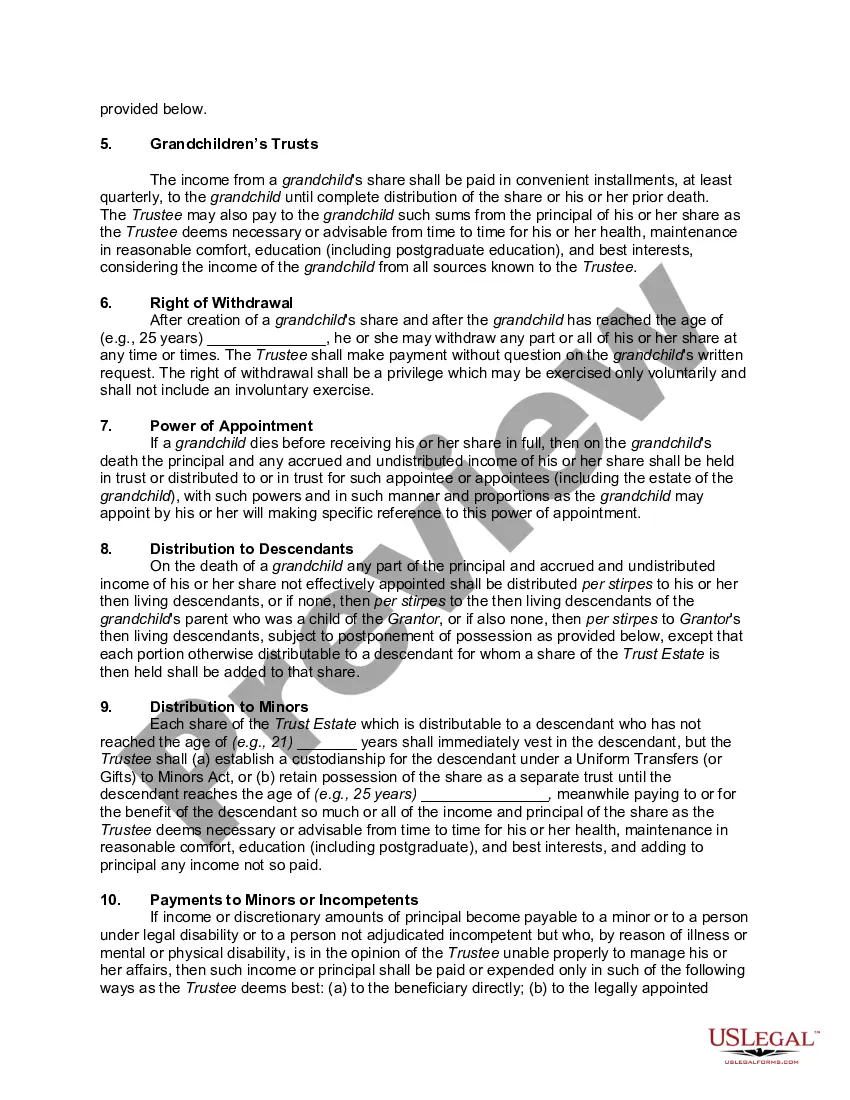
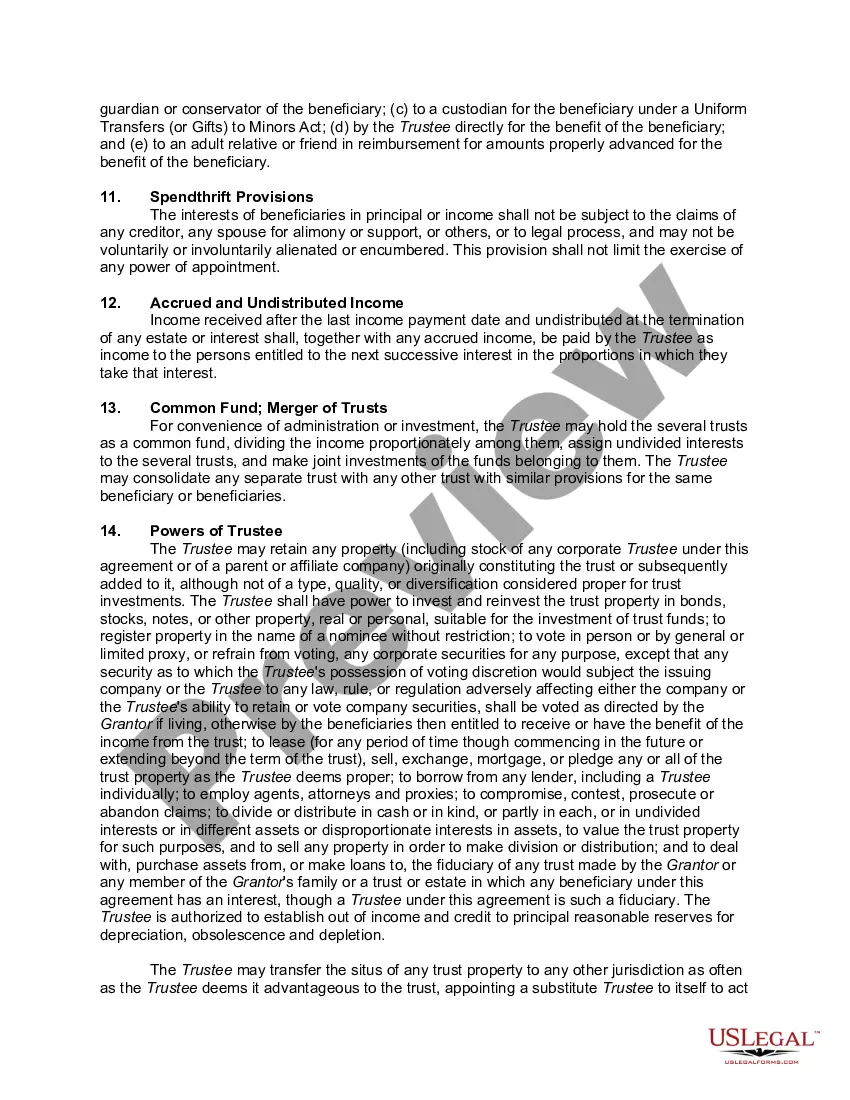
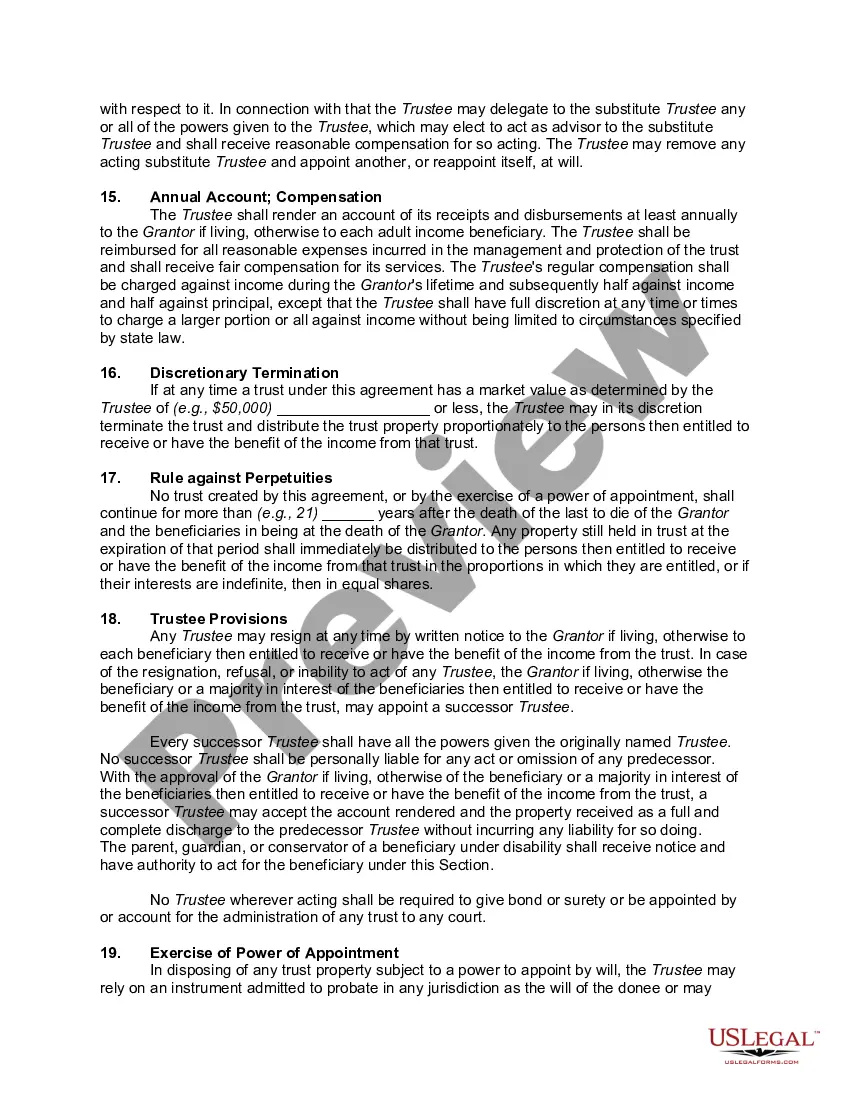
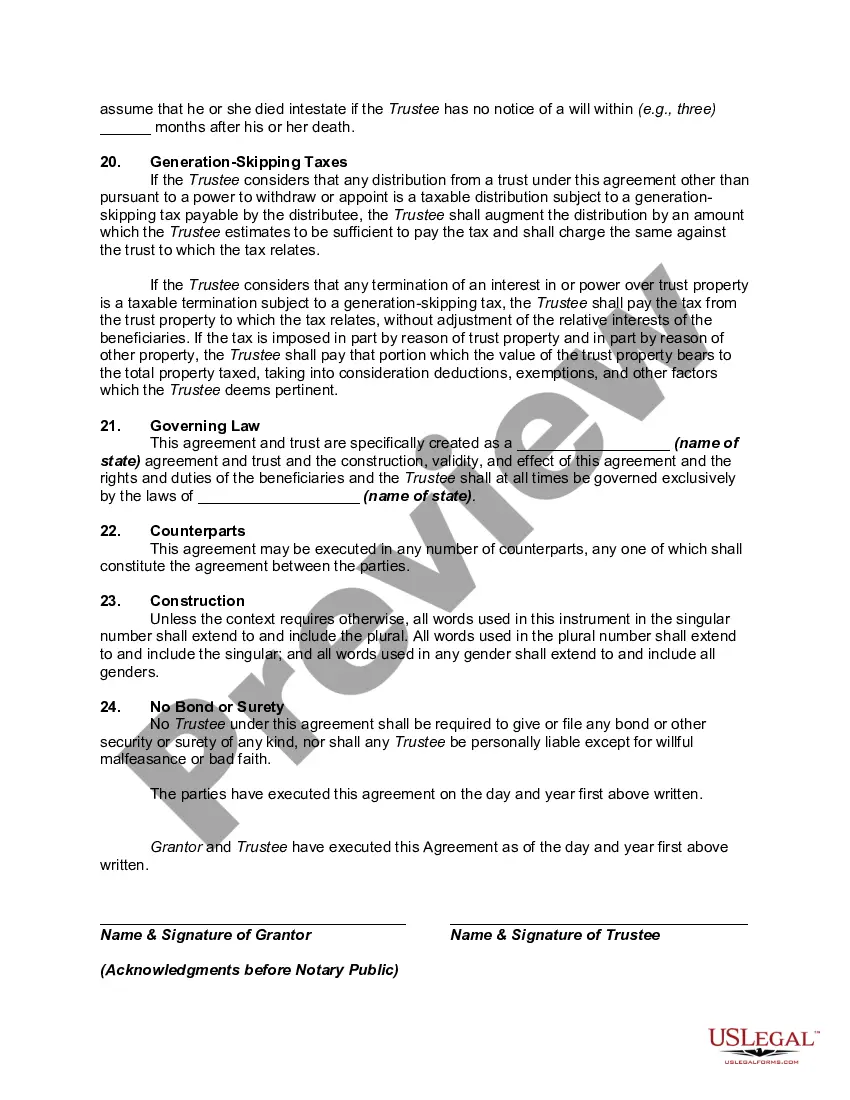
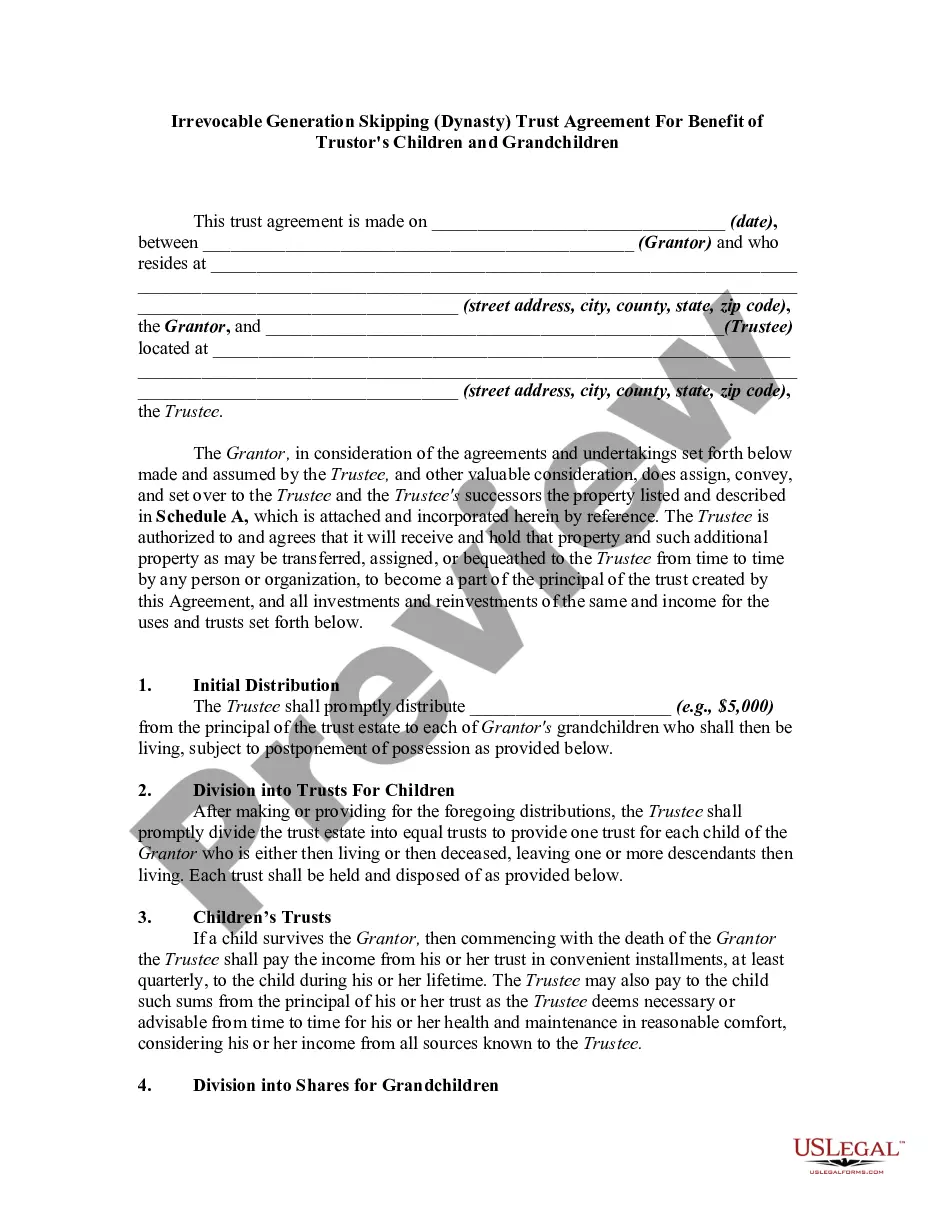
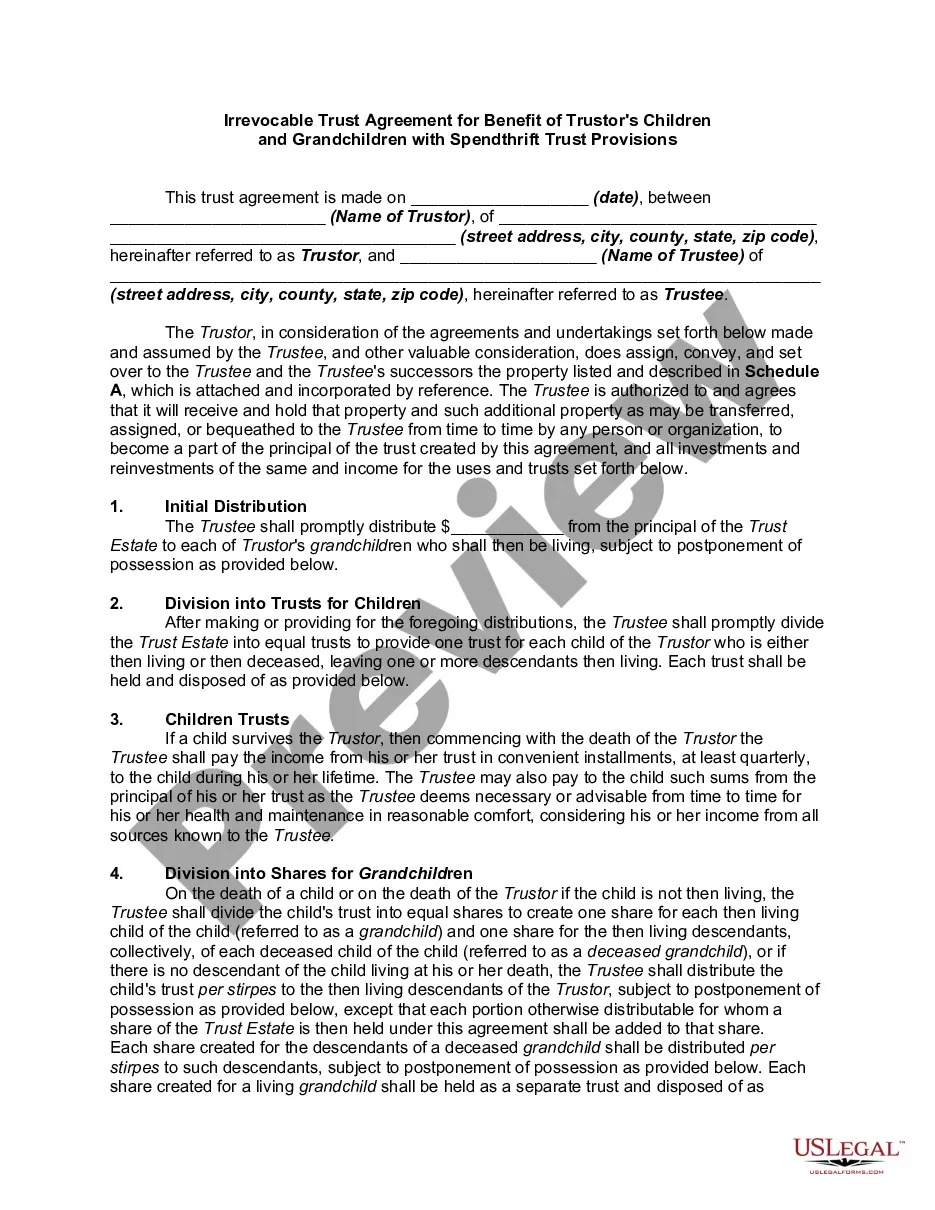
How to fill out Irrevocable Trust Agreement For Benefit Of Trustor's Children And Grandchildren?
Legal administration can be overwhelming, even for seasoned professionals.
When seeking an Irrevocable Trust Benefit Trustees For Reservations and lack the opportunity to spend time locating the correct and current version, the process can become taxing.
With US Legal Forms, you can.
Access a database of writings, guides, and materials pertinent to your situation and requirements.
Make sure it is the right form by previewing and reviewing its description.
- Save time and energy searching for the documents you need, and use US Legal Forms’ superior search and Preview feature to locate Irrevocable Trust Benefit Trustees For Reservations and obtain it.
- If you have a monthly subscription, Log In to your US Legal Forms account, search for the form, and download it.
- Check your My documents section to view the documents you've previously stored and manage your folders as needed.
- If it’s your first time using US Legal Forms, create a free account for unlimited access to all features of the library.
- Here are the steps to follow after downloading the required form.
- Utilize a powerful online form repository to change the way you handle these matters efficiently.
- US Legal Forms is a frontrunner in online legal documentation, boasting over 85,000 state-specific legal forms accessible at any time.
- Make use of cutting-edge tools to fill out and manage your Irrevocable Trust Benefit Trustees For Reservations.
Form popularity
FAQ
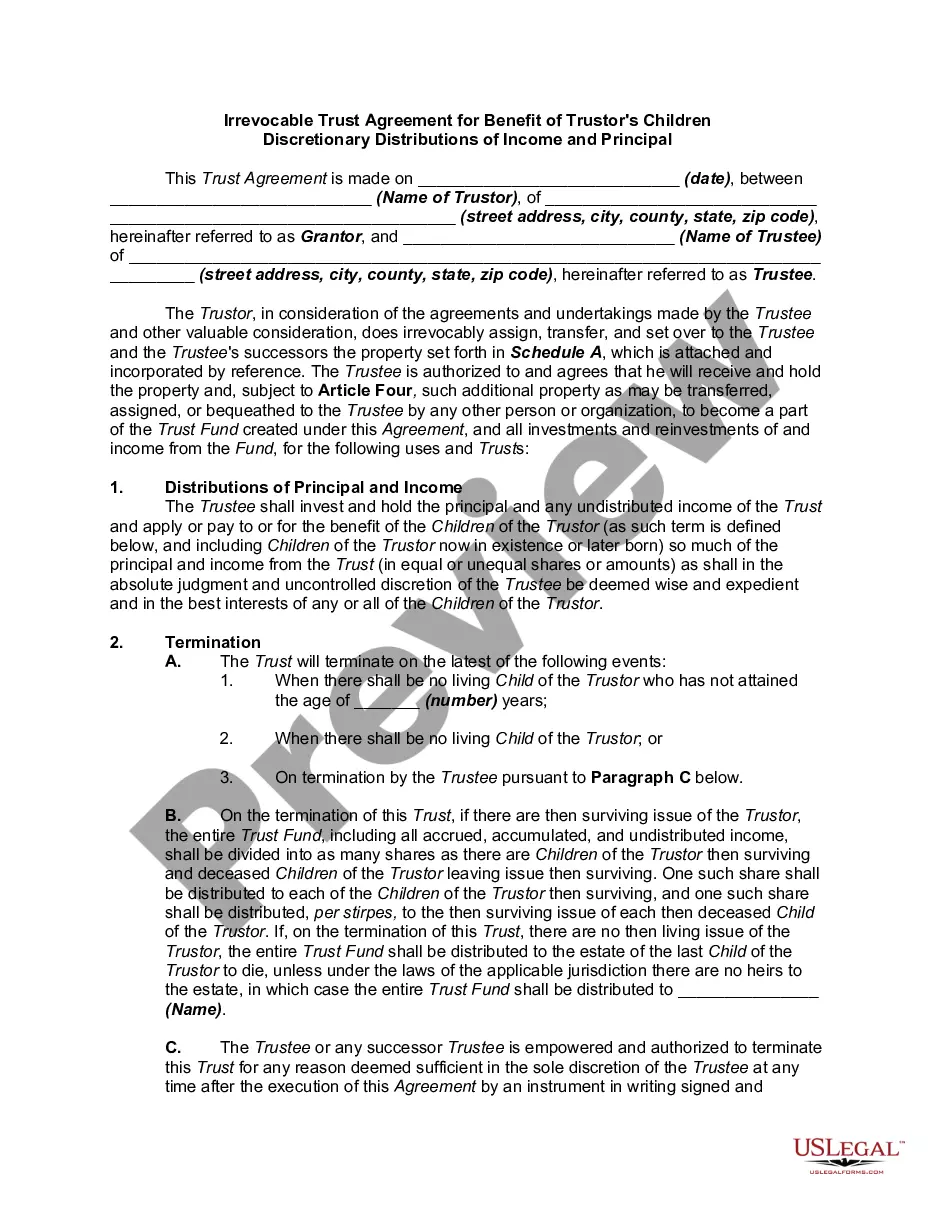
When forming an irrevocable trust, avoid including personal property or assets that may create complex legal implications, such as business interests with multiple partners. Furthermore, refrain from including assets that may not align with your overarching estate plan. Keeping these considerations in mind helps trustees maintain clarity and effectiveness over reservations.
As a trustee, you are responsible for managing Trust property on behalf of another person or organisation, and as instructed by the terms of the Trust. Trust property includes money, shares and real estate.
The trusts shall be irrevocable, and the Grantor expressly waives all rights and powers, whether alone or in conjunction with others, and regardless of when or from what source he may have acquired such rights or powers, to alter, amend, revoke, or terminate the trusts, or any of the terms of this Agreement, in whole ...
With that said, at the passing of the settlor/grantor, all trusts straightaway convert to an irrevocable status. So, a Trustee can be the beneficiary and an heir of the estate.
The trustee is the person (or people) who holds legal title to the property that is in the trust. The trustee's job is to manage the property in the trust for the benefit of the beneficiaries in the way the settlor has asked.