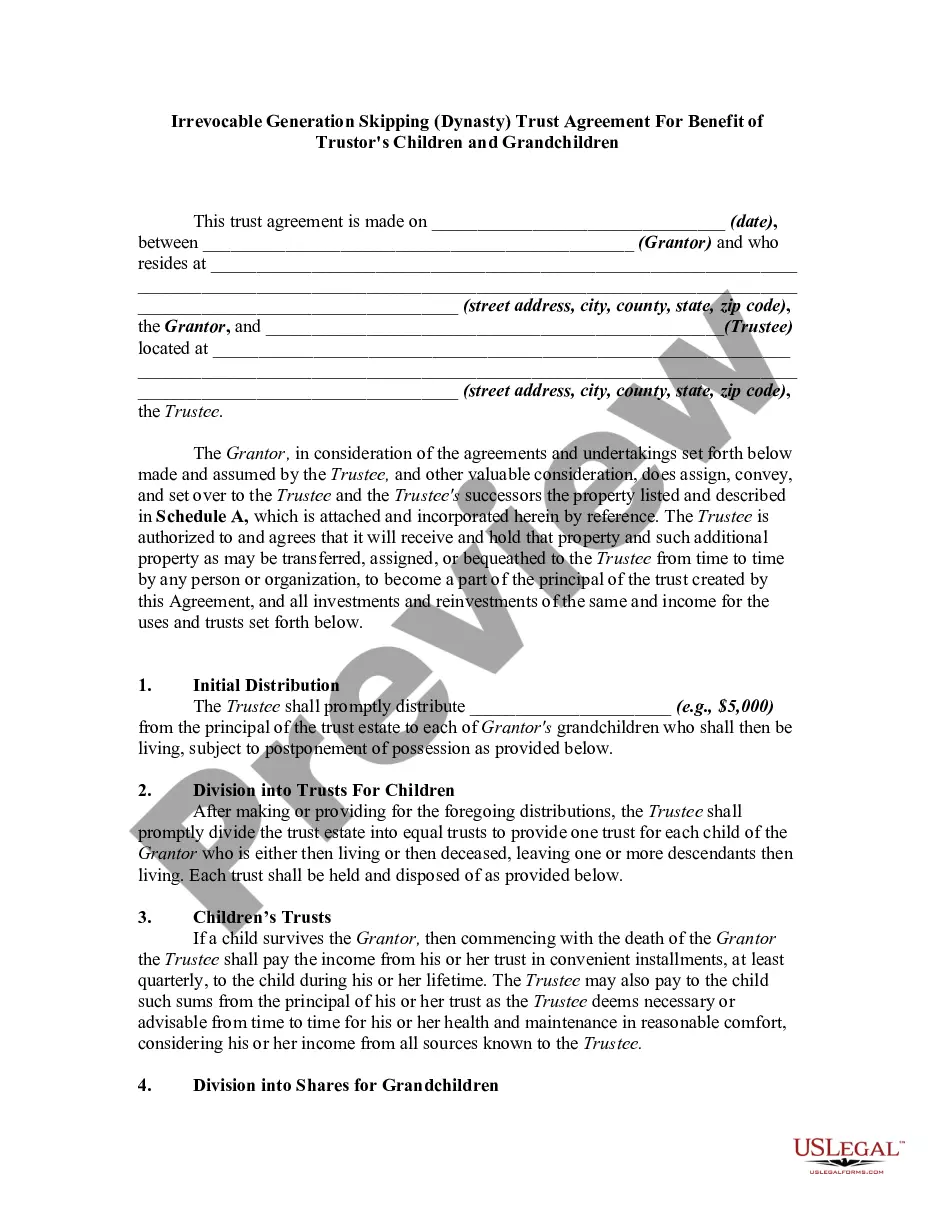
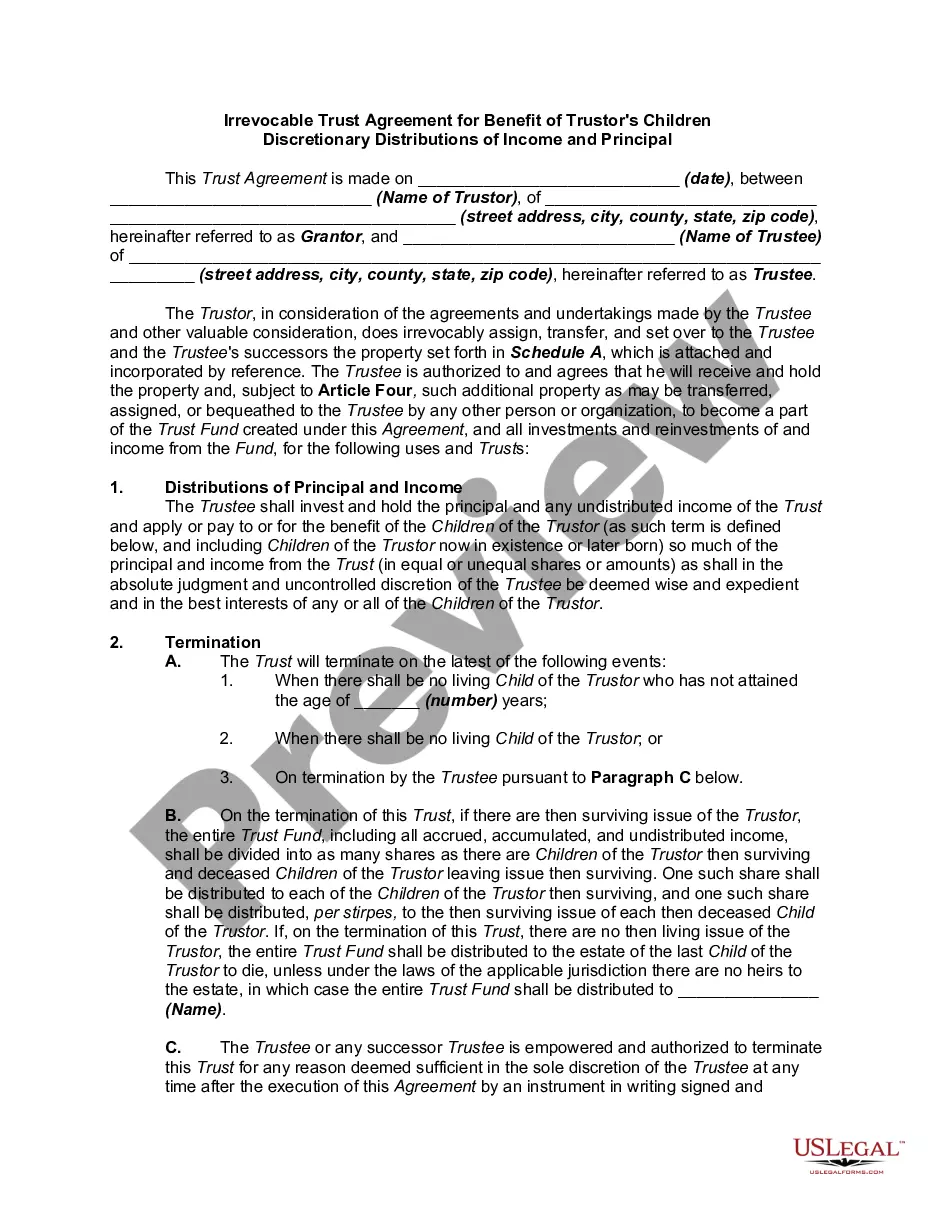
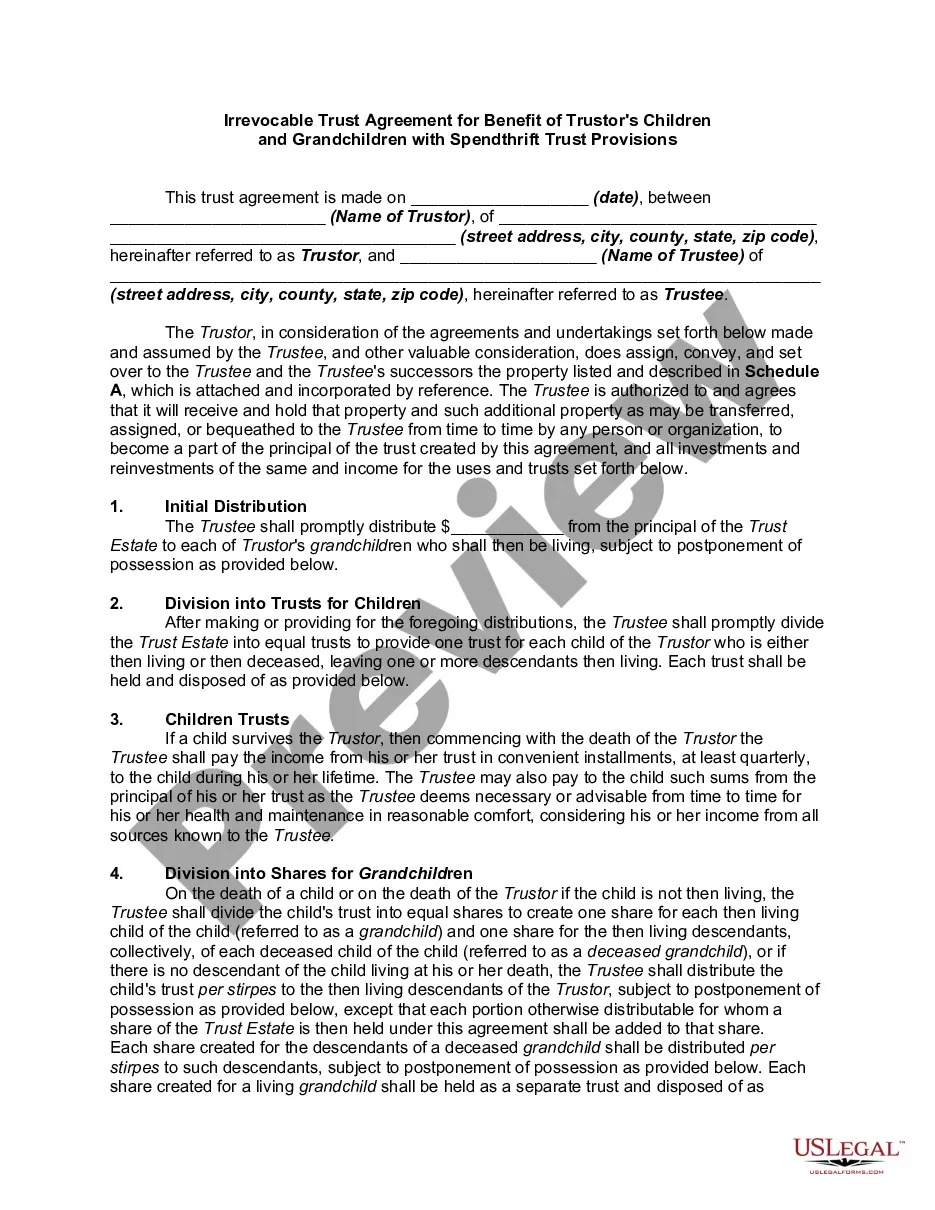
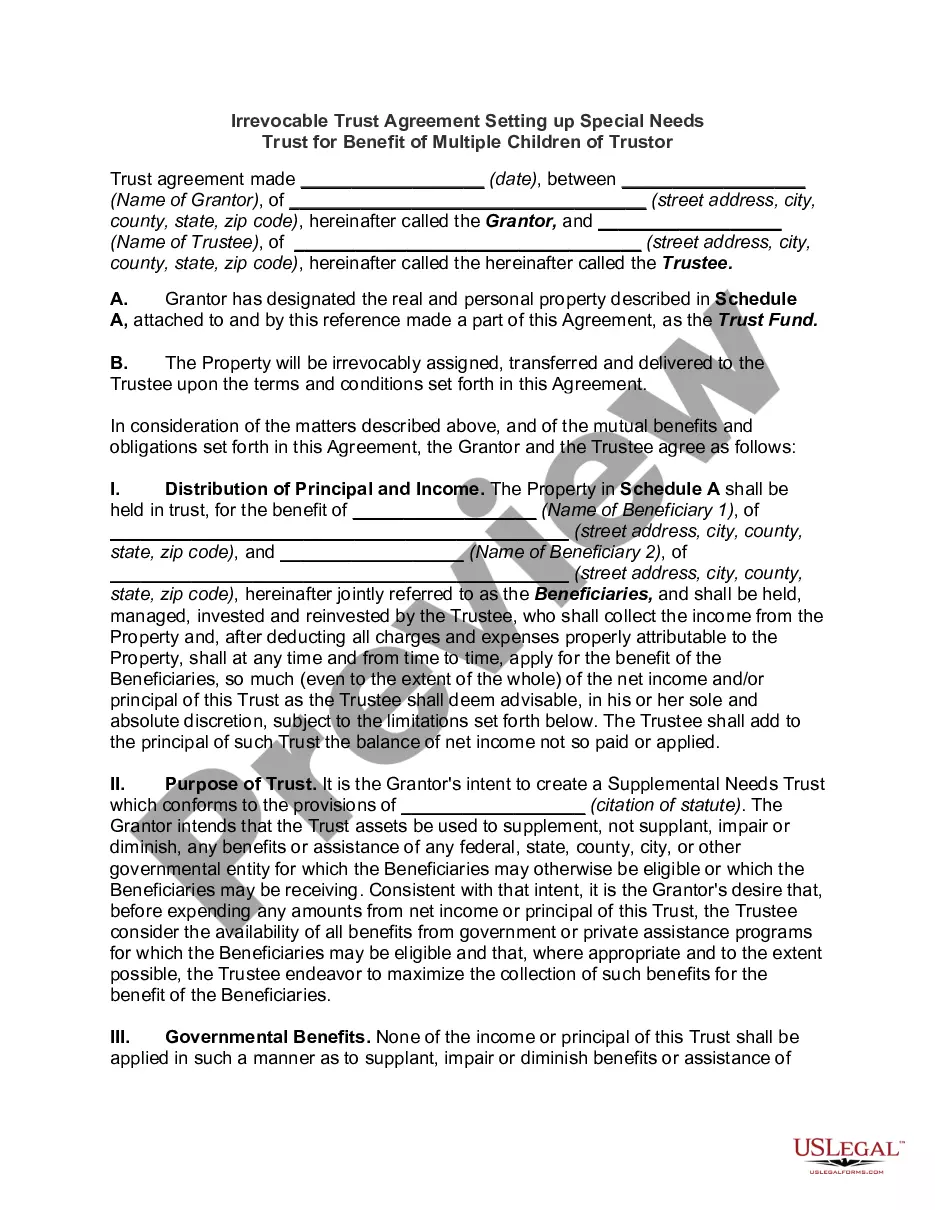
Irrevocable Trust Benefit Trustees For Alaska
Description


Get your form ready online
Our built-in tools help you complete, sign, share, and store your documents in one place.
Make edits, fill in missing information, and update formatting in US Legal Forms—just like you would in MS Word.
Download a copy, print it, send it by email, or mail it via USPS—whatever works best for your next step.
Sign and collect signatures with our SignNow integration. Send to multiple recipients, set reminders, and more. Go Premium to unlock E-Sign.
If this form requires notarization, complete it online through a secure video call—no need to meet a notary in person or wait for an appointment.
We protect your documents and personal data by following strict security and privacy standards.

Make edits, fill in missing information, and update formatting in US Legal Forms—just like you would in MS Word.

Download a copy, print it, send it by email, or mail it via USPS—whatever works best for your next step.

Sign and collect signatures with our SignNow integration. Send to multiple recipients, set reminders, and more. Go Premium to unlock E-Sign.

If this form requires notarization, complete it online through a secure video call—no need to meet a notary in person or wait for an appointment.

We protect your documents and personal data by following strict security and privacy standards.
Looking for another form?



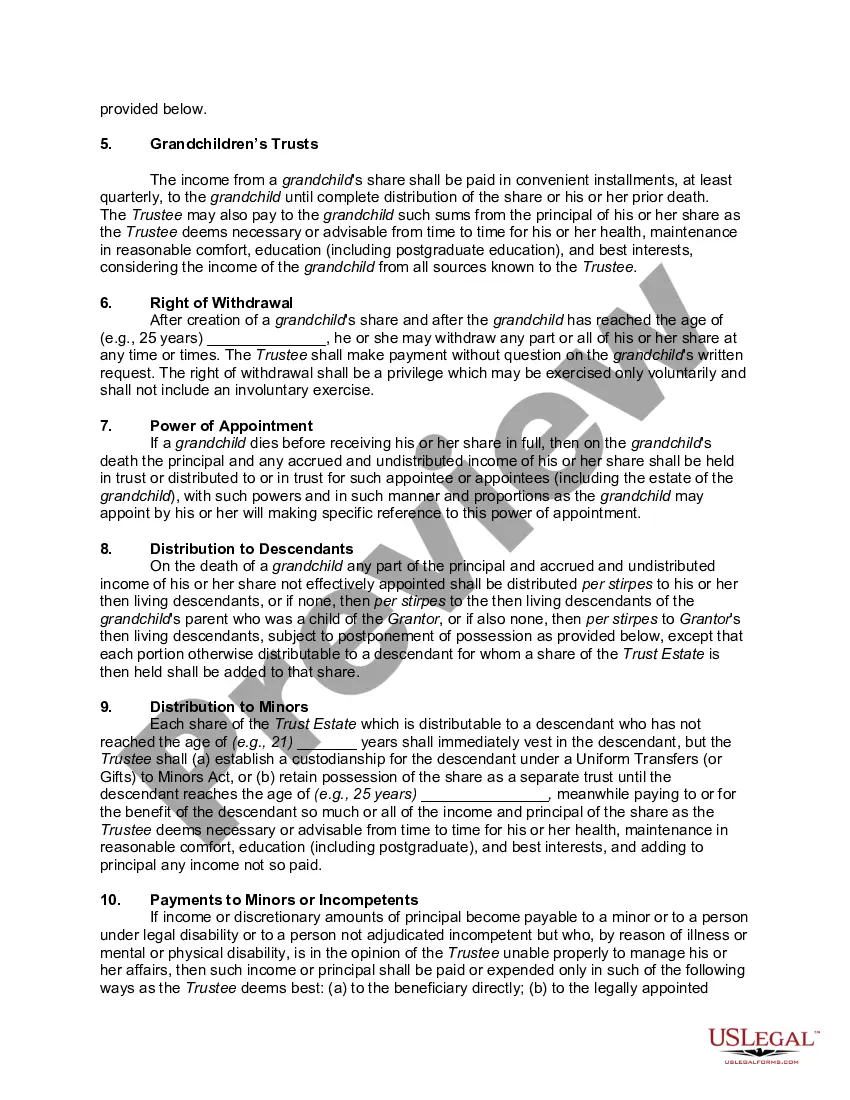
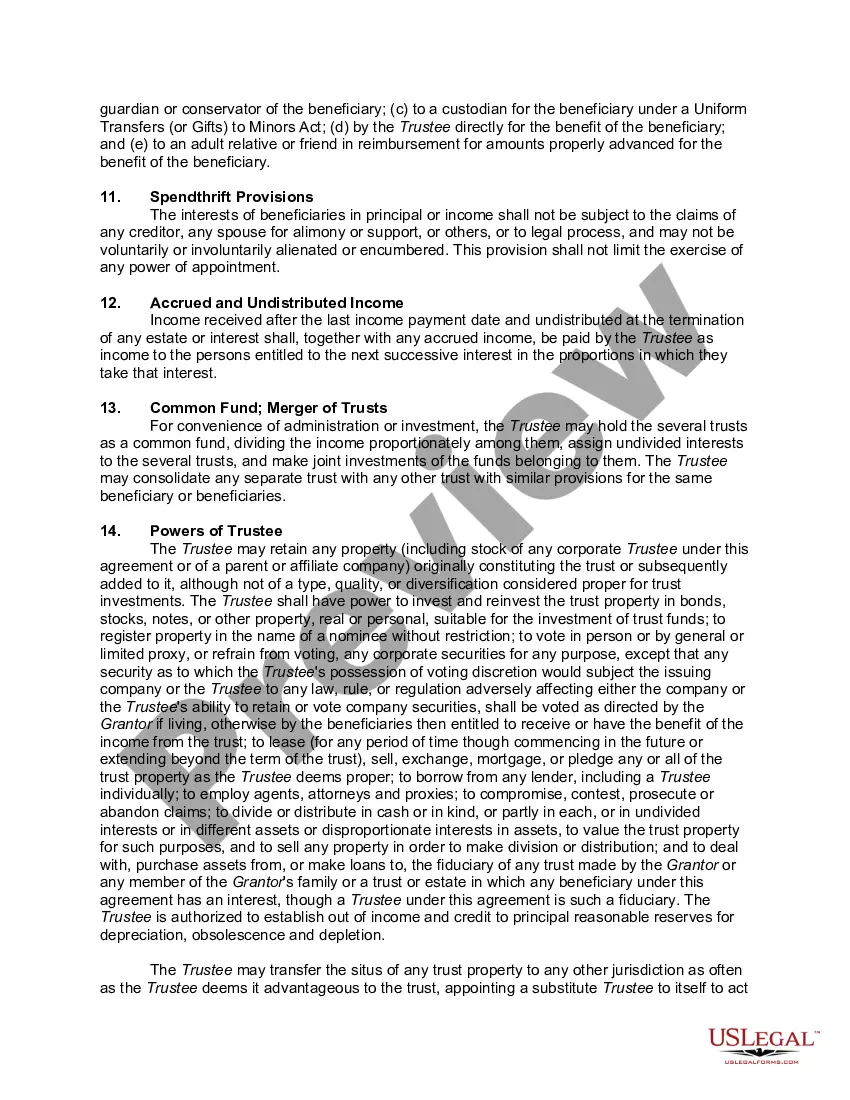
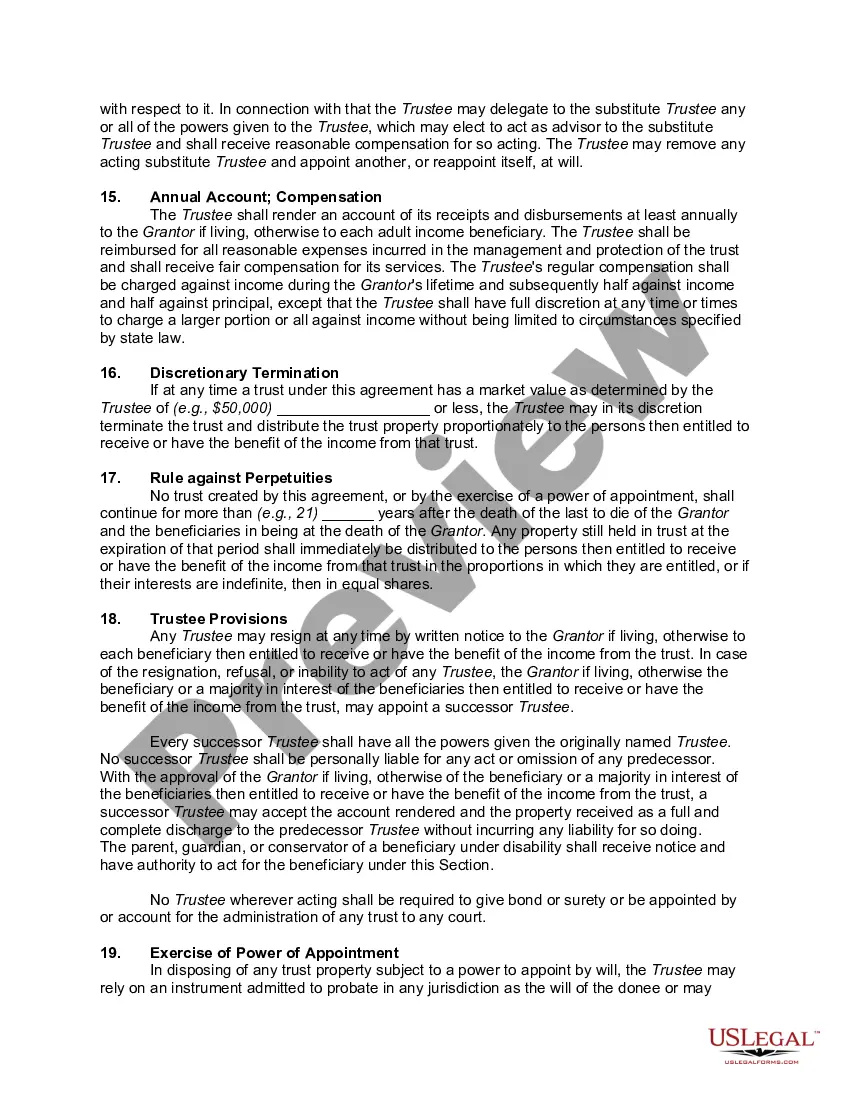
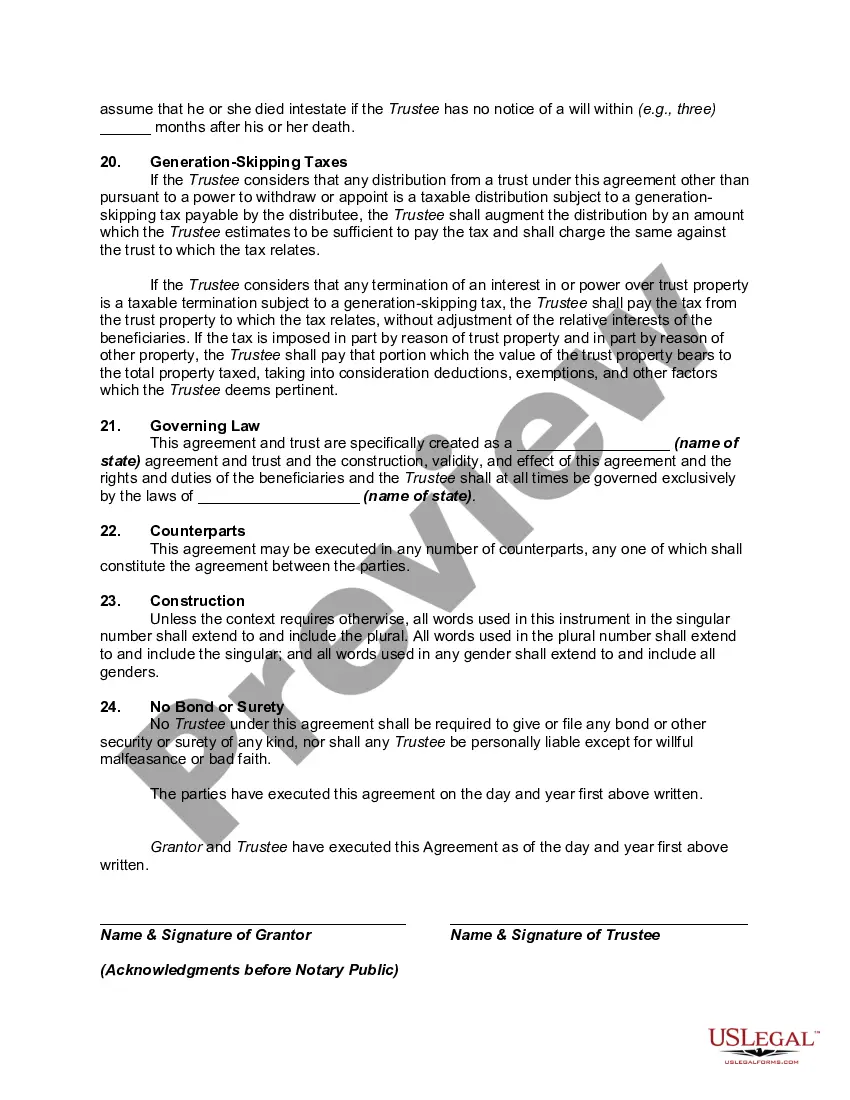
How to fill out Irrevocable Trust Agreement For Benefit Of Trustor's Children And Grandchildren?
Engaging with legal papers and processes can be a lengthy addition to your day. Irrevocable Trust Advantage Trustees for Alaska and similar forms frequently require you to locate them and determine the best method to complete them accurately.
Consequently, whether you are managing financial, legal, or personal affairs, possessing a comprehensive and user-friendly online repository of forms readily available will significantly aid you.
US Legal Forms is the premier online platform for legal templates, boasting over 85,000 state-specific forms and a range of resources to expedite your document completion.
Explore the collection of pertinent documents available to you with just a click.
Next, follow these steps to complete your form: Confirm that you have the correct form by utilizing the Review option and examining the form details. Select Buy Now when prepared and choose the monthly subscription plan that suits your requirements. Click Download, then fill out, eSign, and print the form. US Legal Forms has 25 years of experience assisting users in managing their legal documents. Acquire the form you need today and streamline any process effortlessly.
- US Legal Forms offers state- and county-specific forms available for download anytime.
- Protect your document management processes with top-tier services that enable you to create any form in minutes without additional or undisclosed charges.
- Simply Log In to your account, locate Irrevocable Trust Advantage Trustees for Alaska, and obtain it instantly from the My documents section.
- You can also access previously saved forms.
- Is it your inaugural time using US Legal Forms? Create and set up a free account in just a few minutes to gain access to the form library and Irrevocable Trust Advantage Trustees for Alaska.
Form popularity
FAQ
With that said, at the passing of the settlor/grantor, all trusts straightaway convert to an irrevocable status. So, a Trustee can be the beneficiary and an heir of the estate.
The trustee is the person (or people) who holds legal title to the property that is in the trust. The trustee's job is to manage the property in the trust for the benefit of the beneficiaries in the way the settlor has asked.
The trustee of an irrevocable trust can only withdraw money to use for the benefit of the trust ing to terms set by the grantor, like disbursing income to beneficiaries or paying maintenance costs, and never for personal use.
Can A Trustee Be A Beneficiary? Yes ? although in the interests of the trust, it's good practice to ensure: There's no conflict of interest between someone's role as a trustee and their position as beneficiary. At least one trustee is a non-beneficiary.
As a trustee, you are responsible for managing Trust property on behalf of another person or organisation, and as instructed by the terms of the Trust. Trust property includes money, shares and real estate.