Irrevocable Form Trust For Historic Preservation
Description

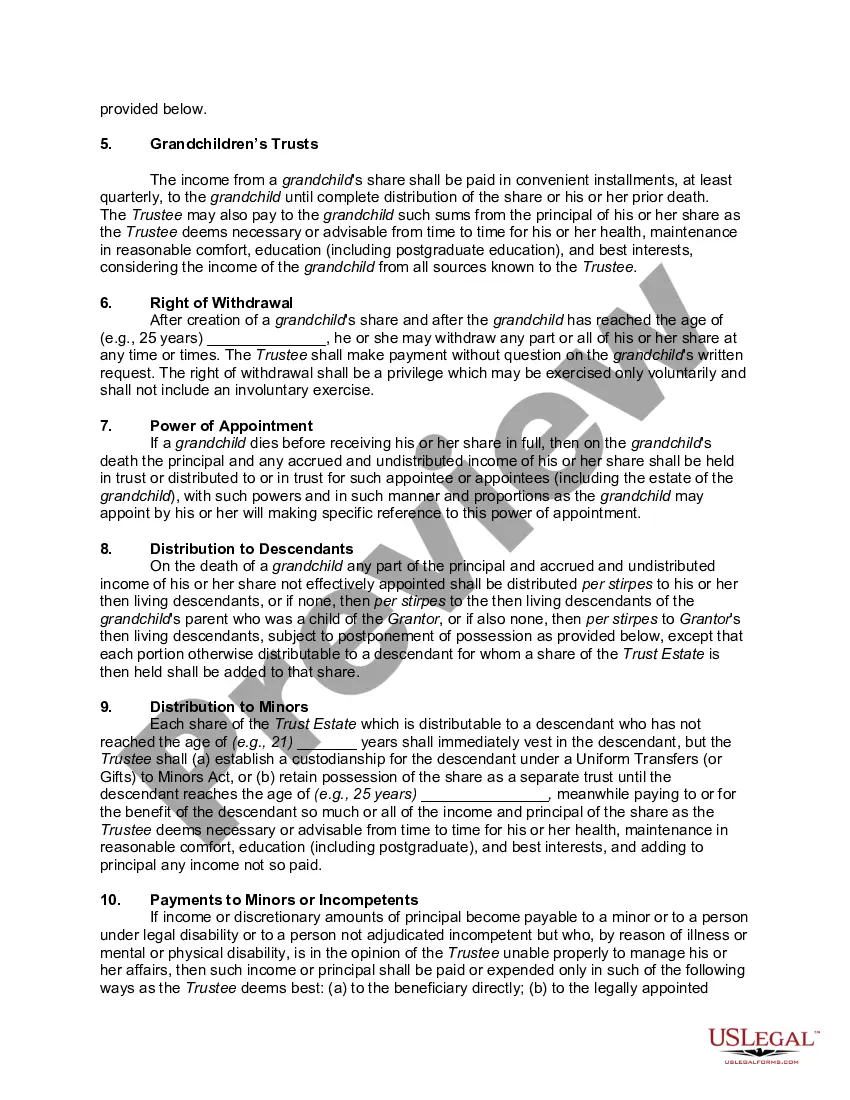
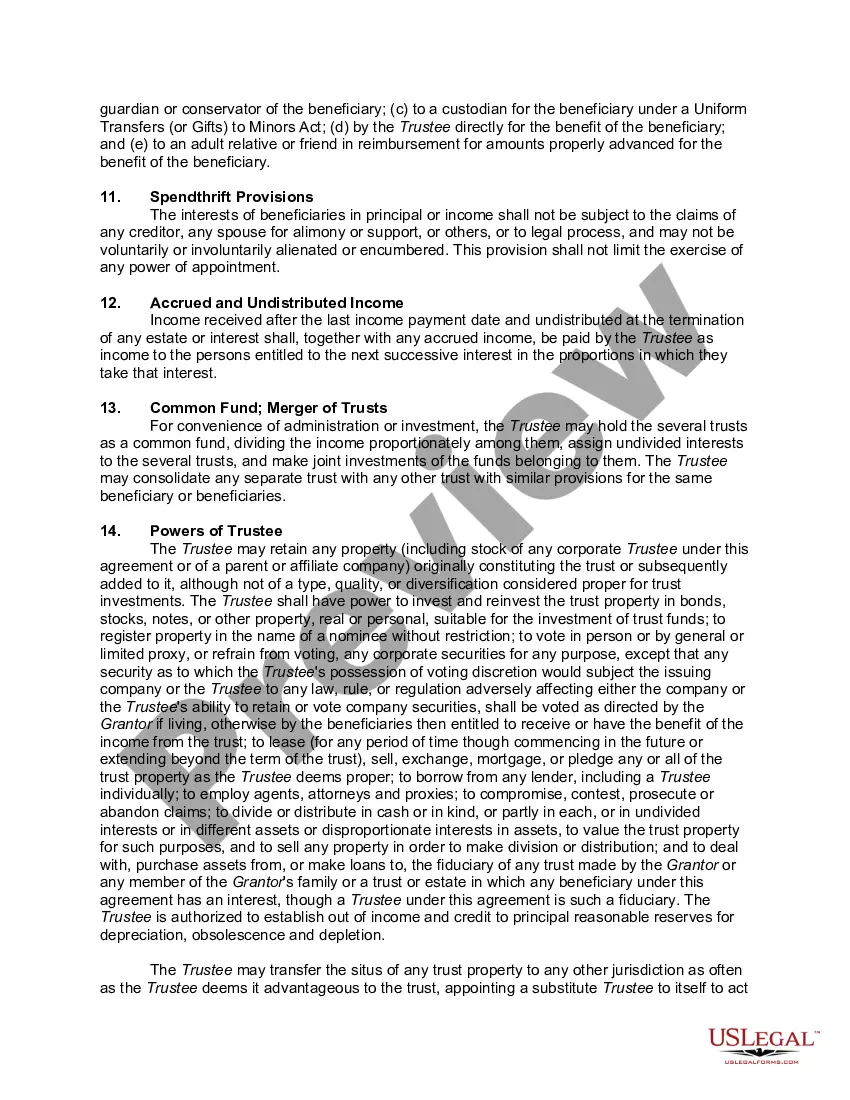
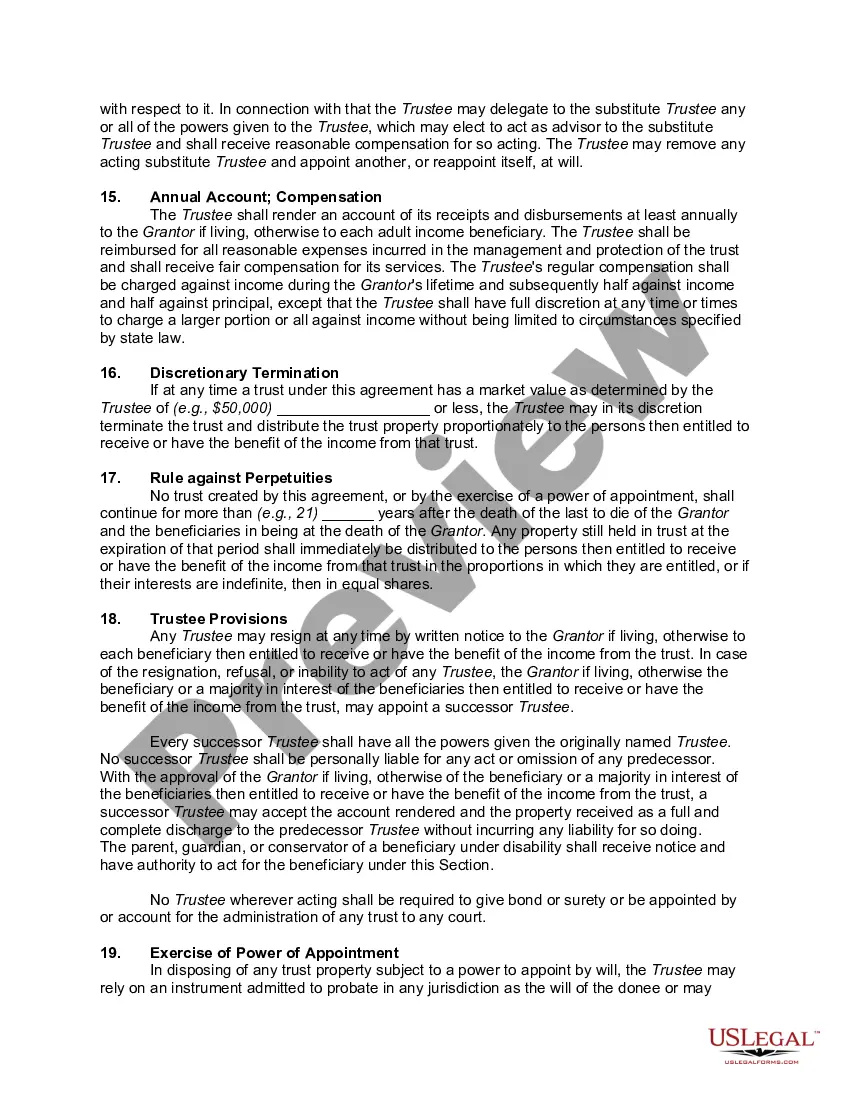
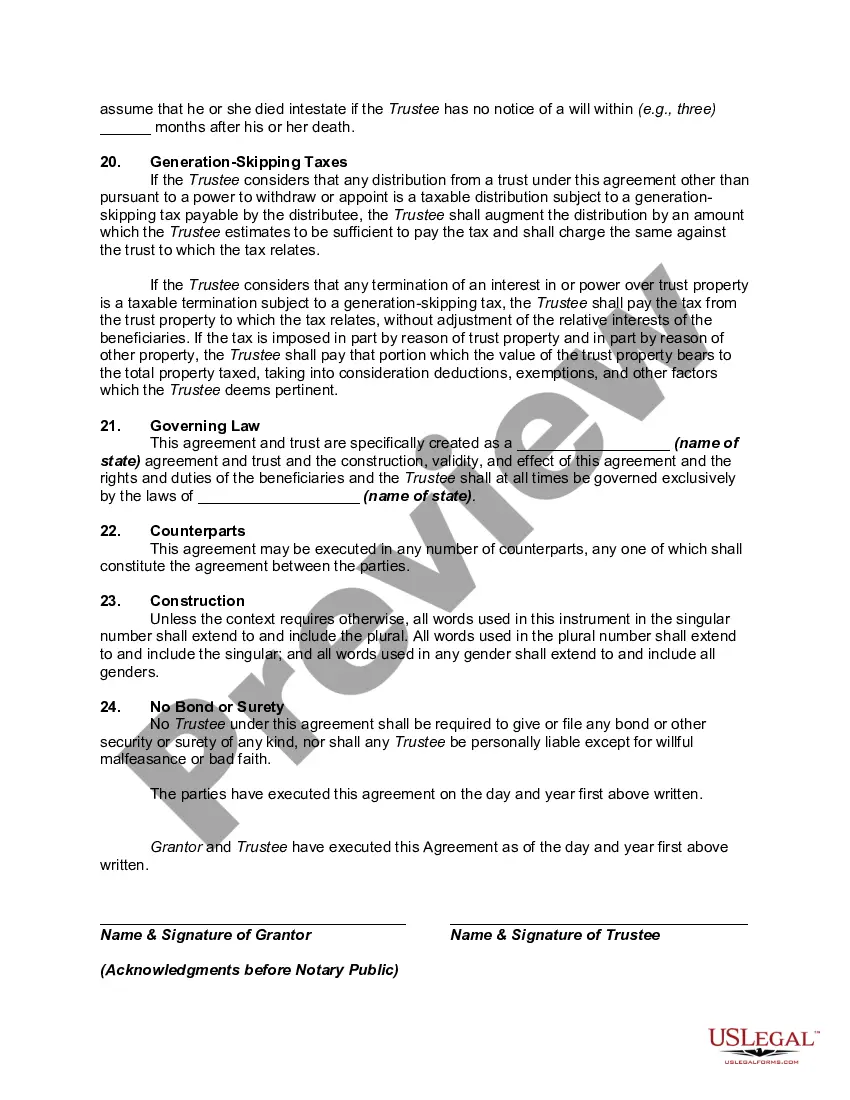



Get your form ready online
Our built-in tools help you complete, sign, share, and store your documents in one place.
Make edits, fill in missing information, and update formatting in US Legal Forms—just like you would in MS Word.
Download a copy, print it, send it by email, or mail it via USPS—whatever works best for your next step.
Sign and collect signatures with our SignNow integration. Send to multiple recipients, set reminders, and more. Go Premium to unlock E-Sign.
If this form requires notarization, complete it online through a secure video call—no need to meet a notary in person or wait for an appointment.
We protect your documents and personal data by following strict security and privacy standards.

Make edits, fill in missing information, and update formatting in US Legal Forms—just like you would in MS Word.

Download a copy, print it, send it by email, or mail it via USPS—whatever works best for your next step.

Sign and collect signatures with our SignNow integration. Send to multiple recipients, set reminders, and more. Go Premium to unlock E-Sign.

If this form requires notarization, complete it online through a secure video call—no need to meet a notary in person or wait for an appointment.

We protect your documents and personal data by following strict security and privacy standards.
Looking for another form?







How to fill out Irrevocable Trust Agreement For Benefit Of Trustor's Children And Grandchildren?
Legal documents handling can be daunting, even for the most experienced experts.
When you are looking for an Irrevocable Form Trust For Historic Preservation and don't have the opportunity to spend time searching for the correct and updated version, the procedures can be exhausting.
Leverage a valuable repository of articles, guides, and resources pertinent to your situation and needs.
Conserve effort and time searching for the documents you need, and use US Legal Forms’ advanced search and Preview feature to find the Irrevocable Form Trust For Historic Preservation and obtain it.
Make sure the template is valid in your state or county. Choose Buy Now when you're ready. Select a monthly subscription plan. Choose the format you prefer, and Download, fill in, sign, print, and send your document. Take advantage of the US Legal Forms web library, backed by 25 years of experience and reliability. Improve your daily document management in a seamless and user-friendly manner today.
- If you have a membership, Log In to your US Legal Forms account, search for the form, and obtain it.
- Check the My documents section to view the documents you have previously saved and manage your folders as needed.
- If this is your first experience with US Legal Forms, create a free account and gain unlimited access to all the resources of the library.
- Here are the steps to follow after accessing the form you desire.
- Confirm it is the correct form by previewing it and reviewing its description.
- Access state- or area-specific legal and business documents.
- US Legal Forms caters to all requirements you might have, from personal to professional paperwork, in one location.
- Utilize sophisticated tools to fill out and manage your Irrevocable Form Trust For Historic Preservation.
Form popularity
FAQ
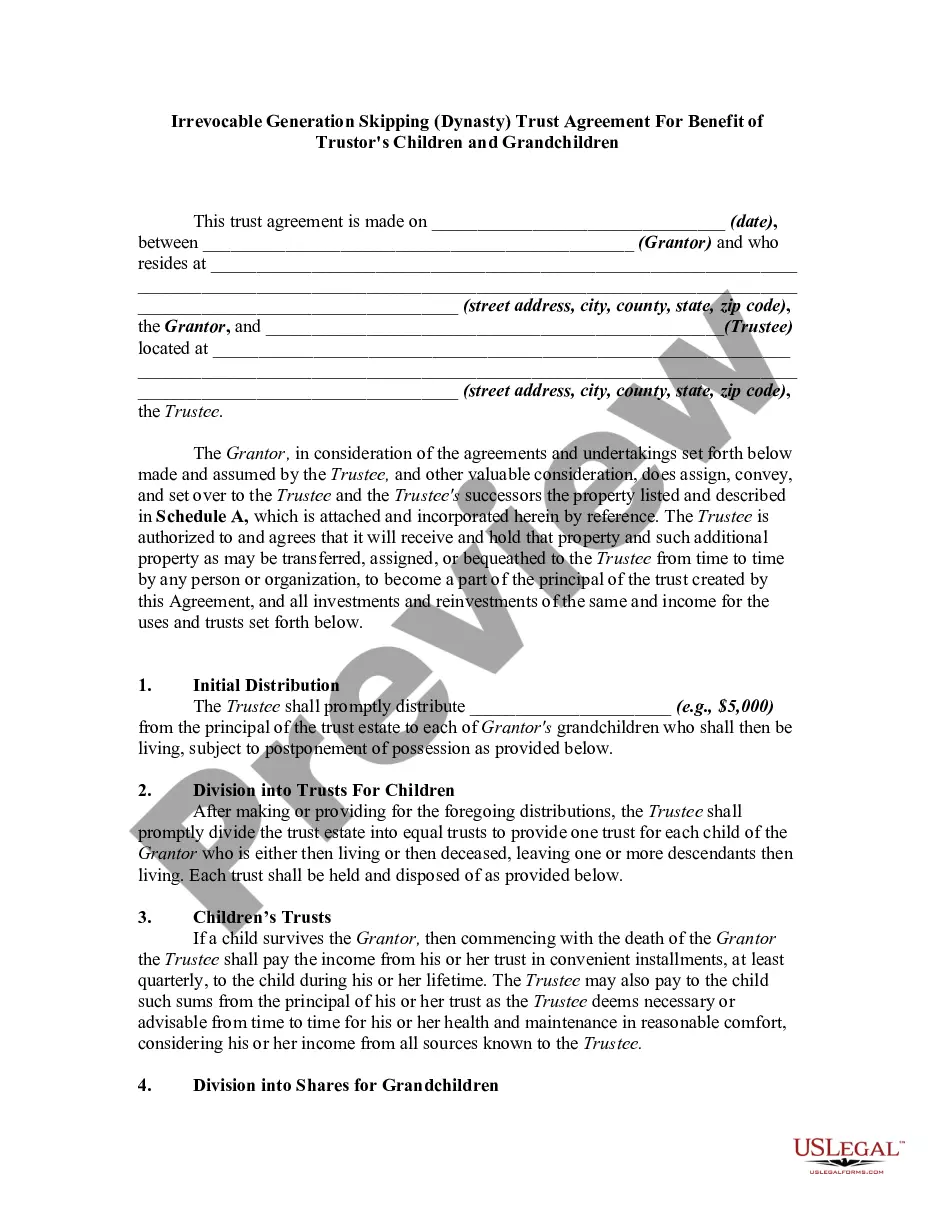
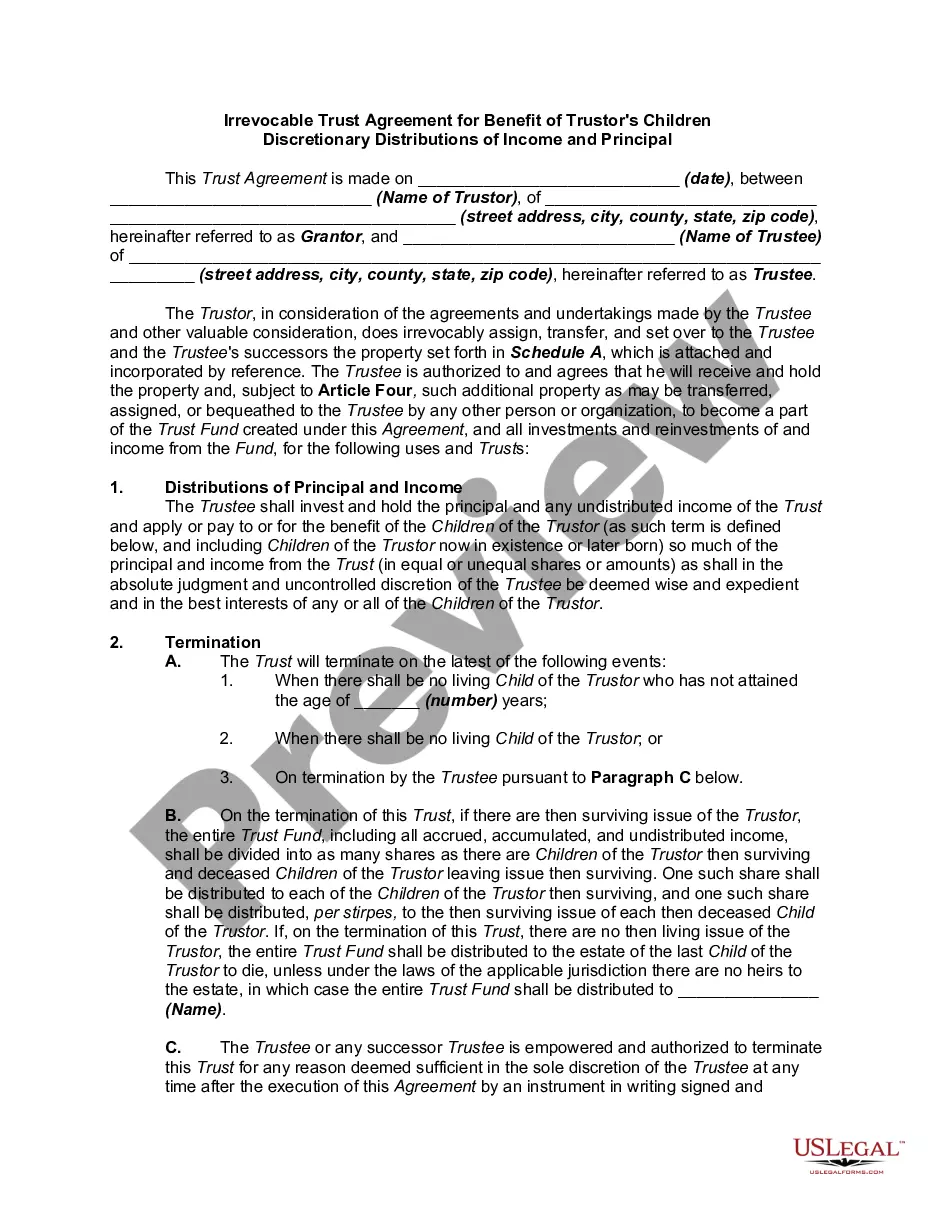
An example of an irrevocable trust is a charitable remainder trust. This type of trust allows you to donate assets to a charity while retaining income from those assets for a specified period. By using an irrevocable form trust for historic preservation, you can ensure that your property maintains its historic character and benefits future generations.
Disadvantages of Irrevocable Trusts Fairly Rigid terms: They are not very flexible. Once the terms are established, they can be difficult to change. The Three-Year Rule: If you include life insurance in an irrevocable trust and pass away within three years, the proceeds return to your estate and become taxable.
Here are 6 tips. Keep the name short. The longer you make the name of a trust, the more possibility you have of making a mistake. ... Consider confidentiality. ... Consider something related to your family name. ... Consider naming it after the street address. ... Ensure that you are using legal names. ... Recheck the spelling of names.
To transfer cash or securities, the trustee will open an account in the trust's name, and the grantor will instruct his or her bank or broker to move the funds from his or her account to the trust's account. For real estate, a deed is used to transfer legal title of the property from the grantor to the trust.
The trustee of an irrevocable trust can only withdraw money to use for the benefit of the trust ing to terms set by the grantor, like disbursing income to beneficiaries or paying maintenance costs, and never for personal use.
Again, this means you can't just withdraw from a trust fund. Instead, you receive that money or assets through one of the following distribution types that are pre-determined by the grantor: Outright distributions, in which the beneficiaries receive the assets outright, generally in a lump sum, and without restrictions.