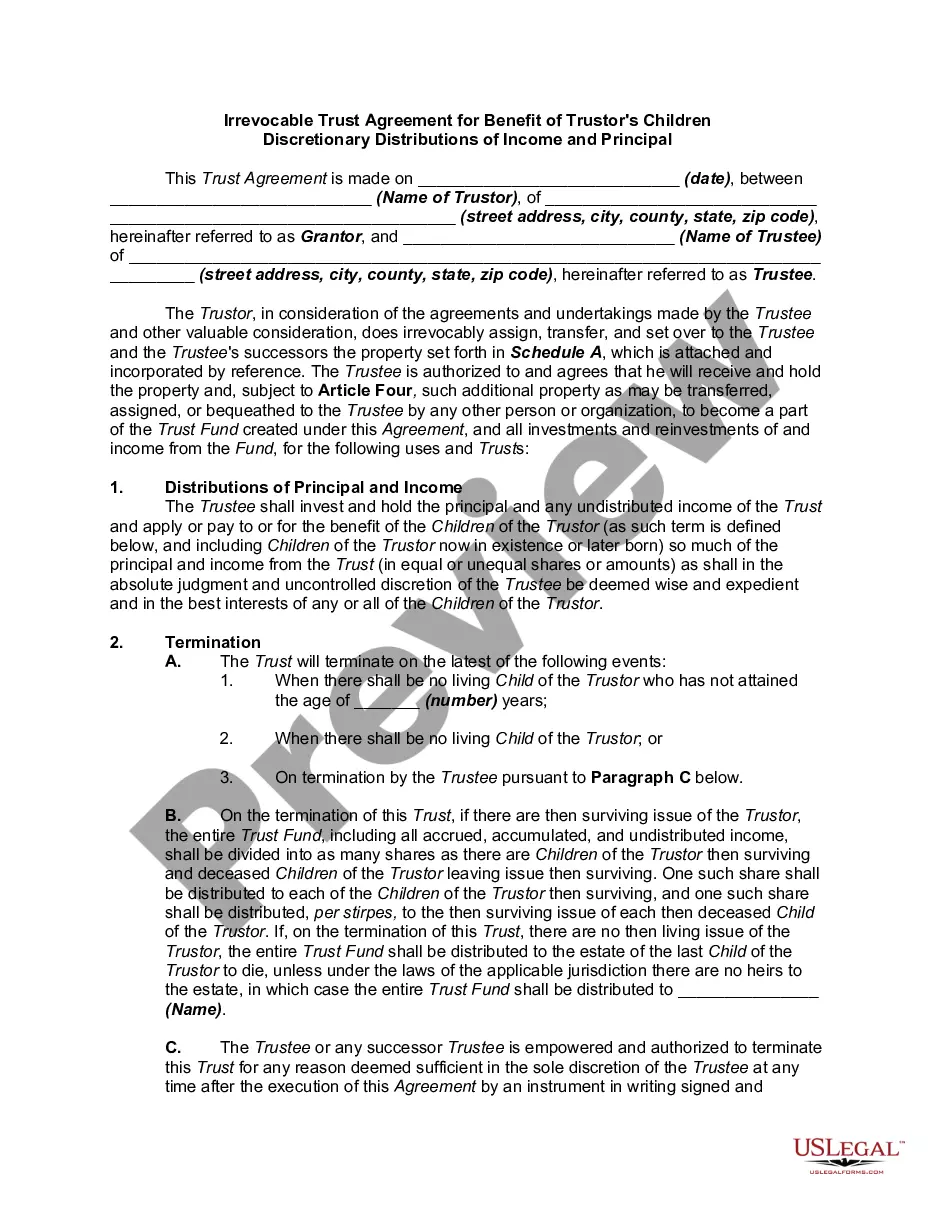
Irrevocable Benefit Withholding
Description





Get your form ready online
Our built-in tools help you complete, sign, share, and store your documents in one place.
Make edits, fill in missing information, and update formatting in US Legal Forms—just like you would in MS Word.
Download a copy, print it, send it by email, or mail it via USPS—whatever works best for your next step.
Sign and collect signatures with our SignNow integration. Send to multiple recipients, set reminders, and more. Go Premium to unlock E-Sign.
If this form requires notarization, complete it online through a secure video call—no need to meet a notary in person or wait for an appointment.
We protect your documents and personal data by following strict security and privacy standards.

Make edits, fill in missing information, and update formatting in US Legal Forms—just like you would in MS Word.

Download a copy, print it, send it by email, or mail it via USPS—whatever works best for your next step.

Sign and collect signatures with our SignNow integration. Send to multiple recipients, set reminders, and more. Go Premium to unlock E-Sign.

If this form requires notarization, complete it online through a secure video call—no need to meet a notary in person or wait for an appointment.

We protect your documents and personal data by following strict security and privacy standards.
Looking for another form?








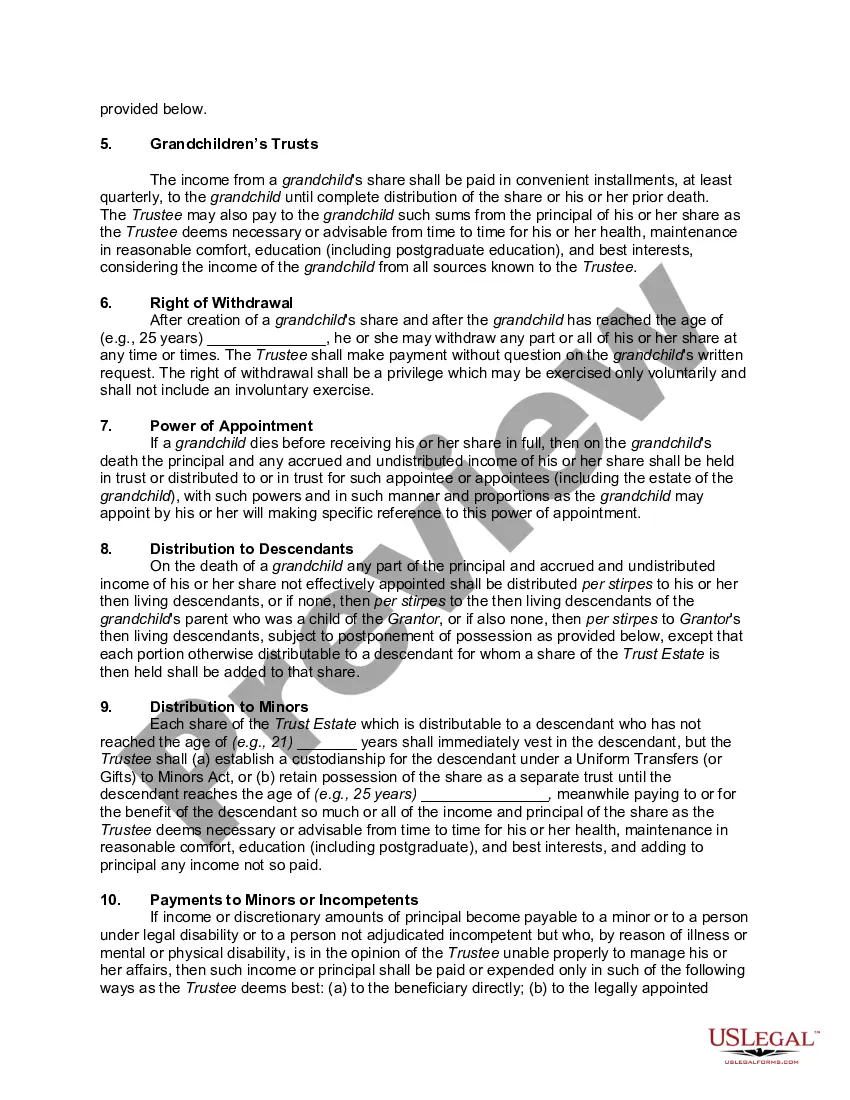
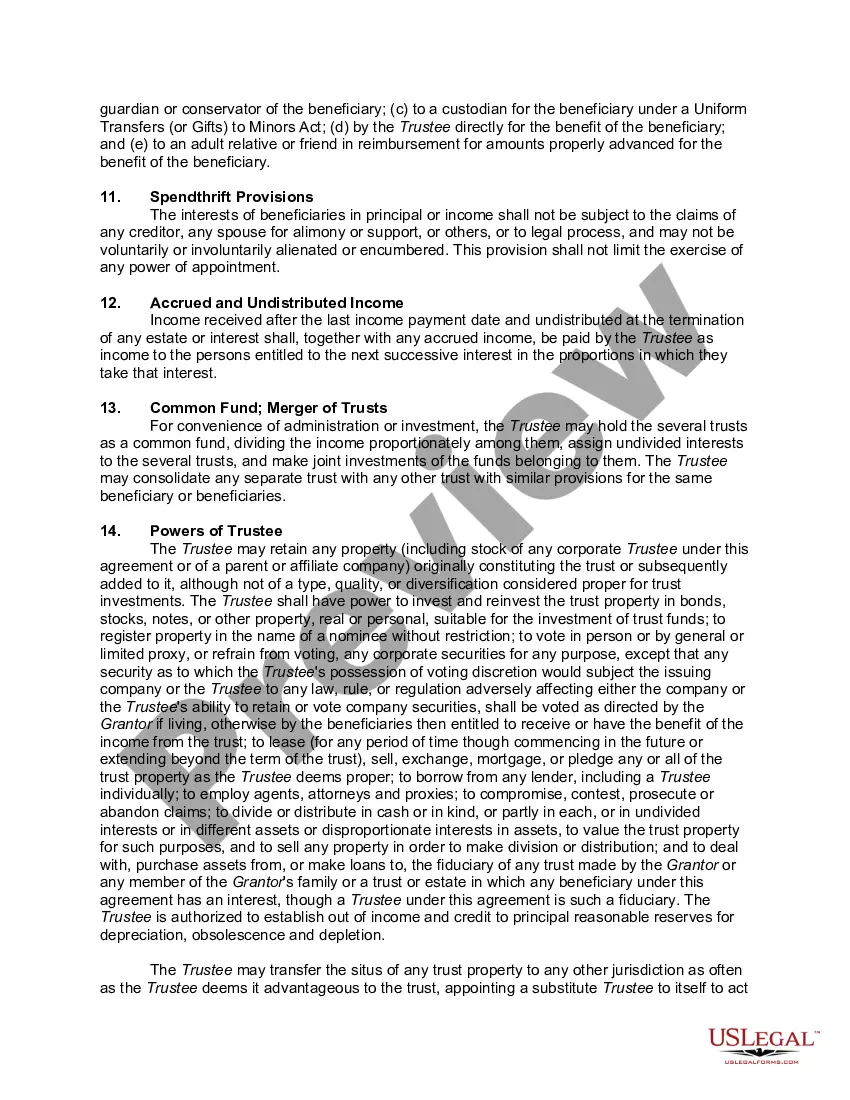
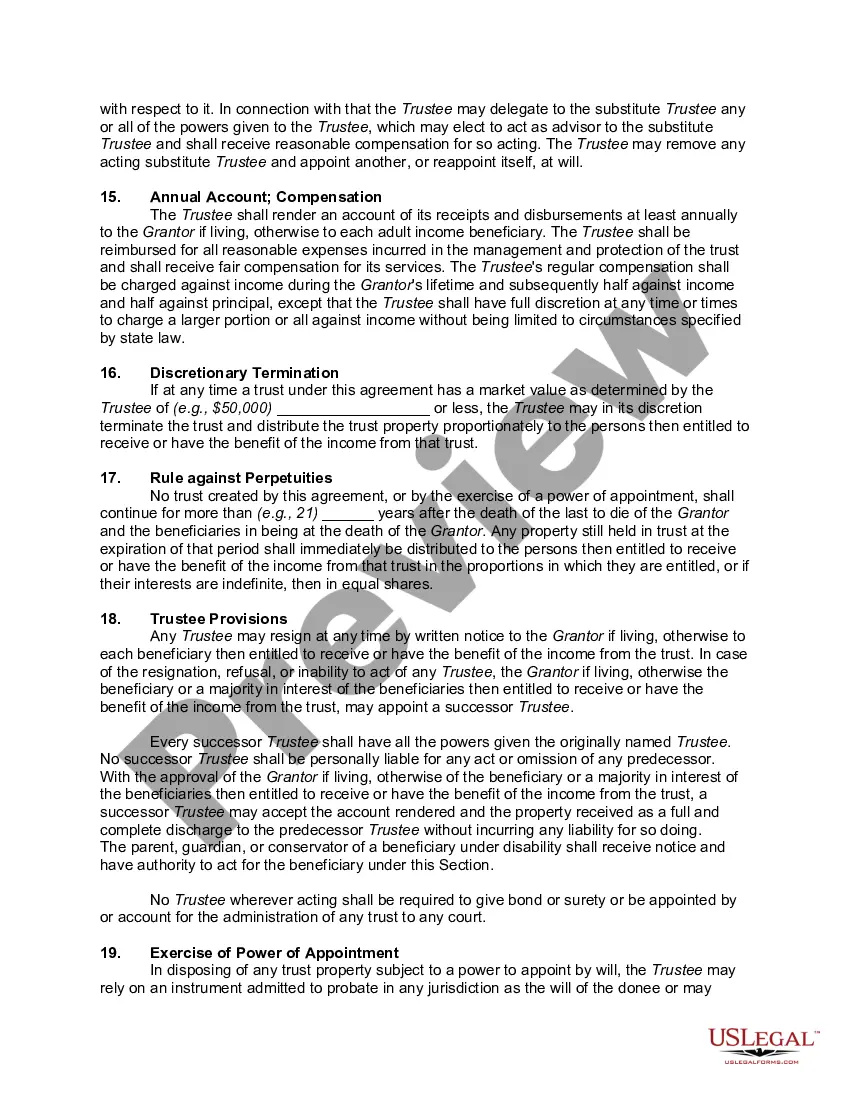
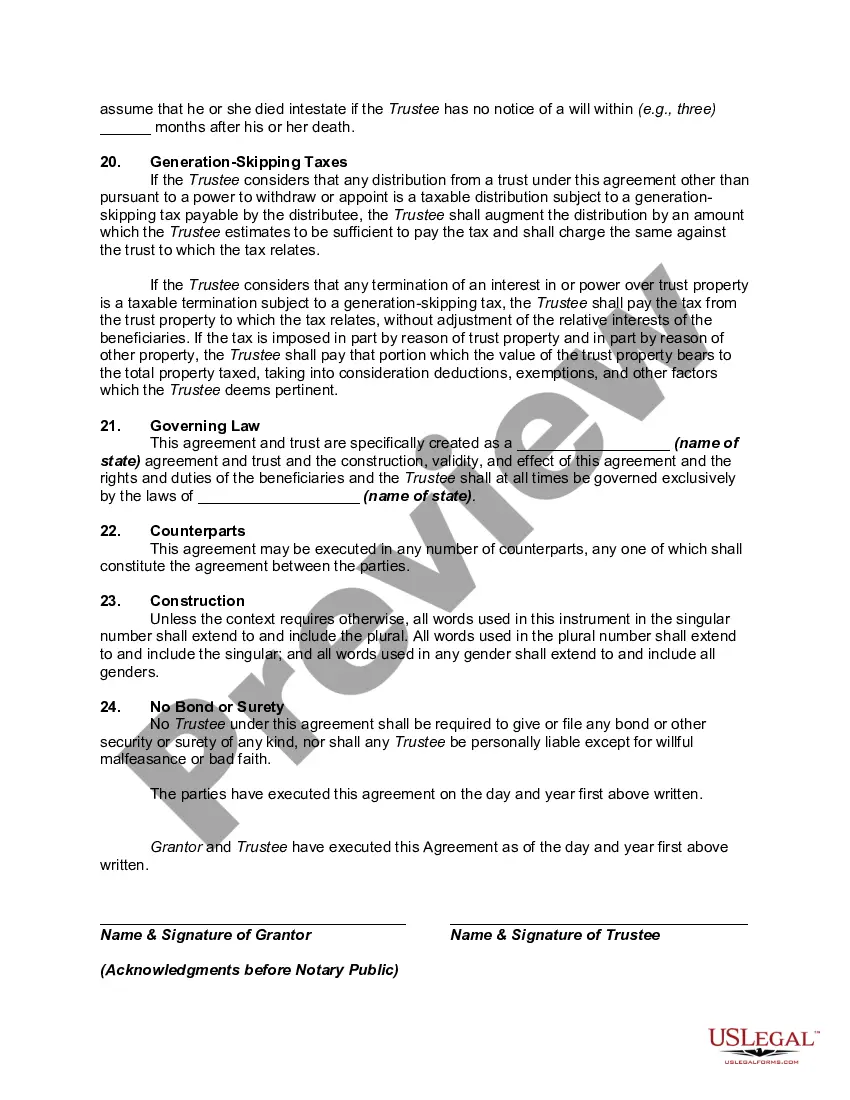
How to fill out Irrevocable Trust Agreement For Benefit Of Trustor's Children And Grandchildren?
Identifying a reliable location to obtain the most up-to-date and suitable legal templates is half the challenge of navigating bureaucratic processes.
Securing the correct legal documents requires accuracy and meticulousness, which is why it is crucial to source samples of Irrevocable Benefit Withholding exclusively from trustworthy providers, such as US Legal Forms. An incorrect template can squander your time and delay the situation you are facing. With US Legal Forms, you have minimal concerns. You can access and review all the details regarding the document’s application and pertinence for your circumstance and in your state or locality.
Eliminate the stress associated with your legal documentation. Explore the extensive US Legal Forms library where you can discover legal templates, assess their relevance to your case, and download them instantly.
- Utilize the catalog browsing or search function to find your sample.
- Examine the form’s details to ensure it complies with the standards of your state and locality.
- Preview the form, if available, to verify it matches your needs.
- Return to the search and seek the correct template if the Irrevocable Benefit Withholding does not fulfill your criteria.
- If you are confident about the form’s applicability, download it.
- If you are an authorized user, click Log in to verify and access your chosen templates in My documents.
- If you lack a profile, click Buy now to obtain the template.
- Select the pricing plan that aligns with your requirements.
- Proceed to register to complete your transaction.
- Conclude your purchase by selecting a payment method (credit card or PayPal).
- Choose the file type for downloading Irrevocable Benefit Withholding.
- Once you have the form on your device, you can edit it using the editor or print it out and complete it by hand.
Form popularity
FAQ
An irrevocable beneficiary refers to a person or entity designated in a trust or insurance policy that cannot be changed without their consent. This designation offers certain protections and ensures that the beneficiary will receive the benefits stipulated in the trust agreement. Understanding the implications of irrevocable benefit withholding is crucial, as it can affect how and when benefits are distributed. Utilizing resources from US Legal Forms can clarify these concepts and assist in proper trust management.
Avoiding taxes on an irrevocable trust involves careful planning and strategic asset management. One effective method is to ensure that the trust is structured to take advantage of tax exemptions, such as the annual gift tax exclusion. Additionally, understanding the nuances of irrevocable benefit withholding can help you manage potential tax burdens. Consulting with experts or using platforms like US Legal Forms can provide guidance tailored to your situation.
The new IRS rule on irrevocable trusts focuses on stricter reporting requirements and tax implications. Under these updated guidelines, trust beneficiaries must be more vigilant about how distributions are handled, especially concerning irrevocable benefit withholding. This means that beneficiaries may now face tax consequences that were previously less defined. Staying informed through resources like US Legal Forms can help you adapt to these changes effectively.
The tax loophole for trusts often lies in the strategic use of irrevocable trusts. These trusts can allow individuals to pass on wealth without incurring estate taxes, as the assets are no longer considered part of the grantor's estate. However, it's essential to navigate these waters carefully, as rules can change. Using a platform like US Legal Forms can help you understand the implications of irrevocable benefit withholding and ensure compliance with current regulations.
People often use trusts as a tool for tax management. By placing assets in an irrevocable trust, individuals can effectively transfer ownership, which removes those assets from their taxable estate. This strategy is particularly beneficial for high-net-worth individuals seeking to minimize their tax liabilities while ensuring their beneficiaries receive the intended wealth. Irrevocable benefit withholding becomes a critical factor in this process, as it allows for tax-efficient distributions.
Deciding to make a beneficiary irrevocable is a significant choice that affects your estate planning. Irrevocable benefit withholding means that once you designate a beneficiary as irrevocable, you cannot change that decision without their consent. This can provide stability and assurance for your beneficiaries, as they know their benefits are secure. At US Legal Forms, we offer resources and documents that simplify this process, ensuring you can make informed decisions regarding irrevocable benefit withholding.
To determine your tax withholding, start by reviewing your income, deductions, and filing status. Use the IRS withholding calculator for a clearer picture of what you should claim. If you have issues with irrevocable benefit withholding, consider using uslegalforms to find the right forms and guidance tailored to your situation.
Deciding whether to claim ‘1’ or ‘0’ withholding depends on your financial goals. Claiming ‘1’ may give you a larger paycheck, while ‘0’ could mean a bigger refund at tax time. If you face complexities like irrevocable benefit withholding, seeking advice can help you make a more informed decision.
To fill out a withholding exemption, you will need to complete the appropriate form, usually the W-4. Indicate your total income and the number of exemptions you claim. If you are navigating irrevocable benefit withholding, ensure you are aware of any relevant state laws that could impact your exemption status.
Whether to claim ‘0’ or ‘1’ for tax withholding largely depends on your financial situation. Claiming ‘0’ means more tax will be withheld, which could lead to a refund. If you have irrevocable benefit withholding considerations, it may be beneficial to consult a tax expert to evaluate your optimal withholding strategy.