Irrevocable Benefit For 2018
Description




Get your form ready online
Our built-in tools help you complete, sign, share, and store your documents in one place.
Make edits, fill in missing information, and update formatting in US Legal Forms—just like you would in MS Word.
Download a copy, print it, send it by email, or mail it via USPS—whatever works best for your next step.
Sign and collect signatures with our SignNow integration. Send to multiple recipients, set reminders, and more. Go Premium to unlock E-Sign.
If this form requires notarization, complete it online through a secure video call—no need to meet a notary in person or wait for an appointment.
We protect your documents and personal data by following strict security and privacy standards.

Make edits, fill in missing information, and update formatting in US Legal Forms—just like you would in MS Word.

Download a copy, print it, send it by email, or mail it via USPS—whatever works best for your next step.

Sign and collect signatures with our SignNow integration. Send to multiple recipients, set reminders, and more. Go Premium to unlock E-Sign.

If this form requires notarization, complete it online through a secure video call—no need to meet a notary in person or wait for an appointment.

We protect your documents and personal data by following strict security and privacy standards.
Looking for another form?






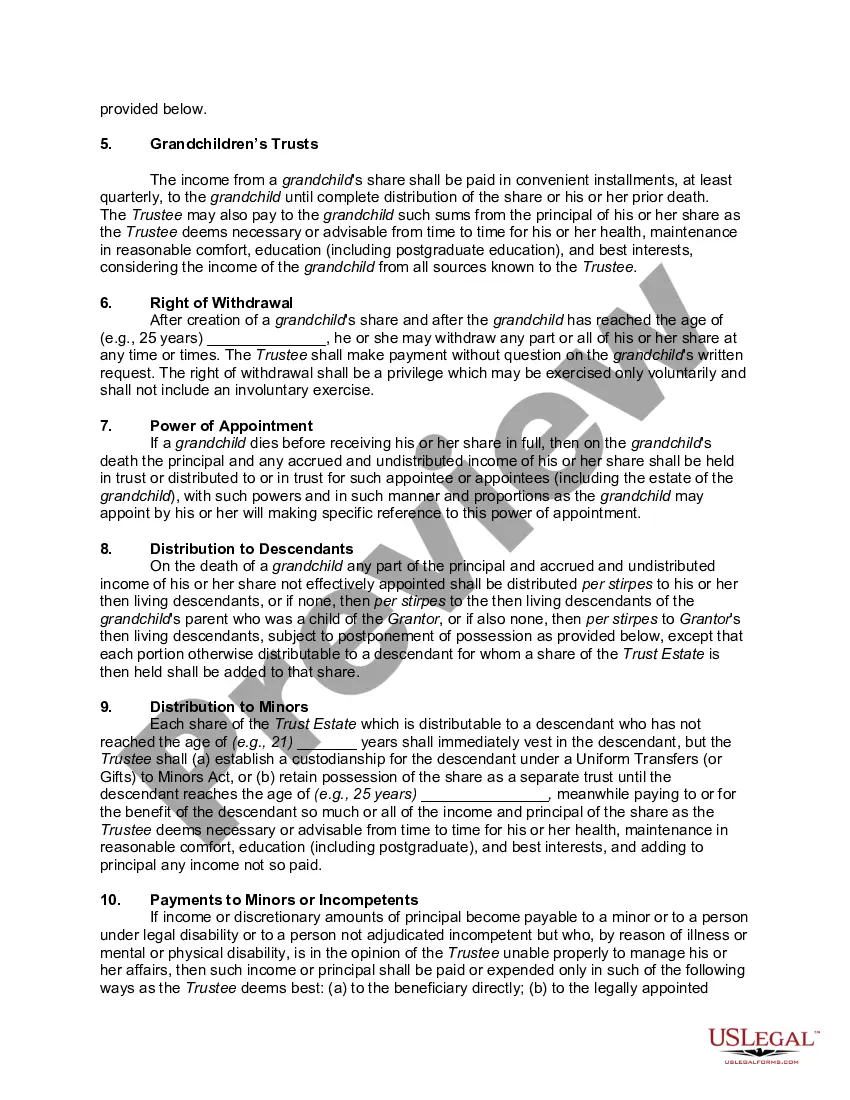
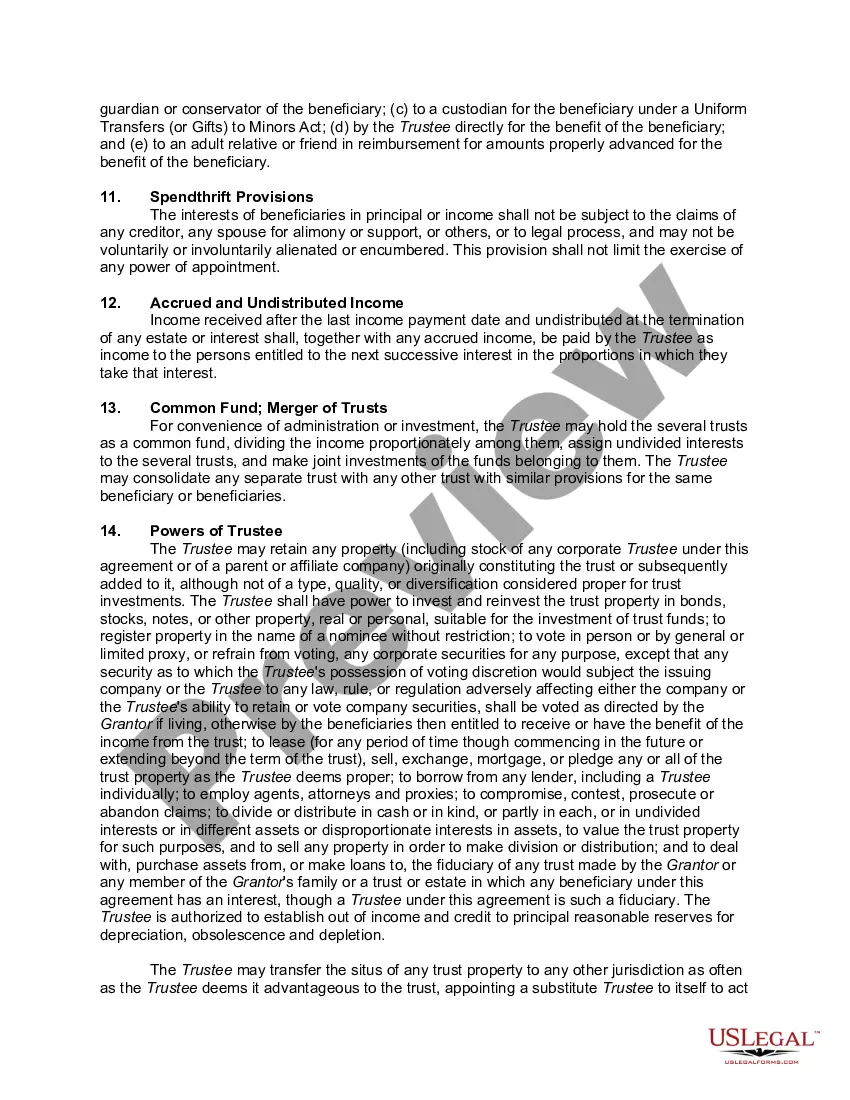
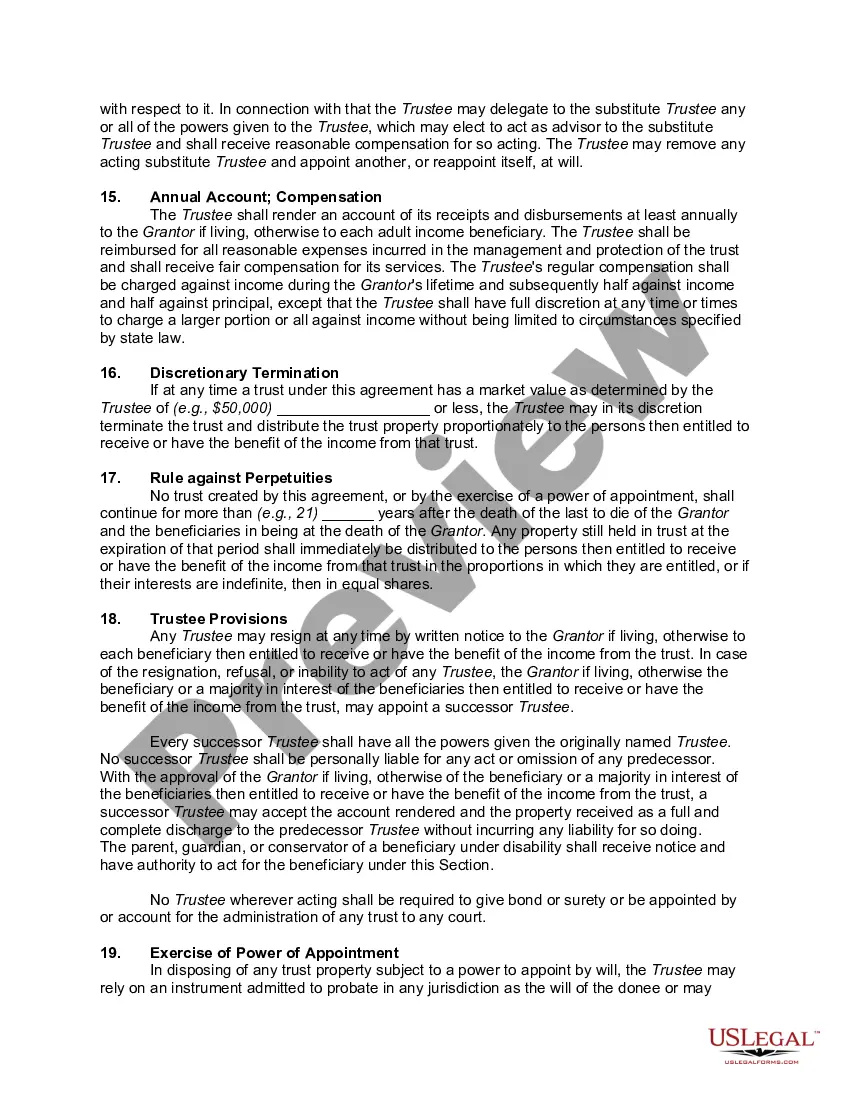
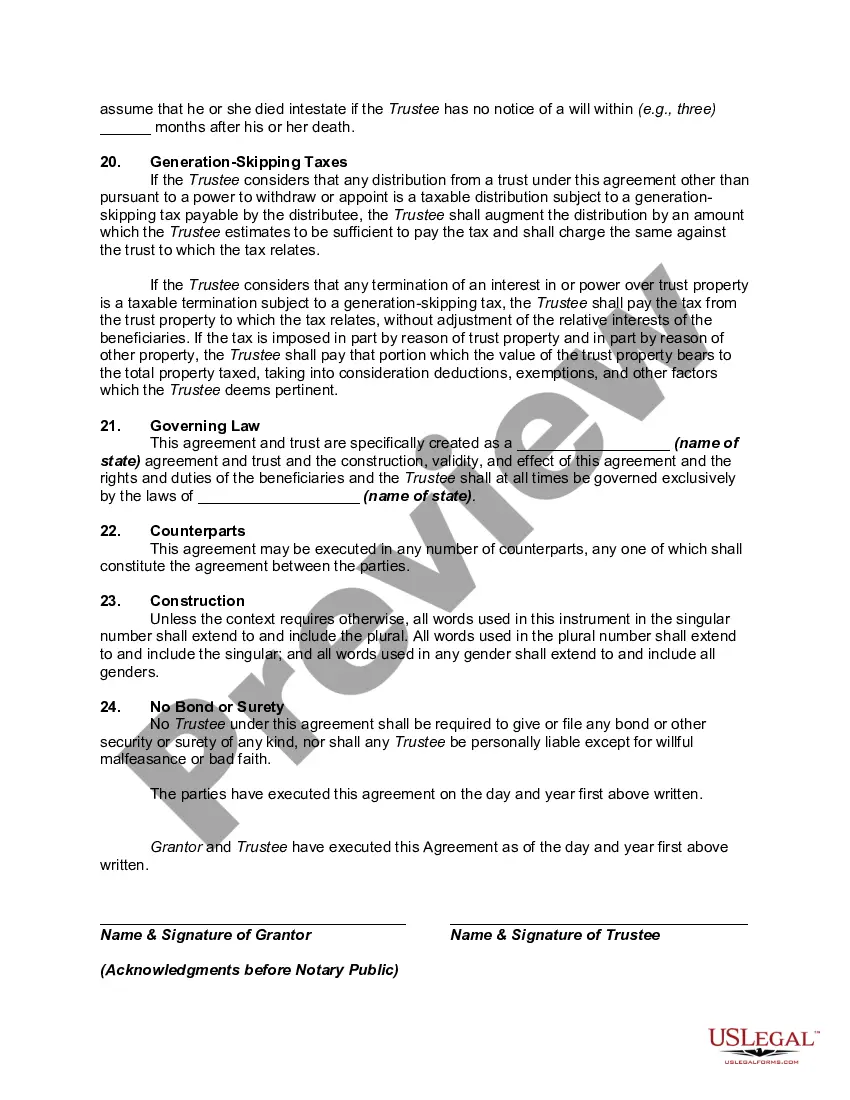
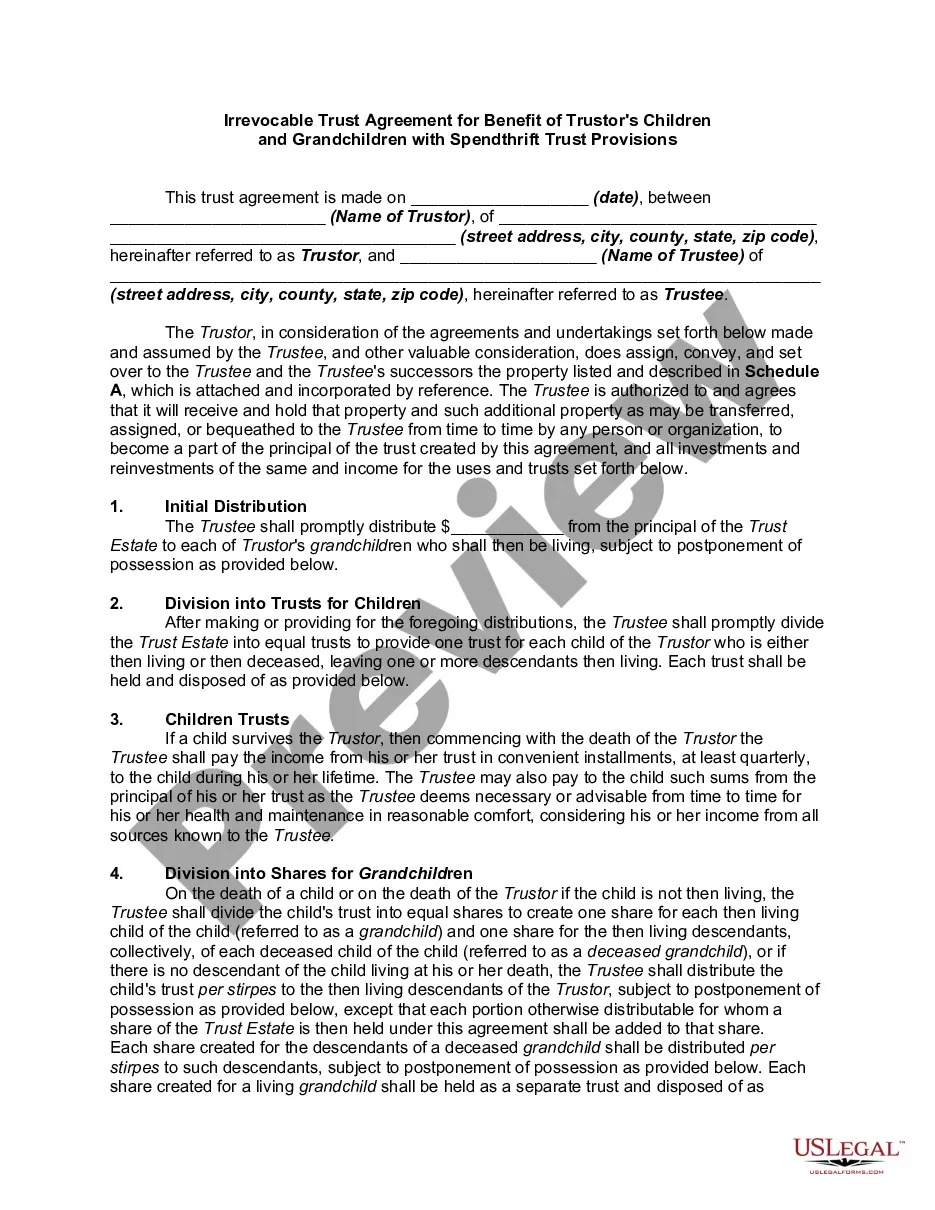
How to fill out Irrevocable Trust Agreement For Benefit Of Trustor's Children And Grandchildren?
Creating legal documents from the ground up can frequently be daunting.
Certain cases may require extensive research and significant financial investment.
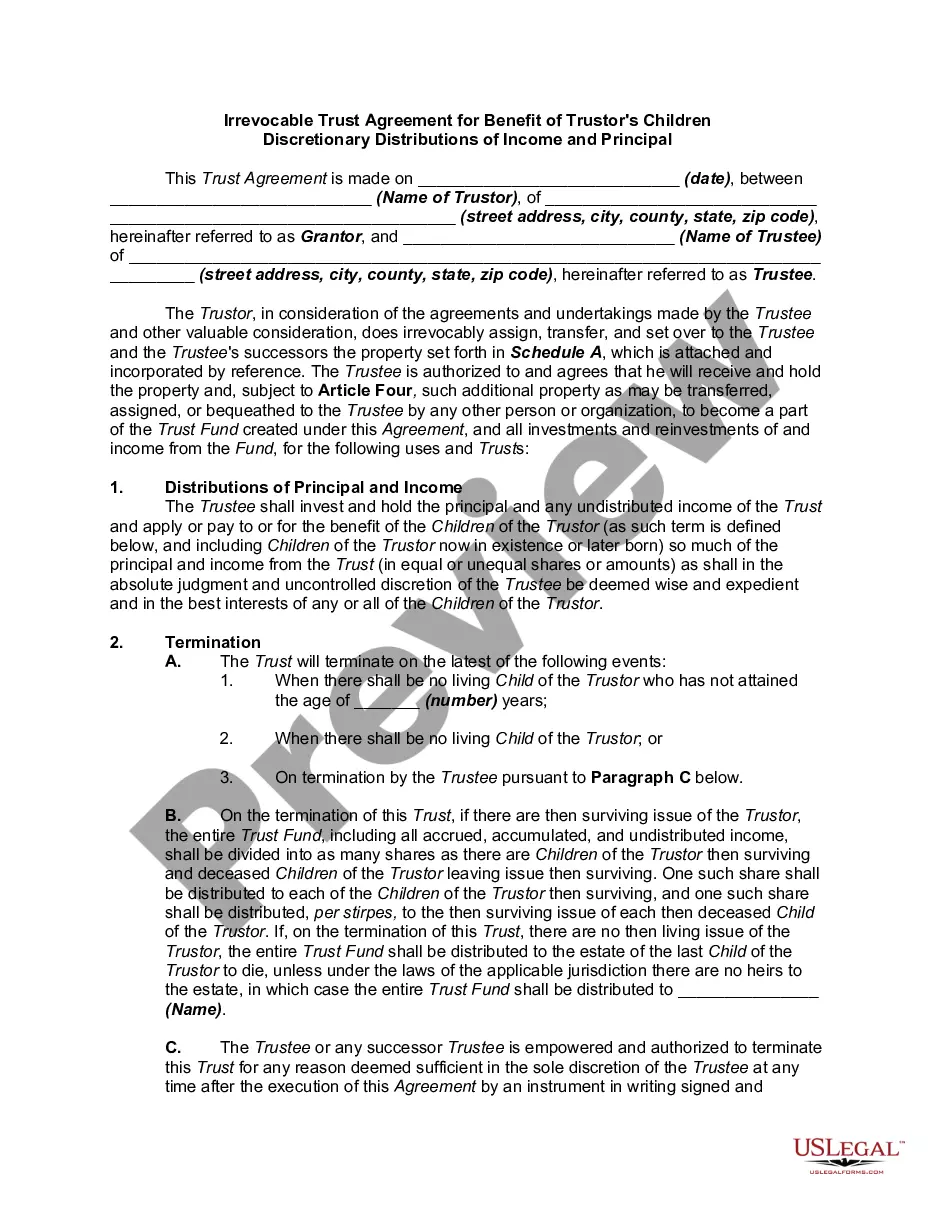
If you’re looking for a more straightforward and economical method of preparing Irrevocable Benefit For 2018 or other documents without unnecessary complications, US Legal Forms is readily available to you.
Our digital library, featuring over 85,000 current legal templates, encompasses nearly every aspect of your financial, legal, and personal matters.
However, before proceeding directly to downloading Irrevocable Benefit For 2018, please adhere to these guidelines: Review the form preview and descriptions to ensure you are selecting the correct form. Ensure the template you select aligns with the laws and regulations of your state and county. Select the appropriate subscription option to acquire the Irrevocable Benefit For 2018. Download the form, then fill it out, certify it, and print it. US Legal Forms enjoys an impeccable reputation and boasts over 25 years of experience. Join us today and simplify the form-filling process!
- With just a few clicks, you can immediately access state- and county-compliant templates carefully crafted by our legal professionals.
- Utilize our website whenever you need dependable and trustworthy services to easily find and download the Irrevocable Benefit For 2018.
- If you’re already familiar with our services and have created an account with us, simply Log In to retrieve the form and download it or re-download it anytime later in the My documents section.
- Not signed up yet? No problem. It requires minimal time to register and browse the catalog.
Form popularity
FAQ
To file an irrevocable trust with the IRS, you need to complete Form 1041, which is the U.S. Income Tax Return for Estates and Trusts. First, gather all relevant financial information regarding the trust income and expenses. Next, ensure you have the trust's Employer Identification Number (EIN), as it is necessary for filing. By understanding the process and utilizing resources like US Legal Forms, you can efficiently navigate the requirements to maximize the irrevocable benefit for 2018.
When filling in beneficiary details, include the full name, relationship to you, and contact information. You should also specify whether the beneficiary is irrevocable or revocable. This clarity ensures that your intentions are honored, especially when considering an irrevocable benefit for 2018. Using platforms like uslegalforms can streamline this process, guiding you through the necessary steps.
An example of an irrevocable beneficiary is a spouse named in a life insurance policy. Once designated, this beneficiary cannot be changed without their consent. This setup ensures that the policyholder's intentions remain intact, providing an irrevocable benefit for 2018. Understanding this concept helps you make informed decisions regarding your financial planning.
New regulations regarding irrevocable trusts focus on how they are treated for tax purposes and Medicaid eligibility. These changes can affect estate planning strategies, emphasizing the need for thorough knowledge of the current laws. By staying informed, you can effectively leverage the irrevocable benefit for 2018 to optimize your estate's financial health.
The 3 year rule for irrevocable life insurance trusts indicates that to avoid estate taxes, you must survive at least three years after transferring the policy into the trust. If you die within that period, the IRS may include the policy's value in your estate. This rule emphasizes the importance of strategic planning to fully utilize the irrevocable benefit for 2018.
An irrevocable trust can remain open indefinitely after the grantor's death, depending on the trust terms. The trustee manages the assets according to the trust's instructions, distributing them to beneficiaries as specified. This flexibility can provide lasting benefits and security, further enhancing the irrevocable benefit for 2018.
The 3 year rule for life insurance trusts states that if you transfer a life insurance policy into an irrevocable trust, you must survive for three years for the death benefit to be excluded from your estate. If you pass away within that timeframe, the policy may still be subject to estate taxes. Therefore, understanding this rule can help you maximize the irrevocable benefit for 2018.
Yes, there is a 5 year look back period associated with Medicaid eligibility. If you transfer assets into an irrevocable trust within five years of applying for Medicaid, those assets may be considered available for your care. This is important to consider when planning your estate to take full advantage of the irrevocable benefit for 2018.
The 3 year clawback rule allows the IRS to reclaim gifts made within three years of your death. This rule applies to irrevocable trusts, ensuring that any assets transferred may be included in your taxable estate if you pass away within this time frame. Understanding this rule is essential to maximizing the irrevocable benefit for 2018 and protecting your estate from unexpected taxes.