Irrevocable Agreement Trust With Trust
Description



Get your form ready online
Our built-in tools help you complete, sign, share, and store your documents in one place.
Make edits, fill in missing information, and update formatting in US Legal Forms—just like you would in MS Word.
Download a copy, print it, send it by email, or mail it via USPS—whatever works best for your next step.
Sign and collect signatures with our SignNow integration. Send to multiple recipients, set reminders, and more. Go Premium to unlock E-Sign.
If this form requires notarization, complete it online through a secure video call—no need to meet a notary in person or wait for an appointment.
We protect your documents and personal data by following strict security and privacy standards.

Make edits, fill in missing information, and update formatting in US Legal Forms—just like you would in MS Word.

Download a copy, print it, send it by email, or mail it via USPS—whatever works best for your next step.

Sign and collect signatures with our SignNow integration. Send to multiple recipients, set reminders, and more. Go Premium to unlock E-Sign.

If this form requires notarization, complete it online through a secure video call—no need to meet a notary in person or wait for an appointment.

We protect your documents and personal data by following strict security and privacy standards.
Looking for another form?






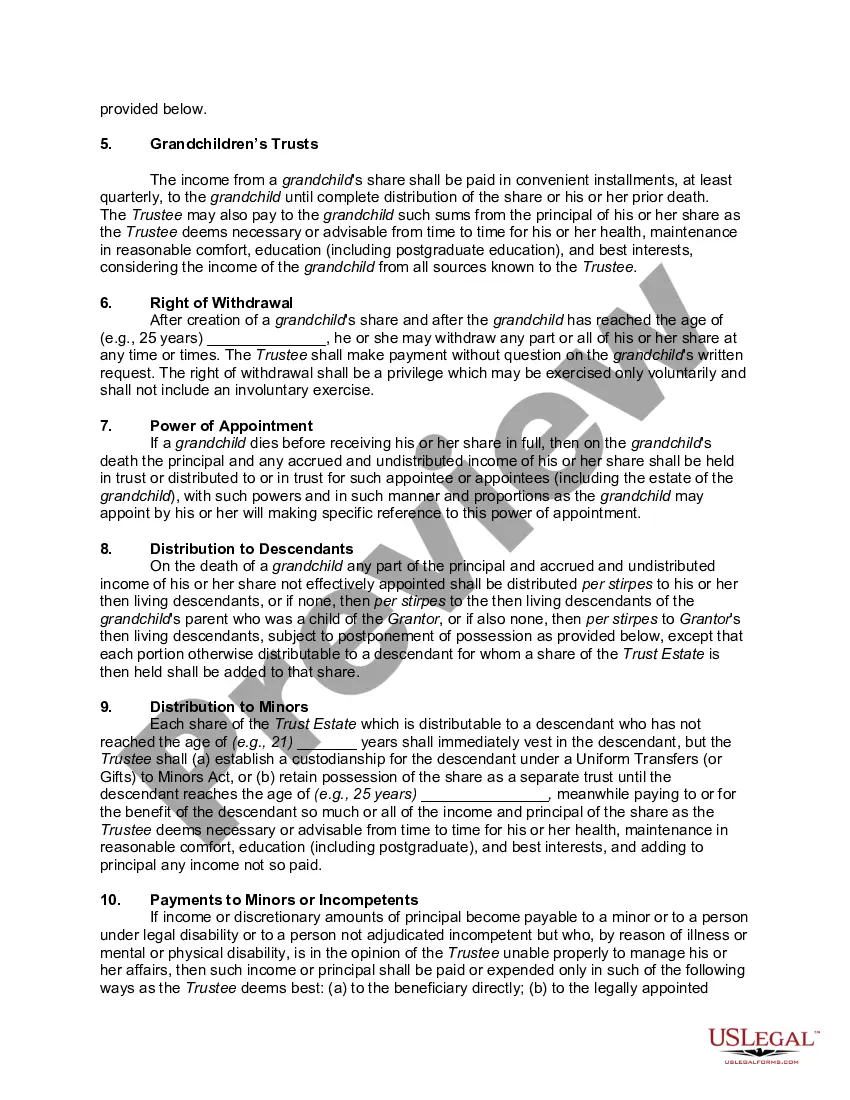
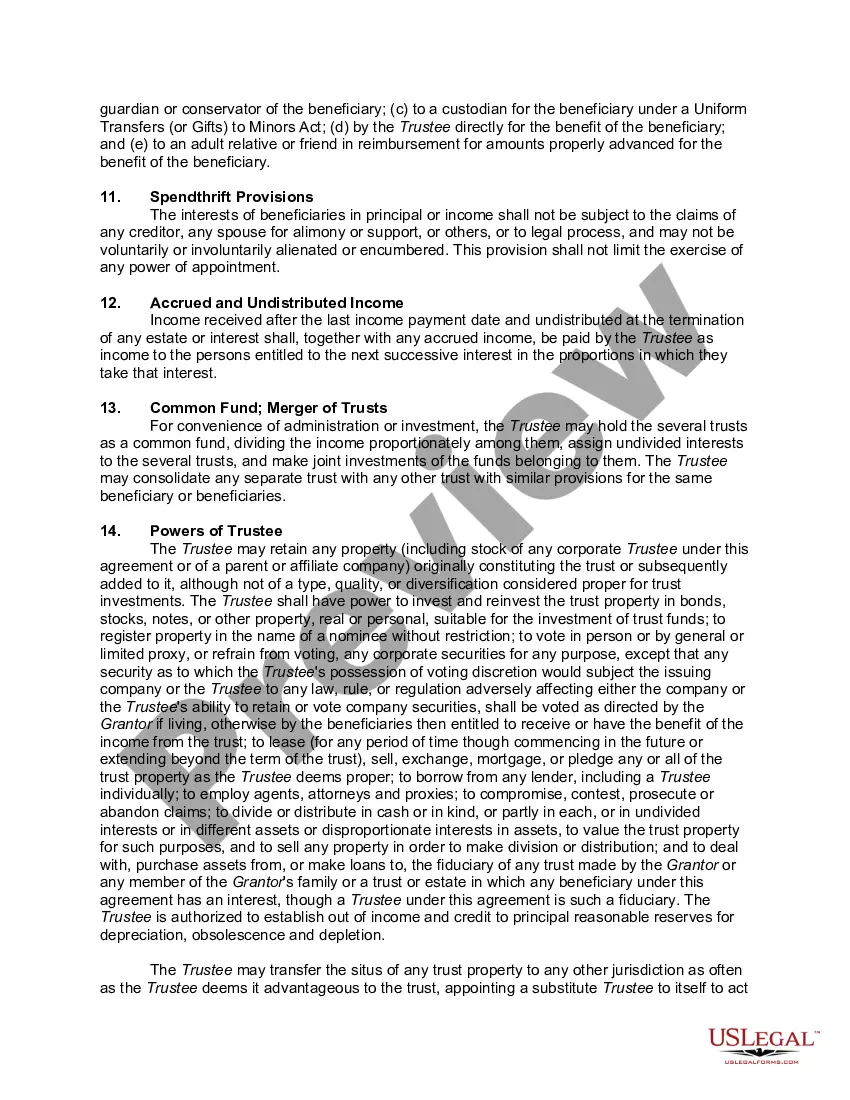
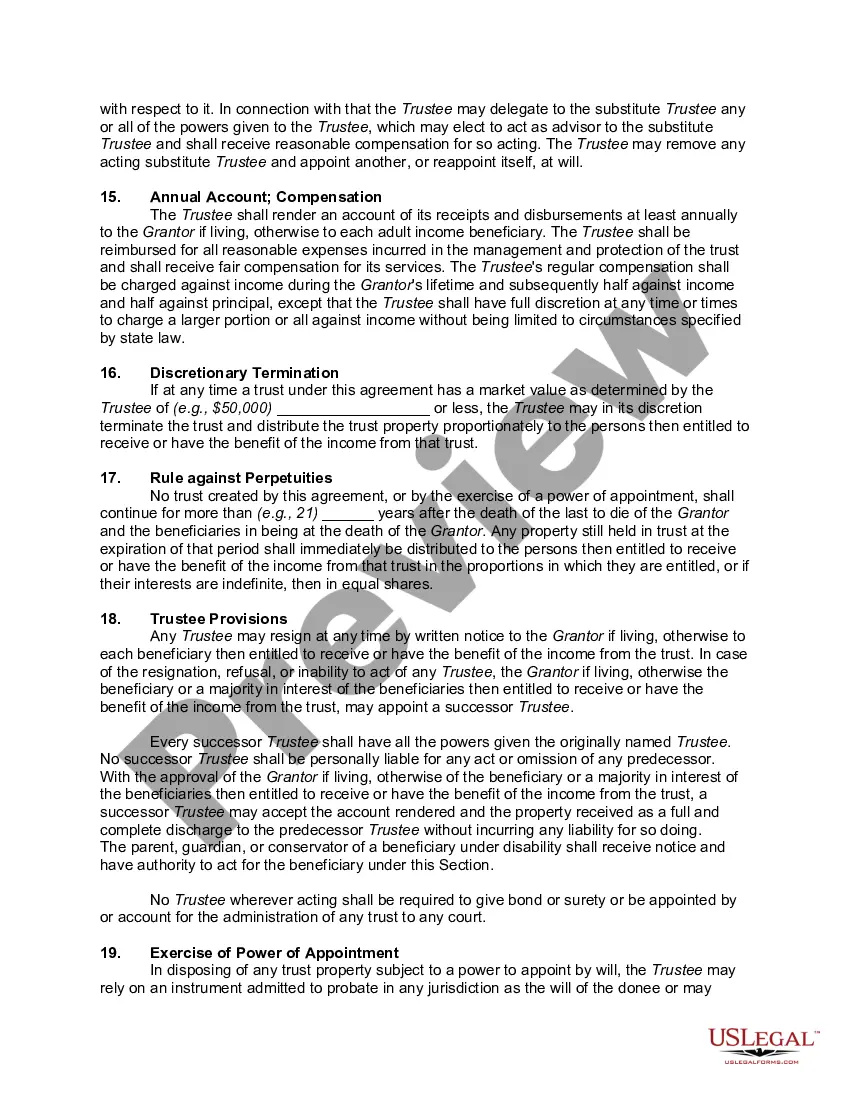
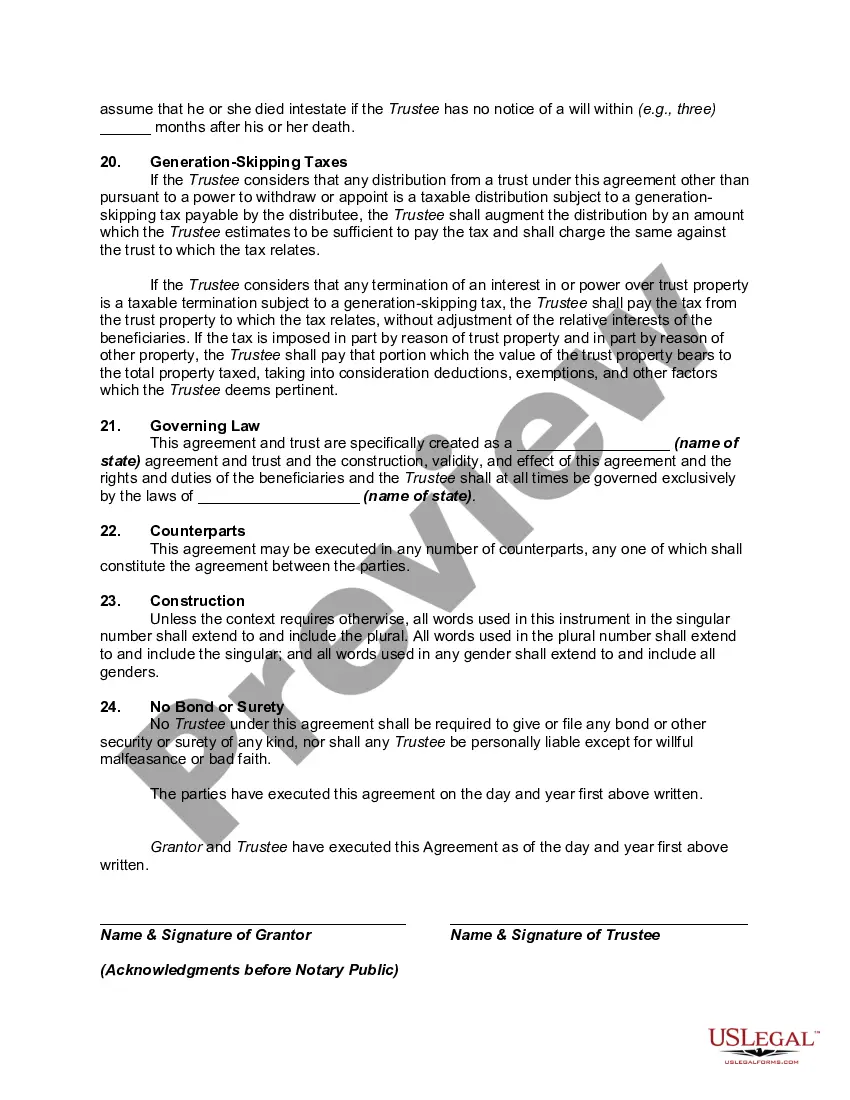
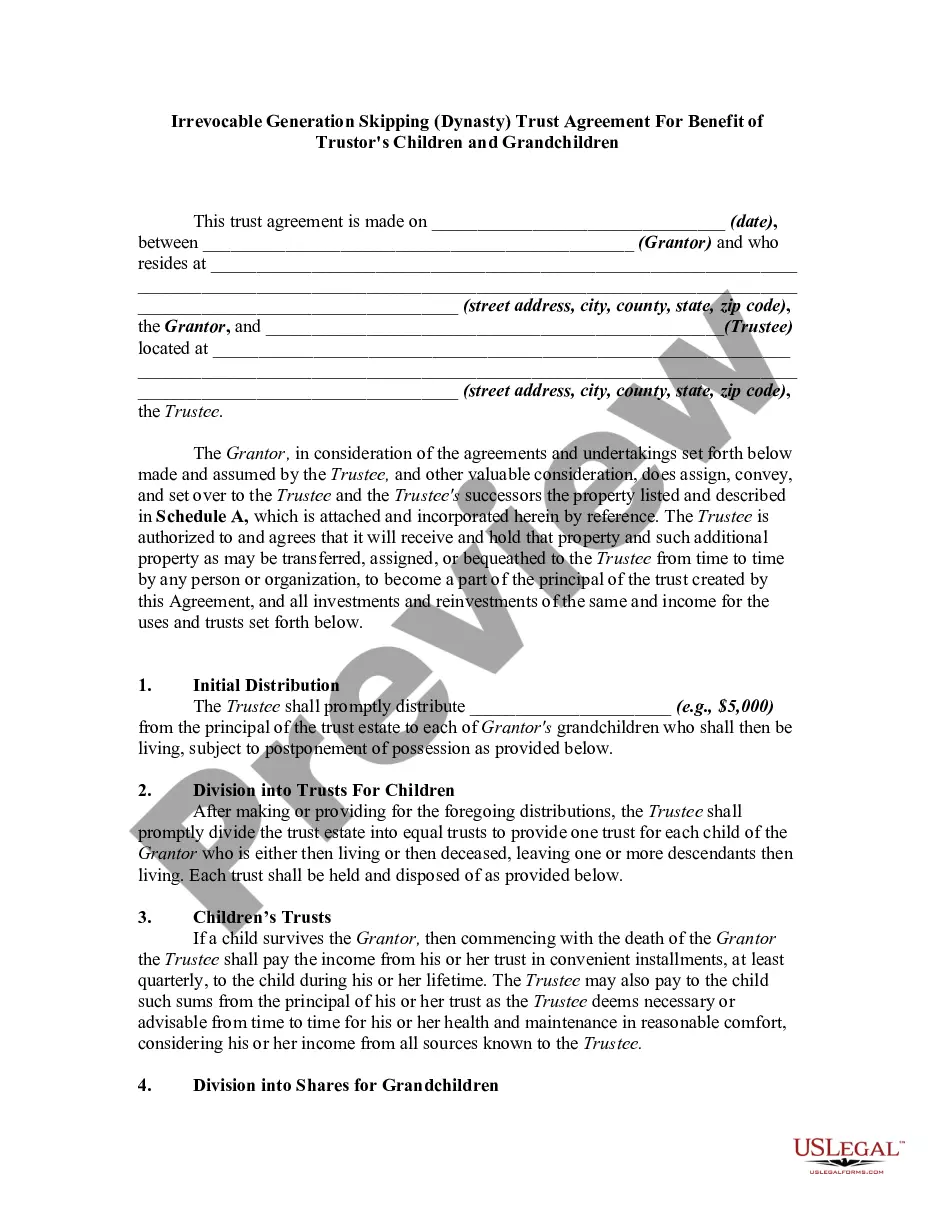
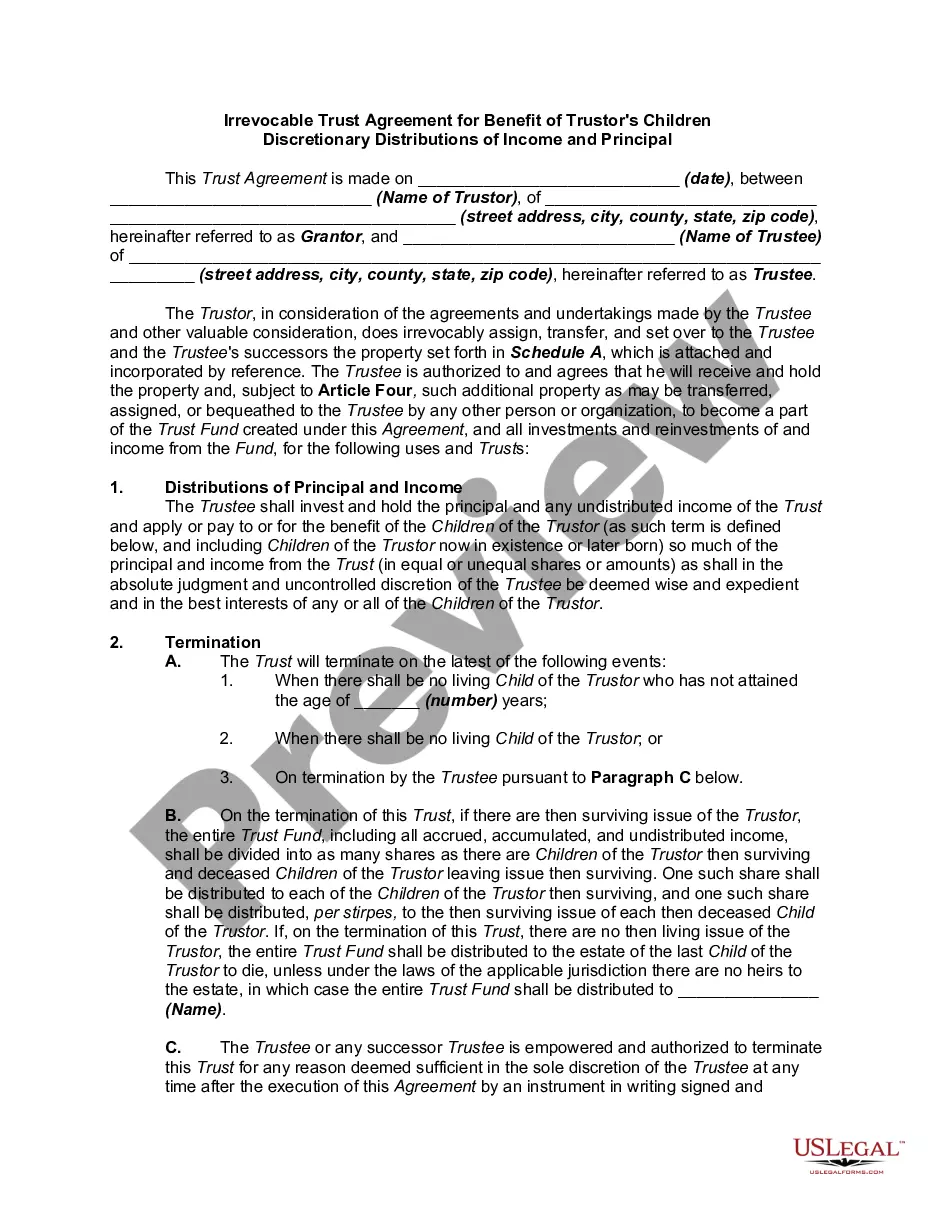
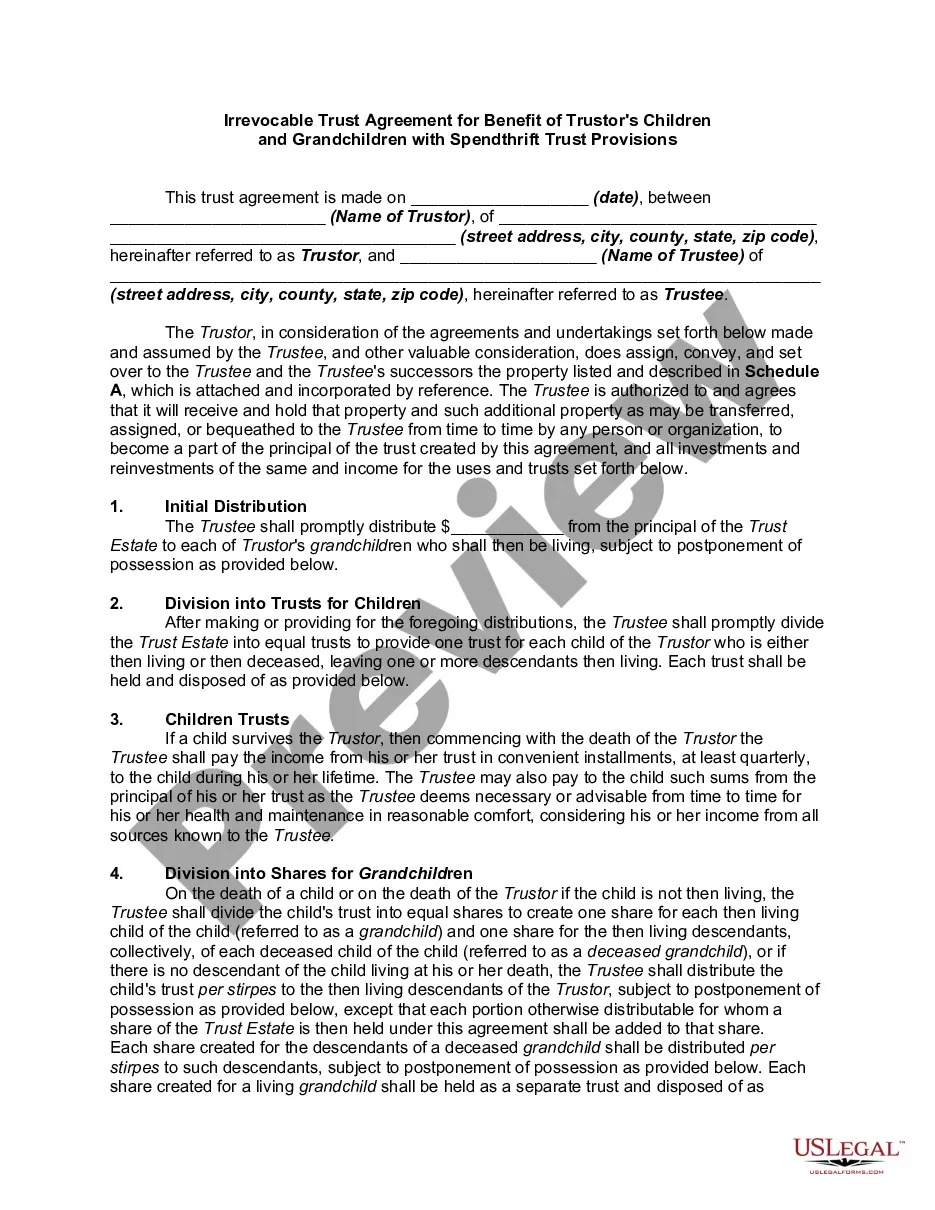
How to fill out Irrevocable Trust Agreement For Benefit Of Trustor's Children And Grandchildren?
- If you're a returning user, log into your account to access the right form template. Ensure your subscription is current; if not, renew it following your payment plan.
- For first-time users, start by checking the Preview mode and form description to confirm you've selected the correct form that aligns with your needs and local jurisdiction laws.
- If the selected template doesn't fit, utilize the Search tab to find the appropriate one tailored to your requirements.
- Proceed to purchase the document by clicking on the Buy Now button and selecting your preferred subscription plan. You will need to create an account for full access.
- Complete your purchase by entering your credit card information or using your PayPal account to finalize the subscription.
- Download your completed form and save it to your device. You can access it anytime through the My Forms section of your profile.
US Legal Forms provides an extensive library with over 85,000 legal forms, ensuring you have more options than competitors at a similar cost.
Empowered by premium expert assistance, you can confidently complete your documents accurately. Take the first step toward secure estate planning today by exploring US Legal Forms.
Form popularity
FAQ
Indeed, setting up an irrevocable agreement trust with trust by yourself is possible, but it requires careful planning and attention to detail. You must accurately transfer assets and complete all legal documentation without errors. An incorrectly established trust can complicate your intentions and create potential disputes. To simplify this process and ensure compliance, consider using US Legal Forms, which offers resources and expert guidance tailored for creating trustworthy irrevocable agreements.
Yes, you can create an irrevocable agreement trust with trust on your own, but it's important to understand the legal complexities involved. You will need to follow specific legal steps and ensure that all paperwork meets state requirements. Additionally, mistakes in drafting can lead to long-term issues concerning asset control and tax implications. For peace of mind, you may consider using platforms like US Legal Forms, which can guide you through the process and provide the necessary templates.
Choosing not to establish an irrevocable agreement trust with trust often stems from concerns over loss of control and flexibility. If you're someone who values having access to your assets or the ability to alter the trust terms, this type may not be suitable for you. Additionally, the complexities and potential costs involved can lead some to prefer other estate planning options. Utilizing platforms like uslegalforms can help you explore alternatives that better align with your needs.
The primary downside of an irrevocable agreement trust with trust is the loss of control over the assets once they are transferred into the trust. You cannot modify the trust or reclaim the assets without the consent of the beneficiaries, which may limit your financial flexibility. Furthermore, some individuals may face tax implications or lose eligibility for certain governmental benefits due to the assets in this trust. It's crucial to weigh these factors carefully before proceeding.
When considering an irrevocable agreement trust with trust, it's important to note that certain assets may not be ideal for inclusion. For instance, personal items with significant sentimental value might be better kept outside the trust to avoid disputes among heirs. Additionally, assets that might generate income or require active management, such as a business, could complicate matters under this type of trust. It's wise to consult a legal expert to identify the right fit for your specific circumstances.
To establish an irrevocable trust, you typically need to complete a trust agreement form that outlines the terms and conditions of the trust. It is also necessary to file Form 1041, the U.S. Income Tax Return for Estates and Trusts, to report the trust's income. Depending on your situation, local requirements may vary, so consider consulting a legal professional for guidance. Utilizing resources like US Legal Forms can simplify this process by providing trusted templates and support for your irrevocable agreement trust with trust.
An irrevocable trust agreement is a legal document that establishes a trust that cannot be modified or terminated without the consent of the beneficiaries. Once you create this type of trust, the assets placed within it become the property of the trust, eliminating your control over them. This can provide benefits like asset protection and estate tax advantages. Understanding the details of an irrevocable agreement trust with trust can help you make informed decisions about your estate planning.
Filling out an irrevocable agreement trust with trust requires careful attention to detail and an understanding of your specific needs. You will need to identify the trustor, trustees, and beneficiaries, along with providing a detailed description of the trust's assets and purposes. Utilizing platforms like USLegalForms can simplify this process, offering templates and guidance that ensure compliance with legal standards.
The new rule regarding irrevocable agreements trusts with trust relates primarily to tax regulations and planning strategies to benefit beneficiaries. Under recent changes, it is advisable to consult with a tax professional to comprehend how these adjustments impact the administration of irrevocable trusts. Staying informed can help you optimize the trust’s benefits and ensure compliance with current laws.
For an irrevocable agreement trust with trust to be valid, it must meet certain legal requirements, including clear intent to create the trust, proper execution of the trust documents, and adequate funding. Additionally, it should have identifiable beneficiaries and a legitimate purpose defined within the trust. Ensuring compliance with these criteria helps to protect the trust's integrity and enforceability.