Grantorname Alienated Situs For The Future
Description

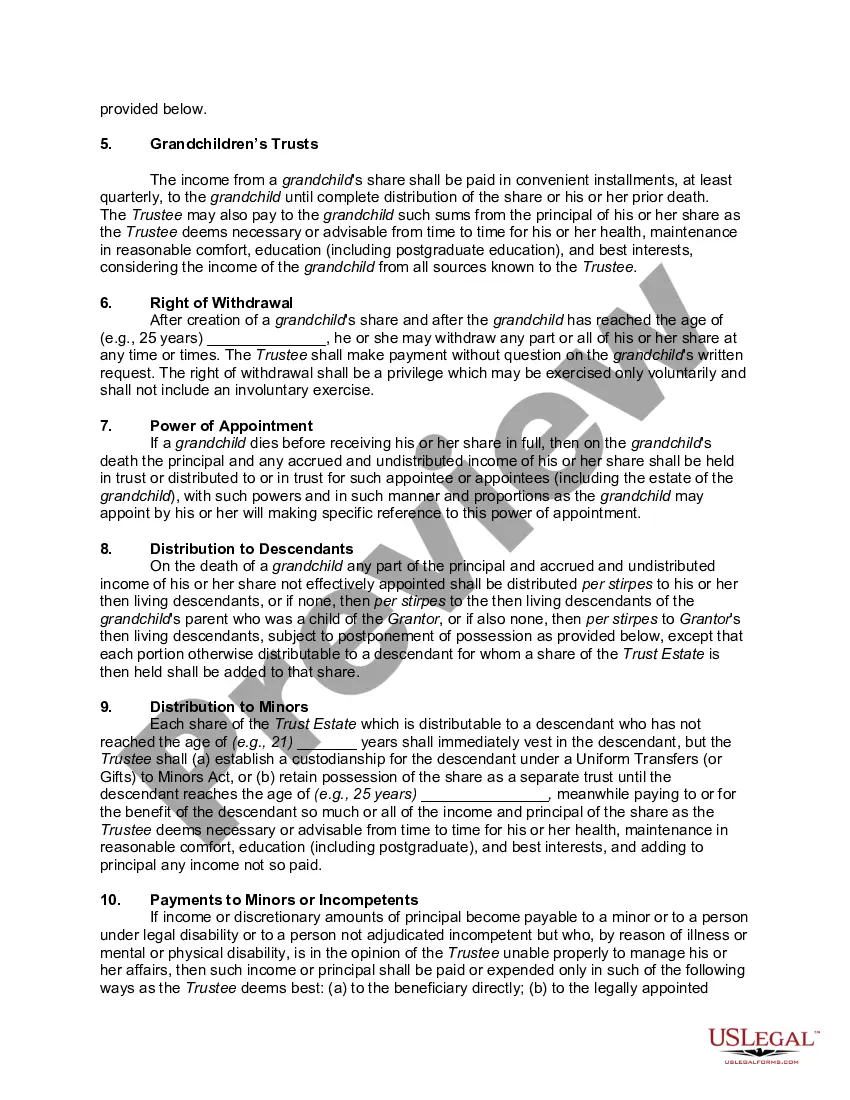
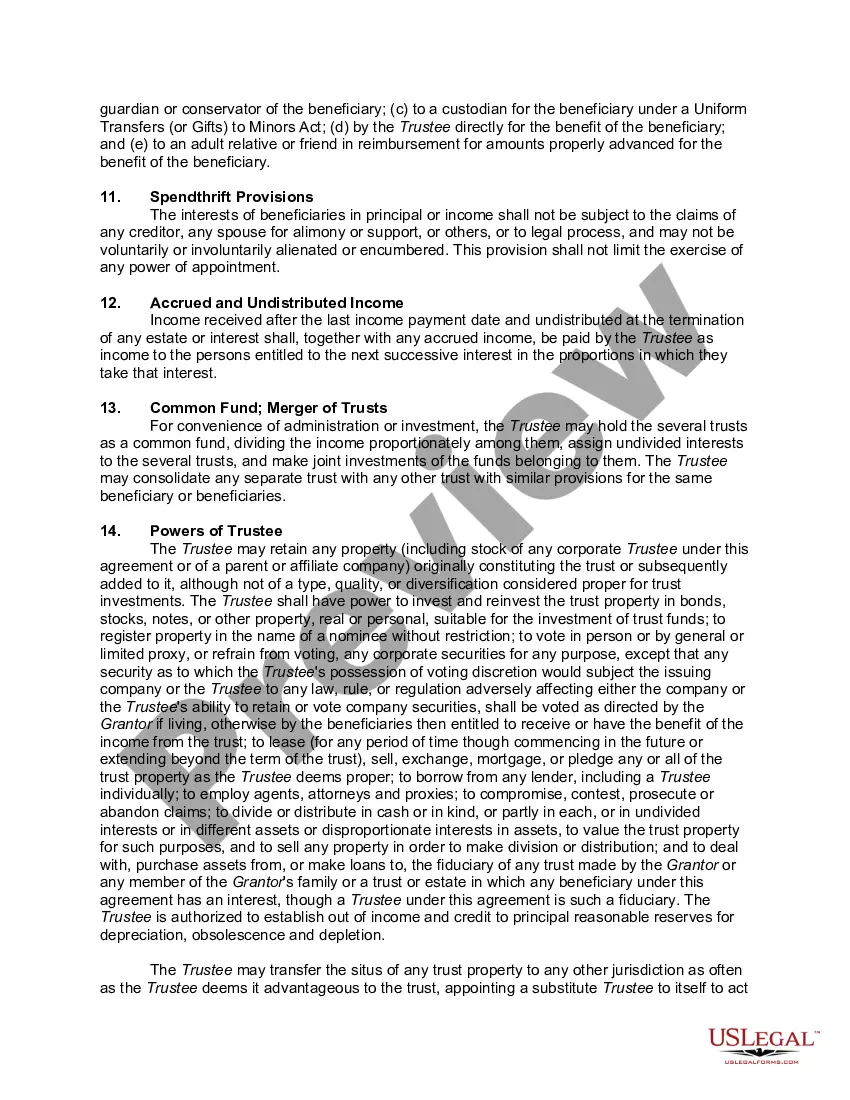
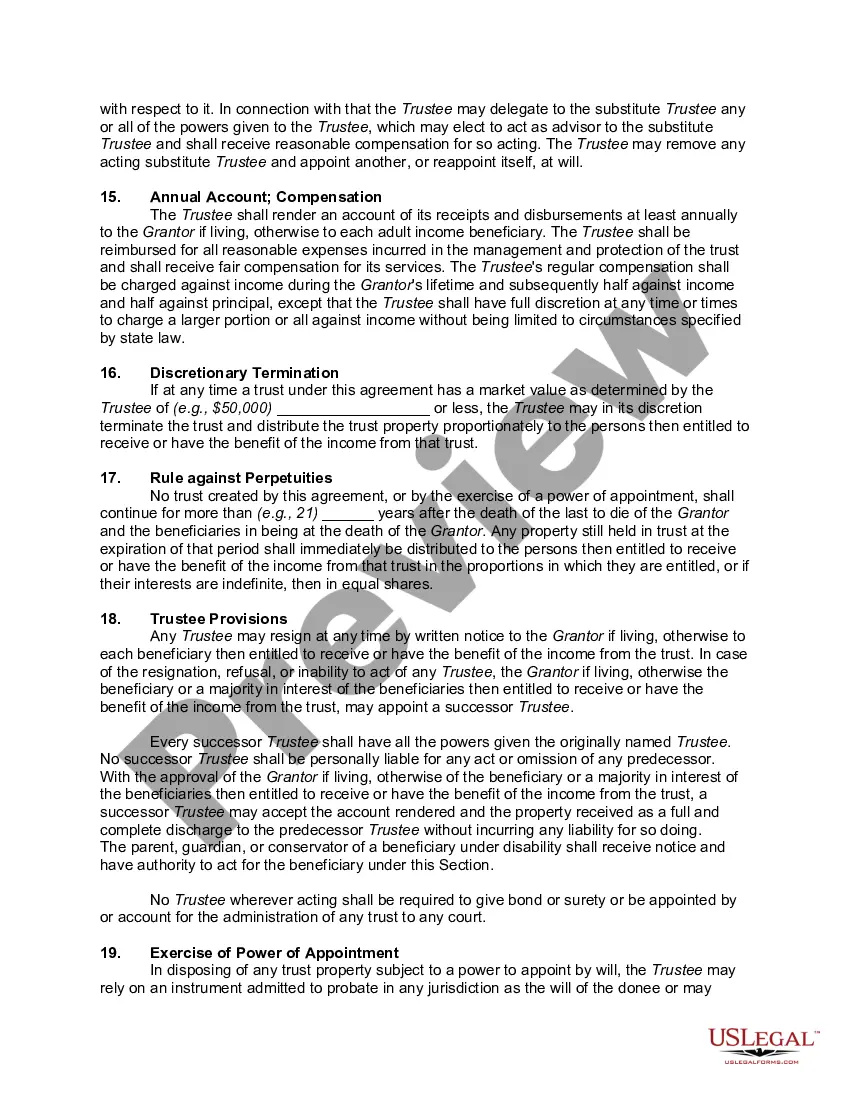
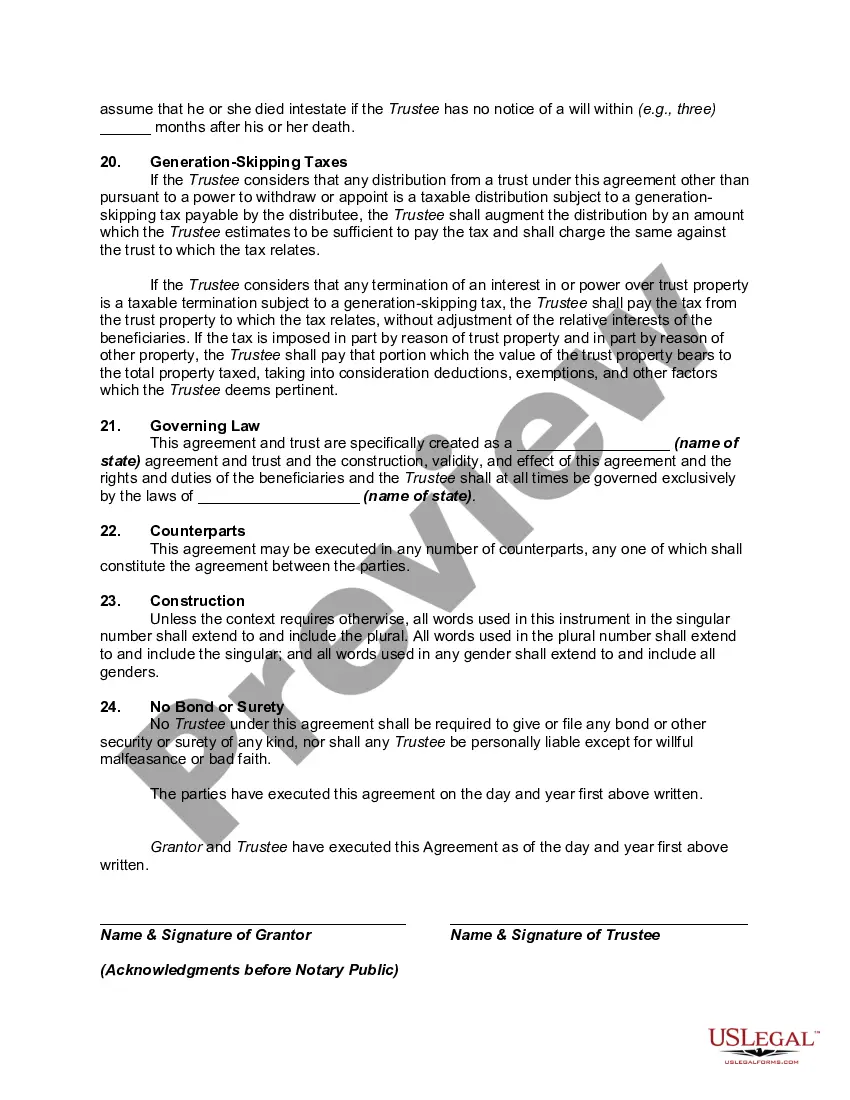


Get your form ready online
Our built-in tools help you complete, sign, share, and store your documents in one place.
Make edits, fill in missing information, and update formatting in US Legal Forms—just like you would in MS Word.
Download a copy, print it, send it by email, or mail it via USPS—whatever works best for your next step.
Sign and collect signatures with our SignNow integration. Send to multiple recipients, set reminders, and more. Go Premium to unlock E-Sign.
If this form requires notarization, complete it online through a secure video call—no need to meet a notary in person or wait for an appointment.
We protect your documents and personal data by following strict security and privacy standards.

Make edits, fill in missing information, and update formatting in US Legal Forms—just like you would in MS Word.

Download a copy, print it, send it by email, or mail it via USPS—whatever works best for your next step.

Sign and collect signatures with our SignNow integration. Send to multiple recipients, set reminders, and more. Go Premium to unlock E-Sign.

If this form requires notarization, complete it online through a secure video call—no need to meet a notary in person or wait for an appointment.

We protect your documents and personal data by following strict security and privacy standards.
Looking for another form?








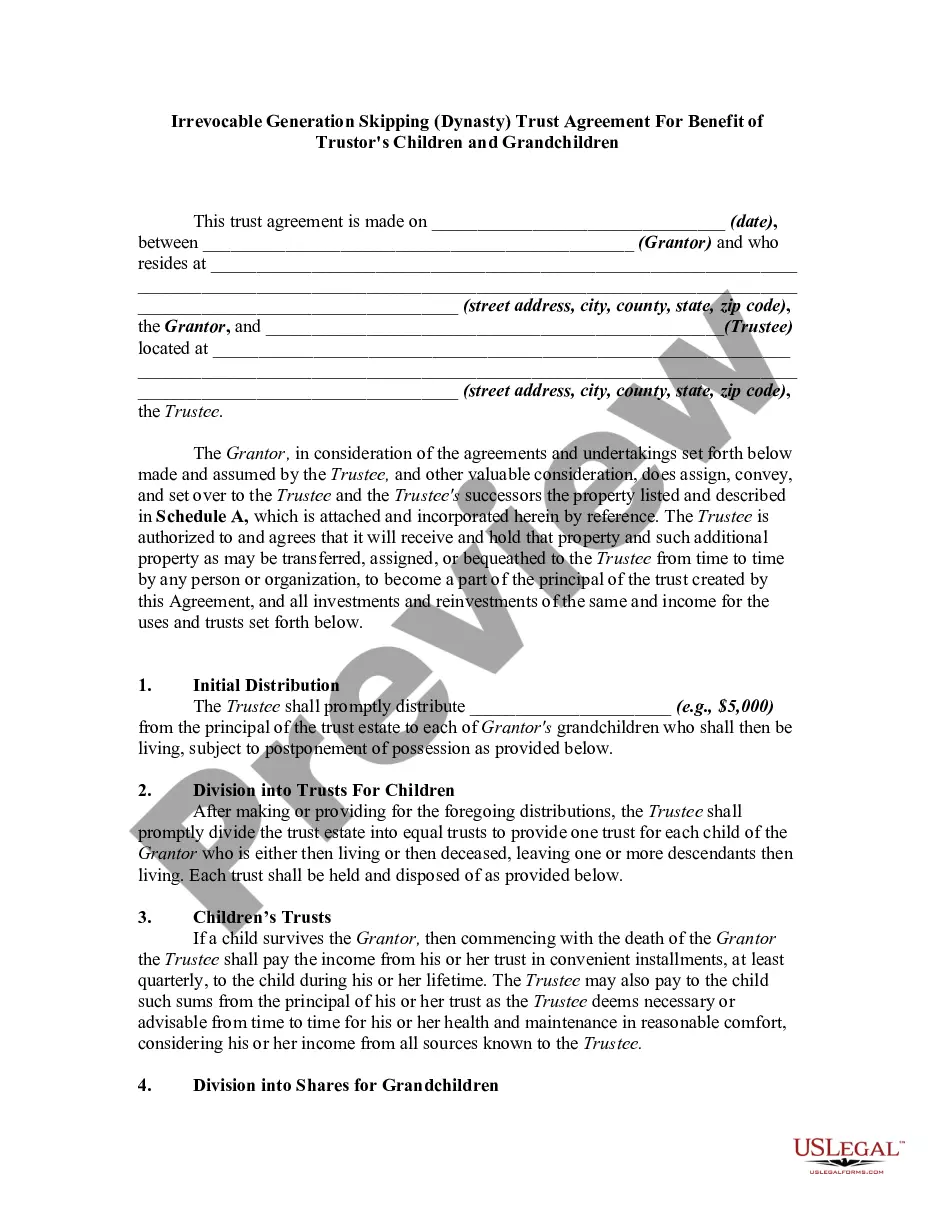
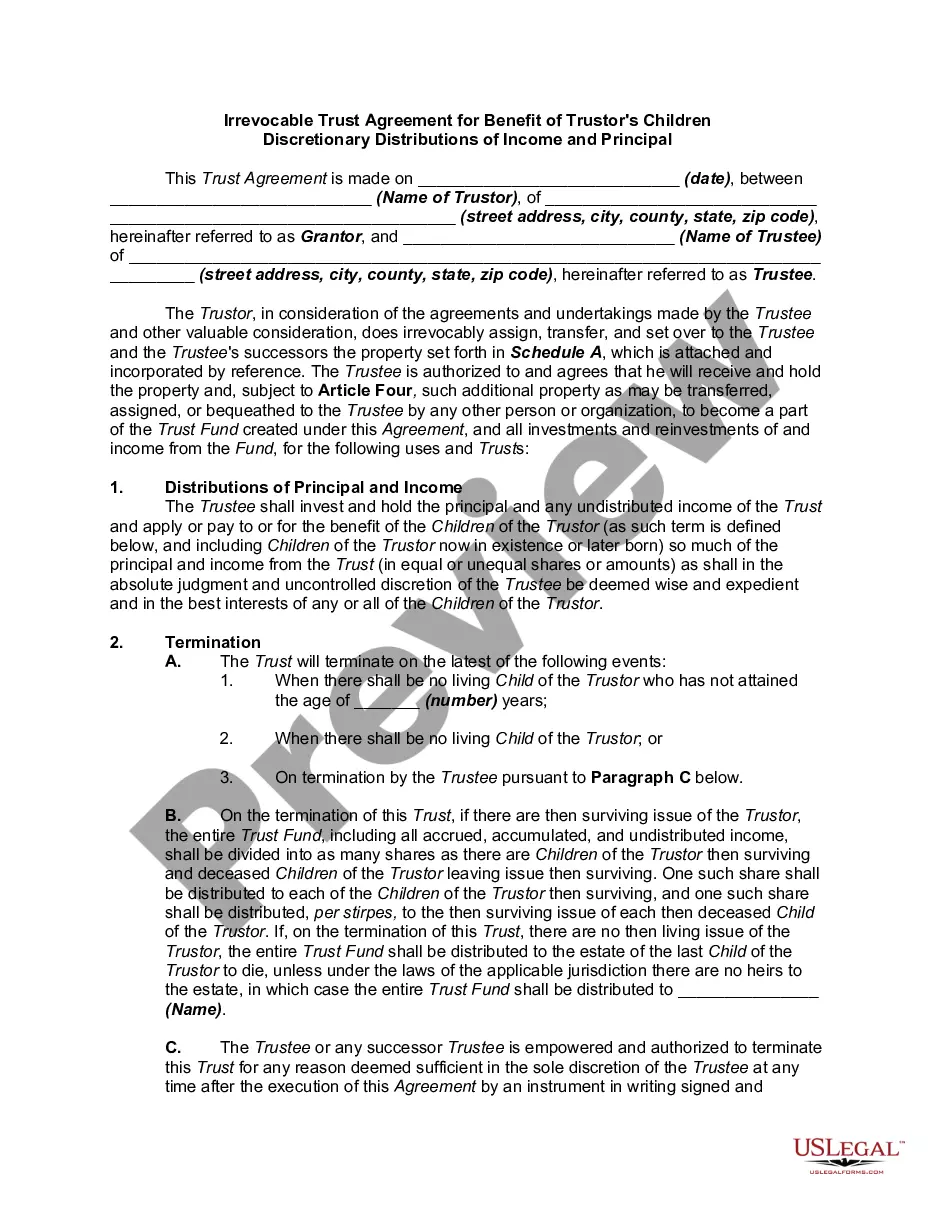
How to fill out Irrevocable Trust Agreement For Benefit Of Trustor's Children And Grandchildren?
- If you are a returning user, log in to your account and ensure your subscription is valid before downloading the necessary form by clicking the Download button.
- For first-time users, start by exploring the Preview mode and form description to confirm you’ve selected the correct document that aligns with your local jurisdiction.
- If the selected template does not meet your needs, use the Search tab above to find alternative forms that may be better suited for your requirements.
- After finding the right document, click on the Buy Now button and select your preferred subscription plan. You will need to create an account to access our extensive library.
- Complete your purchase by entering your payment details, either through credit card or PayPal for a seamless transaction.
- Finally, download your form and save it on your device. You can access it anytime from the My documents section of your profile.
US Legal Forms offers a robust collection of over 85,000 legal forms, more than competing services, ensuring you find the document you need quickly and efficiently.
Empower yourself with precise legal documentation. Start your journey with US Legal Forms today!
Form popularity
FAQ
Types of voluntary alienation include selling a property, gifting it, or creating a trust. When property owners choose to transfer their rights willingly, they exercise voluntary alienation. Discussing grantorname alienated situs for the future emphasizes the importance of knowing these methods for a successful property transition. For legal guidance, uslegalforms provides essential resources that can aid in documenting and executing these transfers effectively.
Involuntary alienation includes processes such as foreclosure, where the bank reclaims property due to unpaid loans. Another example is when a public authority seizes property for public use, often referred to as eminent domain. Understanding these elements is crucial for anyone involved in grantorname alienated situs for the future. Legal tools from uslegalforms can assist in understanding your rights and responsibilities in such cases.
A clear example of voluntary alienation is the sale of a property by the owner to a buyer. The seller actively decides to transfer their property rights to someone else, illustrating their choice in the matter. When thinking of grantorname alienated situs for the future, these transactions highlight the owner's ability to manage their property. Platforms like uslegalforms simplify the documentation required for such transactions.
Involuntary alienation refers to the loss of property ownership without the owner's consent. Common types include foreclosure, adverse possession, and property seizure for unpaid taxes. When considering options for grantorname alienated situs for the future, knowing these scenarios is crucial for property holders. Utilizing uslegalforms can help you navigate legal situations that lead to involuntary alienation.
In the context of real estate, to alienate means to transfer ownership of a property from one party to another. This transfer can happen voluntarily or through specific legal processes. When discussing grantorname alienated situs for the future, understanding how alienation works is essential for property owners to make informed decisions. Uslegalforms offers resources to ensure such transfers follow legal guidelines.
Voluntary alienation occurs when a property owner willingly transfers their rights to a new owner. An example includes selling a property or gifting it to someone else. Specifically, in scenarios involving the grantorname alienated situs for the future, the property owner actively makes choices regarding their real estate. This process can be facilitated through platforms like uslegalforms, which provide necessary legal documentation.
A limited power of appointment may indeed cause a trust to be classified as a grantor trust, depending on how the power is structured. When the grantor retains some control over the trust assets, it can result in grantor trust status for tax purposes. Understanding these dynamics is essential for effective estate planning and applying the 'Grantorname alienated situs for the future' principle.
Entities that receive income from U.S. sources and seek to claim a reduced rate of, or exemption from, withholding need to complete the W-8BEN-E form. This includes foreign entities and certain trusts that may have ties to the U.S. Knowing when to fill out this form is crucial in managing international trust matters, particularly in relation to the 'Grantorname alienated situs for the future'.
You can trigger a grantor trust status by incorporating specific powers into the trust agreement, such as the right to revoke the trust. Additionally, retaining certain distribution powers or modifying the trust terms can ensure you have this classification. Understanding how to navigate these rules is essential for leveraging the 'Grantorname alienated situs for the future' effectively.
A trust qualifies as a grantor trust when the grantor retains certain rights or powers that result in income being taxable to them. Conditions like retaining control over trust property or having the authority to change beneficial interests can establish this classification. You can use this feature to fulfill various financial and estate planning goals while applying the 'Grantorname alienated situs for the future' framework.